
The Peculiar History of the 14th Louisiana Battle Flag: The Origin of the “Wild-cats”
By Niccolò Ferrari · Originally published November-December 2026 · pp. 28–35
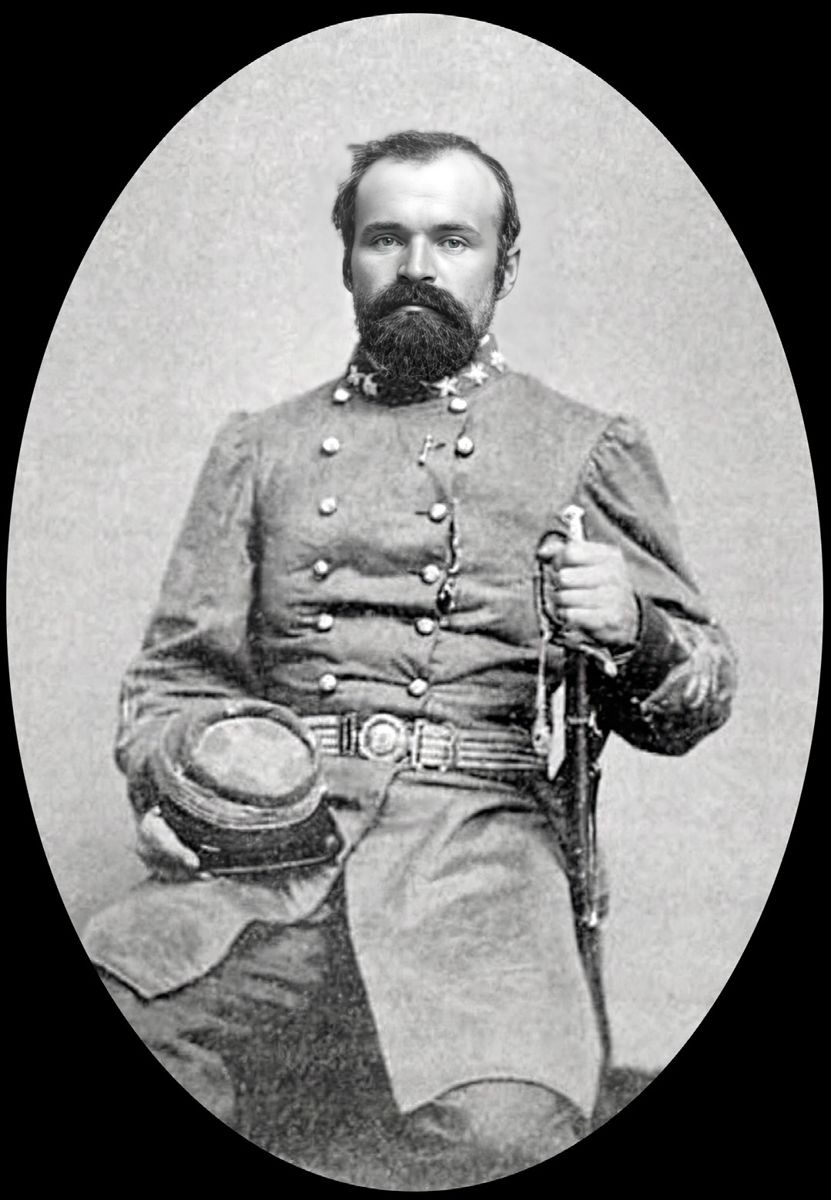
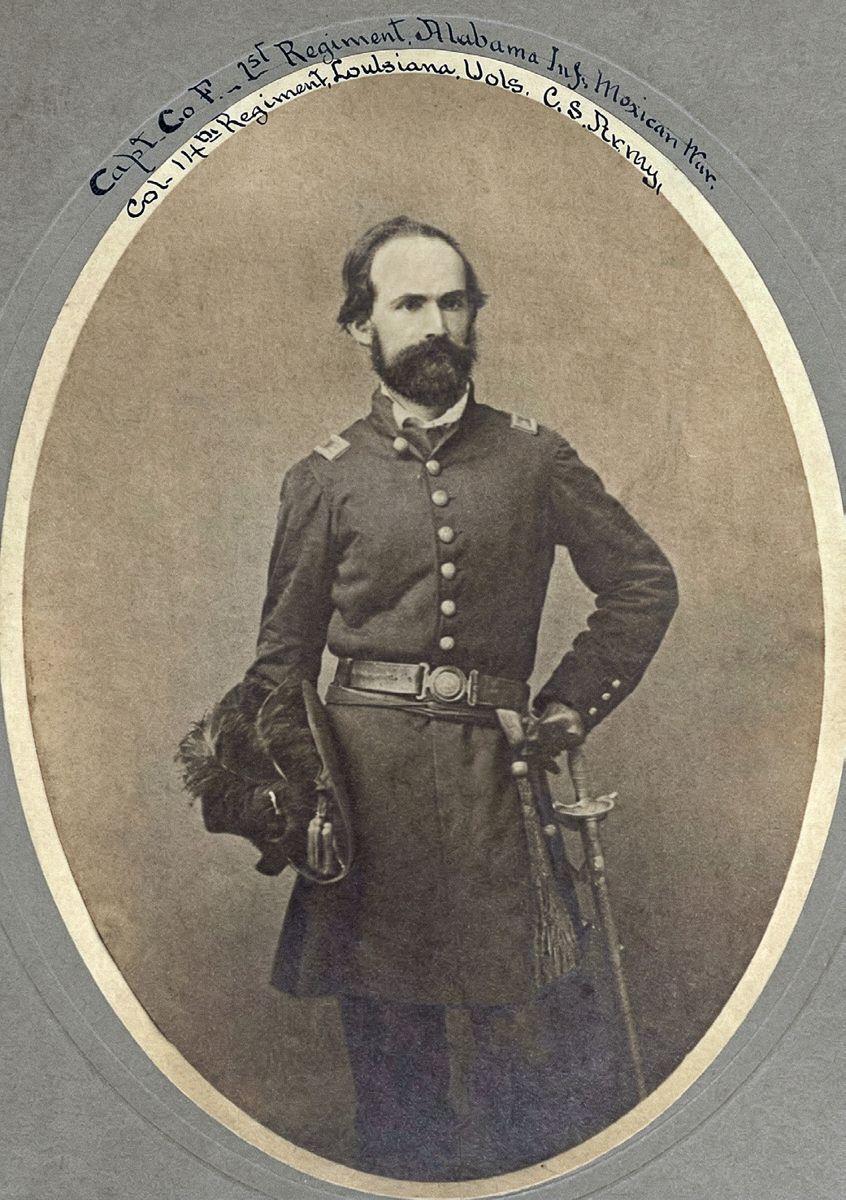
On September 21, 1861, a little over 1,000 men of the 14th Louisiana Infantry Regiment entered service in the Confederate Army at Camp Chimborazo, a future military hospital located on the eastern outskirts of Richmond, Virginia. They were assigned to General Magruder’s forces at Yorktown on the Virginia Peninsula.1 Until that moment, the unit had been part of the Louisiana state troops and bore the designation of 13th Louisiana Volunteers.2 The journey that had brought them to the eastern front had been unforgettable, to say the least, and had contributed greatly to spreading a bad reputation about Louisiana soldiers, already notorious for their unruly behavior thanks to Wheat’s famous Zouaves, the Tigers, or Coppens’ Zouaves. The unit had been formed in early summer at Amite, Louisiana, at the initiative of several members of New Orleans’ Polish immigrant community, who had aimed to create a regiment composed entirely of their compatriots. Hence, the unit’s first nickname, the “1st Polish Brigade” (the 15th Louisiana Infantry Regiment would later be called the “2nd Polish Brigade”). However, they soon had to give up the idea, since there were not enough Poles to fill the ranks. Of the ten companies (each made up of smaller groups of volunteers or militia) that formed the regiment’s initial nucleus, seven had been raised in New Orleans, while the remaining three came mainly from Pointe Coupee, Plaquemines, Tensas, Concordia and Terrebonne Parishes along with Algiers.3 The volunteers reflected the main European origins common along the Mississippi Valley— primarily Irish, British, German, French, a few Italians, and, naturally, Poles. However, the city companies gathered the worst elements the Crescent City’s underworld still had to offer: boatmen, dock laborers, shady and violent characters who loitered around the wharves and had lost their jobs due to the Federal naval blockade, joined by petty criminals and opportunists in search of fortune and loot. The volunteers were sent in mid-June to Amite, Louisiana, along the New Orleans, Jackson & Great Northern Railroad, where one of the state’s two main drill camps stood—the other being Camp Moore, also in Tangipahoa Parish, but near Kentwood. There, they were grouped into ten companies and placed under the command of Colonel Walerian Sulakowski, a 34-year-old Polish veteran of the Austro-Hungarian Army who had migrated to the United States in the 1850s and worked as a civil engineer in New Orleans. He was a hard man, rigid, a strict disciplinarian, and at times violent.4 Upon taking command, his first measures were to reorganize and clean the camp, drive away prostitutes, prohibit the sale and consumption of alcohol, enforce punishments, and establish a strict drill program. He succeeded in taming the most unruly men, though the embers of unrest still smoldered, ready to flare up at the first opportunity. And, as we shall see, that opportunity would not be long in coming. At the Amite camp, the 13th Louisiana Volunteers were armed with whatever remained in the Baton Rouge State Arsenal. Since they were among the last units to be raised, they received obsolete smoothbore muskets, many of them nonfunctional. We do not know exactly what uniforms they wore, but we can assume there was a wide variety, as seen in other regiments.
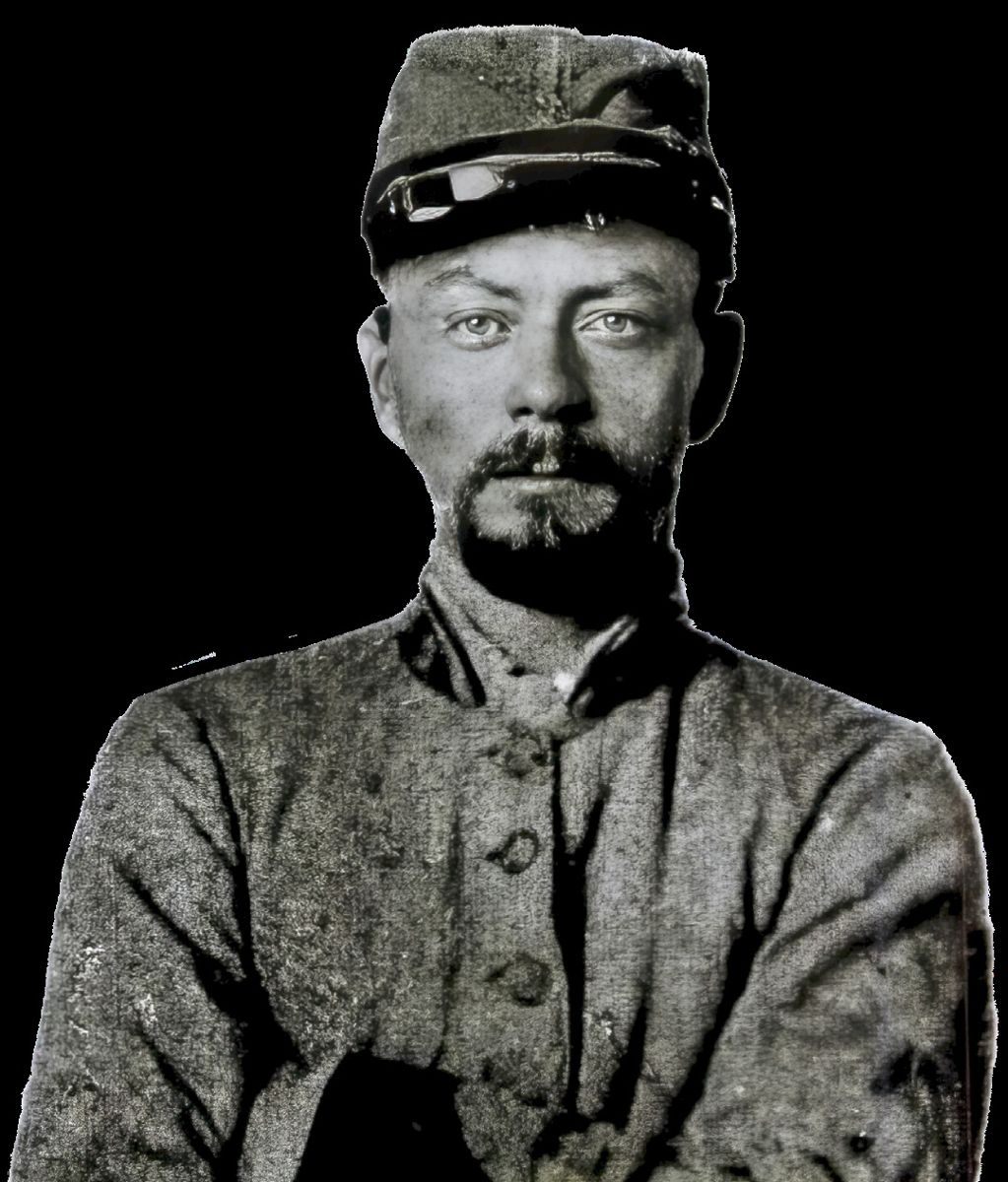
For example, some volunteers of the future Company G had been the Avegno’s Rifles, the only rifle company separated from their original Zouave regiment, which instead joined another unit in Tennessee.5 Their uniforms may thus have had French-inspired designs, but this is speculation. No photographic evidence exists of any regiment members except for the colonels. It is therefore likely that many had no proper uniform at all: the poorest and companies without wealthy patrons probably wore civilian clothes or outfits provided by the New Orleans Ladies’ Sewing Associations.6 On July 15, the regiment boarded a train headed to the Virginia front. However, some soldiers managed to sneak liquor onboard, and by the time they arrived at Grand Junction, Tennessee, they were already drunk. At this railway junction, because of differing track gauges, the troops had to be transferred to another train. During the operation, many men broke ranks and began looting the town in search of alcohol. They assaulted shops and private properties, forcing guards and civilians to take refuge in a hotel, which they then besieged and tried to set on fire. Order was barely restored by Sulakowski, who, pistols in hand and aided by his officers, killed and wounded some soldiers. One company, the Franco’s Rifles,7 was disbanded. Yet the same scenes were repeated at Knoxville, Tennessee, and Bristol, Virginia. Soon, newspapers began warning towns along the train route of the approach of Louisiana’s “Wild-cats,” a derogatory nickname that would haunt the 14th throughout its history, tarnishing even its state of origin.
Military notices in the New Orleans Crescent (New Orleans, Louisiana), Monday, June 17, 1861, page 3.
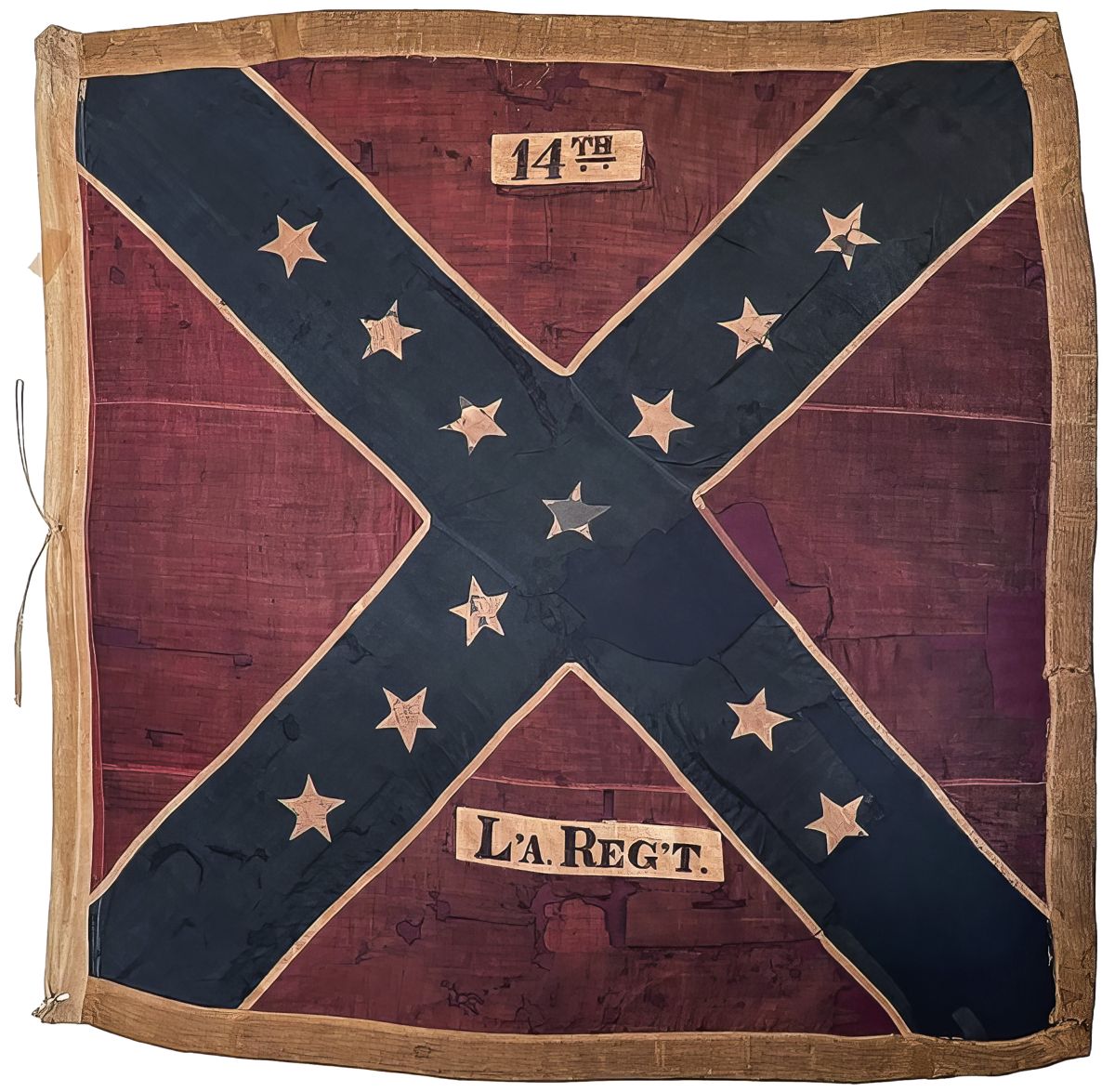
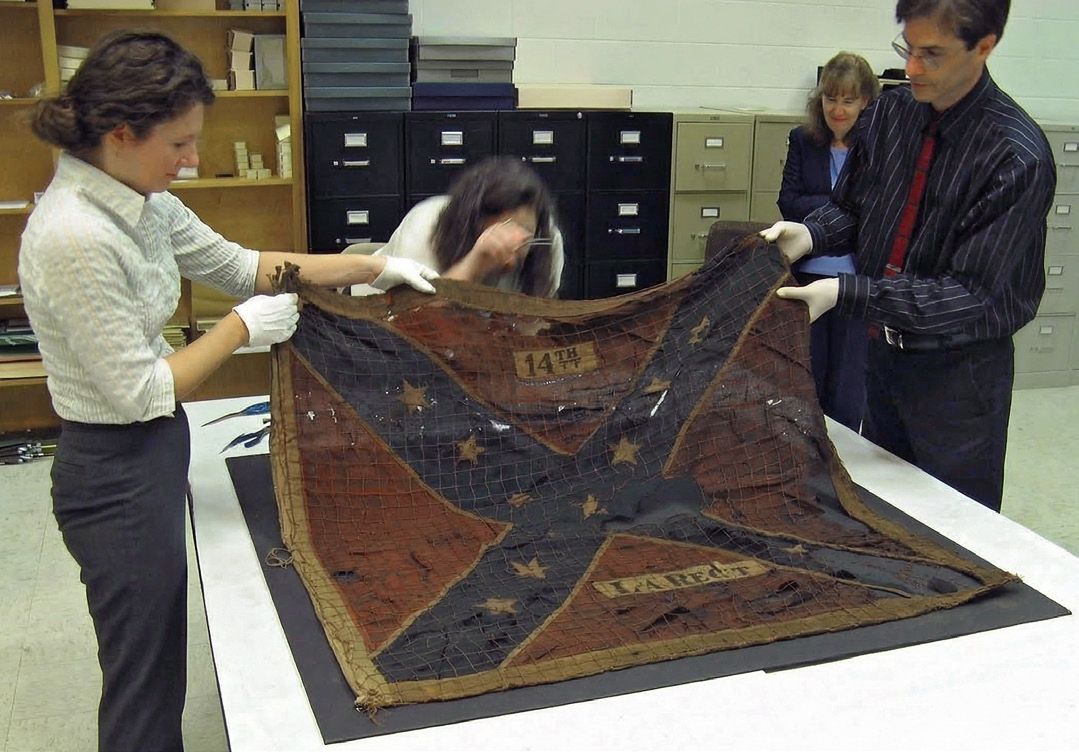
The Presentation of the Battle Flag The regiment remained along the Warwick Line, near Yorktown, where it was rearmed with modern rifles until late spring 1862. It did not see combat but did mutiny at least two more times, once during a mission in North Carolina, where a couple of men were executed, and again when Colonel Sulakowski resigned, angry at not being promoted to brigadier general. It was precisely during this period, on the Virginia Peninsula, that the 14th Louisiana received its battle flag, meant to replace the First National it had carried until then. After two silk issues and one cotton issue, the Richmond Depot clothing bureau, thanks to material seized at Norfolk, Virginia, the previous year, was able to produce a first series of wool bunting flags based on the design with the St. Andrew’s Cross drawn by Congressman William P. Miles. The first issue of wool bunting battle flags had the same dimensions as the silk models (the cotton issue was slightly smaller). Square-shaped, the flag measured four feet on each side;8 the blue St. Andrew’s Cross was 8 inches wide, bordered with white cotton, the same material used for the stars, which were 3 inches in diameter. The flag’s edges were covered with orange flannel, probably to imitate the golden fringe of the silk versions; at the hoist, hemp canvas was used, with three equidistant loops for tying the banner to its staff.9 The battle honors were painted on white cotton bands: one, about 3 inches in height and placed across the upper quadrant, bore the regiment’s designation, “14th,” with the “th” underlined and flanked by quotation
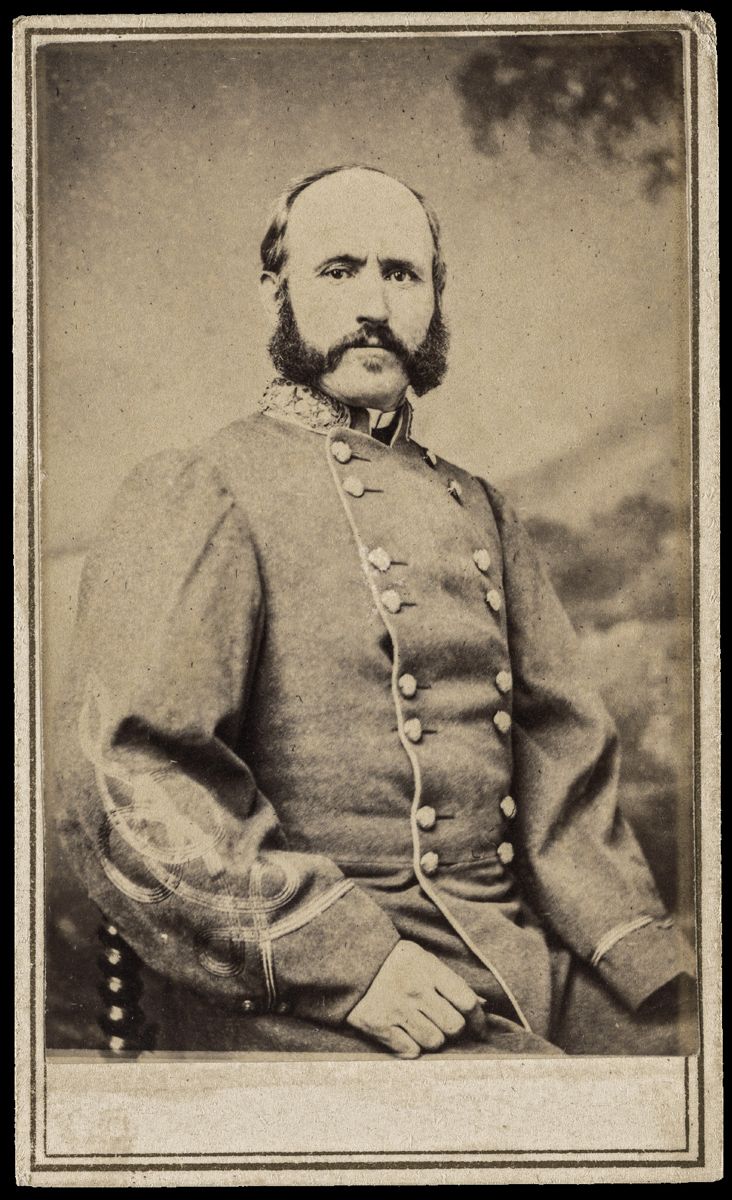
marks; the band across the lower quadrant carried the state abbreviation, “L’a.,” and the contracted designation “Reg’t.” This style of battle honors seems to have been common, along with inscriptions such as “Williamsburg” and “Seven Pines” found on other examples of this type. A second issue soon followed, its main difference being a narrower St. Andrew’s Cross, and then a third and more common issue in the Army of Northern Virginia, with allwhite borders. The presentation took place at a ceremony in mid-April, attended among others by General James Longstreet. The flag’s first use in battle came on May 5, at Williamsburg, which was also the 14th Louisiana’s baptism of fire. Under Lieutenant Colonel Richard W. Jones, the regiment played a key role on the Confederate right flank, enabling Joseph E. Johnston to withdraw his forces intact toward Richmond. Jones, a veteran of the MexicanAmerican War and likely in his forties, left little trace in the records; his tenure as regimental commander was brief, as he too resigned, possibly for health reasons, and passed command to Major Zebulon York, though not without yet another hint of mutiny.10 York, 42, was a native of Unionist Maine who had found fortune in Louisiana’s Concordia Parish, where he and a business partner owned several sugar and cotton plantations worked by hundreds of slaves, probably 600 to 700 in total, making him one of the wealthiest planters in Louisiana and in the entire South.11 The 14th Louisiana’s flag was destined to have a peculiar history, no less turbulent than the “Wildcats” it represented. During the Seven Days’ Battles, at Glendale on June 30, three color-bearers were shot down, and the flag was lost until it was later recovered, entwined around the body of one of them.
The fighting for Richmond had cost the regiment dearly: 243 casualties. The 14th was also heavily engaged in the Second Manassas campaign under “Stonewall” Jackson, during which York was badly wounded, and in the subsequent Maryland invasion under Major David Zable, who was also wounded. The regiment suffered further heavy losses the following year at Chancellorsville, where it took part in “Stonewall” Jackson’s famous flank attack. The “Wild-cats” flag had flown over the key battlefields where Robert E. Lee’s military star had risen. By summer 1863, reduced to fewer than 300 men, the regiment was preparing to launch into Lee’s new, crucial northern offensive.
Gettysburg Campaign After “Stonewall” Jackson’s death, the Army of Northern Virginia had been reorganized from two to three corps. Louisiana’s Second Brigade, which included the 14th alongside the 1st, 2nd, 10th, and 15th Regiments, remained under Brigadier General Francis T. Nicholls, wounded at Chancellorsville, and at Gettysburg was commanded by Colonel Jesse M. Williams of the 2nd Louisiana. The brigade was part of Major General Edward Johnson’s Division,12 in the Second Corps of Lieutenant General Richard S. Ewell, considered Jackson’s heir after serving with him in the masterpiece 1862 Shenandoah Valley Campaign. David Zable, now lieutenant colonel,13 commanded the 281 surviving “Wild-cats.”14 Before the war, Zable had worked as a clerk in a mercantile house in the Algiers district, played baseball, and belonged to the LaQuarte ball club, as did many soldiers of Company K, which he had originally led in 1861.15
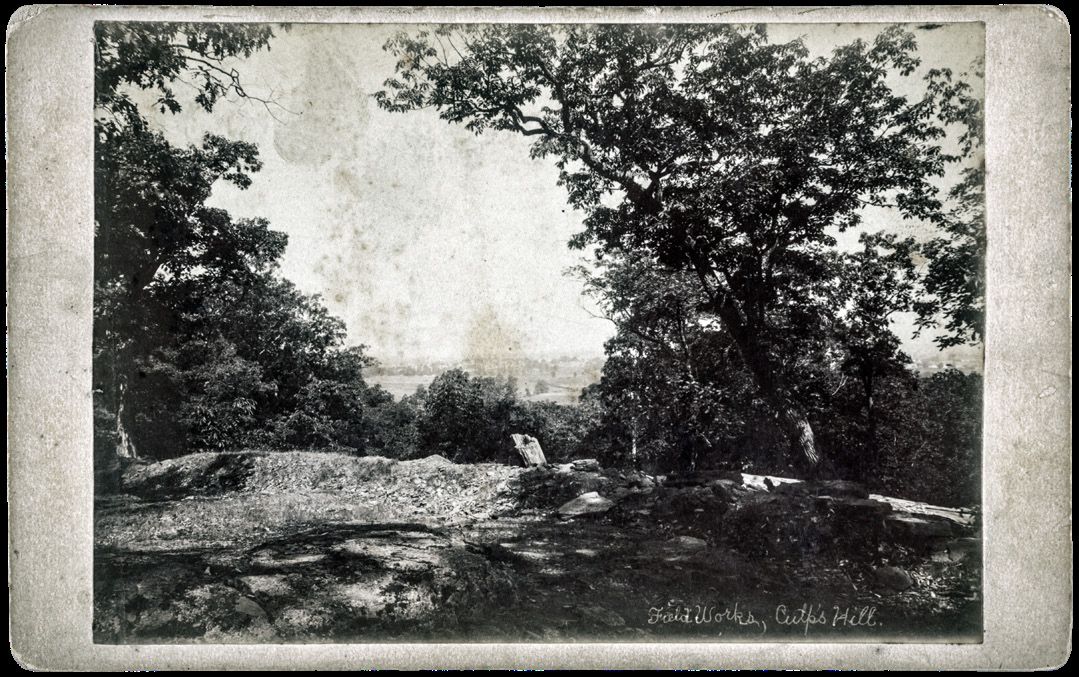
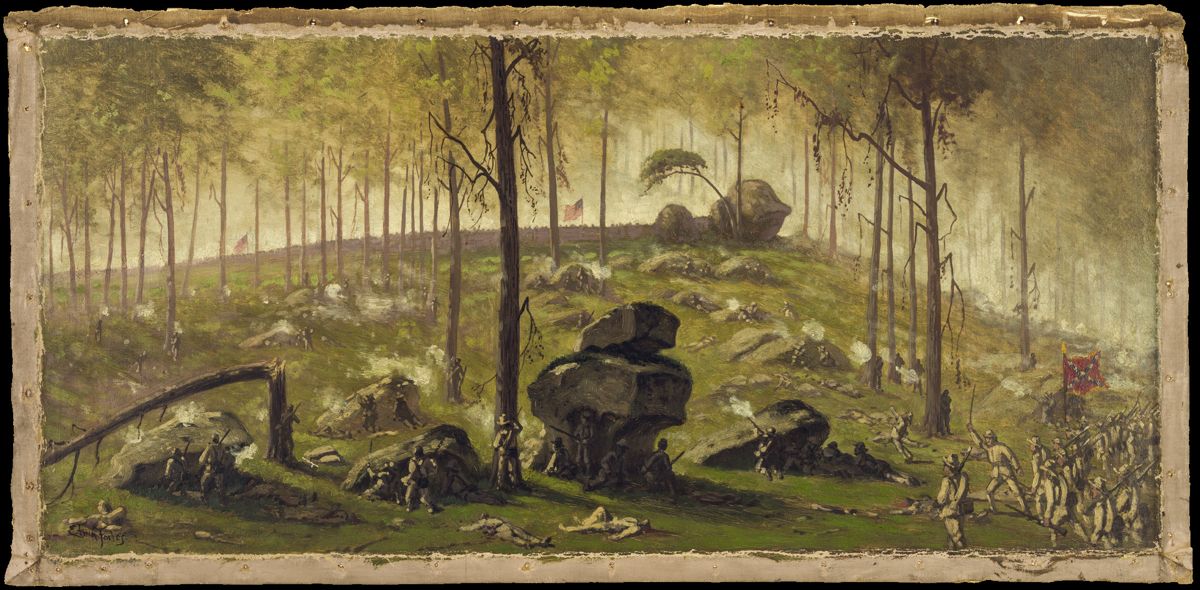
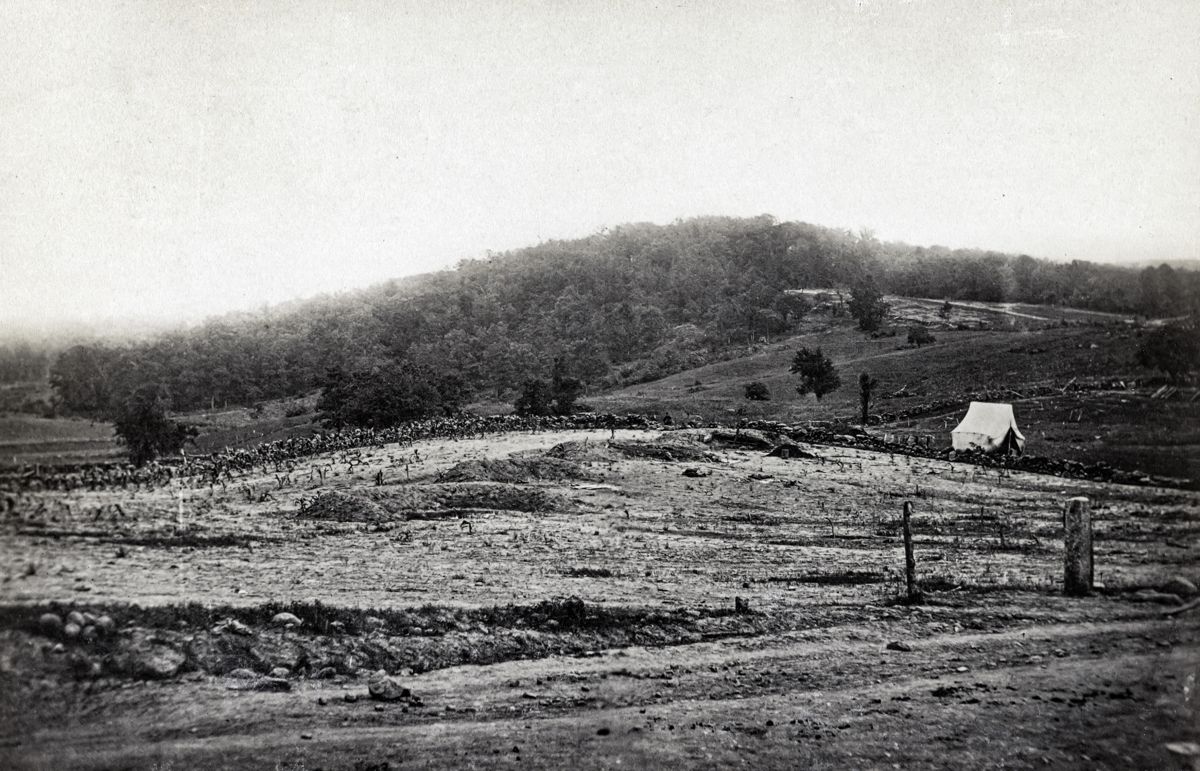
Ewell’s troops marched in early June, via Culpeper and Port Republic, into the Shenandoah Valley, where on June 12 they confronted Union general Robert H. Milroy’s forces near Winchester.16 On June 14, the Louisiana brigade went into action, and by the next day, Union forces were surrounded and destroyed, yielding large quantities of supplies. After a short respite, Johnson’s troops crossed the Potomac River at Shepherdstown, Maryland, then advanced to Carlisle, Pennsylvania, where they seized more supplies from Union barracks. The Confederate advance was fast: the men witnessed Union wealth and prosperity with their own eyes, feasting on cherries and beef. After two days’ rest, Johnson’s Division marched again, passing through Shippensburg, Pennsylvania, then to Dublin, destroying Senator Thaddeus Stevens’s large rolling mill and iron (Library of Congress) mines along the way, before arriving at Cashtown, where Lee’s army was massing for a battle that was about to begin in the nearby village of Gettysburg.17 On July 1, Johnson’s division moved at 7 a.m., crossed Gettysburg, and deployed east of the town by 6 p.m., “along the railroad, about three-quarters of mile from the town,”18 facing a big rise called Culp’s Hill. The Louisiana Brigade held the right, while the rest of the division extended leftward at sunset, 500 yards north of Hanover Road.19 Although only a small Union force held the hill, Johnson delayed his attack, awaiting the offensive of Longstreet’s First Corps south of Gettysburg, which did not begin until 4 p.m. on July 2, after nearly 24 hours of waiting. Divisional artillery under Major Joseph Latimer was positioned on small Benner’s Hill, facing Culp’s Hill, and the infantry advanced with Williams’s Brigade leading the charge. The Louisiana Brigade held the center, with John M. Jones on the left and George H. Steuart on the right, and the “Stonewall” Brigade covering against minor Union harassment in the rear. At 7 p.m., Williams’s men clashed with the enemy along a stream at the base of Culp’s Hill, called Rock Creek, where only the 78th New York Infantry Regiment of Brigadier General George Greene’s Brigade, XII Corps, Second Division, defended the extreme right of the Union line, linked to the XI Corps at nearby Cemetery Hill. The Confederates soon gained the upper hand, but darkness prevented them from finishing the assault in the dense woods, and they did not realize how weak the Union position was. Williams tried to reach the summit with repeated attacks for four hours, but Jones, hindered by rocks and a slope that was too steep, could not provide support.20 The Federals entrenched on the rocky summit of the hill; Johnson’s men lay just 100 yards away, ordered to whisper to avoid detection. At dawn on July 3, reinforced by some troops from A. P. Hill’s Third Corps, the Confederates attacked again. The “Wild-cats” and the other “Tigers” charged the enemy defenses until nearly noon, when, after an hour of what Zable recalled as the hardest fighting of all his battles, they were forced to fall back. The fight was hard. Zable later claimed that his troops were not destroyed only because the enemy soldiers aimed too high.21 The Union had also been heavily reinforced and soon counterattacked. The 14th found itself surrounded by bluecoats as the forest swarmed with Union troops, cutting many men off from the regiment. Among them was the 14th’s color-bearer, Frederick Sontag. Wounded and realizing the situation, he made a desperate decision: he detached the battle flag from its staff and hid it under his uniform to prevent its capture. He was taken prisoner along with an unknown number of comrades, adding to the regiment’s casualties of 15 dead and 50 wounded.22 The entire brigade had lost 388 of the more than 1,000 men with whom it had entered the battle. Yet the Federals never discovered the hidden banner, and a year later it was returned to the regiment when Sontag was exchanged.23 In the meantime, the 14th Louisiana had received a new flag;24 however, Zable, who had taken command of the regiment after York’s promotion to brigadier general, entrusted it to a woman he trusted, who managed to carry the colors safely back to New Orleans. At Appomattox in 1865, the regiment numbered only 25 soldiers and two officers. But the story of the “Wild-cats” was not yet over. After the war, Zable served as president of the Army of Northern Virginia Association and the Camp Nicholls Soldiers’ Home Board; the flag of the 14th was displayed for a long time at the Confederate Memorial Hall of New Orleans25 until it was stolen in 1980s. The FBI’s Art Crimes Division facilitated the return of the flag to Louisiana in 2011, where it has since been restored, standing as a silent witness to the unbelievable story of the “Wild-cats” of Louisiana, but also to a world now lost.
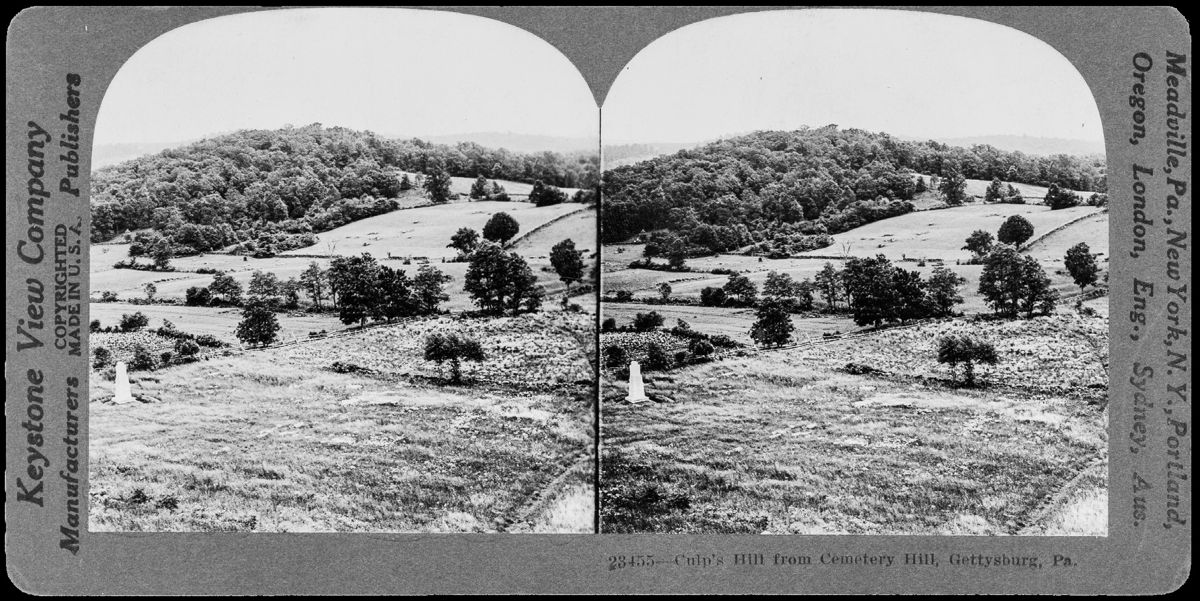
Culp’s Hill, Gettysburg. (Library of Congress)
Endnotes:
-
The manuscript of Private William P. Snakenberg is the primary source about the history of the 14th Louisiana. Biographical research and notes about Snakenberg can be found in L. L. Hewitt and A. W. Bergeron Jr., Louisianans in the Civil War (2002), p. 120. The entire manuscript can be found in six parts on Amite (La.) News Digest: August 29, 1984, sec. 2, p. 2; September 5, 1984, sec. 2, p. 8; September 12, 1984, p. 7; October 3, 1984, p. 11; October 10, 1984, p. 15; October 17, 1984, p. 15. Another significant source for research on the 14th Louisiana is the diary of its chaplain, Father James Sheeran, published in various editions (first edition: J. B. Sheeran, Confederate Chaplain: A War Journal of Rev. James B. Sheeran, 1960), which, however, does not provide a detailed account of military events or of the second half of the conflict.
-
Not to be confused with the 13th Louisiana Infantry Regiment, which served on the Tennessee front. There was also a unit, the 14th Louisiana Sharpshooter Battalion, also active in the West.
-
At the time, a municipality separate from New Orleans and also known as the Right Bank.
-
Carl C. Moneyhon and B. Roberts, Portraits of Conflict: A Photographic History of Louisiana in the Civil War, 1990, p. 53.
-
The 13th Louisiana Infantry Regiment.
-
It is likely that in this case as well, the State of Louisiana provided clothing, particularly the so-called “Camp Moore jackets,” trimmed in black, as well as trousers and kepis, whose distribution had already begun at that time. See also “Confederate Uniforms of the Lower South, Part I: Tennessee, East Louisiana, Mississippi, and Alabama,” by Fred Adolphus, June 29, 2019.
-
The soldiers were scattered among the other companies, which remained nine until the Franco’s Rifles were replaced at Camp Chimborazo by a new one.
-
Cavalry and artillery flags were smaller.
-
P. Katcher, R. Scollins, Flags of the American Civil War (1), 1992, pp. 16–19.
-
C. Moneyhon and B. Roberts, Portraits of Conflict: A Photographic History of Louisiana in the Civil War, 1990, p. 56.
-
W. K. Scarborough, Masters of the Big House: Elite Slaveholders of the Mid-Nineteenth-Century South, 2006, p. 135; and C. Moneyhon and B. Roberts, Portraits of Conflict: A Photographic History of Louisiana in the Civil War, 1990, p. 77.
-
The other three brigades of the division were commanded by Brigadier Generals George H. Steuart, James A. Walker (Stonewall), and John M. Jones.
-
York would return to command of the regiment only at the beginning of 1864, remaining until June, when he was promoted brigadier general, and command of the 14th returned to Zable.
-
J. Arnold, Gettysburg July 2, 1863: Confederate: The Army of Northern Virginia, 2000, p. 60.
-
W. P. Snakenberg, Amite (La.) News Digest, August 29, 1984, sec. 2, p. 2.
-
Battle of Second Winchester.
-
W. P. Snakenberg, Amite (La.) News Digest, October 10, 1984, p. 15.
-
Reports of Col. J. M. Williams, Second Louisiana Infantry, commanding Nicholls’ Brigade. OR, Series I, Vol. XXVII/2 [S#44].
-
L. Tagg, The Generals of Gettysburg: Appraisal of the Leaders of America’s Greatest Battle, 1998, p. 282.
-
Reports of Col. J. M. Williams, Second Louisiana Infantry, commanding Nicholls’ Brigade. OR, Series I, Vol. XXVII/2 [S#44].
-
T. L. Jones, Lee’s Tigers: The Louisiana Infantry in the Army of Northern Virginia, 1997, p. 175.
-
J. Arnold, Gettysburg July 3, 1863: Confederate: The Army of Northern Virginia, 2000, p. 47.
-
W. P. Snakenberg, Amite (La.) News Digest, October 10, 1984, p. 15. Also R. Rollins, The Damned Red Flags of the Rebellion: The Confederate Battle Flag at Gettysburg, 1997, p. 130.
-
By the end of the war, there would be four more issues of battle flags for the Army of Northern Virginia, each slightly different from the others, mainly intended to replace those that had been lost.
-
Moneyhon and B. Roberts, Portraits of Conflict: A Photographic History of Louisiana in the Civil War, 1990, p. 338.
Niccolò Ferrari, born in Verona, Italy, in 1983, graduated in law from the University of Verona. A writer, reenactor, and scholar of the American Civil War, he has devoted many years to the study of the Confederate States of America. In this field, he has collaborated with Corriere Canadese, an Italian-language daily newspaper in Toronto, Canada (2011), and with National Geographic Education (2011). In 2005, he founded the historical reenactment association 14th Louisiana Infantry Regiment, Company G, with which he took part in the reenactment of the Battle of Gettysburg, Pennsylvania, for its 150th anniversary (2013). He also contributed to a battlefield preservation project with the Gettysburg Battlefield Preservation Association (2017), being the only Italian to do so, alongside Pulitzer Prize winner James M. McPherson and historian Harold Holzer. He is the author of three historical novels, collectively called The Confederacy Trilogy: Sul treno per Richmond (2017), Vicksburg sul far della sera (2018), and L’ultima carica (2020). He has also written two essays, the most recent of which focuses on Confederate military history: Gli Stati Confederati d’America: la storia militare, a work that analyzes the logistical, strategic, and tactical aspects of the conflict from a Confederate perspective.