Hospital Corpsmen in Gray Awarded Blue Ribbon at Military Through the Ages
By Bob Ruegsegger · Originally published November-December 2026 · pp. 6–11
Chimborazo Hospital, (Confederate) Richmond, Va., April, 1865. (Library of Congress)
Between the battle lines on Virginia’s Civil War battlefields, gallant attacks and heroic defenses seemed to be the order of the day and were consistently bloody and frequently indecisive. During and after the major clashes, there was invariably a plethora of wounded warriors who required immediate attention. Soldiers were rotated from companies to serve in the ambulance corps. These noncombatants rushed from behind the battle lines, risking their lives to remove their injured comrades-in-arms from the field of battle. The 2nd Corps Field Hospital of the Army of Northern Virginia, established during the Seven Days Battles, was among the dedicated organizations with military and civilian components that served Virginia’s wounded until the conclusion of the War of the Rebellion. For more than a decade, Harry Sonntag and his associates with the Civil War Historical Impressions organization have been faithfully portraying the 2nd Corps Field Hospital of the Army of Northern Virginia at Jamestown Settlement’s phenomenally popular annual Military Through the Ages event.
Harry Sonntag, president of Civil War Historical Impressions, portrays Dr. Hunter Holmes McGuire and Dr. Harvey Black during living history programs. “We have worked hard for first place. Over the years [MTA] we’ve had second places, we’ve had third, and honorable mention,” said Sonntag. “It’s nice to be recognized for all that everybody’s done.” (All photos by Bob Ruegsegger)
Throughout those years, the 2nd Corps Field Hospital team has honed its historical portrayals by conducting additional research, producing new exhibits, and assembling a diverse contingent of living historians to bring daily existence in a Civil War-era field hospital to life. This year, the corpsmen in gray with the 2nd Corps Field Hospital were awarded the blue ribbon (a universally recognized symbol for excellence) in the Black Powder Division for their outstanding living history portrayal of a recreated field hospital camp at Jamestown Settlement. “We’ve been here for eleven years. This is our eleventh year. We are respected. We typically do well. People receive us well,” said Harry Sonntag, who heads the group. Sonntag portrays Dr. Hunter Holmes McGuire, medical director of the 2nd Corps, as well as Dr. Harvey Black, a surgeon with the 2nd Corps Field Hospital. “We all work together to depict the various components of the field hospital—the hospital cooks, ambulance corps, laundresses, ladies’ relief society, and the Richmond Committee for Our Wounded,” he said. “These hospitals provided care for the wounded both blue and gray. These field hospitals provided care for both sides.” Interpreters with the Civil War Historical Impressions group come from the Mid-Atlantic states: Virginia, North Carolina, Maryland, West Virginia, and Pennsylvania. They all come together for events at various locations. “This is our first event of the year—every year. It’s a good way to start,” observed Sonntag. “They provide water, clean facilities, and all the firewood we need to be able to cook for almost two days. They feed us. They cater a meal on Saturday night,” he said. “This is one of the more accommodating events for the reenactors. That goes a long way. It’s nice to be appreciated. We in turn appreciate the effort that Jamestown Settlement puts forth to do this for us.” For Sonntag and his crew of impressionists, their primary mission at living history events is to educate the public about Civil War-era medicine, field hospitals, and the daily lives of the ordinary soldiers. “Honestly, I like it when the children express that they’ve learned something. The children—the youth—are our future. It’s great to talk to the parents and take questions,” said Sonntag. “When the kids are interested in learning what we’re trying to teach them, I think that that’s the most rewarding aspect of coming together from five states.” Bill Billerd is a Virginian from nearby Smithfield. For Billerd, participating in Civil War living history programs has been among his primary interests. Civil War sites abound in the Commonwealth of Virginia. According to Billerd, there are many relatively unknown areas around the state. “There’s so much that people do not know. This area— Jamestown, Williamsburg, Suffolk, and Smithfield—all had a significant part in Civil War history,” said Billerd. “Military Through the Ages brings history to life at different periods. People can relate to history—through the ages—when they see it come alive compared to just reading something on a plaque.” The 2nd Corps hospital impression illustrates how difficult it could be for the ordinary soldier who was wounded in battle or sick with disease. During the middle of the 19th century, there was no “germ theory” and infection rates were high. The survival rate was less than spectacular.
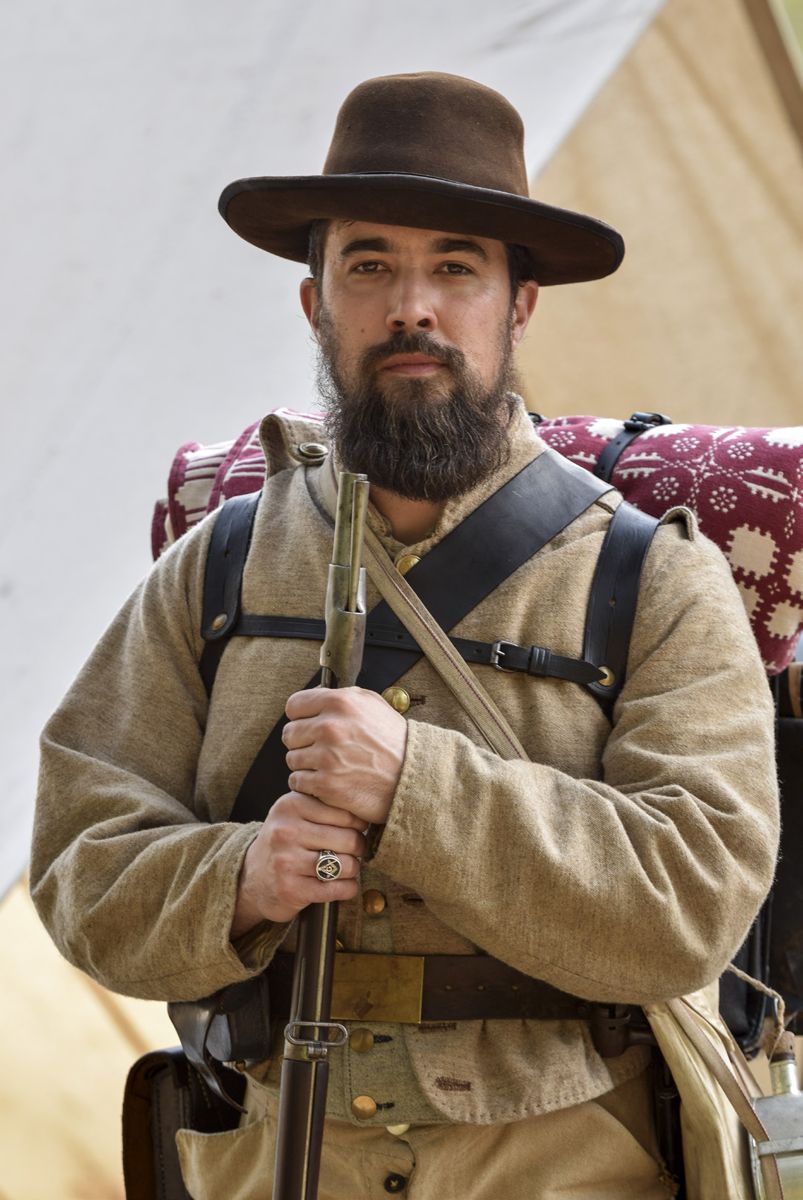
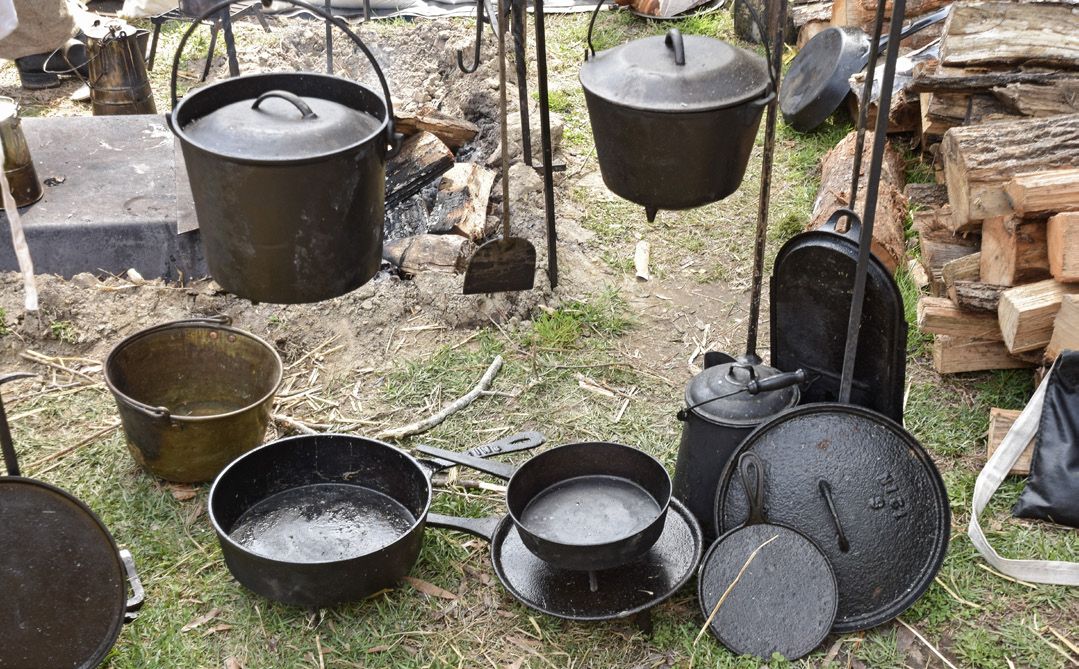
Billerd was dressed as a basic infantryman who was reporting for temporary duty with the ambulance corps. “It’s all about commemoration—both sides. Both sides were Americans—North and South. We have to commemorate these brave men who fought,” said Bill Billerd. “A final element to all of this is preservation. When we raise money, we don’t raise it for ourselves. The proceeds always go to the preservation of historic sites.” Steve Carney has been involved as an interpreter with the 2nd Corps Field Hospital for a long time, 13 years. Carney has been actively engaged in living history for more than 25 years. “The hospital corps is a unique impression. We teach people about a side of the war that people don’t really consider. They know about the battles,” said Carney. “They don’t necessarily know about what happened for the wounded after the battle,” he noted. “A lot of Hollywood representations are not factual so it’s nice to be able to go out and explain how they actually did it.” Carney’s focus with visitors relates to treating the sick and wounded by providing the soldiers with the appropriate rations for their recovery. Scurvy and malnutrition were serious concerns in the army and in the field hospitals. In addition to treating their wounds and keeping them fed, it was vital to make certain the men were getting adequate nutrition.
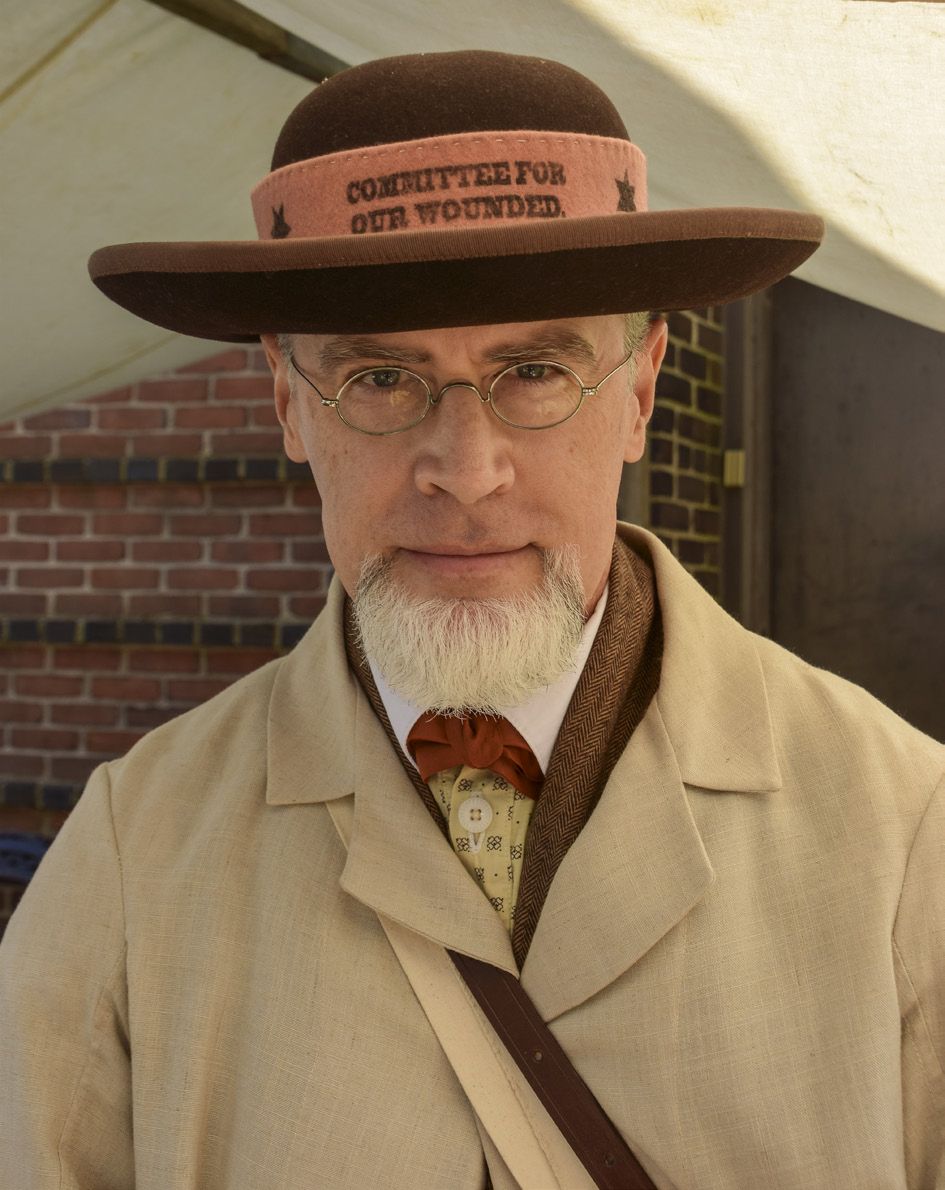
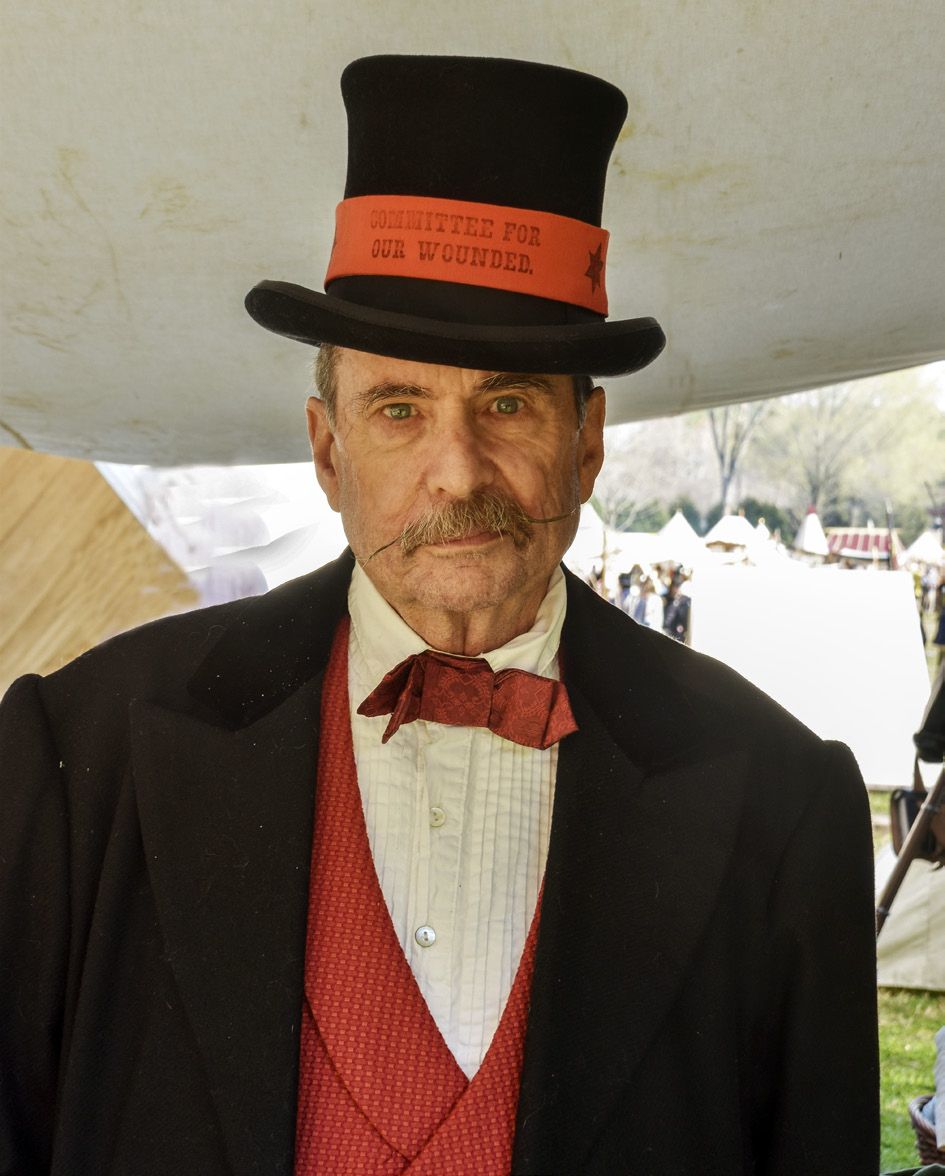
The standard army ration across the board was bread and meat. Usually, the bread was flour or cornmeal. The meat ration tended to be salt pork. In March 1863, no beef was available, fresh or salt. “The sick and wounded are going to get a lot of broth because some of the men have wounds such that they can’t digest solid food,” noted Carney. “Soup can feed many more wounded men and it provides more nutrition than just serving something,” he explained. “Stew provides more calories for the effort. We’re trying to deliver more sustained nutrition in the quickest way possible.” Civilian relief organizations were included in the hospital camp’s impression. Organizations such as the Committee for Our Wounded, represented by interpreter Robert Hester, operated as auxiliaries to the Confederate Army Ambulance Corps. The committee was organized in Richmond during the Seven Days Battles to extract the wounded from the battlefields. “They purchased 38 ambulances on their own. They were mostly merchant men from Richmond who were exempted from military service,” said Robert Hester. “They were involved in every single campaign from the spring of ’62 until the close of the war.”

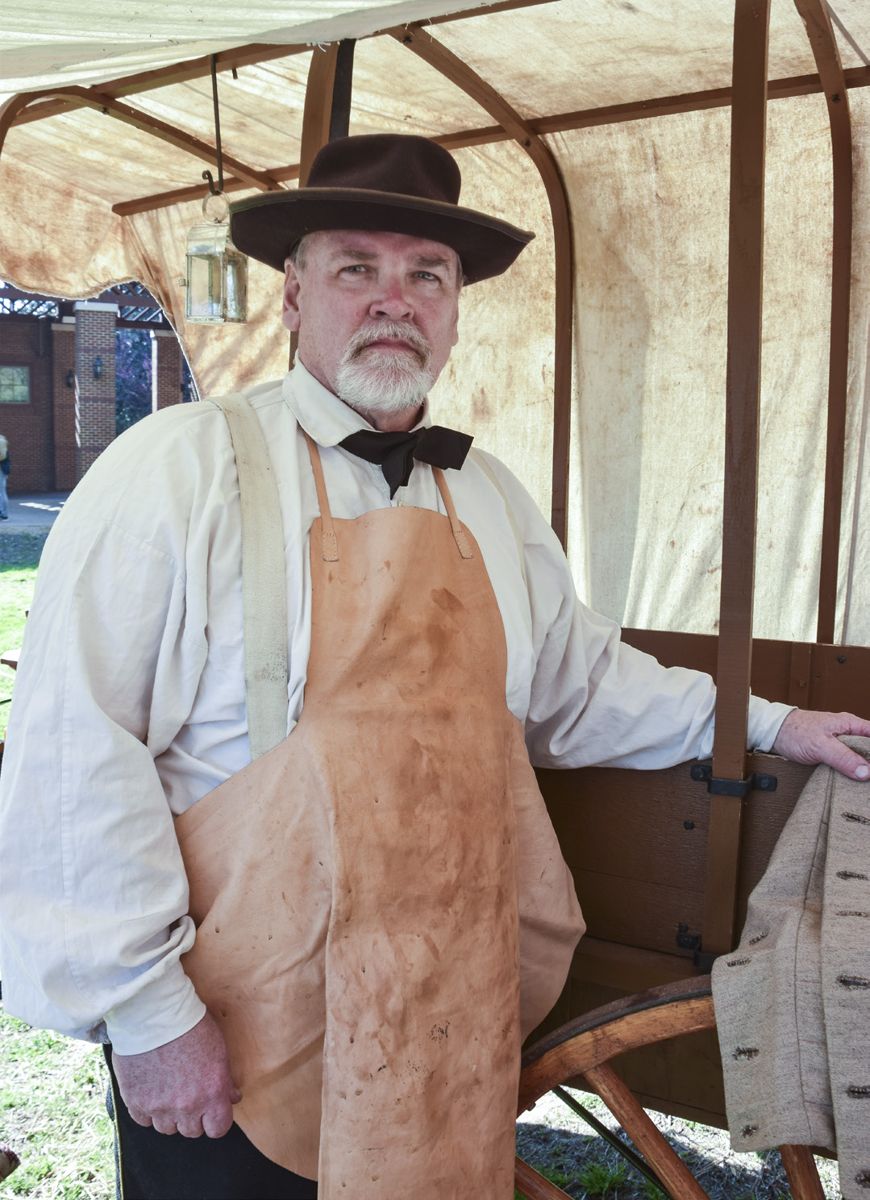
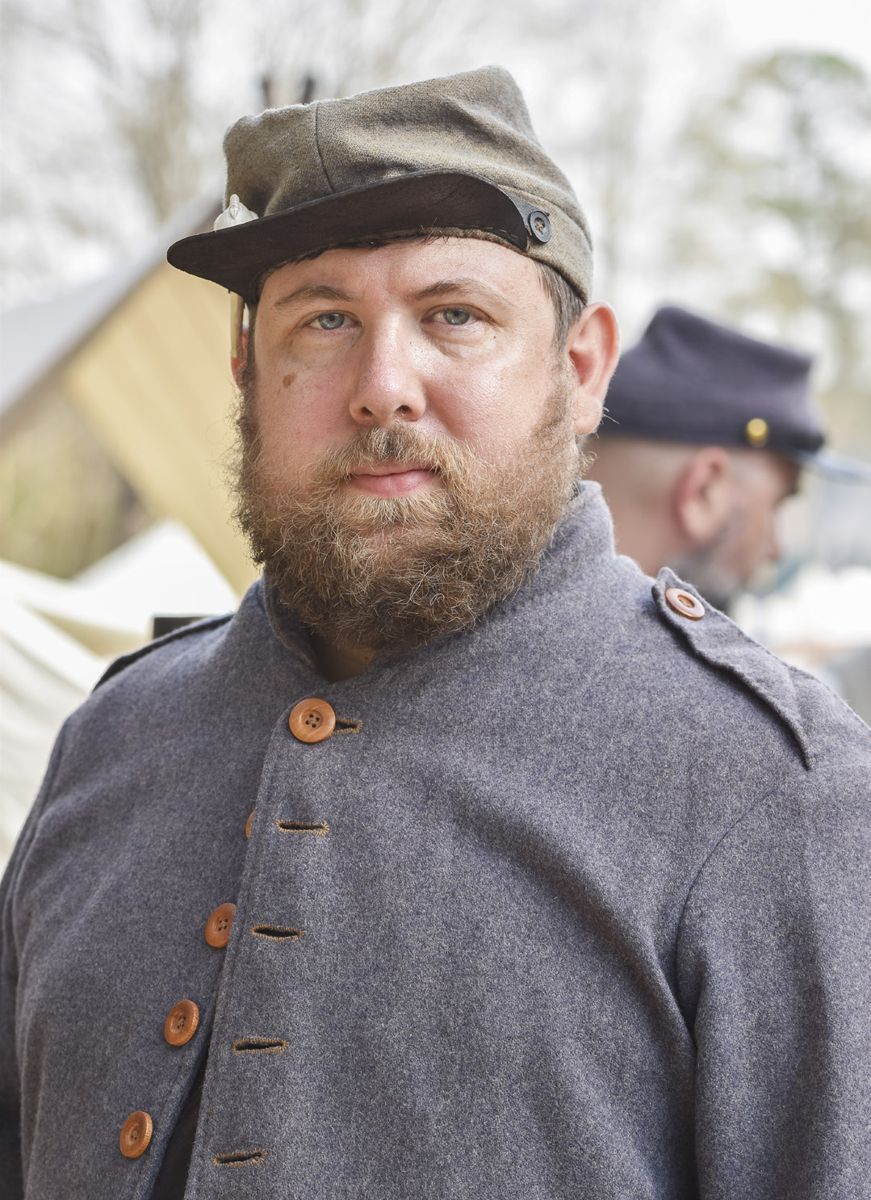
Prominent among the civilian benefactors was John Purcell of Purcell Ladd and Company of Richmond, one of the largest and most successful drug companies in the South. John Purcell supported the hospital corps, ambulance corps, and women’s auxiliary by supplying necessities for the troops in the field. Many of the ambulances used by the Confederate army were provided by Purcell, who also outfitted an entire artillery battery called Purcell’s Battery. “John Purcell was a Virginian, and Virginians looked at Virginia as a country,” said William Buser, who portrayed John Purcell in camp. “When the Northern troops came in and started to invade Virginia, he went with his country which was Virginia,” said Buser. “He was there to support the troops in Virginia defending against the Yankee invasion.” Jason Anderson portrayed a Confederate soldier assigned to the ambulance corps. Soldiers would trade their muskets and accoutrements in favor of an armband, hatband, or poster-board card identifying them as “Ambulance Corps” (non-combatants). “We would be behind the lines during times of battle. Whatever men would fall, we would pick them up. We would go right on the battlefield with the insignia of the ambulance corps,” said Anderson. “We were noncombatants. Both sides had an understanding…let’s not try to actively shoot them. Obviously, ambulance corpsmen did get hit because there were stray rounds everywhere.” Wounded soldiers were loaded onto stretchers and taken to an assistant surgeon who decided whether the injured soldier needed to go to the field hospital immediately by wagon or wait until one was available. “At the field hospital, they would triage the wounded, stop the bleeding, and try to make sure the soldier didn’t die on the way to the hospital,” said Anderson. “If an amputation needed to occur immediately, it would be done at the field hospital. Most amputations were done at the hospitals.” Ashley Sonntag [Harry Sonntag’s daughter] has been participating in Military Through the Ages with the 2nd Corps Field Hospital for more than a decade as an interpreter with the Ladies’ Auxiliary. She returns year after year because she enjoys “the camaraderie, atmosphere, and being with—what we call—our people.” While each unit at MTA has a particular interest, the common thread that bonds them together is their dedication to the appreciation of history. “It [MTA] gives us a platform to share what our special interests are. We care about history as a whole. We’ve learned the ins-and-outs of the individuals we’re representing within our time period,” said Sonntag. “Having a platform to be able to talk to the public and share that knowledge with people who would not otherwise get exposure to some of the elements we are able to show here is very meaningful to us.” Homer Lanier, visitor experience manager with the Jamestown-Yorktown Foundation, has been involved with the annual Military Through the Ages events for nearly four decades. He has seen scores of blue ribbons awarded to topnotch units at MTA throughout the years. “The best thing about Military Through the Ages is that every year we have wonderful reenactors returning year after year,” said Lanier. “We have folks who change up and do something different every year, and we have good old standby units like our 2nd Corps Field Hospital medical group,” observed Lanier. “They are very popular with the public year after year.”
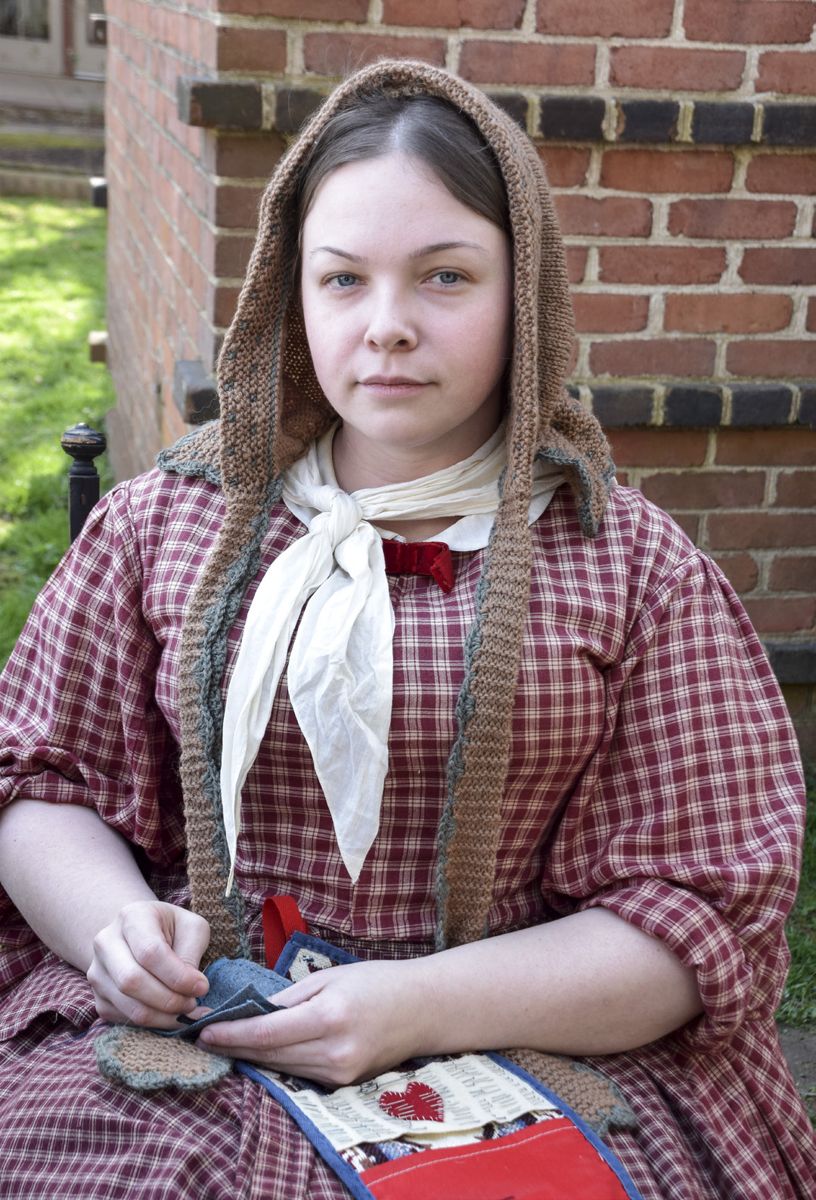
Ashley Sonntag has been participating at Military Through the Ages for more than a decade as a member of the Ladies’ Auxiliary. Sonntag is also executive director at the Renfrew Museum and Park in Waynesboro, Pennsylvania. “As a unit, we all have a very similar mentality, and we’re able to pull all of our unique interests in one subject matter or another together to tell a much larger story,” said Sonntag.
Bob Ruegsegger’s assignments frequently take him to historic sites throughout Virginia, the Mid-Atlantic, and the Southeast. His favorite haunts include sites within Virginia’s Historic Triangle—Jamestown, Yorktown, and Williamsburg. Bob served briefly in the U.S. Navy. He is a retired educator and has been an active newspaper journalist for over 25 years.
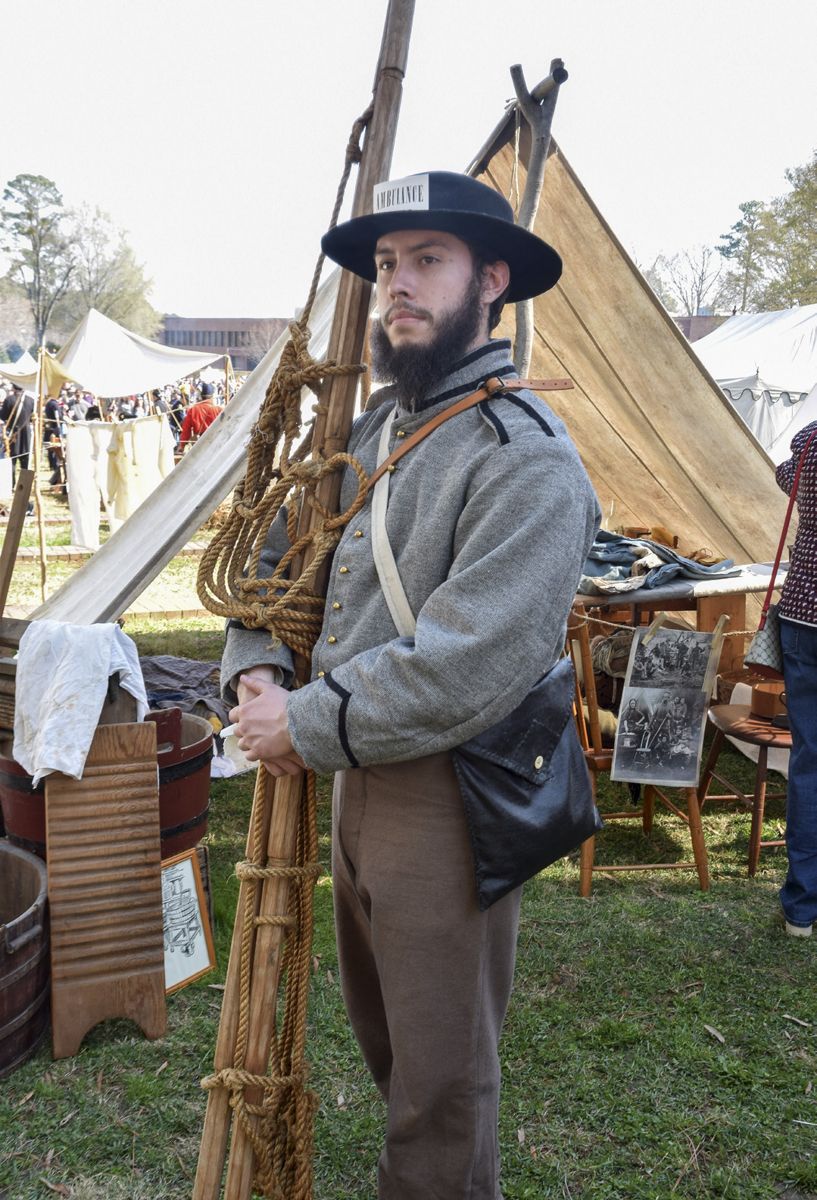
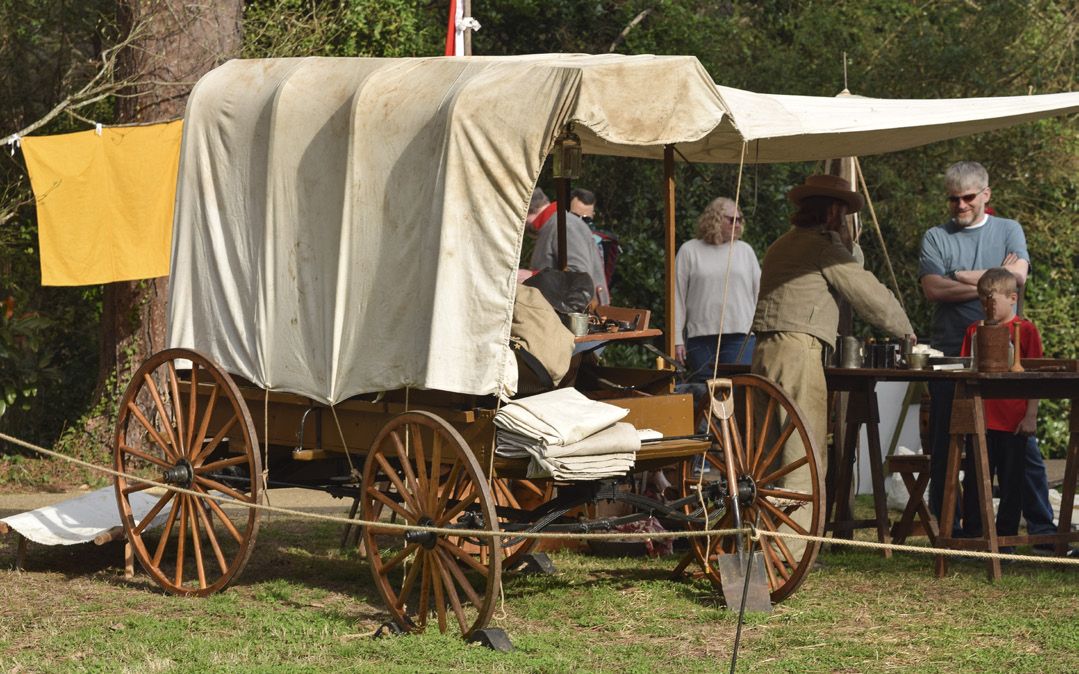
The 2nd Corps Field Hospital has been awarded a number honors for their participation at Military Through the Ages. This year they were awarded the Blue Ribbon—1st place—in the Black Powder competition for their Civil War field hospital interpretation. (Courtesy of Jamestown-Yorktown Foundation)