
Central Virginia Battlefields Trust
Close Calls, Near Misses, and Spent Bullets on Central Virginia’s Battlefields – Part I
By Tim Talbott · Originally published November-December 2026 · pp. 62–66
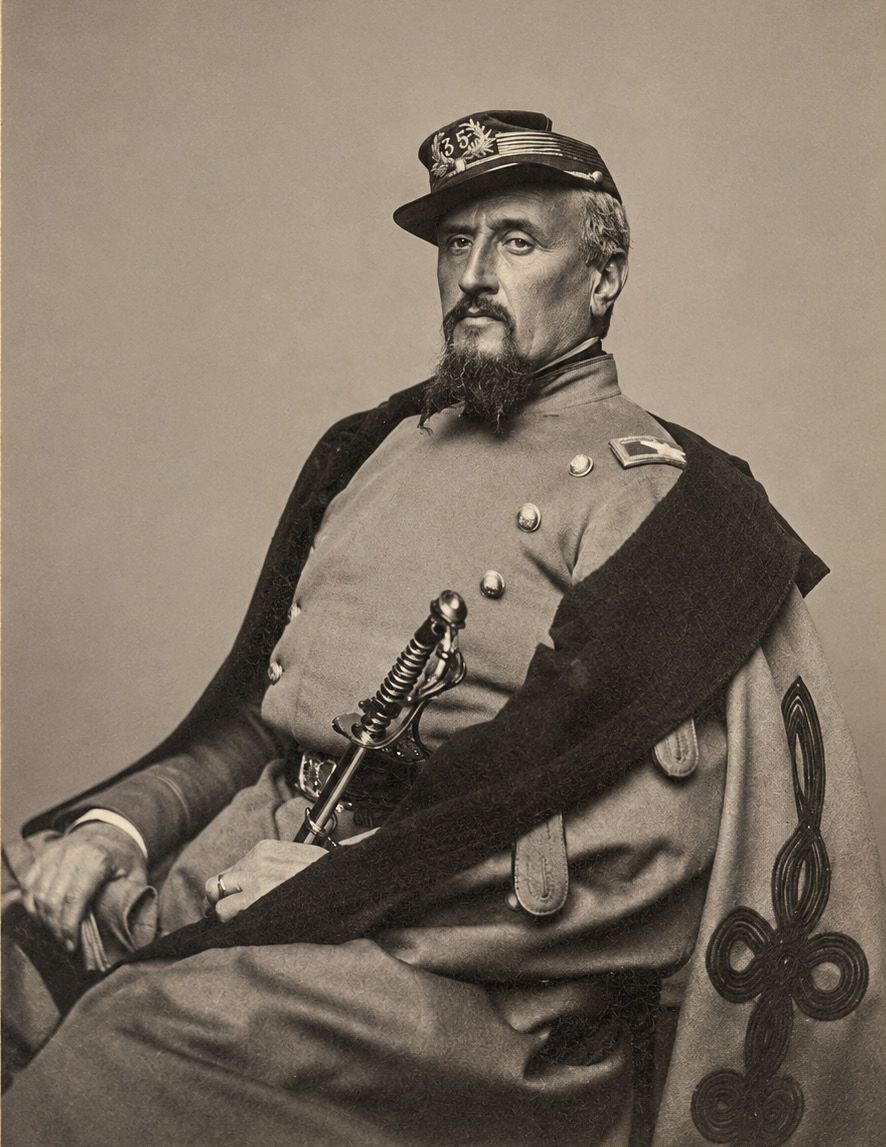
Attempting to describe the chaotic fighting that occurred on May 3, 1863, during the Second Battle of Fredericksburg, Pvt. Wilber Fisk offered some examples of close calls that men in his 2nd Vermont Infantry experienced: “Bullets play curious freaks sometimes, and every battle has its hair-breadth escapes. One fellow had his gun shot out of his hands, and another close by had his life spared because his gun intercepted the bullet. Sergt. [George W.] Davis of Company E, was struck in the breast with a ball, but an account book in his pocket was his lifepreserver. Capt. [Erastus G.] Ballou, Company [K], had the skin scratched off his nose by a rebel minnie [ball], and that is shooting a man almost within an inch of his life. I might multiply incidents like these to an almost endless extent.” Research through the letters, journals, diaries, and memoirs of Union and Confederate soldiers who fought on the battlefields that the Central Virginia Battlefields Trust works to preserve shows that scores of these close calls, near misses, and spent bullet incidents occurred and received comments. Surely, many others went unmentioned, or their documentation no longer exists. These startling occasions created moments of fear, wonder, and thanksgiving for those who endured, survived, and witnessed them. Examining soldiers’ comments about them expands our understanding of their wartime experiences. Of course, what constituted a close call, near miss, or a spent bullet situation was highly subjective. One soldier’s near miss that perhaps only grazed the flesh was another soldier’s serious wound. A soldier who received a spent bullet to his belt buckle, leaving his midsection extremely bruised, might brush it off as providential fortune and remain in the ranks, while another soldier might seek medical attention and receive recovery time. In this article, we will examine a number of these accounts from the battlefields of Fredericksburg and during the Chancellorsville Campaign. In doing so, readers will hopefully get a better sense of how these experiences prompted soldiers to record them at or near the time of their happening or recall them years later.
The Battle of Fredericksburg Lt. Henry Ropes of the 20th Massachusetts seemed to be living a charmed life during the fighting at Fredericksburg.
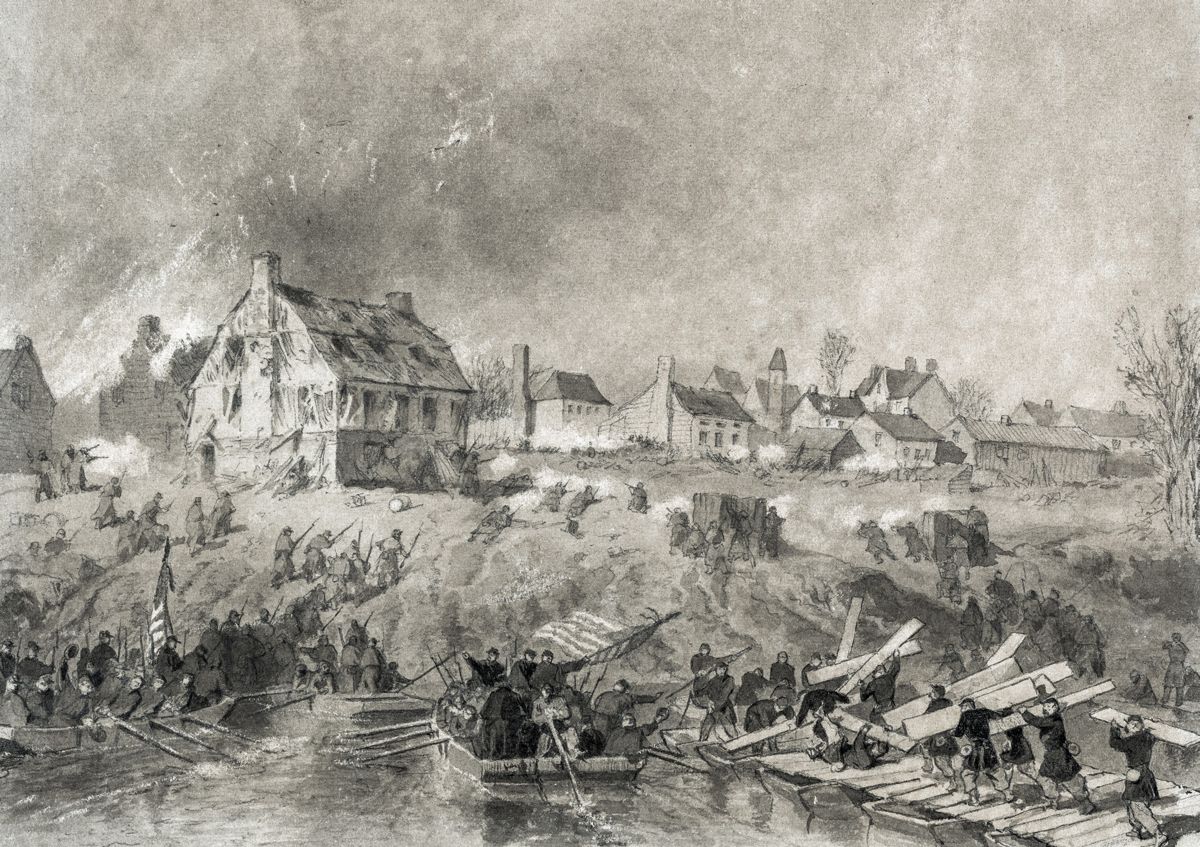
Writing to his father on December 15, 1862, Lt. Ropes explained that on December 11, during the street fighting, he received “a pretty severe blow from a spent ball in the groin and narrowly escaped a very serious injury. For some moments I was stunned, but nothing remains but a black and blue spot and a little stiffness of the limb. I also got a bullet through my coat… .” In the battle on December 13, Ropes had not less than four near misses. He noted that one ball went “through my coat collar just twitching my whiskers, one through my hat, one which passed just over my shoulder and through my blanket, which I had strapped on top of the knapsack … and one on the other side which cut off one of the small straps.” If that was not enough, Ropes found himself “several times covered with mud and dirt thrown up by shot and shell.” He was amazed he survived unscathed. “Altogether I do not see how I escaped. The fire was perfectly terrific, every inch of ground seemed to be struck,” he wrote. Opposing the Federals on the north end of the battlefield, Capt. Henry A. Chambers, 49th North Carolina Infantry, penned in his diary on the day of the battle about his near miss. After taking a position near present-day Hanover Park, he explained, “Here we lay all day, the shells and rifle balls passing over us in showers. A ball struck me on the left side as I was stepping out in rear of the regiment, hitting some maps in my breast pocket and glancing. It then passed through the sleeves of my overcoat, under-coat and shirt but nowhere striking my flesh.” Some Civil War soldiers could find a bit of humor in almost any situation. Pvt. David Holt, 16th Mississippi Infantry, recalled a close call incident during the battle involving his comrade, Pvt. John Stockett. Serving in Gen. William S. Featherston’s brigade, Holt and Stockett hugged the ground. Holt remembered: “During the day [Stockett] took a piece of bread from his haversack and raised up to eat, and just at that moment a bullet flicked the bread out of his hand without touching him.” An astonished Stockett exclaimed, “Well, I call that a lowdown Yankee trick. If that fellow wanted my bread, he ought to have been more polite and come and asked for it. I believe they want to starve us out as that was the last piece of bread I had.” Soldiers often noted the sounds of bullets and shells in their correspondence. On December 15, with the battle’s cacophony still fresh in his mind, the 55th New York Infantry’s Col. Régis de Trobriand wrote: “My dear Lina, one more time I have come out of a battle which had devilishly laid out many others. Not a scratch! Although the enemy skirmishers have made the balls whistle near my ears, not to mention the bombs and the cannonballs, which is the dreadful music of the Devil, during the all afternoon the day before yesterday.” Six days later he shared a close call incident with Lina that happened in the battle: “One of my lieutenants received a shell fragment in his chest at two steps from me. If he had not received it, the shot would have been for me. Fortunately, he just received a severe bruise and is not in danger.” Illustrating the sometimes random nature of injury, some soldiers who thought they had survived unhurt after a near miss were later truly wounded. The day after the Battle of Fredericksburg, the 15th New Jersey Infantry’s Pvt. Joseph Baker wrote to a friend detailing the casualties in his company. Although not wounded himself, Pvt. Baker stated that “I had a bullet shot right through my blanket, which was strapped on my back. It was pretty close I tell you.” Pvt. Baker’s good luck on the battlefield unfortunately ended a few months later at Salem Church on May 3, 1863, where he received a mortal wound. Also fighting on the south end of the battlefield, the 45th Georgia’s Sgt. Marion Hill Fitzpatrick explained to his wife Amanda two close calls in his December 15, 1862, letter. “About a dozen balls one after another whistled close by me. I had my blankets folded in a narrow belt tied together at the ends and had them across my shoulders as is usual for soldiers to carry them. I was lying rather on my side with the fold of the blankets against my head. A ball struck the blankets right against my head but did not go clear through the blankets and did not hurt me,” he wrote. A few moments later another spent bullet struck Fitzpatrick “on the left side on the lower part of my ribs which knocked me nearly senseless. I have never had any thing to hurt quite so bad before. I jumped up and halloed that I was wounded,” he wrote. Helped to a nearby field hospital, rest seemed to revive Fitzpatrick. He explained that “It is strange to me how a ball can shock a man in that way, but I do not wish to gain any more knowledge about it from experience.” Fitzpatrick credited his overcoat and military coat for the protection as “the ball did not enter them atall.” Ricocheting bullets and shells were likely to do just about anything. Capt. Francis Donaldson, 118th Pennsylvania, noted in his journal on December 13 that “Some of the shells that struck near us performed many curious tricks. One, in particular, appeared to have come obliquely into the middle of the hard street, ricocheted, striking the front of a house up which it ran, tearing off a window shutter, then flew over to the other side of the way, striking the house opposite, and then down again into the street just missing my company, and then into the house it had first struck, coming to a stand near the steps and not exploding, a fact I am happy to record of nearly all the shells thrown at us here.” Near the canal, where “The tempest of shot was fearful,” Donaldson saw Pvt. John Mensing of his company endure a “curious accident.” As Mensing “ran forward with his musket aport, a shell struck and shivered it to pieces, but beyond a severe cut on the right hand, he was otherwise unhurt.” Another bizarre incident happened on December 14 among Berdan’s Sharpshooters. While lying prone on skirmish duty, a Confederate cannon lobbed a number of shells, each striking closer than the last. Finally, “There was another flash, and in due time the shot came. It tore the knapsack from the back of a man named George A. Clay … sending the man’s clothing, etc., 20 feet in the air, and a pack of envelopes in the knapsack was thrown 70 feet high and distributed in so peculiar manner as to attract the attention of thousands of troops. The shot passed under a man named Joiner, raising him about two feet, without injuring him any further than a general shaking up, passing on without doing damage.”
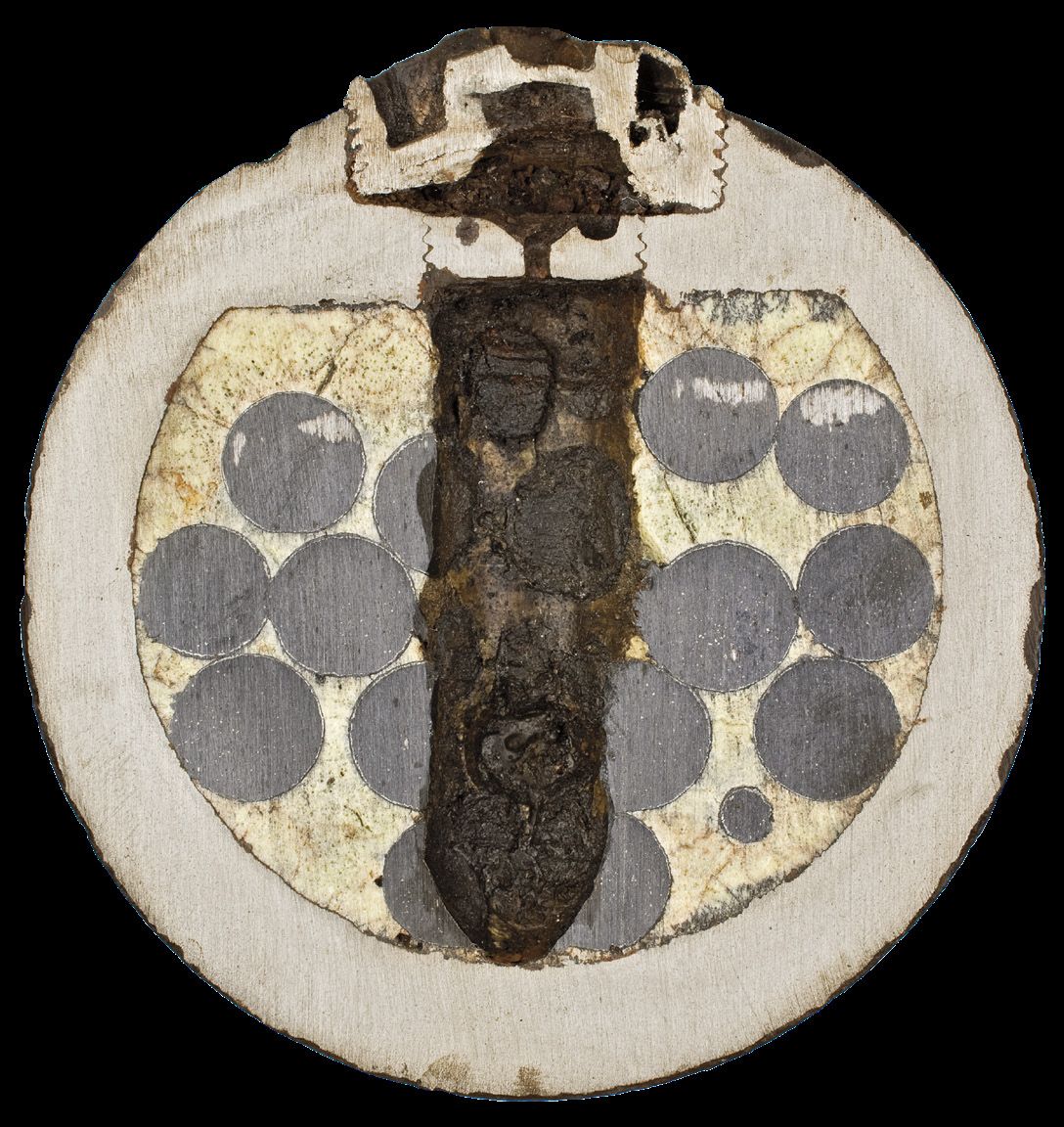
Capt. Francis A. Donaldson, 118th Pennsylvania, commented on seeing a projectile smash a soldier’s musket while the man was carrying it. (Public Domain) On the front lines, where things waxed hottest, numerous near misses happened. George McClelland, 155th Pennsylvania Infantry, wrote his sister that “Our 1st Lieutenant was wounded on one side of me and several of the boys on the other were crying for their comrades to take them off the field. It was a wonder that I escaped. I stood on my feet and took as deliberate aim as I could. They shot a piece of my gun away, a splinter taking me on the leg doing no damage.” On the Slaughter Pen Farm portion of the battlefield, Pvt. Gordon Bradwell, 31st Georgia Infantry, remembered: “Suddenly, like a clap of thunder, I heard the report of the cannon and almost at the same time a flash and explosion in our ranks, and found myself and the comrade behind me lying prostrate ten feet in the rear, obscured from the advancing line by a cloud of smoke. Neither of us was hurt. The shell had passed between me and the colors, killing all the men and cutting a wide gap in the regiment. I snatched up my gun, lying on the ground near me and resumed my place in the ranks… .” Not far away on Prospect Hill, Capt. William T. Poague, Rockbridge (VA) Artillery, experienced a close call. While taking heavy fire from Federal batteries, Lt. Col. Lewis Coleman received a mortal wound. Col. J. Thompson Brown arrived to see about matters and as Poague brought Brown up to speed, “a piece of shell cut through my hat brim within an inch of my head, producing a sensation of much heat about my eyes and forehead.” A few seconds later it was Col. Brown’s turn for a close call when “a heavy shot struck within three feet of” him, “but he was perfectly cool and self possessed in all the fiery ordeal.” Thomas Mann of the 18th Massachusetts wrote to “friends at home” a few days after the battle explaining his ordeals. While attacking the famous Stone Wall he noted that “I was hit five or six times by spent balls[;] two bullets smashed my rifle, one of them blowing the lock completely off… . Another bullet went completely through my tin dipper and haversack, going through a chuck of salt-pork and six thicknesses of woolen bag in which the pork was wrapped, and finally penetrated my overcoat. Amid such a perfect shower of bullets it was my luck to come off with my life.” During their attack, Mann noticed a corporal “struck in such a manner as to suddenly force the breath from his body and double him into a heap on the ground.” Somehow able to examine the damages under fire, the corporal “found that a heavy bullet had passed through the tin dipper hanging to his haversack, penetrated through the contents of the haversack and flattened itself against the heavy brass fastening of his belt. The haversack had worked its way from the side where it belonged, to the front, and thus received the whole impact of the lead.”
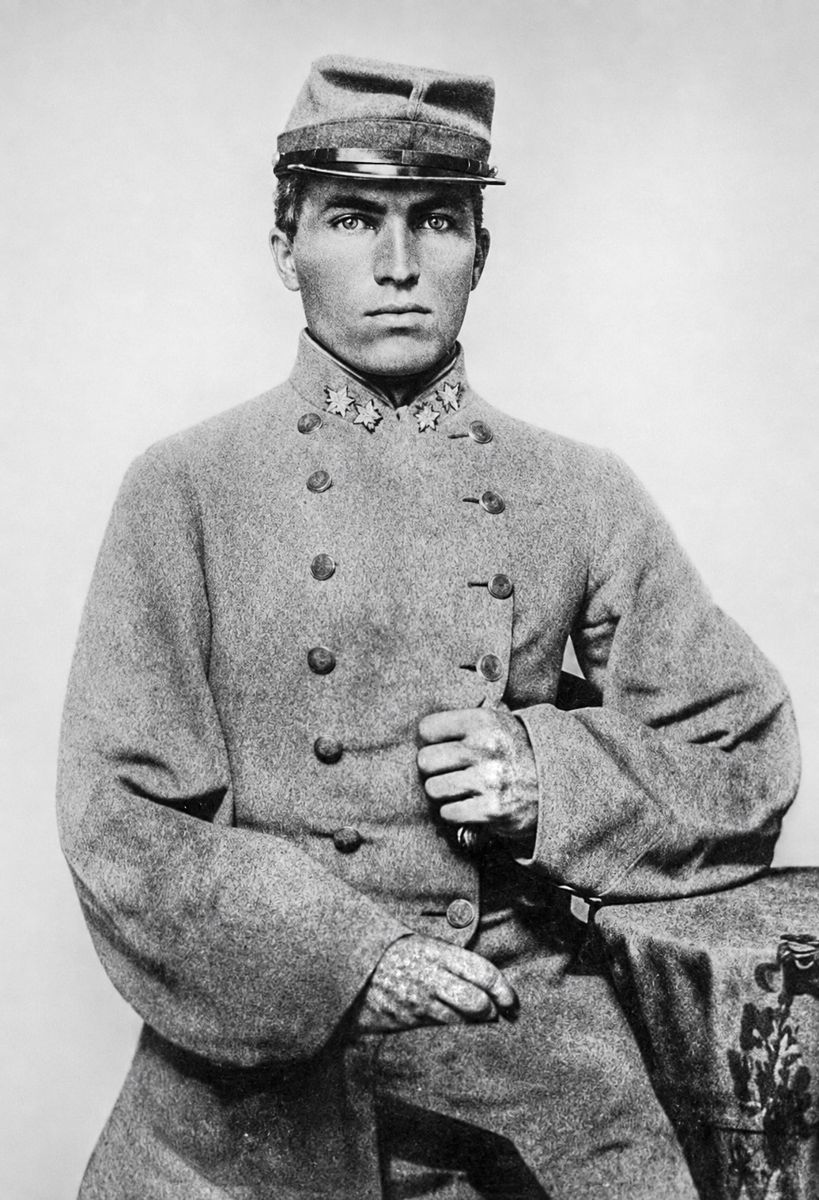
The Chancellorsville Campaign Whether fighting at Chancellorsville proper, Second Fredericksburg, Salem Church, or at the Rappahannock River fords, situations were rife for close calls, near misses, and spent bullet encounters. Near misses made for vivid recollections. Lt. Col. William H. Stewart, 61st Virginia Infantry (Mahone’s Brigade), remembered that during the fighting on May 1, 1863, “a bullet struck my field glasses in the side pocket of my coat, breaking both my [lenses] in one barrel, making a hole through my coat, and passing on, under my arm, fortunately leaving only a slight bruise on my side.” Amazingly, Stewart noted, “This scene thrilled my very soul even in the midst of battle, when bullets were flying like hail… .” When possible, some soldiers kept their lead and iron near miss and spent bullet antagonists as souvenirs. Capt. Charles Mattocks of the 17th Maine noted in his journal on May 3, 1863, that “We had not been there long before were opened upon us one or two batteries and a goodly number of screeching muskets. This was at 4 o’clock and was kept up from time to time in the night. A spent bullet struck between my legs on the ground as I lay on my face and I picked it up and still retain it as a trophy.” The 5th Alabama’s Pvt. Samuel Pickens wrote in his diary on May 1, 1863, that “In eveng. Yanks. threw shell over it & 1 burst just in front of [our works] & piece passd. very near Knowland’s head & struck in bank wh. K. got & showed us.” The 2nd Rhode Island Infantry’s Elisha Hunt Rhodes penned in his diary about the May 3 fighting at Second Fredericksburg: “A Case shot burst in front of my company throwing a shower of iron about us. One iron bullet struck me upon my foot causing me to jump into the air, but only lamed me a little. I picked up the iron bullet and put it into my pocket and will send it home.” The particularly brutal fighting at Chancellorsville on the morning of Sunday, May 3, generated a number of close calls. Sgt. Richard W. Musgrove, 12th New Hampshire, remembered that, while retreating from their forward position that day after exhausting their ammunition, “One of my comrades who was running at my right—I did not know who—fell with a piercing cry of pain and terror. About the same time, a ball struck the stock of my musket and knocked it from my hand, numbing my fingers. I kept on without waiting to pick up my musket.” Sgt. Micajah D. Martin, 2nd Georgia Battalion, wrote a letter to his parents that was printed in the Atlanta Southern Confederacy newspaper on May 8, 1863. Martin explained: “Although I was not hit, I was very near it. I believe that I mentioned about having two haversacks on; a shell whistled by me, cutting them both off. It carried one of them at least forty feet behind me, while my biscuits, bacon and sugar scattered around promiscuously. Several of the boys were struck by the biscuits, and more than one thought he was wounded. I had to rely on the generosity of my friends for the next two days for something to eat. The shell deadened my side for about two hours, and hurt me some for two or three days, but it does not pain me now. It was a narrow escape, and I felt thankful that my life was spared.” Carrying the flag was both a position of honor and danger. Writing to his wife, Col. Francis Marion Parker, 30th North Carolina, verified this by explaining that he saw “the colour bearer of one of our Regts. lying cold, the top of his flag staff shot away, but the gallant fellow was grasping the part which was left, with both hands.” After pointing the dead man out to his own regiment’s color bearer, Parker’s flag bearer “too was shot down, and has since had a leg amputated.” Immediately, “A second man took the flag, he too was struck down; but not killed; the third one bore it safely through the remainder of the day, but ran a narrow risk, he had a ball put through the top of his hat.” Officers were not immune to close calls. Confederate Brig. Gen. William Dorsey Pender wrote to his wife on May 7 and explained: “I was hit the next day [Monday, May 4] while standing behind entrenchments in a miserable skirmish, but it is only a very slight bruise by a spent ball which killed a fine young officer standing in front of me. It is on the right arm near the shoulder.” The 121st New York Infantry’s Capt. John S. Kidder’s experience was common to line officers. He wrote to his wife on May 4: “It is with a sad heart I pen you a few lines having been through a most terrible battle and lost many of my men although I have come out unharmed. [I] had my pistol shot off my belt which I lost and [I had] one bullet [pass] through my blanket and one through my pants just above my foot.” Some soldiers interpreted their near misses as a result of spiritual protection. In a letter to his parents on May 5, 1863, Sgt. William Remmel, 121st New York Infantry, expressed his good fortune in escaping the Battle of Salem Church two days earlier: “I did not get a mark, but the bullets whistled pretty close around my head. I expected every minute to be hit, but kind Providence saved me. 8 officers out of 20 were either killed or wounded. 3 of them we know are dead.” Lt. William Henry Martin, 4th Vermont Infantry, wrote a letter to his brother on May 5 discussing the defense at Banks’s Ford the day before: “Our Regt lost no officers. I was hit by a spent ball in the calf of the leg. I was never in so hot a place & how a man escaped it is a miracle.” One can see from these accounts that soldiers expressed a variety of thoughts about their experiences with close calls, near misses, and spent bullets. Some laughed off their brushes with serious injury or possibly even death. Others wondered how more men were not hit. Still others found comfort in viewing their narrow escapes as a result of God’s protective hand. Regardless of soldiers’ diverse responses, enough evidence survives to show that these incidents were probably quite common for combat soldiers. Their numerous mentions also obviously show that the casualty figures at Fredericksburg and during the Chancellorsville Campaign could have been much higher than they were had it not been for a mere matter of inches.
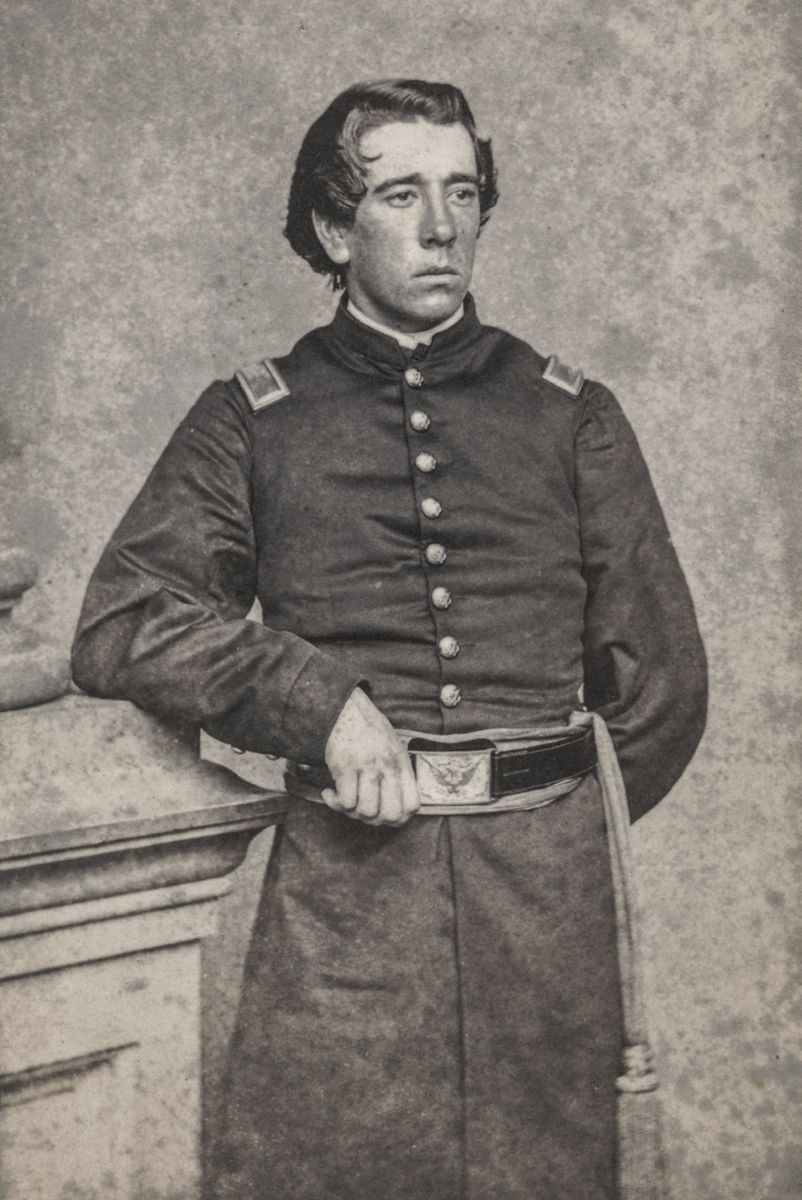
Tim Talbott is the Chief Administrative Officer with the Central Virginia Battlefields Trust. The mission of CVBT is to preserve land associated with the four major campaigns of: Fredericksburg, Chancellorsville, Mine Run, and the Overland Campaign, including the Wilderness, and Spotsylvania Court House. To learn more about this grassroots preservation non-profit, which has saved over 2,000 acres of hallowed ground, please visit: www.cvbt.org.