
The Unfinished Fight
Black Powder
By Craig L. Barry · Originally published November-December 2026 · pp. 18–21
Black powder is an ancient propellant pretty much unchanged in formula from the tenth century until now. It is formed from a blend of three separate components: sulfur, potassium nitrate, and charcoal. Black powder is considered a deflagrating or fast-burning propellant, but it is terribly inefficient. The fuel burned is carbon, and only about 50% of its mass converts to gas. The remainder goes out the muzzle as white smoke or remains in the bore as corrosive fouling. The standard chemical composition of black powder is 75% potassium nitrate, 15% charcoal, and 10% sulfur. The actual burn rate of black powder is controlled by the grain size expressed as a factor of coarseness using multiples of the letter “F” followed by a lowercase “g.” For example, FFFg is less coarse than FFg and thus easier to ignite. FFFg is primarily used for small-bore muzzleloaders below 45 caliber and handguns, while FFg is typically the standard load for muzzleloaders larger than 50 caliber. The coarsest grade is labeled Fg, which is made specifically for artillery use. There is a tendency within the black powder historic weapons community to seek the lowest short-run cost alternative for items that are believed to be generic in nature or are commodities. What about the black powder we load down into the muzzle? Is black powder a generic product or is there a quality difference there? Is there a best alternative or at least some types to avoid? Black powder does vary in quality due to variation in composition, the quality of ingredients such as charcoal, and the consistency of grain size. Are there some recommendations that can be made? So, in the interest of answering some of these questions, I bought five pounds of “reenactor grade” Schuetzen black powder to try. That’s enough for about 500 cartridges, at least the way I roll them. Over the course of firing that many, some statistically relevant observations can be shared. My decision was made easier because it was the only black powder available at the time of purchase. My usual go-to order is Schuetzen FFg or GOEX FFg. I consider both to be quality products and, packaging aside, pretty much identical for purposes of firing blank rounds. The reenactor grade is advertised as a combination of everything from FFFFg, which is flintlock priming powder, to Fg cannon powder in varying amounts in the same can. The idea is that, for blank cartridges, it will work fine as long as it ignites. So the first observation is that some cans contained mostly coarser-grade powder, while one or two others contained mostly finer granulations. There was a general lack of consistency from one can to another, and none seemed to be a true mixture of all four grades. Perhaps that is to be expected; however, the coarser grade reminded me of large-granulation Chinese fireworks lifting-charge powder that was sold here about 20 years ago under the brand name Lidu or Dragon. You might think that since the Chinese invented black powder, they would make the best, but that presumption is incorrect. Let me hasten to add that this reenactor-grade powder is not made in China, but it’s similar in that it will go BANG but leaves behind significantly more fouling crud. The charge can be seen in photographs still burning as it comes out of the muzzle. In addition to that, a greasy residue was noted that literally gets on everything. Cleanup is much more of an ordeal. The cost is several dollars per pound less when purchased by the case. In conclusion, you get what you pay for. It is not recommended for live fire at all, and it is marginally acceptable for blank rounds with the understanding that you will have a bigger mess to deal with after using it.
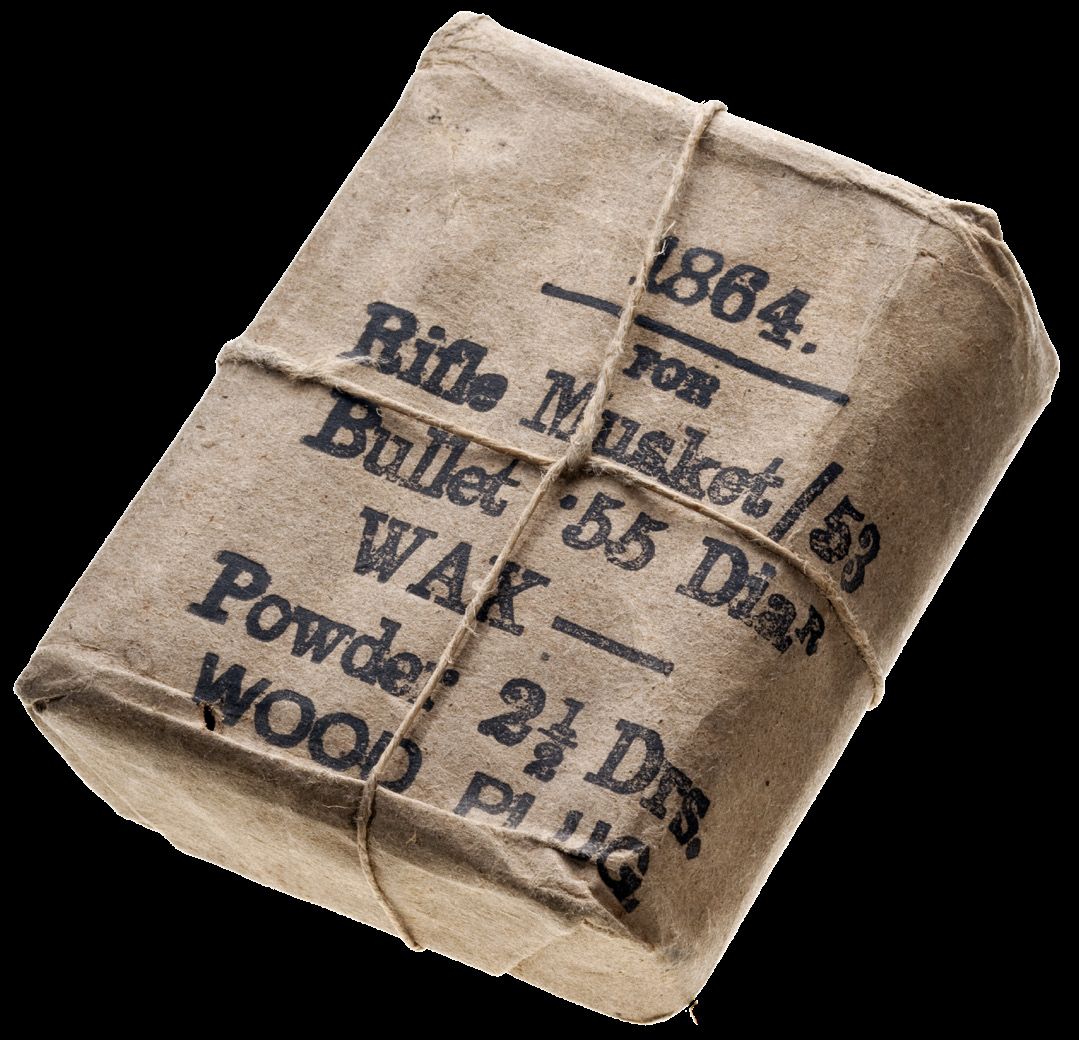
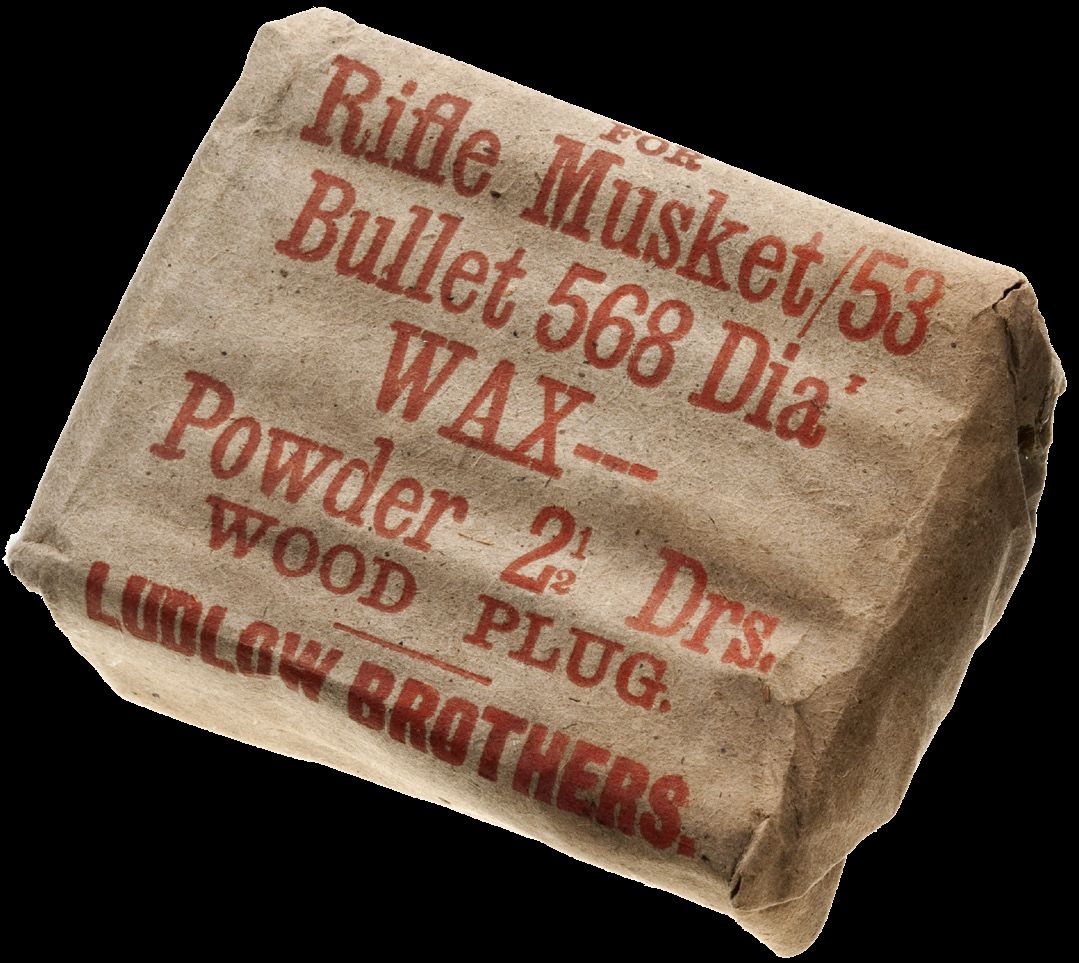
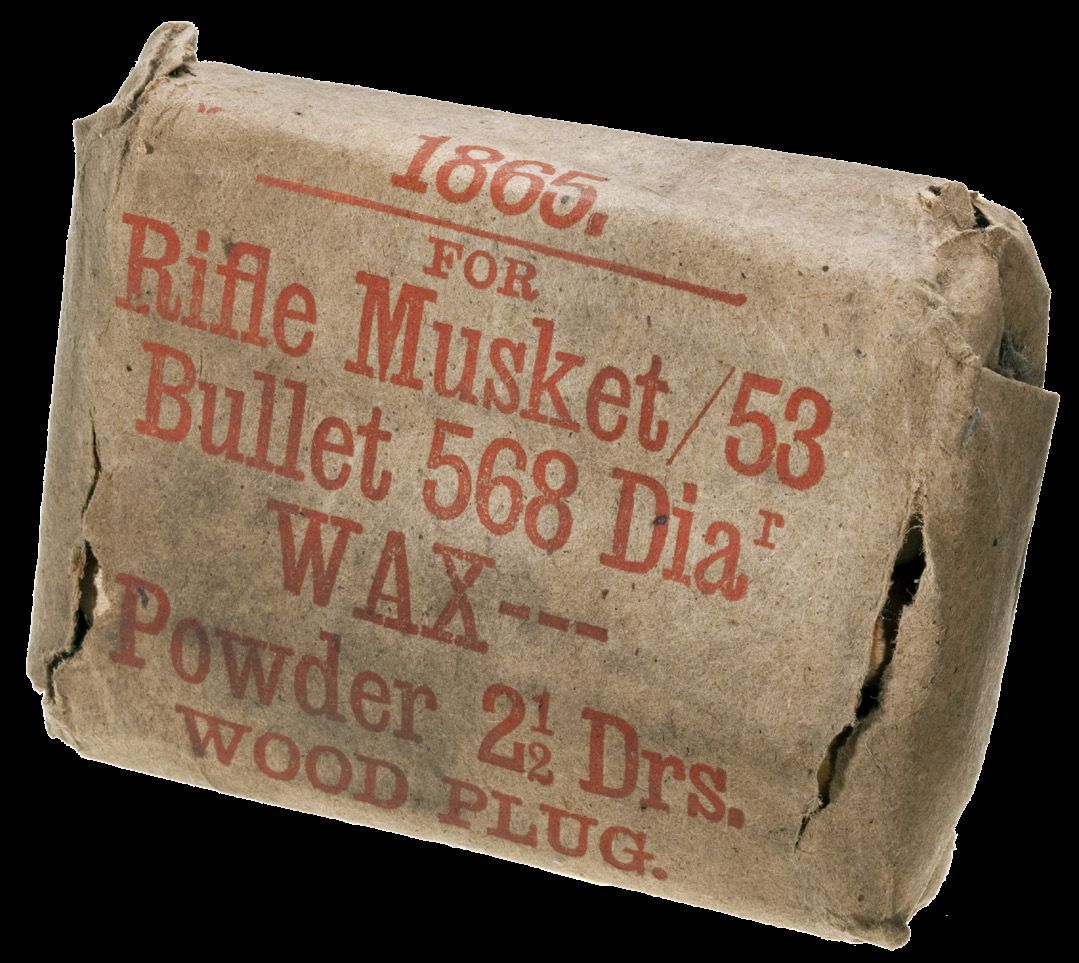
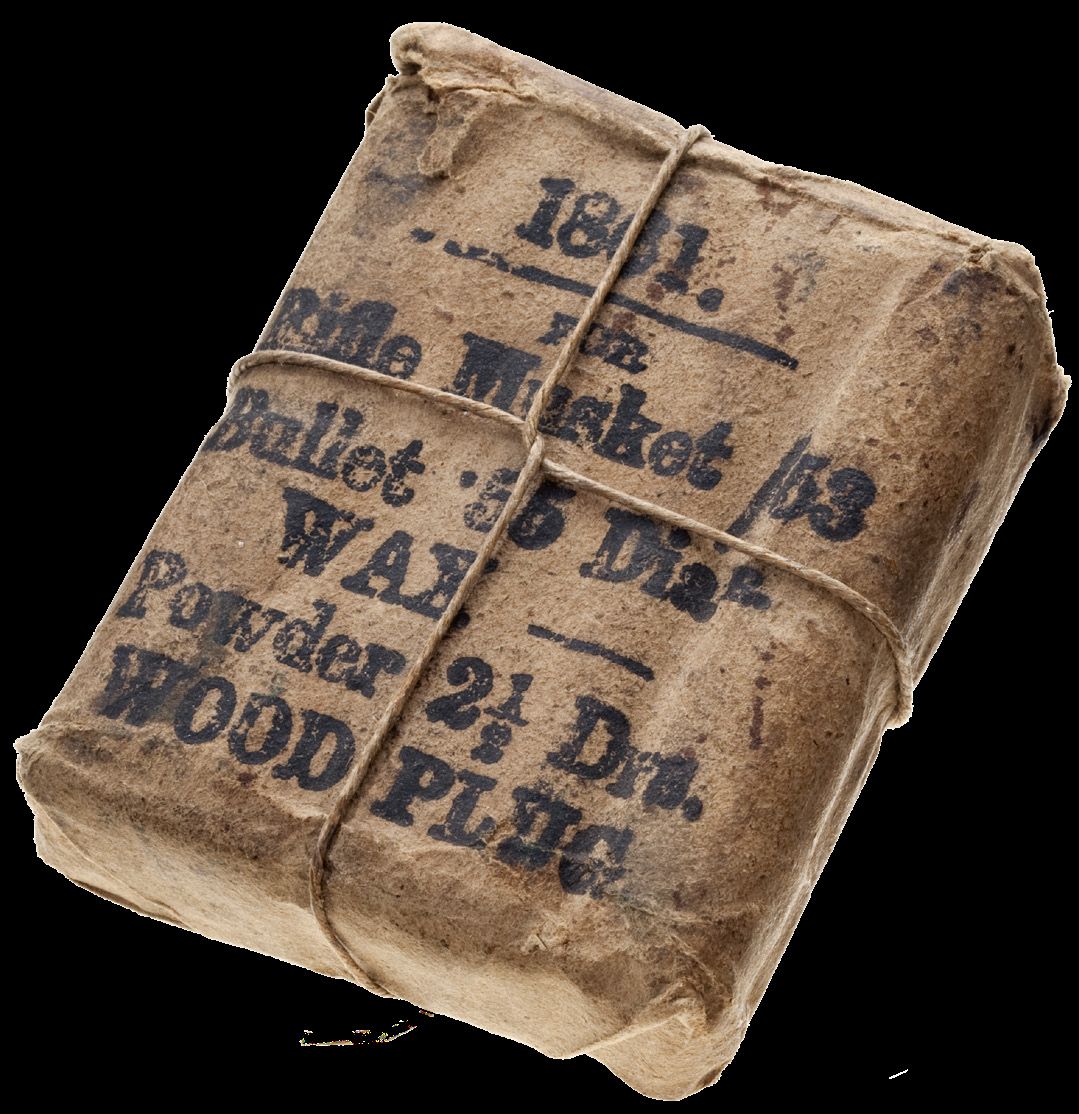
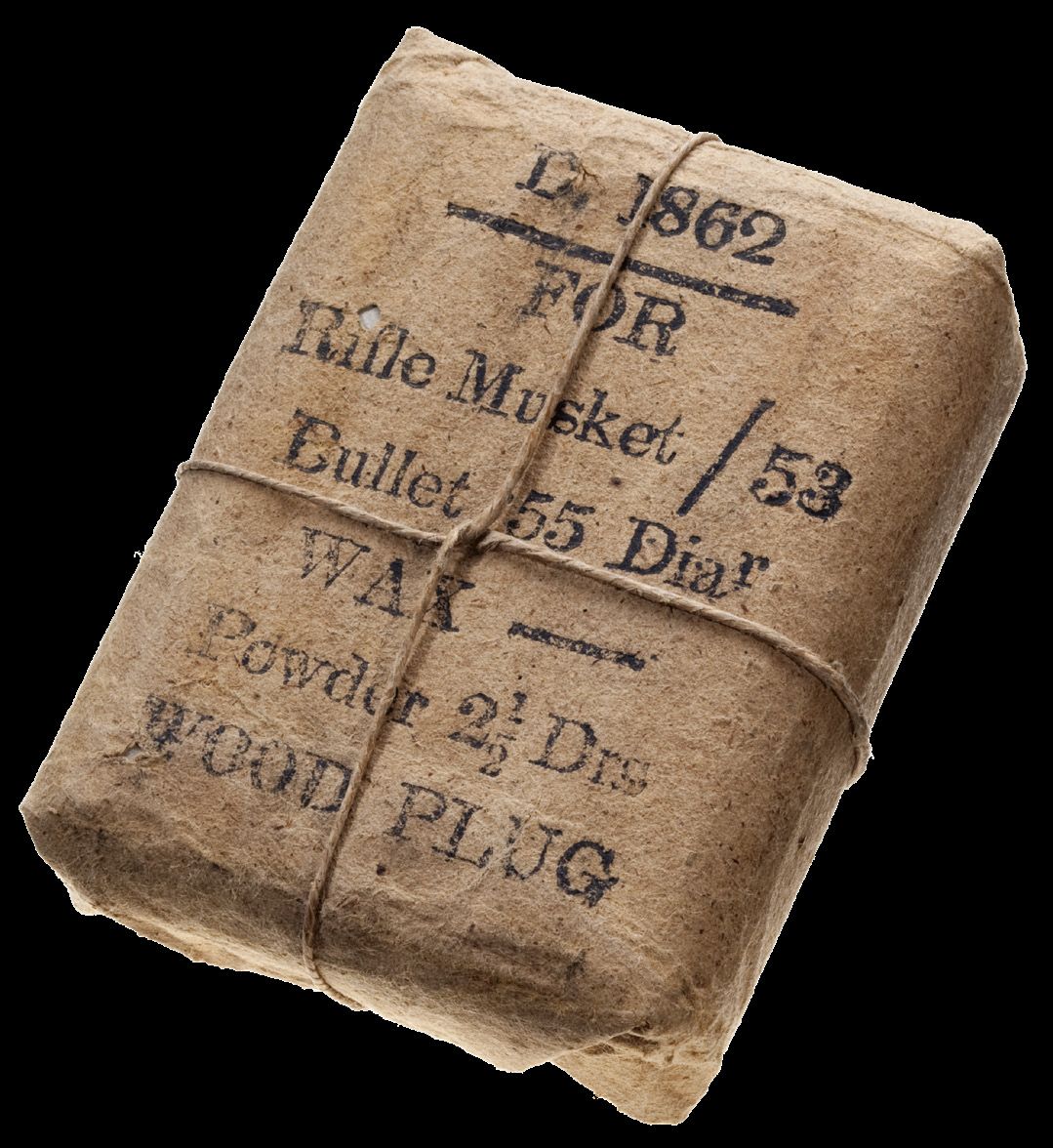
In Civil War-era ammunition packaging, “2 ½ Drs.” means 2 ½ drams. This is a pre-measured weight description for the black powder charge inside a paper cartridge. One dram equals approximately 27.34 grains, meaning 2 ½ drams equals roughly 68.35 grains of black powder. These are original packaging for English imported Civil War ammunition. (C.A. Huey Collection)
Excavated US .58 caliber 3-ring Minié ball.
Left: US .58 caliber 3-ring Minié ball wrapped inside a paper cartridge that contains a black powder charge.
English paper cartridge with .577 Enfield bullet and black powder charge. Manufactured by Eley Brothers, London. (C.A. Huey Collection)
Craig L. Barry was born in Charlottesville, Va. He holds his BA and Masters degrees from UNC (Charlotte). He is the author of several books including The Civil War Musket: A Handbook for Historical Accuracy (2006, 2011), The Unfinished Fight: Essays on Confederate Material Culture Vol. I and II (2012, 2013). He has also published four books in the Suppliers to the Confederacy series on English Arms & Accoutrements, Quartermaster stores and other European imports.