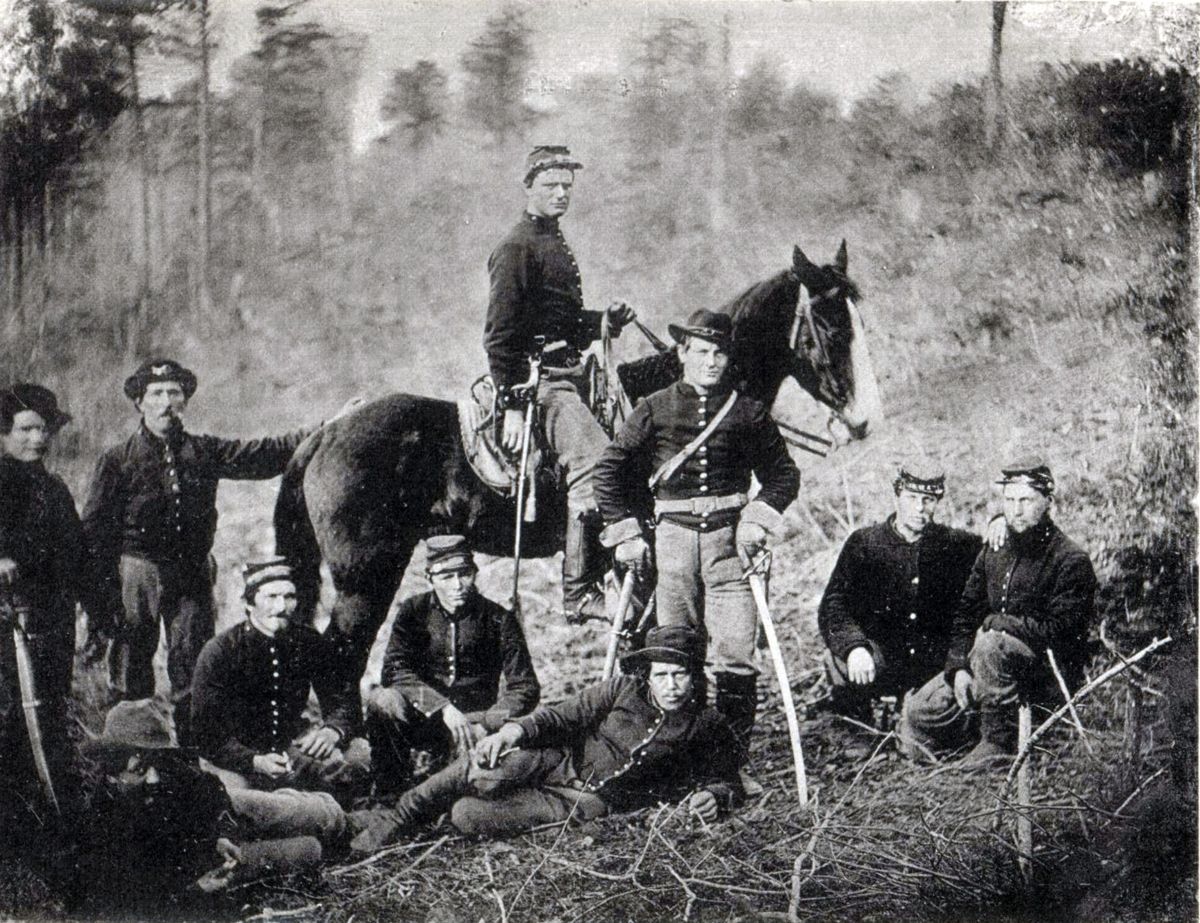
A Close Call Good Enough to Bring Home: Charles L. Warner, Company A, 10th New York Cavalry, and His Spencer Carbine, 1864–1865
By Mark Bingham · Originally published November-December 2026 · pp. 22–27
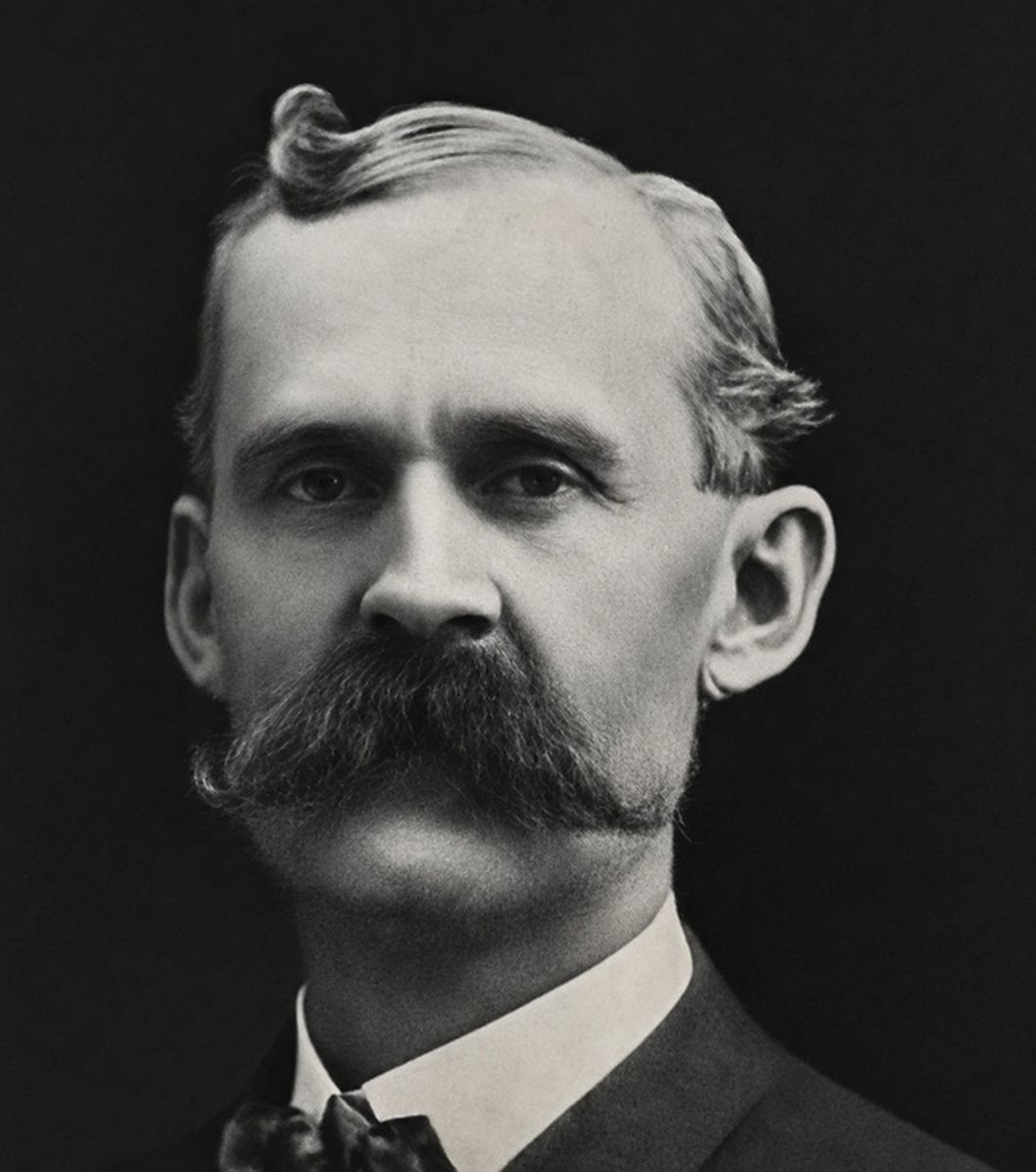
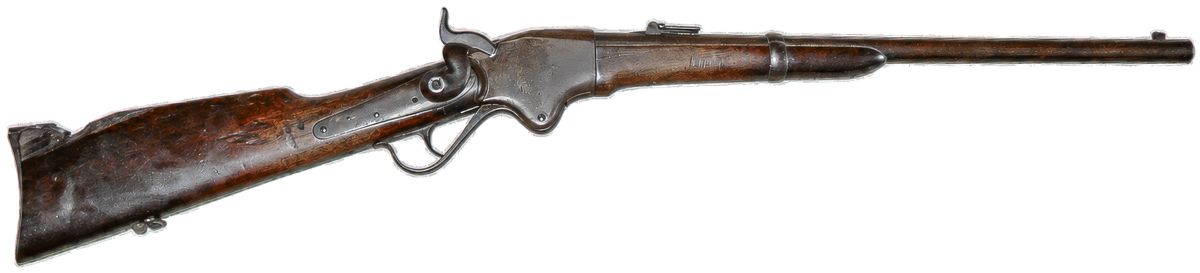
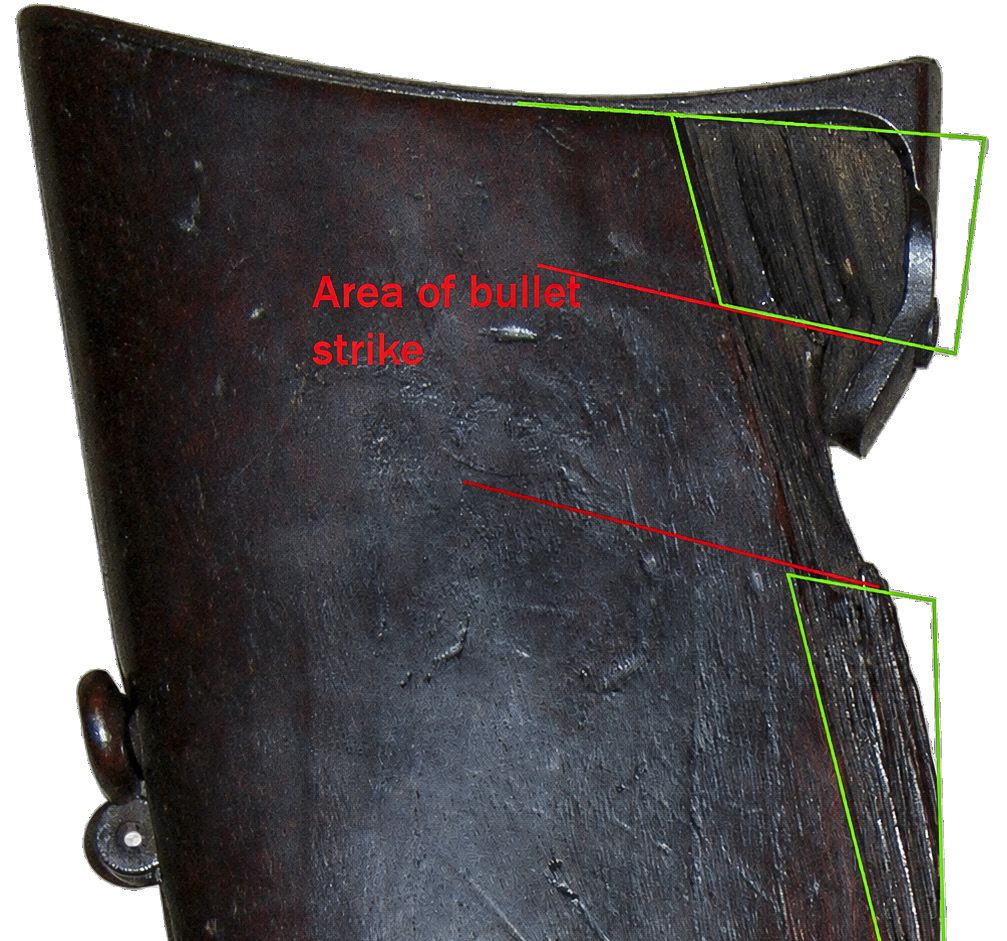
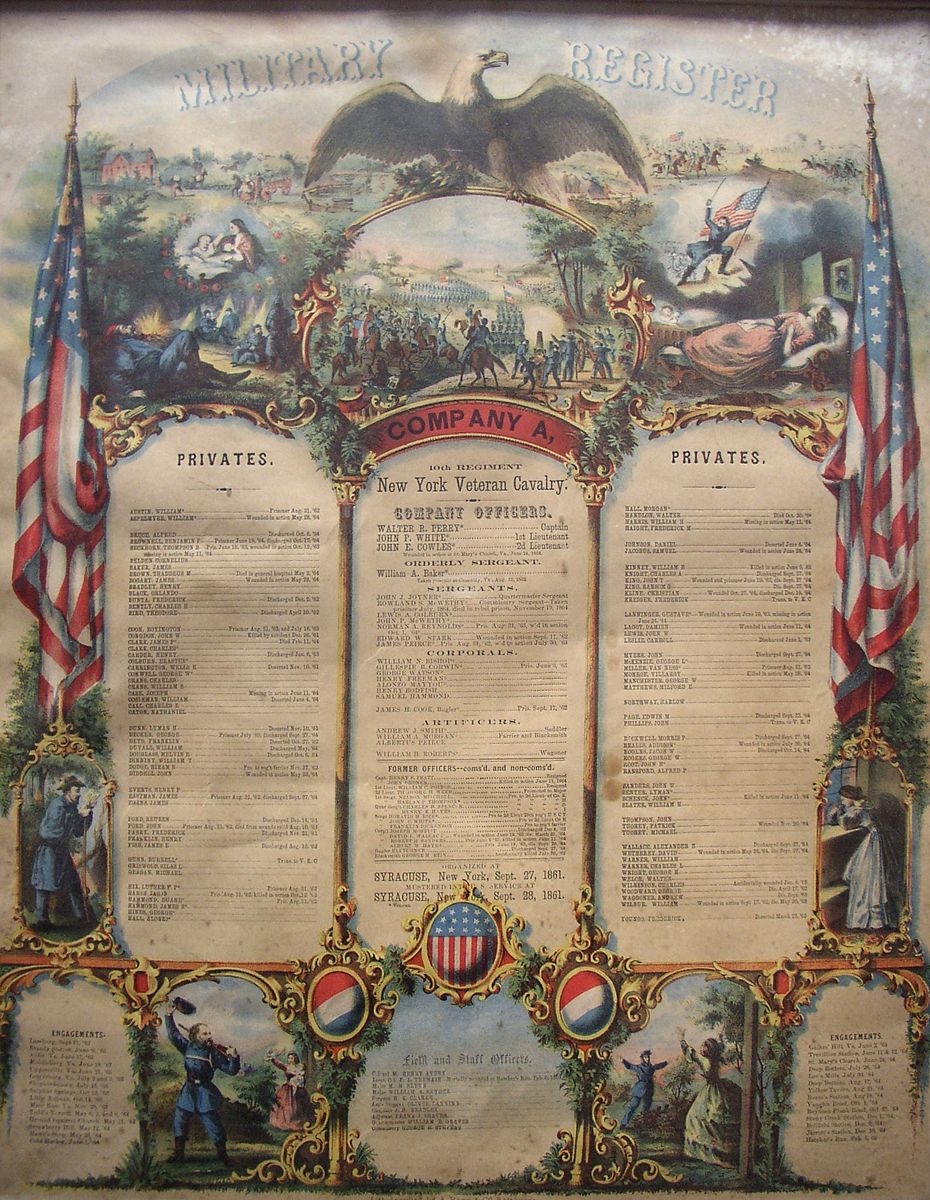
On a cold afternoon in early March 1864, a squad of 88 recruits arrived at the camp of the 10th New York Volunteer Cavalry along Turkey Run, a small stream just south of Warrenton, Virginia. Among the new recruits was Charles L. Warner, an 18-year-old who stood 5 feet 4 ½ inches tall and had black hair.1 Warner had watched the first three years of war pass while reading of places such as Brandy Station, Kelly’s Ford, Middleburg, and Gettysburg. His chance to serve came in February 1864, when Captain Henry S. Pratt of the 10th New York Cavalry returned to New York on a 30day recruiting furlough intended to fill ranks depleted by combat and disease. Pratt brought an appealing proposition: a state bounty for enlisting and the opportunity to join the cavalry rather than march with an infantry regiment. Warner was among the recruits he secured. The new soldiers first reported to the rendezvous at Elmira Barracks and, under Lieutenant H. E. Hayes, traveled by rail through New York City toward Warrenton, Virginia. The recruits reached Warrenton on the morning of March 6, 1864. While the regiment’s reenlisted veterans marched the few miles from the depot to their winter camp along Turkey Run, the 88 recruits remained in town until the following evening before joining the regiment and beginning to acquaint themselves with army life. Their winter quarters were small log huts, some partly dug into the hillside and roofed with buttoned shelter-tent halves. Fireplaces were fashioned from sticks, mud, and whatever serviceable material could be found. Crude by civilian standards, the huts could nevertheless be made reasonably comfortable. Warner’s first night in such quarters must have been memorable, particularly if his bed consisted of pine boughs laid across poles. One month later, the Army of the Potomac’s Cavalry Corps reported 15,209 enlisted men and 616 officers fit for duty. Turkey Run was only one part of a sprawling military landscape of log huts, muddy tracks, horses, wagons, and thousands of men waiting for the spring campaign.2 Warner did not have long to grow accustomed to winter camp. Major General Philip H. Sheridan assumed command of the Cavalry Corps in April, and a corps review was held near Warrenton on April 18. Eleven days later, the 10th New York moved toward Paoli Mills near Brandy Station. For the regiment’s veterans, campaign life was familiar, and many were eager to fight the war to its conclusion. Private Manning Austin wrote home, “I say let them come the sooner we fight it out the sooner we can come home.” For new recruits such as Warner, however, the first weeks in the field could be punishing. Virginia mud clung to clothing, horses, and wagons; when the roads dried, dust penetrated nearly everything. On May 2, a windstorm flattened tents and toppled trees before rain swept through the camp. Army life clearly would not be easy.3 In May, the regiment joined what became Lieutenant General Ulysses S. Grant’s Overland Campaign. At Todd’s Tavern on May 7-8, 1864, Warner and the other recent recruits experienced their first hard combat with the regiment.4 The campaign also brought a notable change in armament for at least some of the men: the Spencer carbine. Ordnance returns show that the regiment had carried primarily Smith carbines since 1862, along with smaller numbers of Burnside and Sharps carbines. Although the surviving returns through September 30, 1864, do not list Spencers, other evidence indicates that at least some men had them by the fall of 1863. Elias Evans of Company D remembered carrying repeaters. William J. Bolton of Warner’s Company A later recalled the fighting at Sailor’s Creek: “The line started as one man over the breastworks and after them with our Spencers, cheering all the time.” Lieutenant Colonel Frederick Tremain also was preparing a manual of arms for the Spencer at the time of his death in February 1865.5 The Spencer was a revolutionary arm for its time. Patented in 1860 by Christopher M. Spencer, a former employee of Colt’s Patent Fire Arms Manufacturing Company, the carbine was well suited to cavalry service. Its lever action permitted a trooper to fire seven shots before reloading the magazine tube housed in the buttstock. A cartridge could also be placed in the chamber before a full magazine was inserted, giving the weapon a potential eighth shot. The men commonly called the Spencers “seven-shooters.” The carbine fired a .56-56 Spencer rimfire cartridge with a metallic case. To operate the weapon, the trooper cocked the hammer, lowered the operating lever to eject the fired case, and raised the lever to feed a fresh cartridge into the chamber. Pulling the trigger released the hammer, which drove the firing pin against the cartridge rim and ignited the priming compound. In trained hands, a Spencer could deliver approximately 14 to 21 rounds per minute, compared with about 3 rounds per minute from a muzzle-loading rifle musket.6 Warner’s Spencer carbine was probably the most advanced weapon he had ever handled. When mounted, a cavalryman carried his carbine on a sling passing over his left shoulder, with the carbine’s sling ring attached to the snap hook. The muzzle could be placed in a leather carbine socket on the right side of the saddle to steady the weapon at a trot, gallop, or run. Viewed from the side, the carbine appeared to stand on its muzzle with the trigger guard to the rear. It could be brought into action within seconds, although troopers knew their aim was better on foot, and much cavalry combat by this stage of the war was fought dismounted. At close quarters on horseback, the revolver or saber was generally preferred. The revolver offered six rapid shots but limited practical accuracy from a moving horse. The saber was an intimidating weapon, yet it was of little use against steady infantry behind substantial earthworks. Against troops who were already disorganized or demoralized, however, mounted cavalry armed with sabers could turn retreat into rout. Warner’s Spencer survived the war and eventually appeared in a Gettysburg relic shop with several of his other possessions and a label stating that the carbine had been damaged by a bullet strike. The visible damage is dramatic: a substantial section of the left side of the stock is missing, and the buttplate tang is bent into the walnut. The pattern is consistent with a severe impact, although the surviving damage alone cannot establish when, where, or precisely how it occurred. One possible explanation fits the circumstantial physical evidence and occurred late enough in the war for Warner plausibly to have retained the damaged carbine: the Battle of Sailor’s Creek on April 6, 1865. Sailor’s Creek is certainly not the only possibility. The damage might have occurred at Stony Creek, Paine’s Crossroads, or during any number of lesser encounters. Yet Sailor’s Creek stands out because it included a largescale mounted saber charge against entrenched Confederate infantry, an action in which the carbine could have been carried muzzle down at Warner’s right side. The physical evidence appears consistent with an object striking the carbine from the front while it was in that position, but the proposition remains circumstantial. By April 1865, Warner had gained considerable experience as a cavalryman. In roughly 13 months of service, he had participated in a demanding succession of campaigns and engagements that included Todd’s Tavern, Cold Harbor, Trevilian Station, Sheridan’s Richmond Raid, Saint Mary’s Church, and Hatcher’s Run. At Trevilian Station, the regiment fought dismounted against Confederates in strong positions, while the Richmond Raid tested men and horses through days of riding and fighting with little food or rest. Perhaps the most trying action was the June 24, 1864, fight at Saint Mary’s Church, where the men of the 10th New York found themselves running for their lives on foot and horseback as thousands of Confederate cavalrymen pursued them through woods and swamps, gathering up exhausted men who stumbled or fell. The chase continued for nearly 7 miles and cost the regiment 22 men. Warner survived these actions and wintered with the regiment in Prince George County, east of Petersburg, where the men performed picket duty and conducted raids against Confederate supply lines while the Army of the Potomac besieged the city.7 The events that ended the war in Virginia accelerated on April 2, 1865. Following a heavy Federal bombardment, the Union Sixth Corps broke through the Confederate defenses southwest of Petersburg shortly before dawn. Lee soon ordered Richmond and Petersburg evacuated, and the Army of Northern Virginia began retreating westward. Throughout that day, the men of the 10th New York had no idea of the breakthrough’s full consequences, but Warner had a personal reason to rejoice: he formally received his promotion to corporal. News of the fall of Petersburg and Richmond only added to his elation as celebratory shouts rang through the ranks of the men resting near Sutherland Station along the South Side Railroad. There they discussed how much longer the war might last and unsaddled their horses for the first time in nearly a week. The rest was short-lived. They spent the next two days following a Confederate army that many now sensed was nearing its end.8 The Army of Northern Virginia, however, was not yet ready to surrender. On April 6, during the series of actions known as the Battle of Sailor’s Creek, the 10th New York faced Confederate troops near Marshall’s Crossroads. Company A, commanded by Captain Walter Perry, was initially sent to guard the ammunition wagons, and its men worried that “if there was to be a circus we would be lookers-on instead of being in the ring.” While Company A remained with the wagons, Captain John J. Van Tuyl of Company K received an extraordinary assignment. With a squadron of approximately 100 men, he was ordered to test the Confederate earthworks and determine whether mounted troops could cross them. Van Tuyl later recalled, “When I considered the approach sufficiently near, I ordered a charge to the works… Not more than twenty-five of the force I started from our lines with reached the rebel works and returned with me, mounted.” His reconnaissance demonstrated that portions of the works could be crossed on horseback, though at severe cost. Sheridan’s cavalry then prepared for a larger mounted assault against troops from Lieutenant General Richard H. Anderson’s command. As the fighting intensified, Warner’s company was called forward and rejoined the regiment. Warner and his comrades had nearly missed one of the final major battles of the Appomattox Campaign but instead entered its confusion at a decisive moment.9 Believing the Confederates were exhausted and demoralized, the 10th New York and the rest of the Second Division advanced. Buglers sounded the charge, and the men galloped into Confederate fire, leaping their horses across the entrenched line. Anderson’s exhausted command, some of its men literally trampled under the horses’ hooves, came apart. If Warner’s carbine was damaged at this moment, the impact must have been tremendous. No firsthand account or surviving record, however, definitively explains the damage. The physical evidence supports a projectile strike as a plausible explanation, but no more.10 Whatever struck the carbine appears to have hit with great force while the weapon was muzzle down, as it would have been at a mounted trooper’s right side. The magazine tube inside the stock miraculously remained intact and operational, but the damage was unmistakable. On the right side of the stock, a faint trace approximately the width of a bullet is visible. The path suggests that the object deflected to the left, away from Warner, while the buttplate tang was forced downward and crushed the walnut beneath it. Whether the object was a bullet or shell fragment, and whether the strike occurred at Sailor’s Creek or elsewhere, the cavalryman carrying the carbine was extraordinarily fortunate. The carbine’s postwar history is unfortunately lost, apart from its eventual association with Warner’s 1865 discharge and a framed postwar memorial for Company A. How Warner retained the weapon also remains unknown. If Company A’s officers permitted it, he may have continued to carry the carbine because it remained functional despite the damage, or he may have purchased it before taking or sending it home. What is certain is that the scarred Spencer survives as an evocative relic of Warner’s service and of a close call worth remembering.
Related damage not caused by contact with the bullet.
Direction of bullet strike. The bullet exited the opposite side of the carbine.
Endnotes
- Noble D. Preston, History of the Tenth Regiment of Cavalry, New York State Volunteers, August 1861, to August, 1865 (New York: D. Appleton and Company, 1892). 2. Preston, History of the Tenth Regiment of Cavalry. 3. Manning Austin letter, August 1863, author’s collection. 4. Preston, History of the Tenth Regiment of Cavalry. 5. Quarterly ordnance returns, Research Arsenal, researcharsenal.com; Memorial of Frederick Lyman Tremain, Late Lieut. Col. of the 10th N.Y. Cavalry, Who Was Mortally Wounded at the Battle of Hatcher’s Run, Va., February 6th, 1865 (Albany, New York: J. Munsell, 1865), author’s collection; William J. Bolton account in the 1913 reunion publication of the Tenth New York Cavalry Veterans’ Association, author’s collection. 6. Roy M. Marcot, Spencer Repeating Firearms (Irvine, California: Northwood Heritage Press, 1983); Herbert G. Houze, Spencer Repeating Firearms (Iola, Wisconsin: Krause Publications, 1996). 7. Preston, History of the Tenth Regiment of Cavalry. 8. Preston, History of the Tenth Regiment of Cavalry. 9. Patrick A. Schroeder, “Sailor’s Creek, Battles of,” Encyclopedia Virginia, updated February 18, 2025; U.S. War Department, The War of the Rebellion: A Compilation of the Official Records of the Union and Confederate Armies, ser. 1, vol. 46, pt. 1. 10. Preston, History of the Tenth Regiment of Cavalry.
Mark Bingham lives in Portsmouth, NH, and taught high school for 18 years. He actively volunteers at several battlefields and museums, as well as having worked at the former Pamplin Historical Park in Petersburg, Virginia. His upcoming book, Cavalry to the Front!, to be published by Heritage Books within the year, is a large collection of transcribed and annotated letters and diaries of twenty-five men of the 10th New York Cavalry from 1861–1865, of which his great great grandfather George Bingham was a corporal.