
Through the Lens It Fairly Made the Earth Shake
Originally published May-June 2026 · pp. 12–15
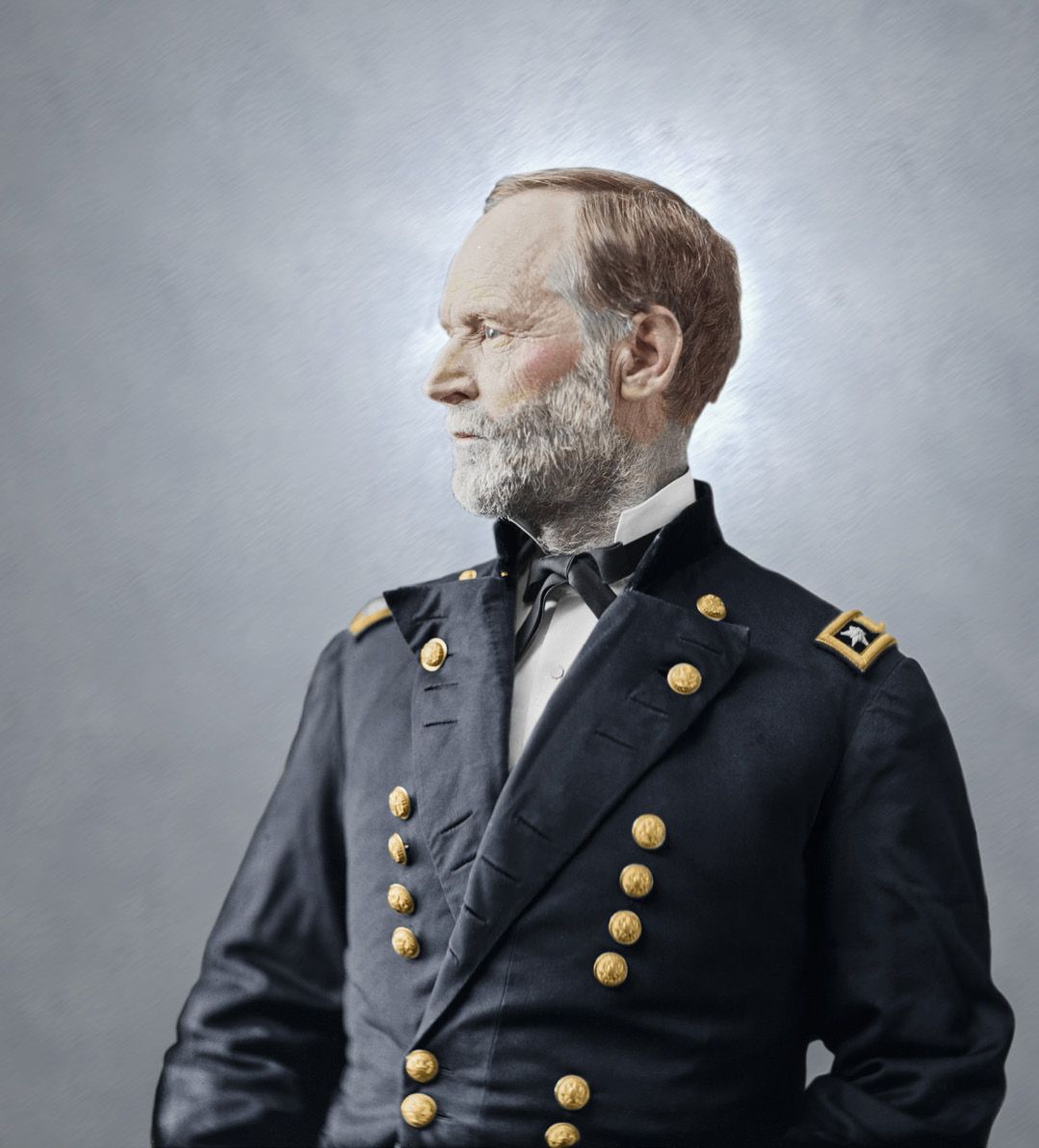
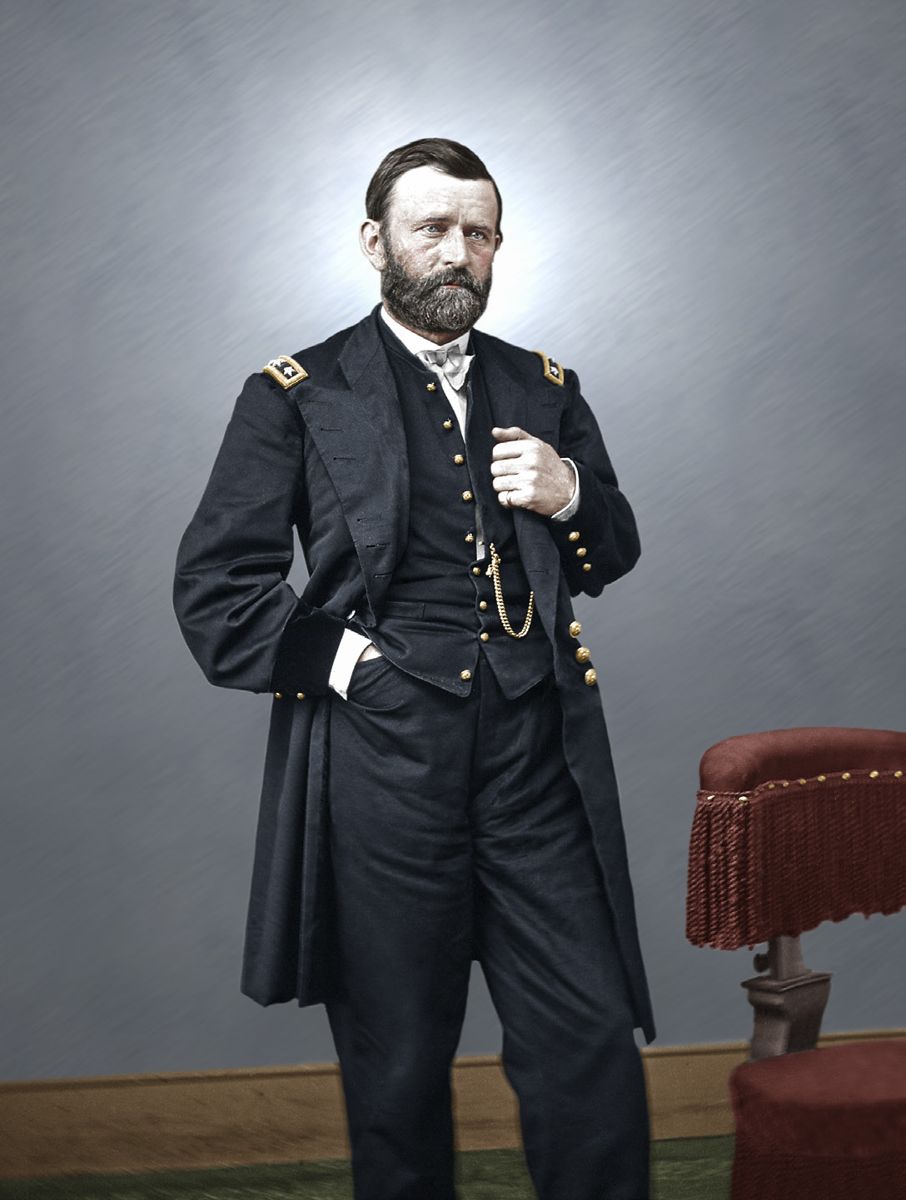
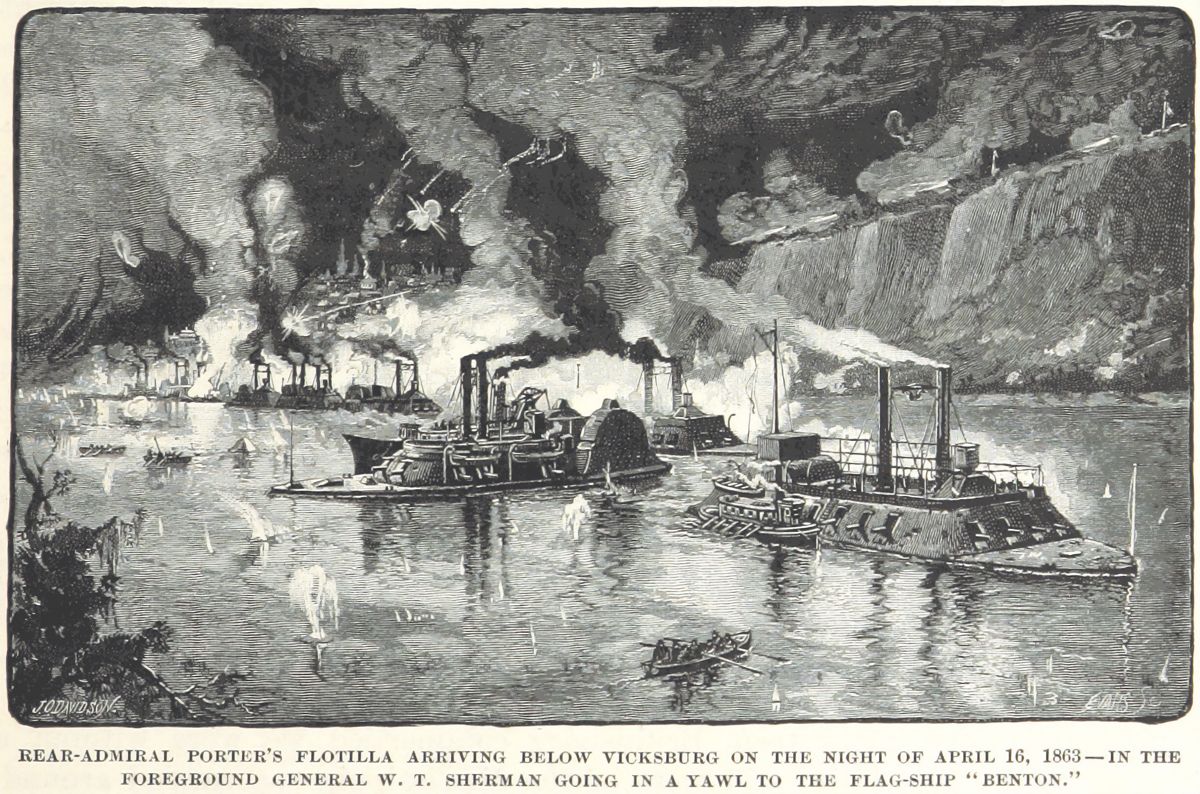
By April 1863, Confederate forces had successfully along the engines for protection, while hay and cotton bales repulsed six separate Federal attempts to seize were stacked to shield the machinery. At 8:45 p.m., Porter control of the Mississippi River from the north, led the fleet downriver aboard his flagship USS Benton. east, and west. Blocking those efforts stood Vicksburg, Eleven vessels followed in line, each about fifty yards apart. Mississippi, perched atop commanding bluffs on a sharp All lights were extinguished. Fireroom hatches were closed, bend of the river. The city was defended by 37 large-caliber and smoke was vented through the paddle boxes to reduce cannon and 13 smaller fieldpieces, while nine earthen forts visibility. Grant, along with members of his visiting family, guarded the approaches from the six roads and the Southern watched the fleet depart. Railroad of Mississippi leading At the same time in into town. Vicksburg, Confederate Maj. U.S. Gen. Ulysses S. Grant, William Watts was hosting a commanding the Army of the ball to celebrate what many Tennessee, decided to gamble believed was the withdrawal his career on a controversial “ YO U A R E E N G AG E D I N A of Federal vessels upriver. southern approach. Before H A Z A R D O U S E N T E R P R I S E , Those ships were actually spare he could attack Vicksburg, AN D , FO R G O O D R E A S ON , transports sent elsewhere to however, he had to move his maintain the illusion. Suddenly men and supplies into position. W I S H T O D I V E RT AT T E N T I ON; the music stopped. If successful, Federal forces T H AT I S S U F F I C I E N T FO R Tar barrels and nearby would gain control of the M E , AN D I T S H A L L B E D ON E .” buildings were set ablaze along Mississippi River and split the the waterfront, illuminating Confederacy in two. the river “as plainly as if it —U .S. G E N. W I L L I A M T. S H E R M AN, Before the war, the Army A R M Y O F T H E T E N N E S S E E were daylight,” Porter later and Navy rarely coordinated wrote. Confederate batteries operations to achieve shared atop the bluffs opened fire, and objectives. Grant could not the gunboats responded. The order Adm. David Dixon Porter Benton’s heavy guns blasted to run a flotilla past Vicksburg’s buildings along the shoreline, powerful batteries, but he could persuade him. Grant while Confederate artillery hurled shell after shell into the invited Porter and Gen. William T. Sherman to meet below passing vessels. Haynes’ Bluff, where they observed miles of Confederate “A shell exploded in the cotton barricades of the steamboat earthworks. There Grant outlined his plan to place Federal Henry Clay” which burst into flames. Despite the chaos, the troops east of Vicksburg on a high, dry plateau—but first he flotilla pressed forward. Confederate batteries fired more needed to move his army south of the city. than 500 rounds before the fleet finally cleared the city. Two individual gunboats had already managed to slip past Grant later wrote simply, “The sight was magnificent, but Vicksburg’s batteries, but sending an entire flotilla was far terrible.” more dangerous. Porter nevertheless agreed to attempt the Grant soon realized he needed additional transports to operation. Once his vessels passed Vicksburg, however, move his army, but he lacked sufficient gunboats to escort he warned that their engines lacked the power to fight the them. Gen. John A. “Black Jack” Logan, commanding the current and return upriver. 17th Division, volunteered to provide covering fire for the On April 16, Porter prepared his fleet. Logs were lashed unarmed transports.
On April 22, another flotilla attempted the passage. Confederate guns sank a side-wheel steamer carrying medical supplies and destroyed six barges, yet enough vessels survived the run for Grant to proceed with his plan. Meanwhile, Grant implemented a series of diversionary operations to distract Confederate Gen. John C. Pemberton, commander of the Vicksburg defenses. On April 17, Grant dispatched Col. Benjamin H. Grierson and 1,700 cavalrymen on a daring raid across Mississippi. Grierson’s troopers tore up railroad tracks, cut telegraph lines, burned bridges, and destroyed water towers across nearly 600 miles of Confederate territory. Grant also telegraphed Sherman, ordering him to stage a heavy demonstration against Snyder’s Bluff, where Sherman had been repulsed earlier in the year. Sherman understood the purpose of the maneuver and replied, “The troops will all understand the purpose and not be hurt by the repulse.” On April 29, Porter attacked the Confederate batteries at Grand Gulf, Mississippi. The guns, positioned on bluffs forty feet above the river, proved too strong to silence. Grant therefore needed a different landing point. His soldiers soon located a local enslaved man familiar with the roads. When Grant asked which route would lead to Bayou Pierre, the man pointed to a road eight miles farther downstream than Grant had expected.
On April 30, Federal transports moved along the river while Union troops marched inland toward Port Gibson. Grant later wrote that he felt:
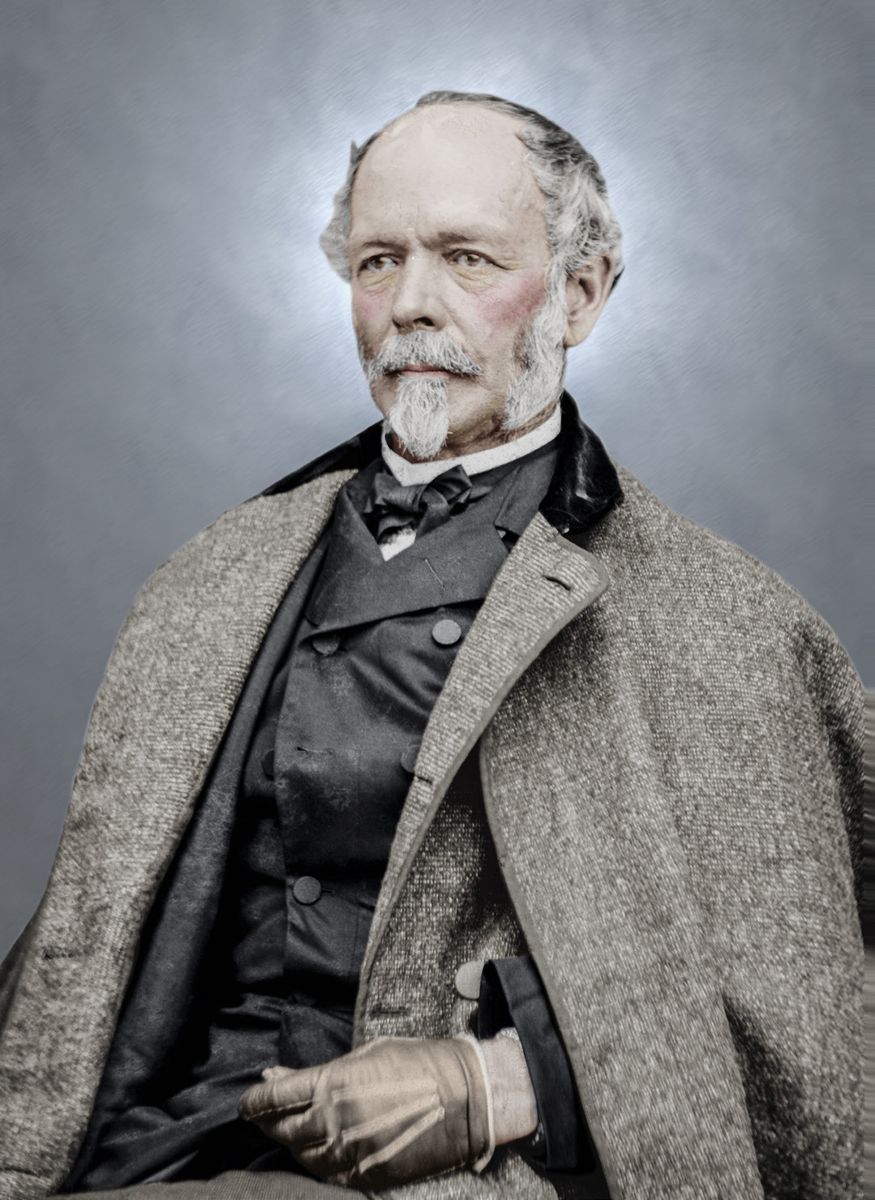
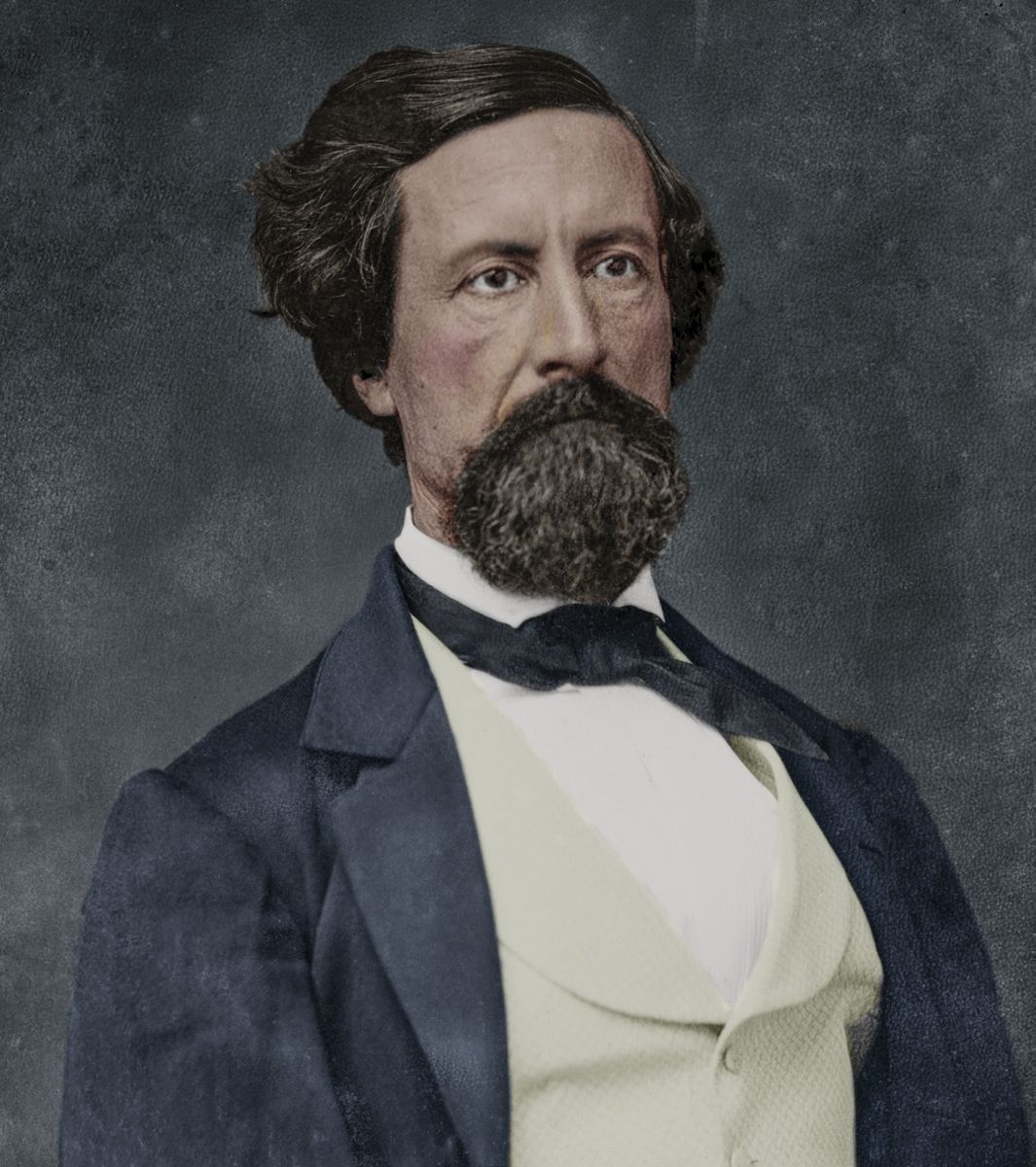
“A degree of relief scarcely ever equalled since.… I was now in the enemy’s country, with a vast river and the stronghold of Vicksburg between me and my base of supplies. But I was on dry ground on the same side of the river with the enemy. All the campaigns, labors, hardships, and exposures from the month of December previous to this time that had been made and endured were for the accomplishment of this one object.” On May 1, as Confederate forces began losing the Battle of Port Gibson, Pemberton wired President Jefferson Davis that Federal troops were threatening both Jackson, Mississippi, and Vicksburg. Pemberton soon found himself caught between conflicting instructions. Davis insisted that Vicksburg and Port Hudson must be held at all costs, while Pemberton’s immediate superior, Gen. Joseph E. Johnston, believed territory mattered less than preserving the army. Johnston argued that Confederate forces should abandon fixed positions, concentrate their troops, defeat Grant in the field, and then recover lost ground later. Johnston sent three couriers instructing Pemberton to move his army east. Pemberton considered such a move “suicidal.” He responded to Johnston:
“I have decided to hold Vicksburg as long as is possible, with the firm hope that the Government may yet be able to assist me.… I still conceive it to be the most important point in the Confederacy.” On May 14, Grant attacked Jackson, Mississippi. Johnston withdrew rather than risk encirclement and abandoned the state capital. Grant would later sleep in the same bed Johnston had occupied the night before. Two days later, on May 16, Pemberton attempted to move toward Johnston but instead collided with Grant’s advancing army. The Battle of Champion Hill began around 7 a.m. Pemberton had chosen strong ground—“one of the highest points in that section, commanding all the surrounding terrain.” Despite the advantageous position, Grant outmaneuvered him, and the Confederates suffered a decisive defeat. The following day, May 17, Pemberton had another opportunity to escape and unite with Johnston. Instead, his army fought again and was defeated at the Battle of Big Black River Bridge. The battered Confederate army retreated into Vicksburg’s defenses. Reflecting on the moment, Pemberton reportedly told his aide Samuel Lockett:
Sources
“Just thirty years ago I began my military career by receiving my appointment to a cadetship at the U.S. Military Academy, and today—on the same date— that career is ended in disaster and disgrace.” Johnston urged Pemberton once more to evacuate the city, warning:
“If you remain in Vicksburg, you must ultimately surrender. Under such circumstances, instead of losing both troops and place, we must, if possible, save the troops. If it is not too late, evacuate Vicksburg and its dependencies and march to the northeast.” Pemberton refused to abandon the city. For more than six weeks, the residents of Vicksburg endured relentless bombardment and severe shortages as Grant’s army tightened its grip. Finally, on July 4, 1863, Vicksburg surrendered. On that same day, Gen. Robert E. Lee’s Army of Northern Virginia began its retreat from Gettysburg, Pennsylvania—a turning point that marked one of the most decisive moments of the Civil War.
Catton, Bruce. U.S. Grant: The Civil War Years—Grant Moves South. Open Road Media, 2015. White, Ronald C., Jr. American Ulysses: A Life of Ulysses S. Grant. Random House, 2016. Symonds, Craig L. Joseph E. Johnston: A Civil War Biography. W. W. Norton & Company, 2015.
Stephanie Hagiwara is the editor for CivilWarInColor.
com and CivilWarIn3D.com. She also writes a column for
HistoryInFullColor.com that covers stories of photographs of historical interest from the 1850s to the present. Her articles can be found on Facebook, Tumblr, and Pinterest.