
Spared & Shared
By William Griffing · Originally published March-April 2026 · pp. 42–45
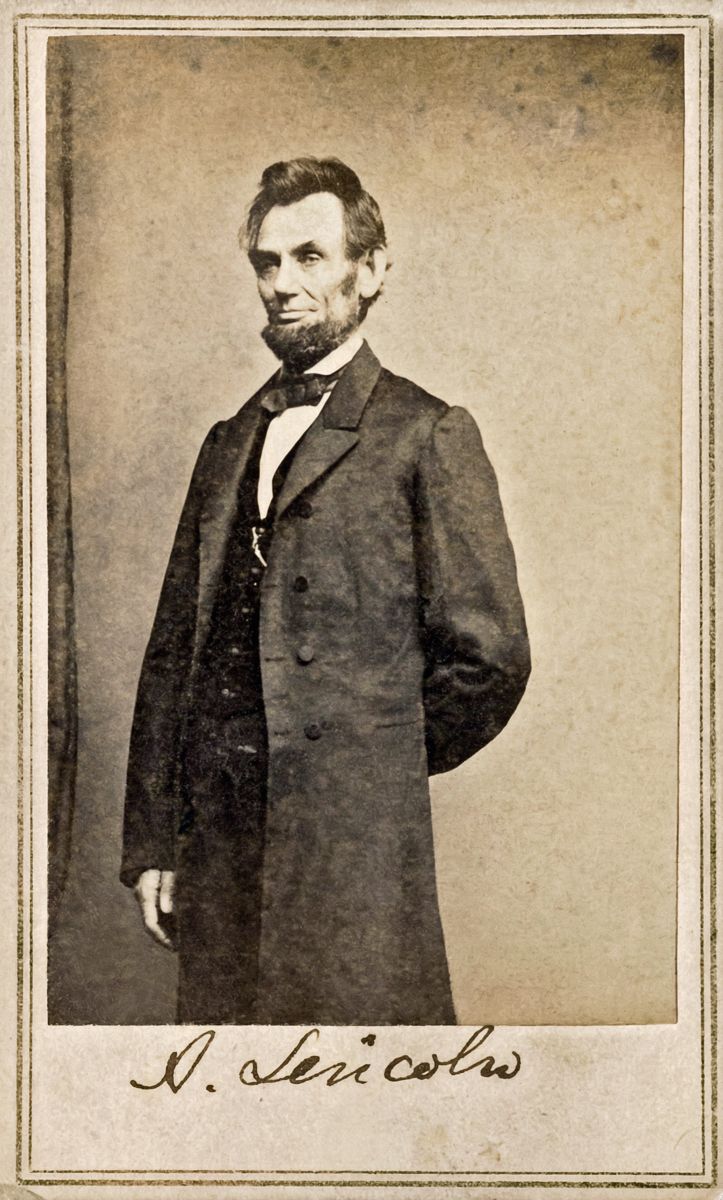
This letter is from a collection I transcribed a few years ago, written by Charles M. Heaton (1805–1899), a native of Middleton (near Cincinnati), Ohio. He was married there but in a few years was left a widower with two small children. He relocated to Lafayette, Indiana, about 1830, and stayed there until 1833, when he came to the small village of South Bend, Indiana, and remarried. An obituary informs us that “He was a man of good education with fine business ability, which combined with a genial nature, energy and honesty of purpose made him a very useful man in the community.” Applying the skills of a surveyor which he had learned from his father—a civil engineer by trade, Charles surveyed the land for South Bend’s early settlers and mapped out the town lots. His prominence and reputation for honesty and fairness enabled him to be elected a justice of the peace in the burgeoning city. He also served as the town’s first express agent and telegraph operator. In politics, Charles was a member of the Whig Party. He gave his first vote for President in 1828 to Henry Clay and campaigned hard for “Old Tip” in 1840. When the Republican Party emerged from the wreckage of the Whig Party, he leaned hard in that direction and threw his support behind fellow South Bend editor, journalist, and politician Schuyler Colfax who rewarded him with a good position in the government land office at Washington in 1860 where he remained for the next twenty years. At the time of this letter, written in March 1864, Colfax was serving as the newly elected Speaker of the U.S. House of Representatives, which, in turn, gave Heaton access to Lincoln and his cabinet—unique privileges not afforded the average civilian. There are many interesting observations of Washington, D.C., and the social circles in which Heaton was permitted to circulate but one of the best accounts comes in a letter he wrote describing the reception General Grant received on March 8, 1864, when Grant met Lincoln face to face for the first time and then was ushered into the East Room of the White House by Secretary Seward to a throng of guests anxious to see and shake hands with the famous general. Washington March 11th 1864
Dear Wife, When I wrote you last evening I fully intended to have written you again before this Friday evening but every evening something was in the way. Tuesday evening I went to the President’s Levee—the first I have attended this winter. The evening was pleasant and the walking good. James Sample and myself went together, but notwithstanding we went early, we found the East Room & halls pretty well filled. It had been announced during the day that Gen. Grant was to be there. This called out an immense crowd. There were a good many Ladies there, yet the Gents outnumbered them five to one. I met Mrs. Green there, the lady who keeps the boarding house on 9th Street—not the one that boarded at Mr.
Lieut. Gen. Ulysses S. Grant. Photograph taken on the day of his arrival in Washington and the same day as the White House visit, March 8, 1864. (Mathew Brady)
Finney’s. She introduced me to a Mrs. Wait from New York State. I offered her my arm and we, with many others promenaded once around the East Room, and just as we got to one of those large sofas right opposite the Green Room entrance, a loud clapping of hands commenced and it was soon discovered that Gen. Grant was about entering
& those that had shaken hands with the General could not get away. I took it on myself to speak to the crowd and urged them to open the way on one side so that those who had shaken hands could pass off. Some was pressed to the floor & they placed their feet against the sofa and pushed the crowd back and in this way run their feet through the silk covering of the sofa & about ruined it—tore it full of holes large enough to run my head through. But we finally succeeded in opening a way for them to pass off. Mr. Seward spoke several times and so did Mr. Stanton of how fortunate it was that they accidentally came to that sofa or the crowd would have overwhelmed them. Their position was fine for the crowd to see them. I was [mis] taken by hundreds for Secretary Wells and it was generally remarked that Gen. Grant was accompanied with three of the cabinet. Now don’t you think I felt very much flattered over that? General Grant stood there near one hour with both hands extended, shaking hands with everyone he could reach. At first the Ladies could not get near but after a half hour or more they began to come forward and at the end of near an hour, the most of the crowd had succeeded in taking the General by the hand and the press slacked off when Secretary Seward and General Grant left the room arm in arm.* I then had a promenade with Mrs. Sturgis and a sister of Mrs. Sturgis who is now there on the East Room. We saw that he was just entering along with Secretary Seward. The crowd pressed toward him very heavy but he pressed his way through and crossed the room directly where we were. They came right up to where we stood. We shook hands with him but the crowd pressed stronger and stronger to shake him by the hand. I spoke to him & Mr. Seward & told them to mount upon the sofa or they would be overwhelmed. Mr. Seward thanked me for the suggestion and up they mounted with their boots on the elegant sofa. The rush in that direction was terrible and was impossible to get away from it and I told Mrs. Wait to get on the sofa. She done so and I put my hand against the wall but the pressure on me was so great, I could not stand under it, and I also mounted the sofa. By this time, Secretary Stanton got there and he also mounted the sofa. There was no controlling the crowd. They rushed from every direction a visit, and then I retired and went home somewhat fatigued with my evening excursion. Mr. Haynes did not go to the levee and instead, I believe, he went to the office or to church, I forget which. It has been raining some this afternoon but Hattie and Frank & Mira and myself are going to Mr. [Schuyler] Colfax’s levee. It is rather muddy but as they have fixed themselves up to go, they are inclined not to give it up… Love to all. Your affectionate husband, — Charles M. Heaton
*There are various accounts of Grant’s reception in the East Room on March 8, 1864, but I will quote portions of Ron Chernow’s Grant, which was published in 2017. Chernow wrote that Grant arrived at the President’s weekly levee wearing the same grubby outfit in which he had traveled in all day because he had misplaced the key to his trunk. The White House was already “packed with spectators” when Grant arrived at 9:30 p.m. because the newspapers had announced he would attend the reception. After meeting briefly with Lincoln in the Blue Room, Secretary of State William Seward took Grant by the arm and walked him into the East Room “which broke into brisk applause and wave after waves of cheers. So boisterous did the gathering grow that [Journalist] Noah Brooks labeled it ‘the only real mob I ever saw in the White House.’ The room shook in the throes of Grant mania. Because the crowd swallowed up the diminutive Grant, people twisted
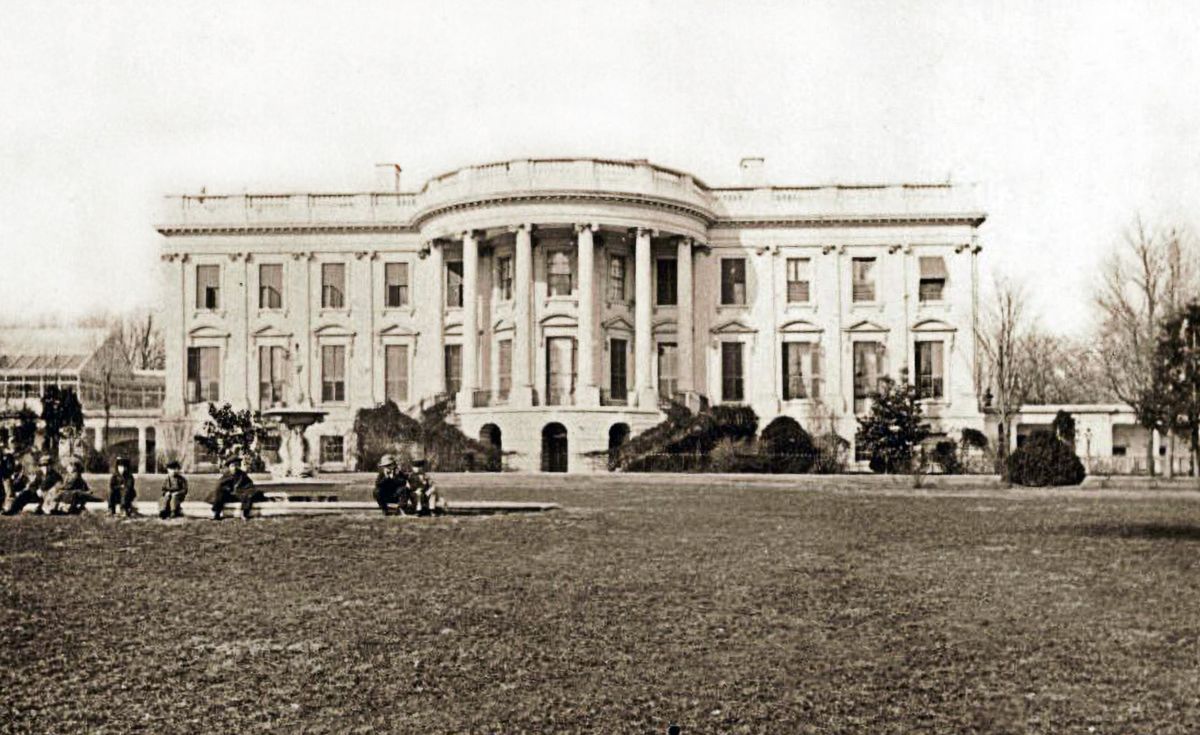
This carte de visite shows a group of children sitting around the sea serpent fountain on the South Lawn of the White House during Abraham Lincoln’s administration. (White House Collection)
https://www.newspapers.com/image/85341505/
New-York Tribune (New York, New York) · Wed, Ma Downloaded their necks to spot the bashful hero, chanting ‘Grant! Grant! Grant!’ Finally at Seward’s behest, Grant stood on a couch, enabling everybody to ogle the hero…. Brooks noted…‘The little, scared-looking man who stood on a crimson-covered sofa was the idol of the hour.’ Never cut out for such social duties, a prisoner of this pandemonium, and embarrassed, Grant admitted that the time he stood on the couch was the hottest campaign he ever fought…One reporter captured vividly the flustered Grant standing amid the hubbub: ‘He blushed like a girl. The handshaking brought steams of perspiration down his forehead and over his face…’ For an hour, Grant remained a captive of the adoring crowd before extricating himself to confer with Lincoln and Seward in a small dining room.” [Grant, by Ron Chernow, pp. 341-342] An eye-witness for the New York Tribune described the reception for Lieutenant-General Grant in the White House on March 8, 1864, as “more furious than any scene that ever transpired in the East Room. Grant was literally lifted up for a while and in obedience to a demand and to a necessity, so great was the desire to have a fair look at him, he was obliged to mount a sofa under the auspices of Secretary Seward who preceded him to that elevation. There was never such a coat-tearing, button-bursting jam in the White House as this soldier has occasioned.” [Providence Evening Press, March 10, 1864] The scene was also described by Sergeant Smith Stimmel, a member of the Presidential bodyguard, who wrote that Grant was led into the East Room of the White House by several members of the guard who formed a wedge in front of Grant and Seward as they forced their way through the crowd across the room where they “stepped upon a sofa and Seward introduced the General to the crowd. And by dint of effort we got the throng started passing in review.” He also wrote of Grant’s appearance that his uniform “and that worn by other military officers present that evening was very marked. The buttons on his coat were placed in the order of a major general’s stars, but the coat was badly faded from exposure and camp usage, and the buttons and shoulder straps were dingy with the smoke and dirt of the field…When he was called to Washington upon receiving Grant visits the White House, March 8,1864. Grantprobably visits White House March 8,1864 his appointment he came direct from the field, Published in the New-York Tribune, New York, wearing the only military suit he owned. [Smith Stimmel, N.Y., Wed., March 9, 1864, page 1. Lincoln’s Bodyguard, North Dakota Historical Quarterly, Copyright © 2025 Newspapers.com. All Rights Reserved. Vol. 1, No. 2, January 1927, pp. 18-19.] In his recently published book on George S. Boutwell, a Radical Republican of the 38th Congress, Jeffrey Boutwell William J. Griffing has worked at the Department of wrote that George and his daughter Georgianna were Labor and the Department of Energy, and later as the ES&H among those present at the White House that evening for Director at the National Renewable Energy Laboratory the President’s Reception and arrived shortly after Grant’s and Fermi National Accelerator Laboratory. Since his departure from the Blue Room to the East Room. “The Lion retirement in 2010, he has focused on preserving American is in the other room,” the President told them. “You must history, mainly Civil War letters and diaries that remain go into the East Room to see Gen. Grant.” When they did, unpublished in private collections. His transcribed Civil Georgianna remembered that “Gen. Grant was standing on War soldier and sailor letters are found at: https://tinyurl. a sofa … Secretary Seward was presenting the company to com/sparedshared. Updates on newly transcribed letters are him. The General was brown from exposure and wore a available at: facebook.com/Griff.CWLetters. In 2024, he couniform which had evidently seen hard service, with two edited a book titled A Great and Good Man with Jonathan A. stars only.” [Boutwell, Radical Republican and Champion White, which includes rare first-hand accounts of Abraham of Democracy, by Jeffrey Boutwell, pages 110-111 Lincoln, drawn primarily from about 15,000 letters he has transcribed since retiring.