
Central Virginia Battlefields Trust
By Tim Talbott · Originally published March-April 2026 · pp. 56–61
Early Visitors to Central Virginia’s Battlefields – Part II By Tim Talbott
Central Virginia’s battlefields drew visitors from far participate in the Grand Review at Washington. In doing and wide in the weeks, months, years, and decades so, a member noted: “Everywhere were visible the terrible following the end of the conflict. Some came to signs of the struggle—trees mowed down by artillery, lowly revisit sites they had previously fought over, while others mounds with nothing to testify whose was the last resting came to see for themselves the places they had read or place, and sadder still unburied remains.” heard about. Regardless of their motivation for visiting, Part I concluded with Lt. Col. Theodore Lyman’s account few of them were left unmoved by what they saw, and of his traveling party viewing the belligerents’ lines at Mine many, thankfully, took the time and effort to record their Run in the spring of 1866 as they continued to ride east experiences for future generations like us. toward the Wilderness battlefield. Among the first visitors to the battlefields were the people who lived in the area. While many sheltered in place and The Wilderness waited for either an opportunity to leave for someplace As Lyman and his party trotted on, he noticed that, “In two safer, or for the armies to move on to other killing fields, or three miles we begin to see marks: – here a scrap of rubber they experienced the battlefields only second-hand to the blanket, and there a cartridge box all warped and cracked soldiers who fought on them. with the sun and rain and frost of two years.” They spotted Katherine Couse, a Spotsylvania unionist woman, noted a log house that had served as a Confederate hospital and in a diary-style letter what she saw on May 19, 1864, as she ventured from her home not far from Spotsylvania’s “Mule Shoe” salient: “the country looks awful, all cut up, new roads all through the fields. no vistage of a fence. desolation and destruction mark the course of large armies… . Dead horse and mules lying around, offensive smells come from every quarter.” In many cases, right behind the local civilians came the soldiers themselves again. For example, the 3rd Wisconsin—a regiment that started its service in the east with the XII Corps but transferred to the west where it finished the This photograph showing the Orange Turnpike bisecting Saunders Field at the war—traveled through the Wilderness was made about the same time that Theodore Lyman wrote his Spotsylvania battlefield observations. Note the faint white fence around Wilderness National Cemetery #1 in mid-May 1865 to in the background. (Library of Congress)
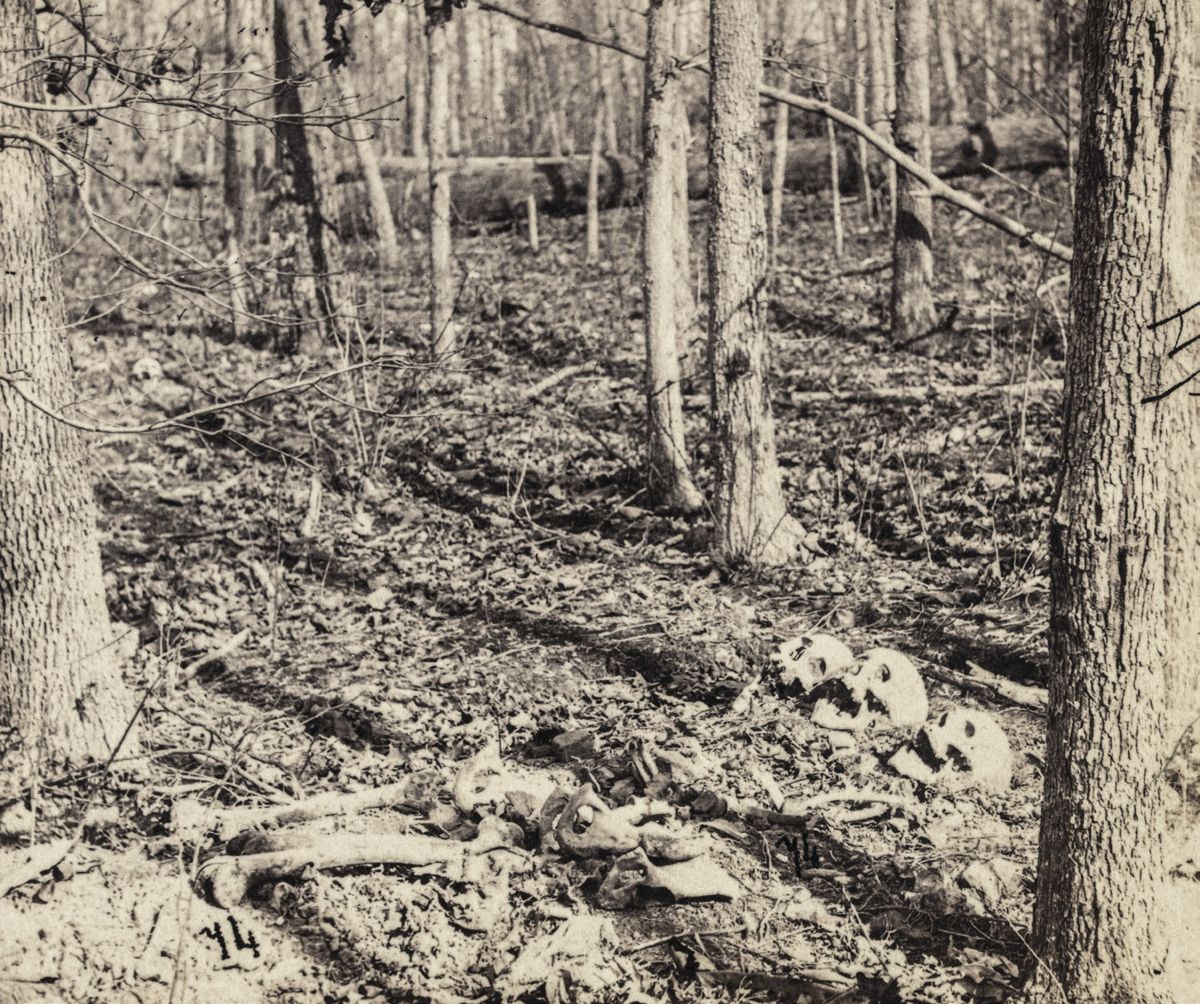
noticed “three or four graves—one of a federal captain ‘died May 24, 1864.’” They quickly came to the spot where Gen. Charles Griffin’s V Corps division had advanced before falling back after a Confederate counterattack. Then they arrived at the Confederate earthworks and saw where a “battery on the pike” once stood at Saunders Field. Stopping to reflect and visit “Wilderness National Cemetery No. 1,” Lyman gave a description: “This is a small and neat enclosure, in which have been buried the remains of all union soldiers found among the woods. They are all marked by headboards as ‘Unknown.’” White headboards provided by the government that were “conspicuously lettered” marked the graves of identified soldiers. Lyman further explained that “In the Wilderness two cemeteries have been enclosed at places where the carnage was the greatest.” The next morning, Lyman visited the Orange Plank Road portion of the Wilderness. Here he “found the noted spot where every tree (they are saplings all) was cut down by musketry! Such a sight I could scarcely credit without my own observation.” The party “struck our breast works and followed them to the left, and then struck over the to rebel works just on the edge of the Tagg [Tapp] house clearing.” Lyman noted that “most of our works were merely a few logs piled up and barely enough to cover a man kneeling; and in many places, there was no line [of works] at all.” About a mile and a half from Brock Road, Lyman encountered “the scattered graves of Texan and Alabama troops— men who were buried where they fell— and saw the bullet marks on the trees; showing that our troops had penetrated thus far.” East of the Tapp clearing and near the Orange Plank Road, Lyman saw “the marks of great fighting. Every tree with two, or three, even half a dozen bullet marks on its lower trunk and many cut in two by rebel shells.” Scattered about were “canteens, cups, knapsacks, cartridge tins and boxes, and all the debris of the fight.” Some of the canteens had bullet holes in them, and Lyman also found parts of newspapers, playing cards, Bibles, and even a German novel not yet totally deteriorated.
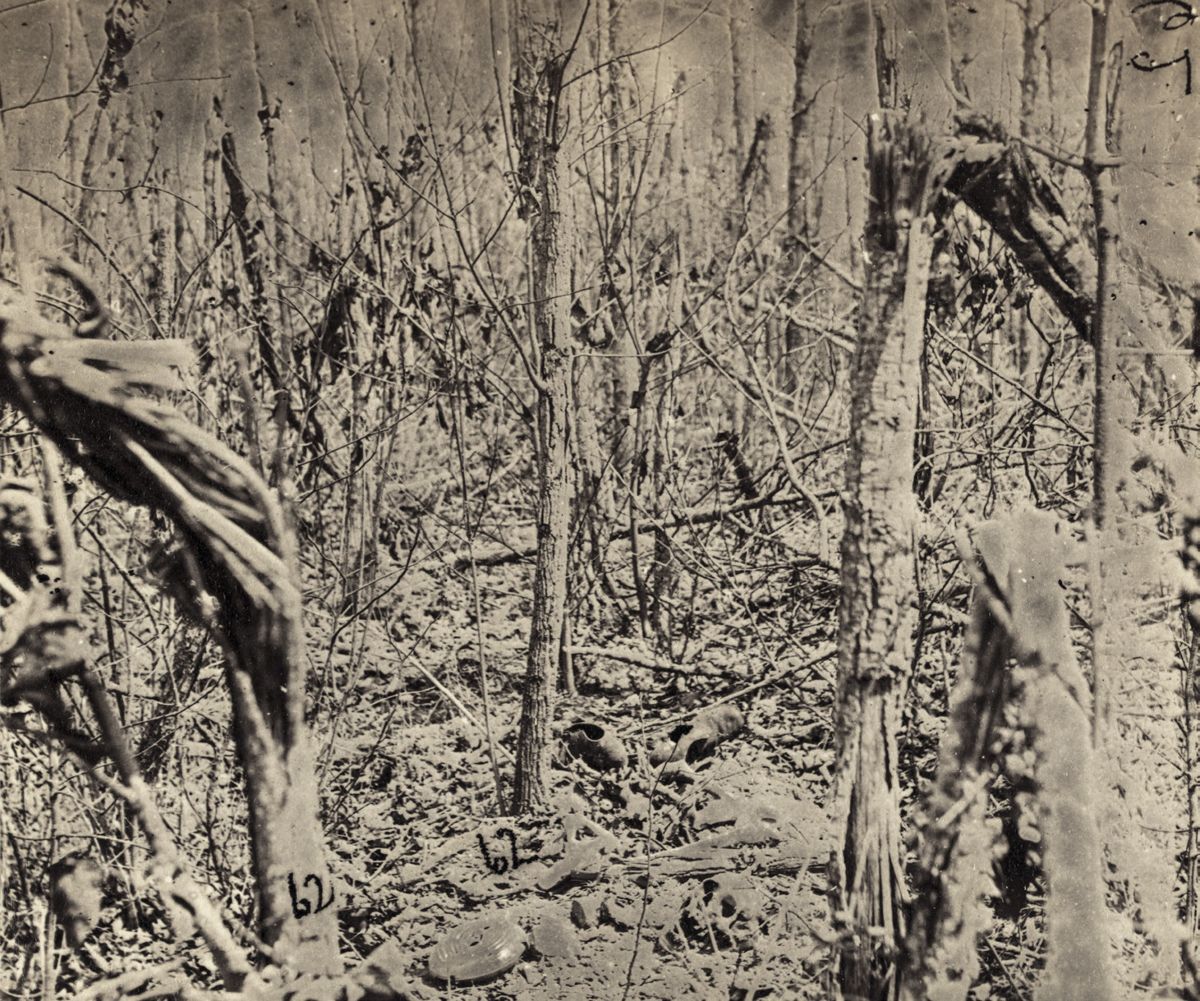
The damage to the trees continued to amaze Lyman and his party. One of them exclaimed “Just look at the trees!” At a spot about 500 yards from Brock Road, “on a slight slope, over a boggy run” that Lyman described as “the vortex of the battle,” he viewed “for a distance of some hundreds of yards in length; - to an unpracticed eye it was just as if a whirlwind had twisted off each trunk and left and left the trunk hanging by fibres.” Lyman noted that “Here fell [Brig. Gen. Alexander] Alick Hayes, Major [Henry Livermore] Abbott [20th Massachusetts Inf.], and hundreds of other brave men.” Around the same time Lyman and his party observed the battlefield, Dr. Reed Bontecou visited in his official U.S. government role to gather forensic evidence of the combat damage to human remains. Accompanying Bontecou was William B. Bell, chief photographer for the Army Medical Museum. Bell and Bontecou took dozens of images while in central Virginia documenting the damaged landscape and various landmarks. Although they apparently did not write down what they saw and felt, their photographic documentation proves the old adage of a picture being worth thousands of words. Before Lyman’s and Bontecou’s visits, John T. Trowbridge, who was introduced in Part I, visited the Wilderness Battlefield in 1865. After sightseeing the adjacent Chancellorsville battlefield, Trowbridge and his hired local guide continued on to the scenes of the May 5-6, 1864, battle. They did not have to travel far before “abundant evidences of a great battle” were clearly visible. “Heavy breastworks thrown up at Brock’s cross-road, planks from the plank-road piled up and lashed against trees in the woods, to form a shelter for our pickets, knapsacks, haversacks, pieces of clothing, fragments of harness, tin plates, canteens, some pierced with balls, fragments of shells, with here and there a round-shot, or a shell unexploded, straps, buckles, cartridge-boxes, socks, old shoes, rotting letters, desolate tracts, perforated and broken trees,—all these signs, and others sadder still” told the story of the Battle of the Wilderness. As Trowbridge left the road and roamed in the woods, his thoughts wandered, much like ours do today on the battlefields. However, the visible evidence of the battle directed his thoughts. He pondered: “Where were the feet that wore those empty shoes? Where was he whose proud waist was buckled in that belt? Some soldier’s heart was made happy by that poor, soiled, tattered, illegible letter which rain and mildew have not spared; some mother’s, sister’s, wife’s or sweetheart’s hand doubtlessly penned it; it is the broken end of a thread which unwinds a whole lifehistory, could we but follow it rightly. Where is that soldier now?” While walking a Wilderness path, Trowbridge noticed “many charred sticks and half-burned roots and logs.” At once, “the terrible recollection overtook me: these were the woods that were on fire during the battle.” Calling his guide over, the young man said a couple of local farmers, “men I know, heard the screams of the poor fellahs burnin’ up, and come and dragged many a one out of the fire and laid ‘em in the road.” The hell that was the Battle of the Wilderness was still clearly evident for these early battlefield visitors.
Spotsylvania
On May 16, 1865, Capt. Cyrus Roberts of the 78th Ohio received permission to leave his regiment’s marching column enroute to the Grand Review in order to visit the Spotsylvania battlefield. Finding a guide in the town, they rode about a mile and a half to “the position of our forces during the heavy engagements.” There, “we saw the timber cut and mangled by the missiles of warfare—so that not a whole tree was visible and the majority of them were cut off to stubs of from 3 feet in height, up. Graves were here visible … and bones would protrude—often a head with gaping jaws, feet hands & c.” Roberts also saw the famous oak tree: “One oak tree 20½ inches through was entirely cut in two by minie balls alone[;] the tree was stationed about 12 feet in rear of the rebel parapet and upon higher ground than the vicinity—consequently very conspicuous.” It was just about a week before Roberts’ visit that Maj. Gen. Nelson Miles, also in route to the Grand Review, was tipped off as to the location of the famous oak tree’s stump. They found it locked in the smokehouse of the Spotswood Inn in Spotsylvania. Breaking the lock and taking the stump, Miles presented it to Secretary of War Edwin M. Stanton as a war relic. It now resides in the Smithsonian National Museum of American History. Lt. George W. Jones from the 26th Wisconsin, an XI Corps unit that transferred to the western theater following Gettysburg, noted in his diary on May 15, 1865, that they “Passed through Spotsylvania C. H. which is a little town of some dozen houses now full of air holes and ventilation caused by Yankee Artillery about a year ago.” Another May 1865 visitor, David E. Cronin, whose regiment, the 1st New York Mounted Rifles, served occupation duty in the Fredericksburg area, noted that the Spotsylvania battlefield “presented an awful picture of the magnitude and ferocity of the war.” Visiting before the burial parties moved remains to Fredericksburg National Cemetery and the Spotsylvania Confederate Cemetery, Cronin helped give readers a mental image through his words. “In some places the remains of the dead of both armies lay in mingled heaps, partly covered with mounds of brushwood, placed there by a few citizens remaining in the neighborhood after the battle, to prevent the ravages of wild hogs. In many places the rain had washed bare the shallow burial-trenches, disclosing hundreds of uniformed skeletons, but many bodies lay unsheltered, just as they had fallen,” he recalled. (Public domain)
Several post-war battlefield visitors commented on seeing the famous oak tree cut down by rifle fire at Spotsylvania’s Mule Shoe salient. (Smithsonian Museum of American History)
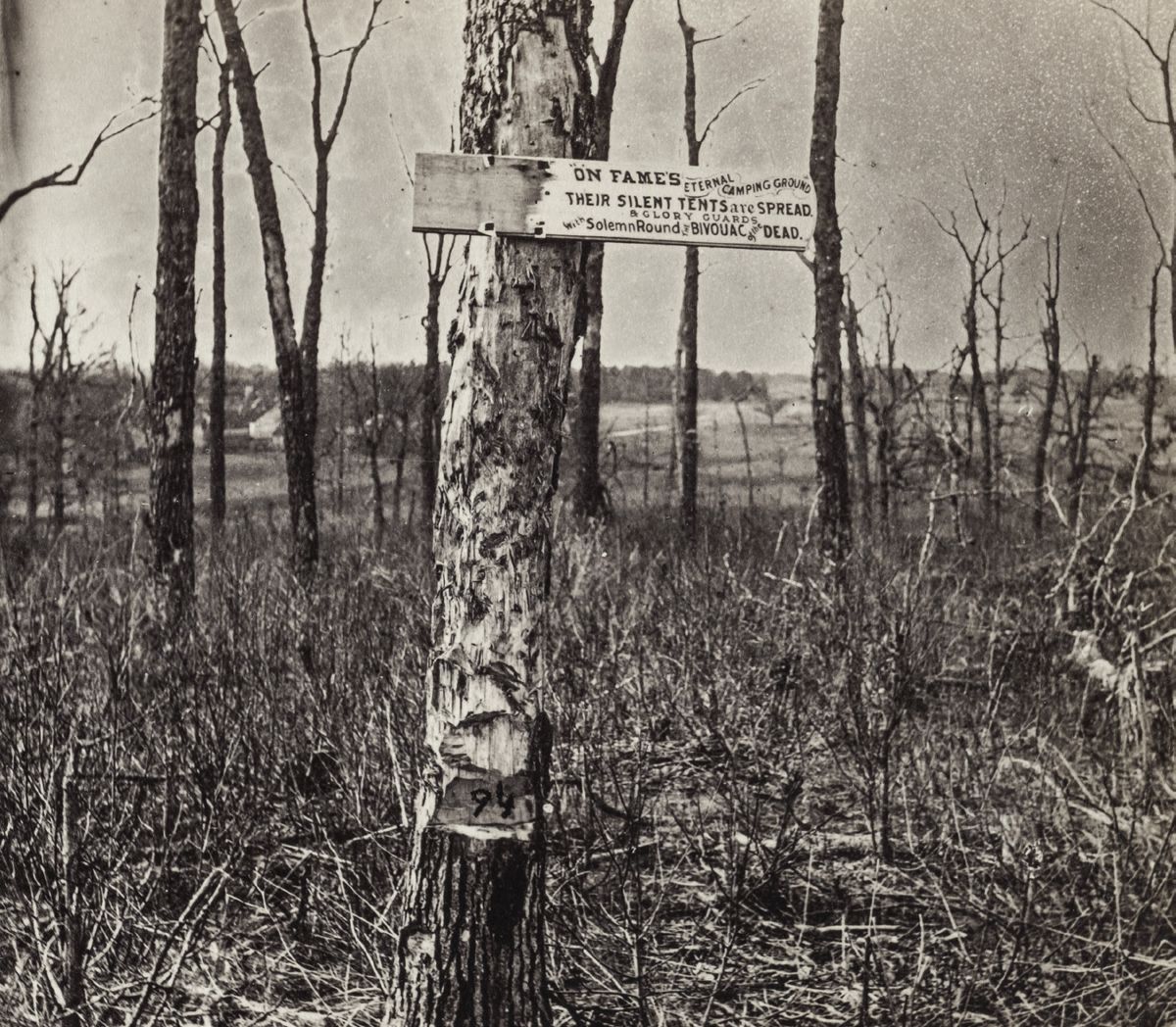
The evidence of the desperate nature of the Federal attack on May 12, 1864, amazed Cronin. He saw pieces of “scattered debris in the open spaces. Here, it seemed as if there had been a mighty whirlwind, gathering and distributing in the wildest disorder all the equipments of a soldier—pieces of cloth of uniforms, caps in profusion, muskets and bayonets shattered and twisted, bayonet sheaths, haversacks, rusty canteens, glittering belt-plates and buttons. It was the countless number of these relics that told of the havoc and anarchy of the battle.” Trowbridge was not too many months behind these very early battlefield visitors. The day following his visit to the Wilderness battlefield, Trowbridge had a new guide, a young man who had fought at Spotsylvania in the Confederate artillery, named Richard Hicks. Stopping at Spotsylvania Court House, which was then under repairs, Trowbridge noted that, “It had been riddled by shot and shell; but masons and carpenters were at work repairing damages, so that there was a prospect of the county … having a courthouse again.” While in town Trowbridge stopped at the [Spotswood Inn] tavern. There the “landlord took me to a room where he kept, locked up, a very remarkable curiosity. It was the stump of a tree, eleven inches in diameter, which had been cut off by bullets… .” The proprietor said, “I had a stump twice as big as this, cut off by bullets in the same way, but some Federal officers took it from me and sent it to the War Department at Washington.” No doubt, that was Gen. Nelson Miles and his staff. Leaving town, Trowbridge and Hicks “passed McCool’s [McCoul’s] house … .” Seeing “the woods, despoiled by the storm of lead and iron” they came to a “strange medley of intrenchments, which it would have required an engineer to unravel and understand.” Trowbridge claimed that “Nowhere else have I seen evidences of such close and desperate fighting.” Near there, “Upon a hacked and barkless trunk at the angle of the woods in the midst of graves, was nailed aloft a board bearing these lines:
On Fame’s eternal camping ground Their silent tents are spread, And glory guards with solemn round The bivouac of the dead. Among the regrowing scrub brush Trowbridge saw “an old woman and two young girls.” Trowbridge noticed that
“The woman had a haversack slung at her side; one of the girls carried an open pail.” The three scanned the ground, barely looking up at the one looking at them. Trowbridge attempted to ask them about the battle but they only answered, “as if they then heard of it for the first time.” While chatting, Trowbridge got “a glance at the open mouth of the heavily freighted haversack and the half-filled pail, and saw … several quarts of old bullets.” A year later, in 1866, Theodore Lyman continued his central Virginia battlefield visits, spending considerable time around the Spotsylvania battleground. Lyman only initially saw part of the Laurel Hill portion of the battlefield “near which Gen. Sedgwick was killed” on his first day due to it being evening and as a threatening storm approached. However, among the places he visited the next day was Myer’s Hill, now preserved by the Central Virginia Battlefields Trust. “The Myer’s Farm, whence [Gen. Emory] Upton’s brigade was driven, and which [Gen. Romeyn] Ayers people retook, is now sold to a Minnesota family!,” he noted. Following the Federal lines, Lyman headed toward the base of the Mule Shoe salient. Then, traversing the east face up to its point, there he “had a good view over the country and saw the Landrum house, only 600 yards off, where Hancock had his headquarters.” Going down the west side of the salient, Lyman saw “The Bivouac of the Dead” sign and noted the Bloody Angle, which he termed “Death Angle … where the west face of the salient begins to slope and where the captured portion is connected with the prolongation of our line.” Apparently, reinternment efforts had begun as Lyman thought that “The Quartermaster’s party has done its work on this field partially. Not only are the remains not collected in a common cemetery, but many marked graves have been overlooked.” Summing it up, Lyman described what he saw: “It is a scene of waste on a barren slope; an oak wood, dead; the long, half ruinous intrenchments; and the graves and scattered debris of battle!” Today, much of what Roberts, Jones, Cronin, Trowbridge, and Lyman saw at Spotsylvania is no longer visible. The perforated trees are gone, or are in museums, as are the rusty canteens, pieces of uniforms, and bones bleaching in the sun. But some things still remain. The location of the famous oak tree whittled down by Minié balls is marked. Remnants of earthworks still trace parts of the Muleshoe salient and other lines. The Spotsylvania Court House building still stands, as does the historic Spotswood Inn. The landscape also retains its rolling nature for presentday visitors to better understand what happened here. Hidden from sight, but still there, the relics left by those of the past continue to inform us today through formal archaeological studies. Along with the everlasting physical characteristics of the battlefield are the enduring primary accounts of those who fought there. Letters, diaries, newspaper accounts, official records, and oral histories remind us of the terrible nature of war, the destruction it brings, and why we should attempt to pursue all means of peace before entering into it again.
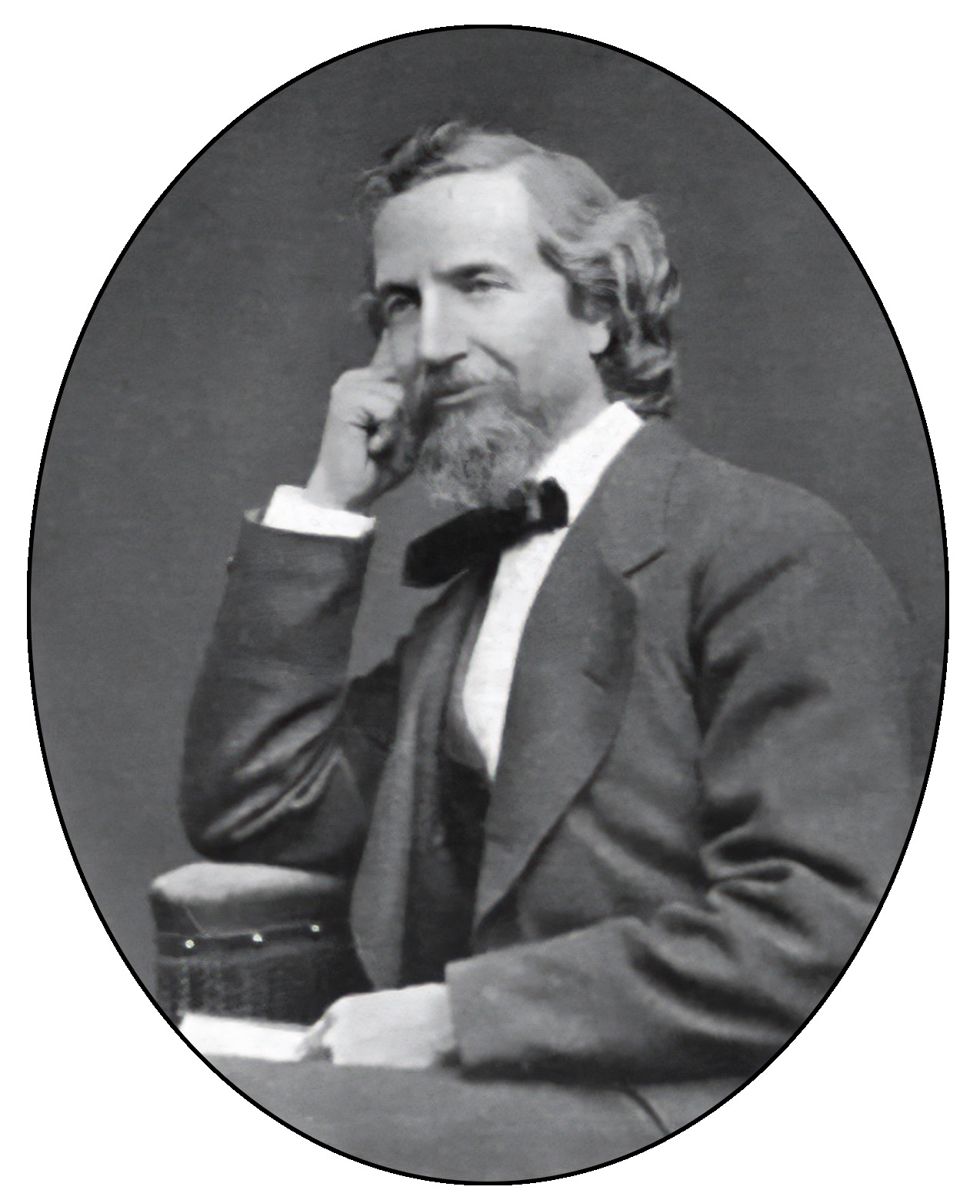
Tim Talbott is the Chief Administrative Officer with the Central Virginia Battlefields Trust.
The mission of CVBT is to preserve land associated with the four major campaigns of: Fredericksburg, Chancellorsville, Mine Run, and the Overland Campaign, including the Wilderness, and Spotsylvania Court House. To learn more about this grassroots preservation non-profit, which has saved nearly 2,000 acres of hallowed ground, please visit: www.cvbt.org.