
Soldier Pickups Part I Old Abe
Originally published July-August 2026 · pp. 26–32
On June 10, 1990, the Lions Club and citizens of Jim Falls, Wisconsin, held a dedication ceremony for the unveiling of a statue they had erected. The statue was of Old Abe, the bald eagle mascot of the 8th Wisconsin Volunteer Infantry Regiment during the Civil War. It was my privilege to present the dedication speech on that day. My remarks included a quote from Dr. Frank Klement, a noted Civil War author, historian, and professor of history at Marquette University in Milwaukee, Wisc. In his 1962 book, Wisconsin and the Civil War, he wrote:
“In a manner similar to the sagas of the Iron Brigade, Lincoln’s Gettysburg Address, the struggle of the Merrimac and Monitor, the legend of Old Abe stands out as a story which transcends the horrors of that great internal struggle, the Civil War.” In the 1997 expanded version of his book titled Wisconsin in the Civil War, emeritus professor Klement wrote:
“He (Old Abe) not only survived the war but also served the Union veterans as a symbol of their victory. When he died in 1881, Old Abe was as famous as many generals and heroes of the Civil War.” These accolades, along with many others, speak to the legendary status attained by the eagle of the 8th. The legend began in the spring of 1861. Somewhere near Park Falls, Wisc., in the northwest part of the state, a tree containing an eagle’s nest was felled. The tree was allegedly brought down by Chief Sky of the Lac du Flambeau band of Chippewa Indians. An eaglet was rescued from the nest. The young eagle was soon traded to the family of Dan and Margaret McCann. The McCanns were farmers who lived near Jim Falls. The 1990 dedication event was attended by large numbers of patriotic citizens. Among them were descendants of the McCann family, including Juanita McCann, the only living granddaughter of Dan and Margaret. The McCanns attempted to raise the eagle as a pet, but soon realized that it was considerably more difficult than anticipated. As he grew, care and feeding became more than the family could handle. A company of soldiers was organizing in Eau Claire, Wisc. They called themselves the Eau Claire Badgers. Dan offered the eagle to them to serve as a mascot. They purchased him for about $2.50, and the Eau Claire Badgers became the Eau Claire Eagles. Title page: Union Signal Sergeant John Hill with Old Abe, the Wisconsin War Eagle. Old Abe is perched on a pole with a shield fixed to it, which the sergeant is leaning on. “THE CENTENNIAL PHOTOGRAPH OF ‘Old Abe,’ the Live Wisconsin War Eagle.” (Colorized photograph.)
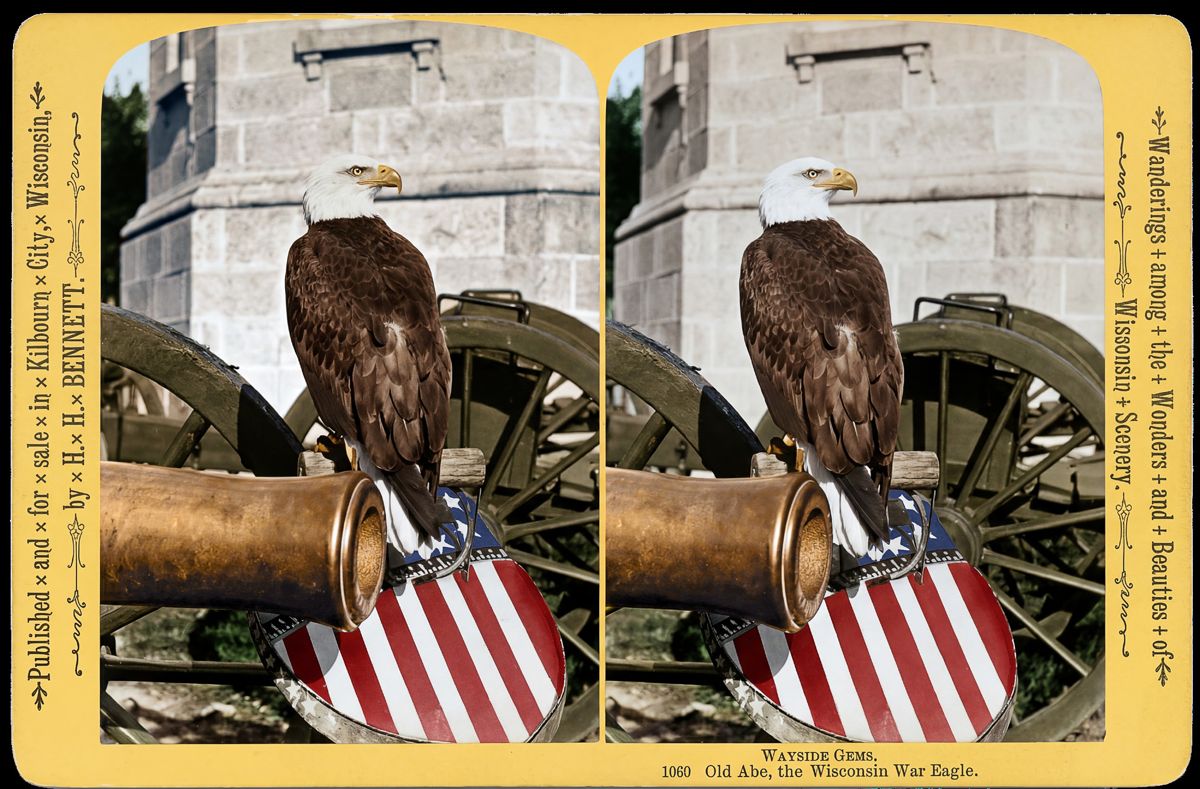
In September 1861, the Eau Claire Eagles traveled to Camp Randall in Madison. Along the way, their Captain named their mascot Old Abe in honor of President Abraham Lincoln. Camp Randall was named for Alexander Randall, the first of Wisconsin’s four wartime governors. The majority of Wisconsin’s soldiers trained at Camp Randall. The Eagles joined nine other companies and became Company C of the 8th Wisconsin Volunteer Regiment. A five-foot pole with an attached wooden shield and crosspiece was constructed. The stars and stripes were painted on the shield. The crosspiece was a perch for Old Abe. During the war, there were three eagle bearers from Company C. It was considered a high honor. They and Old Abe were part of the 8th Wisconsin Color Guard along with the Federal and Regimental Colors. Company C became known as the Eagle Co., and the 8th Wisconsin became the Eagle Regiment. The 8th departed for war on October 12, 1861, after four weeks of training. They would participate in the Western Theatre of War, where the main objective was to deny the Confederates control of the Mississippi River. They participated in 37 battles, including the siege of Vicksburg. Old Abe was with them for all. He became a creature of folklore and fantasy, an amazing hero possessed of amazing attributes. They included, but were not limited to: • • •
Disrupting enemy attacks by diving on the enemy. Stealing enemy maps. Delivering airmail messages.
Wisconsin newspapers reported that he bombed the enemy with rocks. Although he was most certainly an inspiration to his men, he proved to be a distraction to Confederate soldiers. As such, Confederate commanders offered rewards to any soldier who could bring him down. In the attempt, he reportedly lost a few feathers but was never injured or incapacitated. At war’s end, the Eagle regiment occupied Uniontown, Alabama, until September 1865. On September 12, after they had returned to Madison, they were paid and discharged. Old Abe became the property of the State of Wisconsin and was given a home in the state Capitol. The members of the regiment had voted unanimously to present him to the state authorities in Madison. Governor James Lewis accepted the eagle, assuring the men that “he would be well cared for at the Capitol, where he would remain to invoke inspiring memories of the brave boys who had carried him with such honor to themselves and the State.” He occupied a two-room apartment in the basement of the Capitol and never lacked for visitors. He lived there for seventeen years. Pioneer Wisconsin photographer and Civil War veteran Henry
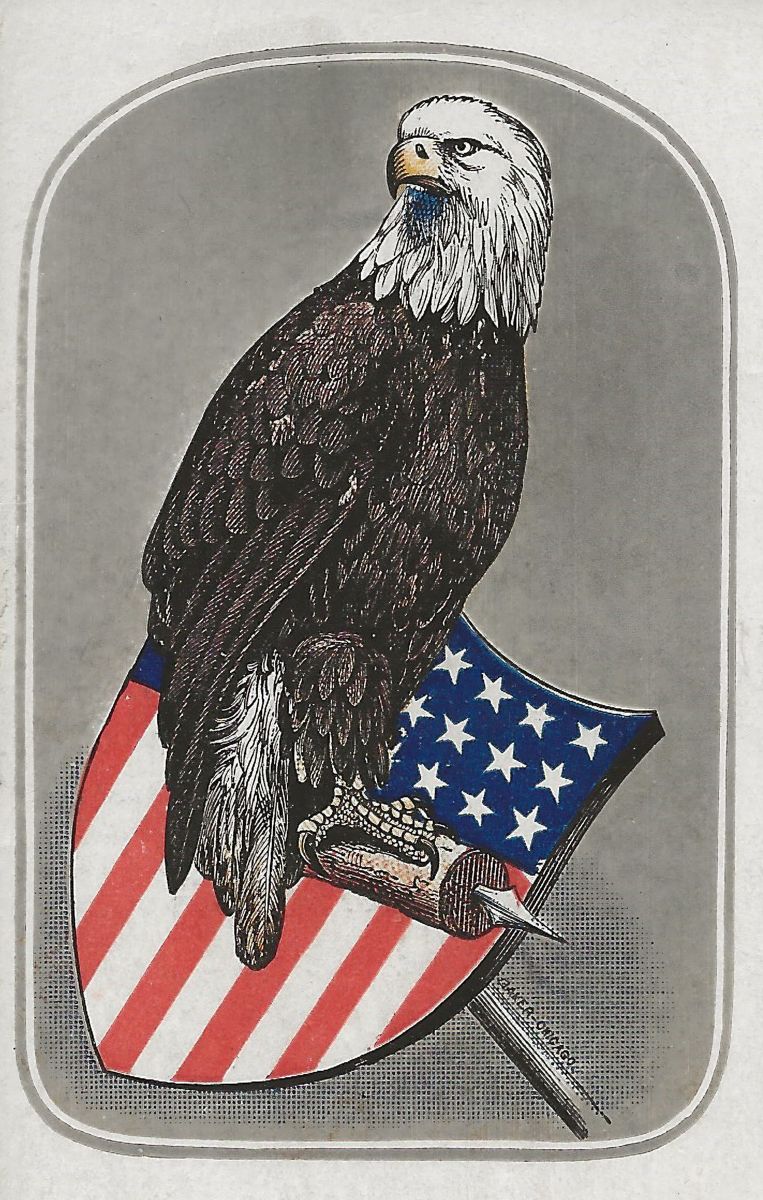
Hamilton Bennett took stereoviews of Old Abe at the Capitol with his homemade camera. His service to the country was far from over. Public appearances at parades, soldiers’ reunions, and political events and fundraisers for sick and wounded soldiers and their families were prominent in his post-war years. In June 1865, he appeared at the Northwest Sanitary Fair in Chicago and helped raise $270,000, followed by the Soldiers Home Fair in Milwaukee, where another $80,000 was raised for the construction of a new Soldiers Home. In May 1868, he was part of the Wisconsin delegation that proposed General Grant for president at the Republican National Convention. He was Wisconsin’s ambassador to the Centennial Exposition in Philadelphia in 1876, and in 1893, his preserved remains were displayed at the Columbian Exposition in Chicago. At the Fairs and the Centennial Exposition, photos and biographies of Old Abe were popular sale items that aided in the fundraising. At the Centennial, an “Eagle Autograph” could be purchased for $1.00. He had been trained to peck a carte-de-visite (cdv) sized photo of himself. “The Army of the American Eagle” had been created prior to the Northwest Sanitary Fair. It was an opportunity for children to become involved in the fundraising. Boys and girls were invited to join and sell “beautiful album pictures in oil colors” for 15¢ each. The pictures were also cdv size. Depending on the amount they sold, they would receive a rank in the “Army” along with a certificate. The ranks ranged from Corporal for selling two pictures to Major General for selling four thousand. In February 1881, a fire broke out in the Capitol, and Old Abe inhaled a large amount of smoke. Despite all attempts to save him, he died a month later. His taxidermy prepared remains went on display in the Capitol until 1904, when another fire consumed the Capitol. Old Abe, the live war eagle of Wisconsin, taken during the American Centennial. (Library of Congress)
United States Army 101st Airborne Division patch, “SCREAMING EAGLES.”
General Dwight D. Eisenhower addresses American paratroopers prior to D-Day. Note the Screaming Eagle patch on the shoulder of the paratrooper wearing number 23 tag. (Colorized image, original from Library of Congress)

Old Abe statue, 1990.
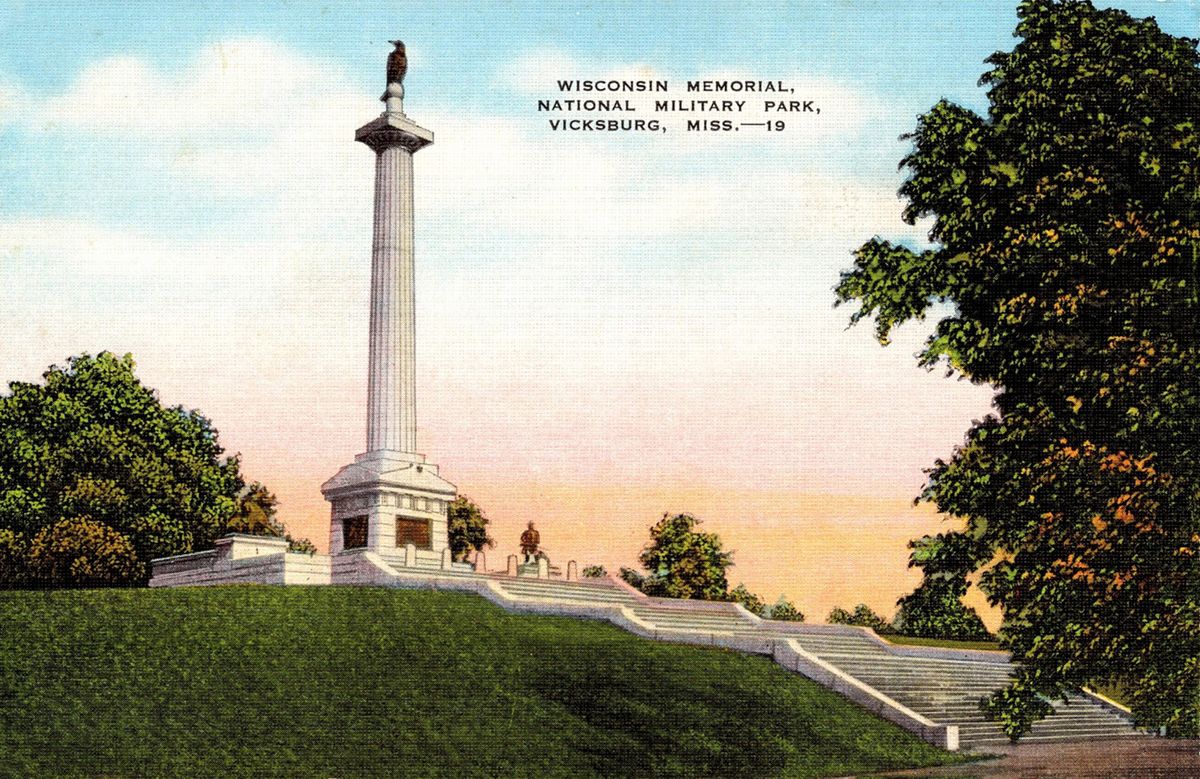
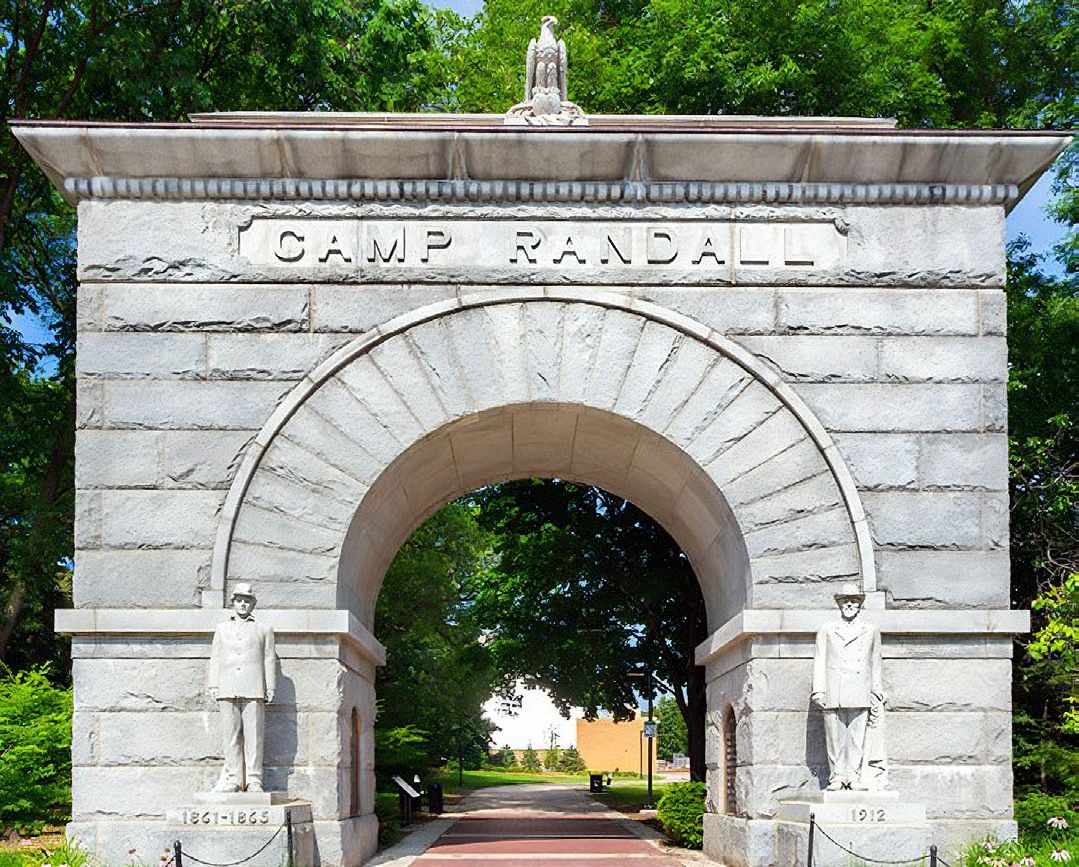
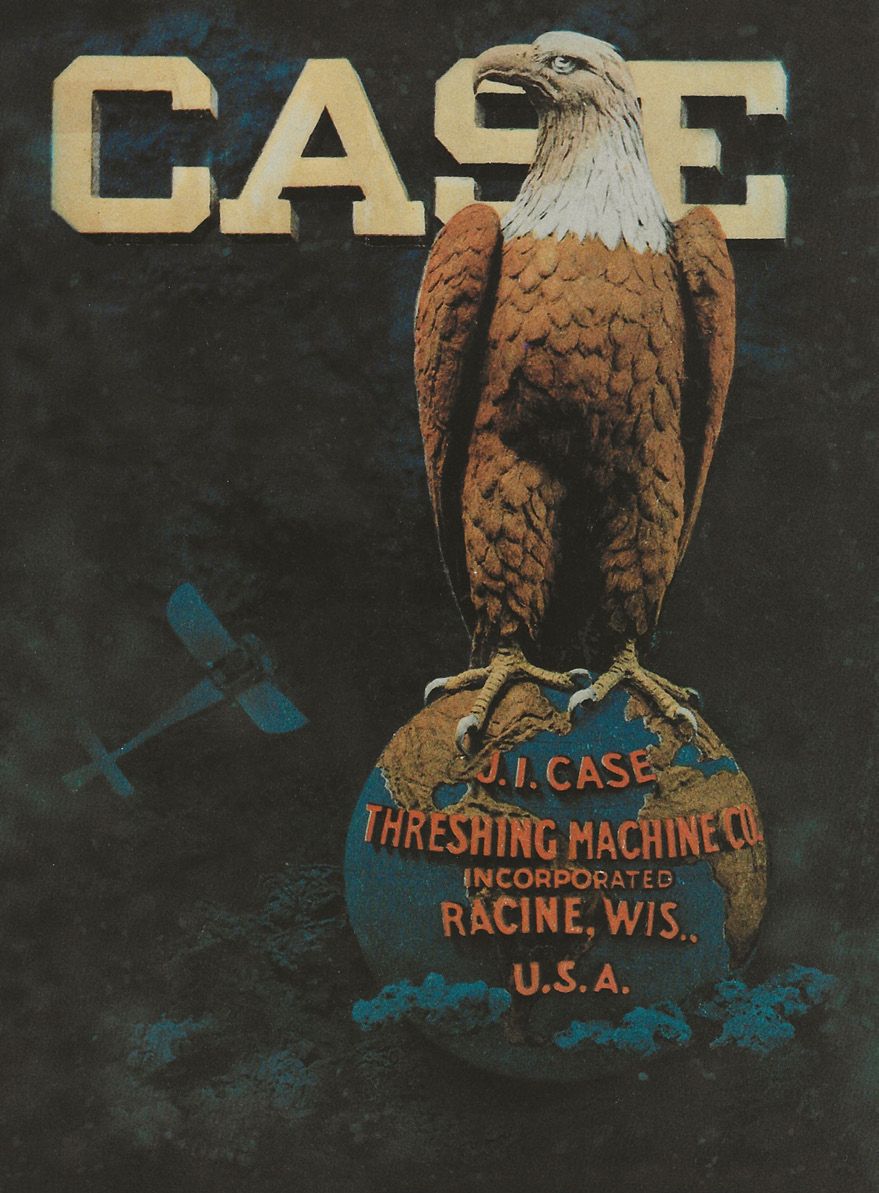
Today, reminders of Old Abe exist in a variety of ways. The previously mentioned photos and biographies are prized by collectors. In addition to the statue at Park Falls, a stone sculpture is at the top of the Wisconsin monument at the Vicksburg National Military Park. Another is on the top of the Memorial Arch at Camp Randall. A replica is on display in the Wisconsin Veterans Museum in Madison, and another presides over the Wisconsin State Assembly Chamber in the Capitol. In 1865, Jerome Case incorporated Old Abe into the trademark of the J.I. Case agricultural equipment manufacturing company of Racine, Wisc. It remained until 1969. After WWI, the U.S. Army’s 101st Airborne Division adopted the likeness of Old Abe on its insignia. The “Screaming Eagles,” as they are known, had their roots in Wisconsin, and their shoulder patch reflects the Civil War traditions of the state. Since the war, and up to the present, books and articles have been written about the Eagle of the 8th. Quite a number of them are directed toward children so they can learn about the eagle mascot who became Wisconsin’s War Eagle during the Civil War. A variety of other promotions, products, and advertising schemes adopted the image of Old Abe as an endorsement. The story of Old Abe and the 8th Wisconsin continues to appeal and attract attention even today. As recently as 2019, studies using facial recognition technology have been used to determine the identities of the men in the Vicksburg Color Guard photograph.
References: • • • • • •
•
Klement, Frank L., Wisconsin and the Civil War, State Historical Society of Wisconsin, Madison, 1963. Klement, Frank L., Wisconsin in the Civil War, State Historical Society of Wisconsin, Madison, 1997. Jacobsohn, Peter H., Old Abe, Wisconsin’s Battle Eagle, Stereo World, Vol 31, No. 1, 2004-2005. Rath, Sara, Pioneer Photographer, Wisconsin’s H.H. Bennett, Tamarack Press, Madison, 1979. Zeitlin, Richard, Old Abe, the War Eagle, State Historical Society of Wisconsin, Madison, 1986. Gerlinger, Donald, Old Abe and the 8th Wisconsin Regiment, Comments from his paper as Chairman of the Wisconsin Civil War Centennial Commission. Phillips,T, Byrd, K, Zou, X, A New Look at Old Abe’s Color Guard, Military Images, Spring, 2019.
Peter H. Jacobsohn, DDS, is a retired Chairman of Oral and Maxillofacial Surgery at Marquette University
School of Dentistry in Milwaukee, WI, and retired from private practice. He is a past-president of The American Dental Society of Anesthesiology, The International Federation of Dental Anesthesiology Societies (IFDAS), The American Academy of the History of Dentistry, and The Milwaukee Civil War Round Table. He is the recipient of the IFDAS Horace Wells Award and the Award of Merit of the Horace Wells Club of Hartford, CT.
Fort Fisher items wanted t!