
This & That Crisis in Charleston
By Gould Hagler · Originally published January-February 2026 · pp. 46–49
& E
This & That
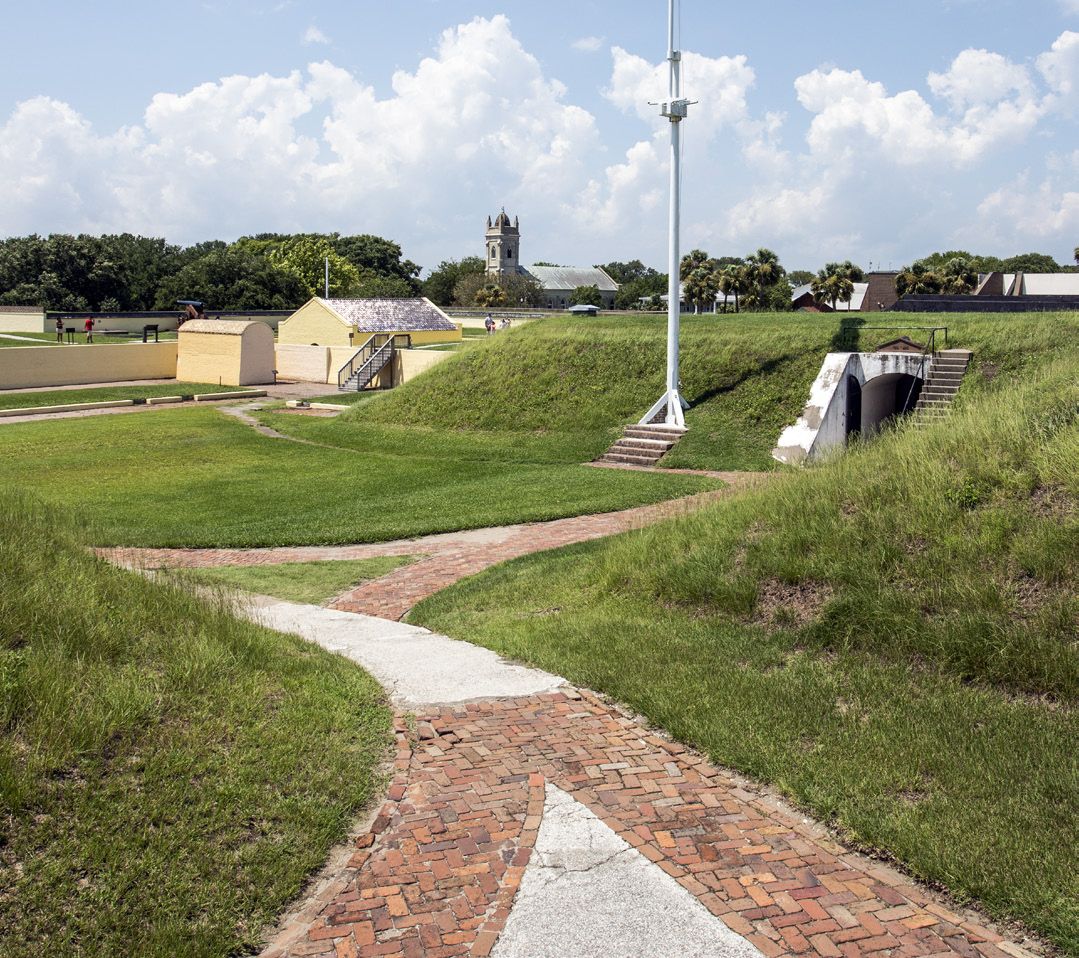
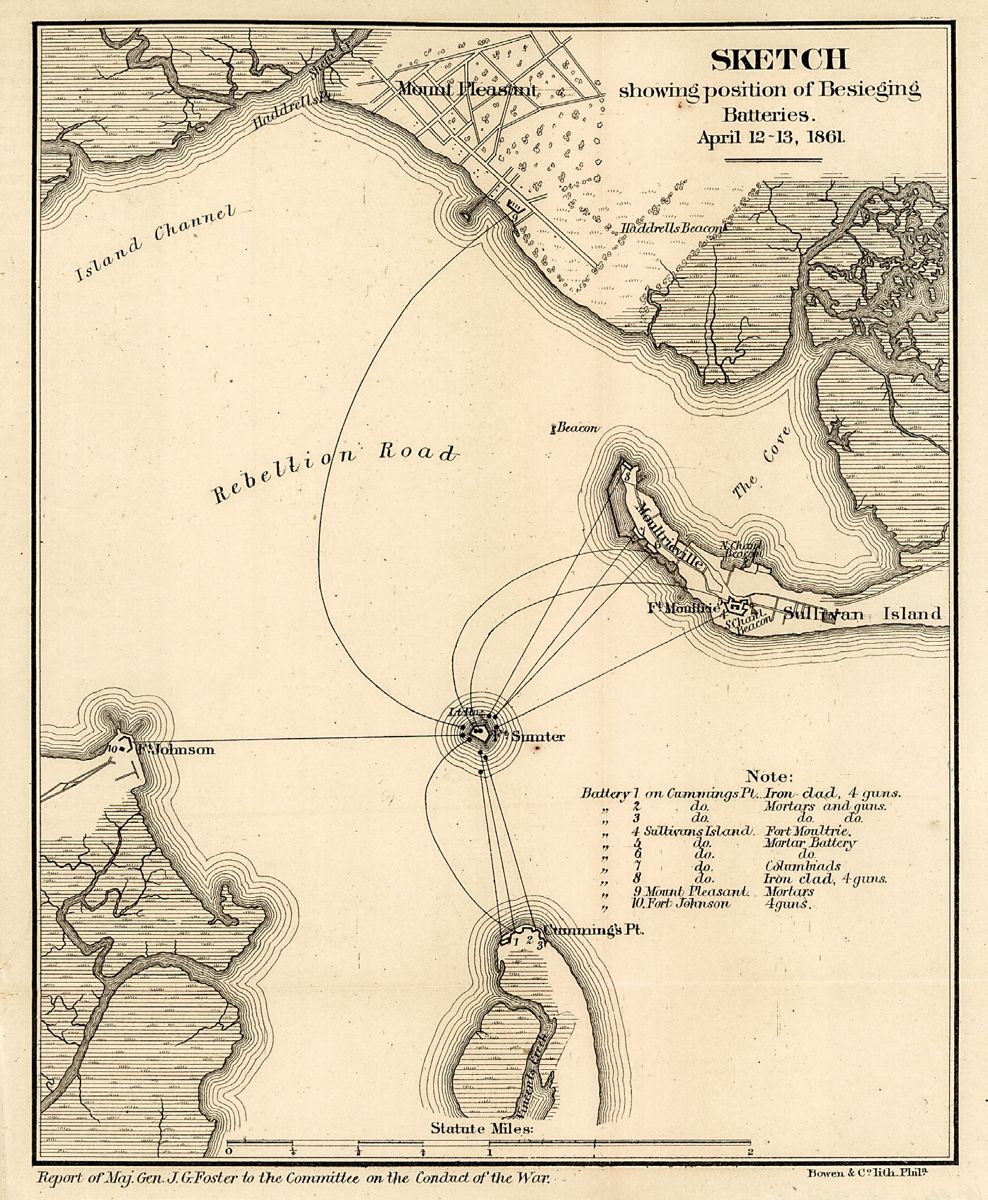
Crisis in Charleston By Gould Hagler very reader of Civil War News knows what happened at On November 15, 1860, Anderson was ordered to take Fort Sumter in Charleston Harbor. Everybody knows command at Fort Moultrie on Sullivan’s Island. Like nearly that Maj. Robert Anderson, U.S.A., commanding at all coastal fortifications, this fort was not ready for war. Fort Moultrie, moved the garrison to Sumter in December The larger one in the harbor, Fort Sumter, was unfinished 1860. Everybody knows that there was a failed attempt by after three decades of on-again-off-again construction. The President Buchanan to resupply and neglect was understandable: no reinforce the garrison. Everybody enemy had threatened the Atlantic knows that, after Lincoln took office, or Gulf coasts for nearly forty years. a second attempt was planned and Circumstances changed during launched. Everybody knows that the 1860 presidential campaign. on April 12, 1861, the Confederates South Carolina threatened secession under Brig. Gen. P.G.T. Beauregard if Lincoln won the election. When began to bombard Sumter from a he did, it was certain that the threat ring of shore batteries. Everybody was not an idle one. The hour was knows that Anderson surrendered near. after a 34-hour bombardment. The fort on Sullivan was all but What else does everybody know? indefensible. It was designed, of That I cannot say, but recently I had course, to repel an attack from occasion to read some details about the sea. Its land side faced what the evacuation of Fort Moultrie, was quite naturally assumed to be the transfer of the garrison to Fort friendly territory. Sand dunes blown Sumter, and the subsequent goings against the walls made a convenient on at the fort, in Charleston and in ramp to the top. Nearby houses Washington between December 1860 made perfect positions for riflemen and April 1861. I learned that there firing into Moultrie’s interior. The was a great deal I did not know about garrison was a small peacetime Sumter and the start of hostilities. In force, not one beefed up for defense. this column, I will write about some As the tension mounted during of these things. the fall, the garrison’s engineer, Major Robert Anderson. (NARA)
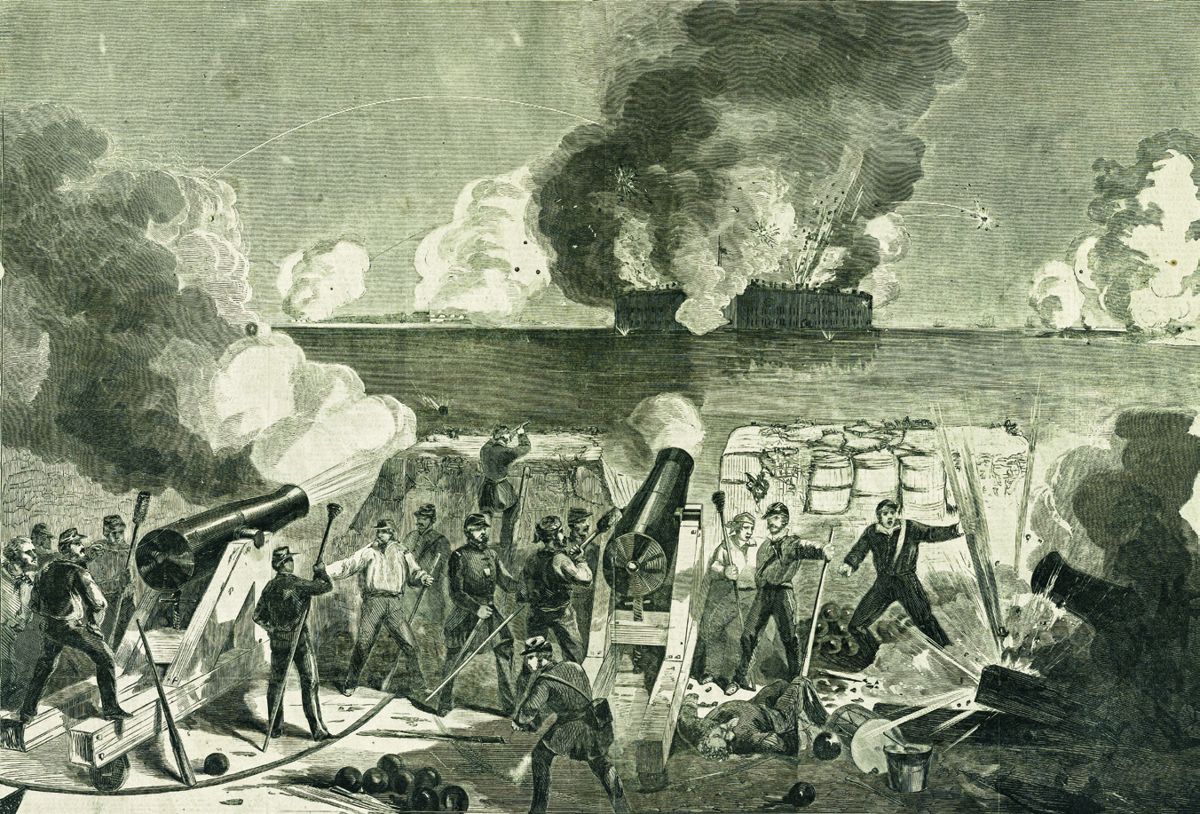
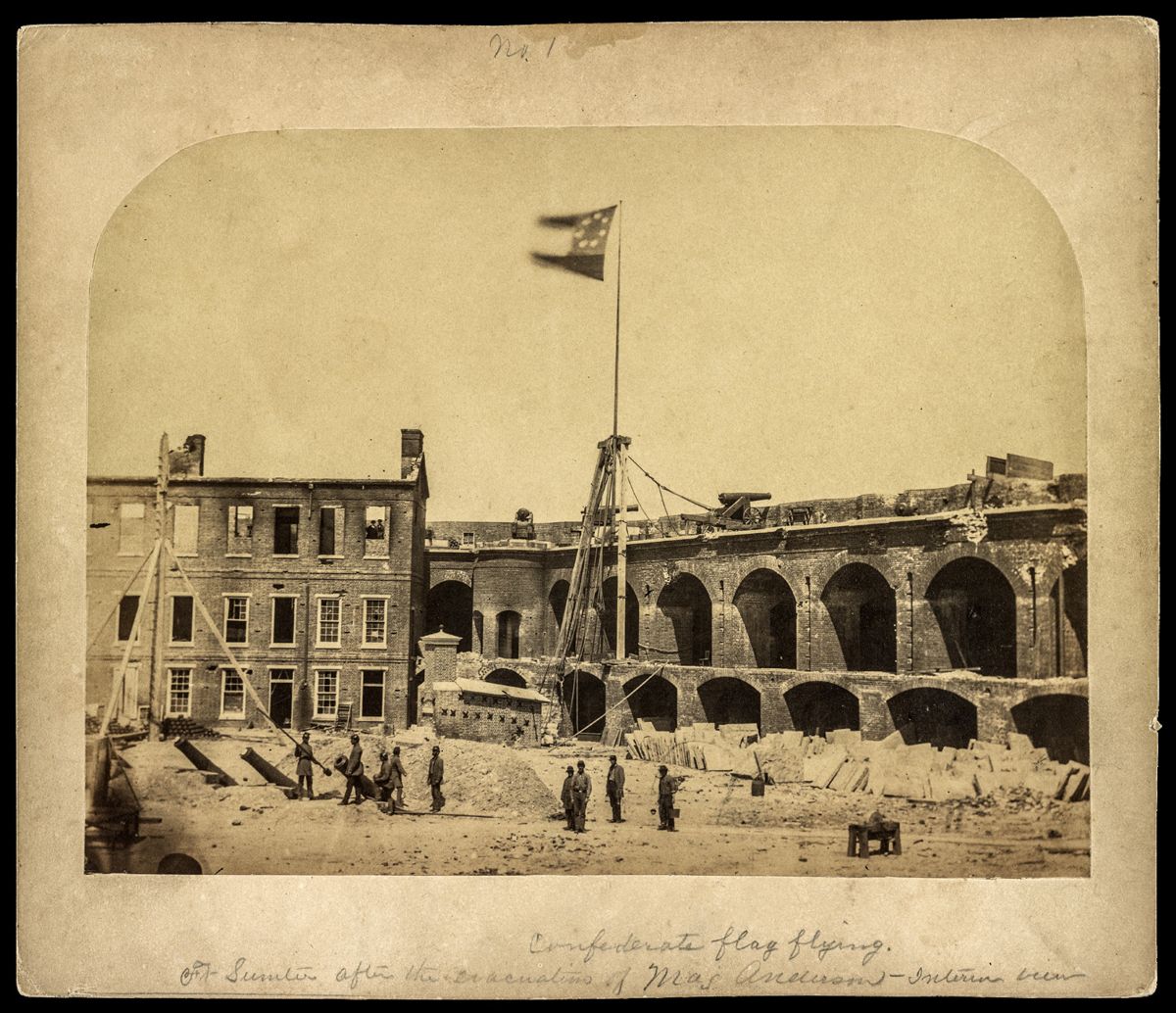
Fort Sumter, the day after its first bombardment. (Library of Congress)
imminent attack. Protecting the women and children made perfect sense to everyone, the officers, the men, and the Charlestonians. The move aroused no suspicion. Anderson also ordered Captain Foster to make sure the artillery at Sumter could not be turned on Moultrie. Foster temporarily defanged the guns by packing up key components necessary to operate them. He shipped them to Moultrie but did not unload them. Late afternoon on the 26th, the women and children boarded two of the hired vessels. Also loaded were supplies to sustain the families at Fort Johnson. A limited supply of food was kept at Moultrie, as the force there would need to eat while defending the fort. The men’s personal property was sent with the evacuees, save some packed in go bags readied for a quick escape if circumstances warranted. Anderson had advised Foster of his plan earlier in the
General Pierre Gustave Toutant Beauregard. (NARA)
Capt. John Foster, did much to bolster the position, but a determined assault by South Carolina troops or even a mob would succeed. Anderson’s orders from the Buchanan administration were not models of clarity. On December 11, he was ordered (verbally by a messenger, Lt. Col. D.C. Buell) to defend his position “to the last extremity.” At the same time, he was told that he should not expose the lives of his men “in a hopeless conflict.” He was “to avoid every act which would needlessly tend to provoke aggression.” In addition to holding Fort Moultrie, he was ordered to keep possession of Castle Pinckney and Fort Sumter in the harbor. In the face of “immediate necessity,” he was authorized to move the entire garrison to either of the other two forts “to increase its power of resistance.” In late December, after South Carolina seceded and as tensions increased, the commander judged that the only way to increase his power of resistance was to move everything and everybody to Sumter. Numerous signs, including a direct warning from James Petigru, a respected Charlestonian and probably the only Union man in town,1 convinced Anderson that it was time to act. He chose Christmas Day. After a weather-induced delay, he put his plan into effect on the 26th. The task was not a simple one. Secrecy was essential: Charlestonians were watching his every move. One of the things I did not know was that there were women and children at Moultrie. (That was a common situation with peacetime garrisons.) Job one was to remove these civilians. Anderson ordered his quartermaster, Lt. Nathan Hall, to hire three schooners to take the families across the harbor to Fort Johnson. He did not tell the man to keep the arrangements a secret. Word got out as Anderson intended. At that point, he was also concealing his plan from his own officers, telling them that he feared an
Interior of Fort Moultrie during the war. (Library of Congress)
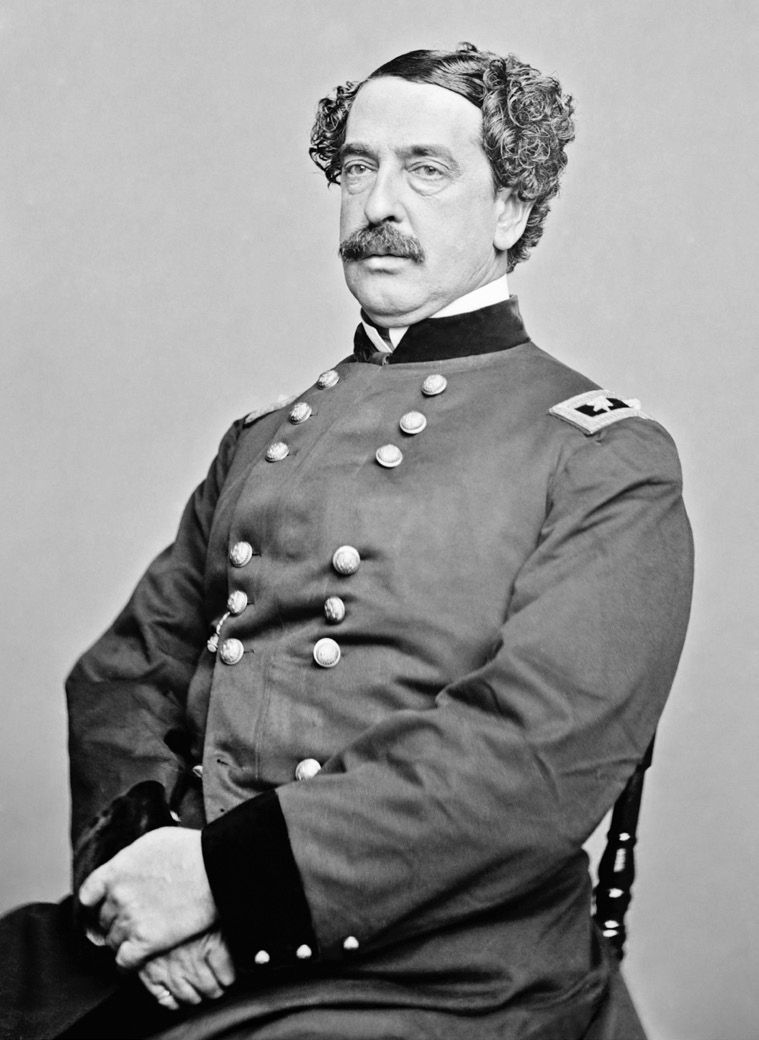
Gen. Abner Doubleday. (Library of Congress)
day; he clued Hall in as the quartermaster prepared to leave. Anderson ordered Hall to keep the passengers and supplies on the schooners when he docked at Johnson. Go ashore, he secretly told the lieutenant, as if he were scoping out the facilities before taking the families and supplies ashore. Other officers were informed as needed. After the families departed, Anderson told Lt. Abner Doubleday to ready his company. There was no time to lose. Anderson gave Doubleday twenty minutes. As darkness fell, Anderson’s men moved. In two shifts, three oared barges carried the troops to Sumter, first loaded with Doubleday’s Company E, then returning for Lt. Truman Seymour’s Company H. Gunners at Moultrie were prepared to fire on any Carolina patrol boat that interfered with the barges. There were some tense moments, but the first wave was successful. The workers at Sumter were surprised when the first barge landed. Most were supportive of the secessionists and, realizing what was afoot, took offense. However, the soldiers were armed; the workers were not; that was that.2 The barges returned to Moultrie to pick up Company H. A rear guard manned the guns, but the barges reached Sumter without incident. As the second wave of barges neared Sumter, two signal shots from Moultrie’s guns told Hall it was time to leave the dock at Fort Johnson. The captain of the hired vessels guessed what was happening and was promptly locked away. The schooners steamed to the fort. By 8 p.m., the garrison, the women, the children, and the supplies were safe at Sumter. Early on the 27th, the rear guard at Moultrie disabled the fort’s guns and evacuated to Sumter with ammunition and the remaining stores. Through a combination of careful planning, clever deception, near-flawless execution, and a generous share of luck, Anderson, under the watchful eye of Charleston, managed to get to Sumter with seven officers, 75 enlisted men, 20 women, and 25 children. The outraged South Carolinians occupied Castle Pinckney and Fort Moultrie. State forces, and later Confederates under Beauregard, built a system of batteries around the harbor. Anderson’s men worked diligently to strengthen Sumter’s ability to withstand attack and to fire in return. The Star of the West, sent to resupply the fort, was repulsed on January 9. Anderson reported regularly to Washington. Mail delivery continued until April 8. Messengers went back and forth. Foodstuffs from the city continued to be delivered, though with some interruption. The women and children were evacuated on February 3. Tensions rose, but there were no fireworks. Until the very end, Anderson expected an order to evacuate.3 Not receiving the anticipated order, he wrote on April 1, pleading for clear instructions.4 Such instructions never came. Instead, Anderson received a letter advising him that a relief expedition was being dispatched.5 Knowing that the relief expedition was under way, the Confederates gave notice to Anderson and opened fire at 4:30 a.m. on April 12. The first ships of the expedition appeared outside the harbor at about the same time, too late and too small to have any impact on the battle. Anderson surrendered on the afternoon of the 13th.6 Everybody knows what happened after that. Sources: Erik Larson, The Demon of Unrest, 2024; David Detzer, Allegiance: Fort Sumter, Charleston and the Beginning of the Civil War, 2001; Maury Klein, Days of Defiance: Sumter, Secession, and the Coming of the Civil War, 1999; OR, Ser. I, Vol. I, Ch. I. pp. 1-317 is well worth a read, start to finish. Endnotes: 1. 2.
Petigru was the man who said “South Carolina is too small to be a republic and too large for an insane asylum.” There were about 150 workers at the fort. One-third were loyal to the Union and stayed. The rest were paid off that night and left the fort on one of the schooners. The ship stayed in the harbor until morning as a precaution: the rear guard was still at Moultrie and the transfer of the garrison had not yet been discovered. On March 25 a messenger from Lincoln, Ward Lamon, told Anderson that an order to evacuate would soon be issued. Lamon told the South Carolina governor the same thing the day before, when he met with the governor and obtained permission to go to Sumter. OR, ser. 1, v. 1, p. 230. On April 4, Secretary of War Simon Cameron sent a letter to Anderson advising him that an expedition to resupply and reinforce his garrison would go forward. On April 8, after receiving this shocking message, Anderson wrote that its content “surprises me very greatly.” Knowing the strength of the harbor’s defenses, he wrote that the mission “cannot fail to be disastrous to all concerned.” Anderson was by no means alone in his judgment of the expedition’s chances: his own officers, Gen. Winfield Scott, Brig. Gen. Joseph Totten, and several other military men thought the same. Anderson’s letter, addressed to Adj. Gen. Lorenzo Thomas, was intercepted by the Confederates and was published in Southern newspapers. It is found in OR, ser. 1, v. 1, p. 294, with the Confederate correspondence. 6. Anderson first negotiated a surrender with Louis Wigfall, a volunteer aide to Gen. Beauregard who had recently resigned from the U.S. Senate. Wigfall rowed to Sumter on the afternoon of the 13th, during the devastating bombardment. He claimed to be acting under Beauregard’s orders, when in fact he was acting entirely on his own. After a great deal of confusion, Beauregard and Anderson agreed to terms essentially the same as those settled by Wigfall and Anderson.
Gould Hagler is a retired lobbyist living in Dunwoody, Ga. He has been a regular contributor to CWN since
- He can be reached at gould. [email protected]. (Library of Congress)