
Vision and Valor: The War Through Women’s eyes
By Juanita Leisch Jensen · Originally published September-October 2025 · pp. 22–25
This Vision and Valor article takes a detour from the usual focus on women’s roles in the Civil War. uring the Civil War, more than 95% of soldiers volunteered to serve. Volunteering was a weighty decision to interrupt life and career, separate from family, and face the very real danger of death.
THE VERSE AND PICTURE ALPHABET The letter H in Head is found, In Hand and Heart, likewise; ‘Tis also seen in Hoop that’s round, And Heaven above the skies.
X in Excel is always found, In good Example, too; Long may they both in you abound, In all you say and do.1
In letters, diaries, and journals, volunteers overwhelmingly cited dedication to God, country, and family as the primary reason to enlist. This article explores, first, what created a generation of men willing to risk life and limb for God, country, and family, and second, whether they regretted this decision. “Republican Motherhood” refers to the idea that an important role of mothers was to raise sons able and worthy of becoming leaders of the Republic, and daughters able
D “He Died for Me”
and worthy to raise their offspring as potential leaders. Even as mothers provided for the health, safety, educational and physical needs of children, they also focused on moral, ethical, and religious training. The physical artifacts which demonstrate this focus include psalms, hymns, primers, periodicals, storybooks, and schoolbooks intended for children. Every topic, including the alphabet itself, could be (and was) used to introduce religious and character-building lessons. Many childhood rhymes now shortened to secular components included religious overtones and characterbuilding lessons:
Against Idleness and Mischief2 Isaac Watts How doth the little busy bee Improve each shining hour, And gather honey all the day From every opening flower! How skillfully she builds her cell! How neat she spreads the wax! And labors hard to store it well With the sweet food she makes. In works of labor or of skill, I would be busy too; For Satan finds some mischief still For idle hands to do. In books, or work, or healthful play, Let my first years be passed, That I may give for every day Some good account at last. Books and periodicals intended for older children likewise emphasized character-building. The following is from the introduction of a book titled The Young Man’s Book: Lectures for the Times. To be free from vice is indeed important, but equally so, that the mind fasten upon an end worthy of pursuit. The necessities of a sincursed world require that young men should expend their energies on some good purpose. … a course of conduct that will make them the world’s benefactors.3 This emphasis on written words found in books for children continued into adulthood as young men were exhorted to own and read testaments. During the Civil War, individuals and organizations distributed bibles, testaments and religious tracts to soldiers in vast quantities. The result of decades of raising children with a constant bombardment of character-building and religious instruction was a country populated with men willing to go to war for principles, whether it was freedom from an oppressive king, independence for Texas, states’ rights, preservation of the union, or God, country, and family.
Frontispiece of testament stamped “Donation Committee, City of Boston, Mrs. H. G. Otis, Agent.“ It was presented to Corporal Durning by Mrs. H. G. Otis, who noted she preferred to personally distribute goods from the depot she ran for the City of Boston. In addition to this testament, a havelock and poncho exist with Mrs. Otis’s stamp on them. [Collection of the Author]
Many women supported their husbands’ enthusiasm to sacrifice time with their family to serve God and country. However, as weeks turned into months and years, and especially toward the end of the war, some encouraged their husbands to return home. From 1861 to 1865, Madison Bowler served in the Third Minnesota Volunteer Regiment while his wife Lizzie remained in Nininger, Minnesota. In the four years from 1861-1865, they spent only twelve weeks under the same roof. By 1864, Lizzie was increasingly insistent that Madison should come home. December 25, 1864 – I do not want to insist on your coming home against your will, but I do not think it best for you to run the risk of your life by staying longer than spring or till the weather comes warm again.4 January 22, 1864 [1865] – That Barney McKenna is at home [to] try to get a divorce from his wife. I suppose he has found some southern girl that suits him better. If you stay there much longer I expect you will be coming home on the same business.5 May 20, 1865 – You still talk of staying in the army. Don’t you think that four years is long enough to be a soldier? I think it is.6
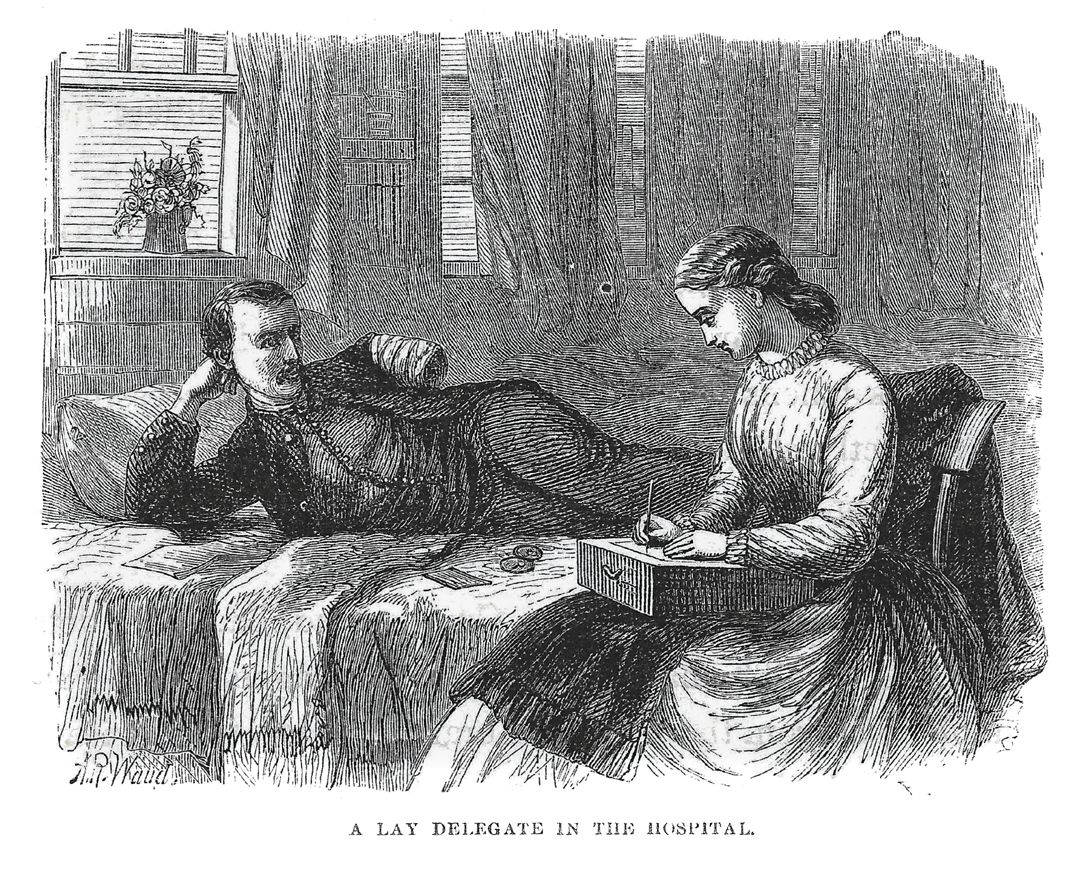
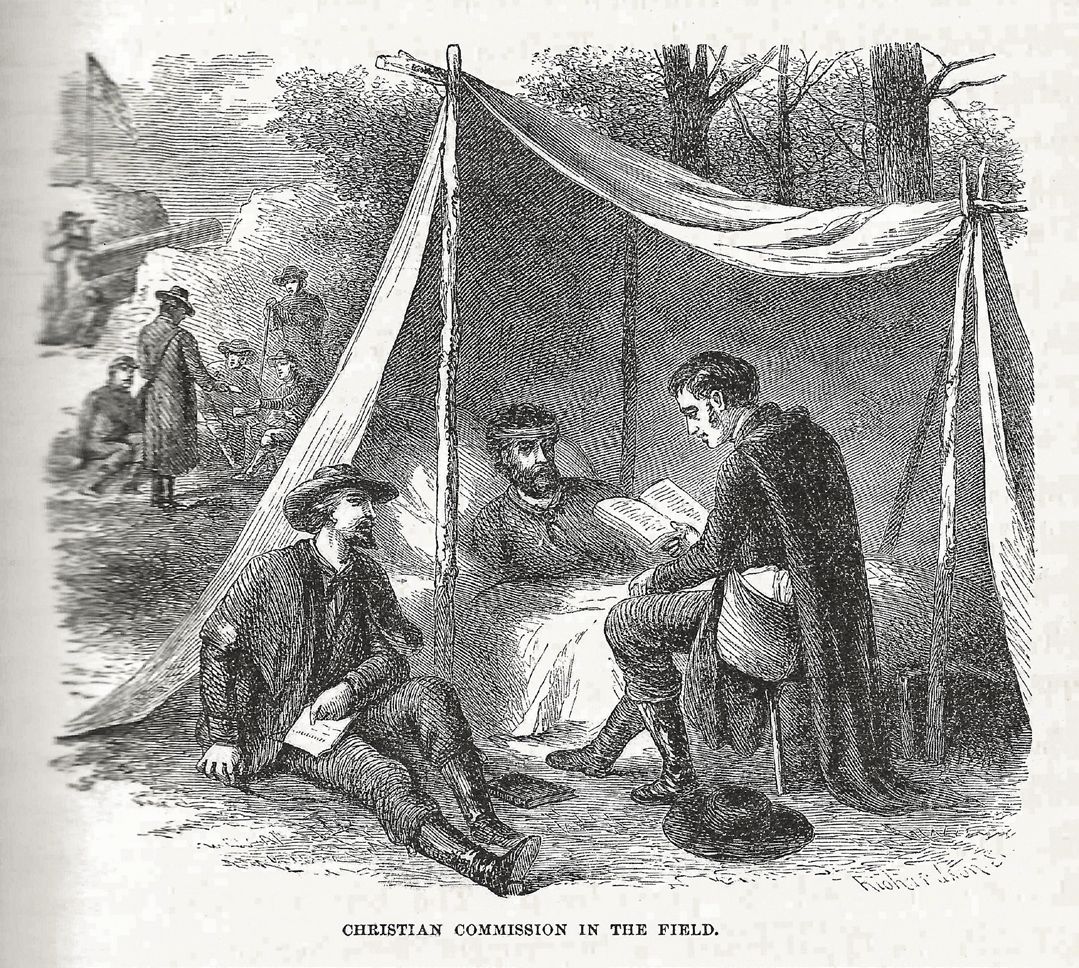
In the fall of 1865, Lizzie joined Madison in Arkansas, where he served as an agent of the Freedmen’s Bureau until April 1866.7 Madison survived the war, and he and Lizzie lived for many decades after the war, expanding their family to a total of ten children. Others were not so fortunate. For some soldiers, there came a time when they realized they would never again return home. How can we know if soldiers facing imminent death regretted the dedication to “God, family, and country” that led them to volunteer for service? In this era, ‘dying words’ and final gestures were considered important clues to mental state. Those who ministered to soldiers on the battlefield, in camp, and in hospitals often noted and reported the sentiments soldiers expressed in their final moments. From these reports, we learn how dying soldiers felt about God, family, and country. Among the genre of books detailing camp, hospital, and battlefield ministry to soldiers, most are accounts of wartime experiences written by individuals. They focus on who did what, where, when, and after which battles. An exception to this is Christian Work on the Battle-field, which offers, instead, a series of anecdotes provided by U.S. Christian Commission agents and ministers reporting conversations they had with soldiers, including many deathbed interviews. An offshoot of the Young Men’s Christian Association, the Christian Commission provided nationwide coordination of charitable support for soldiers. It differed from the more famous U. S. Sanitary Commission by emphasizing religious and spiritual support, and by ministering to both sides. Most anecdotes related in the book describe soldiers still committed to God, family, and country. I saw another [soldier] with both legs off close to the thigh. When I spoke to him of the sacrifice he had made for his country, he answered – “My country demands it and my Saviour demands it. I believe that the kingdom of Christ will be advanced by this war.” Another said, “I am ready to go home to my parents, home to Christ, or back to the war.”8 Some anecdotes describe the patriotic fervor of Civil War soldiers As I passed one cot, my eye was caught by a happy and contented face. I stopped and spoke to the soldier; “You seem happy, my friend. I trust it is because your faith in Christ is firm.” “Yes,” he answered, “I took Him with me to the army.” “I trust you’re not much hurt?” I continued, deceived by his pleasant face. He rolled down the coverlet, and showed me that both legs were gone:
“You have made a noble contribution to your country.” “I have given all but my life and am ready to give that if she needs it.”9 Other anecdotes describe the focus on family connections. “Chaplain, one of our boys is badly wounded, and wants to see you right away.” … I was taken to a cot on which lay a noble young man. He was pale and blood-stained from a terrible wound above the temple. … I said to him – “Well, my brother, what can I do for you?” The poor dying soldier looked up in my face, and placing his finger where his hair was stained with blood, said – “Chaplain, cut a big lock from here for mother. … I did as he requested me. “Now, Chaplain,” said the dying man, “I want you to kneel down by me and return thanks to God” “For what?” I asked. “For giving me such a mother. Oh, Chaplain, she is a good mother. And thank God that by His grace I am a Christian. … I know that my Redeemer liveth.’ I know that his finished work has saved me. … And, Chaplain, thank God … for the promised home in glory. … I knelt by the dying man and thanked God for the blessings He had bestowed upon him …10 Many other anecdotes of the Christian Commission delegates confirm that such patriotism was mirrored by mothers, wives, and sisters at home: I knelt beside [another lovely youth] and said – “My dear boy, what can I do for you? Shall I talk to you of Jesus?” Oh, yes, “he said, “I am used to that. I have loved Him, but not near enough, for two years; and now He is going to take me home.” “Have you a mother?” “Oh yes;” tears filled his eyes. “It must have been a great trial to give you to your country.” “Yes it was. When I first mentioned it, she would not hear me; but we both prayed over it and at last she consented, saying ‘My country deserves this sacrifice. I gave you to God at your birth, and this is His cause.”11 It seems appropriate to end this article with an anecdote illustrating the result of raising boys to “expend their energies on some good purpose” and to be “benefactors to the world.”
While searching, in answer to a home letter, for a grave in the Soldiers’ Cemetery in Nashville, I noticed a man in citizen’s dress kneeling by a grave and evidently writing upon the painted headboard. When I came to the spot he was standing in front of the board, his arms folded, his face bathed in tears. He was an Illinois farmer, and this was the grave of an Illinois soldier “Is that your boy, sir?” I asked. “No, he lived in our town, and I’ve come to find his grave.”
“Perhaps you represent his father, who couldn’t come?” “Yes, my neighbor was glad to have me come, but I came for myself. You see, I have seven children, all of them small, and my wife is sickly. I was drafted. There was nobody to carry on the farm, and I couldn’t hire a substitute. My thirteen dollars a month wouldn’t feed the family. It seemed as though I must go and they must suffer. When we were in our greatest trouble about it, just the morning I was to report at camp, my neighbor’s son came over to the house and offered to go to the war for me. He said he had nobody depending on him and he could go better than I. He went, and was wounded at Chickamauga, brought to a Nashville hospital, and this is his grave.” The stranger sobbed aloud. I read the word which he had traced with his pencil in large, awkward letters under the private’s name, – “DIED FOR ME.”12 Endnotes
Anonymous. The Verse and Picture Alphabet. London: Dean & Co., Threadneedle St, date unknown, p. 11, 28. 2. Watts, Isaac. Divine and Moral Songs for the Use of Children. United Kingdom: Harvey and Darton, 1824. 3. Patton, William M. The Young Man’s Book: Lectures for the Times. Auburn: Derby and Miller, 1851, p. vi. 4. Foroughi, Andrea R. Go If You Think It Your Duty: A Minnesota Couple’s Civil War Letters. St. Paul: Minnesota Historical Society Press, 1984, p. 272. 5. Ibid., p. 274. 6. Ibid., p. 295. 7. Ibid., p. 306. 8. Ibid., p. 152. 9. Anonymous. Christian Work on the Battlefield: Striking Incidents of the Labours of the United States Christian Commission. London: Hodder and Stoughton, 1902. p. 141. 10. Ibid., pp. 229-230. 11. Ibid., p. 226. 12. Ibid., p. 33. 1.
J uanita L eisch J ensen is a nationally known speaker , writer , researcher ( and avid collector ) of subjects related to civilians and the C ivil W ar . S he can be reached at lesandjuanita 1@ hushmail . com to schedule talks and presentations . S he is a member , fellow , and former G overnor of the C ompany of M ilitary H istorians . S he is also a member and former P resident of the S ociety for W omen and the C ivil W ar . S he authored two books : W ho W ore W hat : W omen ’ s C lothing , 1861-65, and an I ntroduction to C ivil W ar C ivilians . J uanita and her husband , military historian L es J ensen split their time between homes in O range C ounty , N ew Y ork , and S henandoah C ounty , V irginia .