
Central Virginia Battlefields Trust
By Tim Talbott · Originally published September-October 2025 · pp. 50–55
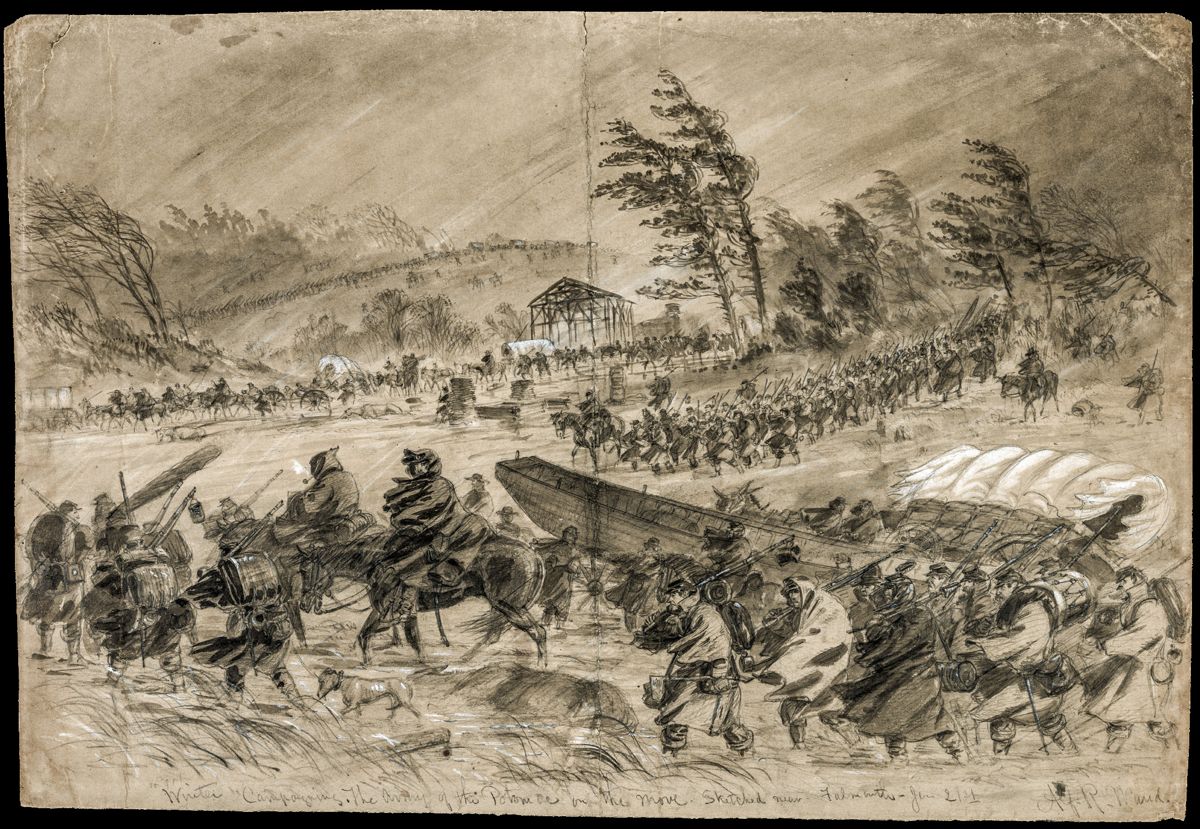
From a strategic and tactical military standpoint, Maj. Gen. Ambrose Burnside’s January 1863, “Mud March” was an unmitigated disaster for the Army of the Potomac. Coming so soon after the defeat at Fredericksburg, it is important to consider how the officers, as well as the noncommissioned officers and enlisted men perceived it. After all, they were the ones who mattered when it came time for the army to do battle. It was their efforts under fire and their morale that truly counted, and if their confidence in their leader, and by extension their belief in their cause, was shaken, what did that mean for their effectiveness as a fighting force and chances for success?
Since assuming command of the Army of the Potomac in November 1862, Burnside continually struggled adjusting to the demands of the position. To his credit, he expressed that the job was beyond his capabilities when President Lincoln first offered it. He felt his feet too small to fill Gen. George B. McClellan’s now vacant shoes. But with few other desirable alternative candidates available, he accepted the role. With political pressure coming down on him from Washington City for a successful rebound after the failure at Fredericksburg, and to buoy the newly added war measure of emancipation, a heavy burden rested on Burnside’s shoulders at the end of December 1862 and into January 1863. Additionally, he must have felt at least some professional pressure to mirror the victory achieved by Maj. Gen. William S. Rosecrans and his Army of the Cumberland at Stones River in Tennessee, fought on New Year’s Eve 1862, and January 2, 1863. Following Fredericksburg, Burnside spent a considerable amount of time and effort planning and scouting a suitable Rappahannock River crossing location for the Army of the Potomac. He had conceived a plan to do so south of Fredericksburg, but soon received a demand from Lincoln to obtain the commander in chief’s approval before making any offensive movement. Burnside made a trip to Washington to discuss the situation with Lincoln and learned that two of his subordinates had informed the president of the planned move that they considered ill-advised. Burnside left Washington still handcuffed by the president.
The Mud March: Union Soldiers’ Perspectives By Tim Talbott Introduction
But upon return to the army, communication was renewed between Lincoln, Maj. Gen. Henry Halleck, and Burnside. Eventually, Lincoln, ever eager to show progress to the public, approved Burnside’s revised plan to cross upriver, above Fredericksburg, and flank Gen. Robert E. Lee’s Army of Northern Virginia out of their fortified positions. After a false start on January 17, when Confederates began shifting to meet the move, selected corps of the army began in earnest on January 20, 1863, toward Banks’ Ford.
Background
Maj. Gen. Ambrose Burnside’s attempt to outflank the Army of Northern Virginia with a movement that began on January 20, 1863, is a good reminder of how important weather could be to the success or failure of Civil War armies. (Library of Congress)
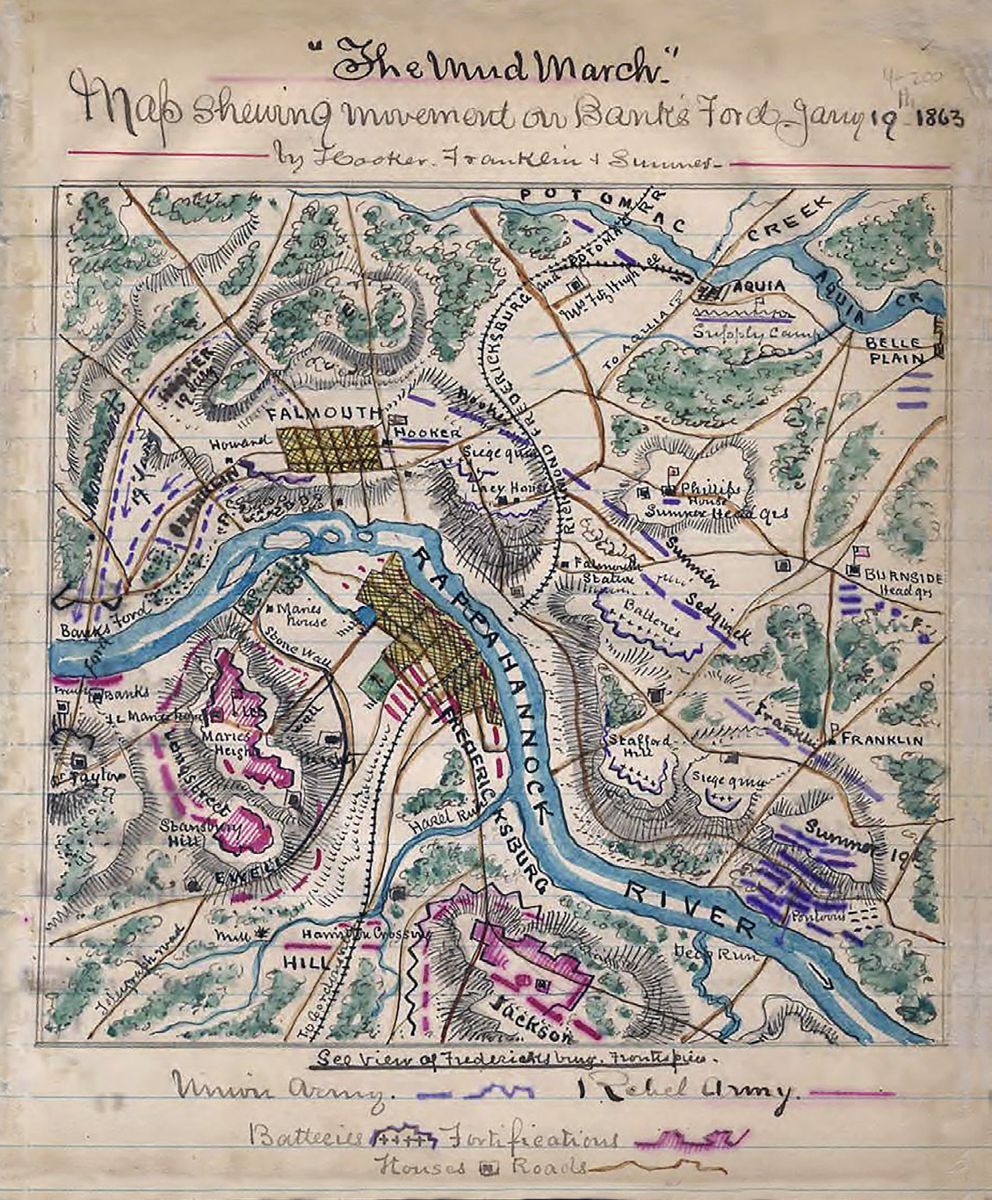
What the Soldiers Wrote
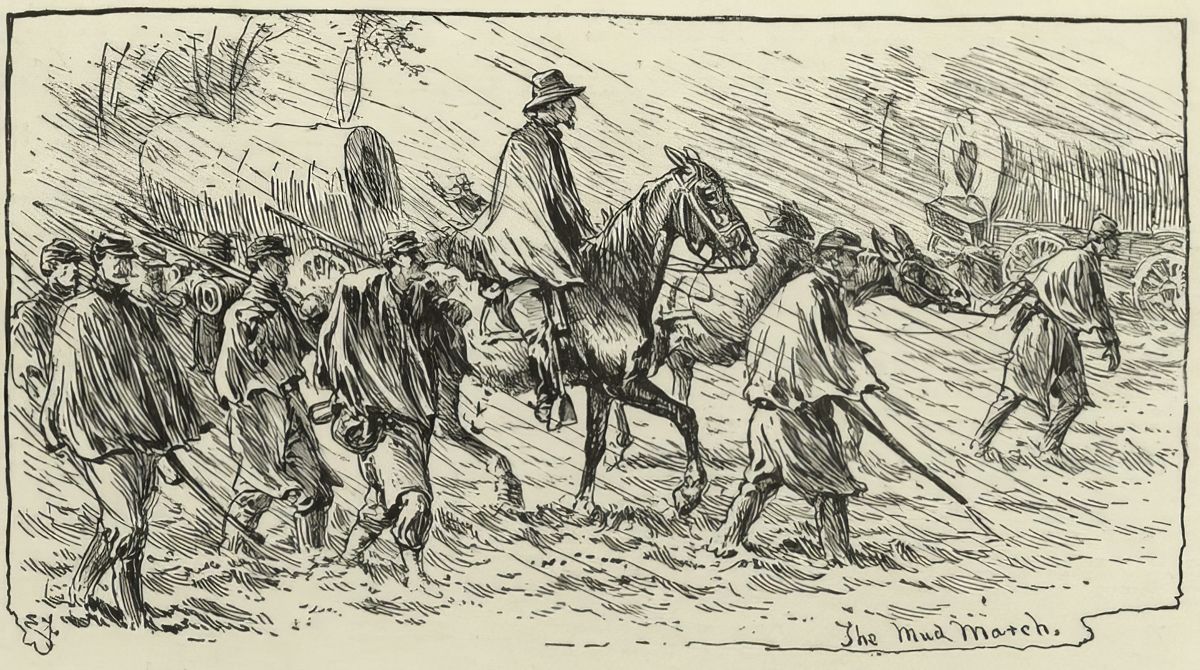
Seemingly any Federal soldier who wrote a letter during the week after the Mud March commented about it, even if their corps did not participate. It was that kind of an event for the army. The following are just a few observations about the Mud March and its results that came from soldiers who wrote about it at the time. On January 20, 1863, Lt. Curtis Clay Pollock, 48th Pennsylvania, wrote to his mother that “Gen. Burnside has sent an order, which will be read to night, saying the army is to move to-morrow. No one appears to know where we are going to, but I suppose we will cross the river above Falmouth.” As part of the IX Corps, Pollock and his regiment luckily remained in camp while others headed out that day on the march upriver. The VI Corps was not as fortunate. After returning from the failed operation, the 77th New York Infantry’s Pvt. Alonzo Bump wrote his wife Mary on January 25 that his reason for not writing sooner was the march. “We have bin a marching threw the mud for 2 days,” he explained. After marching nine miles and making camp “it comments to rain so they could not git thair (Library of Congress)
Pontoons to the river for the mud was so deap they could not move them… .” Bump wrote, “We had to travel threw mud nee deep … and you had Better Beleave I [was] tried when we got Back to our Camp.” During the march, Bump fell out and received a pass from the regimental surgeon. He suggested he would do so again if the army tried another such movement but he believed “we shant march again this winter.” Writing the same day as Pvt. Bump, Capt. Henry Young, 7th Wisconsin, I Corps, scribbled to his wife Delia calling the operation “one of the most damnable marches we ever had.” Young detailed the march: “It commenced to raining just at dark the day we left camp here we had only got eight miles. It rained all night. A cold rain. We build fires and stood around them all night. Next morning we started in the mud and rain to go six miles above Falmouth. By noon all the roads became impassible for Artillery.” Young noted that part of the problem was the thaw, precipitated in part by the rain. “The frost had got out of the ground and the mud was half leg deep by the time we got there,” Capt. Young penned. While he placed the blame on the weather and not directly on Burnside, still he said, “We were out four days and four nights and we never suffered so much in the same length of time since coming into the service.” It is difficult to tell Young’s true take on the march as far as its impact on morale, but he noted that, physically, “The boys of the Co are pretty well used up with the march but a day or two rest will mak them all right. They behaved well and stuck the thing right through.” Sgt. George T. Bowen, 12th U.S. Infantry, V Corps, made daily diary entries. On January 20, Bowen scribbled,
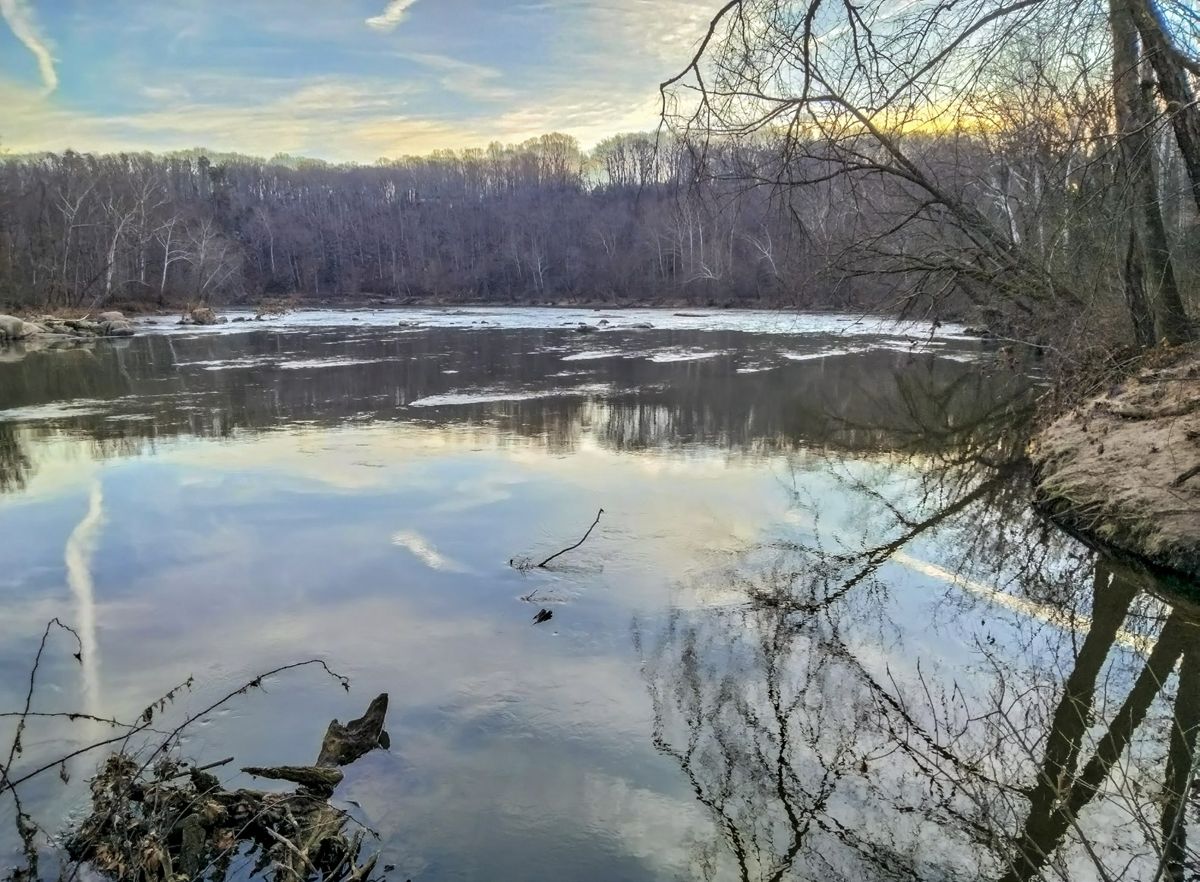
“Marched at 1 P.M. Roads blocked by wagons so that were forced to halt for the night only a mile from the old camp. It is raining & we have prospects of a rough night & muddy march tomorrow.” The following day was much the same: “Rained hard all night & we were forced to sit around camp fires & shiver until day light when we marched on 7 miles … . Rain still continued. Roads awful to travel on for man and teams.” On January 22, seeing little to no progress, Bowen wrote, “we are ‘stuck’ in the mud & can go no farther. The horses and mules are not able to pull even empty wagons.” “The whole move is likely to prove a grand fizzle,” and still more rain could come any minute he added. The conditions obviously strained logistical capabilities and required nontraditional means to provision the troops. On January 23, Bowen penned, “Cavelry men have to bring up boxes of hard bread on their horses though to feed the infantry. Wagons cannot move loaded.” As if the ordeal itself was not enough and adding insult to injury, Confederate pickets on the opposite shore shouted that crossing would have been easy a week previous, but “they are ready for us now.” Lt. Peter Hunt, 1st Rhode Island Light Artillery, II Corps, remained in his camp during the march, but he wrote to his brother on January 25, that it appeared Providence was against the army: “it really seems as if the Almighty was against this ‘Army of the Potomac’, for the very elements are against us. Just as we were to make another advance, and most of the army were on the march, this long cold rain set in causing everything to be abandoned.” With everything stuck in the mud, Hunt explained, “you may expect nothing new for some time to come from this once ‘glorious army of the Potomac.’ I feel mean enough, I tell you. I never wrote like this before. I hate to tonight, but I cannot help it.” As part of the artillery, and with its special travel challenges in the best of weather, one wonders how much more disgusted Hunt would have been had he participated in the fruitless excursion. Writing to a female friend from near White Oak Church, the 4th Vermont Infantry’s Sgt. Frederick Godfrey, VI Corps, explained that as they marched they came upon the pontoon boats “stuck fast in the mud we stacked arms, and waded in with ropes, and helped pull them out which we accomplished by about 11 oclock at night … were marched back to camp wett and cold, and covered with mud from head to foot.” Several soldiers were hurt doing the work, and Godfrey believed that “I dont know that I ever saw the troops so worn out, and discouraged before in my life. 20 deserted out of one battery that went with us in one night.” Sgt. Godfrey was clearly disheartened as he wrote, “if this is the way the war is to be carried on I think the sooner we are divided the better It is to bad if we are to be made tools of for men to practice with that are no more fit to take command than an eight[h] corporal.” Pvt. Alonzo Searing, 11th New Jersey, II Corps, penned his sister a letter on January 26 reviewing the Mud March for her. After receiving marching orders on January 20, Searing and his regiment “took down our shelter tents, packed our knapsacks, and with a good supply of ammunition and haversacks well stored with rations … marched away from camp.” After stopping for orders, it started raining. They returned to their camps and pitched their tents again. The following morning, they struck tents and set out again. Searing explained that “The cold rain continued to fall steadily, and with each mile we traveled the roads kept getting worse, until the blue greasy Virginia clay was almost impassible.” They camped in a pine woods that night and on January 22 awoke to find “the army of the Potomac almost hopelessly engulfed in the mud.” Searing claimed, “nature had defeated [Burnside’s] plans.” Echoing the sentiment previously shared by Sgt. Bowen of the 12th U.S. Infantry, Searing wrote, “The rebels had discovered us and thoroughly enjoyed our situation.” To rub it in, the Confederates “placed a large sign with this inscription on it ‘Burnside’s army stuck in the mud,’ and then they would shout across [the river] inviting us to come over, and also made many insulting gestures.” Serving as adjutant in the 119th New York, Lt. Theodore Dodge was part of the XI Corps and was able to largely observe the Mud March. On January 22, Dodge described the rapid deterioration of the roads: “You have no idea how soon the roads turn from good to bad here in Virginia. A clayey soil is hard and the very best for marching on in favorable weather, but let it rain but an hour and troops and wagons march over the road, and the mud is worse than anyone who has not been in Virginia can conceive of.” The next day he wrote, “The horses sank into mud up to their bellies, and it is said down near the river you sometimes have to put sticks under the mules’ necks to prevent their being engulfed in the very slough of despond.” Dodge added, “How well inspirited and confident the men feel in their leaders you can well imagine.” Soldiering was difficult enough in the best of situations. Despite being accustomed to adverse weather conditions by this point in the war, experiencing rain, mud, and cold weather without any rewards for their efforts tried the spirits of the most patriotic soldiers. Pvt. John Partington, 24th Michigan, wrote to his wife Sarah on January 26 explaining, “we had the most hardships on this last march then we have seen all the time we have been out. I lay in water one whole night … and never moved till morning. My whole side and hip [was] just as it if was dead [numb] By morning. I thought that was Pretty rough after being sick for about 20 days.” As so many other soldiers did in the week following the Mud March, the 111th Pennsylvania Infantry’s Pvt. James Miller wrote home on January 28 describing the march’s sights: “i never saw half so may horses and mules dead in the road on any march we ever made as i saw on this last one.” Miller continued, “it was no uncommon sight to see from fifty to sixty baggage wagons and half as many artillery wagons and caisons stuck in the mud and all in sight at the same time.” Although claiming Banks’ Ford was the Army of the Potomac’s target location to cross the he did not know what would Rappahannock River. (Tim Talbott)
happen next now that Hooker had replaced Burnside, he was obviously frustrated “that the government is determined not to let us do anything for they keep moveing our generals so that i wonder that the men do not get more discouraged than they are.” Miller blamed much of the soldiers’ dispirit on “the letters of croakers at home,” which obviously only added to the poor morale from the Fredericksburg defeat and Burnside’s failed march. One of the harshest criticisms of the movement came from the 20th Massachusetts Infantry’s Capt. Henry Livermore Abbott. In a letter to his father on January 19, that Henry wished him to burn, Henry expressed pessimism about the upcoming movement: “I hope God will give us victory, but I don’t believe he will.” Then, writing three days later, he stated, “The state of the army is terrible.” According to Abbott, newspaper articles only told part of the story, but “since the intense suffering caused by this advance, things are much worse & almost ready for mutiny. One regiment yesterday threw down its arms & came back. I am terribly afraid the rest are nearly as bad, both officers and men.” One cannot help but feel a little sorry for the unfortunate Burnside. Mother Nature did not cooperate, and political pressure called for action despite warnings not to make a major move during winter. Regardless, on January 25, with Gen. Burnside’s resignation accepted by Lincoln, the War Department issued General Orders Number 20, which replaced him with Maj. Gen. Joseph Hooker, the man Burnside wanted to keep from gaining the position when he originally accepted it. However, once in command, Hooker instituted a number of organizational changes that went great lengths toward reenergizing morale and establishing the Army of the Potomac as the potent fighting force it would develop into in the summer and fall of 1863 and beyond.
Tim Talbott is the Chief Administrative Officer with the Central Virginia Battlefields Trust.
The mission of CVBT is to preserve land associated with the four major campaigns of: Fredericksburg, Chancellorsville, Mine Run, and the Overland Campaign, including the Wilderness, and Spotsylvania Court House. To learn more about this grassroots preservation non-profit, which has saved over 1,700 acres of hallowed ground, please visit: www.cvbt.org.
Custom Made
Civil War Muskets
Gun Works, Inc. An American, Family-Owned Company Dixie Gun Works is proud to be an American small business success story. From humble beginnings in 1954, we have grown to be the largest supplier of blackpowder shooting equipment, parts, and antique guns in the world, and the most trusted name in blackpowder expertise. Find everything blackpowder you need here in the 2025 DIXIE GUN WORKS catalog.
DIXIE GUN WORKS, INC. 1412 W. Reelfoot Avenue PO Box 130 Union City, TN 38281 INFO PHONE: (731) 885-0700 FAX: (731) 885-0440 EMAIL: [email protected]
ORDER TODAY! ONLY $8.00 PROFESSIONAL SERVICE AND EXPERTISE GUARANTEED VIEW ITEMS AND ORDER ONLINE!
FOR ORDERS ONLY (800) 238-6785
www.dixiegunworks.com Major credit cards accepted