
The Dentist, The Emperor, and the American civil war
By Peter H. Jacobsohn D.D.S. · Originally published November-December 2025 · pp. 10–13
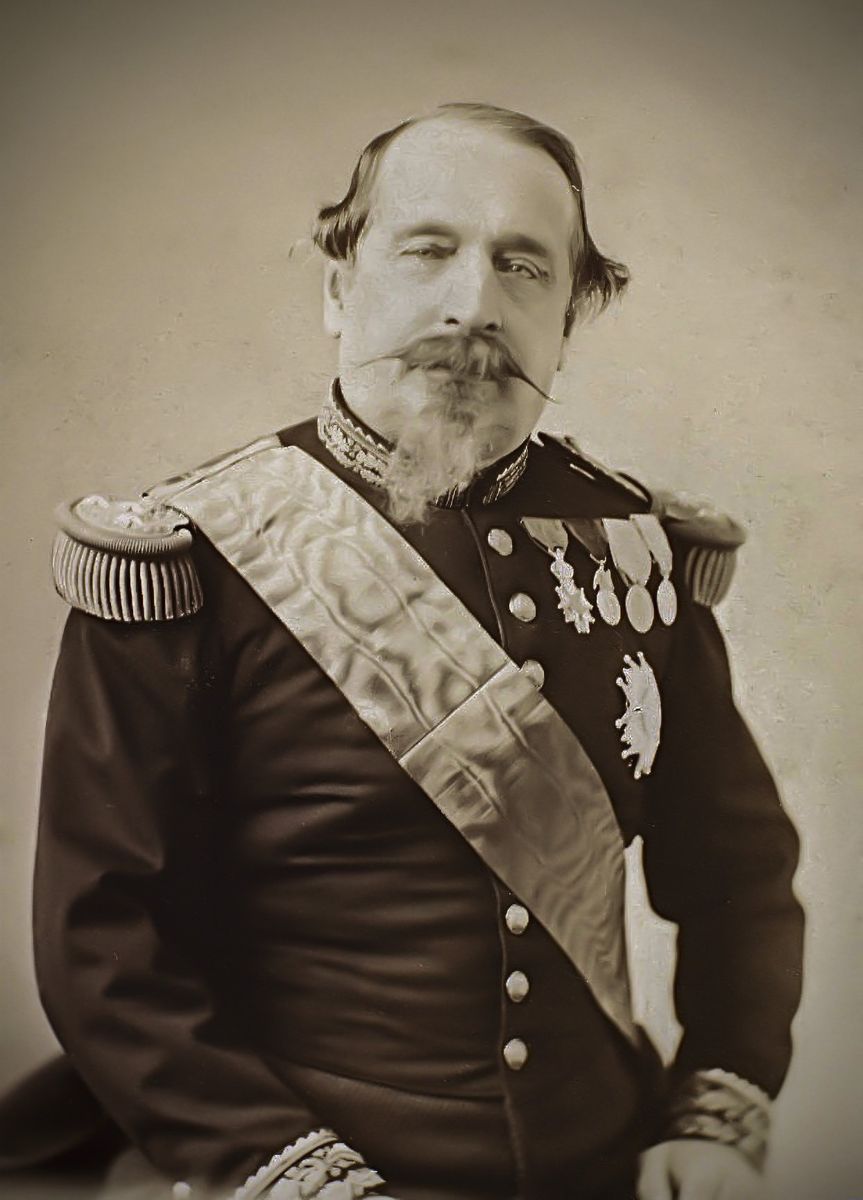
Emperor Napoleon III of France in Coronation Robes. Artist, Franz Xaver Winterhalter.
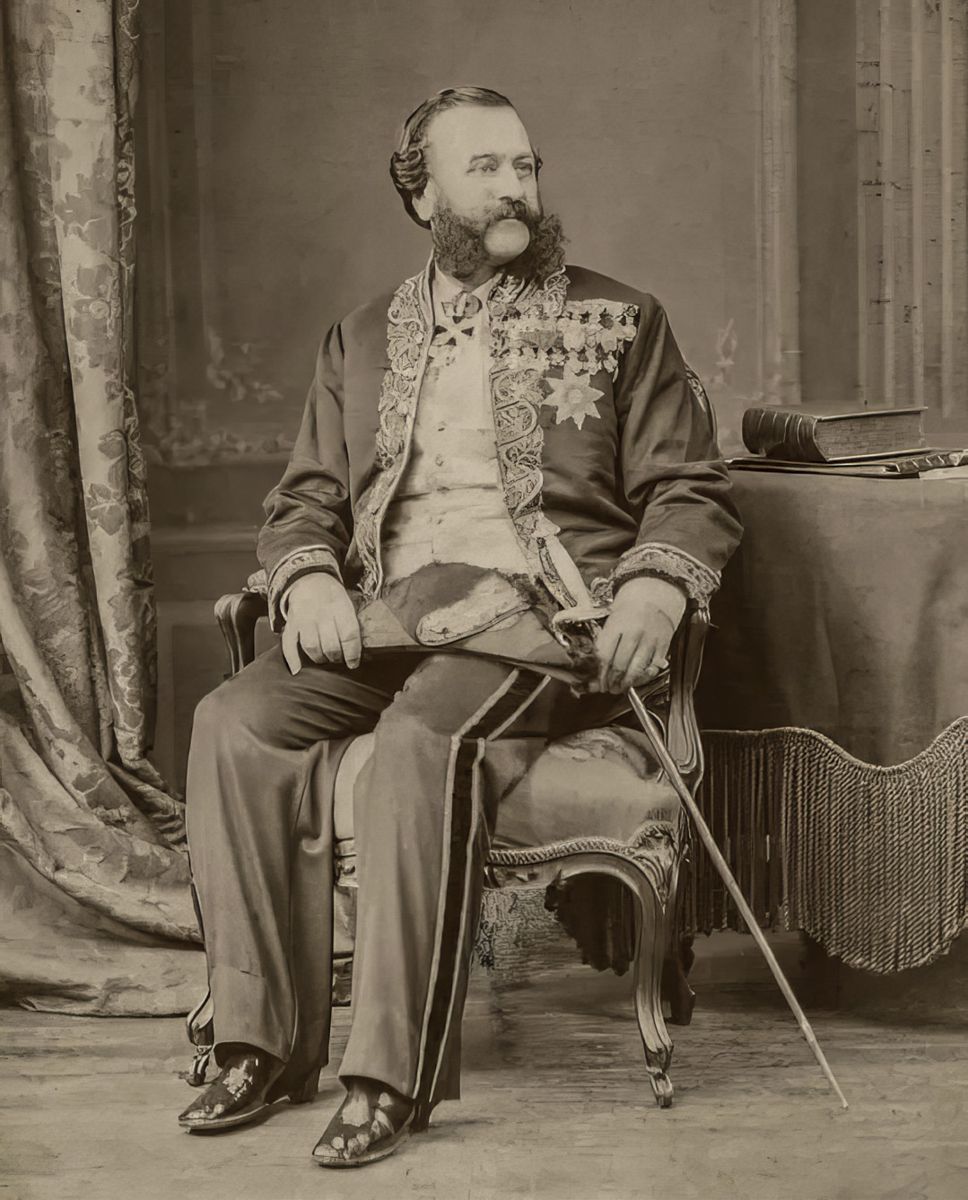
In the mid-19th century, a few American-trained dentists emigrated to Europe to practice their profession. Among them was 25-year-old Dr. Thomas W. Evans of Philadelphia, Penn. Evans was an 1843 graduate of a twoyear dental preceptorship. Formal dental education, with the establishment of dental schools, was still in its infancy. The preceptor system prevailed at the time. In 1847, Evans went to Paris, France. He was recruited by Dr. C. Starr Brewster, the first American dentist in France, who was close to retirement. Brewster was Napoleon III’s dentist. What Evans found in Paris was a profession in disarray. It was unregulated and calling it a profession would be a stretch. Dentists were held in low esteem by the medical community and the public in general. They were classed with barbers, bleeders, mid-wives, and charlatans. If invited to call on a patient’s home, they were required to enter by the back door along with other tradesmen. Evans, by his professional aptitude and skills, would do much to change the status of French dental practice. His exceptional technical ability was soon recognized. He pioneered techniques of dental restoration previously unknown in Europe. He introduced nitrous oxide anesthesia to dental practice in France. Dr. Horace Wells of Hartford, Conn., was the first to incorporate it in dental practice in 1842. In late 1848, Dr. Evans met Napoleon III. He had just been elected president of the French Republic. In 1852, Napoleon III, the nephew of Napoleon Bonaparte, became Emperor of France. Evans was called upon to treat him Dr. Thomas W. Evans.
for dental issues that caused him considerable discomfort. Dr. Brewster, his dentist, was not available at the time. Napoleon’s oral health issues were, in fact, of a chronic nature. He requested and received constant attention from Evans, who would see him on a weekly basis. Evans and Napoleon became good friends. But Evans was more than a good friend and Surgeon Dentist to the Imperial Court. He became a member of the Emperor’s inner circle of confidants and advisors. Evans would meet and care for other European heads of state as well. They included the royal families of England, Germany, Austria, Sweden, Denmark, Spain, Holland, and Russia. When the question arose whether France should enter the American Civil War in support of the South, Evans played a major role in the decision to maintain neutrality and not intervene. At the onset of the war, much of Europe sympathized with the South. Lincoln’s blockade of Southern ports greatly affected the commercial interests of England and France, which imported large quantities of cotton and tobacco. The blockade forced the closure of European cotton mills and put thousands out of work. Emperor Napoleon III was receiving increasing pressure from England and other European governments to support the Confederacy. Evans, however, was a staunch
Dr. Thomas W. Evans.
supporter of the Union. He would use his influence with the Emperor to convince him to keep France neutral. He would say, “I was the only person with pronounced Northern views who had access to the Emperor.” After the Battle of the Wilderness, the Emperor received an urgent communication from London asking him to recognize the Confederacy. However, he had also received conflicting reports on its possible success. He found it difficult to decide on how to proceed, but he knew that entering a war with the United States would not end well. Dr. Evans assured the Emperor “That the resources of the South were almost exhausted and that the military power of the North was irresistible and that the people of the North would not permit foreign intervention no matter the sacrifice.” Evans offered “I will go to the United States and learn for myself what the situation is. I will go directly to Washington to see President Lincoln and Secretary of State Seward and report to you the exact truth on the expected outcome of the war.” Napoleon replied, “Go, Evans, I shall be pleased to hear your impressions and opinions and will not recognize the Confederacy until I hear the result of your visit.” On September 23, 1864, Evans arrived in New York and went directly to Washington, D.C., to see Lincoln and Seward. He explained how the Emperor was receiving pressure to recognize the Confederacy. Lincoln and Seward gave him a clear insight into the government’s point of view. They suggested that he go to City Point, Va., the headquarters of General Grant, and confer with the general to get first-hand facts from a military standpoint. Evans went to City Point and spent five days at Grant’s headquarters. He also met with Generals Mead, Hancock, and Butler. He learned of Sherman’s plan to march to the sea and of Sheridan’s victories. On returning to Paris, Evans told the emperor that he was “entirely convinced that the end of the war was not far distant and would end in victory for the North.” The Emperor replied, “When the plans of campaigns arranged between Grant and Sherman were reported to me, I saw by my maps that it was the beginning of the end.” The maps he mentioned and other pertinent battlefield information were given to him by Evans. Evans was now able to report to Secretary Seward that “I have continually conversed with the persons whom I know have his (Emperor’s) confidence and I am fully convinced that there is no idea of recognition.” The Emperor refused to recognize the South. Dr. Evans said that he often heard the Emperor say that he was more than satisfied that he had waited and had not acted precipitously during the Civil War, as he felt the friendship of the United States was important to France. By aiding in maintaining the neutral stance of France during the Civil War, Evans provided valuable service not only to his adopted country of France but also to his home country, the United States of America. Dr. Evans died in Paris in 1897 at the age of 73. He had received honors, awards, gifts, honorary degrees, and 56 decorations of orders by various monarchs of Europe. Among them was the Legion of Honor from Napoleon III. He had also acquired considerable wealth. Evans left most of his estate to create a dental school that would be “second to none.” It began as the Thomas W. Evans Museum and Dental Institute and is now the Pennsylvania School of Dental Medicine at the University of Pennsylvania in Philadelphia. References: •
• •
• •
•
Branch, Anthony, D., Dr. Evans and the American Dentists in Paris, The Bulletin of the History of Dentistry, Vol.24, No.2, Oct. 1976. Carson, Gerald, The Dentist and the Empress, Houghton Mifflin Co. Boston, 1983. Deranian, Martin, H., Thomas W. Evans: Pennsylvania’s Dentist to Europe’s Royalty, Journal of the History of Dentistry, Vol. 54, No. 1, Spring 2006. Hyson, John, M., Baltimore’s Own, The World’s First Dental School, University of Maryland Dental School, 2006. Iverson, Daniel, J., The Civil War, Three Dentists Who Made a Difference, Journal of the History of Dentistry, Vol. 46, No. 2, July 1998. Rainey, Henry, Dr. Thomas W. Evans, America’s Dentist to European Royalty, University of Pennsylvania School of Dentistry, Evons Co. Philadelphia, 1949.
Peter H. Jacobsohn D.D.S. is retired from the practice of Oral and Maxillofacial Surgery and as the Chair of the Division of Oral and Maxillofacial Surgery at Marquette University School of Dentistry in Milwaukee, Wisconsin. He is a past president of the Civil War Round Table of Milwaukee and the American Academy of the History of Dentistry. He is the Emeritus Curator of the Dental Museum of Marquette University.
Subscribe Today!
Letters to the st!
e a Mu Provenanc
Editor
Email to: [email protected]