
Critic’s Corner Harwell’s “In Tall Cotton”
By Stephen Davis · Originally published November-December 2025 · pp. 62–63
Critic’s o r n Harwell’s e In Tall Cotton r By Stephen Davis
“Confederate history has survived its eras of apology, of brag and bombast, of pietistic biography, of debunking, of reappraisal and revisionism,” Richard Barksdale Harwell wrote 47 years ago. The truth he told then is even truer now, as “Confederate history,” along with almost every genre of historical writing, continues to be reinterpreted to suit the predilections of the present.
That’s why I enjoyed reading Harwell’s In Tall Cotton: The 200 Most Important Confederate Books for the Reader, Researcher and Collector (1978). Confederate history is, unfortunately, being erased, covered up, hushed, closeted, and even rewritten in our current culture. In his time, Dr. Harwell was able to write about it unabashedly, even affectionately. Perusing his listing is like traveling back through history. Harwell (1915–1988) was perhaps the most renowned scholar of Confederate bibliography, second only to Douglas Southall Freeman. The latter’s “Confederate Book Shelf” I discussed this in Critic’s Corner back in November 2016. Dr. Freeman compiled a list of almost three score important books on Confederate history, published as an appendix in his The South to Posterity (1939). Inspired by that listing and wishing to bring it up to date, not to mention expand it, Harwell prepared his list of the 200 most important Confederate books, as he saw them. Expand it he definitely did. While Freeman’s compilations largely featured works of history in such categories as basic reference works, biographies, and memoirs,
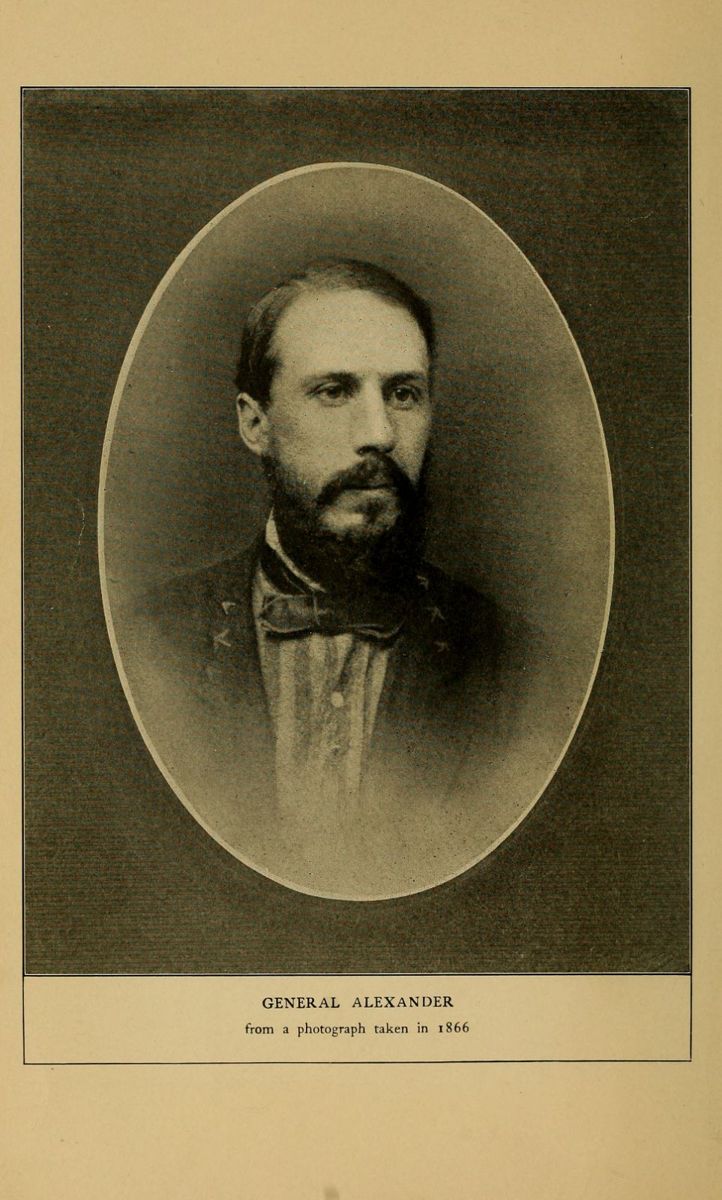
Harwell did not categorize his entries at all, listing every manner of book, such as specialized works on Confederate railroads, newspapers, and warships. August Dietz’s The Postal Service of the Confederacy (1929) is included; so is Harwell’s own Confederate Music (1950). Moreover, he included novels published from wartime to Gone With the Wind. Best of all, he mashed them all together, naming them alphabetically by author. Number 1 is E P. Alexander’s Military Memoirs (1907). Number 200 is Stark Young’s novel of a Mississippi plantation, So Red the Rose (1934). “This list is a guide to an imaginary collection designed to help an imagined reader find his own version of the Confederacy,” Harwell wrote in his Introduction, emphasizing the breadth of experiences one may derive from literature. Part of the fun of In Tall Cotton is to turn to a page—any page—and discover what he saw fit to include. Page 46 has John Singleton Mosby’s Reminiscences (1887), The Comanches: A History of White’s Battalion, Virginia Cavalry (1871), and Robert Manson Myers’ epic The Children of Pride (1971). For each book chosen, Harwell offers commentary that is at once expository and personal. And erudite: for James Boyd’s novel Marching On (1927), he quoted an opinion offered in the New York Herald Tribune Books of May 9, 1927. Harwell spent his last working years as director of the University of Georgia’s Hargrett Rare Book & Manuscript Library. It’s not surprising that In Tall Cotton showcases his knowledge of rare Confederate titles. Example: Francis P. Porcher’s Resources of the Southern Fields and Forests,
OF A
MEMOIRS
MILITARY
The actual
CONFEDERATE
Awhich number
ANTIETAM
OR
SHARPSBURG
McClellan the field of brought upon es these, at 87,164. Besid a the battle, he states within Sharpsburg during 0 men, were yʼs divisions, 14,00time for use either Couchʼs and Humphre the 18th, in and arrived, on dayʼs march defeat or victory.
in
NARRATIVE
CRITICAL
BY
E. BRIGADIER-GENERAL
P. IN
ARTILLERY,
WITH
ALEXANDER THE
ARMY,
CONFEDERATE
LONGSTREETʼS
BY
SKETCH-MAPS
CHIEF
OF
CORPS
THE
AUTHOR
Ey FIELD OFSHARPSBUR ,
Anlielam,
Or:
NEW
CHARLES
YORK
SCRIBNERʼS 1907
SONS
ie eA oe ne Cg
FIELD
\
oF e
SHARPSBURG
but we have men; been about 55,000 caused force should have of straggling, amount to the enormous the inon referred hes, dy hard marc alrea of shoes, and lack were s the effect by poor discipline, and apples. That diet of green corn sufficient Leeʼs
GENERAL from a
ALEXANDER
photograph taken in
1866
Harwell’s number one pick: Military Memoirs of a Confederate; a critical narrative, by Edward Porter Medical, Economical, and Agricultural, published at Richmond in 1863, was an attempt to catalog Southern trees, plants, and shrubs for their useful medicinal extracts. Harwell terms Porcher’s “probably the most important work produced in the Confederacy.” I was fortunate to have known Dr. Harwell (he received an honorary doctorate from New England College in 1966) when he was still in Athens. I’ll never forget the time he interrupted my research at Hargrett to ask if he could take me—a poor graduate student!—to lunch. (Who could ever forget that?) Rick, as I came to call him, appreciated the value of fiction as a way of embracing the Confederate experience. Among his 200 titles, I count a dozen novels, including those by Joel Chandler Harris and William Faulkner (that’s cool). But Dr. Harwell was much more interested in personal narratives. Emma LeConte’s When the World Ended (1957) he deems “a truly exciting view of Columbia, South Carolina, in 1865 through the eyes of the teenage daughter of…one of the most capable Southern scientists.” What strikes me is that Rick found Miss LeConte’s book exciting—that’s the kind of book-lover’s world he lived in. I don’t think it’s too much to say that Richard Barksdale Harwell—he was related to the famed general from Mississippi, and always used his middle name—spent his life pondering the question of what it meant to be an enlightened Southerner with a passion to study the Confederacy. I was therefore not surprised that he wrote so positively of Robert Penn Warren’s The Legacy of the Civil War: Meditations on the Centennial (1961). Harwell quoted Warren’s meditation that “only at the moment Lee handed Grant his sword was the Confederacy born.” In other words, Southerners lost their war for independence, but in fighting and losing it, they gave us a set of experiences which I suspect will continue to fascinate Americans for a long time to come. Note: In Tall Cotton was originally printed by Jenkins Publishing Company of Austin, Texas, in a limited edition of 1,500 copies. In 2006, it was reprinted by Broadfoot Publishing Company of Wilmington, N.C. Unfortunately, Harwell’s opus is currently out of print; I bought my copy from Marc Ramsey when Owens & Ramsey had a table at a big Civil War meeting. In 2006, Tom Broadfoot also published In Taller Cotton: 200 More Important Confederate Books for the Reader, Researcher, and Collector, a work he intended both to emulate and update Harwell’s listing of 1978. To select this newer 200 he enlisted the services of Gary W. Gallagher, Nathaniel Cheairs Hughes Jr., and Robert K. Krick.
Stephen Davis has been writing about the Civil War for a long time—“since Jesus was in third grade,” he contends.
He served as General Editor for The Reminiscences of General M. Jeff Thompson (Morningside, 1983), and from 1985 to 2005 worked as Book Review Editor for Blue & Gray Magazine. He is author of Texas Brigadier to the Fall of Atlanta: John Bell Hood (2019) and Into Tennessee & Failure: John Bell Hood (2020). With Bill Hendrick he wrote The Atlanta Intelligencer Covers the Civil War (2022). His book, The National Tribune Remembers the Atlanta Campaign: Battles, Skirmishes, Marches and Camp Life as Recalled by the Union Veterans Themselves, was published by Savas Beatie in 2025.