
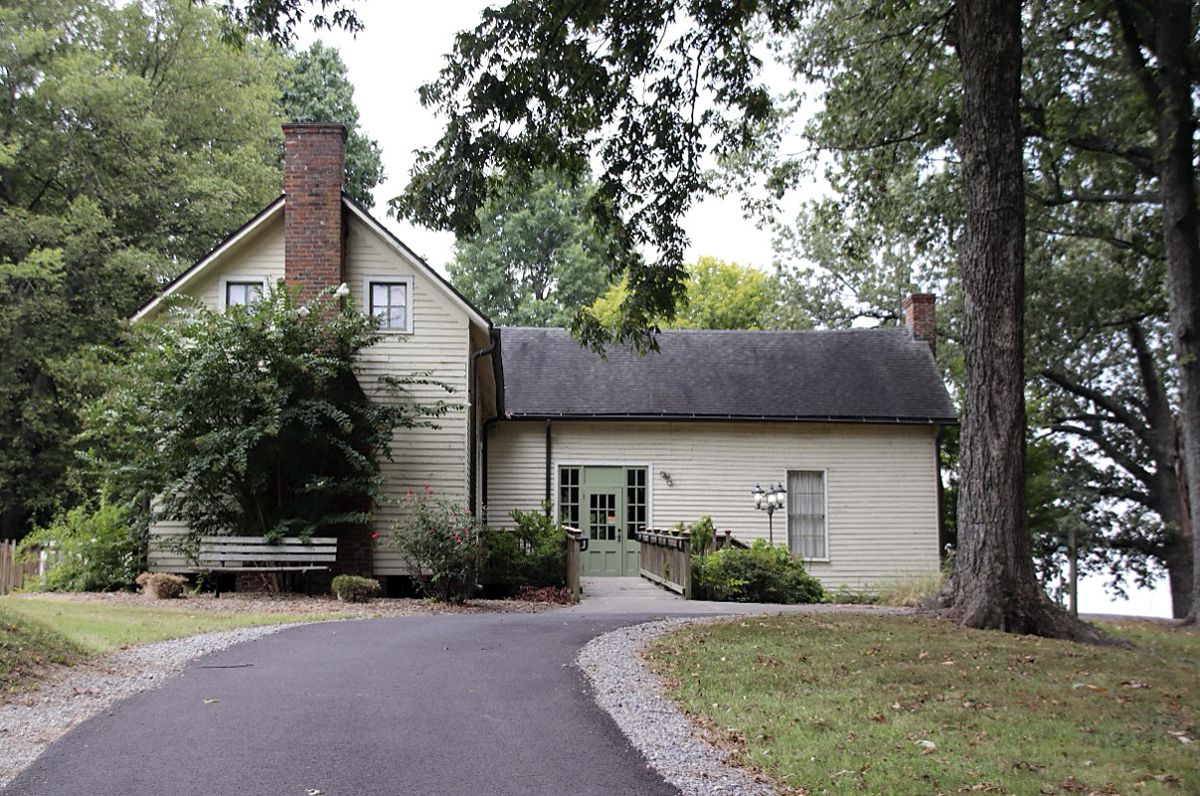
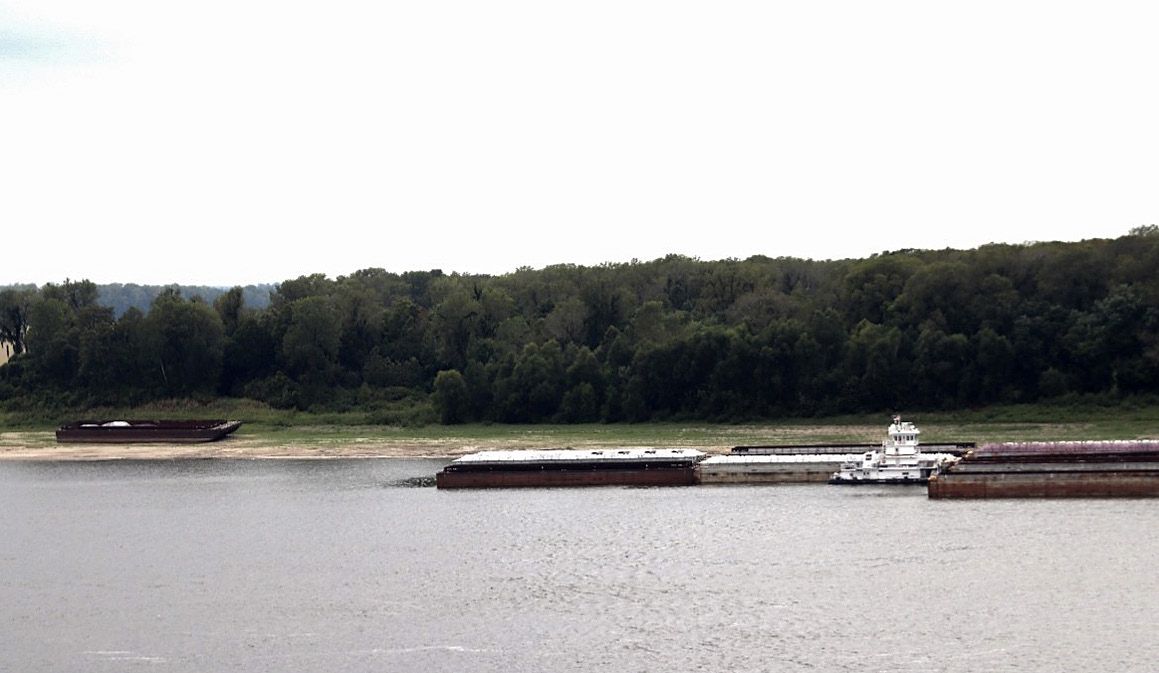
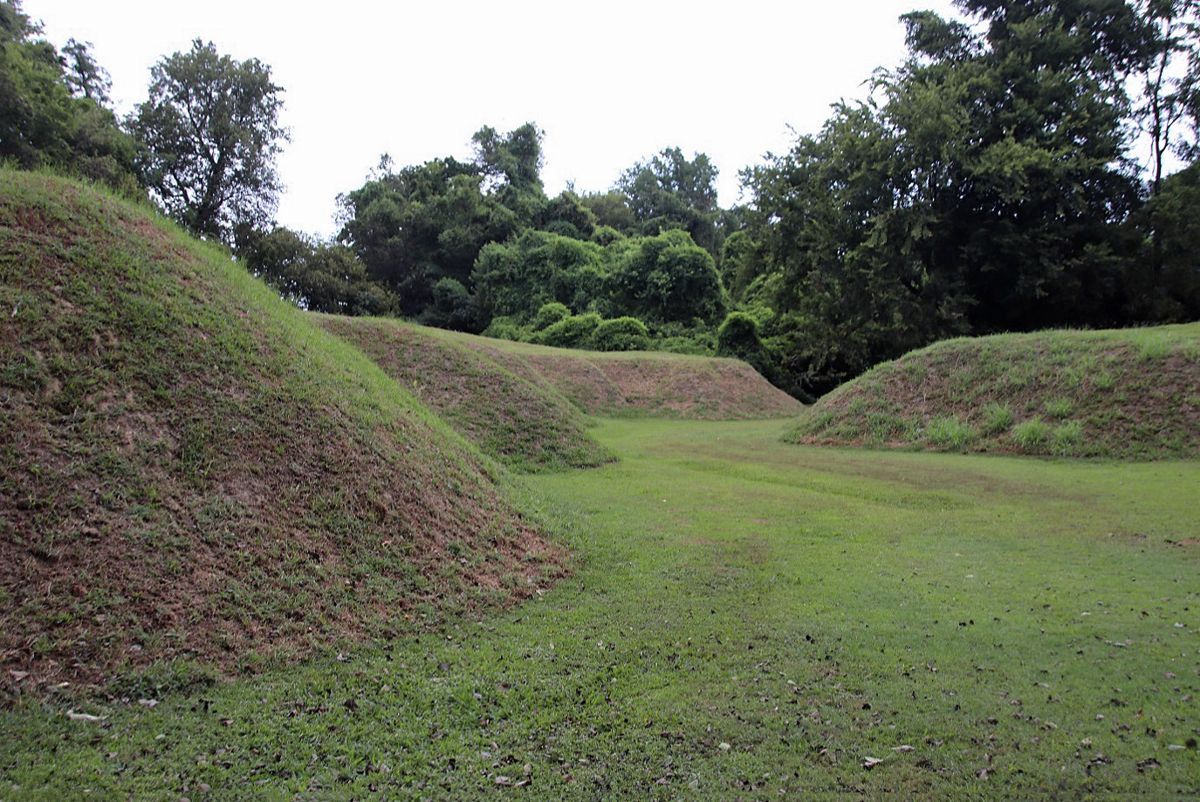
A view from Columbus Park across the Mississippi River at the Belmont Battlefield.
Originally published May-June 2025 · pp. 20–25
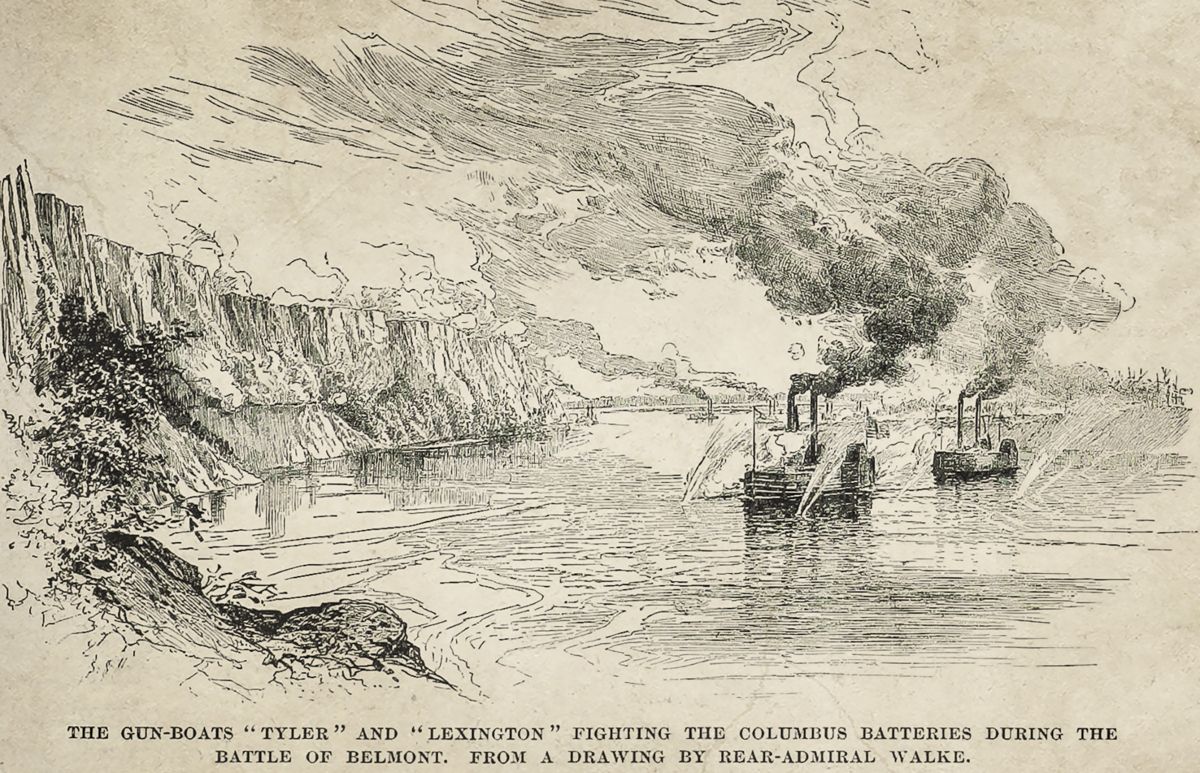
On November 7, 1861, Grant loaded the 22nd Illinois, 27th Illinois, 30th Illinois, 31st Illinois and 7th Iowa onto six steamboats, and escorted by the gunboats USS Tyler and USS Lexington, steamed from Cairo some 18 miles down the Mississippi to Belmont. The appearance of General Grant’s flotilla off of Belmont caught Brig. Gen. Gideon Pillow’s Confederates by surprise. In the first river borne assault of a fortified position during the Civil War, the Federal army advanced confidently across the Belmont flood plain pushing back the Confederates as they tried to form a defensive line. Just when victory was within the Federal grasp Grant lost control of his men. Upon reaching the Confederate encampment the Federal troops, instead of continuing to pressure the Confederates, broke ranks to loot the camp. This allowed the Confederates to reform and receive reinforcements from Columbus. In a counterattack,
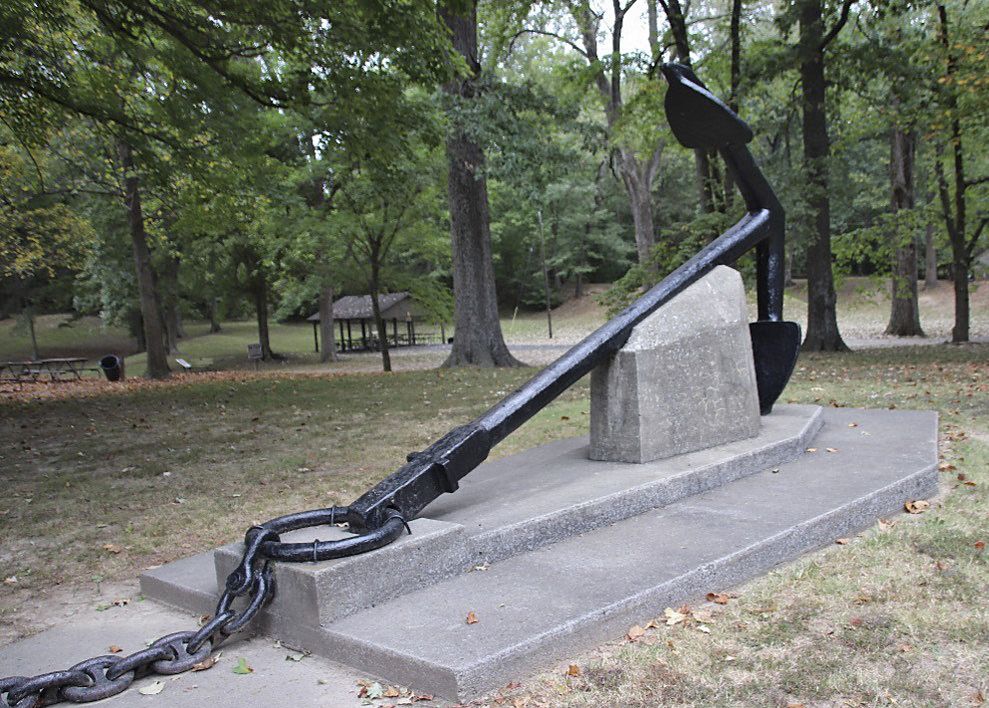
The gunboats USS Lexington and USS Tyler fighting at the Battle of Belmont. (Battles and Leaders of the Civil War) the Confederates caught the Federal troops by surprise and drove them back onto their steamboats. Only covering fire provided by the gunboats USS Tyler and USS Lexington allowed Grant to successfully reload his men and return to Cairo. Federal casualties are given as 607 killed, wounded, and captured; Confederate casualties included 641 killed, wounded, and captured. The American Battlefield Trust has preserved two acres of the Belmont Battlefield. Before the Confederates abandoned Columbus in late February 1862 following the Federal capture of Fort Henry and Fort Donaldson, they built over a mile of entrenchments and installed some 143 cannon. After the Confederates abandoned Columbus, the Federals moved in and occupied the site. They maintained a garrison here throughout the Civil War. The Federal garrison’s main duty was suppression of Confederate guerrilla activities in the area. Following the Civil War, the fortifications at Columbus were abandoned and nature was allowed to reclaim the site. The city of Belmont no longer exists; it was washed away by various Mississippi floods. In 1934, the Commonwealth acquired 134 acres of the former Confederate and Federal fortifications at Columbus. Much of the fort had been lost due to erosion and floods. The Great Mississippi Flood of 1927 destroyed the towns of Columbus and Belmont, along with the two railroads that operated a rail ferry service between the towns. Columbus’ population has since fallen from 1,200 to 140. Walking trails in the Columbus park allow visitors to explore the few remaining sections of trench line, view a portion of the chain that used to stretch across the Mississippi River, see the partial remains of the cannon known as Lady Polk, and a 32-pounder cannon. Charles H. Bogart has a BA from Thomas More University and an MCP from Ohio State University. He is employed as a tour guide at the Fort Boone Civil War Battle Site in Frankfort, Ky., Past-President of the Frankfort Civil War Roundtable, and is a board member of the Kentucky Civil War Roundtable. He has written several books and articles on military and naval history.
Over the preceding year, the “Vision and Valor” column has provided information on women’s roles in the Civil War and how they contributed to military operations and efforts. This article will step back and describe some of the sources from which the information is gleaned. The Civil War occurred at a golden moment when a largely literate female population encountered an immediate, urgent, and long-term need to correspond in writing with soldiers who were away from home for long periods of time. While government pay records were used to identify the high levels of illiteracy among women sewing for soldiers, and the unsurprising lack of diaries and letters by these women, such illiteracy is not representative of most of the population; and accounts written by participants represent a significant source of information on women’s roles in the Civil War. As noted by James McPherson in his Pulitzer-prize winning book, Battle Cry of Freedom, literacy rates among Americans (including women) were higher then than now (‘then being the 1980s,’ when he wrote the book).
Letters and Collections of Letters
Letters are very often dated and provide information on the minutiae of daily life described with honest and immediate opinion that is so valuable to historians. Many families collected and preserved letters sent home by soldiers, while soldiers had less time, space, and the opportunity to save letters from home. Thus, letters to soldiers are somewhat rarer than letters from soldiers. Published collections of letters offer researchers the benefit of an editor’s commentary explaining events and people mentioned. One example of a collection of women’s letters that provides especially valuable information is Dear Ones at Home: Letters from Contraband Camps edited by Henry L. Swint. Quaker friends Lucy and Sarah Chase traveled south to Virginia, North Carolina, and Georgia as they taught school, distributed supplies, and ministered to contrabands. Some of their letters solicited donations and other support; these letters often include detailed descriptions of the clothes, food, housing, and [lack of] educational facilities they encountered.

Vision and Valor The War Through Women’s Eyes
“How Do We Know” By Juanita Leisch Jensen

Norfolk, VA - December 9, 1864 Upon Craney Island we “cared for” … two thousand negroes. … We clothed them; helped them patch their rags; caused them to make bed-ticks for themselves; tried to teach them cleanliness; made both slates and pencils for them from slate tiles. … Taught some – yes, many, to read and write, working ourselves twelve hours a day.1 In some cases the letter writer compiled and published her own correspondence along with a retrospective commentary. One such publication was The Other Side of War: On the Hospital Transports with the Army of the Potomac by Katharine Prescott Wormeley. The following are quotes from her Introductory commentary on her letters:
[This book] touches on … scenes so intimately related to the army that they seem an essential part of a soldier’s experience.2 As the men mustered for the battlefield, so the women mustered in churches, school-houses, and parlors, working before they well knew at what to work , and calling everywhere for instruction.3 Time and the Sanitary Commission were to show … that … their work was to broaden out into a fundamental good to the whole army; that lives were to be saved, the vital force protected; and that women, guided by the wisdom of men, were to bear no small part in helping to maintain the efficiency of the troops, and thus to share upon the field itself the work of husbands and brothers.4 The following excerpts are quoted from a letter after she was assigned to a hospital transport:
May 10, 1862 As far as I can judge, our duty is to be very much that of a housekeeper. We attend to the beds, the linen, the clothing of patients; we have a pantry and store-room, and are required to do all the cooking for the sick and see that it is properly distributed according to the surgeons’ orders; we are also to have a general superintendence over the condition of the wards and over the nurses, who are all men.5 May 13, 1862 Let no one pity or praise us. I admit painfulness; but no one can tell how sweet it is to be the drop of comfort to so much agony.6
Diaries and Journals
The practice of keeping a diary or journal was cultivated among many young women. While some wrote little more than cryptic notes on weather and daily chores understandable and helpful to themselves, others wrote detailed accounts of events as though intended for themselves or others to re-read in the future. Caroline Cowles Richards was a schoolgirl when she commenced her diary, which was published as Village Life in America. She and her schoolmates were enthusiastic supporters of the war, seeking ways to be useful and helpful.
We are going to sew for [the soldiers] in our society and get the garments all cut from the older ladies’ society. They work every day in one of the rooms of the court house and cut out garments and make them and scrape lint and roll up bandages. They say they will provide us with all the garments we will make. We are going to write notes and enclose them in the garments to cheer up the soldier boys. 7 Maria Lydig Daly was the wife of a judge in upstate New York. Like Mary Boykin Chesnut, she used her diary to express her opinionated thoughts on people and events. In several passages, she used her diary to record her reasons for refusing to help with Sanitary Fairs and other fundraising activities for war efforts:
This Fair for the Sanitary Commission is a good excuse to many, not but that it will do much good and … I have taken no part in it. Mrs. Stout came … to ask me to personate Katrina Van Tassel. … Mrs. Stout said that I looked like an old Flemish picture, and that no one else would do. … I think it the part of modesty and patriotism to decline. My refusal will spare me just and critical remarks and a great deal of trouble.8 Memoirs and Reminiscences
During, after, and long after the War, some women wrote memoirs and reminiscences, either for family use or intending them for publication. These reflections are often more polished and eloquent than those jotted down in diaries and journals at the time. Mary Clemmer Ames titled her memoir Ten Years in Washington and included descriptions of both the people and the sights to be seen in the wartime and post-war capital city.
(On viewing Arlington Cemetery) Beauty and silence reign through this domain of the dead. … Far as the sight reaches, stretch the long column of immortal dead. The beauty of their sleepingplace, the reverent care covering it everywhere, tells how dear to the Nation’s heart is the dust of its heroes, how sacred the spot where they lie. In this let us not forget the still higher love which we owe them; let us attest it by a deeper devotion to the principles for which they died.
Fannie Casseiopea Lawrence was featured in dozens of cartes de visites which were published and sold for the cause of anti-slavery.
Both diaries and memoirs sometimes include details of historical events that might otherwise be lost to history. Miss Catharine S. Lawrence enrolled and trained as a nurse in 1861, but found much difficulty in working under the direction of Miss Dorotha Dix. She later served as an independent nurse and hospital directress in Washington, D.C., detailing in her journal the misbehavior she witnessed by other nurses and by some doctors:
… as Directress of the Kalarama Hospital … my duties were quite numerous but cheerful. My first work in the morning was to go through the wards and see what was wanting, and have them kept tidy; also to see that the medicines were properly given, the same being done in the evening. I had to be cautious in changing my apparel when going into the small-pox wards. Many of the nurses were afraid of contagious diseases.9
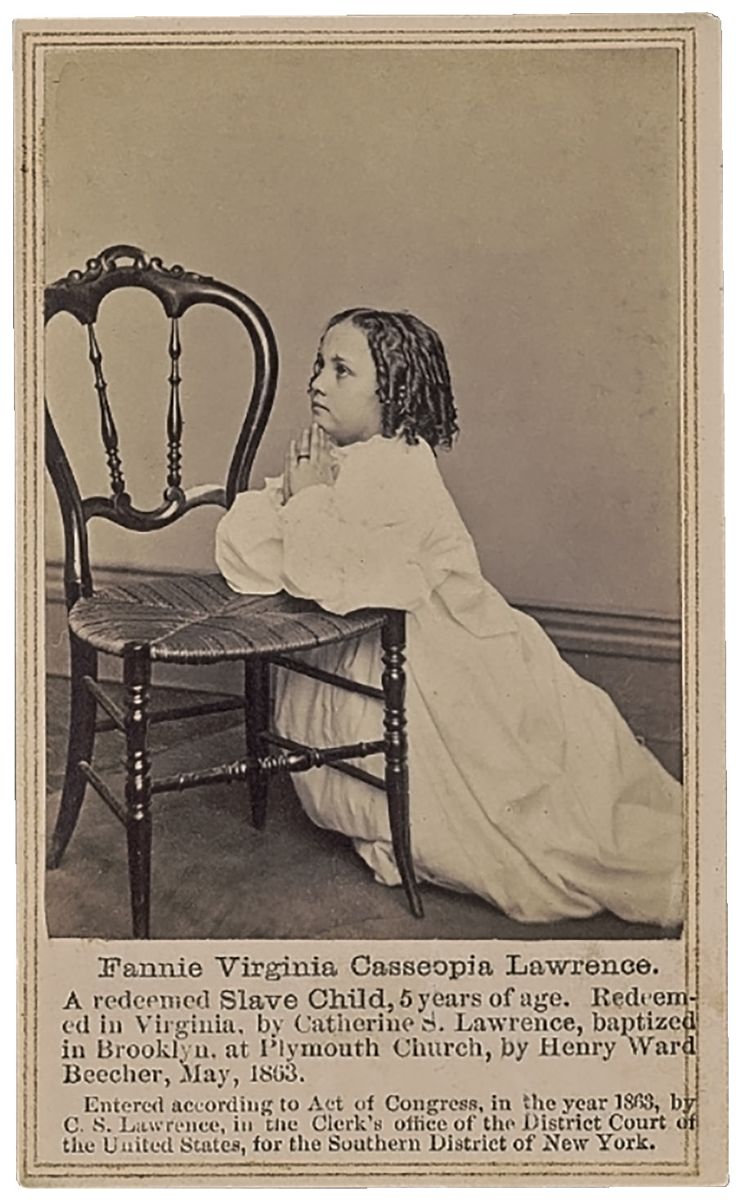
While in the south, Miss Catherine Lawrence took on the role of foster mother to a slave child who became a celebrity. She was one of a small number of slave children with Caucasian features used in fundraising and marketing efforts by anti-slavery activists. Miss Lawrence’s charge, Virginia Casseopea Lawrence, was featured in a dozen or more sittings at a Brooklyn photography studio. Miss Catherine Lawrence’s journal is one of the only sources of any details on Virginia’s life after she was “redeemed.”
Secondary Sources
In addition to works written and published by participants in the Civil War based on their own experiences, many other accounts have been rediscovered and published in more recent times. In some cases, modern authors have based their histories on primary sources, sometimes even taking a diary or journal and significantly enhancing the original document with additional research and materials without distorting the original account. One such secondary source is Harriet Jacobs: A Life by Jean Fagan Yellin. Harriet’s original account of her life was published as Incidents in the Life of a Slave Girl while she was still relatively young. Yellin’s account followed Jacob’s life through to her death, and so includes her many accomplishments and significant friendships with people like Charlotte Forten Grimke, Elizabeth Keckley and others. Another extremely informative secondary source is Headstrong: The Biography of Amy Morris Bradley: 1823–1904: A Life of Noblest Usefulness by Diane Cobb Cashman. This book brought to light information on and the importance of Amy Morris Bradley’s experiences as a nurse in camp hospitals and aboard hospital transports, as a matron of the soldiers’ lodge in Washington, D.C., as a special agent for the U.S. Sanitary Commission and as founder of the Soldiers’ Journal, a military newspaper that reached 20,000 circulation.
Manuscripts
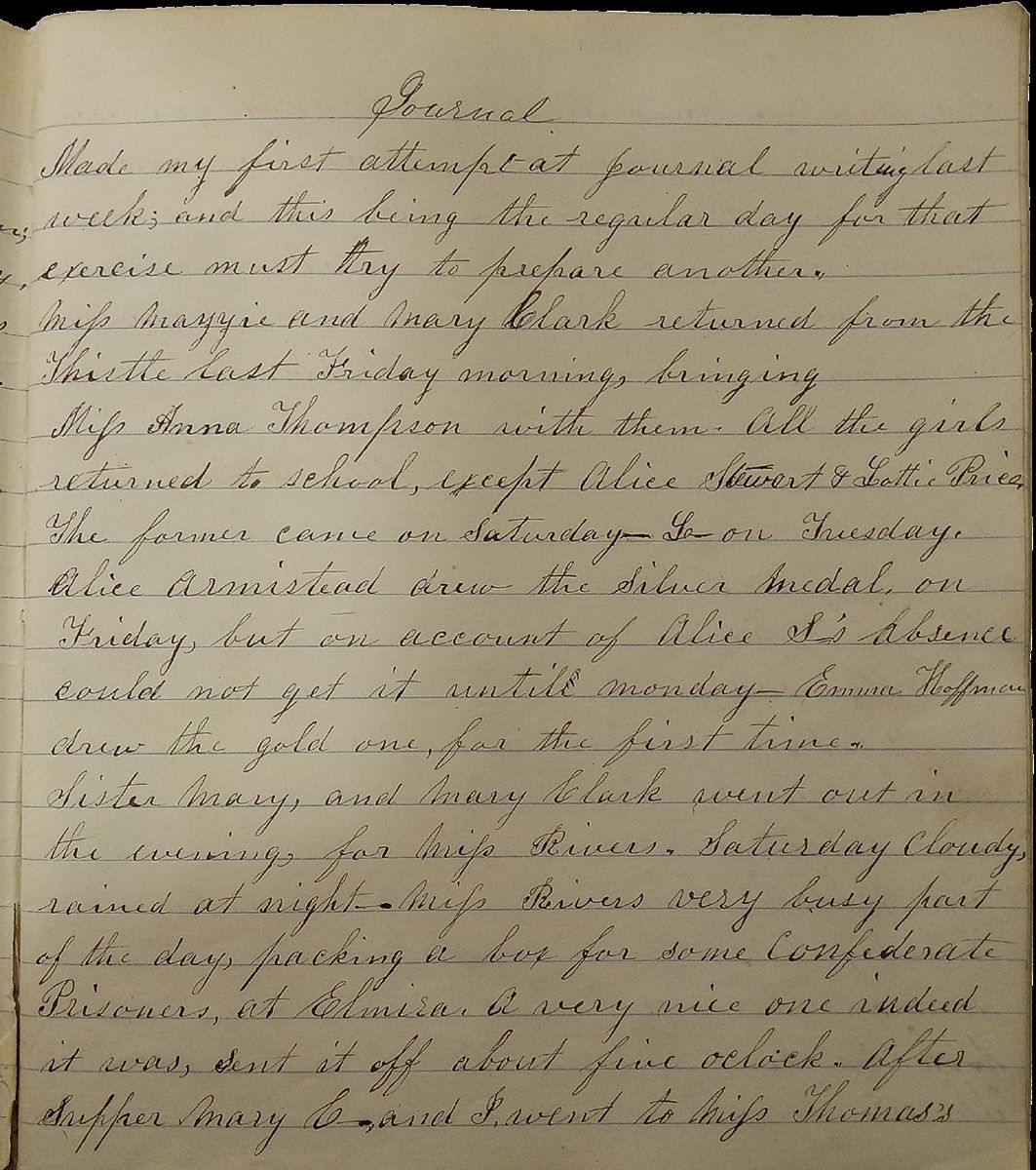
The only way to avoid biases inflicted by editors (even if edited by the original author) and any other softening of opinions or other later revisions of comments is to use manuscript sources. The most valuable of these provide author, dates, and places, and are written in easily readable penmanship. One excellent example with all these characteristics is an account headed “Baltimore Female Institute” and signed Alice M. Chapman. The dates of entries extend from November 25, 1864, to June 16, 1865. In this document, Chapman describes concern for the soldiers, and activities in support of the war.
Yesterday was kept as a Thanksgiving and … for the present state of this country … for the many slain in battles, for the widows and orphans that are weeping and wailing for their slain and lost friends … for the prisoners that are dying from … starvation and cruelty.10
… very busy part of the day packing a box for some Confederate prisoners at Elmira.11
… Mr. Lincoln’s funeral took place on Wednesday following, and on Friday his body was brought through this city en route for Illinois. Had he been the wisest and best of men they could not have made more fuss, and ado over him.12 But he has gone to his reward, to receive a strict account to that God whom he neither honored nor feared while living.
These, then, are some sources used in researching women’s roles for Vision and Valor columns. Endnotes: Swint, Henry L., editor. Dear Ones at Home: Letters from Contraband Camps. Nashville: Vanderbilt University Press, 1966, p. 134. 2. Wormeley, Katharine Prescott. The Other Side of War: On the Hospital Transports with the Army of the Potomac. Boston: Ticknor and Company, 1889, p. 3. 3. Ibid., p. 5. 4. Ibid., p. 6. 5. Ibid., p. 17. 6. Ibid., p. 28. 7. Caroline Cowles Richards. Village Life in America. New York: Henry Holt, 1912, p. 140. 8. Harold Earl Hammond, editor. Diary of a Union Lady 1861–1865 by Maria Lydig Daly. Lincoln: University of Nebraska Press, 1962, pp. 262-263. 9. Catherine S. Lawrence. Sketch of Life and Labors of Miss Catherine S. Lawrence. Albany: James B. Lyon, 1896, p. 86. 10. Manuscript Journal of Alice M. Chapman November 2, 1864– June 15, 1865, p. 1. 11. Ibid., p. 2. 12. Ibid., p. 45. 1.
J uanita L eisch J ensen is a nationally known speaker , writer , researcher ( and avid collector ) of subjects related to civilians and the C ivil W ar . S he is served as C hairman of the N-SSA 150 th C ivilian E vents T ask F orce planning special events at the fall , 2024 national skirmish . S he is a member , fellow , and former G overnor of the C ompany of M ilitary H istorians . S he is also a member and former P resident of the S ociety for W omen and the C ivil W ar . S he authored two books : W ho W ore W hat : W omen ’ s C lothing , 1861-65, and an I ntroduction to C ivil W ar C ivilians . J uanita and her husband , military historian L es J ensen split their time between homes in O range C ounty , N.Y., and S henandoah C ounty , V a .