
The Graphic War Dodging the Draft: Offering a Substitute, A
By Salvatore Cilella · Originally published March-April 2025 · pp. 36–39
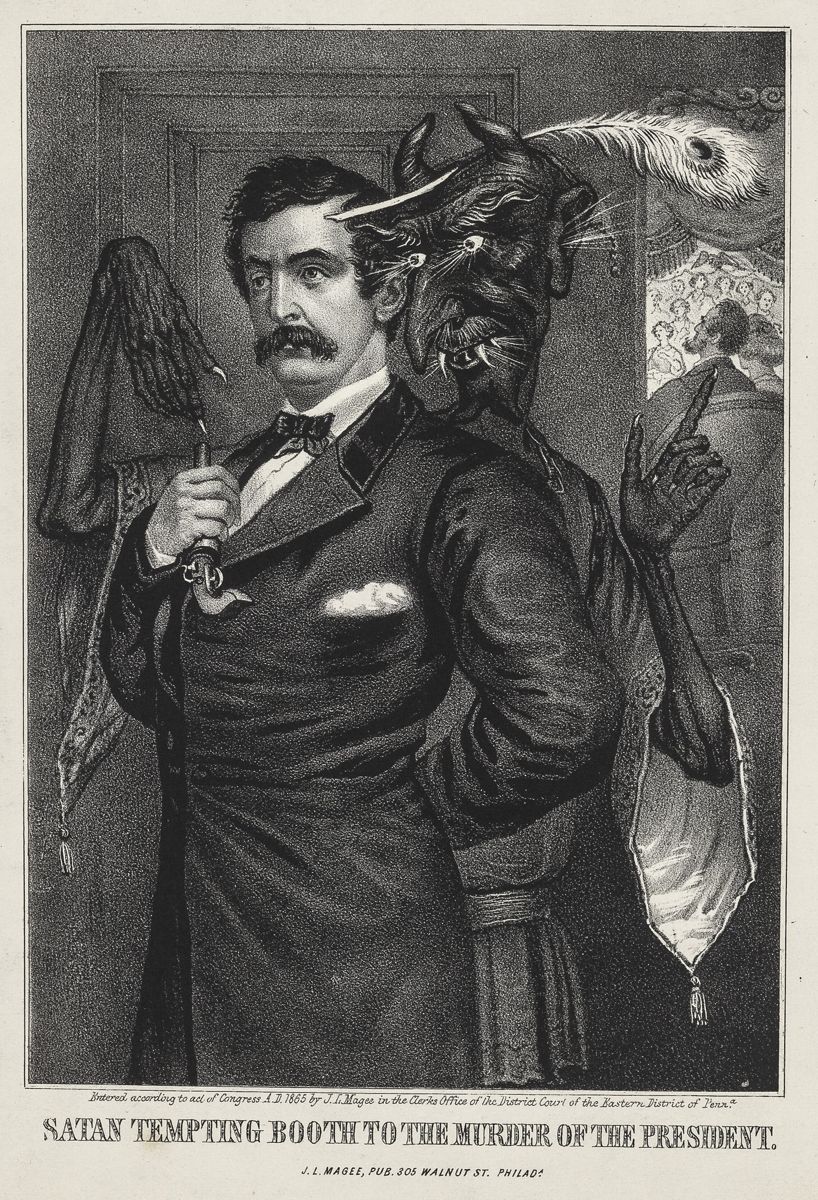
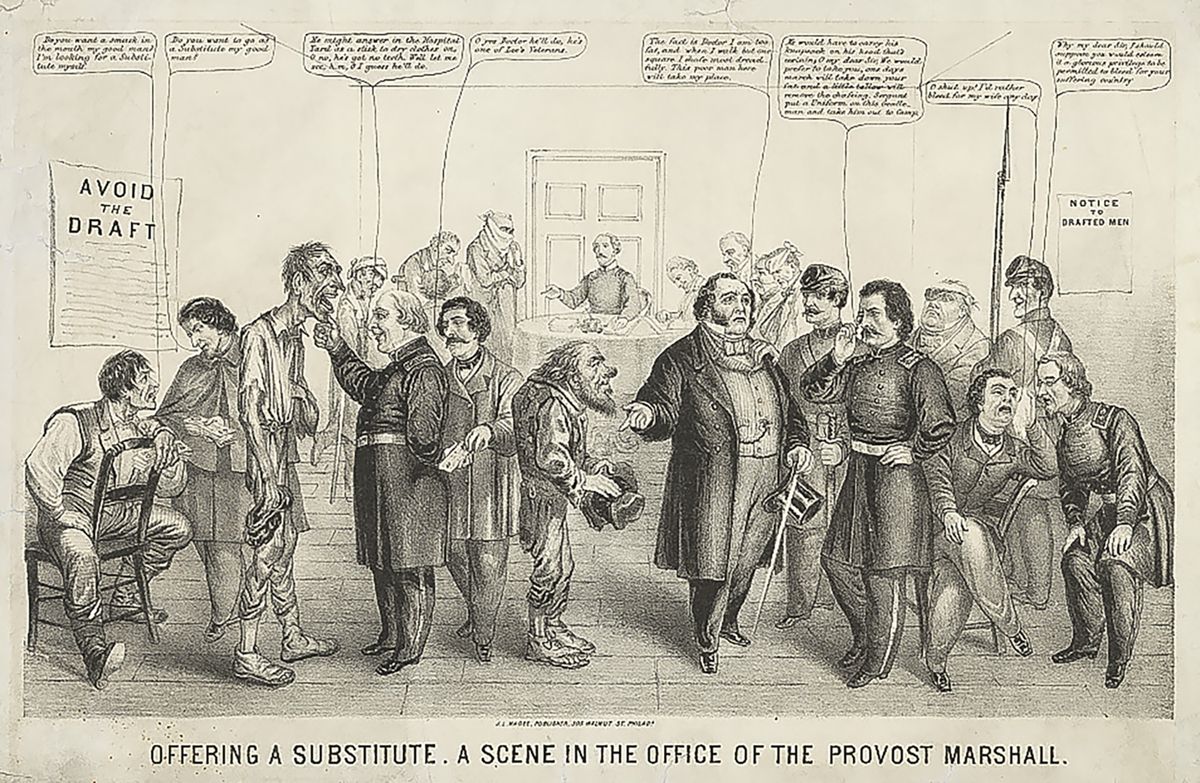
The Confederacy turned to conscription before the three original paintings at the National Academy of Design, Lincoln administration considered it. Plagued by including “The Mischievous Boy” in 1844, which he later desertions and disenchantment of life in the military, printed as a lithograph. Magee also pursued engraving and Jefferson Davis’ government passed and implemented “the between the mid 1840s and mid 1850s, Magee engraved first of three conscription acts on April 16, 1862” thereby illustrations for several children’s picture books published beginning the “first national military draft in U.S. history.” by Turner & Fisher (Boston, N.Y., Phila., Baltimore). By Davis meant to spread the manpower burden over all the 1850 he published cartoons from his own establishment at Confederate States. Some Southern governors expressed 34 Mott Street before relocating to Philadelphia after 1852.”4 opposition as a violation of state’s rights. The provision in One of his most famous illustrations was a depiction of the the law allowing paid substitutions further magnified the Brooks-Sumner Affair, May 22, 1856. Pro-slavery, South differences between the yeoman farmer and the gentleman Carolina Democrat, Preston Brooks attacked abolitionist planter.1 Senator Charles A year later the Sumner in the senate north passed the chamber with his Enrollment Act walking cane. Brooks of March 1863. had been provoked Volunteering for by Sumner’s fiery Federal service was “Crime against on the wane for some “O YES, DOCTOR, HE’LL D O , Kansas” wherein he of the same reasons; the slave H E ’ S ON E O F L E E ’ S V E T E R AN S .” denounced war fatigue, actual power. 5 Another war opposition and depicted the Devil at “significant personal Booth’s ear urging sacrifices if one had him to assassinate a family, ran a farm, Lincoln. (Figure 1). or had a business.”2 During the turbulent Both governments decade before and instituted provisions whereby draftees could avoid service. during the war, Magee designed “political cartoons as well The most obvious was volunteering. Offering one’s service as…portraits, church views, and civil war imagery” for for a bounty (which grew larger as the war dragged on) was other publishers as well as his own publication.6 an incentive to join the army. Paying a substitute was also A prime example of his cartoon work during the war available but restricted to only those who could afford the related to the Conscription Act. (Figure 2) The cartoon usually high $300 premium. Another way out was to pay the consists of four different tableaus. From left to right, four government for your absence. Both administrations faced singular conversations are conducted. On the far left, two identical criticism of these policies that the war was a “rich men, one standing, the other seated: Standing man: “Do you man’s war and a poor man’s fight.” want to go as a substitute, my good man?” The seated man Philadelphia printmaker, John Magee, took up the says to his standing friend: “Do you want a smack in the conundrum faced by both administrations with a blistering mouth, my good man? I’m looking for a substitute myself.” lithograph revealing the foibles and inadequacies of the draft. The next set features a group of three men; one is silent as Magee was a native of New York city and was first noticed a medical officer examines his mouth: “He might answer in in 1844 although he is not a well-known print maker. He is the hospital yard as a stick to dry clothes on—Oh no, he’s one of those journeymen who moved from one lithographic got no teeth. Well, let me see, hmm, I guess he’ll do. The house to another and, at various times, considered himself third man, observing the exam, exclaims “O yes, Doctor, an artist, engraver, and lithographer.3 he’ll do, he’s one of Lee’s Veterans.” By 1850, he had settled in Philadelphia where he In the third vignette, featuring four characters, a civilian continued to produce timely prints of unfolding events as and medical officer discuss the civilian’s prospects of the well as satirical cartoons which had more impact and were draft while a silent, second individual and an enlisted man more memorable. “Early in his career, he also exhibited look on. The civilian says: “The fact is Doctor, I am too fat, and while I walk but one square, I chafe most dreadfully. This poor man here will take my place.” The civilian appears to be a racist stereotype representation of an Irishman to which the draftee is pointing. To which the doctor replies: “He would have to carry his knapsack on his head, that’s certain; O my dear Sir, we would prefer to take you, one day’s march will take down your fat and a little tallow will remove the chafing. Sergeant, put a uniform on this gentleman and take him out to camp.” The last vignette to the far right features a civilian and an officer. The officer speaks first: “Why my dear sir, I should suppose you would esteem it a glorious privilege to be permitted to bleed for your suffering country.” To which the civilian replies: “O shut up! I’d rather bleed for my wife any day.” On the wall are two broadsides, “Avoid the Draft” and “Notice to Drafted Men.” In the background are several supplicants pleading their case before a provost for draft exemption exhibiting various ailments with arms in slings and bandaged heads. In one searing image, Magee captured the essence of the draft and the Army’s need for manpower. Endnotes 1.
David Carlson, “Conscription, C. S. A.” in Heidler, David and Jeanne. Encyclopedia of the American Civil War: A Political,
Social and Military History. New York: W. W. Norton & Co., 2000, 486-487. Hereafter, Heidler. Samantha Jane Gaul, “Conscription, U. S. A.” in Heidler, 487488. Library Company of Philadelphia, research notes and file. Hereafter, Library. Library. Unfortunately, the only copy of this particular print I was able to find is in the New York Historical Society and is subject to heavy reproduction fees. No other images in the public domain were discovered. Library. See also, Harry Peters, America on Stone, 268-269.
After 43 years in the museum field, Cilella devotes his time to collecting A merican prints and maps and writing. He has written extensively on Emory Upton:
Upton’s Regulars: A History of the 121st New York Volunteers in the Civil War (Kansas, 2009); a twovolume Correspondence of Major General Emory Upton, (Tennessee, 2017), received the 2017–2018 American Civil War Museum’s Founders Award for outstanding editing of primary source materials. He edited Upton’s love letters 1868-70 to his wife–Till Death Do Us Part (Oklahoma, 2020), and The Memoirs of Dewitt Clinton Beckwith of Upton’s Regulars (McFarland, 2023). (Library of Congress)
MARCH 22-23, 2025 NEWfor 2025 Show! Sales of C&R (Curio & Relic) Handguns will be permitted! This includes WWI and WW 2 Military Handguns. Collectable unaltered Colts, S&W, Savage , Ruger, etc. that are at least 50 years old and meet the C&R criteria listed on the back page of this flyer. SEE REVERSE SIDE FOR ATF DEFINITION OF C&R FIREARMS
NO AR / AK RIFLES OR ASSOCIATED PARTS ARE PERMITTED FOR SALE TRANSFER AT THE ‘BALTIMORE SHOW’. NO MD-BANNED WEAPONS ALLOWED (Go to www.mdsp.org/organization/supportservices/licensingdivision for current list)
MARYLAND LAW MANDATES THAT ALL POST 1898 RIFLES, SHOTGUNS and HANDGUNS MUST BE TRANSFERRED BY A FEDERAL FIREARMS LICENSED (FFL) DEALER, INCLUDING AN NICS CHECK. All Firearm Sells/Transfers are to abide by all Federal, State and Local mandates.