
Fort Fisher’s New Visitor Center and reconstructed Earthworks
Originally published March-April 2025 · pp. 50–53
View of the land front, showing destroyed gun carriage in second gun emplacement in Fort Fisher, N.C. (Library of Congress)
A Gateway to History
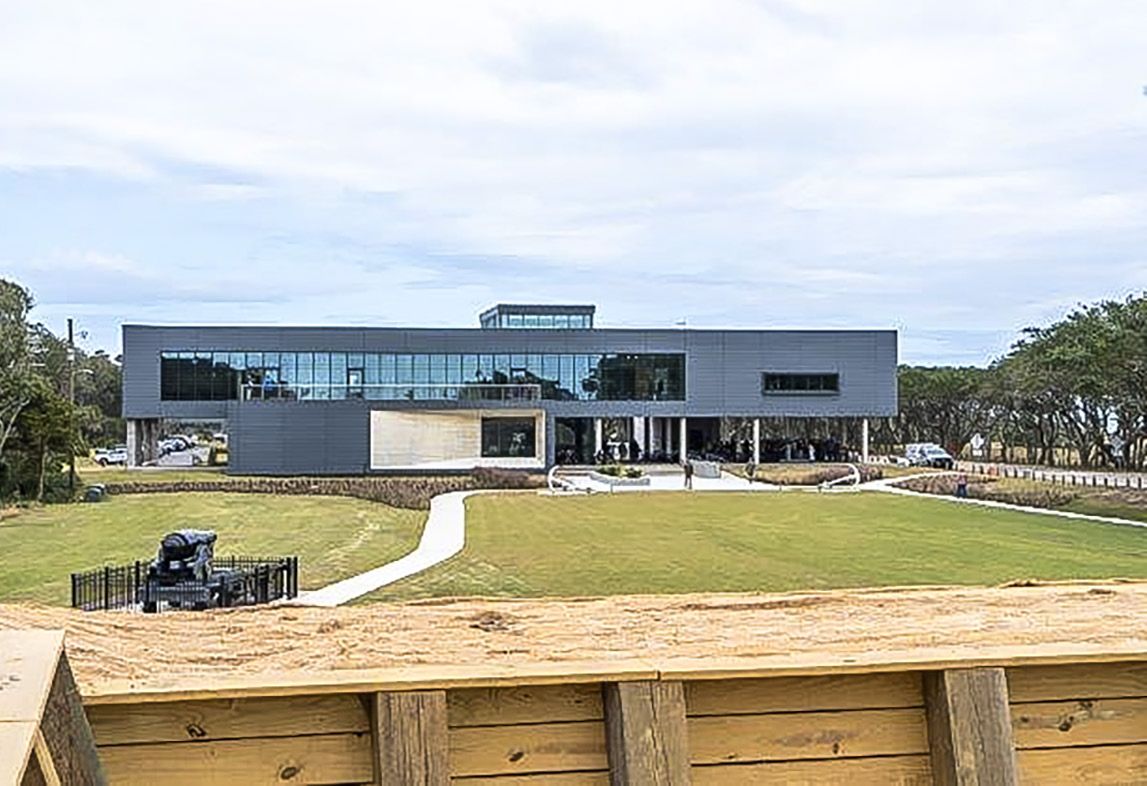
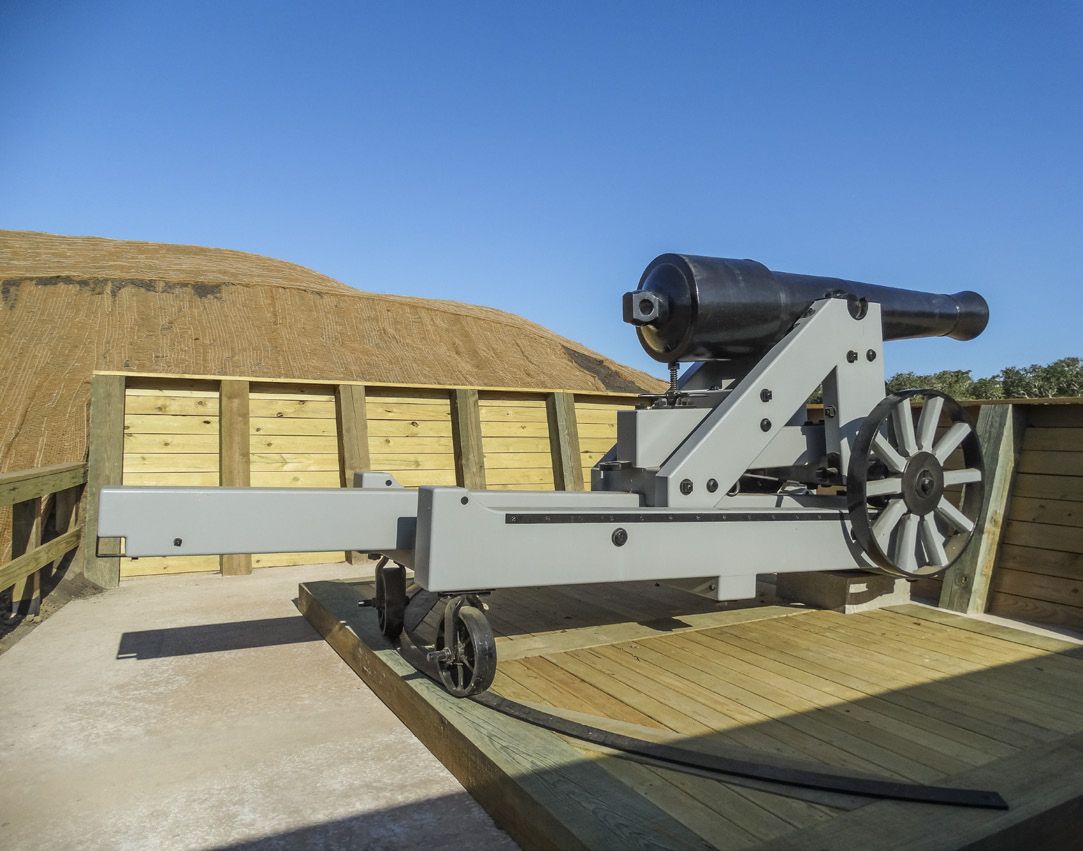
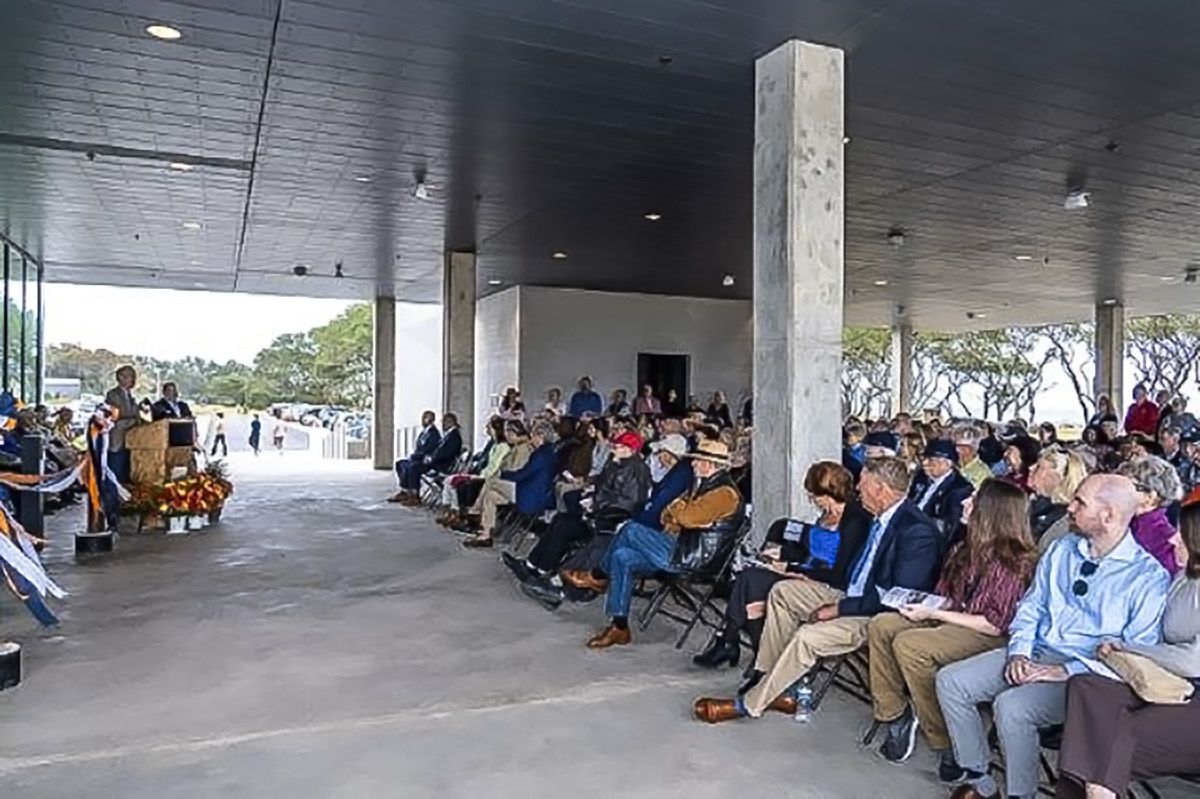
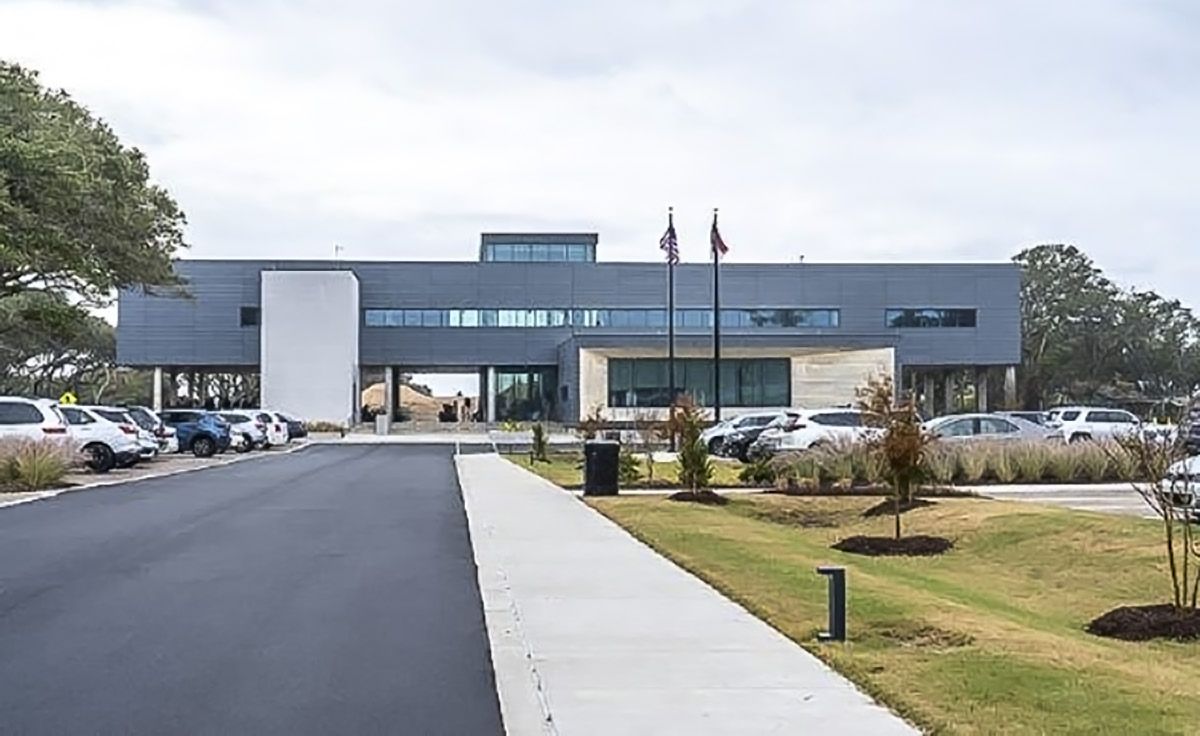
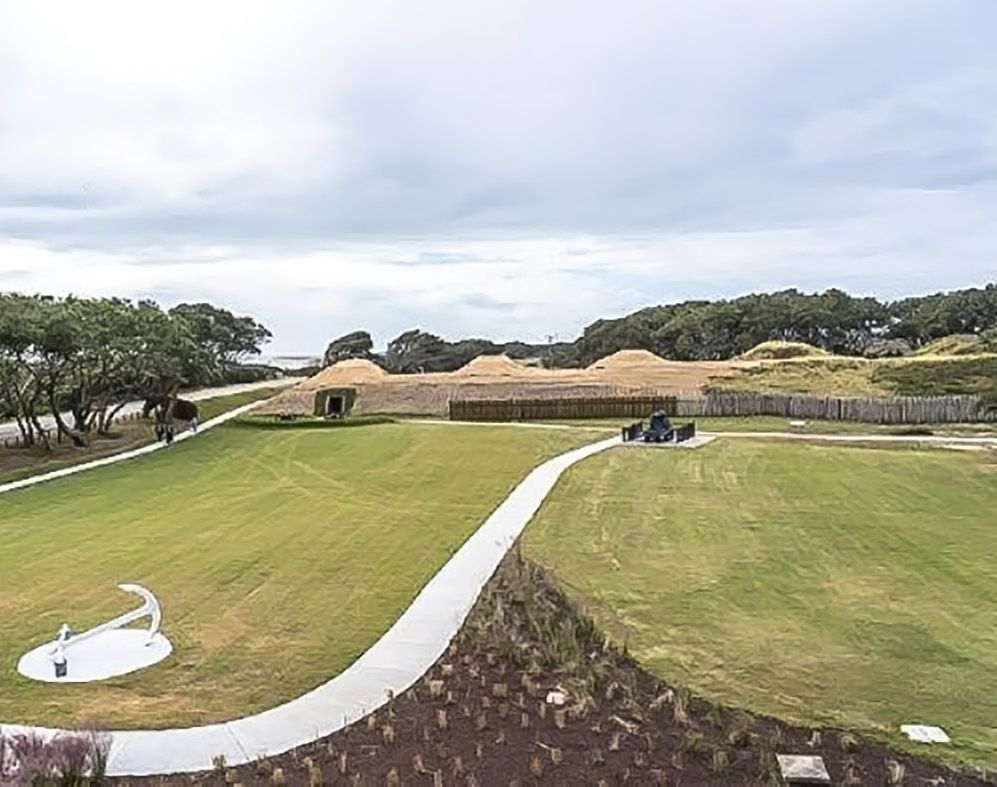
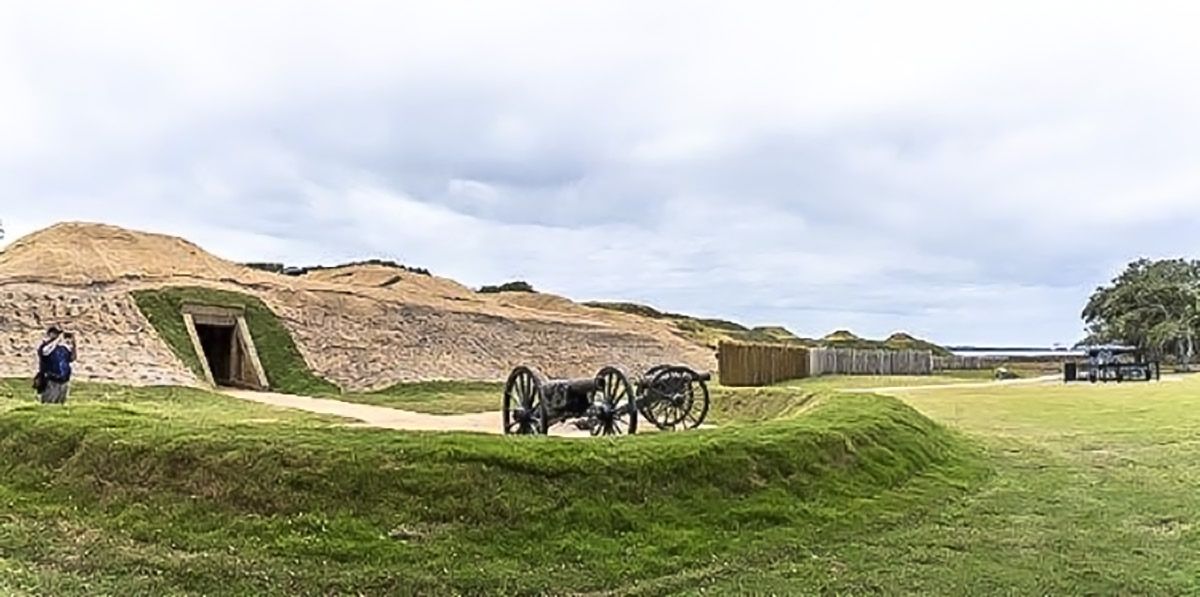
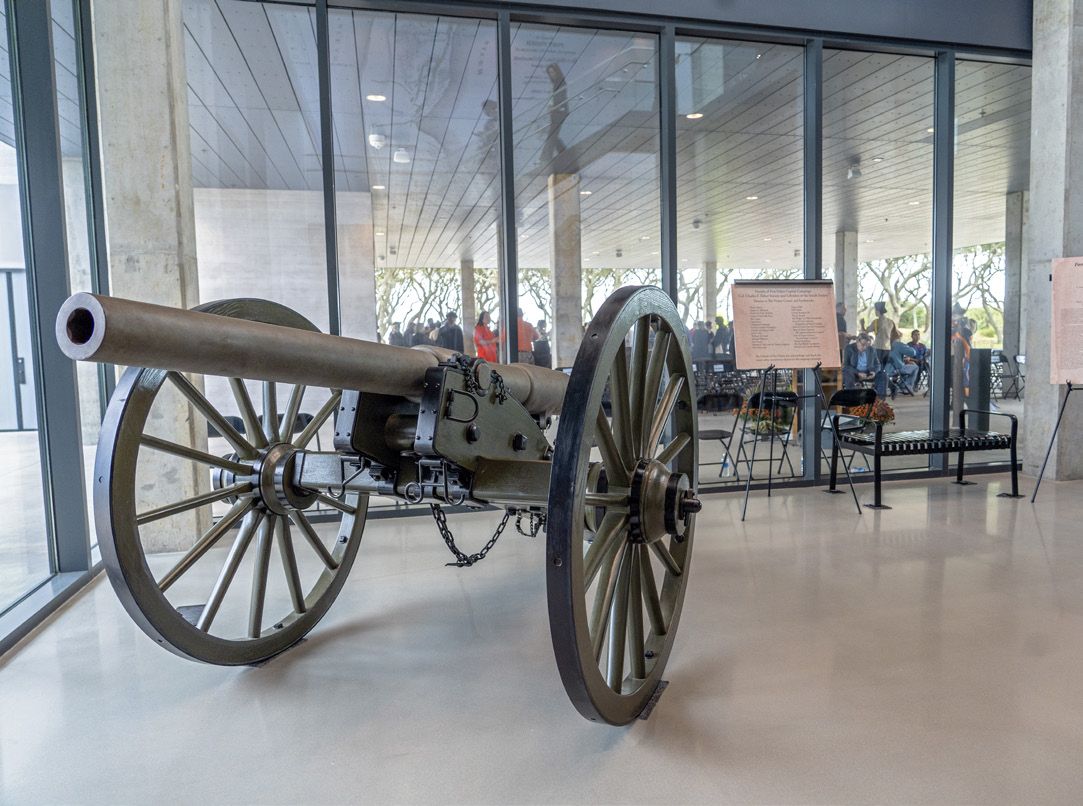
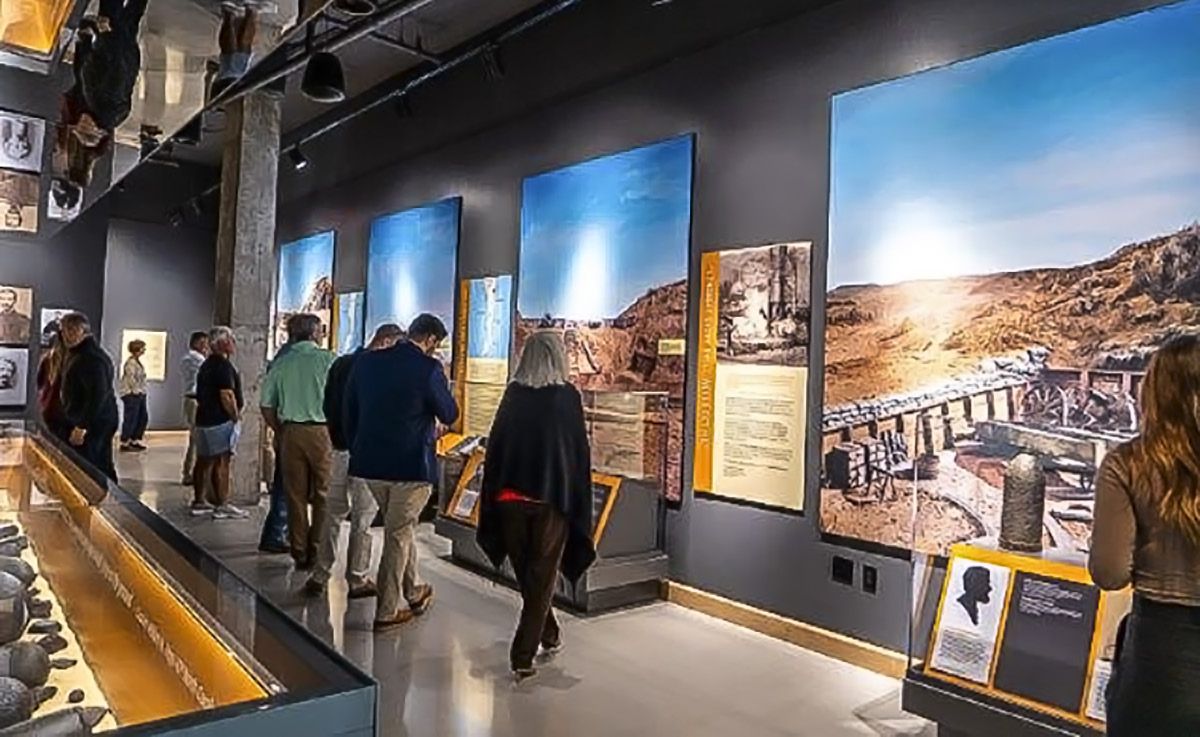
On October 29, 2024, after years of anticipation and overcoming challenges like flooding delays, the new visitor center at Fort Fisher State Historic Site finally opened its doors to the public. This state-of-the-art facility, a dream in the making since 2010, is set to transform the visitor experience at one of North Carolina’s most historically significant landmarks. Admission is free, and the site welcomes visitors from Tuesday through Saturday, 9 a.m. to 5 p.m. The new $25.5 million, two-story visitor center is a remarkable upgrade from its 1965 predecessor. Spanning 20,000 square feet, nearly three times the size of the original, it is now equipped to accommodate more than one million visitors annually, far surpassing the initial projection of 25,000 per year when the original center was built. As the most visited of North Carolina’s 27 historic sites, Fort Fisher now has the resources to match its popularity. Inside, visitors will find nearly double the exhibit space, a 100-seat orientation theater, an expanded gift shop, and a multipurpose room that can host everything from elegant wedding receptions to educational workshops. But the experience extends well beyond the visitor center. Along the scenic tour trail, reconstructed earthworks, such as the fort’s 7th, 8th, and 9th traverses, bring history to life. Visitors can also explore a sally port, an ammunition magazine, and even venture underground through a recreated tunnel system, a unique feature that allows guests to engage with the site in ways never before possible. For the first time in 160 years, Fort Fisher’s historical cannon emplacements and underground features are accessible, offering a vivid glimpse into its wartime operations.
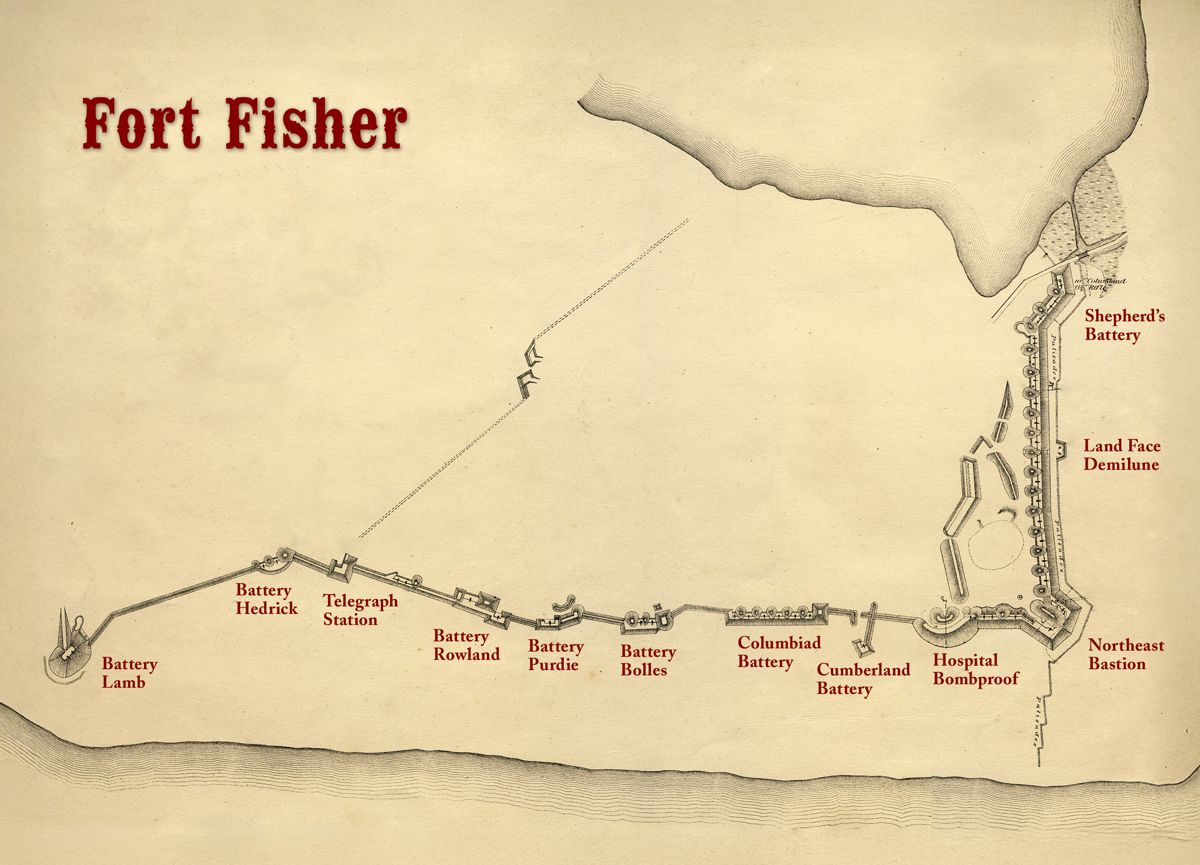
Wartime map of Fort Fisher, N.C., showing the sea face and land face defenses. (Map courtesy Chris E. Fonvielle Jr. Ph.D., NC Starburst Press, www.chrisfonvielle.com)
View of museum from one of the gun emplacements.
The Gibraltar of the South: Fort Fisher in the Civil War Fort Fisher earned its nickname, “The Gibraltar of the South,” for its critical role in protecting the Confederacy’s last major port, Wilmington, North Carolina. From its perch along the Cape Fear River, the fort stood as a vital lifeline, enabling blockade runners to supply the Confederacy with weapons, ammunition, and goods from overseas. Its massive earthworks, reinforced with sand and heart pine logs, made it a formidable stronghold against Union naval assaults. Throughout the war, Fort Fisher proved to be a thorn in the side of Union forces, withstanding two large-scale attacks. However, its fate was sealed during the Second Battle of Fort Fisher in mid-January 1865. After an intense bombardment—the second largest of the war—Union troops stormed the fort in a bloody ground assault. The fall of Fort Fisher marked a turning point in the war, effectively cutting off the Confederacy’s supply chain, known as the “Lee’s Lifeline,” and hastening the South’s downfall. Designated a National Historic Landmark in 1962, Fort
WHERE SC MILITARY HISTORY COMES TO LIFE. If you’re really interested in the Civil War, the South Carolina Confederate Relic Room and Military Museum is filled with things that actually were THERE, on the field of battle and back on the home front — swords, rifles, pistols, and flags. Our collections and live programs cover all of our state’s extensive military history, from the Revolution to the present. Learn more at crr.sc.gov.
crr.sc.gov 803.737.8095
301 Gervais Street • Columbia, SC
Fisher remains a powerful reminder of the Civil War’s farreaching impact. Its preservation and the recent opening of the new visitor center reflect the dedication of the Friends of Fort Fisher and countless supporters who made this ambitious project possible. The center was funded through state appropriations, grants, and private donations, ensuring that this iconic site continues to educate and inspire future generations. Today, Fort Fisher stands not only as a monument to the past but also as a dynamic destination where history comes alive. Whether you’re walking around its reconstructed earthworks, exploring its underground tunnels, or attending a special event in its new facilities, a visit to Fort Fisher is an unforgettable journey through time. For more information visit https://historicsites.nc.gov/all-sites/fort-fisher.
Ashley R. Rhodes Revolutionary War through WWI
- Specializing in Civil War Documents * Visit my eBay store at: www.ebay.com/str/reddevilsmilitaria