
Fidelity: The Fighting Swearers
The Fighting Swearers
By Alan D. Gaff · Originally published March-April 2025 · pp. 22–30
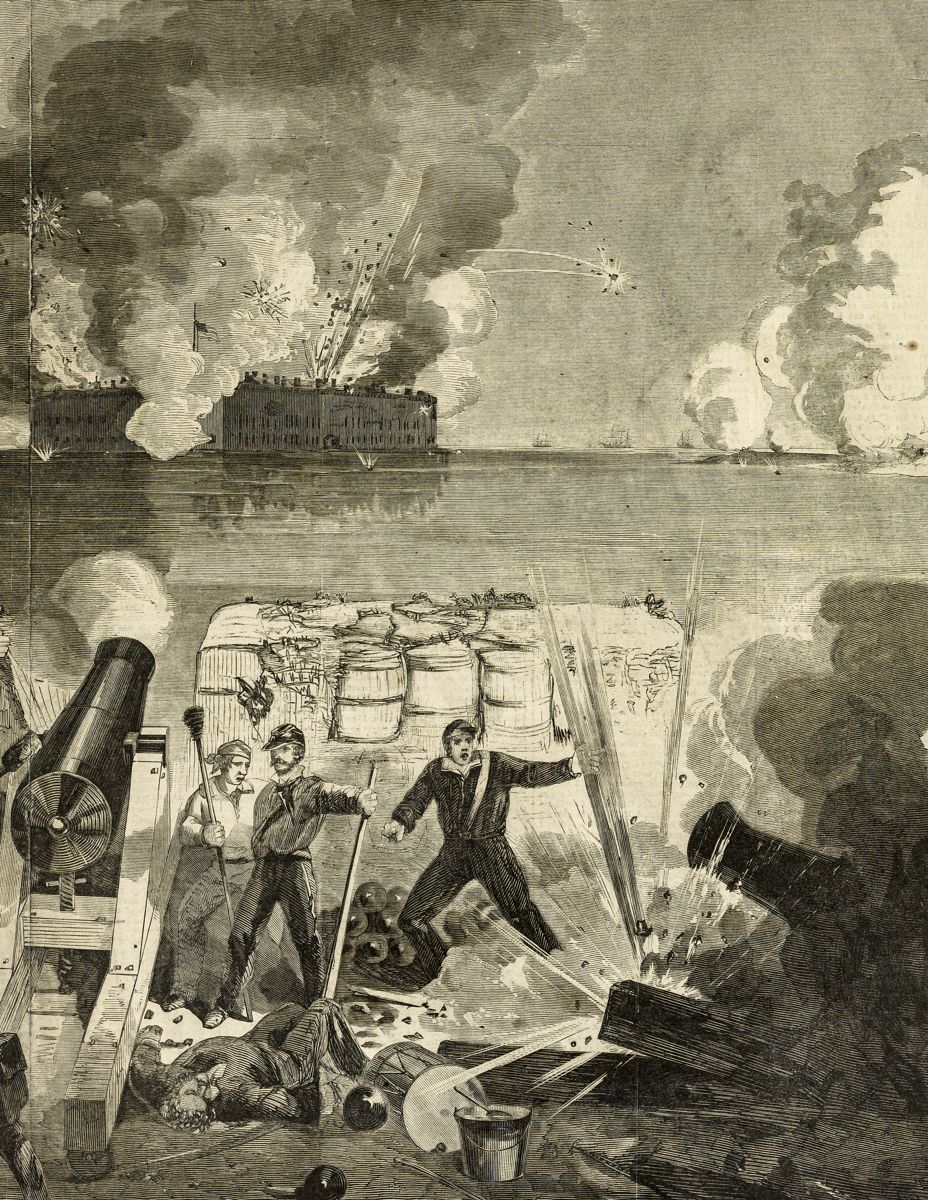
Bombardment of Fort Sumter by the batteries of the Confederate states, April 13, 1861. (Harper’s Weekly)
Lieutenant Jefferson C. Davis, Company E, First that trade his entire adult life except for a few months during United States Artillery, and John Swearer, a the summer of 1860 when he worked for his brother Charles, bricklayer employed by the Engineer Department, owner of the Hiawatha Hall restaurant in Baltimore. By late waited expectantly atop the ramparts of Fort August, Charles had sold the contents of Hiawatha Hall and Sumter. Charleston harbor lay shrouded in purchased the smaller Carroll House, leaving John free to darkness with only a thin sliver of moonlight occasionally resume his trade. About this time, he encountered Captain peeking through the clouds. The harbor’s beacon lights John G. Foster, U.S. Army Corps of Engineers, who was had long since been extinguished by the South Carolina finishing an assignment at Fort Carroll in the Patapsco insurgents and, within the fort, scanty supplies of candles River. Foster told Swearer he was assembling a party of and fuel for the oil lamps had been reserved for emergencies. bricklayers, stone masons, and carpenters to complete Some of the garrison slept soundly in the casemates, like construction on Fort Sumter at Charleston, South Carolina. Captain Abner Doubleday, Davis’s commanding officer, John signed on, packed up his tools, and headed south, while at least one group of enlisted men passed the time arriving in the harbor on September 6. with a lively game of Foster’s construction poker, squinting at their crew found the inside cards in the darkness. of Fort Sumter “filled As the time inexorably with building materials, approached 4:30 a.m. that guns, carriages, shot, pitch-dark morning of shell, derricks, timbers, JOHN SWEARER REMEMBERED, April 12, 1861, the two blocks and tackle, and “ FO R T H E M O M E N T W E W E R E men atop the ramparts coils of rope in great said little as they waited. confusion.”8 Huge piles S T U N N E D . T H E N L I E U T . DAV I S Following months of of bricks and flagstones S P R AN G B E H I N D A C AN NON FO R stalemate, General Pierre loomed everywhere. S A F E T Y , AN D I – W E L L , I – I G.T. Beauregard had Temporary sheds on the K NOW NO T W H AT I D I D , B U T YO U established a deadline for parade ground contained C AN C A L C U L AT E I G O T O U T O F Major Robert Anderson lime, cement, asphalt, and T H E WAY M I G H T Y Q U I C K LY .” H E to surrender Fort Sumter. tools. A blacksmith shop Anderson curtly refused, occupied another shanty. C ON T I N U E D , “ I T WA S T H E F I R S T so hundreds of South Sumter’s parade ground GUN FIRED – THE INDEX OF THE Carolina artillerists was literally a maze of F E A R F U L C R I S I S T O FO L L OW .” readied their guns and equipment, construction mortars for the upcoming materials, and war bombardment. Of course, materiel. Captain Foster Davis and Swearer could supervised the civilian not see any of these workforce, but there preparations from the was no garrison in Fort fort. As officer of the guard, Lieutenant Davis was obligated Sumter. Beside Foster, the only soldier inside Sumter was to be awake and alert, but Swearer was just curious; he had Ordnance Sergeant James Kearney, who was responsible never seen a war start. for receiving and protecting all cannon, ammunition, and At almost precisely 4:30 a.m., a mortar shell rose military stores within the fort. into the sky from a battery near Fort Johnson on James Island. A “whizzing shell” came flying over the two men and exploded above the parade ground. John Swearer remembered, “For the moment we were stunned. Then Lieut. Davis sprang behind a cannon for safety, and I – well, I – I know not what I did, but you can calculate I got out of the way mighty quickly.” He continued, “It was the first gun fired – the index of the fearful crisis to follow.”7 In the war initiated by this mortar shell, hundreds of thousands of American soldiers would fall victim to hostile musketry and artillery fire. Strangely, the first Northern man to feel the searing pain of an enemy projectile in the ensuing Civil War was this same John Swearer, a Baltimore bricklayer, a civilian, who became caught up in events he never could have imagined. Born in Baltimore in 1829, John was the son of John and Elizabeth Swearer, both natives of Germany. By 1840, his father had died, leaving Elizabeth to raise seven minor John was apprenticed as a bricklayer and pursued Fort Sumter.
By Christmas, John Swearer had become Captain Foster’s master bricklayer at Fort Sumter. He and the other workmen were startled on the evening of December 26, when armed soldiers suddenly appeared at the gate and announced that Major Anderson was moving his entire garrison from Fort Moultrie to Fort Sumter. Soldiers with bayonets hustled the civilians outside onto the wharf and secured the fort. Next morning Foster interviewed his workmen to determine who would be willing to stay on. The majority, mostly unskilled laborers from Charleston sympathetic to secession, opted to leave. Most tradesmen from Baltimore and northern cities decided to remain. Sergeant James Chester, one of Captain Doubleday’s noncommissioned officers, recalled that Foster identified “several loyal men, and also some doubtful ones who were willing to share the fortunes of the garrison. These constituted an acceptable addition to our working strength, although those classified as doubtful would have been an element of weakness in case of a fight.”9 Sergeant Chester singled out three Baltimore residents for lavish praise: Swearer, William O. Lyman, master carpenter as well as overseer of the entire construction gang, and James Tweedale, master blacksmith. He would later state emphatically that these three men “were the first volunteers for the Union.” Chester explained, “They shared the hardships of the siege and the dangers of the bombardment, doing their duty as good and faithful soldiers, without the formality of enlistment, or muster in or the hope of pension
U.S. Maj. Robert Anderson (Brig. Gen. from May 15, 1861). (Library of Congress)
C.S. Gen. Pierre Gustave Toutant de Beauregard. (National Archives)
or reward.” The sergeant elaborated on John Swearer, saying, “He was a soldier by instinct, and elected to remain with and share the fortunes of the garrison. His services as a bricklayer were invaluable in preparing the work for defense and when the bombardment began he was found to be as handy at the guns as any old soldier.”10 As the outbreak of war loomed, Captain Foster asked Swearer to convince other workmen to reinforce Major Anderson’s understrength garrison by acting as artillerists. His efforts were only partially successful. Swearer later related how he “succeeded only in getting thirteen men out of the whole gang! Oh, sir, if I’d had my way I’d have shot all the rest!”11 Although only fourteen civilians ultimately volunteered as gunners, the remainder rendered important service by carrying ammunition, sewing cartridge bags, and putting out fires. John Swearer continued his account of the bombardment on April 12 after the first shell had burst: “Then came the terrible cannonading; shell after shell burst upon our ramparts, and we returned fire as best we could. It was an unequal battle, and we foresaw that unless assistance came surrender was inevitable. Nevertheless, not one of those who fought thought of giving up while life lasted or there remained a remnant of the old fort. Major [Captain] Doubleday commanded company E, and I tell you he made us work like demons. All that day and part of the next I manned one of the guns, though each shell that struck against the side of the buttress threatened to knock a fellow into judgment day.”12 Sergeant Chester explained how Swearer at first seemed to be invincible: “His only fault was he was too venturesome.
He seemed to despise danger, and during the first day’s fight led a charmed life. Shells burst in his immediate vicinity, without hurting a hair of his head, and shot seemed to avoid him.”13 Although several nearby soldiers had been injured by flying fragments of brick and masonry, John refused to stay under cover. Swearer’s luck did not hold, as Chester related: “On the second day, however, the charm was broken, and a fragment of shell, at least a quarter of a pound of iron, irregular in shape, struck him about mid thigh on the inner side, and tearing round the bone in a downward spiral course, lodged behind the knee whence it was extracted by the surgeon. It was a horrible wound, but, strange as it may seem, the bone was uninjured.”14 The bricklayer recounted how this shell exploded overhead as he stood near the rear of a casemate and struck his left leg, saying that “it settled me, sir; it settled me for that fight. I knew no more till a long time, and then the battle was all over and Fort Sumter was demolished.”15 Major Robert Anderson evacuated Fort Sumter the afternoon of April 14, the garrison’s departure having been held up by an accidental explosion during a salute to the Stars and Stripes that killed one man, mortally wounded another, and seriously injured a few more. Although the Federal soldiers and Foster’s workers boarded the Isabel, a delay in tending the wounded meant that the rebel steamer could not cross the harbor bar until next day. About noon on April 15, sailors from the sloop of war USS Pawnee boarded the Isabel to assist in moving the Sumter garrison and its equipment to the Baltic, a civilian steamship that would carry them to New York. As might be expected, John Swearer was the first man to be bundled into a sling for transfer to the Baltic. By a remarkable coincidence, the Pawnee seaman who lifted John into the sling, tied the knots, and sang out, “Hoist away!” was
USS Pawnee during the Civil War, with a spar torpedo at her bow. (NH 45362-A )
his brother, Benjamin. The wounded bricklayer was both astonished and overjoyed to see Benjamin, explaining his appreciation with the simple statement that “he brought me home.” Upon reaching New York, Benjamin received a leave of absence from Commander Stephen Rowan of the Pawnee and accompanied his brother to the hospital at Fort Hamilton. While John Swearer was unquestionably the first man wounded by an actual missile of war during the Civil War, Benjamin soon achieved his own recognition. Having previously served aboard the frigate USS Congress and the sloop USS Saratoga prior to his third enlistment aboard the Pawnee, Benjamin was already an old salt by 1861. Seaman Swearer received a Medal of Honor, the second Benjamin Swearer, Seaman, United States Navy. Halftone image published in Deeds of Valor, Volume II, page 7, by the Perrien-Keydel Company, Detroit, 1907. Seaman Swearer was awarded the Medal of Honor for “gallant service” during the capture of Fort Clark, N.C., on August 29, 1861. He was a member of USS Pawnee’s crew at that time.
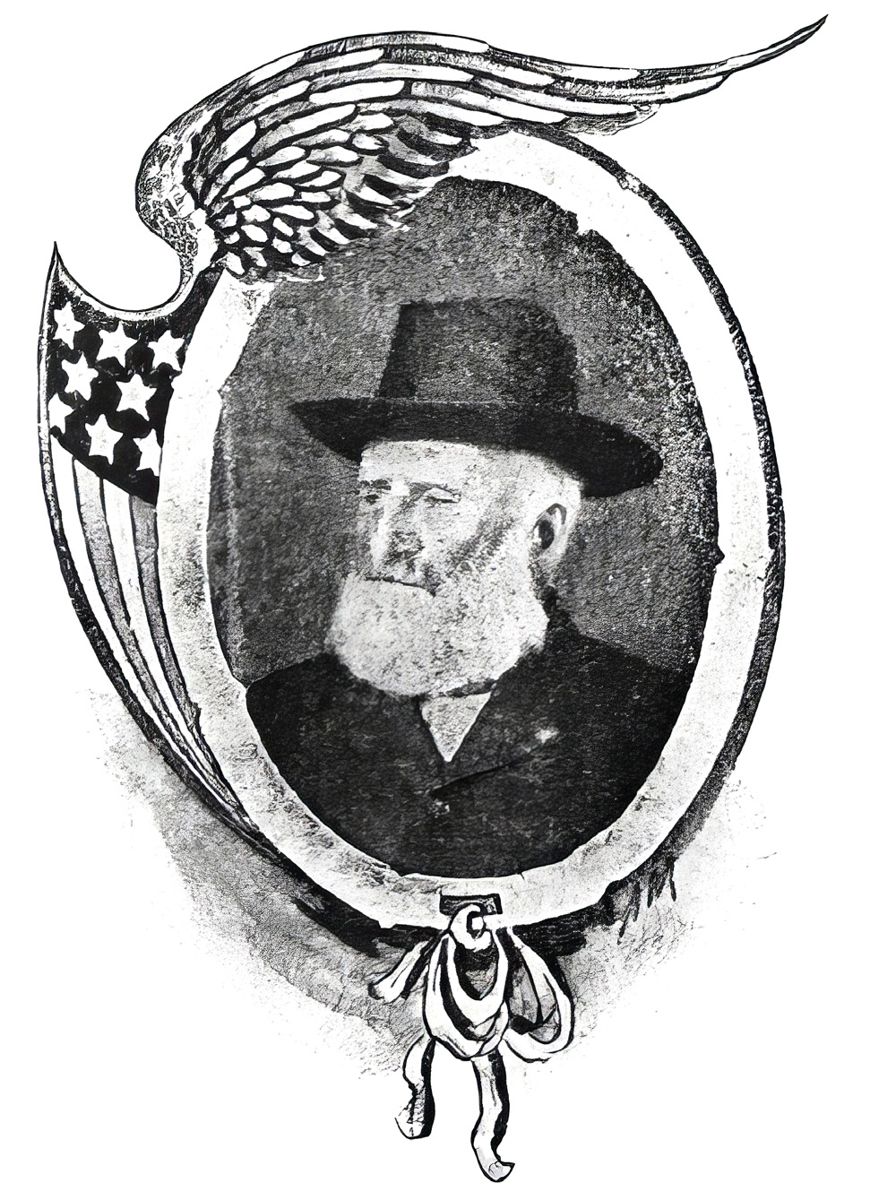
Source: Congressional Serial Set, Serial Set Number 4026, SuDoc Class Number 56-1:H.RP.1657, Y 1.1/2:SERIAL 4026. Report Number H. Rept. 561657. Date May 23, 1900. Congress 56th Congress, 1st Session.
chronological Navy Medal ever issued, for actions at Hatteras Inlet, North Carolina. The citation for his Medal read: “Embarked in a surfboat from the USS Pawnee during action against Fort Clark, off Baltimore Inlet, August 29, 1861. Taking part in a mission to land troops and to remain inshore and provide protection, Swearer rendered gallant service throughout the action and had the honor of being the first man to raise the flag on the captured fort.”16 In recounting his experiences on August 28 [not August 29 as in the citation] Benjamin Swearer wrote modestly, “I was one of the landing party from the Pawnee, and shortly after noon of the first day we got into Fort Clark. I happened to be the first to hoist the Union flag in this fort, for which deed I was granted the Naval Medal of Honor.”17 Discharged in September 1862 from the Pawnee after contracting rheumatism, Benjamin returned to Baltimore and joined the city police force. He subsequently enlisted in Company B, Ninth Maryland Infantry, on June 17, 1863, during the Confederate invasion of Maryland and Pennsylvania. Another Swearer brother, William, enlisted in Company D of the same regiment. On October 18, while stationed near Charlestown, West Virginia, the Ninth Maryland was badly cut up and hundreds of its soldiers captured during an attack by General John D. Imboden. Benjamin Swearer, by now regimental color sergeant, tore the Stars and Stripes from its staff and concealed the colors under his uniform. As Imboden’s men closed in, he began to rip apart the regimental flag despite being threatened with instant death by the Confederates. Benjamin and William Swearer ended up in Belle Isle Prison where they remained for over five months before being paroled. The pair successfully hid their banner from the rebels by burying it, although guards suspected its existence and made frequent searches for the prize. As soon as Benjamin stepped aboard the truce boat City of New York, he pulled out his cherished flag amid resounding cheers from other released prisoners.18 Benjamin and William finally mustered out of the Ninth Maryland on March 20, 1864. Following the assassination of President Lincoln, Sergeant Swearer testified before the military commission investigating the affair, outlining the treatment he had received at Belle Isle: “I laid there for three months without any shelter; my ordinary weight is about one hundred and seventy pounds, but when I came home I weighed only about one hundred and twenty-three. I do not think I would have lived had I staid there a month longer.”19 After his parole, Benjamin returned to his mother’s home on Grant Street where John, in a reversal of roles, helped nurse his brother back to health. After regaining some strength, Benjamin married and eventually moved to St. Louis, Missouri, where he worked as a painter, but fate was not kind to him. Benjamin’s wife Kate died in 1890 at the St. Louis Insane Asylum and his own health began to deteriorate.
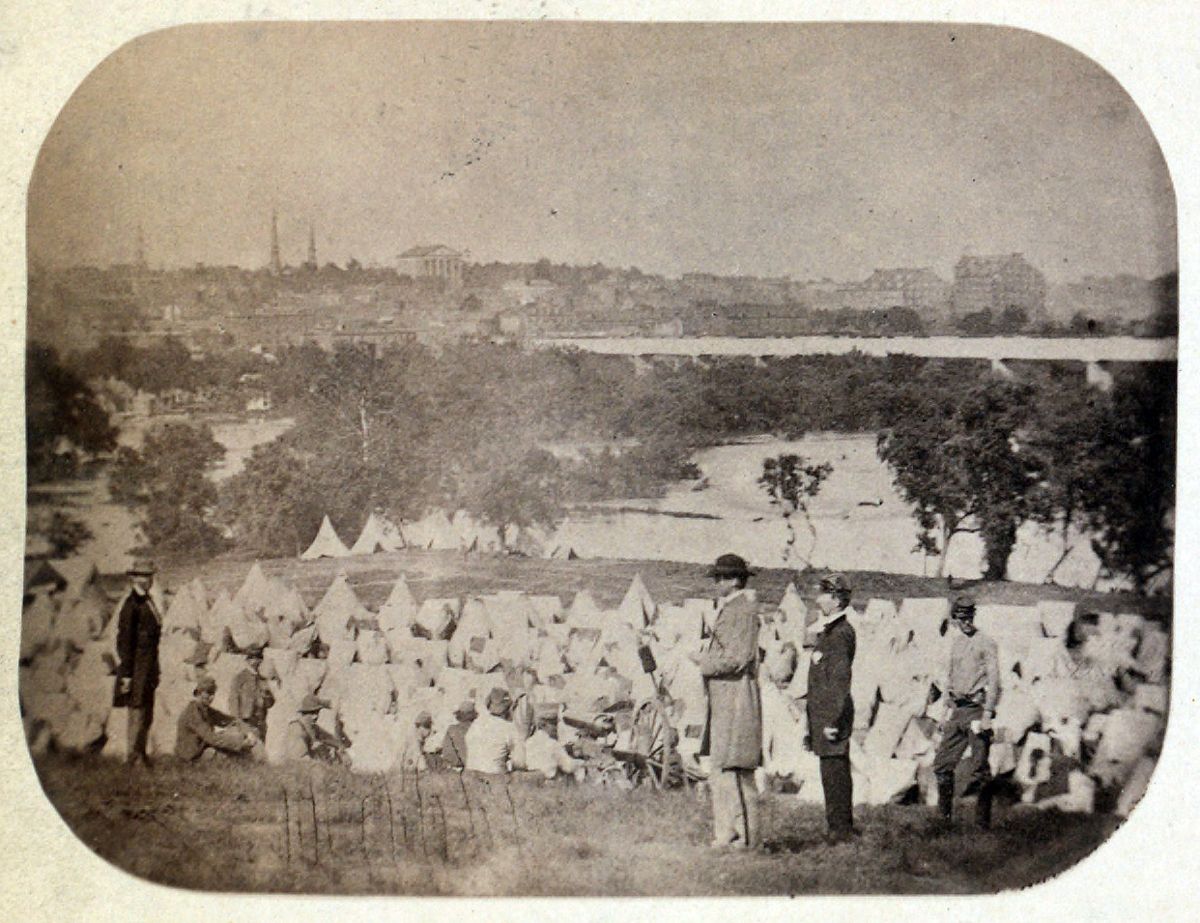
which were valued at $1,800, were stolen from him.”22 This grossly exaggerated claim was also ignored by the government. John Swearer finally received a pension of four dollars per month in 1884, but only through a Special Act of Congress, the general pension laws for Civil War service were not applicable in his case. His pension was doubled in 1889. Another piece of legislation for Swearer’s benefit worked its way through Congress in 1890, this time accompanied by a letter from retired General Abner Doubleday. The old Fort Sumter hero wrote to support the claim: “In this emergency, John Swearer, with a few of his companions who were masons and brick-layers, and who were at work in the fort, served at the guns during the bombardment and performed all the duties of a soldier. At the close of the action Swearer was badly wounded by a piece of shell entering his body.” Doubleday then added the sentence that would regain Swearer some of his long-lost fame: “He was the first man wounded in the late civil war.”23 This legislation passed Following a year’s residence in the Leavenworth National without a hitch, raising his monthly pension to twenty Soldiers Home, he went to live with a daughter. Benjamin dollars per month. Swearer died November 2, 1902, of “senile debility,”14 Doubleday’s statement caught the eye of the media. John and now lies in Saint Peters Cemetery, buried beneath a Swearer was again hailed as an intrepid hero, reminiscent headstone that identifies him as a winner of the Medal of the Minutemen of old, who stepped forward to volunteer of Honor. His brother William, who shared Benjamin’s when his country was imperiled. Some editors made light confinement at Belle Isle, was laid to rest in the Baltimore of his surname. One wrote, “There were a good many Cemetery following his death on November 6, 1904. other swearers in the army, but John is the first to achieve While Benjamin’s role in the Civil War was acknowledged distinction.”24 Another chimed in, “His name ought to give during his lifetime and memorialized after his death, him the increase he asked, as scores who were not wounded John Swearer faded into obscurity. After a period of at all have secured pensions by swearing.”25 convalescence following hospitalization in New York, John John enjoyed this new adulation only a few years. He returned to his trade and eventually married Laura V. West contracted stomach cancer and underwent an operation at in 1866, the couple having two daughters and a son. Joseph Hellen would recall, “I had the pleasure of working with him on nearly all the buildings of the Johns Hopkins Hospital group. We worked side by side as journeymen bricklayers. And after I went into the contracting business he worked for me, and was one of the very best of the craft.”20 Swearer filled his social life by joining the Bricklayers Union, the Carroll Association, the Keystone Hickory Club (a Democratic political organization), and the Golden Rule Lodge and Philanthropic Encampment of the Independent Order of Odd Fellows. An initial attempt in 1874 to obtain a government pension for his wound went nowhere. He reapplied for a pension five years later and was examined in 1880, doctors concluding his disability was one-half. The Pension Bureau rejected him outright “because he was not an enlisted man.”21 Taking another approach, in 1882, John filed a claim for reimbursement, alleging that “while (Library of Congress) he lay suffering from a wound, his tools,
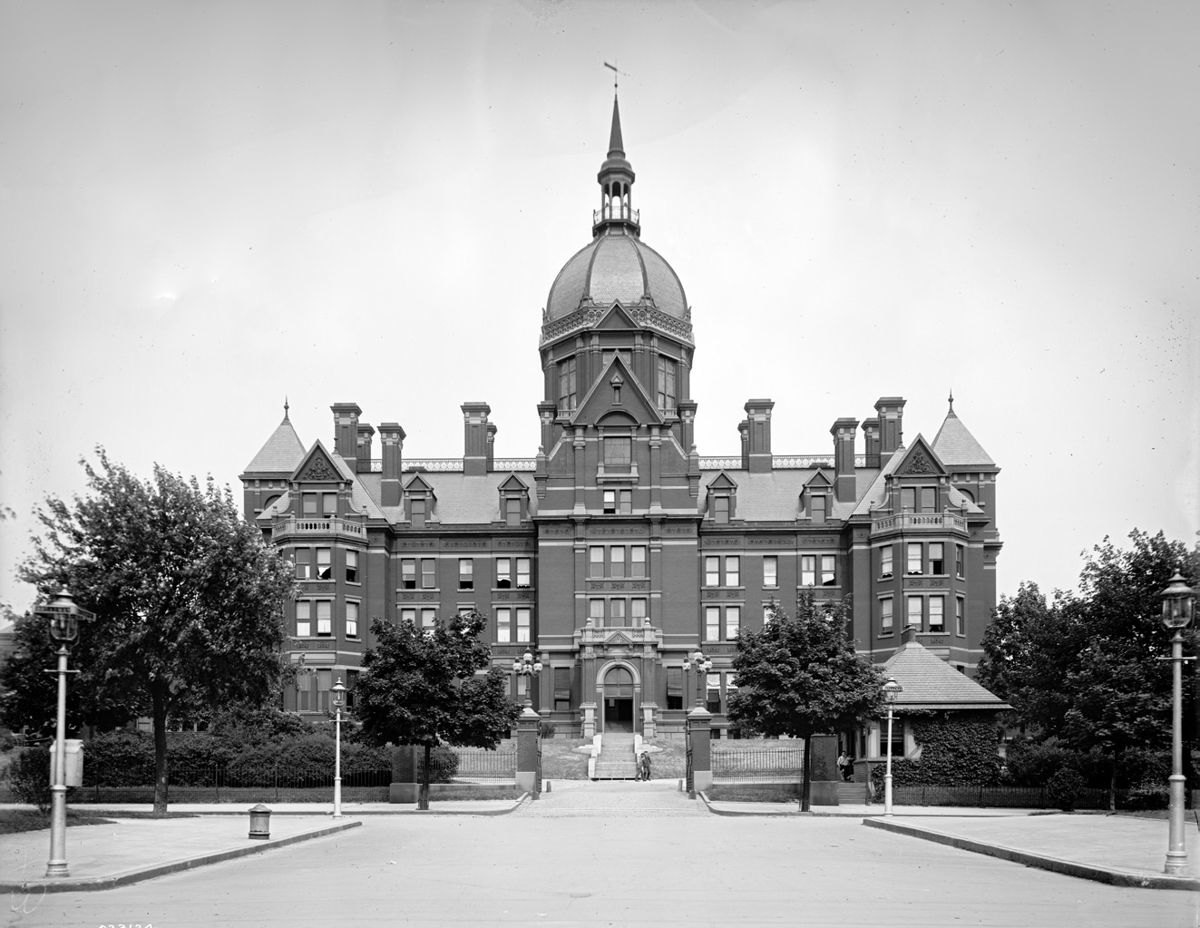
Johns Hopkins Hospital in September 1892. This surgery proved unsuccessful, leaving the old patriot an invalid. John Swearer died July 30, 1893, aged sixty-four; some said it was from cancer, while others believed it was an overdose of the opium he used to dull the pain. He was buried in Baltimore Cemetery, near his bother William, a delegation of Odd Fellows serving as pallbearers. When Laura filed to keep John’s monthly stipend (unmarried Civil War widows automatically being approved upon their application), she was rejected. The Pension Bureau denied her claim, repeating the old argument that “her husband had not been an enlisted man in the military or naval establishment of the United States.”26 It took yet another Special Act of Congress to overcome this bureaucratic roadblock, but Laura finally received her widow’s pension in 1901. Although only a civilian, John Swearer had been an important member of the Fort Sumter garrison. Lionized for a few weeks, his service became lost in the enormity of the Civil War. Following the war, even the United States government turned its back on him, refusing recognition and compensation for his unique service. Only when Abner Doubleday declared him to be the first man wounded during the war did he again achieve distinction. But for the last thirty-two years of his life, John bore the scars and endured the pain of his Sumter wound. He once remarked simply, “If my memory should ever fail me I have only to look at my limb or to over-exert myself in the slightest, and my wound will remind me.”27 John Swearer’s fame died with him. Edward Everett Warner, a native of Baltimore who helped John’s successful appeals, decades later would reflect on Swearer’s fidelity to the Union at Fort Sumter, writing simply, “I wonder if a tablet of marble records at his grave his heroic service.”28 Although America abounds in memorials to Civil War soldiers, monuments, plaques, headstones, grave markers, there is still no such memorial to John Swearer, the Baltimore bricklayer turned soldier. Even those who choose to visit his place of interment in Baltimore will be disappointed. John Swearer’s grave is unmarked. His remains rest beneath a patch of grass on the side of a hill that overlooks the city where he lived his entire life, except for a few months spent in Charleston harbor, where this ordinary man did something truly remarkable in our nation’s history.
Fort Sumter, the day after its first bombardment. (Library of Congress)
Endnotes
Democrat and Chronicle, January 15, 1886. James Chester, “Inside Sumter in ’61,” Battles and Leaders of the Civil War, vol. 1 (New York, 1887), 52. Ibid. Evening Star, April 10, 1886. Democrat and Chronicle, January 15, 1886. Ibid. Evening Star, April 10, 1886. Ibid. Ibid. Medal of Honor Recipients 1863-1978 (Washington, 1979), 232. Beyer, Walter F. and Oscar F. Keydel. Deeds of Valor, vol. 1 (Detroit, 1902), 8. Cavada, F. F. Libby Life: Experiences of a Prisoner of War (Philadelphia, 1864) 203-204. The Trial of the Alleged Assassins and Conspirators at Washington City, D. C., May and June, 1865 (Philadelphia, 1865), 85. Baltimore Sun, February 13, 1925. 48th Congress, 1st Session, Senate Report No. 636. Baltimore Sun, February 11, 1882. Congressional Record, August 29, 1890, 9370. Chicago Tribune, May 15, 1890. Pocahantas County Sun, February 20, 1890. 56th Congress, 2nd Session, Senate Report No. 1888, “Laura V. Swearer,” 2. Democrat and Chronicle, January 15, 1886. Baltimore Sun, February 7, 1925.
Alan D. Gaff served as a sergeant in the U.S. Army Military Police from 1969–1972. He received a bachelor’s degree in history from Indiana University in 1979 and a Master’s in American History from Ball State University in 1980. A lifelong resident of Fort Wayne, Ind., he retired from the United States Postal Service in 2009 after nearly thirty years of service. Since 1984, Mr. Gaff has been president of Historical Investigations, a research firm specializing in history, archaeology, and environmental research. Successful and respected authorities on American military history, Alan and his wife Maureen have authored and edited eleven books. Gaff and his son Dr. Donald H. Gaff have recently edited four books, George Kimball’s A Corporal’s Story and Charles Curtis’ Ordered West, two unique Civil War narratives, the latter of which was a finalist for the New Mexico-Arizona Book Award in Biography.