
This & That Through the Lens
By Gould Hagler · Originally published July-August 2025 · pp. 40–42
& A
This & That
A Blackguardly Trick or an By Gould Hagler
Honorable Act for the Public Good?
s many readers will know, the CSS Florida was a highly-successful commerce raider. Cruising from January 1863 until October 1864, the vessel preyed on Northern shipping in the North and South Atlantic and in the Caribbean, claiming 37 prizes during her 21 months at sea.1 The Florida’s career ended on Oct. 7, 1864. This column will tell the story of the ship beginning with her last days in Confederate service. The full story doesn’t end until July 1866. At 9 p.m. on Oct. 4, 1864, the ship entered the harbor at the Brazilian port of Bahia. The sloop-of-war, which had been at sea for 61 consecutive days, was low on supplies and in need of minor repairs. Lieut. C. Manigault Morris, in command of the Florida, obtained permission to remain in the harbor for repairs and re-supply, initially for 48 hours, then for two additional days. The Florida was not the only warship from América do Norte in the harbor: the USS Wachusett, captained by Cmdr. Napoleon Collins, was anchored there when the Confederates arrived. The American consul in Bahia, Thomas Wilson, immediately filed a protest with the president of the state of Bahia, Antonio J. da Silva Gomes. Wilson argued that the Florida was a “piratical cruiser” and was not entitled to Brazilian hospitality, but rather should be detained with her officers and crew. Gomes rejected Wilson’s protest. Brazil recognized the Confederate States as belligerents. The Florida would, after 61 days at sea, receive “all the assistance required by humanity,” provided that the Confederates respect Brazil’s neutrality. Gomes demanded of Wilson the same respect from the Wachusett and was “answered affirmatively, the consul pledging his word of honor.”2 An American citizen, Mr. L. de Videky, visited Lieutenant Morris aboard the Florida on Oct. 6. De Videky bore a letter from Wilson, the U.S. consul. Morris refused to accept the letter, as it was “improperly addressed” to the captain of “the sloop Florida,” not the CSS Florida.3 After a brief conversation with the intermediary, Morris terminated the meeting, and de Videky went ashore.
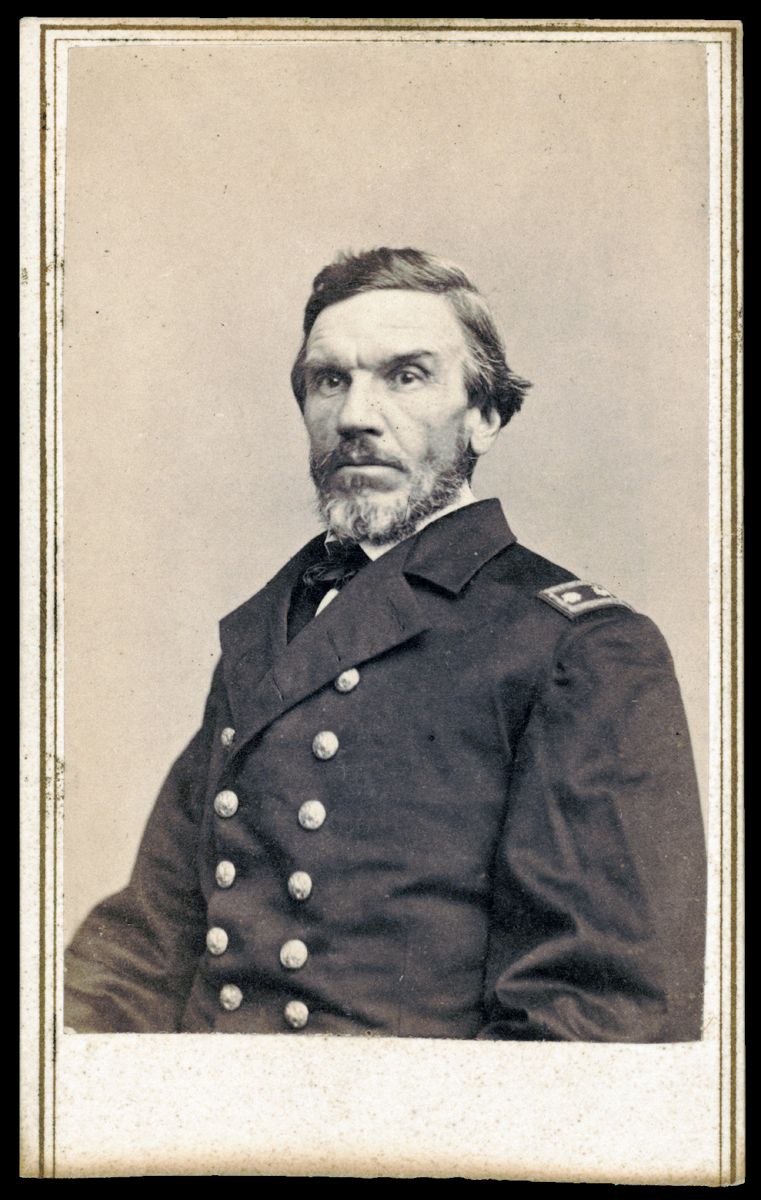
In the harbor, the Florida was anchored five-eighths of a mile from the Wachusett, with a Brazilian warship anchored in between. Assured by President Gomes that Wilson had pledged that the Wachusett would engage in no hostile act in the harbor, and having made the same pledge in return, Morris allowed his crew to go ashore, one watch at a time. On October 6, Morris himself went ashore, leaving First Lieut. Thomas Porter in command. At about 3:15 a.m. on October 7, while Morris was still ashore, the Wachusett steamed past the intervening Brazilian ship and attacked the Florida. The Federal ship rammed the Florida, simultaneously “pouring a volley of musketry and a charge of cannister…upon our decks.”4 The Wachusett backed away and fired again. Caught unawares, the Confederates had no choice but surrender. Soon the Wachusett was towing the Florida out of the harbor toward international waters. Brazilian vessels pursued, but with steam and sail the Wachusett got away with her prize.5 The naval battle was over. The diplomatic battle was to begin immediately. The remainder of this column will focus mainly on that element of the story, along with some matters related to military justice. The Wachusett sailed for Hampton Roads, as did the Florida, manned by a prize crew, with the Florida’s officers on board under parole and crewmen in irons.6 Back in Bahia, Morris prepared his report, and the Brazilian authorities prepared their diplomatic protest. Morris requested copies of correspondence between the Brazilian government and the American consul Wilson and Cmdr. Collins. President Gomes replied, through an intermediary, that he could not have official communications with an officer representing a government not recognized by Brazil. For this reason, he refused to share the correspondence. However, the intermediary informed Morris that the correspondence had been published in the local press and that he could therefore obtain the information from that source. The very day of the capture, October 7, Morris received a letter from Mr. de Videky, the go-between with whom he met on the 6th. In the letter de Videky expressed his outrage at the behavior of “that faithless scoundrel who calls himself a consul of the United States, and goes by the name of Wilson.” He told Morris that he had been sent on what he thought was “a mission of honor,” while Wilson was actually “mediating…an infamous and blackguardly trick.” The letter assured Morris that de Videky would take his revenge should he again meet Wilson. On the same day, President Gomes addressed a letter of protest to Wilson condemning the attack on the Florida. This “unexpected and deplorable act,” the protest stated, was carried out in violation of the consul’s explicit promise that the commander of the Wachusett would engage in no hostile act while in Brazilian waters. It seems that Gomes was unaware that Wilson was not present to receive the rebuke. The consul, who was present on the Federal ship during the attack, had avoided the wrath of de Videky and the displeasure of President Gomes by leaving Bahia on the Wachusett. The Wachusett and the Florida arrived in Hampton Roads on November 11. The Confederate officers and crew were shipped off to prison. The Florida, moored at Newport News, was seriously damaged when an army steamer ran into her about 1 a.m. on the 28th. The pumps, already hard at work keeping the existing leaks caused by the action in Bahia, could not keep up. The prize Florida, formerly the CSS Florida, went down in nine fathoms at 7:30 a.m. I can’t say whether Consul Wilson ever saw President Gomes’s protest, but there is no doubt that Wilson’s boss heard from Gomes’s boss. Through his chargé d’affaires in Washington, Ignacio de Avillar Barloza da Silva, Emperor Pedro II sent a detailed protest, dated December 12, to U.S. Secretary of State William Seward. The attack on the Florida, the message said, was “an act of the most transcendent gravity” and “an offense to [Brazil’s] honor and sovereignty.” Furthermore, the U.S. consul had broken his solemn pledge of honor that the Wachusett would “respect the neutrality and sovereignty of Brazil.” The protest stated that, as the Wachusett left her anchorage and moved toward the Confederate ship, a Brazilian boat was sent to instruct the Wachusett to halt the attack. Collins “told the officer commanding the boat that the Wachusett would return to her anchorage.” Nevertheless, the Wachusett steamed on and attacked. “The consul, Wilson, preferred to abandon his post,” the letter continued, “withdrawing on board the Wachusett.” The chargé d’affaires expressed his government’s expectation that the United States “would attend to the just reclamation of the Empire as promptly and fully as the case demanded” and would, in addition, “give [to the Empire] the reparation which is due to it.” Da Silva asserted that international law was clear on the matter and reminded Seward of a similar instance that occurred in U.S. waters in 1793, when Britain and France were at war at a time when the U.S. was neutral. When a French warship attacked and captured a British vessel in Delaware Bay, President Washington’s government “remonstrated against this violation, and required from the French Republic not only the delivery of the captured vessel but also the complete liberation of all the persons found on board.” The French complied in 1793; Brazil called upon the United States to conduct itself in the same manner in 1864. Seward answered on December 26. “You have justly expected that the President would disavow and regret the proceedings at Bahia,” read the reply. “He will suspend Captain Collins and direct him to appear before a courtmartial. The consul at Bahia admits that he advised and incited the captain and was active in the proceedings. He will therefore be suspended.” Seward added “The flag of Brazil will receive from the United States Navy the honor customary in intercourse of friendly maritime powers.” After the brief paragraphs in which he stated what action the U.S. would take, actions which may seem to admit wrongdoing, Seward continued at length with a detailed “however.” The secretary stated that the United States did not admit or give credit to “the charges of falsehood, treachery, and deception which you have brought against the captain and the consul. These charges are denied on the authority of the officers accused.”
Seward further stated that the Brazilian government was in error in believing that “the insurgents of this country are lawful belligerents.” The favorable treatment of the Florida was therefore “unfriendly and wrongful, as it is manifestly injurious, to the United States.” The Florida was a “pirate belonging to no nation or lawful belligerent.” By aiding the pirates, Brazil injured the United States, and “justly owes the reparation to the United States as ample as the reparations she now receives from them.” Why, then, did the government disavow the actions taken by the consul and the captain? And why, in addition, did the government later release all the prisoners and provide funds to those prisoners who needed money to leave the country? Seward explained that “It does not… belong to the captains of the ships of war of the United States or to their consuls residing in foreign ports, acting without the authority [of the government], and choosing their own time, manner, and occasion, to assert the rights and redress the wrongs of the country.” Collins was tried in a court-martial on March 23, 1865, on the charge that he “being in command of the United States steamer Wachusett…at the port of Bahia…did unlawfully attack and capture the steamer Florida and a portion of her officers and crew within the territory of the Government of Brazil, then and now a neutral power.” Collins pled “Guilty, excepting the single word ‘unlawfully.’” The trial was brief. Collins offered no testimony but stated that his action was “for the public good.” Two weeks later the court found that the charges were proved and sentenced Collins to be dismissed from the Navy. In September 1866, the Secretary of the Navy Gideon Welles disapproved the sentence and notified Collins that he was to “await the further orders of the Department.” The honor promised to the Brazilians in 1864 was duly paid in Bahia on July 12, 1866, on the USS Nipsic. “A few minutes before 12:00 o’clock the American flag was hauled down from the fore-masthead, and at noon a salute of twenty-one guns was fired with the Brazilian flag at
“I Thank the Lord I Am Not a Yankee…”
Eliza Frances Andrews (1840–1931) received a strong education and was a successful writer and educator. Her War-Time Journal of a Georgia Girl surely ranks among the most observant and intelligent wartime memoirs by a Southern woman. Edited with commentary by Stephen Davis, I Thank the Lord I Am Not a Yankee includes selections of her wartime and postwar journals which are most expressive of her Confederate patriotism and Southern pride. February 2023 • $35.00, hardback
Stephen Davis is author of ten books on the Civil War, most of which treat the Atlanta Campaign. His two recent volumes on Confederate General John Bell Hood have won several prizes, including the Fletcher Pratt Award of the New York CWRT.
the fore.” On the corvette Doña Januaria the Brazilians returned the salute, “gun for gun.” On July 21, the new President of the state of Bahia, Dom Pedro Seao Vellosa, acknowledge the amende honorable and stated that, honor being satisfied, Brazil would not harbor the “slightest resentment” against the United States. Collins was promoted to captain in July 1866, even before Welles disapproved the sentence. He remained in the Navy and was promoted to the rank of rear admiral in 1874. He died on duty while in command of the South Pacific Squadron in 1875. Morris and his family moved to England after the war. In 1880 they returned to the United States and lived in Baltimore. He died in 1895. Sources: Some basic information on the CSS Florida and the persons involved was taken from various online sources. The specifics about the controversy in Brazil and all the documents cited are from Official Records of the Union and Confederate Navies, Ser. I, v. 3.
Endnotes: 1.
Two of the Florida’s prizes were themselves converted into commerce raiders. These two vessels, like the ship which captured them, waged war against U.S. commerce on the high seas. This exchange between Gomes and Wilson is described in a Dec. 12, 1864, letter from Brazil’s chargé de affaires in Washington to Secretary of State William Seward. As we will see, the U.S. government denied that Wilson had made such a pledge. In matters such as these, fine distinctions can be important. On October 5, First Lieut. Porter had refused to accept a similarlyaddressed note from Wilson. The Federals considered the Florida to be pirate ship, and would not address a message to the captain of the CSS Florida. Morris, on the other hand, would not accept a letter addressed in any other manner. In an earlier war, a British general sent a letter to Gen. George Washington’s headquarters addressed to “George Washington, Esq.” The letter was returned unopened with the explanation that there was no such person at those headquarters. Washington insisted that he be addressed as “General.” Morris insisted that the Florida was a warship commissioned by the Confederate States of America. Morris’s report, October 13. It seems that the Brazilians did little to prevent the attack and that their pursuit was half-hearted. Porter’s report provides information on the paroled officers and shackled crew. Morris’s report states that five officers (including Morris) and 71 crewmen were ashore when the Wachusett attacked. Fifteen crewmen tried to escape capture by jumping overboard. Six reached shore; nine were shot and killed in the water. Collins reported that 11 officers, 23 crewmen, and one civilian were captured. Eighteen of the crewmen escaped from the Florida at St. Thomas.
Gould Hagler is a retired lobbyist living in Dunwoody, Ga. He has been a regular contributor to CWN since 2016. He can be reached at [email protected].