
Emerging Civil War
Connection in the Desert: Visiting Picacho Peak
By Chris Mackowski, Ph.D. · Originally published July-August 2025 · pp. 44–46
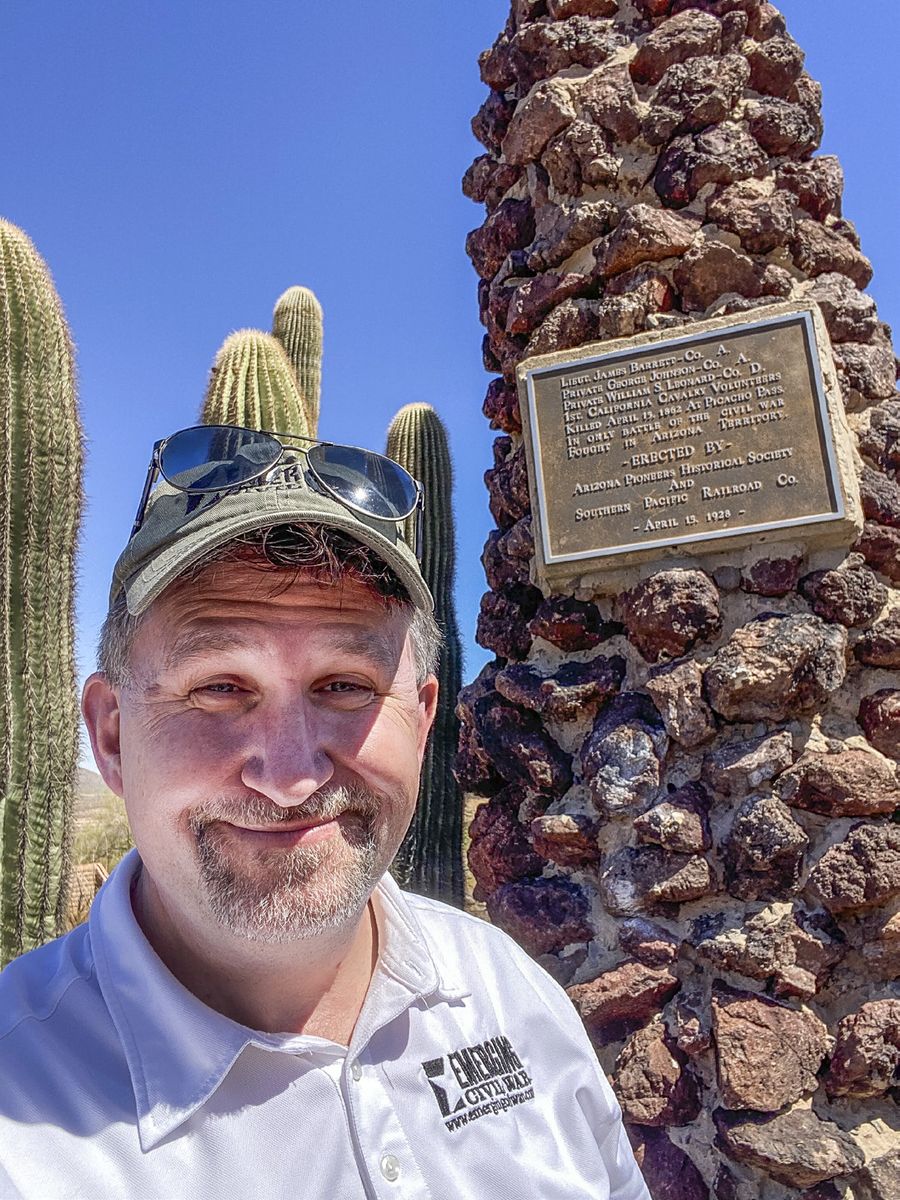
Interstate 10 rockets straight through the heart of Picacho Pass, connecting Phoenix and Tucson. A freight train, stretching almost as far as I can see, rattles along the railroad that runs parallel to the highway. Somewhere along that railroad lie the unmarked remains of Lt. James Barrett. Barrett was one of three Federal fatalities in the April 15, 1862, skirmish that became known as the Battle of Picacho Peak, or, in some accounts, the Battle of Picacho Pass.
Barrett and his troopers were part of a 2,300-man column that had ridden eastward from California—a group now described as “the California Column.” They had answered a summons for help as the United States Army tried to fend off an invasion further east by Confederate Maj. Gen. Henry Hopkins Sibley. The column didn’t know it yet, but Sibley‘s men had been turned back following a late-March battle at Glorieta Pass. Sibley had won the battle but lost his supplies, effectively ending his ability to continue.
In conjunction with Sibley’s main effort, a 125-man detachment of Confederates had taken up position in Tucson, Arizona. The California Column, commanded by Col. James Carleton, was advancing to flush them out. Carleton intended to sweep into Tucson with overwhelming force and drive the Confederates from their camp.
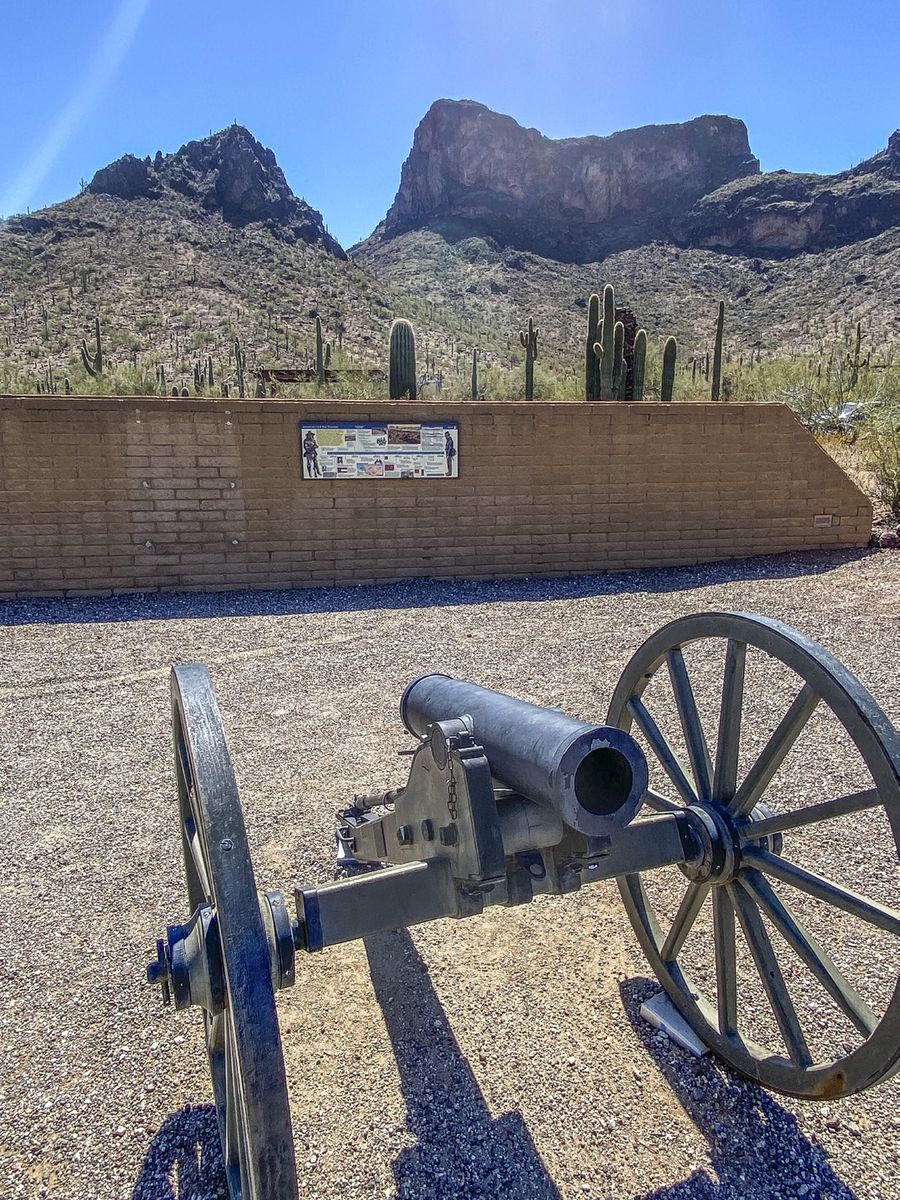
Detachments from both forces clashed at Picacho Pass because the north-south Butterfield Overland Stagecoach Road—the one that eventually evolved into I-10—intersected nearby with an east-west road that roughly followed the Gila River. Carleton’s column, coming down the road, sent Barrett on a maneuver to outflank the Confederate post on the road.
Barrett, 28, had emigrated to America from County Mayo, Ireland. Once in the U.S., he joined the army and went all the way to his new country’s far-flung, westernmost edge.
In an act of bravado against orders, Barrett’s 13-man squad charged into a 10-man patrol of Confederate rangers who, in turn, ambushed the Federals. A 90-minute fight ensued. Six Federal casualties resulted, including the death of Barrett and two others. Reports varied on the number of Confederate casualties: Federals claimed five, but Confederates claimed zero. It became the western-most fight of the Civil War.
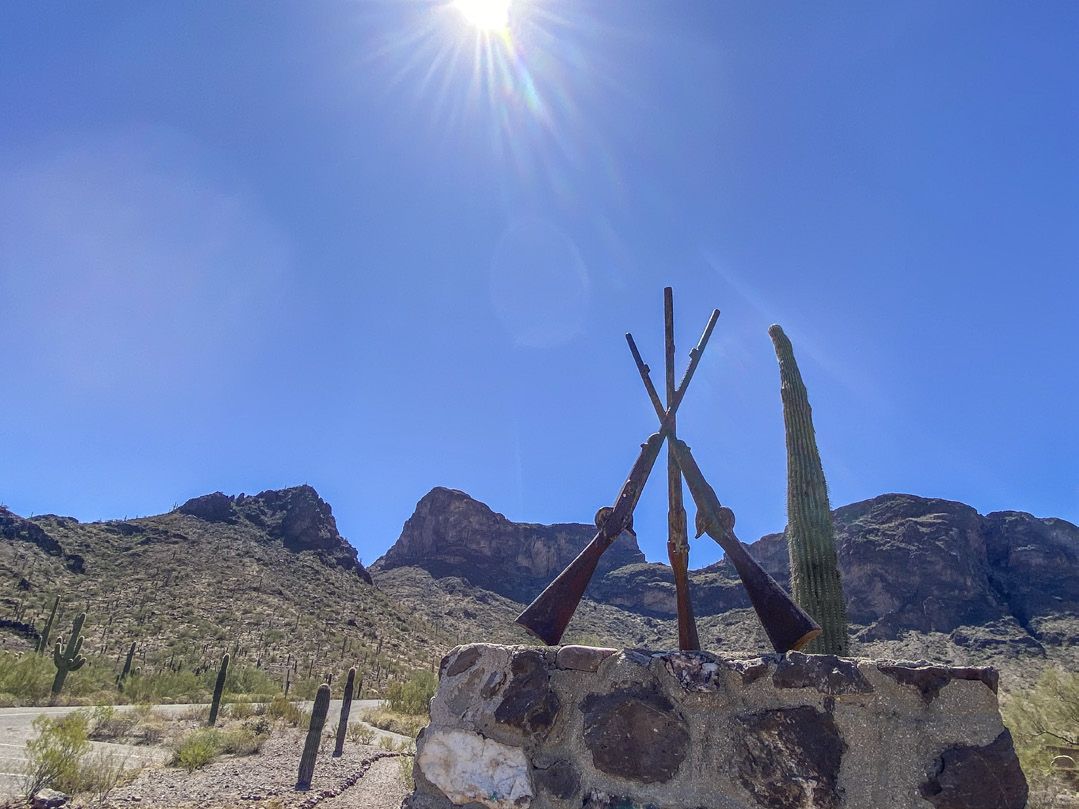
Two of the Federals killed, privates George Johnson and William Leonard, were eventually disinterred for reburial at Presidio National Cemetery in California. But Barrett’s body, buried on the field in an unmarked grave, was never recovered. He must still be out there somewhere, memorialized today only by the monument that now stands in Picacho Peak State Park, which lists him, Johnson, and Leonard all by name. Dedicated in 1928, the monument once stood near the railroad track in what was believed to be the area of Barett’s grave, but vandalism necessitated its relocation in 1975 to the more secure spot in the park.
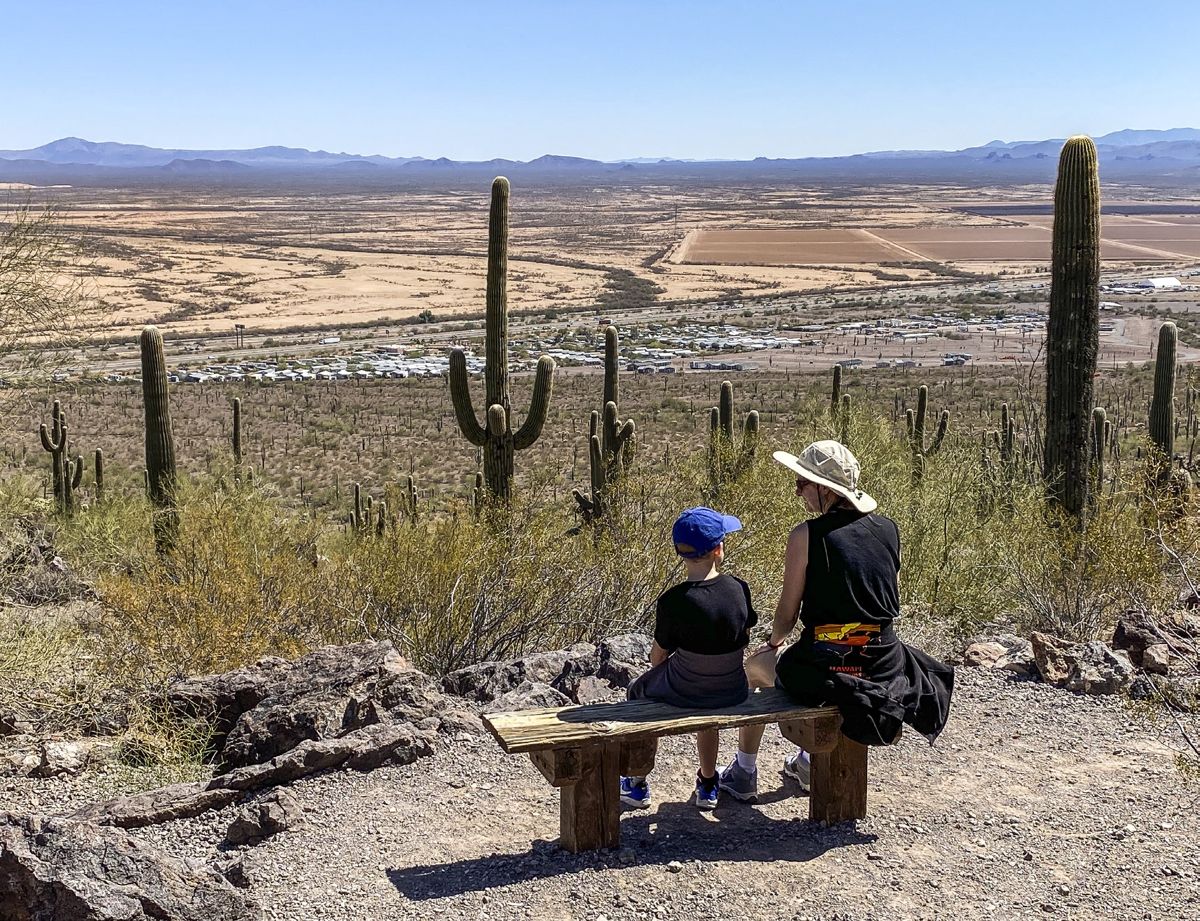
From the monument, I look down on the scene of the battle. Barett’s man swept in from the south—my right—and into the pass, while Carleton’s main column waited way off to my left. The main feature of the landscape are brown-red rocks dotted with low-growing barrel cacti, prickly pears, and furry-fierce chollas. Interspersed are the much taller saguaro cacti, rising as tall as 40 feet, their many arms octopussing toward the sky, worshiping the sun. I wanted to come to the desert specifically to see them, and they never stopped fascinating me.
But the overall wildness of the Picacho Pass landscape is long gone, paved over by highway and planked over with railroad ties and iron bars. Such transportation corridors connect America today in ways unimagined in 1862. In fact, how could one even conceive of the size of the continent back then? How did Arizona or California feel connected at all to even the Trans-Mississippi theater of war, let alone the western or eastern theaters, so far away as they were? How could the capital in Washington, D.C., have been anything other than just some vague idea and a name on a map?
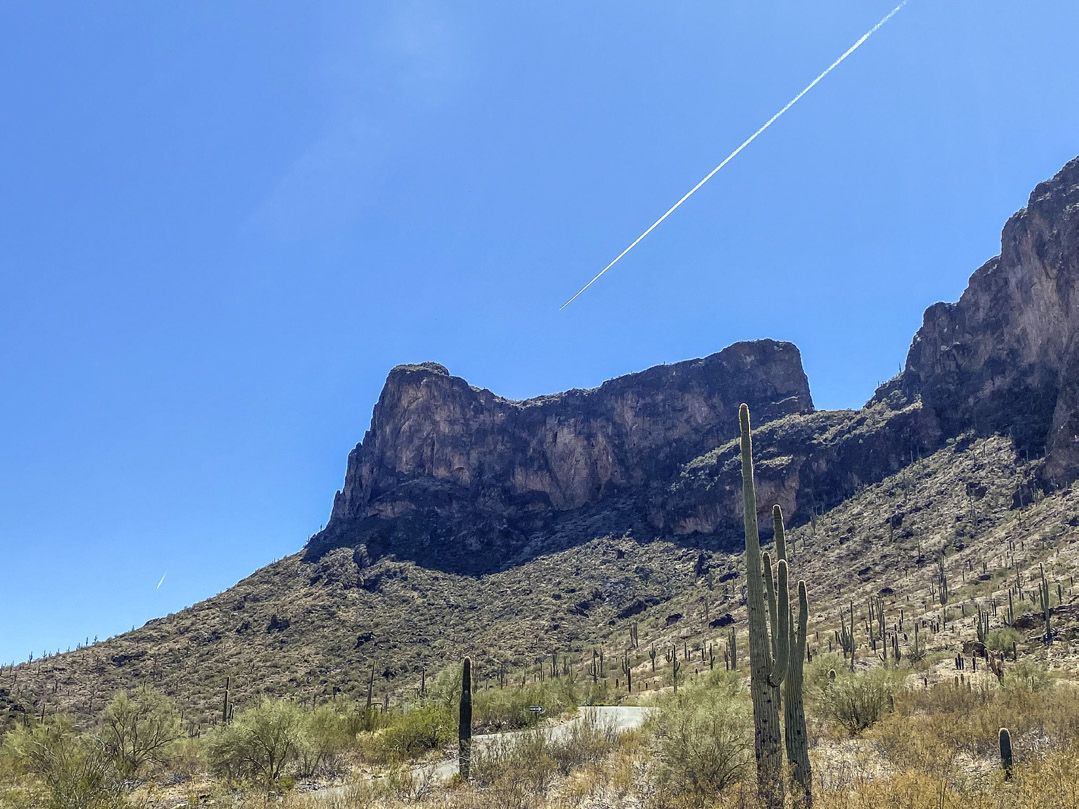
What prompted Barrett and his fellow soldiers to serve a country that must have felt so abstract in its hugeness and its difficulty to traverse?
As an immigrant, what did America even mean to Barrett?
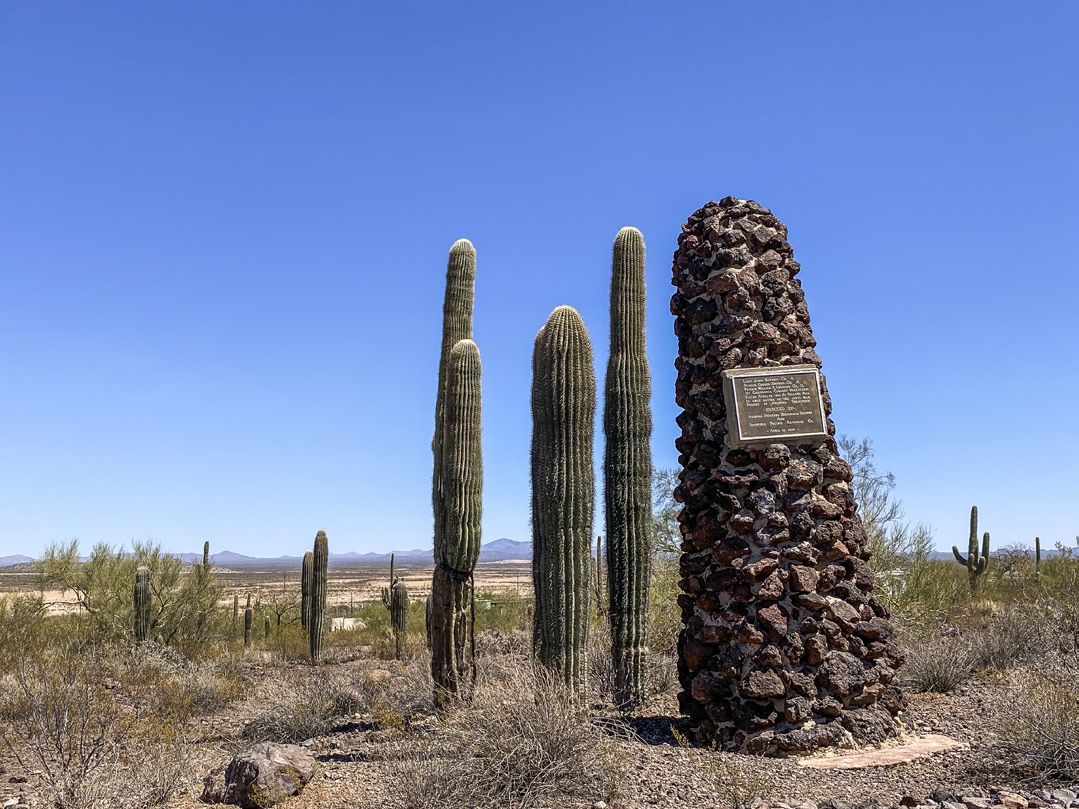
What did it mean for any of them? What made that country worth fighting for? Worth dying for?
As a nation, we seem to spend a lot of time these days arguing about our ideas of what our country means to us. While it surely means different things to different people, I would argue that America is an idea and a geography big enough for anyone who loves it. And it’s big enough for people to love it in different ways.
These highways, these railroads, these cell towers and fiber optic internet cables and satellite signals—they connect us in ways inconceivable to the men who once fought in Picacho Pass. We should be closer than ever, not further apart.
Chris Mackowski, Ph.D., is the editor in chief of Emerging Civil War (www.emergingcivilwar.com) and a writing professor at St. Bonaventure University’s Jandoli School of Communication.