
Central Virginia Battlefields Trust “Dressing Wounds & Sending Back the Disabled”
By Tim Talbott · Originally published July-August 2025 · pp. 50–55
“Dressing Wounds and Sending Back the Disabled”: Cases of Medical Care on Central Virginia’s Battlefields By Tim Talbott
The sheer size of the contending forces virtually ensured that the battles of Fredericksburg, Chancellorsville, the Wilderness, and Spotsylvania Court House would result in tremendous casualties. Add into the mix a tremendous amount of political pressure from the Lincoln administration in Washington, D.C.; the white southern population’s preference for offensive operations, when possible; some of the best tactical field officers in both armies; and it all created a nearly perfect recipe for large numbers of casualties. Looking at examples from these four battles provides important perspectives about what was involved in handling some of the over 100,000 casualties that these engagements produced. Reading the writings of those who endured wounds and others who attempted to help the wounded gives us a much better understanding of the level of suffering. Just as the common soldiers and their officers went through a “seasoning” phase, adapting to the challenges of their new lives, doctors, their assistants, and nurses, too, knew that previous knowledge and experience would only take them so far. When battles arrived, and the pressure mounted, soldiers’ lives were literally in their hands. They and the soldiers they treated encountered many variables that helped determine life or death.
The Battle of Fredericksburg would eventually include some
Sketched by Arthur Lumley, who worked for New York Illustrated newspaper, this drawing brought out the reality of the Battle of Fredericksburg. (Library of Congress)
The Battle Fredericksburg significant firsts on American soil—for example, the first militarily opposed river crossing, and the first urban fighting—but more importantly, it pitted the two largest armies against one another during the four-year conflict. In a bit of role reversal to that point in the conflict, it witnessed the Army of the Potomac as the aggressor and the Confederate Army of Northern Virginia in a defensive stance. The numerous determined assaults against the Confederate positions at the Slaughter Pen Farm, Prospect Hill, and Marye’s Heights produced about 19,000 total casualties; the Federals having about two soldiers killed, wounded or missing for each Confederate casualty. During the Irish Brigade’s attack on the famous Stone of
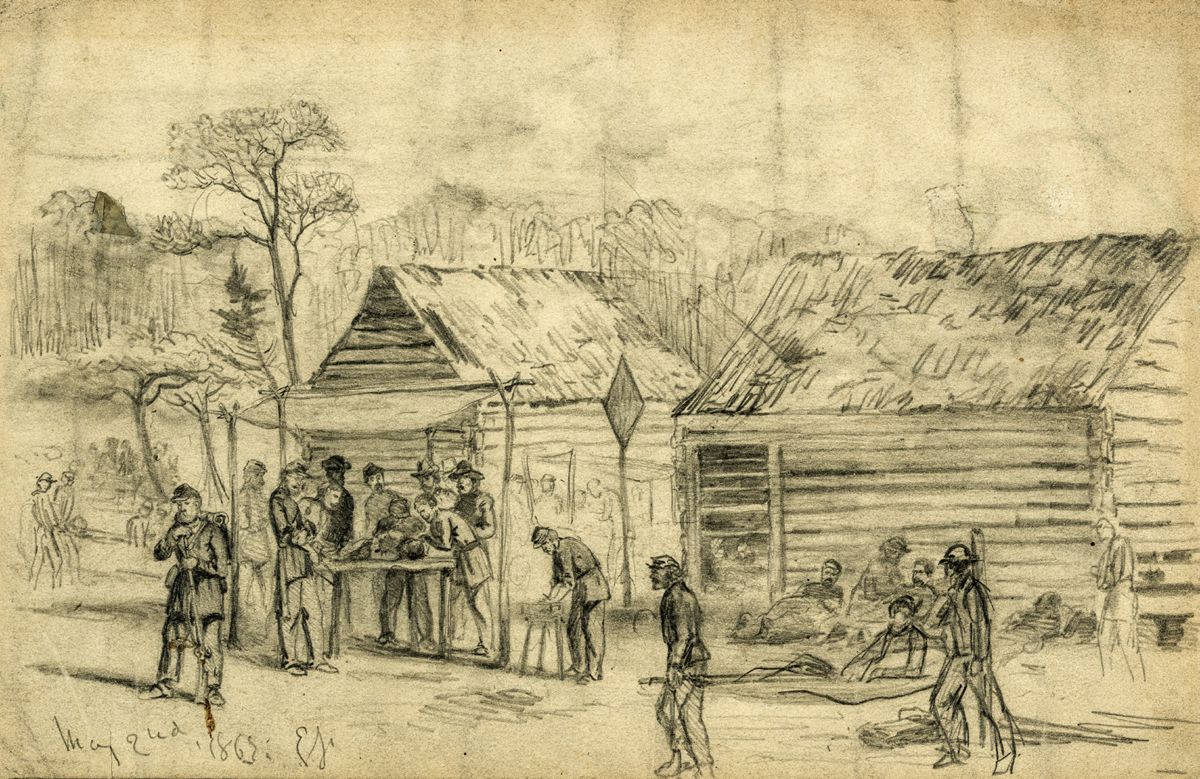
Wall at the base of Marye’s Heights, Pvt. William McCarter, cots comforted the wounded, only some pine boughs on the 116th Pennsylvania Infantry, received painfully annoying ground and a blanket. Soon McCarter received hot coffee but not serious spent bullet injuries to his left shoulder and and some food courtesy of the United States Christian ankle. However, things got hotter as they got closer. “Bullets Commission, which improved his spirits somewhat. had been singing their little songs around my head and ears At one point, a surgeon inspecting McCarter’s wound … piercing my uniform from head to foot and cutting open advised amputation, but he refused the suggestion. my cartridge box by my side,” McCarter recalled as his McCarter claimed he “found that so numerous had been the regiment moved toward their target position. During the amputations that the bloody limbs were piled up in heaps battle, as Pvt. McCarter raised his right arm to ram another four or five feet high.” Trying again to get on the train, he cartridge down his musket, he received a wound to his arm failed. Another train happened by about an hour and a half at the shoulder. “A stream of warm blood now came rushing later, which McCarter finally boarded. On the morning of down the inside and outside sleeve of my uniform, then December 17, McCarter reached Eckington Army Hospital down the side of my pants into my right foot shoe until it in Washington, D.C. Recovering there, he received a overflowed,” McCarter remembered. medical discharge in May 1863. Feeling faint, McCarter fell to the ground. An unfortunate killed comrade’s body, just in front of McCarter, served as The Battle of Chancellorsville a bullet barrier. Unable to go to the rear for aid due to the Thomas Fanning Wood served as the assistant surgeon amount of flying lead, McCarter remained on the field after for the 3rd North Carolina Infantry. As a regiment in his regiment withdrew and awaited darkness to try to find Gen. Raleigh Colston’s Brigade, they participated in Gen. some help. After Confederate fire slacked, McCarter got Thomas J. “Stonewall” Jackson’s famous flank attack on up and made his way off the field. Exhausted, he found a May 2, 1863, at Chancellorsville. safe place. Fortunately for McCarter, a company comrade Wood remembered, “My duties as Assistant Surgeon searching for him came by and eventually put him in an were to go along with the Regiment on the field, dress the ambulance. Taken to a Fredericksburg house converted to a wounds of the men as they fell out and came to the rear. field hospital, McCarter finally received medical attention Only those cases needing immediate attention ever applied, several hours after arriving. The surgeons, overwhelmed but in stopping to dress the wounds we got pretty well to the with the sheer volume of patients, could not get to everyone rear, and were not subjected to the hottest firing.” Wood’s immediately. The doctor cut out the bullet, gave it to “ambulance man carried a canteen of whiskey and one of McCarter as a souvenir, and dressed the wound. Moved to water. We had sponges, bandages, ligatures [torniquets], the fourth floor of the house to make way for more patients, and necessary medicines—usually morphine and opium.” McCarter received no additional medical aid while there Wood recalled that with surgical instruments being hard to except what the soldiers could provide to each other. come by, he did not have a case at hand at the time. Resting as best they could on the straw-strewn floor, As the fighting between Jackson’s flanking force and the McCarter and the other wounded soldiers spent most of Army of the Potomac’s XI Corps intensified, Wood and December 14 and the following night wondering what Dr. L.C. Coke of the 1st North Carolina worked together. would happen next. The evacuation of Fredericksburg began the night of December 15 and continued to the morning of December 16. The walking wounded, including McCarter, crossed the pontoon bridge on the morning of December 15. Hospital tents had been ordered but had not arrived yet when he reached Stafford Heights. Some wounded went by train from Falmouth to Aquia Landing, and then by boat to hospitals in Alexandria and Washington, D.C. McCarter saw three wounded men killed by falling under the trains as they started off. Not finding room on the train, he received a place in one of the Stafford hospital tents once they This sketch by Edwin Forbes shows a Union field hospital on May 2, 1863, at arrived and were erected. No Chancellorsville. (Library of Congress)
However, due to the speed of the attack, the pair found it difficult to “keep anywhere within reach of the Brigade.” As darkness descended, and the attack wore down, Wood and Coke “went on the field with a lantern to look after the wounded and to take note of the dead of our Regiments.” They “attended to all we came across, of friends and foes.” A lack of ambulances became apparent as “the wounded came to the rear in large numbers from the 3rd [N.C. Inf.] and only one ambulance could be found.” Apparently, it was later determined that another of their ambulances removed Gen. Jackson from the field after his wounding. On May 3, the furious battle continued. Wood noted, “As the wounded were now pouring in and our medical force was entirely insufficient, I was very fatigued.” At about that time, Wood received an order from his superior, Dr. James F. McRee, to go to the Lacy House, “Elwood,” and assist him. The hospital there consisted of “a few small houses and a number of hospital tents.” Wood explained that once there, “My first case was an amputation just below the shoulder joint.” Assisting in the procedure was a hospital steward. “This was my first real introduction into surgery and a trying one it was, as I had to rely on ready wit more than to assistance from my superiors, who were far too busy to look after me,” Wood recalled. Improvising with what they found around them worked for surgeons as well as it did for common soldiers. Unhinged doors and barrels doubled as operating tables, farm buckets and tubs brought water to wash wounds, and bed sheets and table linens turned into bandages and tourniquets. The mental pressure to work quickly due to the volume of patients added to the physical exhaustion of standing and bending over the wounded. Needs came before niceties. After everyone received treatment, Wood had an opportunity to view the battlefield. “The most appalling site was the wounded in the burnt woods. In a small space the woods caught fire from our shelling and a number of killed and wounded were lying there. Some of them had been carried off, but some of the badly wounded who could not get away were charred in the very agony of their contortions. It was a sickening site,” Wood remembered. The battlefield, however, also proved beneficial in the form of captured medicines. “We recovered chloroform, ether, etc., etc., in metal cases with screw tops from the laboratory of E. R. Squibb of Brooklyn,” Wood commented. Apparently, Chancellorsville was Dr. McRee’s last battle. Wood hoped to receive promotion due to the vacancy, but it went to Dr. Washington. Despite his disappointment, Wood continued his surgeon’s work with the 3rd North Carolina until the surrender at Appomattox.
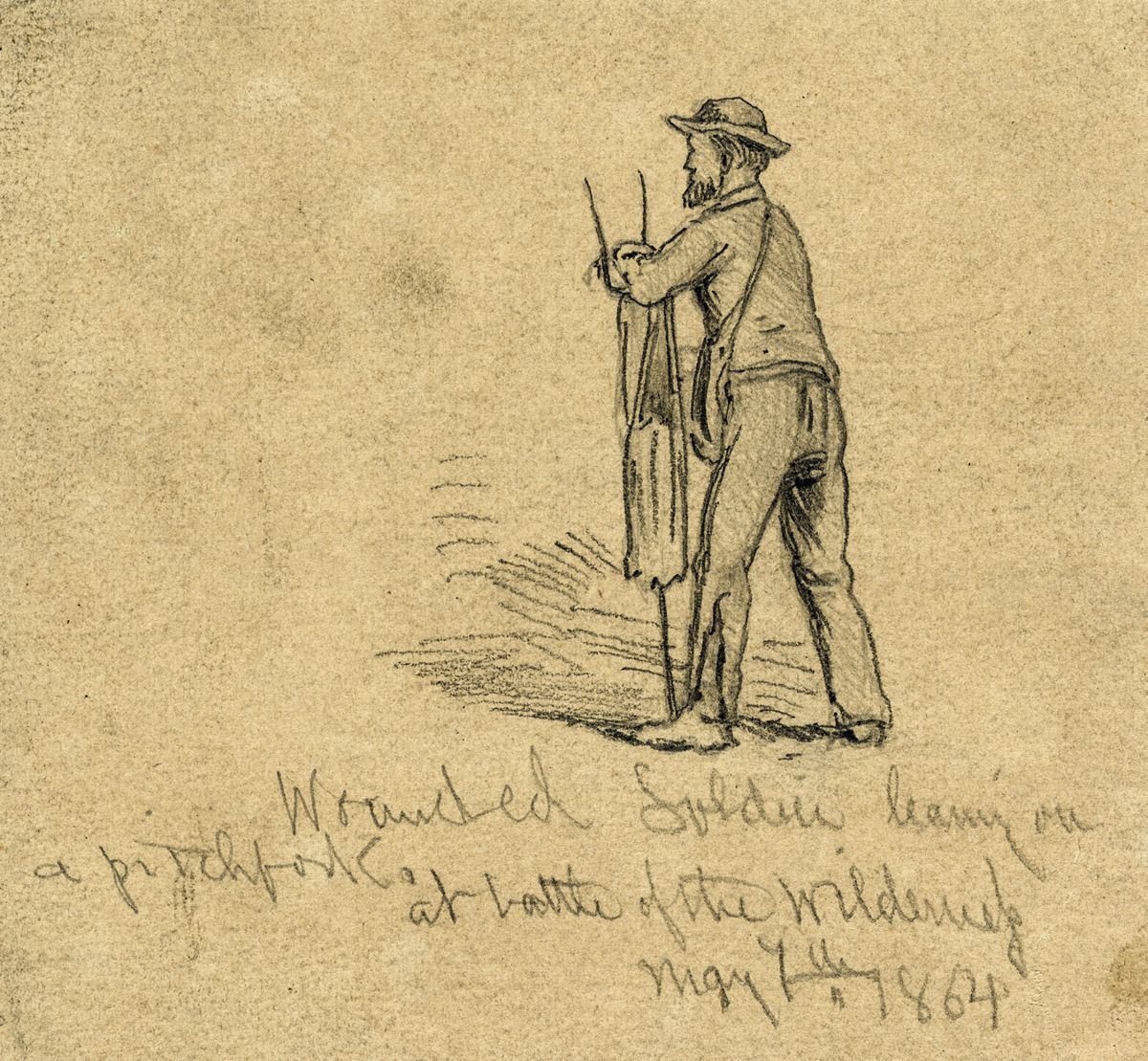
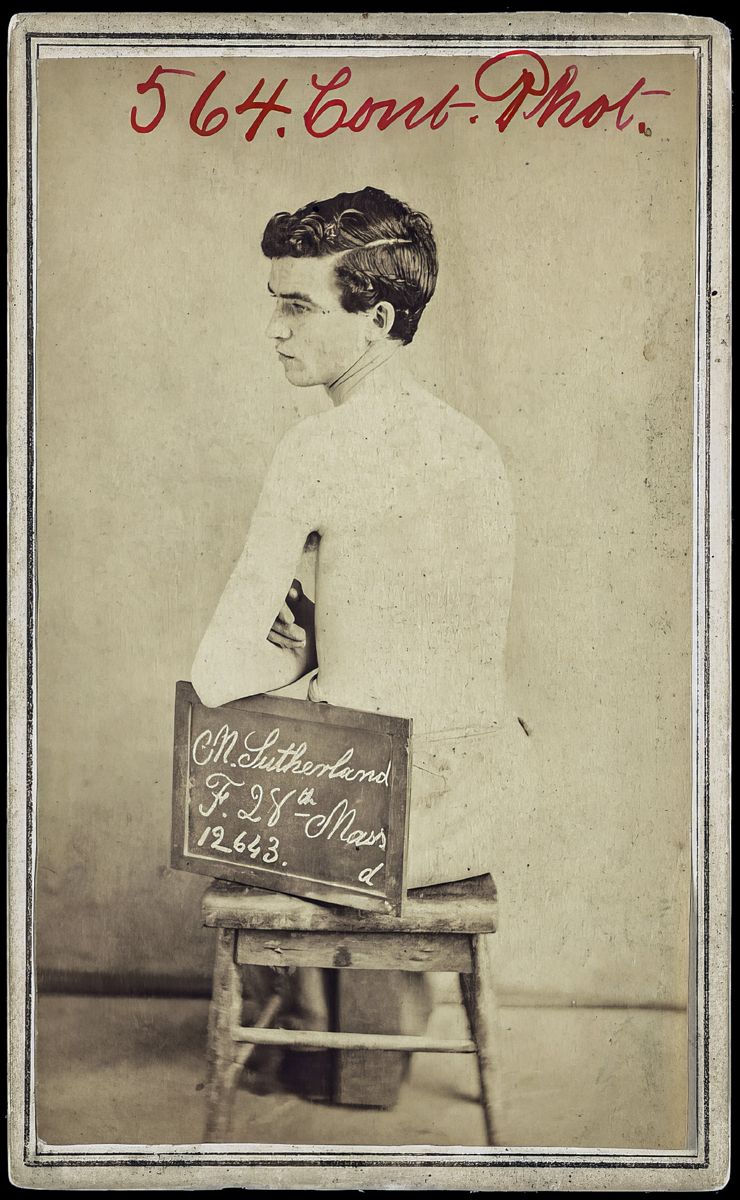
In his mid-40s, by the Battle of the Wilderness, Dr. Daniel Holt was the oldest staff officer in the 121st New York Infantry. A practicing The Battle of Spotsylvania Court House physician since 1853, the doctor brought a wealth of As the fighting continued from the Wilderness to experience to the care of his regiment. His knowledge, Spotsylvania, the Union army set up hospitals in skills, and abilities received tests time and time again Fredericksburg, or as Dr. George Thomas Stevens, surgeon during his service, but the challenges at the Battle of the for the 77th New York termed it, “that great depot for Wilderness proved particularly difficult. Writing in his daily wounded men.” Others wounded in the early phase of diary, and in letters to his wife, Holt made that clear. fighting at Spotsylvania found some succor at the field The day before the army moved, May 3, 1863, Holt was hospitals. treating the sick rather than the wounded. He put in a nineFighting in the II Corps, Lt. Thomas Galwey, 8th Ohio hour day at the Division Hospital that included mention Infantry, participated in the desperate fighting at the of a case of smallpox. The following day, the army got in “Bloody Angle.” Following closely on the heels of Barlow’s motion on time, 4 a.m., and crossed the Rapidan River at and Birney’s divisional attacks, Gibbon’s Division pitched Germanna Ford. Familiarity with the area from the Mine in. “Here the fighting was hand-to-hand and bloodthirsty Run Campaign the previous winter, and a return visit, in the extreme,” remembered Galwey. In command of the did not seem to dampen the mood of the soldiers as Holt company, Galwey noticed, “At one time the shower of reported that “the best of spirit prevails.” musket-balls, shrapnel, and every sort of projectile falling On the battle’s first day, May 5, Holt recorded that, “At 11 A.M. commenced firing and kept up a brisk engagement all day. It was a hard and obstinate fight.” Apparently, being the only surgeon with the regiment in the field at that time, Holt related that, “I had rather be here. It is harder and more dangerous work, but one of excitement and interest.” With the 121st New York Infantry not seeing much action on May 5, it was a rather light day of work for Holt. “Dressed only about twenty wounds to-day, almost all from other regiments than my own,” Dr. Holt noted. As many of the soldiers did who fought there, Holt tried to describe his Wilderness surroundings: “This is the raggedest hole I about ever saw. No wonder we cannot find or see a reb until we get right upon them. Swampy, hilly, bushes thick as dog’s hair, grape vines, rotten logs and fallen trees, make up this pretty picture. A fine place to fight in surely; a perfect quag mire.” It seems the conditions in which the soldiers were asked to fight had tarnished the army’s previous “best of spirit” demeanor. May 6 brought intensive fighting to the Army of the Potomac’s VI Corps and the 121st New York. Battling without Gen. George W. Getty’s Division, which was detached to another part of the battlefield, the VI Corps experienced see-saw fighting until Confederate Gen. John B. Gordon’s force flanked them on the Federal right that evening. As Dr. Holt related. “For one I can say that it was hot work just about that time.” In the confusion Holt came near to “being gobbled up.” “This has been a hard day and night for me—out all night—not a moment of sleep—dressing wounds and sending back disabled of all sorts.” Holt worked in the field with a pack horse that carried his medical supplies. Those precious supplies would be readily needed to treat some of the 17,000 Federal soldiers who were casualties. Exhausted, but finally finding time to write to his wife on May 13, 1864, he told her that, “I am more dead than alive.” However, these wounded were only the tip of the iceberg. More bloodletting would occur throughout One month after enlisting, 19-year-old Pvt. Michael the Overland, Petersburg, and 1864 Shenandoah Sutherland, 28th Massachusetts Infantry, was among Valley Campaigns before Dr. Holt resigned due to the thousands of soldiers wounded at Spotsylvania. ill health on October 16, 1864, and returned home to (Library of Congress) Newport, New York.
in the midst of us was trying to the nerves of our coolest [soldiers].” The battle had already raged for about eight hours when Galwey received a shell wound in the calf. Carried about a quarter of a mile to the rear, he took in the view: “Here I saw acres of wounded men lying on the grass waiting for ambulances to evacuate them to the hospitals established about four miles behind the front.” There Galwey quickly noticed a comrade from his company, Pvt. John Quinn. Galwey recalled that, “Quinn’s bowels were hanging out, and the surgeon, having pushed them in with his hand, set a handful of lint against the big hole and tied a big bandage around his body.” Galwey helped Quinn into an ambulance to hopefully receive additional care further to the rear. Galwey distinctly remembered, that while there, “one noise which seemed to be one continuous sound: the tearing of linen for bandages.” The field hospital was mainly composed of wall tents. These were “laid out in sections for the various corps, divisions, and brigades. Men were more or less attended by their own surgeons, and kept in the company of their comrades, thus being identifiable in case of death.” This was not Galwey’s first wound, and although he mentioned that “the surgical business had become something of an old story,” still, seeing the sights, smelling the smells, and hearing the sounds must have been unsettling. Some of the tent walls “were raised three or four feet high for better circulation of air,” which allowed all to view the surgeons’ actions inside the tents. “In them were performed the amputations and most of the probing for balls and shell fragments,” Galwey explained. Apparently, Galwey’s wound was not too serious, because he explained that after having his injury dressed, resting for the night, and getting something to eat, he eventually located his regiment and rejoined them. Galwey continued serving through the Overland Campaign and the beginning of the Petersburg Campaign, when he mustered out in July 1864, and returned home.
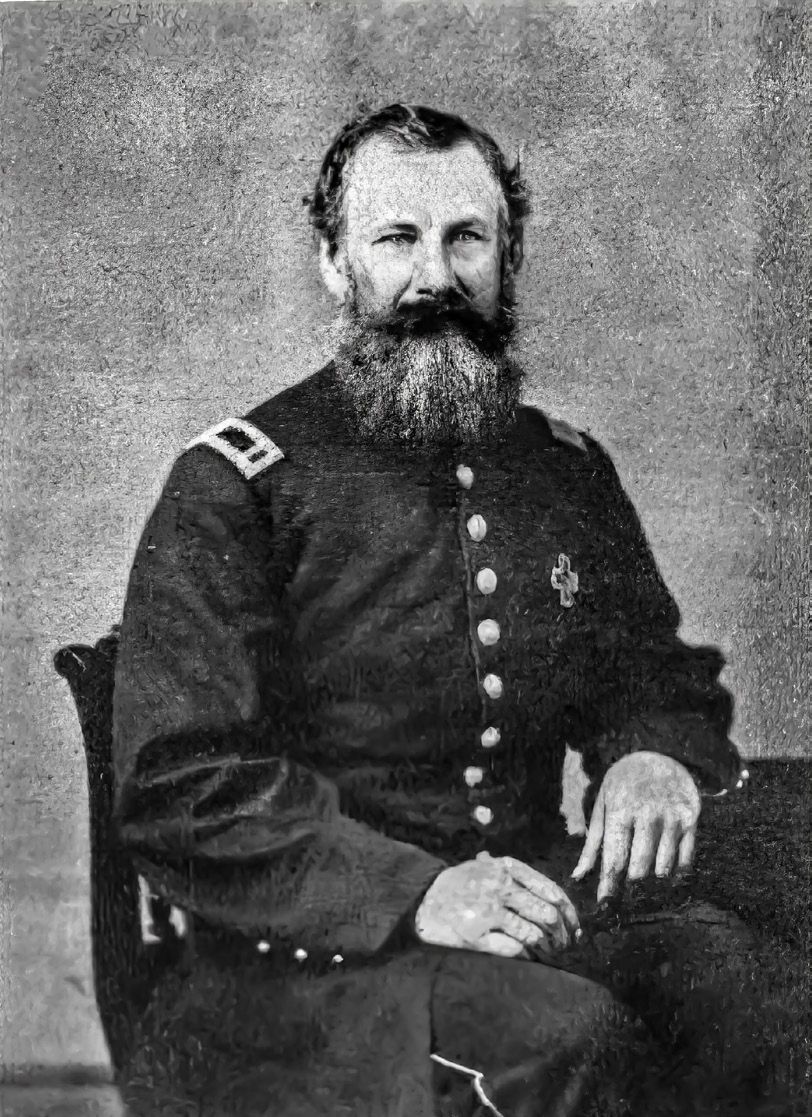
Tim Talbott is the Chief Administrative Officer with the Central Virginia Battlefields Trust.
The mission of CVBT is to preserve land associated with the four major campaigns of: Fredericksburg, Chancellorsville, Mine Run, and the Overland Campaign, including the Wilderness, and Spotsylvania Court House. To learn more about this grassroots preservation non-profit, which has saved over 1,700 acres of hallowed ground, please visit: www.cvbt.org.
Custom Made
Civil War Muskets
Gun Works, Inc. An American, Family-Owned Company Dixie Gun Works is proud to be an American small business success story. From humble beginnings in 1954, we have grown to be the largest supplier of blackpowder shooting equipment, parts, and antique guns in the world, and the most trusted name in blackpowder expertise. Find everything blackpowder you need here in the 2025 DIXIE GUN WORKS catalog.
DIXIE GUN WORKS, INC. 1412 W. Reelfoot Avenue PO Box 130 Union City, TN 38281 INFO PHONE: (731) 885-0700 FAX: (731) 885-0440 EMAIL: [email protected]
ORDER TODAY! ONLY $8.00 PROFESSIONAL SERVICE AND EXPERTISE GUARANTEED VIEW ITEMS AND ORDER ONLINE!
FOR ORDERS ONLY (800) 238-6785
www.dixiegunworks.com Major credit cards accepted