
A Regiment Doomed from the Start Spared & Shared
By Joseph F. Wilson · Originally published July-August 2025 · pp. 60–65
Southwest view of Burnside’s Bridge across the Antietam creek. (Library of Congress)
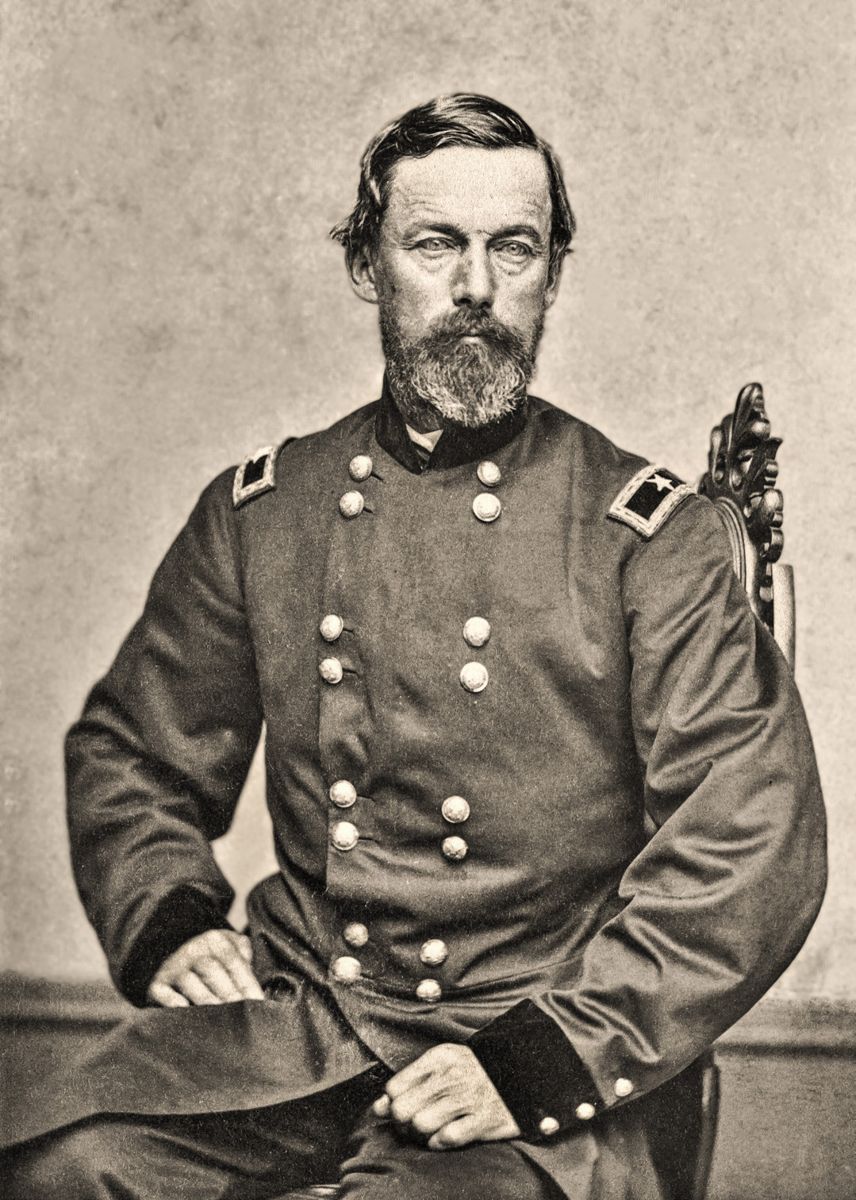
Some regiments in the Civil War achieved glory, while others found only heartbreak. Few regiments suffered the enormous pain and sorrow that fell upon the boys of the 16th Connecticut Infantry. Being foolishly thrown into the fury of battle only weeks after enlisting guaranteed the carnage that followed in their first and only combat at the bloody Battle of Antietam. With 67 dead and 157 wounded, many survivors of the slaughter at the Sharpsburg felt fortunate to be alive. But good fortune can be short-lived. A worst fate followed for the Antietam survivors with even more misery as the regiment faced annihilation after their later capture and confinement in a vile Civil War prison. The 16th Conn. was comprised of boys almost exclusively from the county of Hartford. Under the command of Colonel Frank Beach, a regular army officer, the regiment mustered into service at Camp Williams on August 24, 1862. Less than a week after muster, the troops with little training marched through the streets to the cheering townsfolks. Ships waited at the docks ready to carry the green soldiers on to Washington and the theater of war. No muskets had been issued. Once in Washington, the Hartford men finally received .69 caliber muskets sometime around the first week of September. All now felt like soldiers while proudly marching through the streets of the capital shouldering a weapon. While looking impressive on the march, they had little instruction on drill or how to fire the gun, an oversight that cost the regiment dearly in a matter of days on the Civil War’s bloodiest day. On September 7, 1862, the 16th Conn. joined the Army of the Potomac on the march to Frederick, Md., in pursuit of Robert E. Lee’s Army of Northern Virginia already invading the north. Seemingly on a fast track, the unskilled regiment still hadn’t been trained in any battlefield tactics or weaponry. Whether it was an error lost in the fog of war or simply negligence on the part of bungling officers will never be known. Marching along the dusty roads for over a week proved difficult for the Hartford boys unaccustomed to such lengthy hikes. After leaving Frederick on September 15, the realities of war hit home while passing through Middletown. Hundreds of ambulances carried the bloody and disfigured soldiers back from the previous day’s battle at South Mountain. Any perceived idea of soldiering changed in an instant. While the ambulances streamed from South Mountain, thousands of infantrymen chased after Lee. Single lane roads quickly clogged with wagons, ammo trains, and artillery. Wide eyed soldiers only weeks from enlistment went forward with fear and anxiety now pulsing through their veins. All knew that a large battle loomed up ahead. Along the march, orders came down assigning the 16th Conn. to the 2nd Brigade, 3rd Division, IX Corps under General Ambrose Burnside. Colonel Edward Harland commanded the brigade, which included the 11th and 8th Conn., and the 4th Rhode Island Infantry. All three sister regiments in the brigade had enlisted in 1861 and received extensive training in drill. They were already experienced combat veterans. Rising early on September 16, the regiment took up the march at 6 a.m. for Boonsboro and Keedysville, while artillery could be heard booming in the distance. Even more wounded packed the public buildings at Boonsboro than at Middletown. While resting at Keedysville, Adjutant Burnham rode up with orders that the regiment was “wanted at the front.” Officers ordered knapsacks dropped and ammunition distributed. The boys from Hartford voiced surprise at the prospect of their untrained unit being called to battle so soon despite their inexperience. Colonel Francis Beach had no choice but to heed the order and led the boys toward the battlefield past countless regiments and brigades resting in the fields. Privates wondered why so many seemingly available veteran troops relaxed around stacked muskets as they marched toward the enemy having never loaded their muskets or fired a shot. Lt. Bernard Blakeslee later recalled Keedysville, “After resting awhile we loaded our muskets for the first time, and marched over a hill, and into a meadow which lay between two hills. While getting into this position we could plainly see the rebel gunners load and fire, some of the shells coming quite near us. At last we were in the great “line of battle” of the “Army of the Potomac,” 2d Brigade, 3d Division, 9th Corps, General Burnside, on its extreme left.” Burnside’s Bridge is a familiar landmark on the Antietam Battlefield. Taking the bridge proved difficult for Burnside.
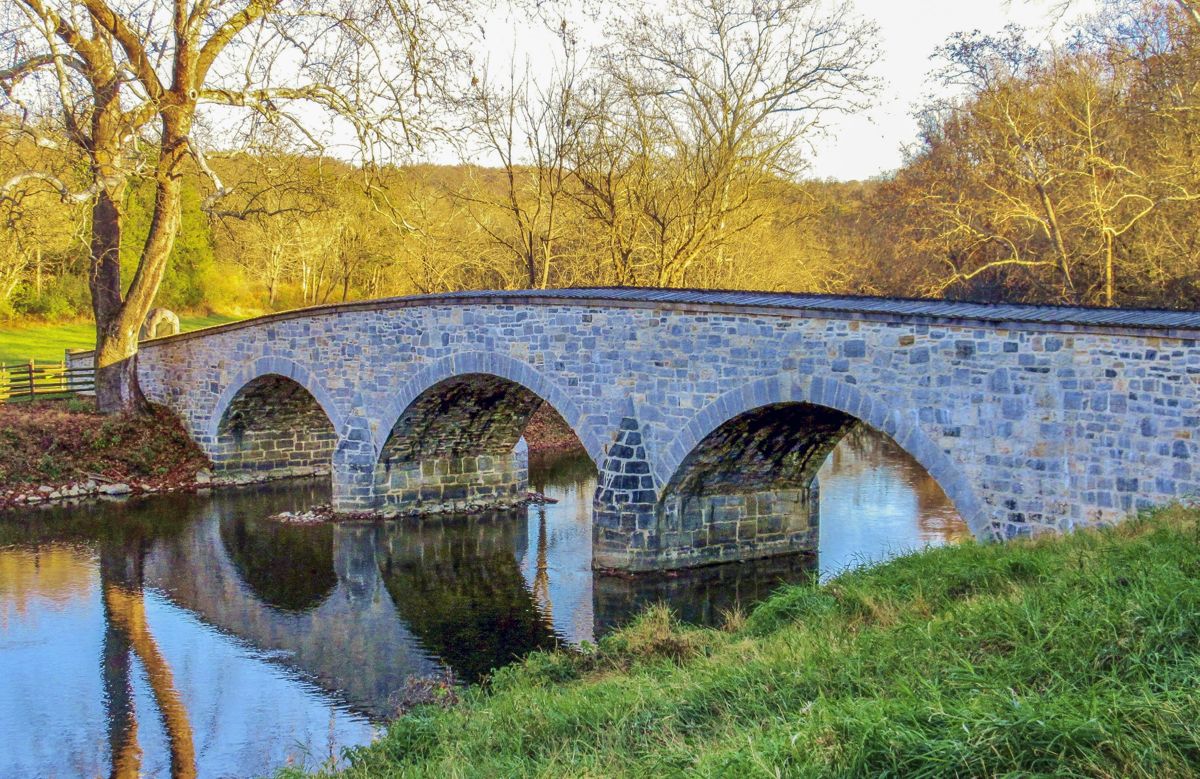
In an effort to take the bridge he ordered Colonel Harland’s brigade, along with the 16th Conn., to move up the creek, cross over, and outflank Confederates protecting the bridge. By the time the brigade forded the creek at Snavely’s Ford, the bridge had already been secured by the Federals. The way to Sharpsburg appeared to be wide open. Once across Antietam Creek, the IX Corps pushed forward seeking to cut off Lee’s retreat. Victory seemed imminent. Division commander General Isaac Rodman sensed victory and personally led Harland’s Brigade into what became known as the “other Cornfield” on the Antietam Battlefield. Onward went the 16th Conn. into Otto’s Cornfield on the extreme left flank of the entire Union army. Without warning, a Confederate horde crashed into the flank of the Federals. Confederate General A.P. Hill’s Division had arrived just in time from Harper’s Ferry to halt the Federals. Hill’s troops wore blue uniforms recently acquired at the capture of Harper’s Ferry prompting the Sixteenth to hold their fire. Shots rang out in thunderous unison over and over from the veteran rebel muskets, devastating the surprised yanks in a rout that didn’t take long. First to fall was General Rodman, who later died from his wounds. Confusion and chaos gripped the inexperienced 16th Conn. as troops from one of Lee’s finest divisions crushed the Union left flank. In doing so, Hill saved Lee’s army. All Union resistance melted away. Terrified recruits of the 16th Conn. ran for their lives back toward the bridge in their first encounter in actual warfare. The rest of the brigade followed.
Burnside’s Bridge saw heavy fighting at Antietam in late afternoon. (Joe Wilson)
What had begun as a chance for glory quickly dissolved into a disaster. Two hundred men of the regiment fled into the woods in panic to escape the butchery. They hid in fear under fence rails or laid in ravines all night until morning. Come daylight, they straggled back to their regiment. In a letter to family back home a few days after Antietam, Private Lyman Wilcox reflected on his good fortune when he wrote,
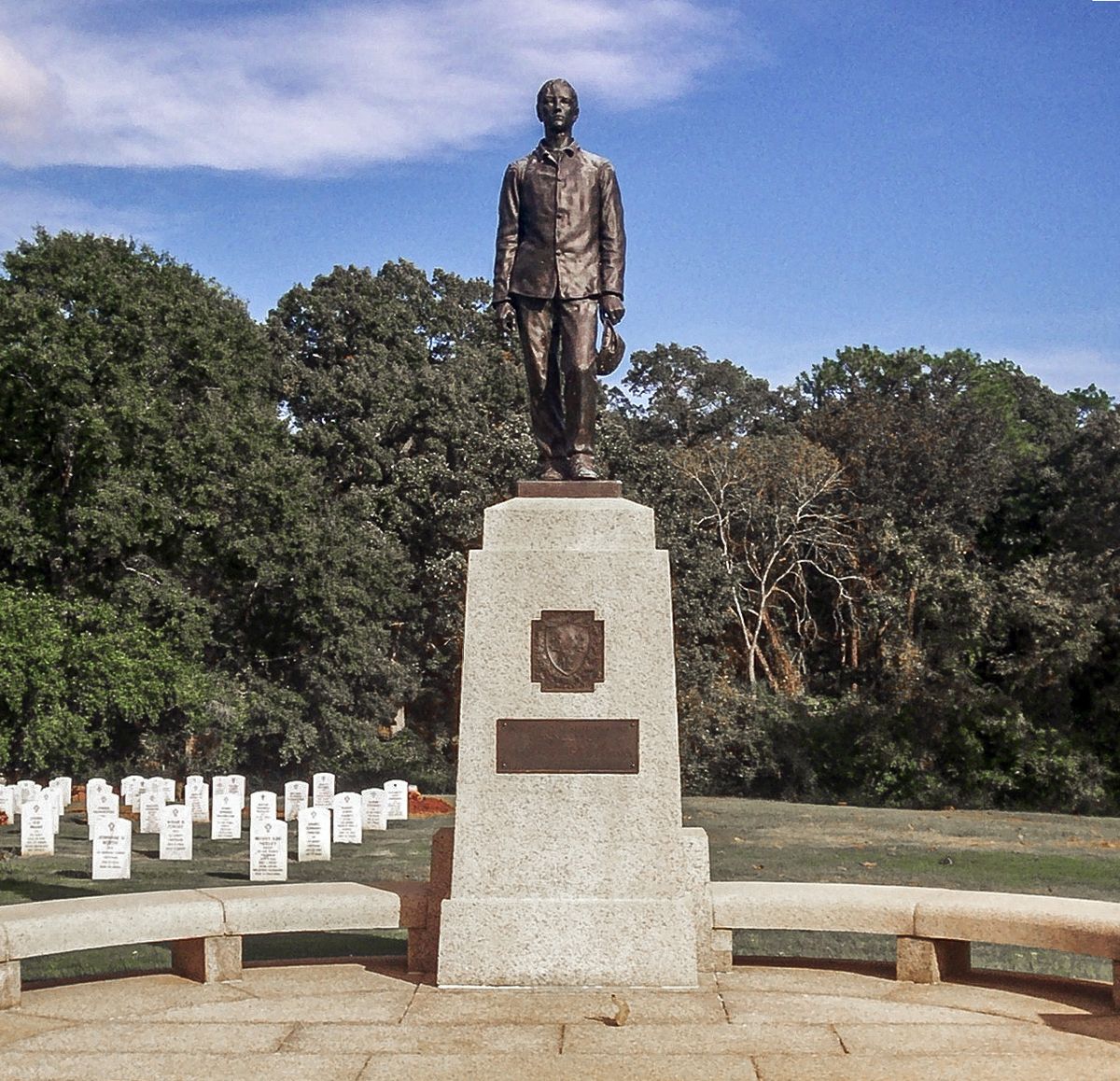
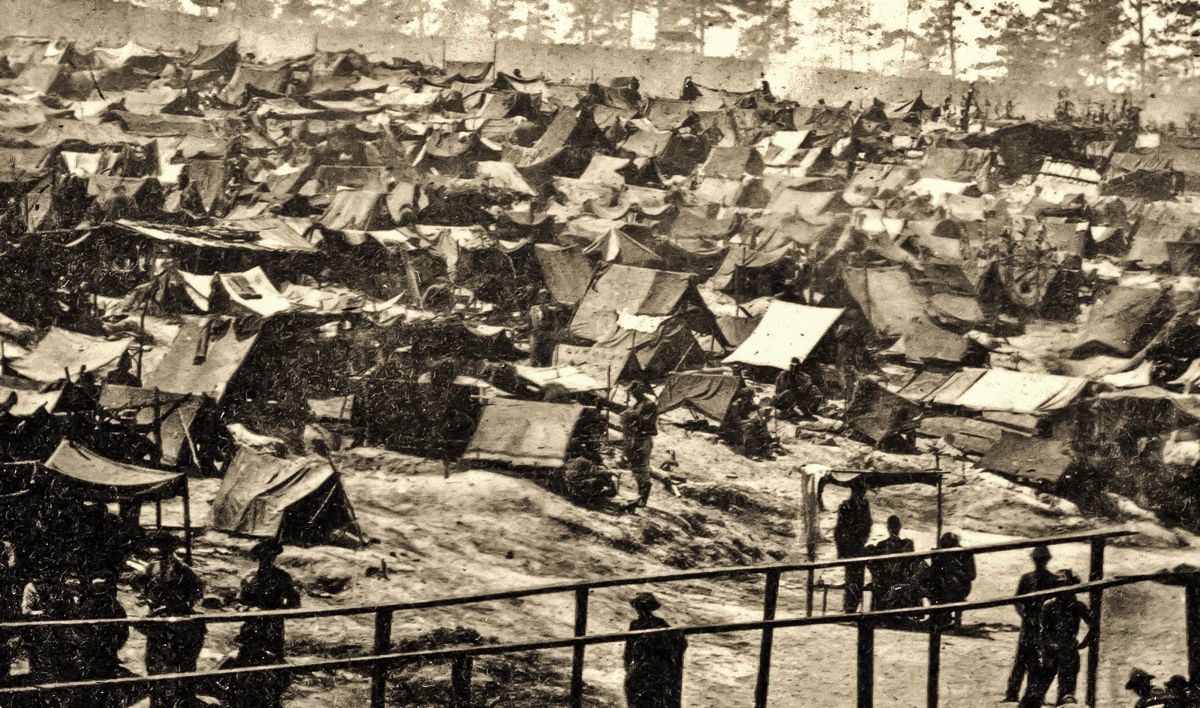
In the last battle of ours I was detailed for hospital service or I should have most certainly have been killed or wounded with the rest of the boys. I came out of the battle without being hurt at all and that is what most of our boys cannot say. Casualties for the 16th Conn. in Otto’s Cornfield amounted to 67 killed and 157 wounded. Families later decried officers for deploying the untrained boys into battle as a scandalous dereliction of duty. The devastated regiment would never endure the terror of heavy combat again; a more severe battle of another kind lie ahead without anywhere to run. Come summer, a reckoning worse than Antietam awaited. Leaving the nightmare of Antietam behind, the Sixteenth moved to the camps at Falmouth, Va. At the Battle of Fredericksburg, the regiment likely relished being held in reserve. In February, the Connecticut boys left the Army of the Potomac to join the Department of Virginia for the Siege at Suffolk. A few minor skirmishes excited the boys, vital to supplying Lee’s army. Confederates realized that Plymouth had to be taken to protect the rail line called, “the Lifeline of the Confederacy.” Union General Henry Wessels, commanding the garrisons at Plymouth, learned from contraband traders that a force of 13,000 Confederates was gathered only miles away preparing to take Plymouth. Only 2,834 Federals defended the forts aided by a modest flotilla of five gunboats in the Albemarle Sound. In the third week of April 1864, Hoke unleashed the attack. Supporting Confederate General Robert Hoke’s attack was the newly completed ram, the CSS Albemarle. While the powerful CSS Albemarle drove off the out matched Federal vessels, Hoke’s five to one advantage in numbers compelled Wessels to surrender on April 20, 1864. Terms of the surrender allowed the Union soldiers to keep their personal possessions, including recently received back pay. All but the 16th Conn. had just received generous bounties for reenlisting that put the Connecticut troops at a disadvantage in prisons where money and trade meant life or death. The Connecticut Monument in Andersonville Cemetery honoring Reality quickly set in for soldiers of the her lost soldiers (Joe Wilson) 16th Conn. A long dusty march under guard taxed the soldiers so accustomed to greeting ships that but nothing took place to equal the debacle at Antietam. regularly delivered all their wants and needs. Life had taken Following Suffolk, the regiment built log huts for a long a turn for the worst, but most captives weren’t aware of the winter stay at Portsmouth, Va. suffering to come at the end of the line in Georgia. The camp at Portsmouth offered many pleasantries. Lt. Enlisted men, including 456 men of the 16th Conn., Blakeslee stated, arrived at Andersonville Prison on May 24, 1864. When the gates opened, the newly arrived prisoners gazed upon the wretched conditions inside the stockade that posed a striking The site was in a splendid grove and being on the contrast to their former comfortable accommodations. bank of the river afforded a fine place for the men Gaunt looking men in torn and tattered clothes gathered to bathe, row, sail, and catch fish and oysters. I near the gates to glean any news from the new arrivals recollect of no place where the regiment lived so about the outside world. Only then did the Connecticut boys well, and enjoyed themselves so much as there. know they were in for their toughest fight of the war, a fight countless would lose. Such pleasant living conditions did little to prepare the Sergeant Robert Kellogg of the 16th Conn. recalled the men for the harsh reality of living without even the barest scene after the war, “As we entered the place, a spectacle necessities to sustain life. met our eyes that almost froze our blood with horror, and With a year separating the regiment from the horror in made our hearts fall within us. Before us were forms that Otto’s Cornfield at Antietam, they settled into a camp that had once been active and erect, stalwart men, now nothing would be the envy of any soldier. Fishing and sailing beat more that walking skeletons covered with vermin.” A 16 bullets flying overhead. The long stay ended in the spring acre stockade designed to hold 10,000 prisoners held nearly of 1864 when another move ushered in an equally pleasant 20,000 men by mid-June with 400 more captives arriving station along the Atlantic coast in North Carolina. Luxuries by train every day. The population surged to 33,000 in from home arrived weekly by boat for the pampered boys August, with 100 men going to the burial pits daily. of the 16th Connecticut. By June, the stream cutting through the stockade had The important port of Plymouth along the Roanoke River been polluted with excrement leaving the water unfit to offered the Union a jumping off point for military incursions drink, though prisoners had little choice but to ingest the into North Carolina, not only by land because the Union foul water. Enlarging the prison to 26 acres in July did little Navy flotilla stationed at the mouth of the Roanoke had to help alleviate the dying. Disease and lack of food killed access by water to the interior of North Carolina. Especially off close to 10,000 men in the summer of 1864. By the end threatened was the Wilmington and Weldon Railroad so of summer the 16th Connecticut.
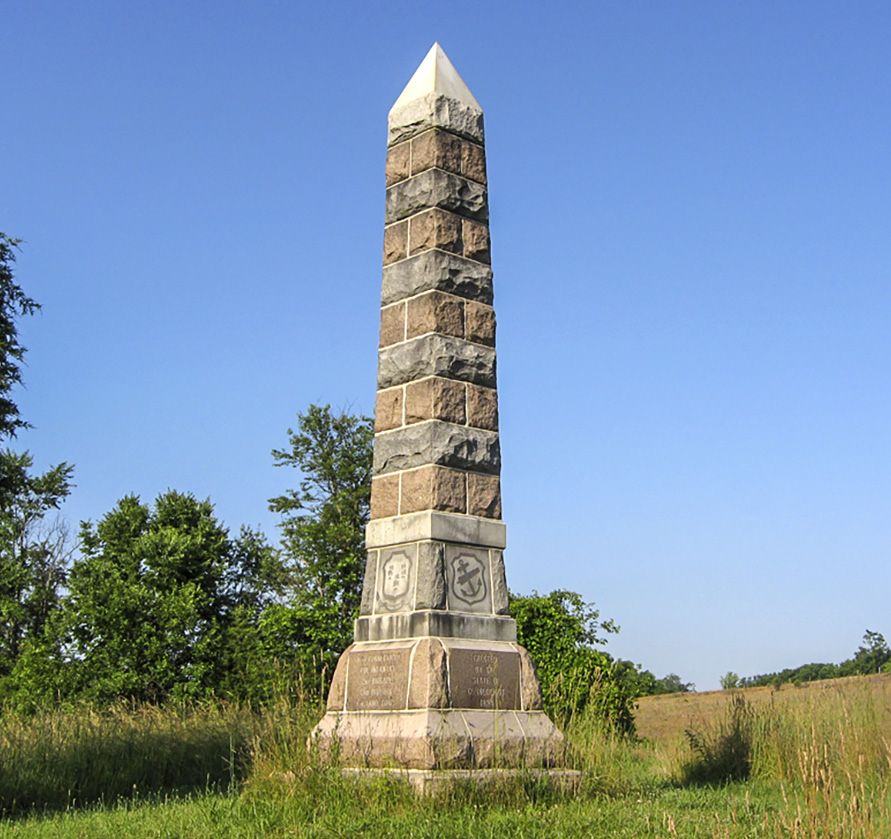
As time wore on, exchanging prisoners ended. The Hartford boys began taking their places in the burial trenches that eventually exceeded the overall acreage of the prison. From the 456 captured at Plymouth, 154 perished within the walls of the Georgia stockade. Absent from the final death toll are the survivors who arrived home in a debilitating condition and dropped dead shortly after arriving home suffering ailments acquired in prison. The 16th Conn. Volunteer Infantry paid a steep price in their ill-fated journey through the Civil War. The twin tragedies of Antietam and Andersonville that struck the 16th Conn. snuffed out the young lives of many and left scores crippled for life. Numerous veterans recalled the horrors in Maryland after the war while dedicating a monument to the Sixteenth on the Antietam Battlefield. The State of Connecticut followed with a monument in the Andersonville Cemetery to honor all 259 Connecticut boys from regiments who lost their life at the Georgia prison. The 16th Conn. accounted for most of the Connecticut Andersonville dead. Too many young boys in the regiment never saw home again after being sacrificed needlessly on the Antietam Battlefield or left entirely abandoned inside the Andersonville Stockade. The inexperienced and unlucky Hartford volunteers of the 16th Conn. didn’t have a fighting chance against either!
The 16th Connecticut Monument on the Antietam Battlefield. (Joe Wilson)
Museum Building at Fort Branch Total Loss by Larry Babits
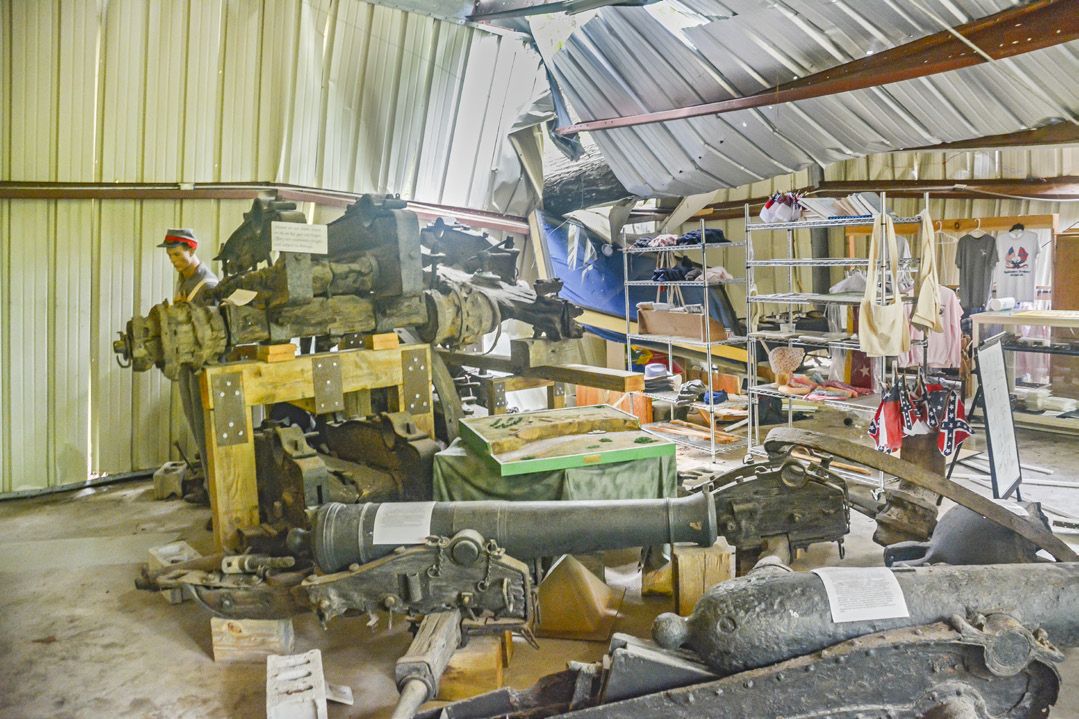
Over the night of April 22, the museum building at Fort Branch, Hamilton, N.C., was so severely damaged, it was declared a total loss. A large oak tree fell onto the museum roof, crushed and twisted supporting beams, and tore through the west and north walls, endangering the collection of original artillery and its carriages as well as smaller artifacts. Volunteers moved most artifacts to a secure location and secured others in place during the day. When the oak fell onto the roof, it struck just off the ridge line so that most damage was confined to the northern half of the building. All four walls were knocked awry. They also bulged inward under the tree’s weight and knocked over all but one exhibit case. There was some “good” news in that the roof collapsed in such a way as to direct water away from the gun carriages and cannon tubes that were on wooden blocks. Most water damage was to the gift shop area where clothing and other souvenirs were soaked. Fort Branch, a Civil War earthen fortification, was built in stages starting 1862 to protect a Confederate ship yard at Edwards Ferry, the navy yard at Halifax, and, perhaps most importantly, the railroad bridges connecting the last open Atlantic seaport to the Army of North Virginia. Federal forces conducted several operations against the fort during the War. In one episode, two Union sailors were awarded some of the first Navy Congressional Medals of Honor when a river flotilla tried to pass an outlying position at Poplar Point. Another time, Federals were guided past the fort by a local black man when the garrison had been deployed to stop Federal cavalry to the north. There are several wrecked Union vessels in the Roanoke River just below Fort Branch, the victims of Confederate torpedoes. Farther down are other wrecks, including one sunk by the CSS Albemarle, the ironclad built at Edwards Ferry. The river fort was built on Rainbow Bluff by soldiers and slaves hired from their owners off and on throughout the war. Fort Branch was garrisoned by men from several North Carolina regiments, including the Junior Reserves, and Alabama artillerymen. Attacks were attempted by several Union navy vessels and infantry from Massachusetts, New Jersey, Connecticut, New York, and Pennsylvania. The fort may have been located in a backwater to the main theaters, but it saw its share of visitors, showing the interconnected nature of the war. Widespread connections, as well as changing technology, are represented by the fort’s armament. Cannon still at the fort were produced, or later modified, in the District of Columbia, three Virginia foundries (Bellona, Tredegar, and Virginia Manufactory), Boston, Massachusetts, and Liverpool, England, showing that it was not quite as isolated as it first seems. The big guns demonstrate changes demanded by technological advances that included better powder, fusing, and rifling. Two 6-pounders were already obsolete when the War began; they had been produced by the Virginia Manufactory prior to 1818. Two pre-war cannon were modified by rifling and adding a reinforcing band. The English gun was rifled and mounted on an unusual iron field carriage. Interestingly, the pre-war gun tubes are surprisingly resistant to surface rust while the 7-inch Confederate Gibbon and Andrews rifle is rusting despite conservation efforts nearly 50 years ago. The reinforcing band added to a pre-war 32-pounder also shows more rust than the earlier tubes. The 6-pounders are two of three that survive from the over 200 produced. The English, Fawcett & Preston rifle is one of three survivors of an 1862 shipment. The other two are in Raleigh and Connecticut. The 7-inch Gibbon and Andrews is the sole survivor of the over 20 produced during the war. Taken as a group, the Fort Branch cannon represent most of the fort’s 1865 armament as well as rare survivors of evolutionary changes in artillery. Insurance will not fully cover the building’s replacement. The local 501c organization operating the fort already had plans underway to create humidity-controlled displays. The rebuilding will now incorporate those plans by designing the entire structure as an environmentally controlled display area to protect the artillery and other artifacts. Other fort enhancement projects, including restoring an 1830s farmhouse and reconstructing a gun emplacement, have been put on hold by this emergency. This rebuilding will be more expensive than just rebuilding. Donations are urgently requested to assist in creating the funding base for requesting matching grants. Anyone willing to help support the rebuilding can do so by sending donations to: Fort Branch Historical Society Museum Rebuilding Fund P O Box 355 Hamilton, NC 27840