
The Graphic War Ehrgott and Forbriger
By Salvatore Cilella · Originally published January-February 2025 · pp. 34–41
E hrg ott an d Fo r b r i g e r , West er n L i t h o g r a p h e r s By Salvatore Cilella The Graphic War highlights prints and printmakers from the Civil War discussing their meaning and the printmaker or artist’s goals.
The names of Currier and Ives are renowned among most Americans as either purveyors of quality art reproductions for the masses or the mass production of sentimental kitsch. As noted before in this column, the Civil War was good to Currier and Ives. They worked hard to produce contemporary “Breaking News” of the war, producing visual if, at most times, highly inaccurate depictions of heroes and battle scenes.
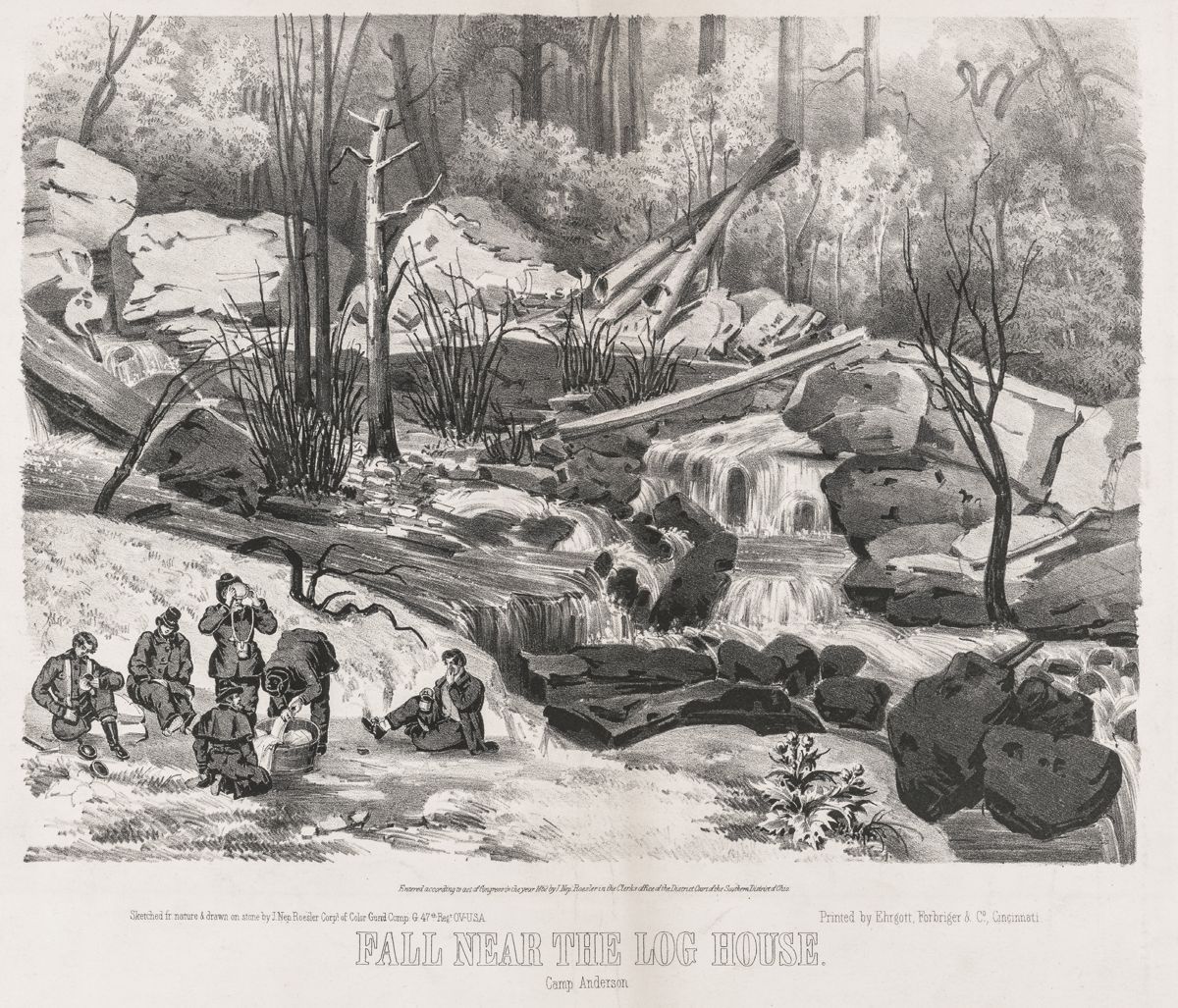
As familiar as Currier and Ives is today, the name of Ehrgott and Forbriger is either unknown or largely forgotten. Yet during the war, the lithographic firm produced a wide range of images, some quality and others worthy of overlooking. Like many lithographic printing firms, they specialized in publishing show cards, diplomas, bonds, checks, drafts, and all sorts of office paperwork needs. What is notable about the Cincinnati based firm founded in 1865 by Peter E. Ehrgott and Adolphus F. Forbriger, was its willingness to compete with the great eastern centers of printing, Boston, Philadelphia, and New York. They were “the first to use a steam powered press west of New York City in the year 1868.”1 Each brought a separate and useful skill to the partnership. Ehrgott was “a practical lithographer” and Forbriger “an excellent artist.”2 The two brought their highly developed skills in lithography production from their native Germany to the immigration friendly city of Cincinnati. As a result, they became documentarians of the conflict west of the Alleghanies. Early in the war, an Ohioan, J. Nep Roesler, an artist and private in the Forty-Seventh Ohio Volunteer Infantry, collaborated with Ehrgott and Forbriger to produce a portfolio of 20 prints entitled The Civil War in West Virginia, as sketched by J. Nep Roesler. (Figure 1, all illustrations courtesy Library of Congress) Roesler captured the lesser known and sparsely covered, early military action in the western theater. Roesler’s attention to detail “as well as his real skills as a landscape artist, gave his portfolio a special place among popular prints of the Civil War.”3 Roesler’s artistic skills shone in his depictions of landscapes; his efforts to portray the human image left much to desire. Roesler’s portfolio was Ehrgott and Forbriger’s first production related to the Civil War. Not many examples of the firm’s work before the war exist, but as in the case of
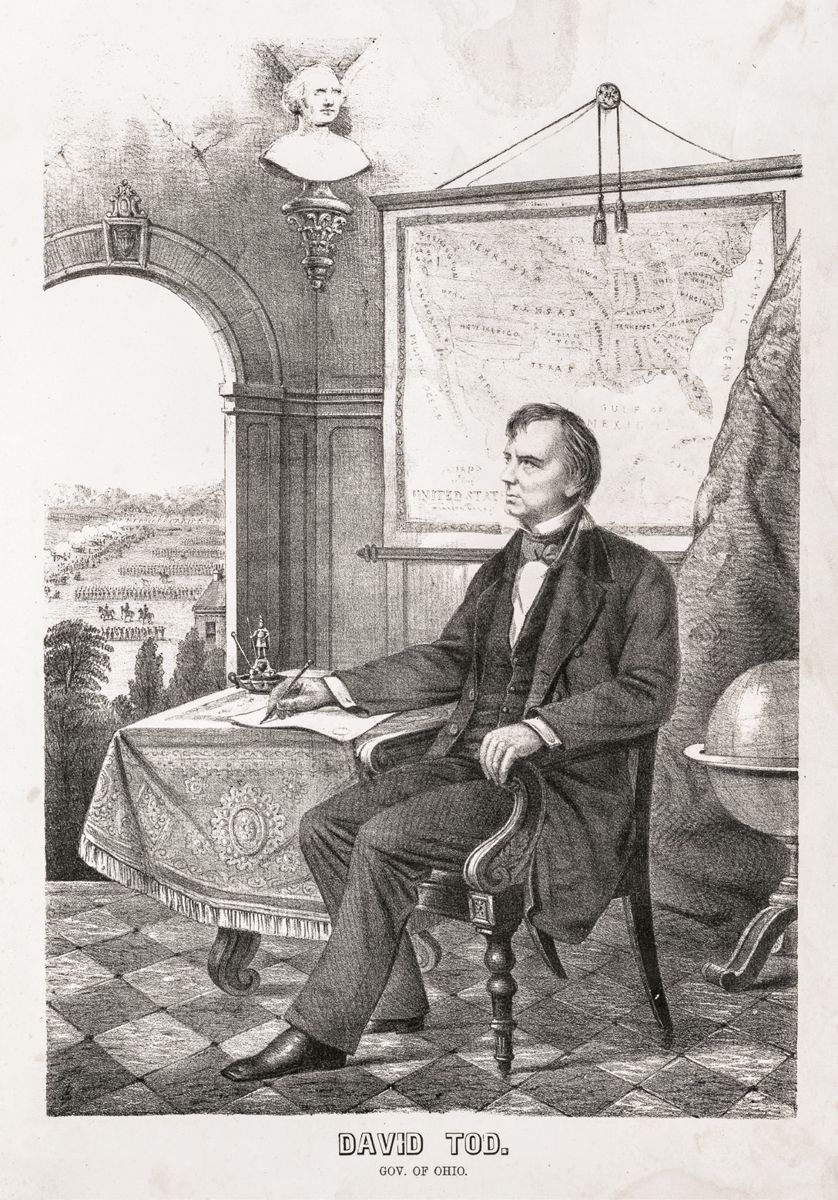
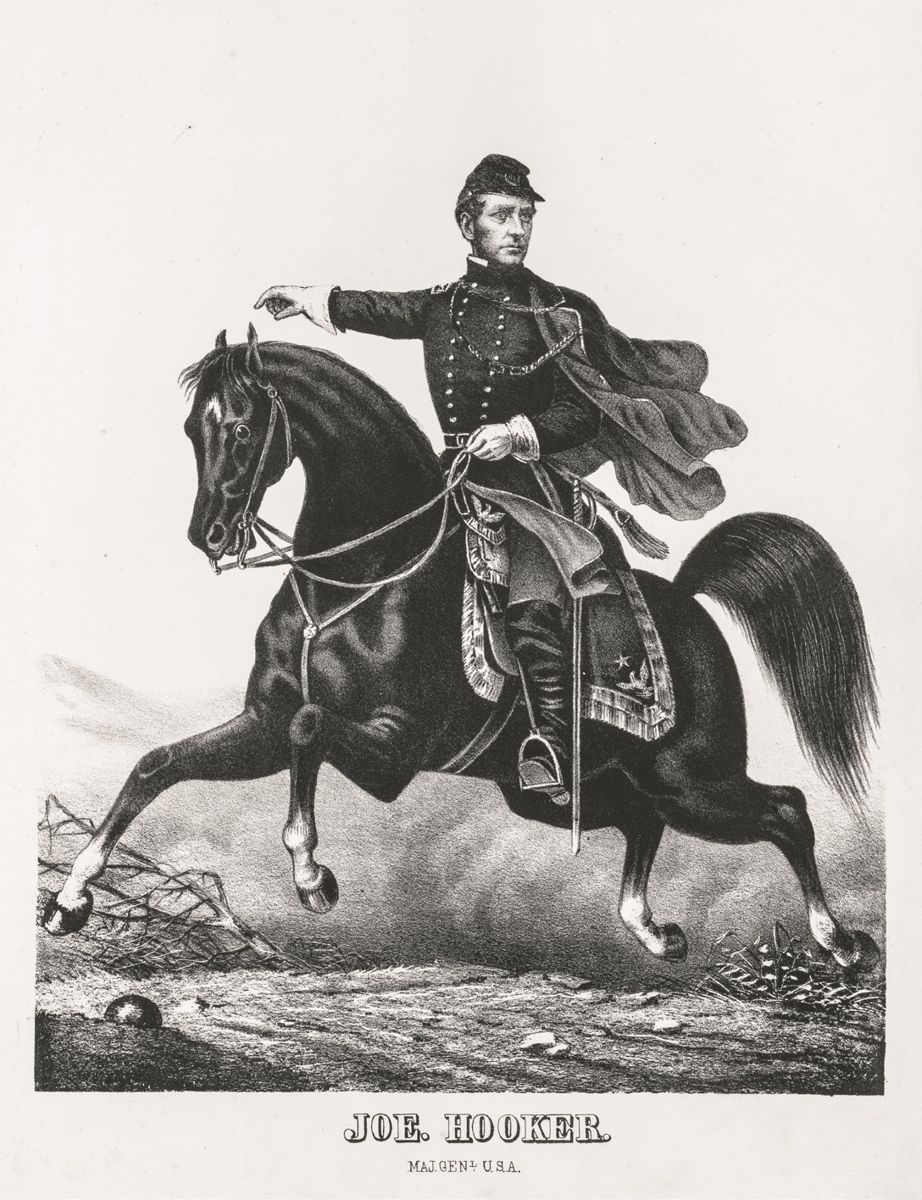
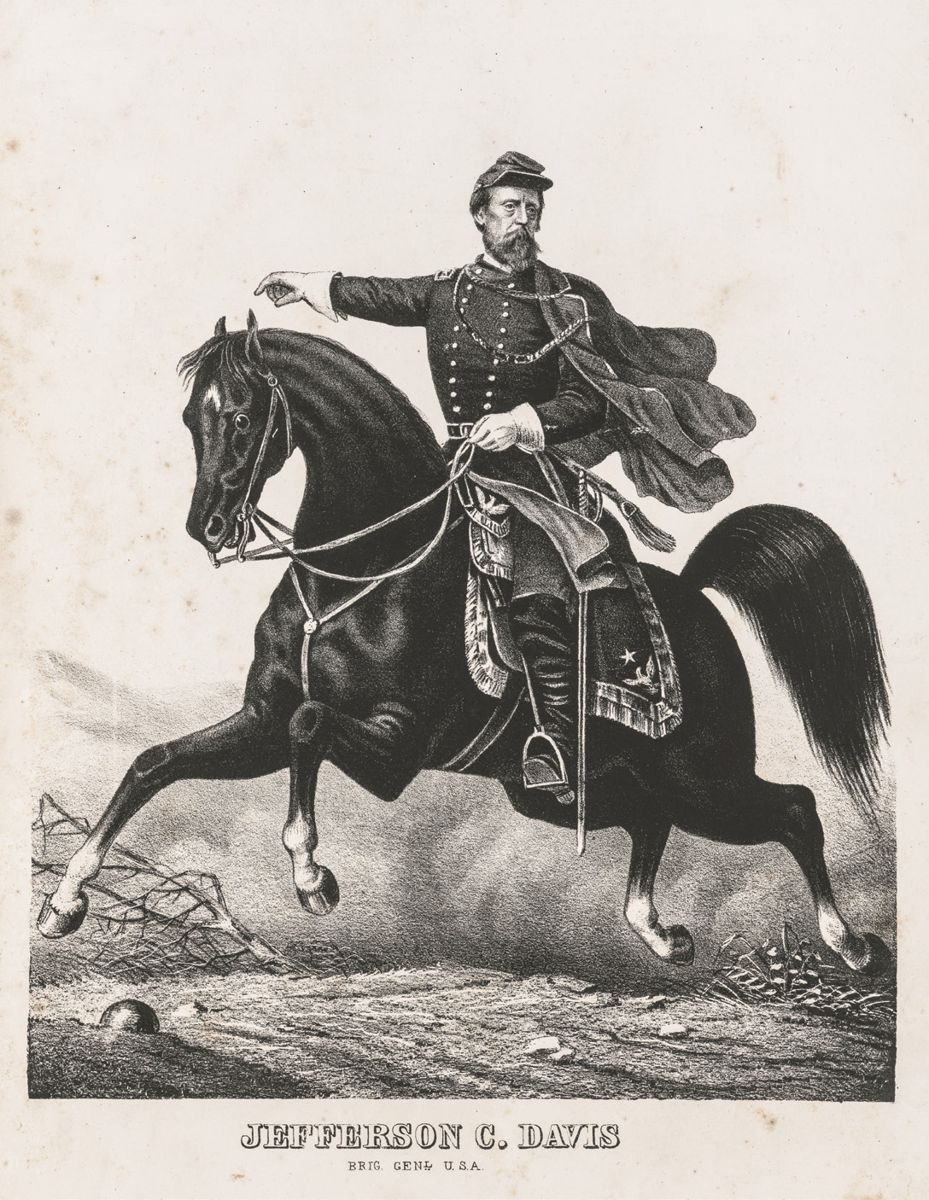
Currier and Ives, “It seems obvious that the Civil War was good for Ehrgott and Forbriger’s business,” according to authority Christopher Lane.4 Lane estimates that 90% of the firm’s output during the war was directly related to the war. Their second portfolio of portraits of notable Union defenders followed a definite pattern. Civilians, “politicians,” were seated at a desk surrounded by the trappings of power and leadership, a bust of Washington high on the back wall, a wall map, and world globe to the right. In the farleft background, through a classical arch, countless troops march off to victory. Only the heads of the principles are changed. Lincoln and Governor Tod of Ohio (Figures 2 and 3) share the same body, as do Secretary of War Stanton and Secretary of State Seward. The military leaders are inevitably on horseback leading a charge or on foot, encouraging their men to move forward on the enemy as seen in their depictions of Federal Generals Jefferson C. Davis and Joe Hooker. (Figures 4 and 5) These were undoubtedly issued before Hooker lost at Chancellorsville. Davis was never promoted to full major general. Almost all portrayed are generals and the rest are colonels. Naval notables are shown standing on the deck of their command. In all, a conservative estimate puts the firm’s output at seventy-nine prints showing sixty-nine individuals. “This includes nine politicians, eight naval figures, and fifty-two soldiers.”5 Ehrgott and Forbriger,
Figure 3. “A. Lincoln.”
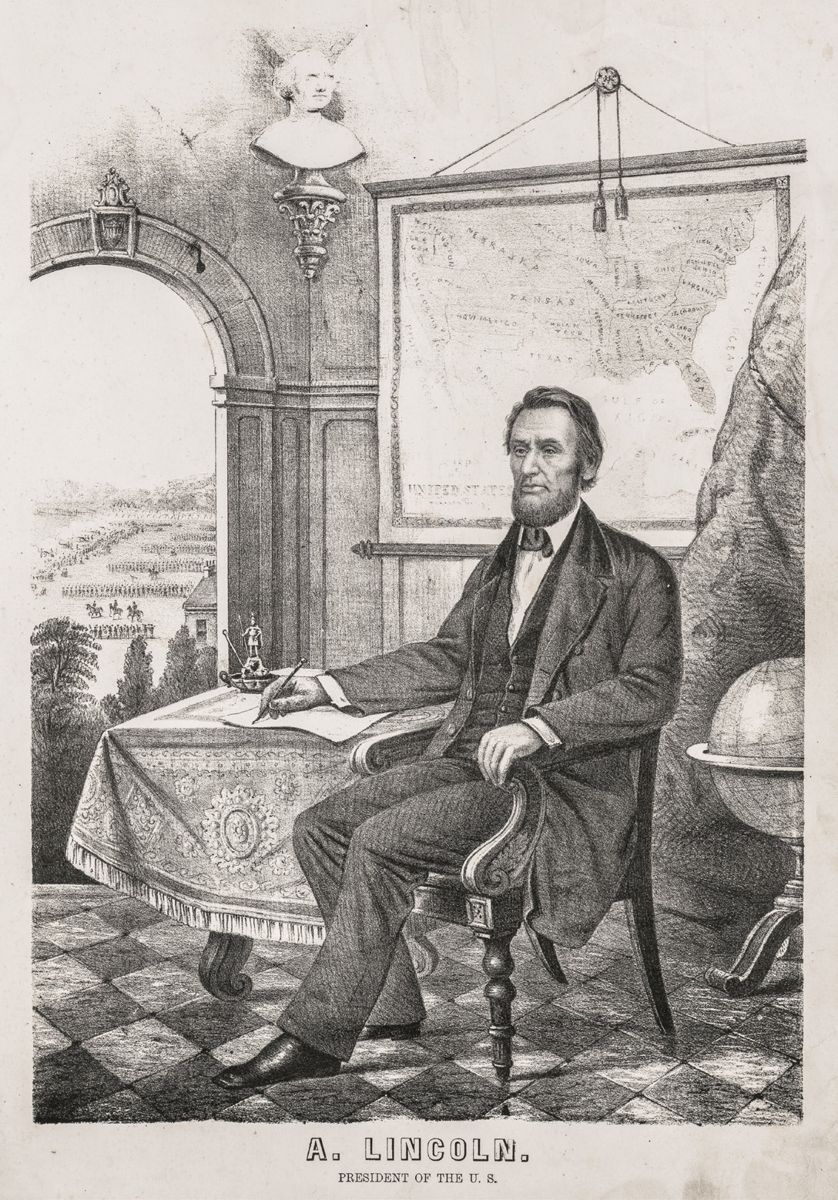
Figure 4. “Joe. Hooker.”
from its “western” perspective in Cincinnati, just as the firm emphasized western battles in Roesler’s portfolio, they featured western and Ohio notables in their military portfolio. Therefore, the representation of Ohio Governor Tod. Originally the prints were issued separately. It remains a mystery who introduced the idea of compiling them in portfolios. Perhaps the firm’s earlier production of 20 images of Roesler’s work issued in portfolio form gave antecedence to the new effort. The common usage of old prints reissued with new imagery, i.e. new heads on old bodies; had a long tradition traced back to England and Europe. It was efficient and more economical (read “cheaper”) to use an old lithographic stone and merely change the head of the sitter or the individual portrayed rather than create an entirely new and original one. Moreover, new “head shots” were available through the medium of photography. Now it was easier than ever to simply scrub out the old “head” and replace it with a new, updated image. Print authorities Mark Neely and Harold Holzer identified twelve different groups of the firm’s military lithographs. Criteria for each group was different and it is pointless to list all of them. A few examples with their descriptors will suffice: Group 1 contained seven portraits; equestrian, right arm outstretched; Group 10—five portraits standing beside horse. It appears that the portfolios were not assembled by Ehrgott and Forbriger but by sales agents and customers. That the individual prints were nearly identical did not seem to bother consumers. When they were assembled in portfolios, there uniformity and rigid representations were glaringly obvious.6 Christopher Lane argues that the four extant portfolios were probably assembled by booksellers or agents and not Ehrgott and Forbriger. The portfolios don’t carry the usual printers and publishers’ remarks or copyright indications. Lane concludes that the “creation of these portfolios started off as a convenient sales technique which then grew and developed.”7 Certainly, the practice of assembling images in book form follows the tradition of maintaining family albums when the art of photography produced countless carte de visites before and during the war. Curiously, one or two of the known copies include two Currier and Ives prints on the first two pages—one of Liberty and the other of George Washington, both in contemporary color. The main portraits are all in their original black and white printings. Lane identifies four locations holding the portfolios as The Cincinnati Historical Society Library, The Library of Congress, The Clements Library (University of Michigan), and the Lilly Library, Indiana University. Since Lane wrote his article, WorldCat, an important library search engine, identified a fifth portfolio in the collections of the American Antiquarian Society, Worcester, Mass. The firm of Ehrgott and Forbriger operated at the corner of Fourth and Walnut streets in Cincinnati during the war. “The original name of the business did not have the ‘&Co.’, which was added in 1860.” Forbriger died in 1869. “Adolph K. Krebs became the new partner, and the company name became Ehrgott & Krebs. In 1874 Ehrgott left the company, and the name was changed to Krebs Lithographic Company.”8 Krebs died in 1884 at 53. Endnotes 1.
Peter Marzio, The Democratic Art: Chromolithography 1840-1900: Pictures for the 19th-Century America, Boston: Godine, 1979, 132-133. Benjamin F. Klein, ed., Lithography in Cincinnati, pt. 1, To the Advent of the Steam Press, 1836-68 (Cincinnati: Young and Klein, 1975-76) as cited in Christopher W. Lane, Chpt. 4 “The Curious Case of the Hydra-Headed Stones: Ehrgott, Forbriger & Co.’s Civil War Portraits,” In Alice M. Cornell, ed., Art as Image: Prints and Promotion in Cincinnati, Ohio, Athens: Ohio University Press, 2001,73. Hereafter Lane, “Curious Case.” Mark Neely, Jr. & Harold Holzer, The Union Image: Popular Prints of the Civil War North, Chapel Hill, University of North Carolina Press, 2000. 67. Hereafter Holzer, et. al. Union Image. Lane, “Curious Case,” 74. Ibid., 79. Holzer, et. al. Union Image, 41-49. Lane, “Curious Case,”101. For a comprehensive survey of the Ehrgott and Forbriger firm see Lane’s “The Curious Case of the Hydra-Headed Stones: Ehrgott, Forbriger & Co.’s Civil War Portraits,” in Alice M. Cornell, ed., Art as Image: Prints and Promotion in Cincinnati, Ohio, Athens: Ohio University Press, 2001. Harry Peters, America on Stone, 169-170, 190, 256.
After 43 years in the museum field, Cilella devotes his time to collecting A merican prints and maps and writing. He has written extensively on Emory Upton: Upton’s Regulars: A History of the 121st New York Volunteers in the Civil War (Kansas, 2009); a twovolume Correspondence of Major General Emory Upton, (Tennessee, 2017), received the 2017–2018 American Civil War Museum’s Founders Award for outstanding editing of primary source materials. He edited Upton’s love letters 1868-70 to his wife–Till Death Do Us Part (Oklahoma, 2020), and The Memoirs of Dewitt Clinton Beckwith of Upton’s Regulars (McFarland, 2023).
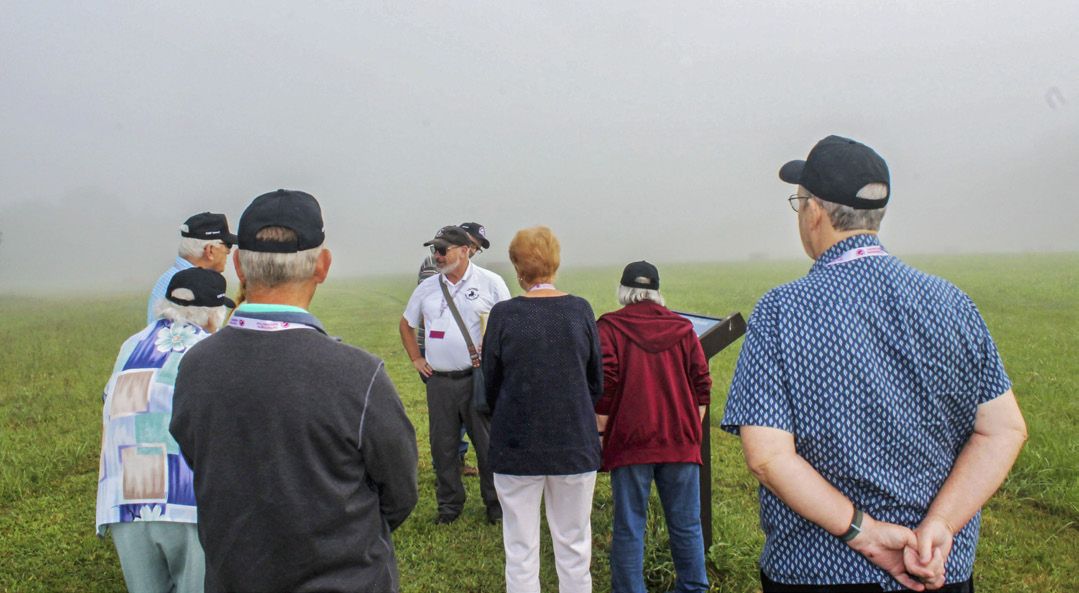
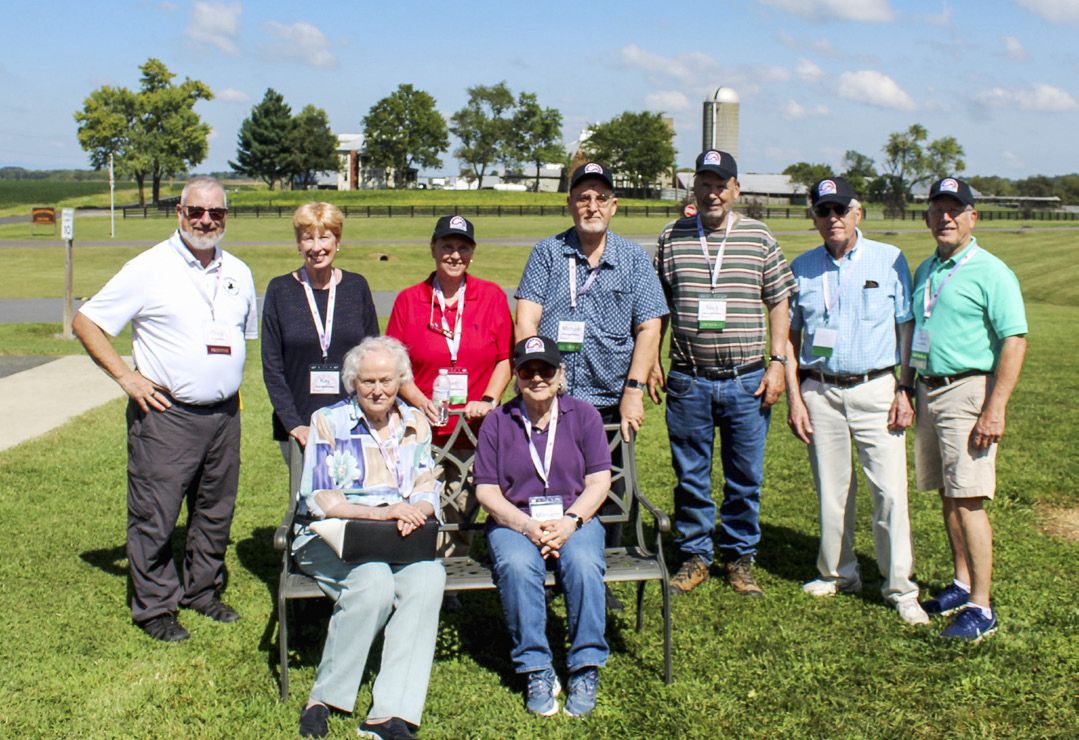
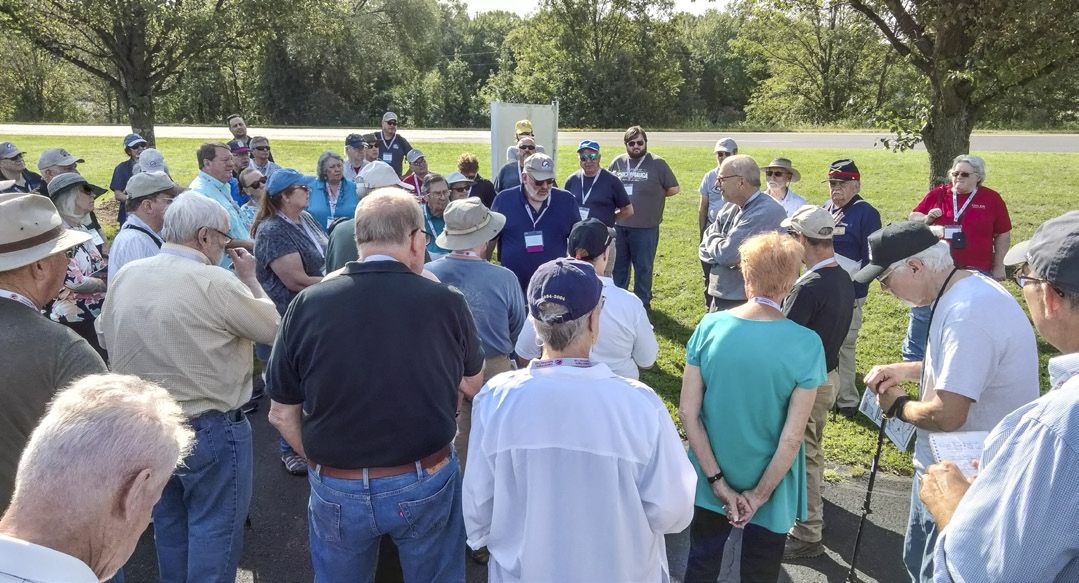
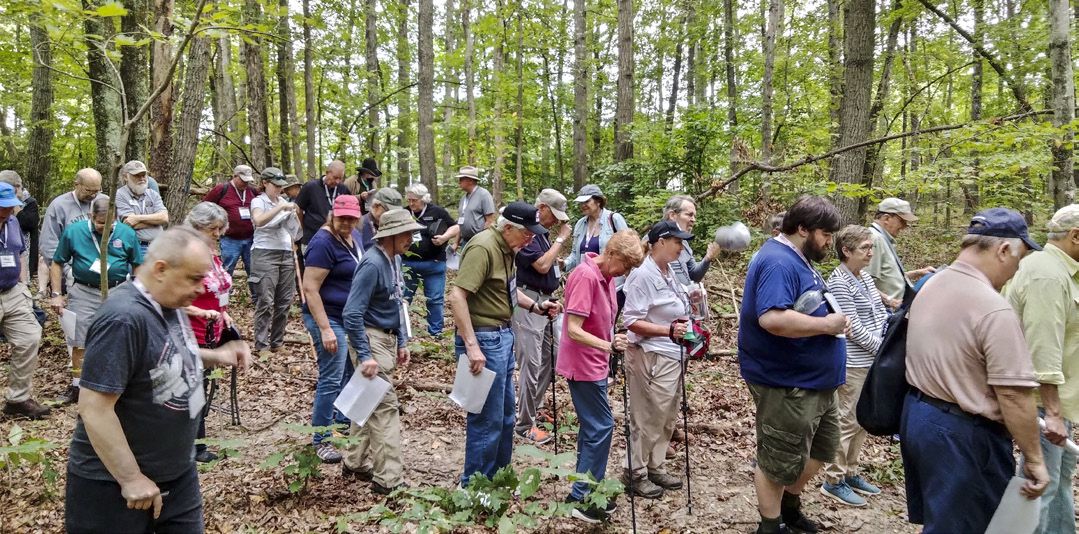
am pleased to report a resounding success for our 2024 CVBT Annual Conference. Tour buses and banquet halls were bursting at the seams. The Central Virginia Battlefields Trust created this conference as a thank-you to all our resolute members and supporters back in 1997-98. The event has evolved from a simple under the tent BBQ on newly preserved battlefield land to a three-day conference including several battlefield tours, keynote speakers, a Saturday evening social hour and banquet as well as a Sunday morning breakfast and programs. We started this year’s conference activities on Thursday, September 12th with a special tour for our CVBT “Generals” corps to Brandy Station battlefield. The CVBT “Generals” is a group designation for those members who donate $1,000, or more, above membership dues and land preservation appeals each year. Our tour guide, Chris Army, treated the group to an in depth program on the battlefield. Early morning fog gave the battlefield an eerie ambiance, not to mention some obscured vision, but it finally dissipated and allowed the group to view some spectacular sights. CVBT donated $770,000 to assist in saving Fleetwood Hill which is now part of the newly designated Culpeper Battlefields State Park. Friday, Paul Sacra toured two bus loads of CVBT guests across the Payne’s Farm battlefield, the major fighting in the November 1863 Mine Run campaign. After the Battle of Gettysburg in July, Confederate Gen. Robert E. Lee and his army retreated across the Potomac River into Virginia. In late November, as Thanksgiving approached, Union General Meade attempted to steal a march through the Wilderness of Spotsylvania and strike the right flank of the Confederate Army south of the Rapidan River. Paul and Ted Savas originally discovered and uncovered Payne’ battlefield. Paul informed the tour group of several new discoveries regarding the battle not yet widely known. It was a true hike in every sense but our hardy CVBT members survived the day, mostly.
Wall at the Graffiti House – part of Wilderness Tour. Photos courtesy of Tim Talbott, Terry Rensel, and Lisa Van Winkle.
Volunteers Carol and Chyenne at CVBT registration table.
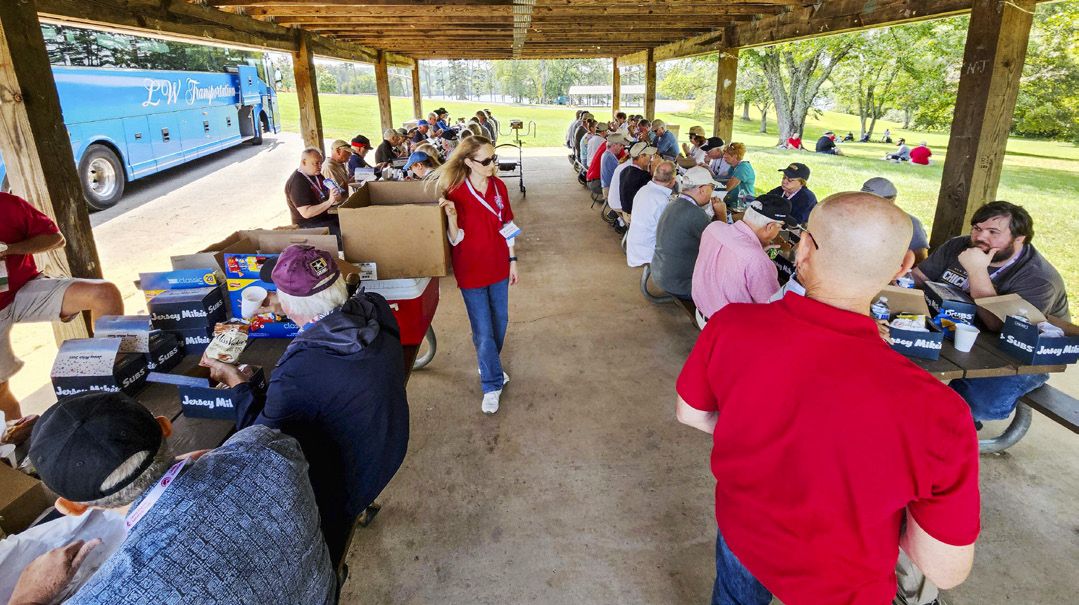
Saturday another two full buses of CVBT conference attendees were treated to a tour of the Wilderness, the “72 Square Miles of Hell,” and how it impacted several campaigns. The Wilderness itself affected several overlapping conflicts in 1863 and 1864, both in planning and execution. On the western edge of the Wilderness, key sites of the Wilderness, Chancellorsville, and Mine Run Campaigns reside in Orange and Culpeper Counties. Several points in the counties west of Spotsylvania were significant during all three of the campaigns fought in the Wilderness. The Wilderness itself was as great an obstacle as the armies were. Retired NPS Historian Greg Mertz covered extensive territory and visited Mayhurst in Orange County. During the Civil War, General Ambrose Powell Hill, commanding Third Corps of Lee’s Army, was headquartered at the Willis home (now Mayhurst Inn). He commanded over 18,000 men from his tent on the front lawn. The christening of one of Hill’s daughters with her famous godfather Robert E. Lee attending was also described. Another popular stop was the Graffiti House at Brandy Station, that focused on soldier’s inscriptions from the three “Wilderness Campaigns.” Saturday evening’s CVBT meeting and banquet began with a social hour where our 130 guests mingled and reacquainted with old friends as well as making new ones. This was followed by a superb dinner. CVBT Vice President Eric Powell opened the meeting with remarks regarding our CVBT education program and Community Youth Day activities, which Eric chairs, then passed the podium to President Van Winkle. Opening remarks were made by CVBT President Tom Van Winkle recognizing the many organizations represented in the audience as well as CVBT Board members and the “Generals” core. Representatives from several like-minded preservation organizations were on hand such as American Battlefield Trust, National Park Service, Civil War Roundtable Congress, Friends of Wilderness Battlefield, Civil War News, Civil War Roundtable of Fredericksburg, Shenandoah Valley Battlefields Foundation, Civil War Study Group Lake of the Woods and more. Tom acknowledged the staff and all CVBT volunteers who worked so diligently to make the entire conference happen. The least of which included CVBT Executive Director Terry Rensel, CVBT Chief Administrative Officer Tim Talbott and Volunteer CVBT Events Coordinator Lisa Van Winkle. Tom commented on the “Holistic” approach to battlefield preservation and its overall effects on history, green spaces, and quality of life. “Today battlefield preservation not only protects our nation’s history but affects our current day quality of life,” stated Tom. “It protects shrinking green spaces and allows those who walk the fields for other than historical reasons to become educated on the battlefield itself.” Three new CVBT Board of Directors were nominated and voted onto the Board. Kevin Rousseau, Dave Herold, and Brent Feito. You may read their extensive bios on the CVBT.org website. The 2024 Dr. Micheal P. Stevens Preservation award was bestowed upon retiring CVBT Board member Paul T. Scott for his lifetime of work on preserving Civil War battlefields in the Fredericksburg area. Paul served in the U.S. Army Medical Service Corps as a Lt. in the Medical Platoon of the 27th Infantry Regiment with service in Vietnam earning the Combat Medic’s Badge and Bronze Star with “V” Device. The Dr. Michael P. Stevens award was developed by the CVBT Board of Directors to recognize past president Dr. Mike Stevens’ years of service to the organization and preservation. The award, and the funds awarded with it, are provided by the Board of Directors, and not the CVBT’s donated funds. A plaque is affixed to the trophy and that trophy remains on display at the CVBT office. A $1,000 monetary award and framed certificate is also conveyed. We award this to an individual, or group, that continually contributes to Civil War preservation and education in Virginia. At the end of the conference Paul announced he donated the $1,000 check back to CVBT for use in our Battlefield Interpretation project. Paul is a true gentleman and he will be missed by the CVBT Board.
Dr. Micheal P. Stevens Preservation award.
CVBT President Tom Van Winkle presents the Dr. Micheal P. Stevens Award to Paul Scott.
Jack Davis presents “Myths and Mythology” of the Civil War Saturday evening dinner.
Sunday’s keynote speaker Steven Cushman at Stevenson Ridge Sunday breakfast.
Our key note speaker, well-known author and personality William “Jack” Davis, delighted the audience with a presentation on “Myths and Mythology,” especially as it related to the Civil War. Jack pointed out how actual events, and some not so factual, were embellished through the years, published and republished until they were ingrained in the public’s minds as fact. Jack gave several very entertaining examples including the “Pregnancy by Minié ball” story. Sorry, you will have to look that one up
CVBT President Tom Van Winkle and Executive Director Terry Rensel stop for a quick video interview.
MARCH 22-23, 2025 NEWfor 2025 Show! Sales of C&R (Curio & Relic) Handguns will be permitted! This includes WWI and WW 2 Military Handguns. Collectable unaltered Colts, S&W, Savage , Ruger, etc. that are at least 50 years old and meet the C&R criteria listed on the back page of this flyer. SEE REVERSE SIDE FOR ATF DEFINITION OF C&R FIREARMS
NO AR / AK RIFLES OR ASSOCIATED PARTS ARE PERMITTED FOR SALE TRANSFER AT THE ‘BALTIMORE SHOW’. NO MD-BANNED WEAPONS ALLOWED (Go to www.mdsp.org/organization/supportservices/licensingdivision for current list)
MARYLAND LAW MANDATES THAT ALL POST 1898 RIFLES, SHOTGUNS and HANDGUNS MUST BE TRANSFERRED BY A FEDERAL FIREARMS LICENSED (FFL) DEALER, INCLUDING AN NICS CHECK. All Firearm Sells/Transfers are to abide by all Federal, State and Local mandates.
yourself. Jack’s lovely wife, Sandra, was in attendance, and we had some fun conversations. Their other family member “Cuddles” stayed back at the hotel as the large dinner was a true temptation. Sunday opened early at Stevenson Ridge in Spotsylvania for a breakfast buffet and the mornings Keynote speaker. The property is named after Brig. Gen. Thomas Greeley Stevenson who died May 10th during the Battle of Spotsylvania. The land was used as a staging area for attacks against the Mule Shoe and Heth’s Salient. The ridge was occupied by the Union V Corps and extensive earthworks may be viewed on the grounds. Our keynote speaker was Steven Cushman. Steven is a Professor at the University of Virginia and spoke on his book, The Generals’ Civil War: What Their Memoirs Can Teach Us Today. It was a fascinating review of how and why memoirs, specifically Civil War memoirs, were written and why one of the leading figures in the Civil War, General Robert E. Lee never penned his own. We learned the “Memoir Period” was in fact quite a business with publishers vying for significant Civil War generals to author their stories. In summary, it was another successful conference with numerous compliments from our attendees. I thank all who attended and, of course, our CVBT staff and volunteers who made it all happen. Save the dates of September 12–14, 2025, as next year’s conference is already in the planning stage. Our tentative topic, “Battle of Spotsylvania Court House.” Don’t miss it!