
John S. Clark’s Estimate of Confederate Strength, Sept. 1862
By Juanita Leisch Jensen · Originally published January-February 2025 · pp. 16–19
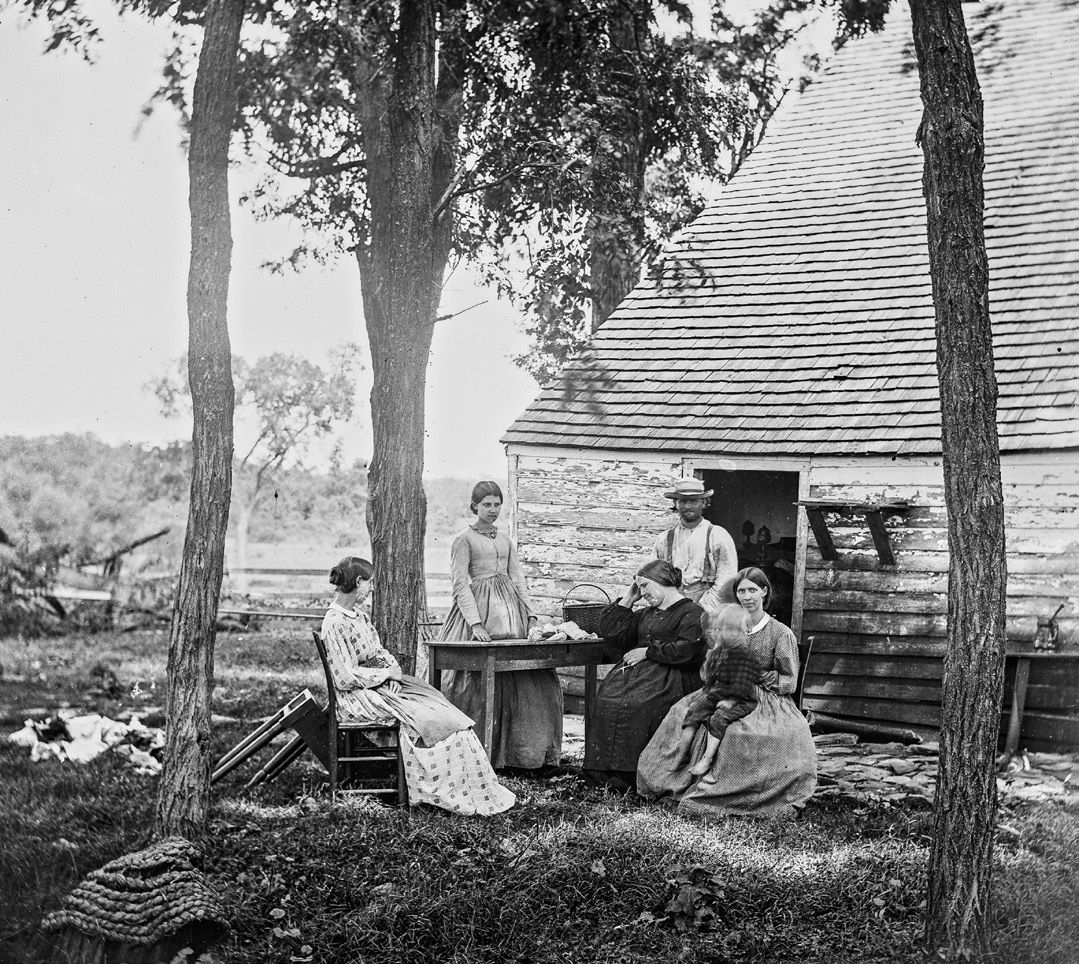
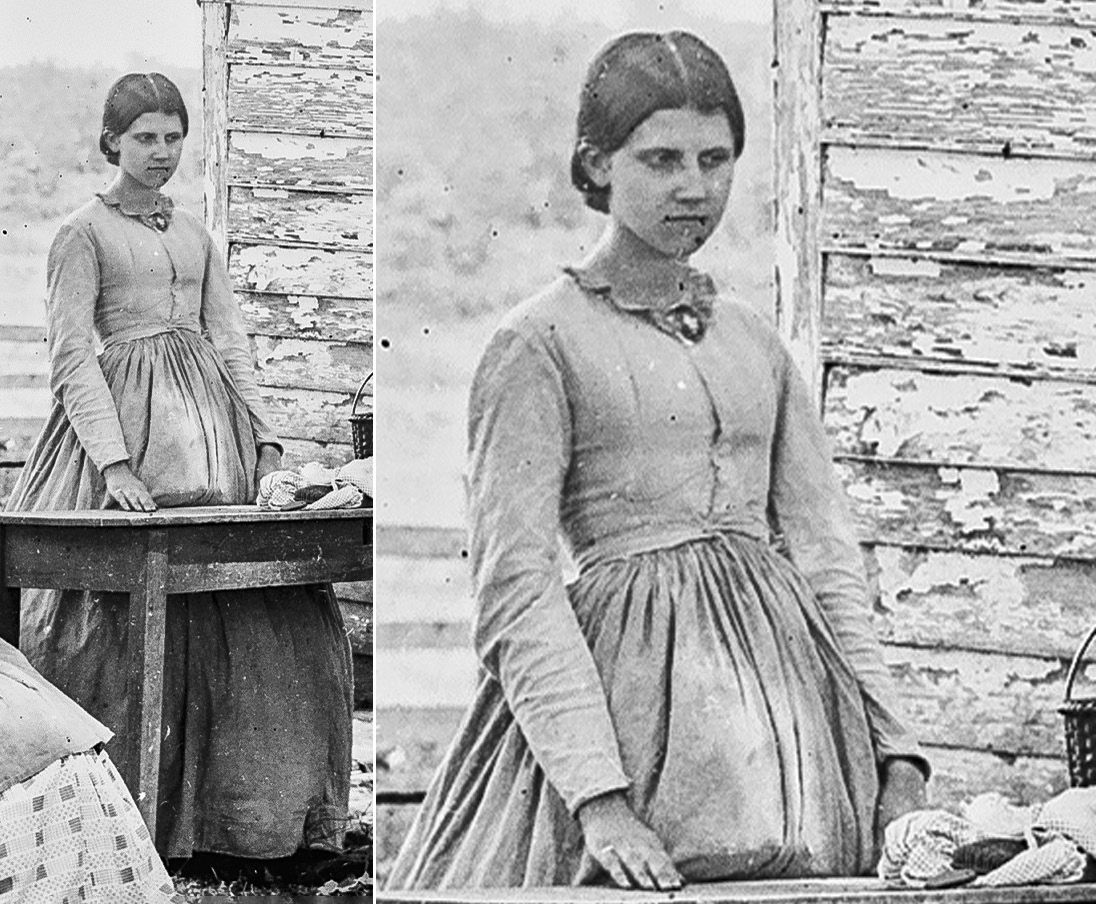
Vision and Valor The War Through Women’s Eyes
“Homespun” By Juanita Leisch Jensen
The author begins by acknowledging the seminal research on Confederate Homespun Dresses done by Vicki Betts. Betts conducted a comprehensive and exhaustive study of existing examples and (so far as the author knows) was the first person to apply scientific survey technology to this subject. So far, this “Vision and Valor” series has focused on women and their roles in the Civil War. This article will break that pattern to discuss a group of artifacts. “Confederate
Homespun Dresses” are iconic civilian artifacts of the Civil War. If we study objects to learn more about the people who made and used them, then these dresses provide an excellent lesson, if only because the mythology differs so markedly from their reality.
Homespun By the mid-nineteenth century, commercially-produced fabrics were so widely available and economically priced that the vast majority of Americans had set aside spinning wheels, looms, and other tools of home textile production. There were, and continued to be, families that made and used homespun fabric for their clothing as a matter of economic necessity and common practice.
Home production of fabric represented a significant investment of time and energy, and economics ensured that garments of homespun fabrics were used, reused, repaired, and remade. Extant examples of such homespun clothing— when they can be found at all—consistently show evidence of extreme economy. Families who used homespun fabrics as a matter of daily life simply did not have the luxury of setting aside or saving old clothes.
homespun clothing by the realities of life behind a blockade, developed such a patriotic fervor that they enjoyed—and even preferred—wearing homespun clothing. It followed, then, that they surely chose to wear it every day. The poem “Confederate Homespun Dress” (sung to the tune of “The Bonnie Blue Flag”) exemplifies this myth.
The Homespun Dress by Carrie Belle Sinclair
There were some plantations where slaves were employed to weave cloth long after it was economically illogical to do so. By contrast, there were also so many plantation owners who preferred to purchase commercially made cloth for slave clothing that northern factories produced and sold a textile they called “negro” cloth.1 War-induced shortages caused some women accustomed to buying fabric to make homespun fabrics. As Rachel Young King Anderson of Greene County, Mo., wrote, “I am spinning, toiling and sweating in order to clothe my family—oh the terrors of war.”2 In the south, the blockade and subsequent shortages of northern goods turned voluntary non-importation of northern goods into forced compliance. A mythology developed around “The Confederate Homespun Dress” that southern women, initially compelled to make and wear
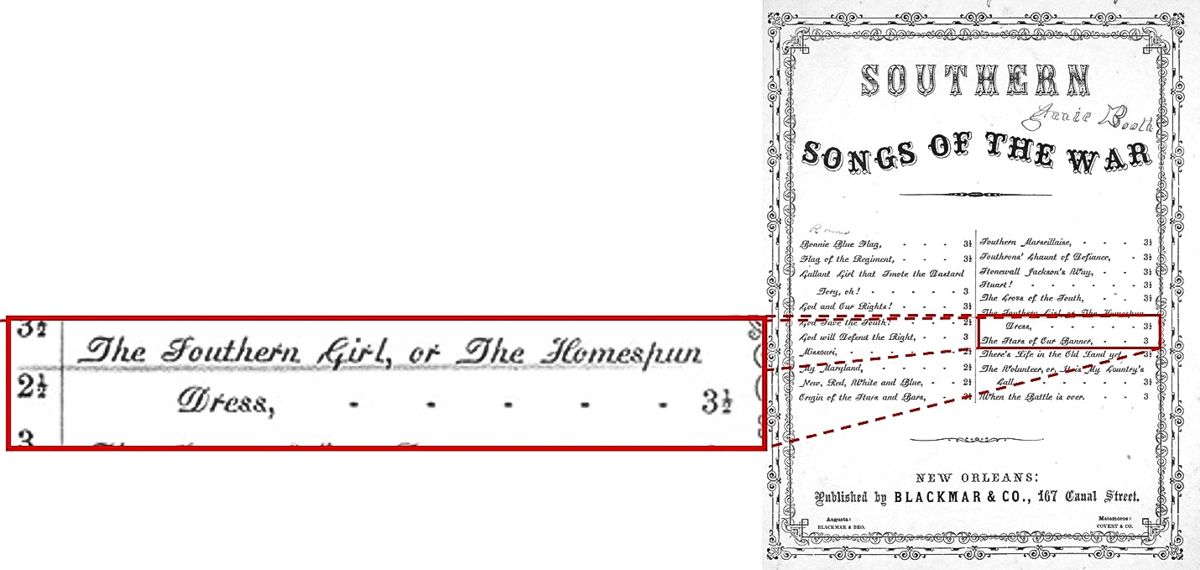
Oh, yes, I am a Southern girl, and glory in the name, And boast it with far greater pride than glittering wealth and fame. We envy not the Northern girl her robes of beauties rare, Though diamonds grace her snowy neck and pearls bedeck her hair.—CHORUS CHORUS: Hurrah! Hurrah! For the sunny South so dear; Three cheers for the homespun dress that Southern ladies wear! The homespun dress is plain, I know; my hat’s palmetto, too; But then it shows what Southern girls for Southern rights will do. We have sent the bravest of our land to battle with the foe, And we will lend a helping hand–we love the South, you know.—CHORUS Now Northern goods are out of date, and since old Abe’s blockade, We Southern girls can be content with goods that are Southern made. We sent our sweethearts to the war, but, dear girls, never mind— Your soldier love will never forget the girl he left behind.—CHORUS3
A few verses of this rousing song might lead one to imagine entire communities of southern women proudly, patriotically, and consistently wearing homespun dresses. However, the objects tell a somewhat different tale.
Clues in the Production
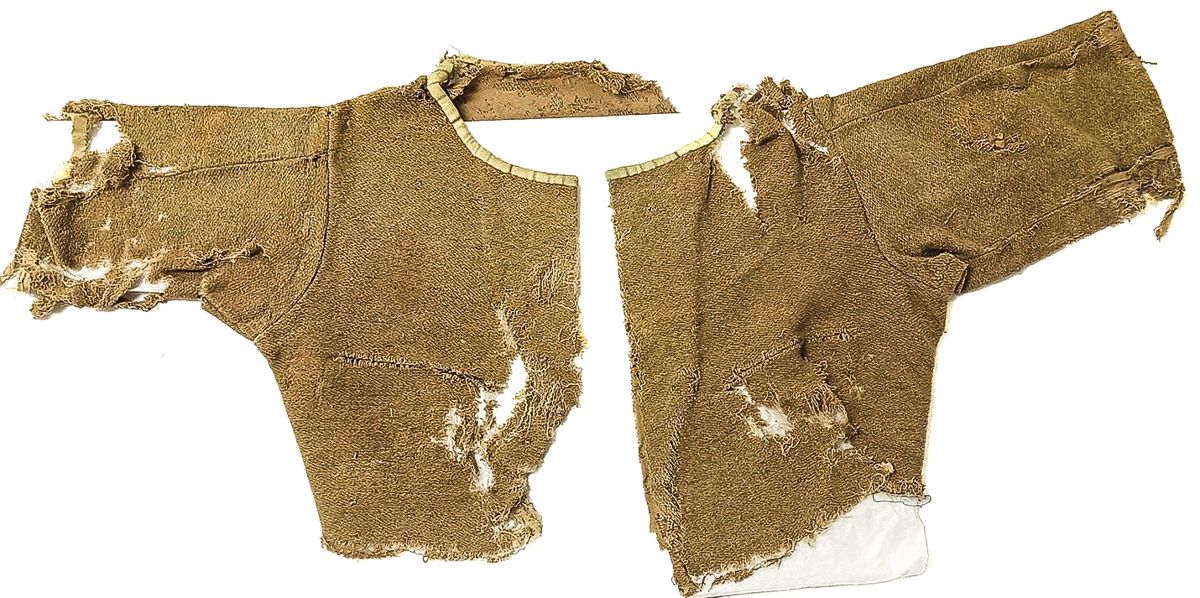
The idea of owning and using a “Confederate Homespun Dress” became so popular it was practically a fad among women who had worn clothing of commercial fabrics their entire lives. Extensive research and a national survey found that only a few dozen Confederate Homespun Dresses exist. Some have solid family provenances that identify the maker and wearer. A significant portion was made and used by teenage girls. For example, one Confederate Homespun Dress now in the collection of the DAR Museum in Washington, D.C., has elbow-length sleeves generally worn by teens rather than adults. Accounts of women who attempted to make “Confederate Homespun Dresses” generally describe difficult, tedious, time-consuming attempts to relearn long lost skills. Parthenia Hague describes in The Blockaded Family the efforts of a family of young girls who took up the challenge of making This compilation of sheet music titled “Southern Songs of the homespun dresses: War” included “The Southern Girl, or The Homespun Dress.”
As the novelty of carding and spinning wore off, we often grew weary in our strife, and it is not to be denied that all four of us became heartily sick of our agreement (to spin sufficient thread and weave sufficient fabric to make four homespun dresses) … by the time we had carded and spun two weeks at night and two Saturdays, … never another Saturday dawned that found us so eager to spin as did the first one. Each of the four felt inclined to withdraw from the compact …4 The resulting homespun fabric was coarser, thicker, and stiffer than commercially produced fabrics. Parthenia Hague notes that even after working for weeks on homespun wardrobes, and changing configurations to weave thinner ‘muslin’ fabric with fewer threads, she and others found the allure of commercially-produced goods entirely irresistible.
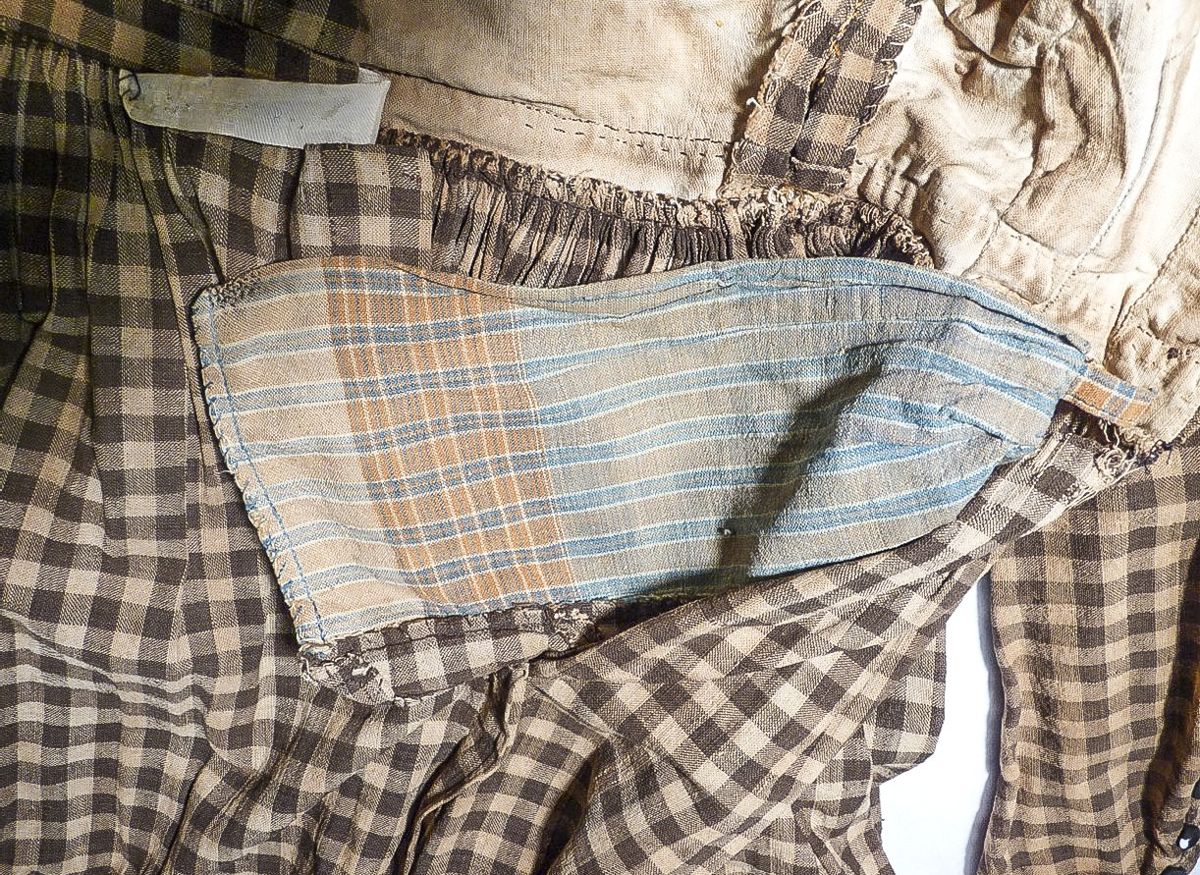
Soon after completing and wearing our homemade muslins, news came into our settlement that a steamer had run the blockade; and that the city of Eufaula had secured some bolts of prints and other notions. … The Saturday following the report, … we were driven to Eufaula, not to buy, but simply to have a look at these imports. … We had fondly imagined ourselves satisfied with our home-made cloth, and had said of it, “What do we care for the blockade when we can make such as these?” We little dreamed that our firmness would so suddenly collapse before about three bolts of calico and a few pairs of black Morocco shoes (which they bought) …5 The body of existing dresses tells a tale of women and girls willing to expend the time and effort to make the dresses), but, blockade or not, able to secure something else to wear on a daily basis. Indeed, most of the “Confederate Homespun Dresses” that survive are in remarkable condition, and appear to have been worn very little before being set aside and saved to be passed down through families as treasured mementoes. In at least one case, the dress was so treasured that it was worn by live models in annual fashion shows. By the twentieth century, the fabric had weakened, and this dress shows the evidence of wear and tear. The dress is also unique for having been made by a skilled (and possibly professional) weaver. (See photo top right.)
Clues in the Construction The construction of homespun dresses provides further clues to the thought processes of the women who owned and used them. In a period when material was expensive and time
This Confederate Homespun dress has underarm stains and shows evidence of wear that may have been inflicted when it was worn in a series of annual fashion shows. The pocket is a hidden showpiece of weaves and patterns. Research indicates it was made by Cassandra Kibler, whose occupation in the 1860 census was listed as ‘weaver.’ (Shenandoah Valley Cultural Heritage Museum)
was cheap, Civil War women spent much more effort considering not their next dress, but their next iteration of this dress. Seamstresses went well beyond the modern mantra of “reduce, reuse, recycle”, to design and construct clothing with an eye to how they would reuse not just the garment itself, but also the fabric from which it was made. This “Economics of Intended Re-use” can explain some of the variations seen in homespun dresses. Most existing Civil War dresses, especially those of commercial and fine fabrics, were constructed in such a way that the pieces of fabric from which it was made could be re-used when the dress was updated or remade. Examples of this include using hook and eye fasteners with buttons that were purely decorative rather than button-andhole fasteners that require puncturing the fabric. Another example is placing the front opening of a skirt in a seam rather than slitting a panel of the skirt. Both these features indicate an intended re-use of both the dress and the fabric from which it was made. By contrast, puncturing bodice fabric with buttonholes, and skirt fabric with a slit in the center front panel indicates an intention to wear the dress in its current configuration until worn out, as it limits potential re-use of the fabric pieces from which the dress is made. The bodice of the purple and blue dress is punctured with buttonholes. The skirt opening was created by slitting the center front panel of the skirt. The bodice of the brown and yellow dress, although made of a stiff, heavy-weight, home woven fabric, has an underbodice punctured with buttonholes, preserving the integrity of the bodice fabric itself. The skirt has a center front seam, and consequently, the center front slit in the skirt occurs in a seam and does not affect the integrity or potential future re-use of the skirt panels. The maker of the purple dress apparently had little invested the time, effort and patriotism so treasured them that they were set side and saved in the years, decades, and now century and a half since the war. 1.
These dresses of fine, commercially-produced fabrics exhibit constructional features, including ‘dog-leg’ openings and skirt openings in the side-front seem that preserve the fabric pieces for future re-use. (Author’s Collection)
Purple and blue dress above; brown and yellow below. Closeup photographs of two homespun dresses with North Carolina provenance. (Author’s Collection)
Endnotes
Dr. Jonathan Michael Square. Negro Cloth: How Slavery Birthed the American Fashion Industry (Duke University Press, 2025). (The book has not yet been released, but the author has given talks foretelling its contents.) Sept. 9, 1862, letter quoted in Civil War Diary Quilt by Rosemary Youngs. Iola, WI: Krause Publications, 2004, p. 19. Sinclair, Carrie Bell, Carrie Bell Sinclair, “The Homespun Dress,” 1862, Civil War Era NC, accessed October 23, 2024, https://cwnc.omeka.chass.ncsu.edu/items/show/850. Verses 1, 2, and 5. Parthenia Antoinette Vardaman Hague. A Blockaded Family: Life in Southern Alabama During the Civil War. Lincoln, NE: University of Lincoln Press, 1991, pp. 87-88. Ibid, pp. 90-91.
J uanita L eisch J ensen is a nationally known speaker , writer , researcher ( and avid collector ) of subjects civilians intention of remaking or reusing the fabric of this dress in any other configuration, while the maker of the brown dress preserved for herself more options for reusing the fabric. The quantity, condition and construction of Confederate Homespun Dresses can teach us much about the women and girls who made and used them. They were created because of economics, patriotic fervor and popular culture. They were worn only occasionally (if at all), but those who and related the to
C ivil
W ar . S he is served as C hairman of the N-SSA 150 th C ivilian E vents T ask F orce planning special events at the fall , 2024 national skirmish . S he is a member , fellow , and former G overnor of the C ompany of M ilitary H istorians . S he is also a member and former P resident of the S ociety for W omen and the C ivil W ar . S he authored two books : W ho W ore W hat : W omen ’ s C lothing , 1861-65, and an I ntroduction to C ivil W ar C ivilians . J uanita and her husband , military historian L es J ensen split their time between homes in O range C ounty , N.Y., and S henandoah C ounty , V a .