
Emerging Civil War Bentonville, N.C.
By Chris Mackowski · Originally published January-February 2025 · pp. 42–45
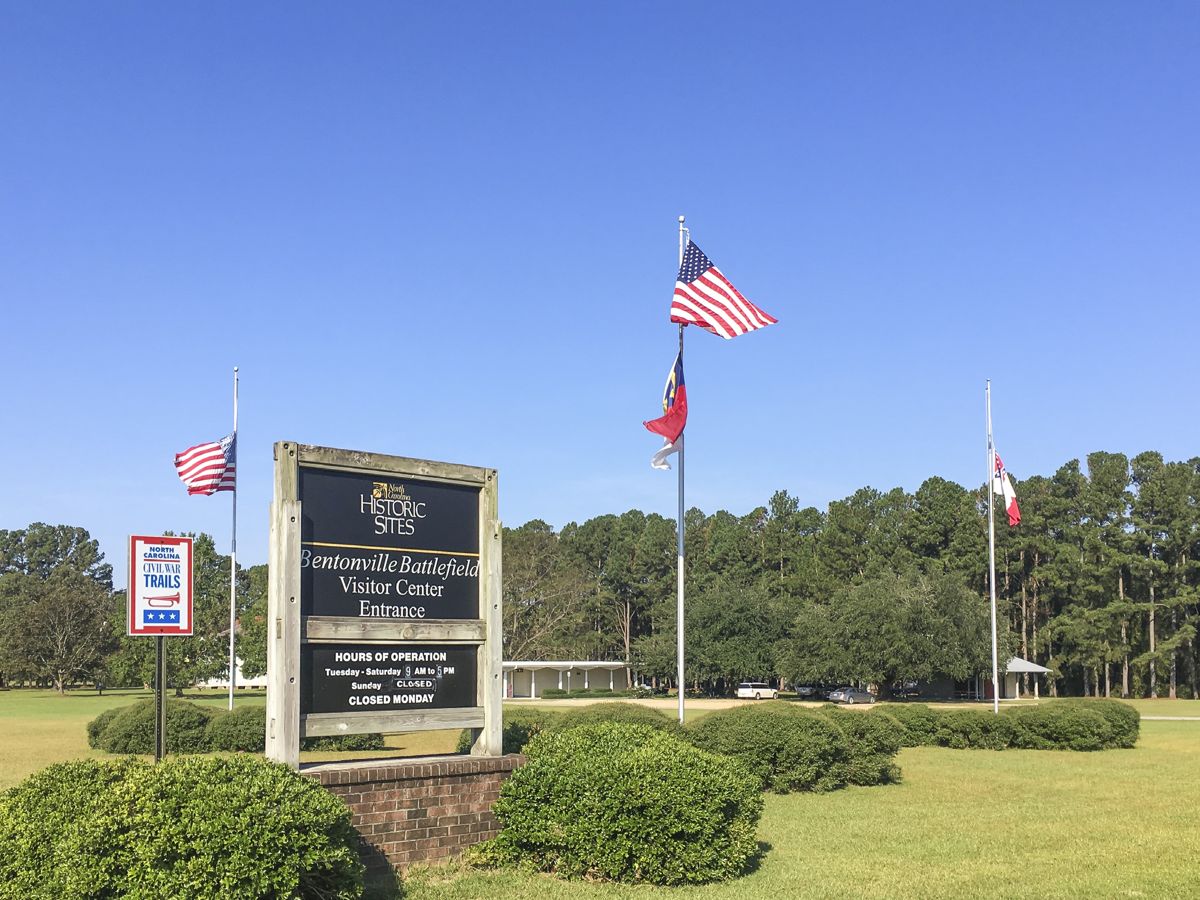
Where the Familiar Seems Different From a tour bus, the fields that comprise most of the Bentonville battlefield look flat and open. But as I stood on the edge of a cotton field at Tour Stop D, I could see small undulations in the ground. In fact, a small ridge blocked my view of the far tree line where Confederates once assembled. (Chris Mackowski)
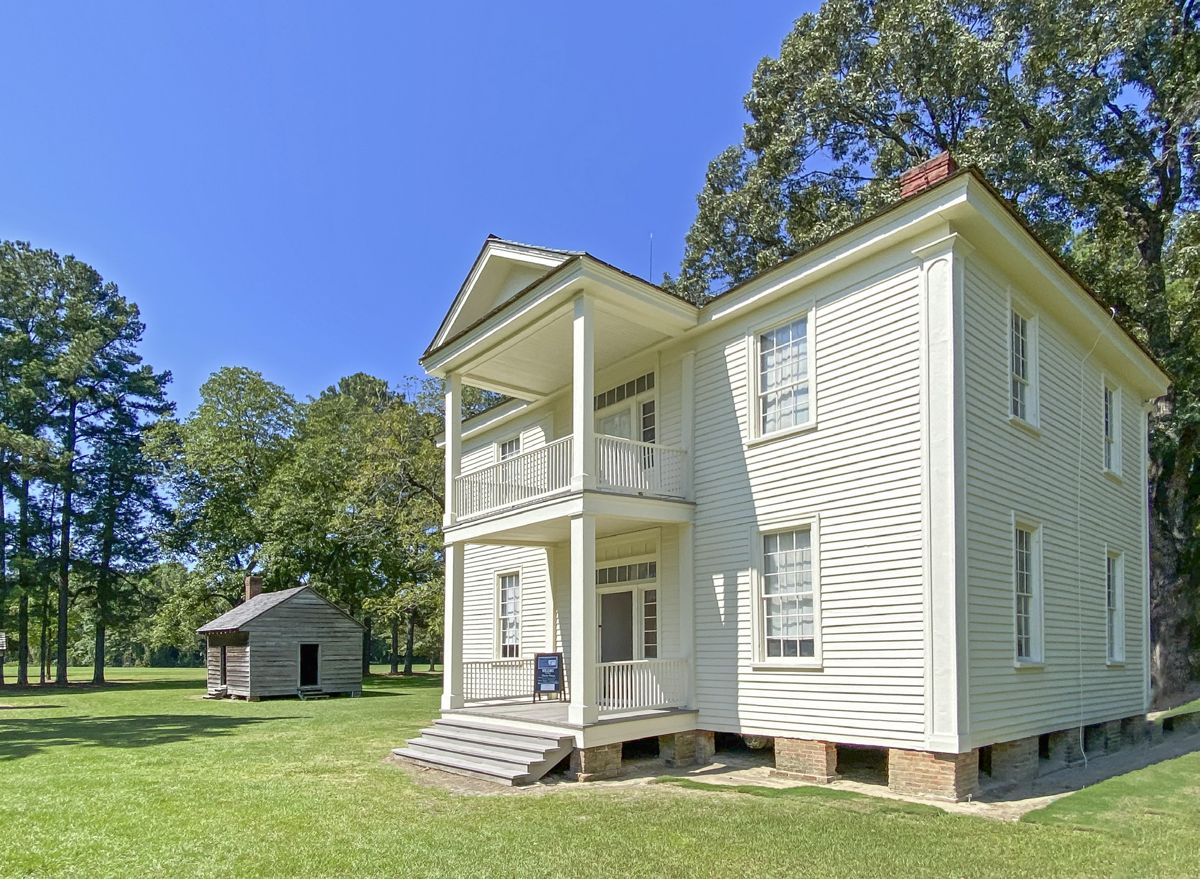
Derrick Brown, the chief operations officer at Bentonville, chuckled. “It’s no Little Round Top,” he said. But the small ridge did prove the point the terrain is never as simple as it appears, and only by standing on the ground can you fully appreciate the action that unfolded there. Bentonville served as a cotton-covered testament to the importance of battlefield preservation. Indeed, that’s what had brought me to Bentonville. I was co-leading a tour with Garry Adelman for the American Battlefield Trust, which has preserved more than 2,000 acres at Bentonville on 54 tracts, ranging in size from 1 to 180 acres. Garry and I had the privilege to be joined on the field by Derrick and another of the park’s historians, Colby Stevens. (As it turned out, Bentonville has two Colbys, the other being Colby Lipscomb—as rare as that name is, go figure!) What a treat to be on the ground with two guys who knew the ground so well. Their colleague, Anna Kulcsar, waited in the Harper House to share the story of the battlefield’s witness structure, with bloodstains on the floor. Owned by John and Amy Harper, the house became a XIV Corps field hospital during the battle. “We don’t know if the bloodstains are
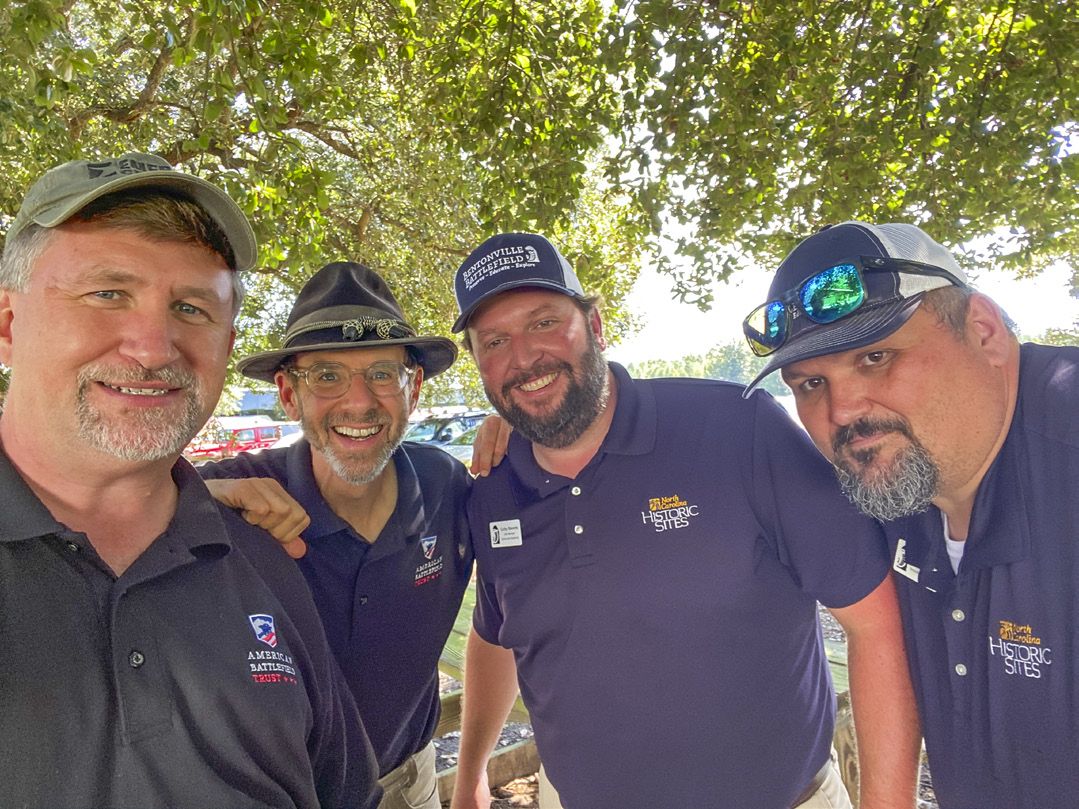
From Left: Chris Mackowski, Garry Adelman, Colby Stevens, and Derrick Brown prep for a morning on the Bentonville battlefield. (Chris Mackowski)
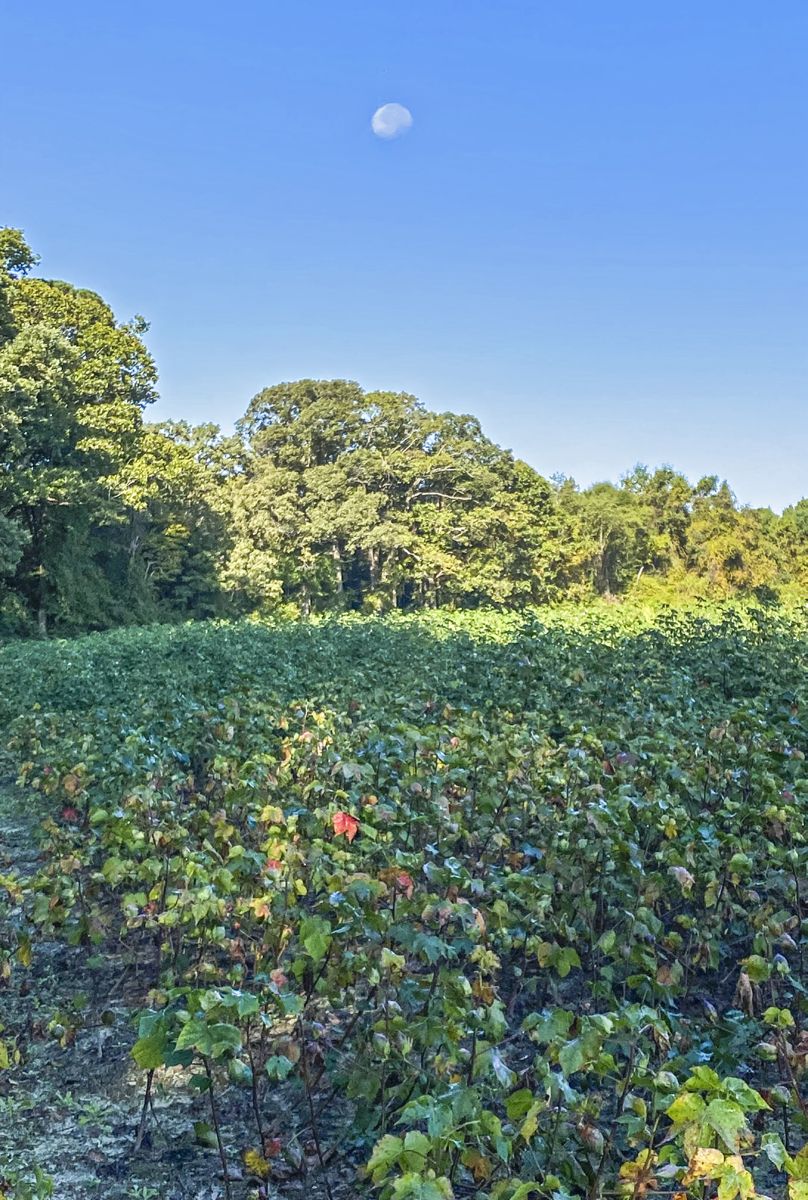
A nearly full moon hangs over one of Bentonville’s cotton fields. Local farmers lease the land from the state park—an arrangement that has encouraged battlefield preservation. (Chris Mackowski)
Union or Confederate, but I don’t think that matters,” Anna says. Fought March 19–21, 1865, the battle of Bentonville demonstrated just how poorly the war had gone for the Confederacy by that point: the Western Theater had shifted all the way to central North Carolina. Union Gen. William T. Sherman squared off against a newly reinstalled Confederate Gen. Joseph E. Johnston. An eclectic mishmash
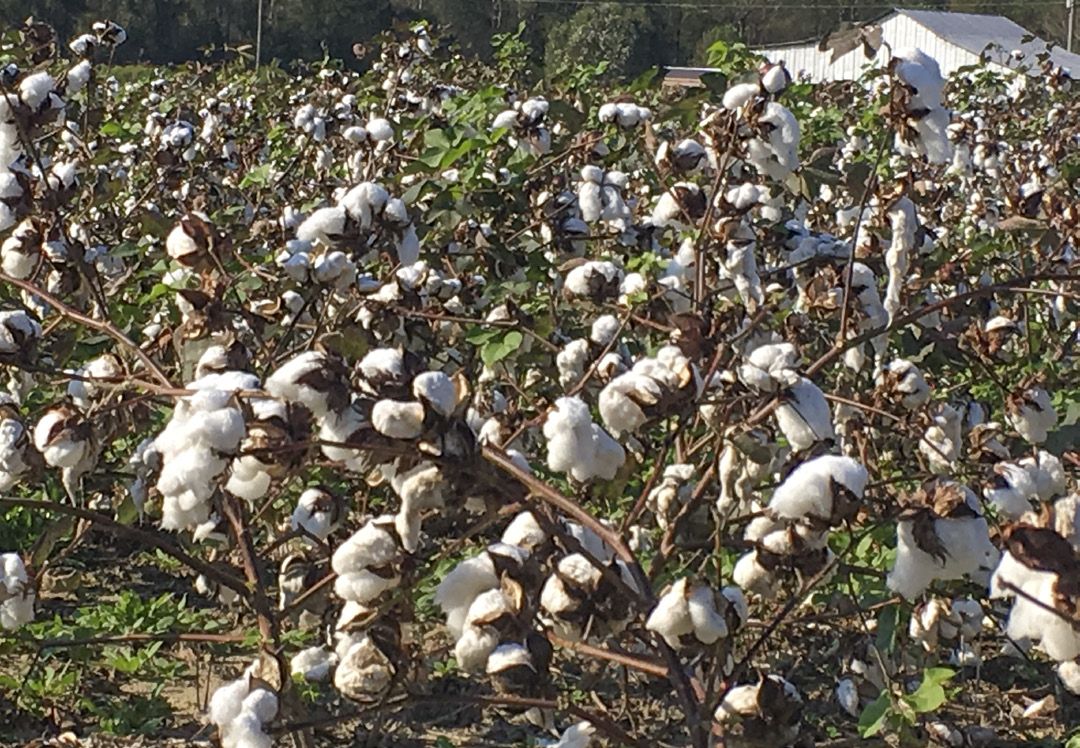
Chris Mackowski: “It wasn’t until I saw a full field of cotton on a battlefield for the first time— at Bentonville—that cotton’s central role as an engine of the war really dawned on me.” (Chris Mackowski)
of officers from both Eastern and Western Theaters served under each commander. Have you ever opened a high school yearbook and seen a former classmate’s photo, and it made you wonder, “Whatever happened to so-and-so?” The answer is probably: “They ended up at Bentonville.” Such was the battle’s motley assemblage of Civil War names we all know: William T. Sherman, Joseph E. Johnston, Henry Slocum, William Hardee, Oliver Otis Howard, Braxton Bragg, John Logan, D.H. Hill, Robert Hoke, Wade Hampton, Judson Kilpatrick, Joseph Mower, Lafayette McLaws, Evander Law… . Uncle Billy. Old Joe. Old Reliable. Old Prayerbook. Kill Cavalry. The Swamp Lizard. Some had fallen from grace and sought redemption. Some were temperamental cusses who fought as much with each other as with the other army. They all seem a little out of place except maybe for Sherman, the inexorable force rolling onward. Everyone’s out-of-placeness is perhaps best exemplified by a statue of Johnston that stands literally out of place, on private land not far from the visitor center, a spot he never even got close to during the battle. (It reminds me of the out-of-place statue of Lee at Antietam.) The Johnston statues points at some indistinct spot in the distance. He might as well be pointing the way to the best spot for bus parking, although we don’t actually stop. I can’t tell if the park staff is a little embarrassed to have Joe Johnston on the edge of the state park property. Constructed by the Sons of Confederate Veterans, the small park around Johnston is well maintained and attractive, even if in an odd place. Even odder, though, is a monument on an adjacent plot featuring a horse’s head, as though some Civil War Godfather has made Joe Johnston an offer Johnston couldn’t refuse. Another battlefield highlight is the newly opened Bull Pen, where Federals fought in one direction and then jumped to the other side of their own works to fight off a Confederate threat to their immediate rear. Today, a new trail cuts through an old tree farm to provide access to the Bull Pen. Mosquitoes as large as Super Balls wait to swarm the unprepared history hiker, but the wonder of the site is worth it. “The Bull Pen at Bentonville should be as famous as the Sunken Road at Antietam, the Hornet’s Nest at Shiloh, or Gettysburg’s Little Round Top,” my ECW colleague Bert Dunkerly has said—a comment that gives different resonance to Derreck’s earlier comment. Bentonville might not have a Little Round Top, but it has its own distinctive landmarks, its own incredible stories. At Bentonville, the familiar seems different. You could spend the day unpacking what you think you know and what you think you see. For a battle that took place with just weeks left in the war, it has a lot of surprising things to teach. Fortunately for all of us, the staff there—the wonderful staff there—is excited to share its story.
Since 1978, we have collected or handled over 80 of the “Big Six” Confederate Notes to include nearly 10% of all known surviving Montgomery Notes.
Eliza Frances Andrews (1840–1931) received a strong education and was a successful writer and educator. Her War-Time Journal of a Georgia Girl surely ranks among the most observant and intelligent wartime memoirs by a Southern woman. Edited with commentary by Stephen Davis, I Thank the Lord I Am Not a Yankee includes selections of her wartime and postwar journals which are most expressive of her Confederate patriotism and Southern pride. February 2023 • $35.00, hardback
“I Thank the Lord I Am Not a Yankee…”
Stephen Davis is author of ten books on the Civil War, most of which treat the Atlanta Campaign. His two recent volumes on Confederate General John Bell Hood have won several prizes, including the Fletcher Pratt Award of the New York CWRT.
Everything needed by the Living Historian! Our Clothing is 100% American Made!
WALLACE MARKERT