
Critic’s Corner Reading Mary Boykin Chestnut
By Stephen Davis · Originally published January-February 2025 · pp. 54–57
Critic’s o r Reading n Mary Boykin Chesnut e r By Stephen Davis
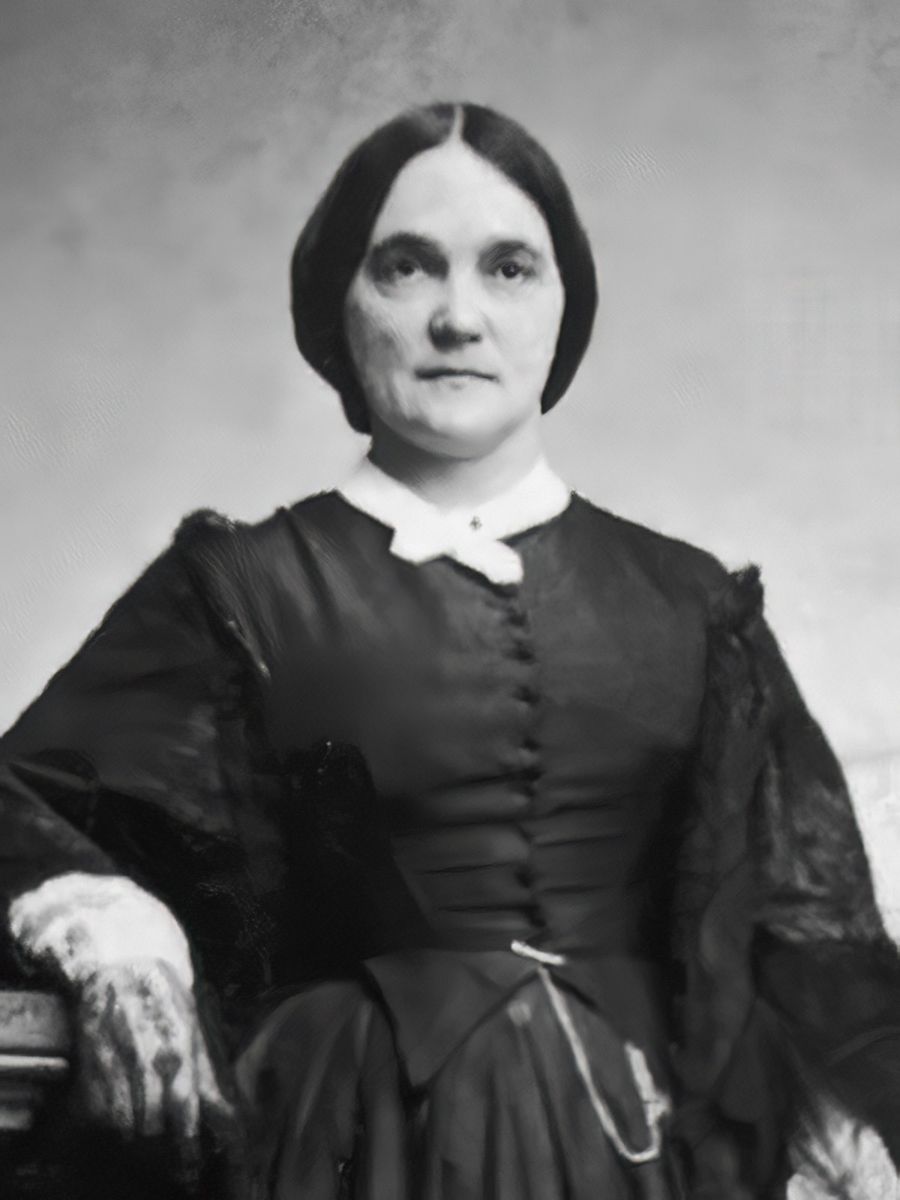
…will never be the same. Like you, probably, I grew up reading Mrs. Chesnut’s Diary from Dixie decades ago in a paperback reprint of the 1949 edition, as prepared by Ben Ames Williams.1 In the past several decades, though, we have learned that MBC— as she sometimes signed herself—thoroughly revised her work, originally a wartime journal, during the 1880s for publication (which did not happen in her lifetime). In the process, both her revisions and our reading about them, we have been forced to reassess Chesnut’s “diary.” Not so much a daily record of events, though bearing entries from Feb. 18, 1861 to July 26, 1865, the work is a delightful amalgam of wit, observation and astute journalism that makes it today one of the most important sources in Confederate letters. Indeed, I would place Mary Boykin Chesnut’s writing at the very top of that tier, along with the diaries of Edmund Ruffin and John Beauchamp Jones.2 The author was born on March 31, 1823, at her family’s plantation in middle South Carolina. Educated in nearby Camden as well as at a Charleston boarding school, Mary was wed in April 1840 to James Chesnut, a prominent lawyer who took his bride to live in his country home near Camden. James was elected to the Senate in 1858, but resigned within days of Lincoln’s election. Her husband was a delegate to the Confederate convention in Montgomery, where Mary decided to keep a daily journal of events. An aide to General Beauregard, James traveled with Mary to Charleston, where she heard the roar of the Sumter bombardment. (Chesnut received a colonelcy and assignment as President Davis’ aide; promotion to brigadier followed in January 1864.) In the last year of the conflict, she continued to record all she saw and heard as her beloved Confederacy collapsed. By then she had composed at least a dozen handwritten volumes.
The end of the war left the Chesnuts with land in Carolina, but little money. Mary thought of writing for income. She drafted several novels that went unpublished, as well as an autobiographical piece, 1877-78. During 1875-76 she began editing her war journal with an aim for publication. Mary soon laid this work aside, but resumed it in 1881. Over the next three years, she wrote more than 5,000 manuscript pages. Mary then entrusted her journals, almost fifty copybooks, to Isabella Martin of Columbia, a longtime friend. Though she had written a short story that was published in a Charleston newspaper, and thought of composing a biography of her husband, Mrs. Chesnut was largely an unpublished author when she died on Nov. 22, 1886, still hoping for eventual publication of her journal.3 For almost two decades, Miss Martin kept the Chesnut journals in her bedroom. Then, in 1904, she met a writer, Myrta Lockett Avary, who insisted that they be published. Mrs. Avary had written a war memoir and had secured its publication by D. Appleton of New York. It was therefore to Appleton that Martin and Avary turned for printing of their book, to which they gave the working title of With the Heroes of Dixie. Martin wrote an introduction and corrected a typescript for the work, which contained less than half of Mary’s writing, and which she edited (“with a free and heavy hand,” in the words of Mary’s biographer Elisabeth Muhlenfeld). As publicity, Appleton arranged a five-part serialization in the Saturday Evening Post. It was the Post that bestowed the title of A Diary from Dixie. Excerpts ran in the magazine’s consecutive issues, January 28 to Feb. 25, 1905. Meanwhile Appleton’s editors prepared Chesnut’s text. Although Mary had never used such a name, Appleton editors adopted the Post’s title, A Diary from Dixie. Chief editor was Francis W. Halsey, and it was he who divided the text into chapters, wrote the footnotes, and even rewrote the introduction. In this guise, A Diary from Dixie appeared from Appleton in March 1905.4 Reviews were favorable. War memoirs by Southern women were already being published; some readers hailed Chesnut’s book as the best of its kind. A New York writer, Ben Ames Williams, used it as background for his novel House Divided (1947). When he learned that the Chesnut journal had been severely cut but that the manuscript still existed, Williams secured from heirs permission to prepare a more thorough edition. This new “Ben Ames Williams edition” of A Diary from Dixie appeared in 1949, with much more text than its predecessor of 1905. Still, Williams deleted more than 100,000 words from the Chesnut manuscript. More than that, he changed some wording, updated grammar and punctuation, and (as Dr. Muhlenfeld discerns) “silently added words, even sentences of his own,” without informing the reader. For this reason, one scholar has termed Williams’ meddling “one of the most extravagant escapades of editorial overreaching.”5
A Diary From Dixie by Mary Boykin Chesnut. Published by D. Appleton and Company, New York, 1905. First edition.
With numerous editors’ fingerprints all over A Diary from Dixie, let’s not forget that the author herself was constantly refashioning her stuff. Muhlenfeld astutely discerns six ways in which, during 1881-84, Mrs. Chesnut revised her journals with an aim for publication: 1. turning her thoughts into others’ words; 2. rearranging personal incidents for dramatic effect; 3. cutting out some materials, adding others; 4. supplying anecdotes for comic relief; 5. infusing “essaylike material”; and 6. introducing new people to her narrative.6 Scholars are able to make these distinctions on the basis of the wartime journals that exist today, reposing among the Chesnut Papers in the South Caroliniana Library of the University of South Carolina in Columbia. C. Vann Woodward, then retired from teaching at Yale, and Elisabeth Muhlenfeld, professor at Florida State, collaborated to edit the wartime journals and publish them as The Private Mary Chesnut: The Unpublished Civil War Diaries (1984).7
Because “no part of the diary Mary Chesnut kept during the years 1862, 1863, and 1864 has survived” (218), the editors are able to bring forth only her text written from Feb. 18, 1861 to Dec. 8, 1861, and from late January to Feb. 23, 1865. Though her writing is thus truncated, Woodward and Muhlenfeld still declare Mary Boykin Chesnut to be “the preeminent writer of the Confederacy” (xviii). Some may argue with that, distinguishing between writer (e.g., William Gilmore Simms) and diarist, and emphasizing scope of work (thinking of John Beauchamp Jones’ voluminous diary, now that it has been edited by the late James I. Robertson). Besides, one must acknowledge that a lot of Mary Chesnut’s diary-writing is just private observation of the people around her—often caustic, sometimes catty (e.g., “Mrs. Davis was rude to me” [July 4, 1861, p. 90]). Rather than a record of the Confederate struggle, historian C. Vann Woodward advises that the Chesnut journal be appreciated for “the life and reality with which it endows people and events and with which it evokes the chaos and complexity of a society at war.” In other words, as many times as we think we have read Mary Boykin Chesnut’s A Diary from Dixie, maybe it’s time to approach the work anew.…which is what I did, using the text presented in Woodward, ed., Mary Chesnut’s Civil War.8 Much of her diary-entering concerns her daily coming and going, dining and entertaining/being entertained. And sometimes, frankly, it’s just boring. On June 16, 1862, when she gave just two lines to the battle of Secessionville, fought near Charleston, she expounds upon the appearance of Mrs. Alfred Huger (“She was proud of her exquisite figure,” 388). Yet the author occasionally sees the sectional conflict in the big picture. “If we could only separate,” she wishes, hoping the South and North might part without “a horrid fight for divorce” (25). The war itself she views through Southern eyes (she admits to being “a rebel born,” 4). Mary records hearing her friends declare, “God is on our side. Of course He hates the Yankees” (48). Seeing her friend Louisa Wigfall trying to break her children from saying “damn Yankees,” she notes that one piped up, “Well, mama, is not that their name?” (109). She wonders why, in the spring of ’61, the Confederate government did not send cotton off to England—“could be a gold mine to us” (62). She frets that Southern troops did not pursue the beaten Yankees from Manassas. “Why did we not follow them?” she asks (113). Dining with Jefferson and Varina Davis, hobnobbing with Southern political leaders, and catching much gossip from her husband, Mary Chesnut was very much in a position to pass judgement on Confederate officials’ management of things—which she often found wanting. “In the meantime,” she wrote as early as August 1861, “we seem to be lying on our oars, debating in Congress, and the enterprising Yankees are doubling, quadrupling their arms at their leisure” (130). She especially disliked all the carping against the President, particularly in Southern newspapers. “There must be an opposition in a free country,” she admitted, “but it is very uncomfortable” (141). Spending much of the war in Richmond (a house floor leased at Clay and 12th
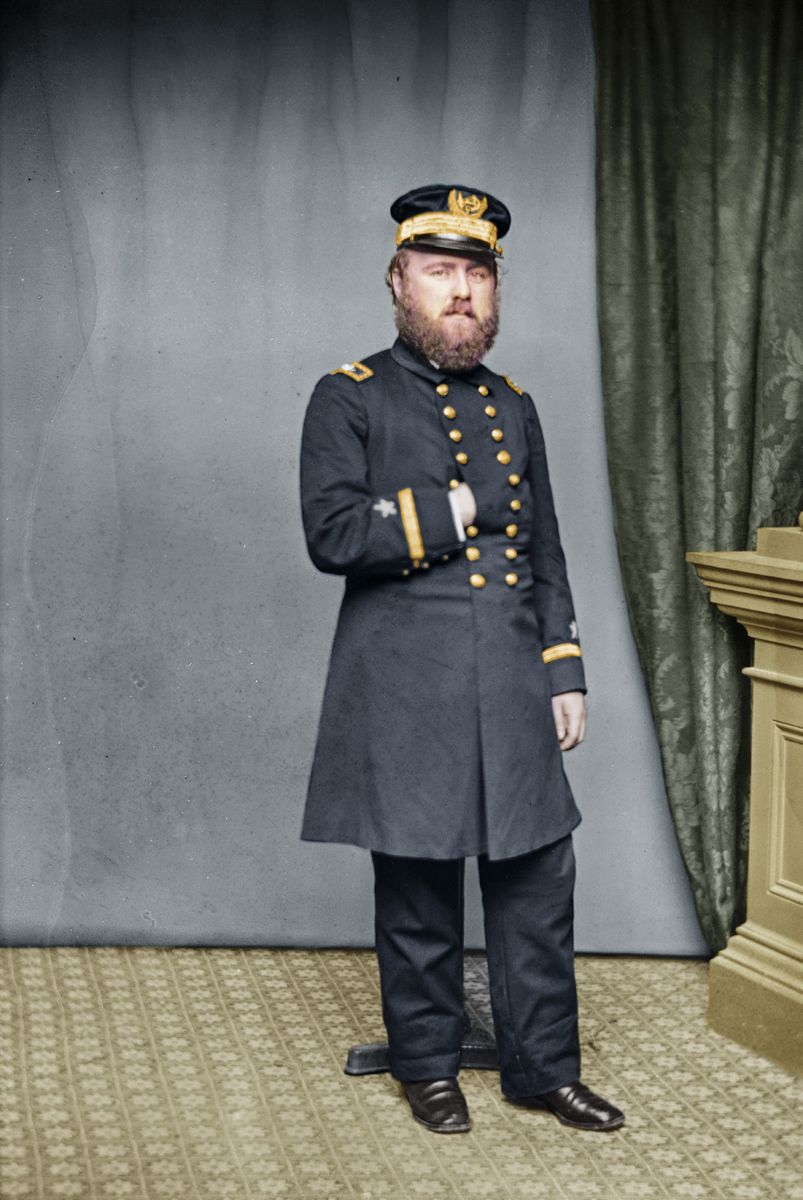
From page 53 U.S. Capt. Jonathan M. Wainwright maneuvered the Lane’s bow from the wharf to the channel, steamed up and charged towards the cottonclads. The Lane fired three shells and a cannonball into the City’s engine room, messroom, and pantry. C.S. Captain A.R. Weir, 1st Texas Heavy Artillery, fired the City’s 32-pounder rifle. His second shot was close to Lane’s magazine, “knocking a hole in her big enough for a man to crawl through.” Firing the third shot, the gun exploded, killing Weir and wounding others. The Neptune rammed the Lane. The Lane blew a hole in the cottonclad’s hull. As the Neptune sank into eightfeet water, rapid fire from both her howitzers and the sharpshooters on board continued to target the Lane. Taking advantage of the distraction, the City rammed the Lane, locking the two together. C.S. Col. Tom Green’s, 5th Texas Cavalry, armed with Enfield rifles, poured fire onto the Lane before boarding. The Owasco rushed to the Lane’s aid and was greeted with gunfire which was returned. Thinking quickly, C.S. Maj. Leon Smith, commander of the naval attack, sent a demand for surrender under a flag of truce.
Renshaw preferred to scuttle the Westfield. The crew were evacuated, a barrel of turpentine lowered into the magazine, Renshaw lit a slow match and descended into the gig. “… there was a flash of blue smoke and a fearful explosion. The shells of the magazine, rising in the air, burst far up. … for a radius of four or five hundred feet there was a shower of fragments which sounded like falling rain. Westfield was seen to part or burst out forward … but the machinery had not (yet) been destroyed, as the singing of the steam was distinctly heard after the explosion.” When the smoke cleared, 13 men and their boat had disappeared. U.S. Lt. Cmdr. Richard L. Law was now senior in command. Burrell’s men were being herded away at gunpoint. As one, the Lane and City were moved to shore which Law considered in violation of the truce. The Confederates were stunned to see the Federal vessels depart with white flags still flying. However, Magruder successfully seized Galveston and captured supplies. The Confederacy would hold the island for the rest of the war. Albert Lea had watched the battle from the town’s highest church steeple. On board the Lane he learned of Wainwright’s death and that his son was mortally shot in the abdomen and side. After arranging for care ashore, Lea cradled his son’s head, saying, “Edward, this is your father.” “Yes, father, I know you,” Edward responded, “but I cannot move.” Upon being advised that his death was near and asked whether he wished any special disposition made of his body, Edward replied, almost with his last breath, “No, my father is here.” The next day, Wainwright and Edward would be buried together in a common grave. Major Lea officiated the burial service. •
•
•
•
Sources:
Bosson, Charles P. History of the Forty-second Regiment Infantry, Massachusetts Volunteers, 1862, 1863, 1864. Boston, MA: Mills, Knight & Co. 1886 Official Records Of The Union And Confederate Navies In The War Of Rebellion, (Washington: US Government Printing Office, 1927) series I, 19:464-476 J. Thomas Schraf, History of the Confederate States Navy From Its Organization To The Surrender Of Its Last Vessel: Rogers & Sherwood; San Francisco, A. L. Bancroft & co., 1887, 507 - 508 Block, W. T. (1993) “A Towering East Texas Pioneer: A Biographical Sketch of Colonel Albert Miller Lea,” East Texas Historical Journal: Vol. 31: Iss. 2, Article 7.
Stephanie Hagiwara is the editor for Civil War in Color.com and Civil War in 3D.com. She also writes a column for History in Full Color.com that covers stories of photographs of historical interest from the 1850’s to the present. Her articles can be found on Facebook, Tumblr and Pinterest.