Charleston Free Badge
By Cliff Krainik · Originally published January-February 2025 · pp. 8–9
11th Known
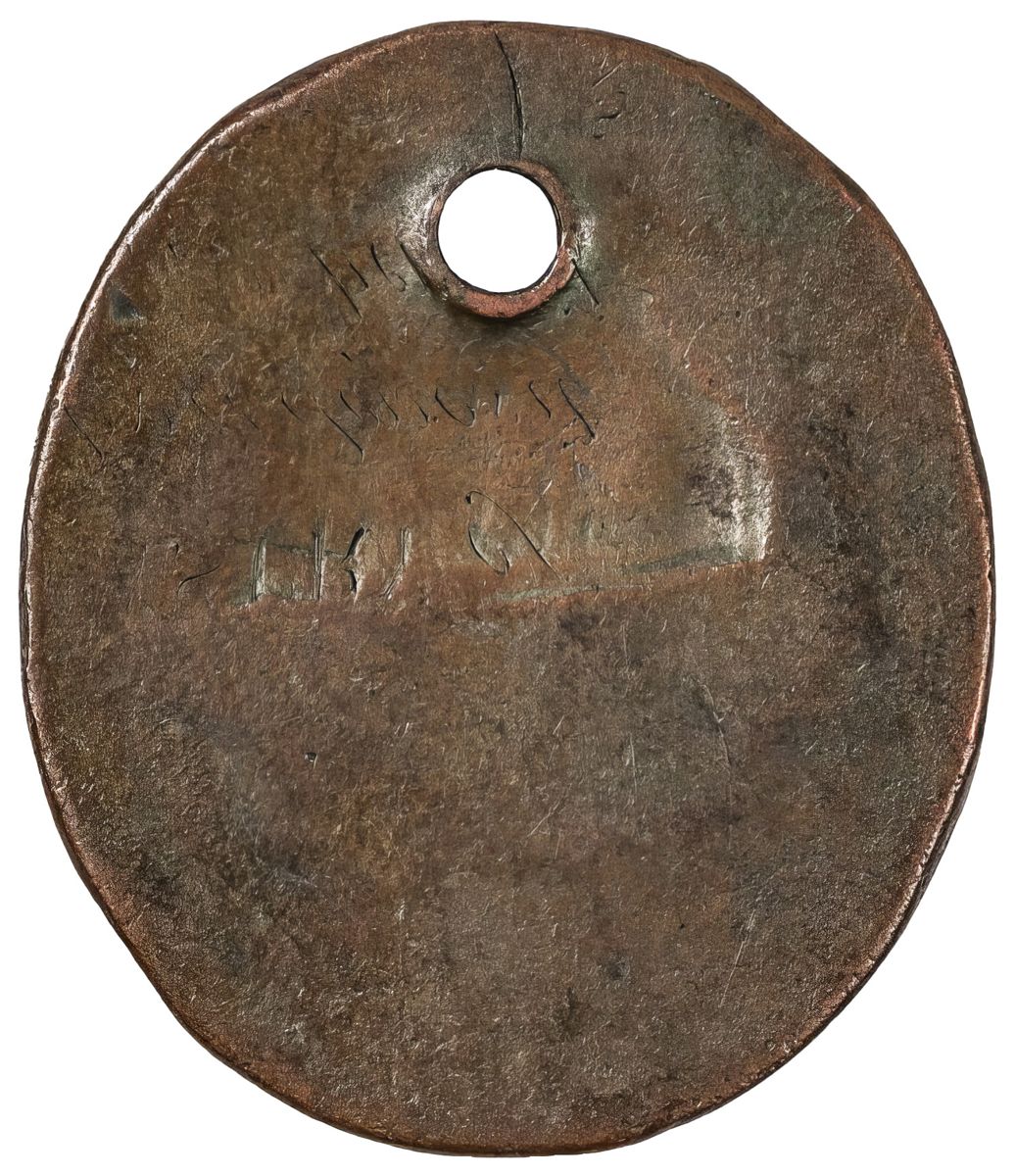
Charleston Free Badge sold at Auction By Cliff Krainik (Fleischer’s Auctions)
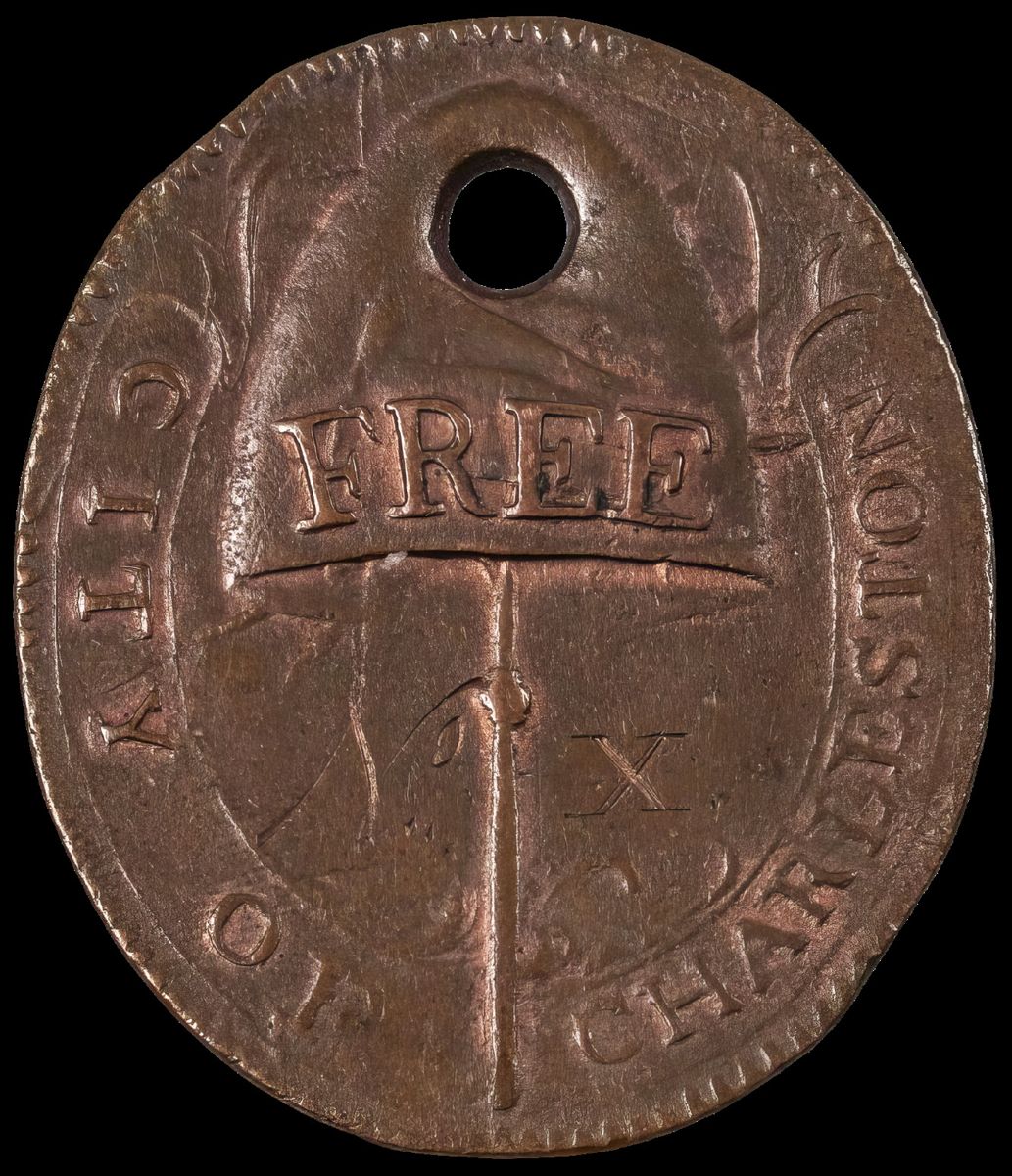
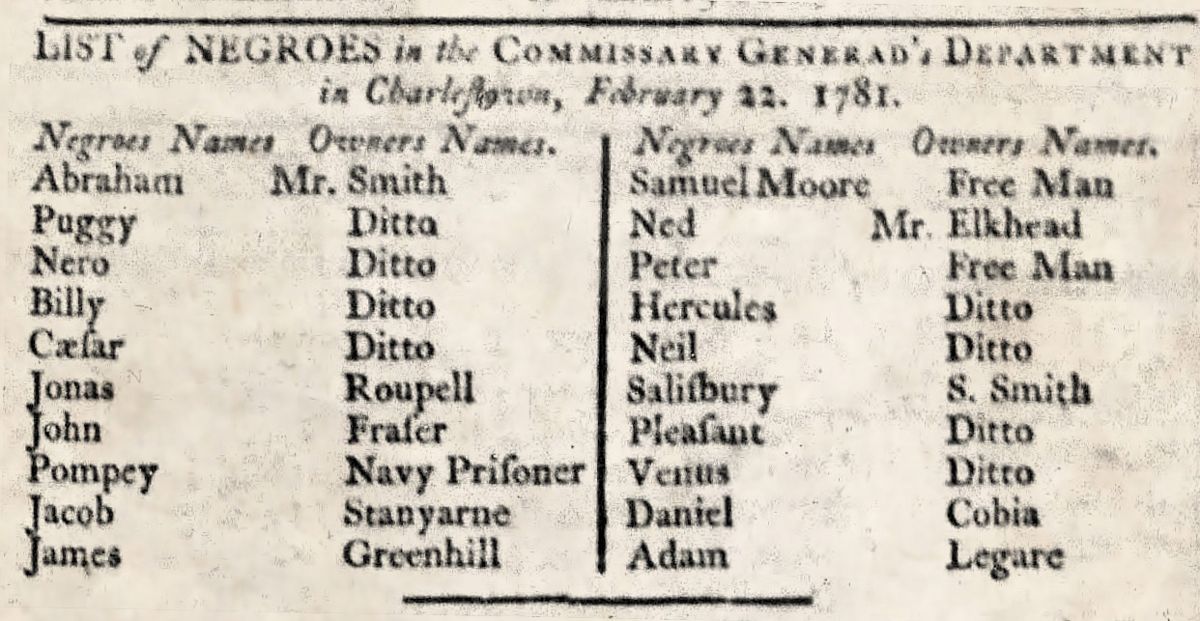
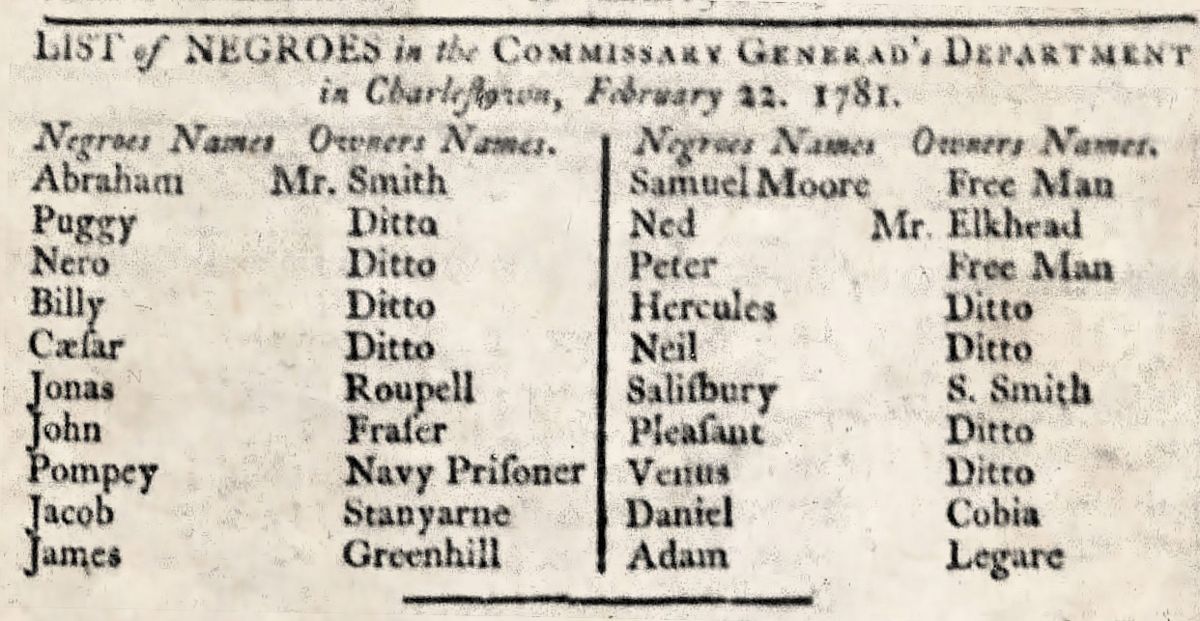
By 1790 Charleston was the fourth largest city in America, with a population and in excess of 16,000 inhabitants. Of these, 7,684 were enslaved and 586 were “free persons of color.” The latter constituted nearly 3.6% of the city’s population. Cities offered greater opportunities to free blacks, explaining why most made their homes and their living in more metropolitan areas. In South Carolina, that meant Charleston and its immediate surroundings. Although laws codifying the behavior and movements of slaves in South Carolina had formally been in place since the Slave Code of 1740, when the city of Charleston was incorporated in 1783, Two “Free Man” listed in the Commissary General’s the administrators felt it necessary to further Department in Charleston, Feb. 22, 1781. (The Royal Gazette, regulate the presence of slaves and free blacks. Charleston, S.C., Wed., March 21, 1781, page 3.) The 12th law enacted by the newly formed city government strictly limited the way owners could hire out their slaves and specified licensing were made of copper and one of silver; of those, nine have fees for various types of work. Tickets or badges for one numerical designations; one is marked with the letter “U.” year’s duration were to be issued to hired out slaves, The appearance of an 11th Free Badge on Adam Fleischer’s and these could be renewed at the end of every year. In internet auction site caused a great deal of interest in the some cases, the intent was to limit competition with white museum and private collecting sectors. The Free Badge at tradesmen in the same field, such as mechanics and other auction was the property of the noted political memorabilia skilled laborers. Thus, the Charleston slave hire system was collector, J. Doyle Dewitt. Mr. DeWitt is best remembered born. for his monographs on American political history, and Another concern of Charleston’s founders was identifying for his extraordinary collection of American presidential the few free blacks. The 1783 ordinance also contained the campaign memorabilia, containing more than 25,000 requirement that every “free negro, mulatto, or mestizo” pieces, which he donated to the University of Hartford. The above age fifteen, who resided within the city of Charleston, Free Badge was one item that was deaccessioned from the register with the city clerk and provide the number of people University of Hartford collection. in their family and their places of residence. In addition, The DeWitt Free Badge has several interesting features. each free black older than fifteen was compelled to obtain a The badge is in superb condition; it is a non-dug example. badge from the city and required “to wear it suspended by Enigmatically, it is the second Free Badge to appear with string or ribbon, and exposed to view on his breast.” a letter rather than a numerical designation. The badge at The cost of the badge was established at five shillings, auction is marked with the letter “X.” Similarly, the other approximately $40 in today’s money. The penalty for failure letter-marked Free Badge—letter “U,” is also a non-dug to register or obtain and display the Free Badge was severe. example. Both badges share another intriguing feature. A fine of 3 pounds ($480 in today’s currency) was imposed, Each was produced on a repurposed engraved copper and if not paid within 10 days, the offender could be taken plate. The “U” badge was made from an engraving plate to the city’s workhouse and committed to hard labor for up for scrip issued by the city of Charleston in 1786. The “X” to 30 days. badge contains several fragmented engraved words used Free Badges were issued by the city of Charleston from for printing. All these factors propelled bidding for the 1783 to 1786, when the policy was discontinued. Unlike 11th known Free Badge to the astounding auction price of the Charleston Slave Hire badges issued from 1800 to $133,650. The Free Badge was purchased by a presently 1865 numbering in the tens of thousands, the Free Badge undisclosed institution. was issued in limited numbers. The highest marked serial numbered badge located to date is 320 and consequently, For further information on this subject please see “Charleston the existence of Free Badges is limited. None of the Free Free Badges: Symbols of Freedom” by Cliff Krainik in North Badges are dated. South Trader’s Civil War, Vol. 42, No. 4, 2021. Prior to the discovery of a Free Badge, serial Number 147, in Mount Pleasant, S.C., by Ralph Fields, there were only nine other known examples. Of the ten extant examples, six Free Badges are held in private hands while four are housed in institutions; American Numismatic Society, Cliff Krainik, from Warrenton, Virginia, is an N.Y.C. Badge 33; Charleston Museum, Badge 156; Avery independent historian, appraiser, and author. He maintains Research Center, Charleston, 197; and the International an avid interest in Charleston Slave Hire Badges and African American Museum, 259. Ten surviving badges Charleston Free Badges.