
The Lawbook Raid
By Stephanie Hagiwara · Originally published September-October 2024 · pp. 56–59
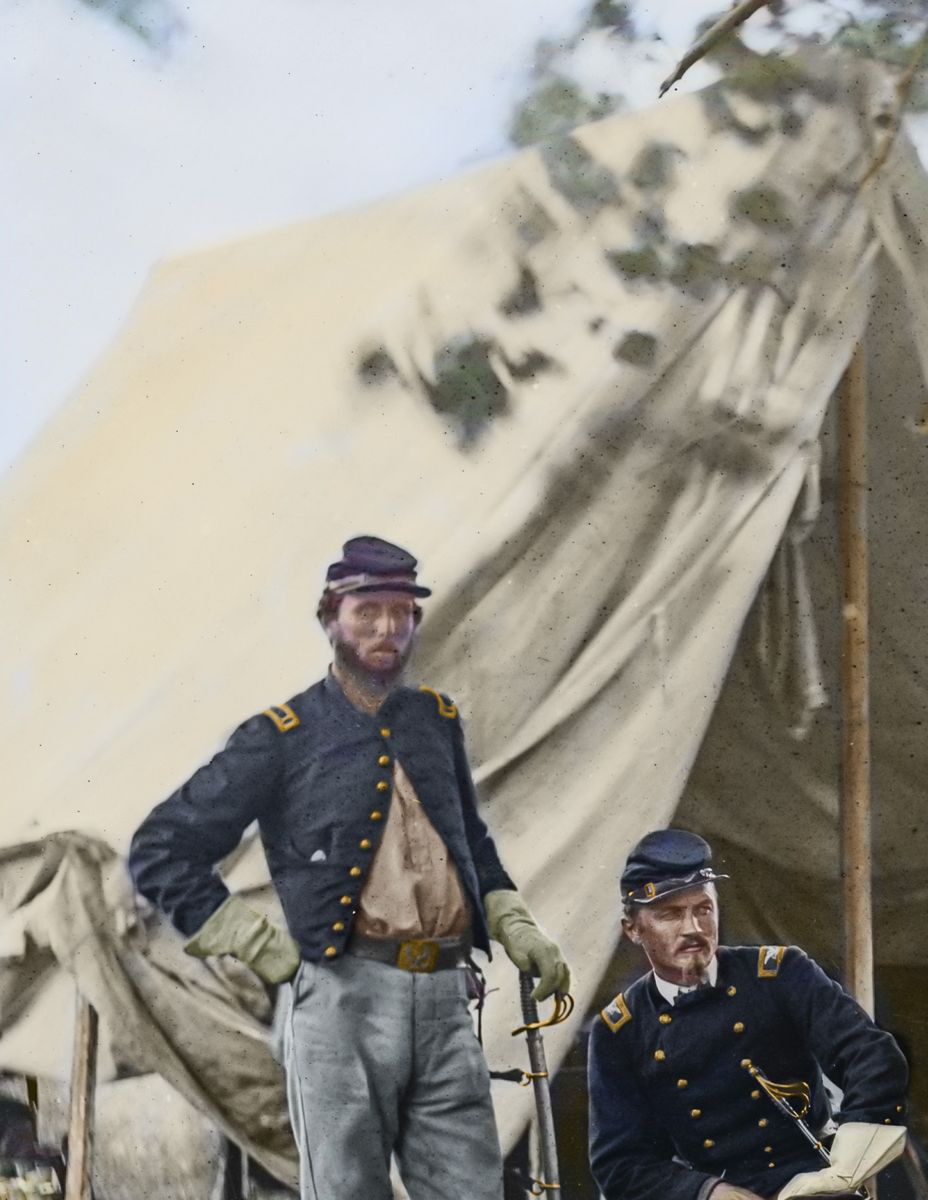
On June 20, 1863, the newly formed state of West Virginia was admitted to the United States. The northern portion of the new state mostly favored the Union. Conversely, about 40% of the state’s population supported the Confederacy. Pro-Confederacy guerrillas roamed the state. At least one man joined the Federal army because “he would prefer to die during battle over being killed by a secessionist in his own home.” The U.S. War Department decided that having infantry units scattered across the mountains to combat enemy cavalry action was ineffective. The infantry needed to be mounted. On May 4th, 1863, Gen. William W. Averell assumed command of the Fourth Separate Brigade, Dept. of W.Va. West Point graduate Averell was a superb horseman and an “excellent drillmaster.” Under Averell’s tutelage, the 3rd Penn. Cav. became known as “one of the best-trained and best-disciplined” volunteer cavalry regiments.
“In the encounter between the
8th and the [Rebel] 22nd, there was something terrible, for it was really a conflict between brothers, cousins, and neighbor boys, for these two regiments were made up in the same section of country in
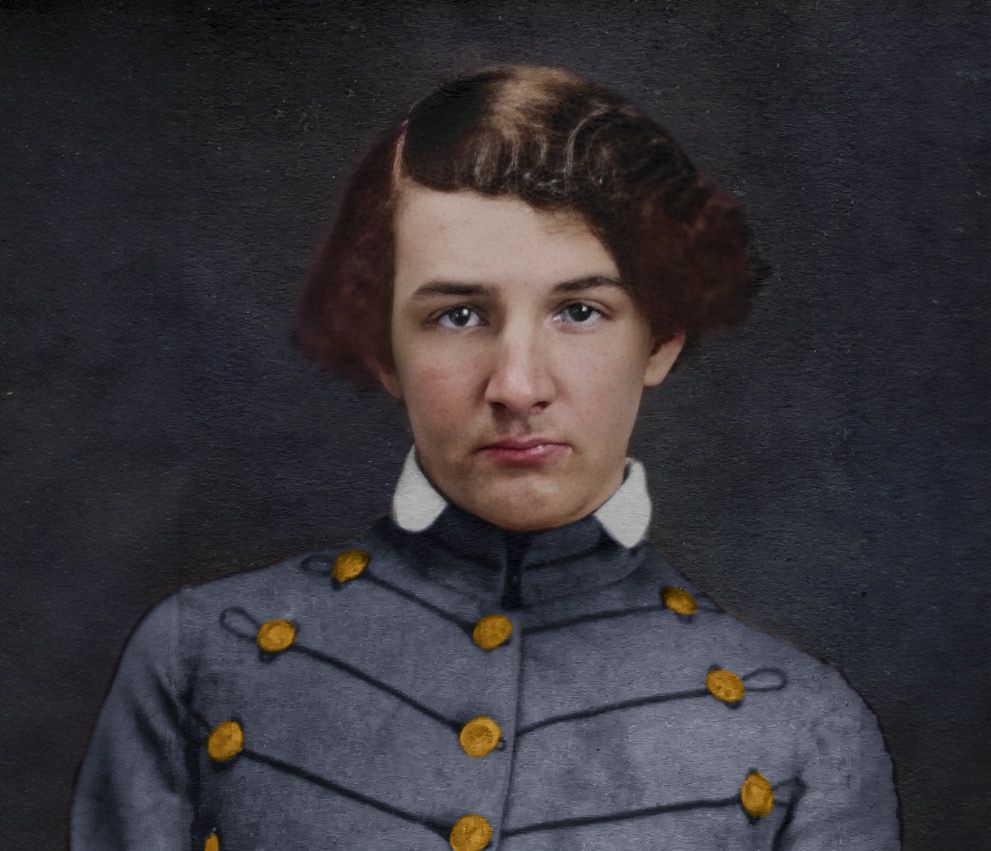
West Virginia.”
– U.S. Captain, 8th West Virginia As he acquired equipment, Averell focused on establishing a training camp and schooling his officers on cavalry tactics. The 14th Penn. Cav. was Averell’s only full cavalry regiment. It had been established a year earlier by one of the youngest regimental commanders in the Union Army, future Medal of Honor Awardee, 20-year-old Col. James M. Schoonmaker. His commission had been issued by Pennsylvania Governor Andrew Curtain. On August 5, 1863, Averell and his 1,400 men marched 60 miles in two days from Winchester, Va., to Moorefield, Va. On August 9, the men reached Petersburg, W.Va. where Averell waited to receive horseshoes, nails, clothing, and ammunition. On August 12, Gen. Benjamin F. Kelley, commander, Department of West Virginia, instructed Averell to deploy with three objectives. Averell was to destroy Confederate saltpeter and powder works as he passed through Pendleton County. He was to attack C.S. Col. William L.
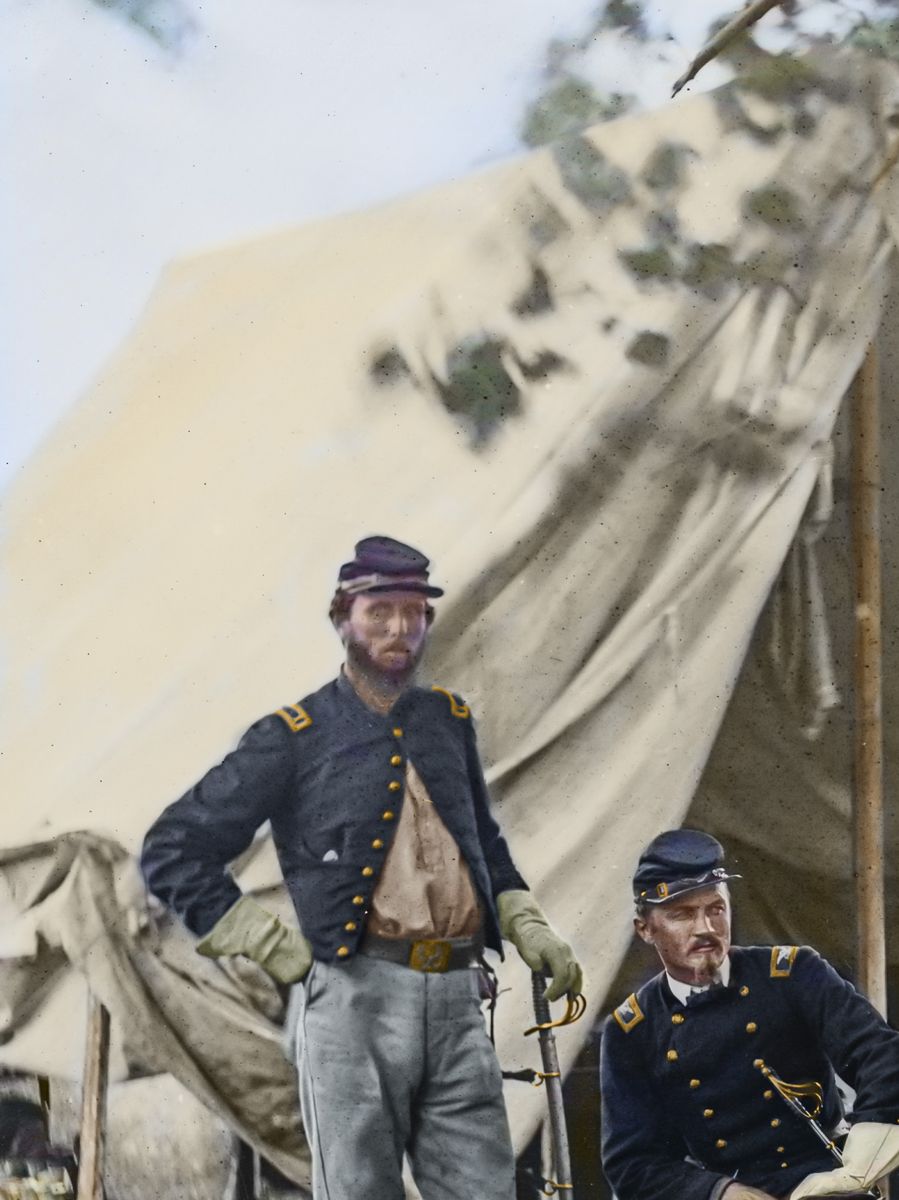
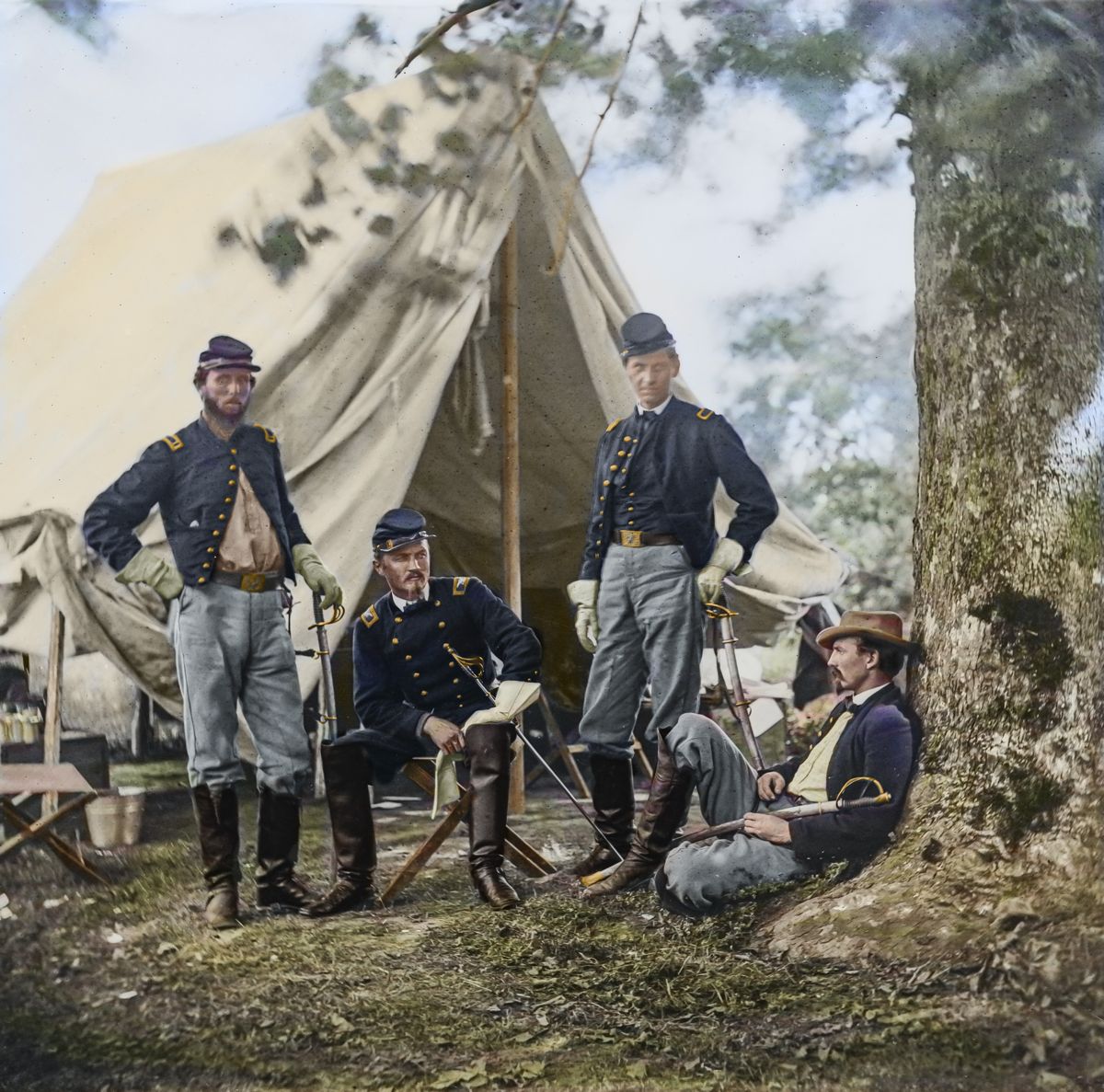
“Mudwall” Jackson, 19th Va. Cav., and drive them out of Pocahontas County, W.Va. Finally, Averell was to eliminate the enemy in Lewisburg, W.Va., and seize West Virginia’s portion of the division of goods, in the law books of the Supreme Court. By an 1834 statute, Virginia had a Supreme Court in the capital of Richmond and Lewisburg, Virginia, “for the convenience of those living west of the Alleghenies.” On August 19, Averell, with two squadrons, destroyed the saltpeter works. Day and night potshots were aimed at the Federals. “Sometimes the enemy was so strong and aggressive that the whole command was deployed to resist his assaults,” wrote Pvt. William Slease, 14th Penn. Cav. The next day, August 20, Averell entered Monterey, Va., to rescue one of his scouts and caused the “terror-stricken” scattering of a quarterly court martial board. By one day, Averell missed capturing two Confederate generals plotting to attack him. On August 22, scouts reported that a ravine full of Jackson’s Rebels waited on the road to Huntersville, W.Va. Averell sent Gibson’s Battalion in a “false advance” down the road while the bulk of his force reached Huntersville by an alternate route. Realizing that he had been outflanked, Jackson retreated, driven out of Pocahontas County and abandoning the long-established Camp Northwest and its supplies to the Federals. Confederate intelligence sources speculated that Averell was leading a large force intent on attacking the Virginia and Tennessee Railroad, at Staunton, Va. Staunton was a manufacturing center. The railroad transported lead, iron, niter, and coal from Virginia’s mines. To protect the town, the Home Guard was called out. “Men of over 60, with boys of 12 and 15, took their places in the ranks and shouldered shot-gun or rifle with alacrity.” C.S. Col. George S. Patton, Echols Brigade, was ordered to intercept Averell with his 2,000 men. Patton was the grandson of Revolutionary War hero Gen. Hugh Mercer and grandfather of WWII hero Gen. George S. Patton Jr. The well-liked colonel was a Virginia Military Institute graduate, civilian lawyer, and a social acquaintance of Averell. Patton had unknowingly been heading in the wrong direction. About 2 a.m., the brigade turned around and began a forced night march. The Confederates marched for 24 consecutive hours before reaching the intersection of the Kanawha Turnpike, James River, and Anthony’s Creek Road. Patton immediately formed a line across the road with Lt. Col. George Edgar, 26th Battalion Virginia Infantry. Edgar swiftly built a barricade as Cpt. Bernie Chapman’s, Company of Virginia Light Artillery, positioned their four guns on the high ground to the left. The August 26-27, 1863, Battle of White Sulphur Springs, W.Va., began about 4 a.m. as Averell’s advance approached from the narrow Rocky Gap gorge. High ground on either side of the road, meant Averell could only make a frontal assault. Averell hurried to set up Cpt. Chatham T. Ewing’s, Battery G, 1st W.Va. Light Artillery’s guns on the very steep higher ground to the right. The Rebels charged the center of the Federal line with fixed bayonets. The 14th Penn. drove them back wielding drawn sabers. For several hours, the four guns of each battery “were only a few hundred yards apart, and in full view; each was a target for the other, and for the space of several hours we exchanged shots as fast as it was possible to do… ,” recalled a Confederate gunner. About 4 p.m., Averell ordered a squadron of the 14th Penn. Cavalry to charge the Rebel barricade. The horsemen started with a whoop, drew sabers, and charged under “withering fire.” Three hundred Rebels ran. The Confederate reserves pushed back, driving the few Federal survivors away. Repeated efforts were made to drive off the Confederates. Lt. Col. Francis Tompson, 3rd W.Va., led seven unsuccessful charges. At dusk, Averell had the men who had spent the day holding the horses make a mounted charge on Edgar’s Battalion. Edgar’s men waited until the blue coats were within fifty feet before releasing a savage volley. After nine hours of fighting, both sides were short on ammunition. Both commanders ignored subordinates’ counsel to retreat. The men slept on their arms, 50 yards from their foe. Although Averell was hoping for reinforcements or a Confederate retreat, he planned for a hasty morning withdrawal. About 2 a.m., the Confederates received reinforcements and Patton replaced his worn down men with the fresh troops. On August 27, about 5 a.m., Averell tried to break through Patton’s lines. Out of ammunition, Averell ordered to pull pack about 10:30 a.m. He protected his rear by falling trees behind him. On August 31, Averell reached Beverly, W.Va. After 27 days and marching 150 miles, the expedition was over. The Confederate press praised Patton for protecting the railroad. The law books were evacuated to Richmond. Patton was recommended for promotion to brigadier general. Alas, he died in a later battle before the Confederate Senate could confirm his appointment. Sources: • •
•
Wittenberg, Eric J. The Battle of White Sulphur Springs: Averell Fails to Secure West Virginia: Arcadia Publishing Inc., 2011. United States, War Department. The War of the Rebellion: A Compilation of the Official Records of the Union and Confederate Armies. Washington: 1894 Vol 29, part 1, pp. 33-38, 53, 58. Milton, Lauren Michelle, “Civil neighbors to violent foes: guerrilla warfare in western Virginia during the Civil War” (2019). Theses, Dissertations and Capstones, p. 1196. https://mds.marshall.edu/etd/1196.
Stephanie Hagiwara is the editor for Civil War in Color.com and Civil War in 3D.com. She also writes a column for History in Full Color.com that covers stories of photographs of historical interest from the 1850’s to the present. Her articles can be found on Facebook, Tumblr and Pinterest.
The N-SSA is America’s oldest and largest Civil War shooting sports organization. Competitors shoot original or approved reproduction muskets, carbines and revolvers at breakable targets in a timed match. Some units even compete with cannons and mortars. Each team represents a specific Civil War regiment or unit and wears the uniform they wore over 160 years ago. Dedicated to preserving our history, period firearms competition and the camaraderie of team sports with friends and family, the N-SSA may be just right for you.
For more information visit us online at www.n-ssa.org.