
Sacred Places, Profane Scenes: Central Virginia’s Battlefield churches
By Tim Talbott · Originally published September-October 2024 · pp. 34–37
Sacred Places, Profane Scenes: Central Virginia’s Battlefield churches By Tim Talbott he names of churches that were on or near some Civil War’s battlefields are familiar to many students of the conflict. Places like Shiloh Church; Dunker Church at Antietam; Mt. Zion Church at Richmond, Ky.; St. James Church at Brandy Station; New Hope Church and Ezra Church in the Atlanta Campaign; Ware Bottom Church at Bermuda Hundred; and Namozine Church and Cumberland Church during the Appomattox Campaign, all were significant sites during the war. The frequent appearance of churches on the landscape speaks to the importance of religion to mid-nineteenth-century Americans.
T A Revival
During and following what historians refer to as the Second Great Awakening, a period of Protestant revival that lasted from the late-eighteenth century into the first half of the nineteenth century, much of the United States experienced a heightened interest in religious matters. Of particular concern to many Protestant worshipers was gaining assurance of their spiritual salvation. This tremendous upsurge resulted in greater church attendance in many places and, thus, a felt need to establish new congregations and construct buildings. Of particular popularity in Virginia during this era were Baptist and Methodist churches. With most of Virginia still rural, small churches sprang up across the countryside. Often attended by both free and enslaved members, but usually with segregated seating sections, church buildings were frequently located along well-traveled byways and at county crossroad intersections. Churches chose locations that helped facilitate members’ regular attendance and attract new worshipers. Due to their chosen locations, many churches ended up in the paths of the contending armies and witnessed unspeakable acts of brutality as soldiers fought and maneuvered for strategic routes of travel. In the battles’ aftermath, church buildings often ended up serving as impromptu field hospitals. As one post-war traveler noted after visiting the battered Wilderness Church: “Red Mars [the god of war] has little respect for the temples of the Prince of Peace.” The following are five examples of central Virginia church buildings associated with the battles of Fredericksburg, Chancellorsville, Mine Run, the Wilderness, and Spotsylvania Court House. These structures ended up either engulfed in the fighting or became significant sites of military operations. Some still stand much as they were at the time fighting raged around them over 160 years ago; others have been added on to or replaced with more modern buildings on their wartime locations.
“IN THE LECTURE ROOM OF THE BAPTIST CHURCH EIGHT O P E R AT I N G TA B L E S W E R E I N F U L L B L A S T , T H E F L O O R WA S D E N S E LY PAC K E D W I T H MEN WHOSE LIMBS WERE CRUSHED, F R AC T U R E D AN D T O R N . LY I N G T H E R E IN DEEP POOLS OF B L O O D , T H E Y WA I T E D VERY PAT I E N T LY …”
Wilderness Church
Fredericksburg
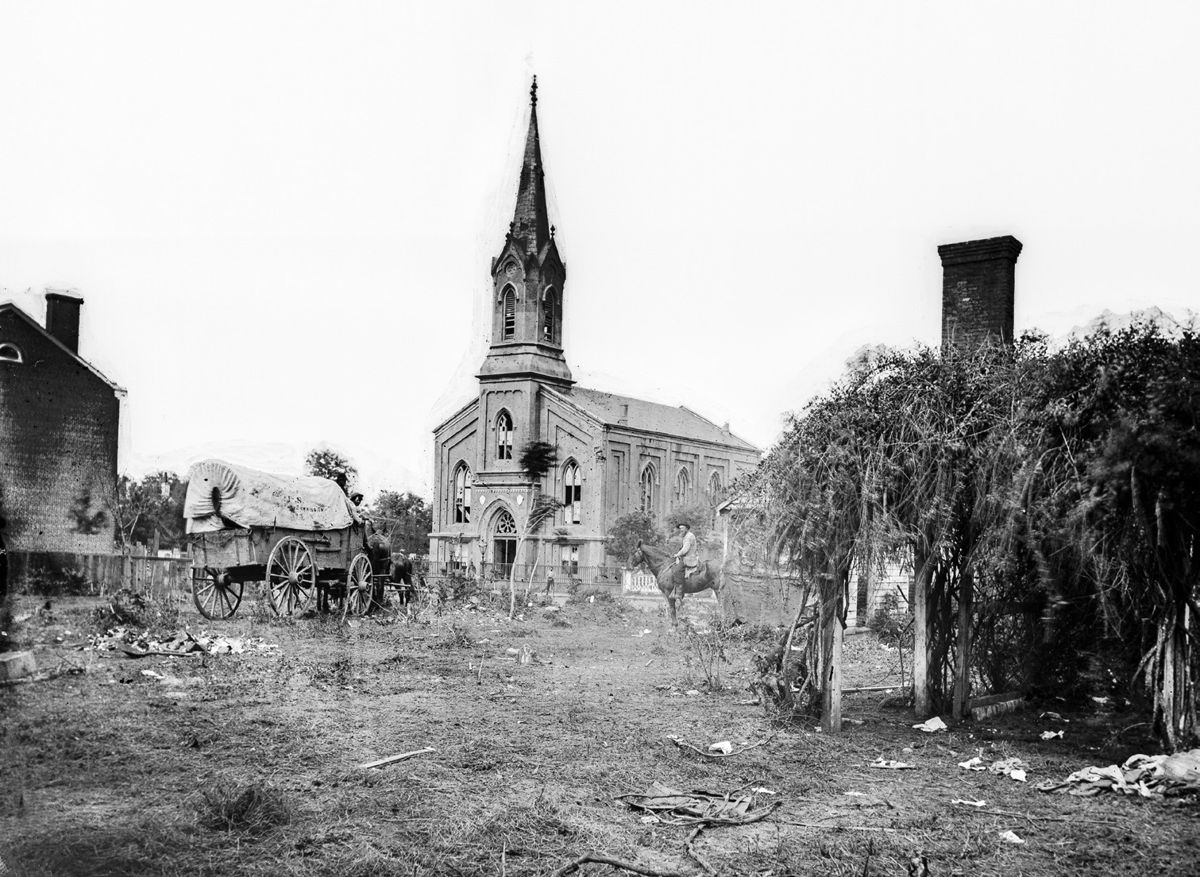
Several church buildings in Fredericksburg suffered damage from both Union and Confederate shelling during the fighting of December 11-14, 1862, and to a lesser extent on May 3, 1863. Caught in the crossfire, virtually from the beginning to end of the battle, the First Baptist Church on Princess Anne Street displayed vivid evidence of its brutal ordeal. Built in 1855, this impressive edifice with its prominent steeple sustained significant damage to its exterior. Period photographs show numerous craters and pockmarks on the outside walls caused by exploding shells and solid shot. Broken windows, smashed louvers, and a pelted roof vividly demonstrate the power of Civil War artillery. Fredericksburg Baptist Church’s interior also received rough treatment. With a casualty tally that climbed past 12,000, the Army of the Potomac needed hospital space to treat the wounded wherever they could find it. Accounts from Fredericksburg’s citizens, as well as Union soldiers and officers, note the staggering amount of damage inflicted on Fredericksburg Baptist Church’s pews, floors, and walls. Lt. Col. St. Clair Mullholland, 116th Pennsylvania, wrote that “In the lecture room of the Baptist church eight operating tables were in full blast, the floor was densely packed with men whose
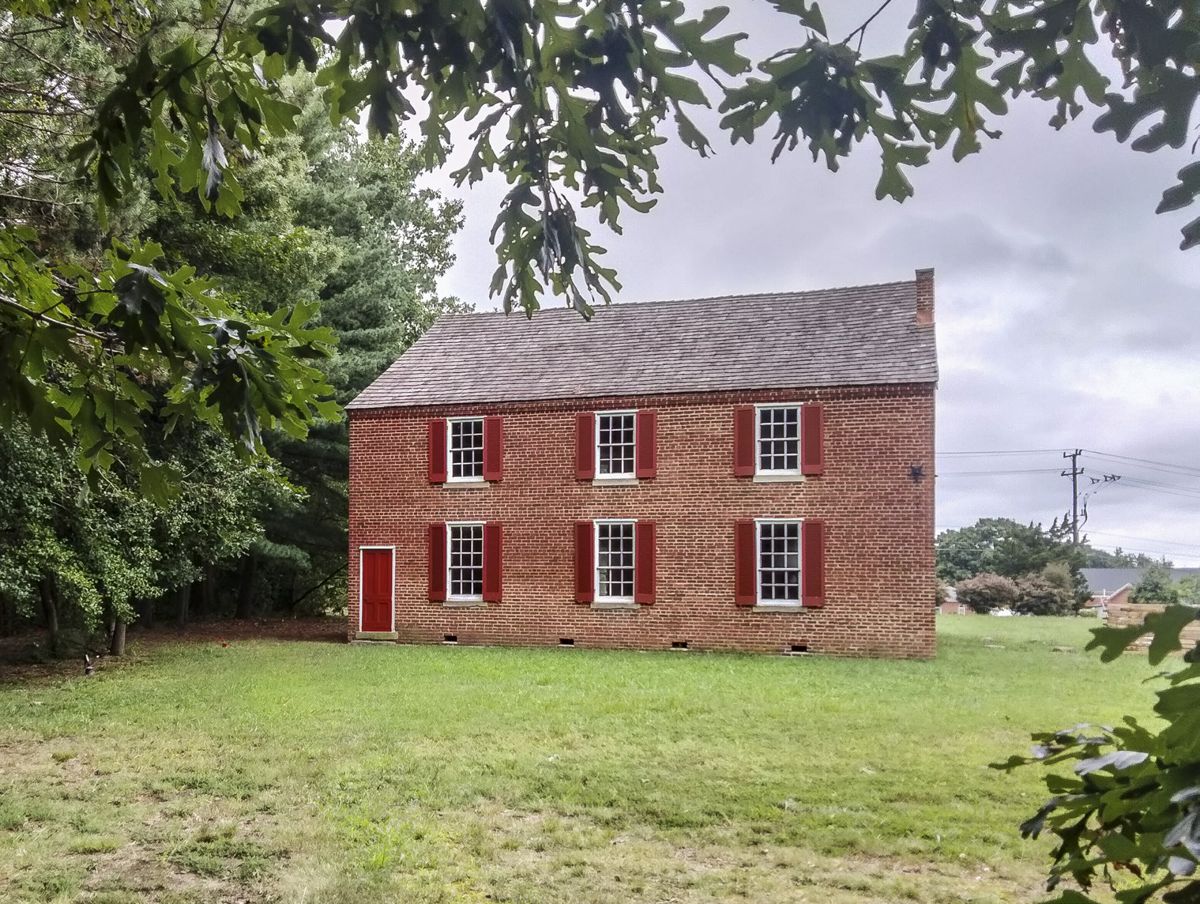
Salem Church is probably the bestknown church building associated with the area’s battlefields. Used by some Fredericksburg refugees as a place of shelter during the previous December’s battle, Salem Church ended up caught between belligerent lines on May 3, 1863, during the Chancellorsville Campaign. The 1844 brick church building endured a desperate fight between regiments from the Army of the Potomac’s VI Corps and Confederates in the brigades of Cadmus Marcellus Wilcox and Paul Semmes. After breaking Confederate defenses held by Gen. Jubal Early’s Brigades while battling to capture
Marye’s Heights at Fredericksburg, the VI Corps continued west. Hoping to come in on the rear of the Army of Northern Virginia, which at the time was fighting the other corps from the Army of the Potomac around the Chancellorsville crossroads, they instead ran into more Confederate resistance as troops from Lafayette McLaws and Richard H. Anderson’s Divisions set up a defensive line on the ridge crowned by Salem Church. About 800 yards east of the church building, Confederates posted a skirmish line. Fighting at Salem Church opened at about 3:30 p.m. Believing that they were only facing limited resistance, Sedgwick’s VI Corps attacked Wilcox’s Alabamians and Semmes’ Georgians, taking some fire from soldiers posted inside Salem Church. Col. Emory Upton’s 121st New Battered both inside and outside, Fredericksburg’s First Baptist York reached beyond the church Church became a Federal hospital following the December 13, 1862, just southwest of the building before battle. (Library of Congress) eventually being shoved back by the 9th Alabama. Finally withdrawing limbs were crushed, fractured and torn. Lying there in deep several hundred yards, the Federals relied on artillery pools of blood, they waited very patiently… .” To make support to stall the Confederate counter attack. room for recovering patients, pews were hacked from the Following the battle, Salem Church became a hospital floor and tossed out of the windows. Those not smashed to and cemetery. About 2,000 soldiers were either killed or bits by the tumble ended chopped up for firewood. wounded in the fighting. Those who survived received aid Due to the amount of damage the church building sustained, inside and on the grounds around the building. Col. Robert the congregation did not meet after the Battle of Fredericksburg until the end of the war. In 1866, church leadership hired a new pastor, who led efforts to repair the damage. Today, a restored building still serves the community.
Salem Church
McMillan, 24th Georgia, remembered: “The spacious yard was literally covered with wounded and dying. The sight inside the building for horror, was, perhaps, never equaled within so limited a space. Every available foot of space was crowded with wounded and bleeding soldiers. The amputated limbs were piled up in every corner almost as high as a man could reach; blood flowed in streams along the aisles and out at the doors; screams and groans were heard on all sides, while the surgeons, with their assistants, worked with knives, saws, sutures, and bandages to relieve or save all they could from bleeding to death.” Those killed were interred on the grounds. Salem Church, now owned by the National Park Service, still stands as a tiny island of preserved history amid the hustle and bustle of the heavy development surrounding it.
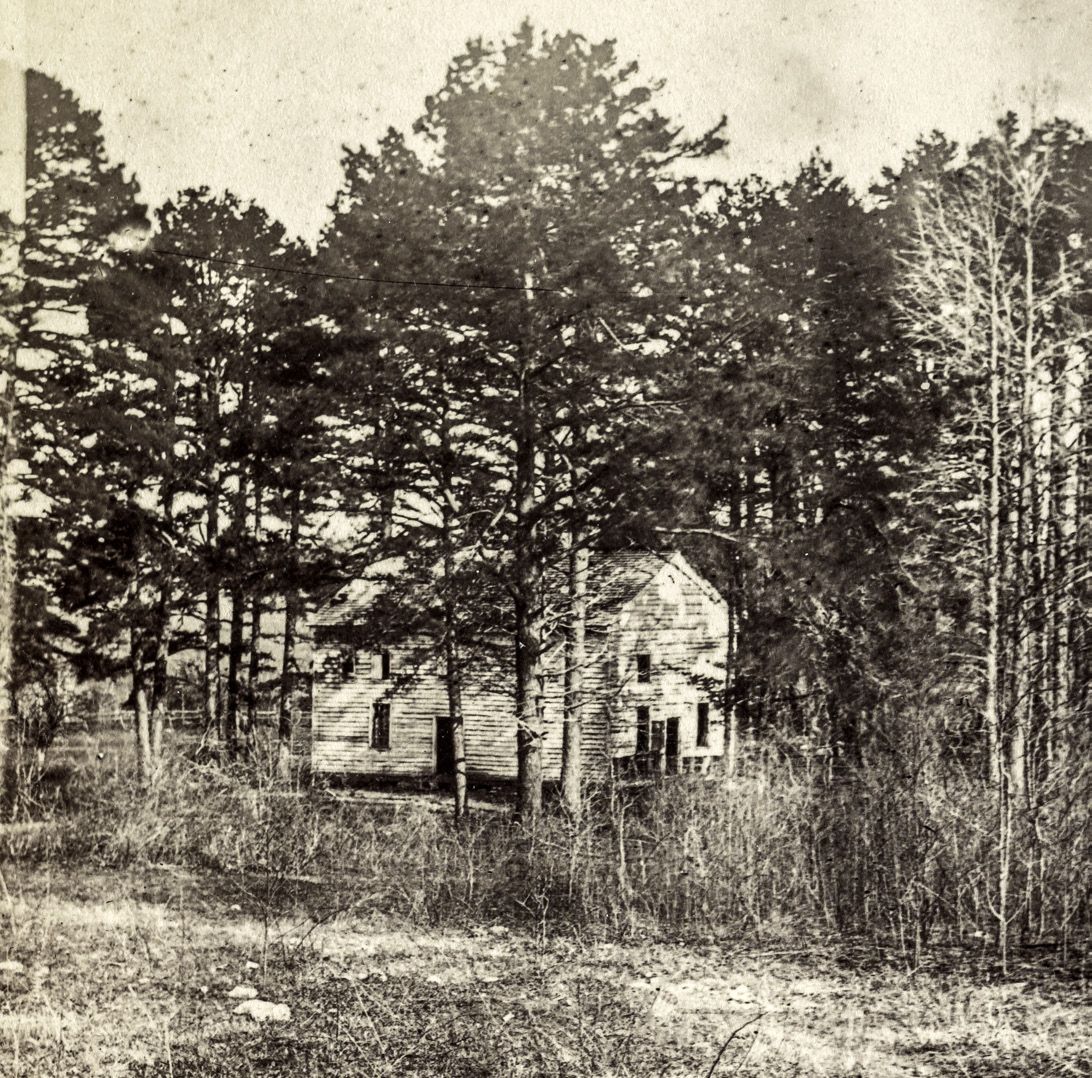
Wilderness Baptist Church, built about 1853, at or near the location where other congregations apparently had worshiped as early as the late 1770s, was a simple white, wood frame building. Its decade of existence as a place of peace and worship ended with the maelstrom of Gen. Thomas J. “Stonewall” Jackson’s May 2, 1863, Chancellorsville flank attack. Located on the north side of Orange Turnpike, just northwest of Dowdall’s Tavern, and east of the Orange Plank Road intersection, Wilderness Church occupied part of the area that witnessed the strongest Federal resistance during the flank attack. Near the church several regiments of infantry and some guns from Gen. Carl Schurz’s Division, along with Col. Adolphus Buschbeck’s Brigade
Wilderness Church, a humble, white-washed frame building found itself swallowed up in the fury of the Confederate flank attack on the Army of the Potomac’s XI Corps on May 2, 1863. (Library of Congress) (Tim Talbott)
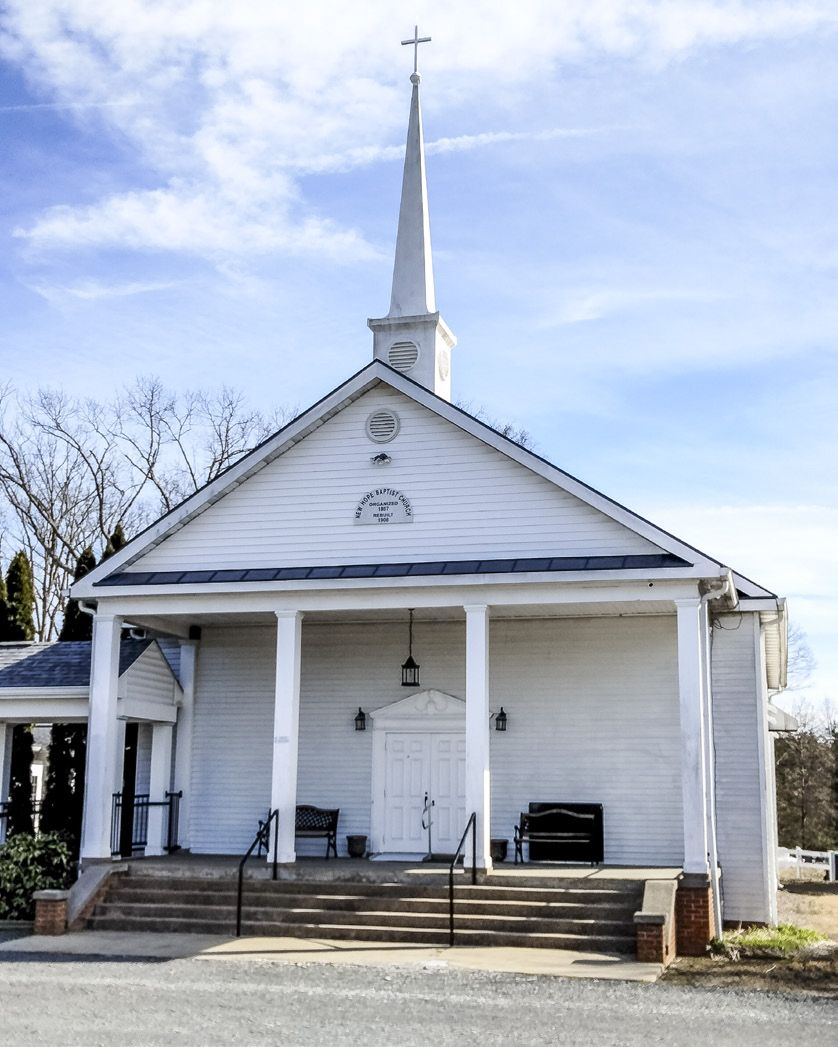
from Adolph von Steinwehr’s Division to the southeast, briefly held back the hard-charging Confederates before retreating eastward. Schurz mentioned Wilderness Church in his official report: “The line fell back step by step to the neighborhood of the church grove facing about and firing as it yielded. Meanwhile the batteries of Capt. Dilger and Wiedrich had kept up a rapid fire … In and on both sides of the church grove.” Capt. Hubert Dilger received the Medal of Honor for his courageous actions within a short distance of Wilderness Church. Scattered through the woods that surrounded the church building and in the nearby fields owned by the Hawkins family, wounded Union and Confederate soldiers sought relief. Some received care in Wilderness Church, which became a Confederate field hospital after the May 2, 1863, fighting ended. Despite the damage to the church building from the fighting, and its use as a hospital, it underwent repairs and remained in use after the Civil War. The congregation constructed a new church building at the site in the late 19th century, which still stands today.
New Hope Church
A notable landmark during the Mine Run Campaign (November 26-December 2, 1863), New Hope Church began meeting as a congregation in 1857. Rev. Melzi Chancellor, who also preached at Wilderness Church and Salem Church, served as New Hope’s first pastor. An unknown disaster destroyed the church building in 1860, but it was rebuilt by 1863. Situated along the Orange Plank Road in Orange County, New Hope Church is probably best known as the location where Lt. Charles A. Longfellow, 1st Massachusetts
Cavalry, the soldier-son of renowned poet Henry Wadsworth Longfellow, was wounded in a skirmish on November 27, 1863, as the Mine Run Campaign unfolded. That day, while serving as the eyes and ears of their respective infantry commanders, Confederate cavalry in Wade Hampton’s Division moved east, and Federal cavalry under David M. Gregg pushed west, probing ahead of the advancing foot soldiers on the Orange Plank Road. Advanced dismounted skirmishers from the cavalry clashed around New Hope Church. At first, the Union cavalry forced the Confederates back until the Southerners brought up an artillery piece. This effort was met by a Federal battery, which drove off the lone gun. As more Union troopers fed into the fight, they pushed the Confederate cavalry back about a mile and into their infantry support under Gen. Henry Heth. A Confederate battery joined on their right as more cavalry regiments moved forward. At this point, a stalemate developed as the Army of the Potomac’s V Corps moved toward the scene and darkness began to fall. The Federal casualty report included 19 killed, 64 wounded, and one missing. The Confederate casualty count is unknown.
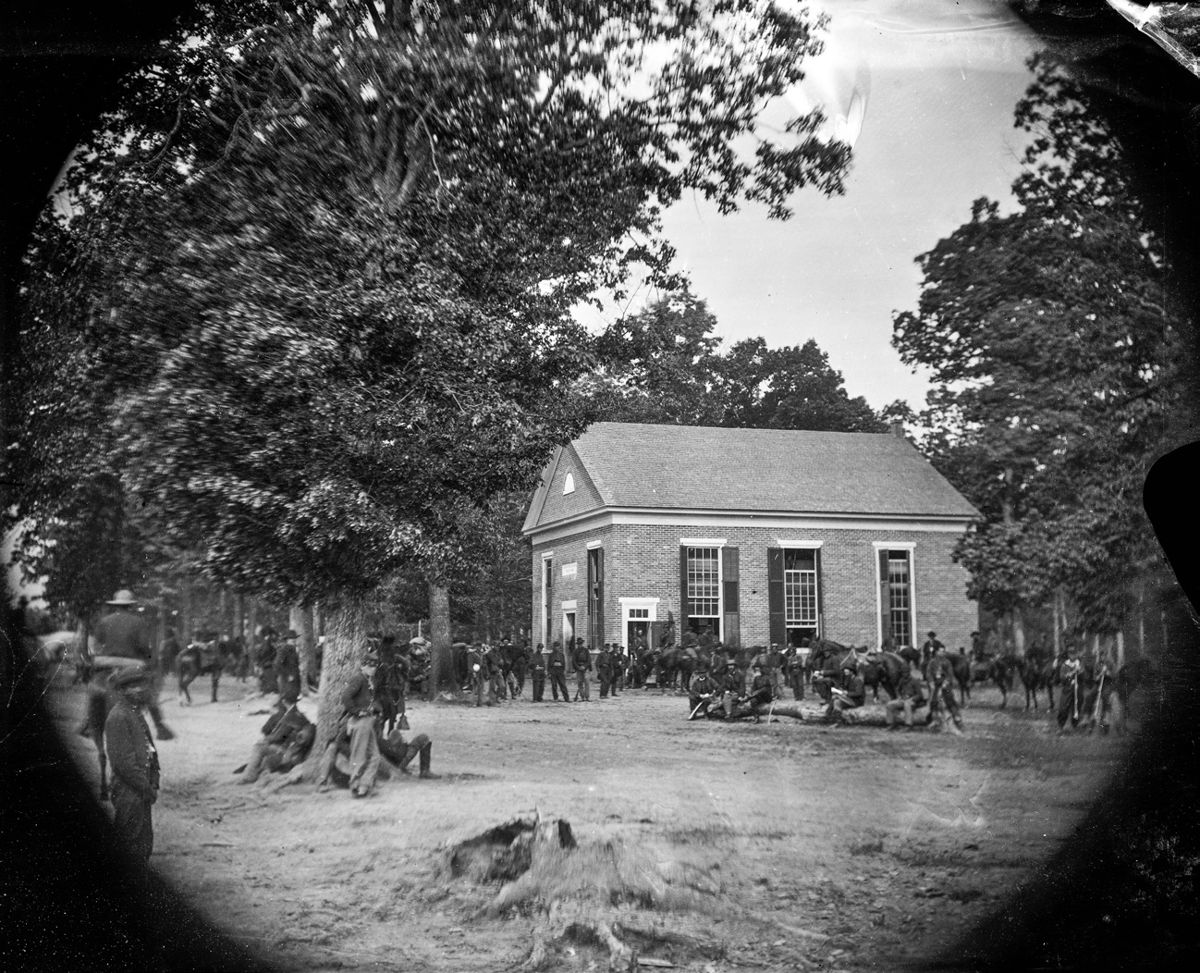
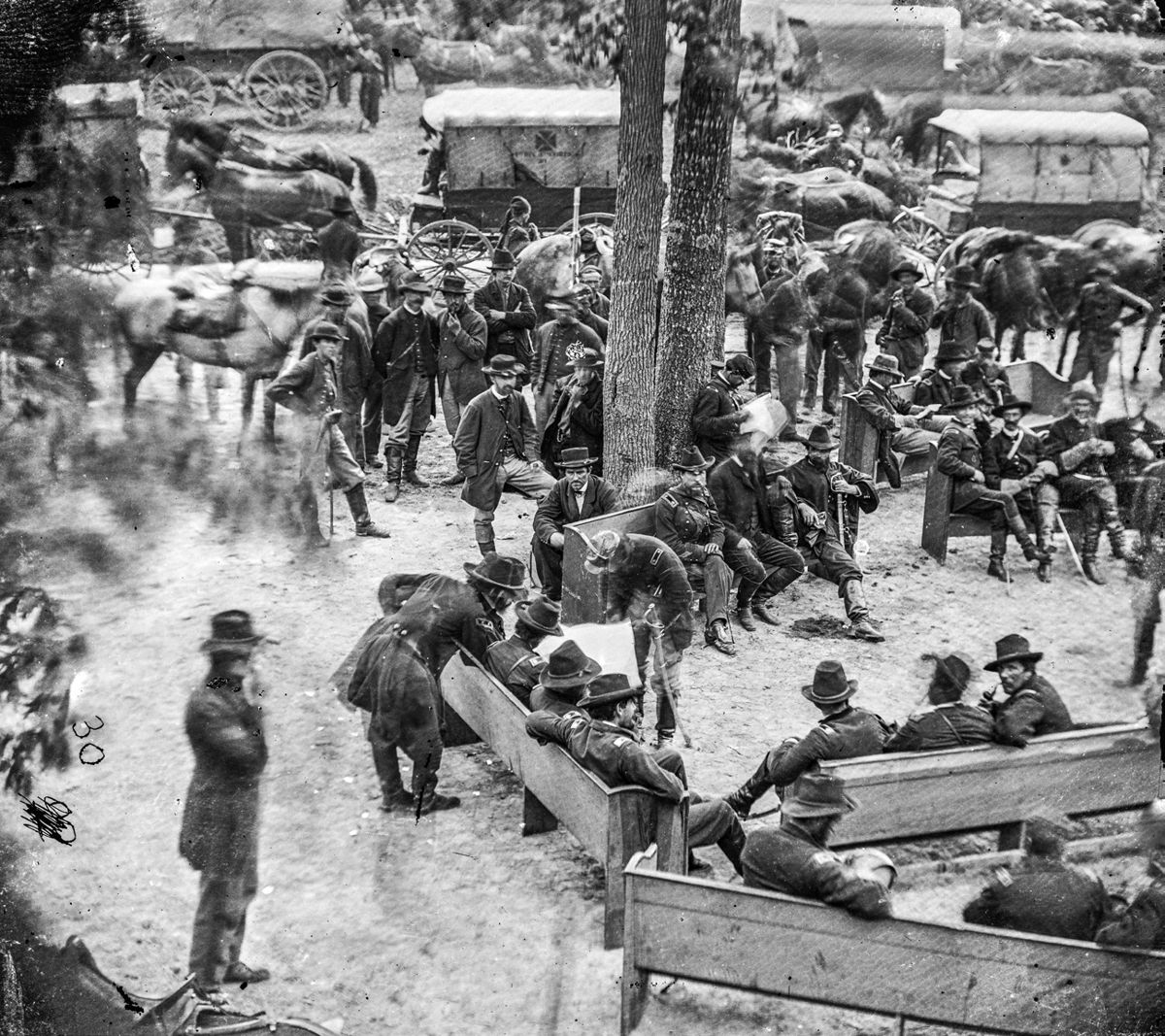
Although not directly involved in the extended combat around Spotsylvania Court House, Massaponax Church, a Baptist congregation in existence since the late 1700s, served as a key location and reference point when occupied by Union and Confederate forces. Following the Battle of Fredericksburg, Confederate cannoneer, John Walters and his Norfolk Light Artillery Blues camped at Massaponax Church on their way to defend fords along the Rappahannock River. On January 17, 1863, Walters wrote in his diary: “At an early hour this morning we started and at night halted at Massaponax Church, having made only about fourteen miles, caused by the bad state of the roads, which was not at all improved for our traveling by our battery being in the rear of some ten or twelve other batteries.” In May 1864, after the fighting around Spotsylvania finally died down and the Army of the Potomac began moving south toward Richmond, the church building became a hive of activity and brief command post. Period photographs show numerous Union generals seated in pews pulled from the church, reviewing maps and writing orders. Other evidence of soldiers’ presence includes graffiti signatures and drawings inside the church building. The church building shown in Civil War-era photographs, built in 1859, still stands today as a silent witness to scenes of the armies’ comings and goings.
Massaponax Church
Tim Talbott is the Chief Administrative Officer with the Central Virginia Battlefields Trust. The mission of CVBT is to preserve land associated with the four major campaigns of: Fredericksburg, Chancellorsville, Mine Run, and the Overland Campaign, please visit our website www.cvbt.org.