
Medal of Honor for Two of Andrews’ Raiders
By Stephen Davis · Originally published September-October 2024 · pp. 54–55
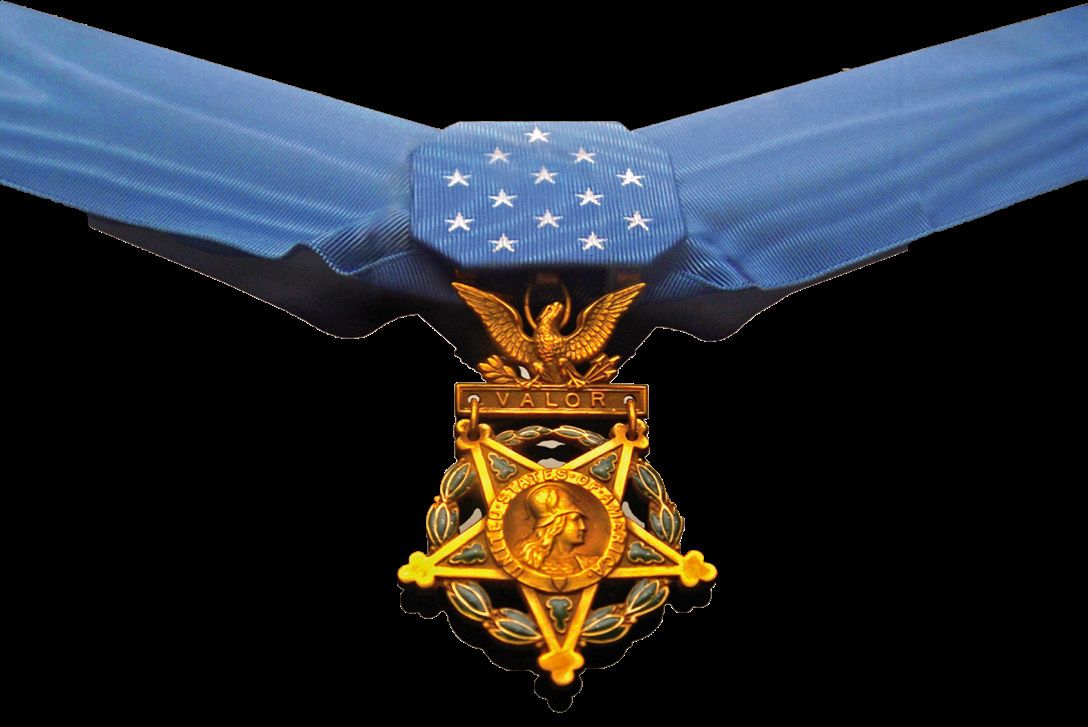
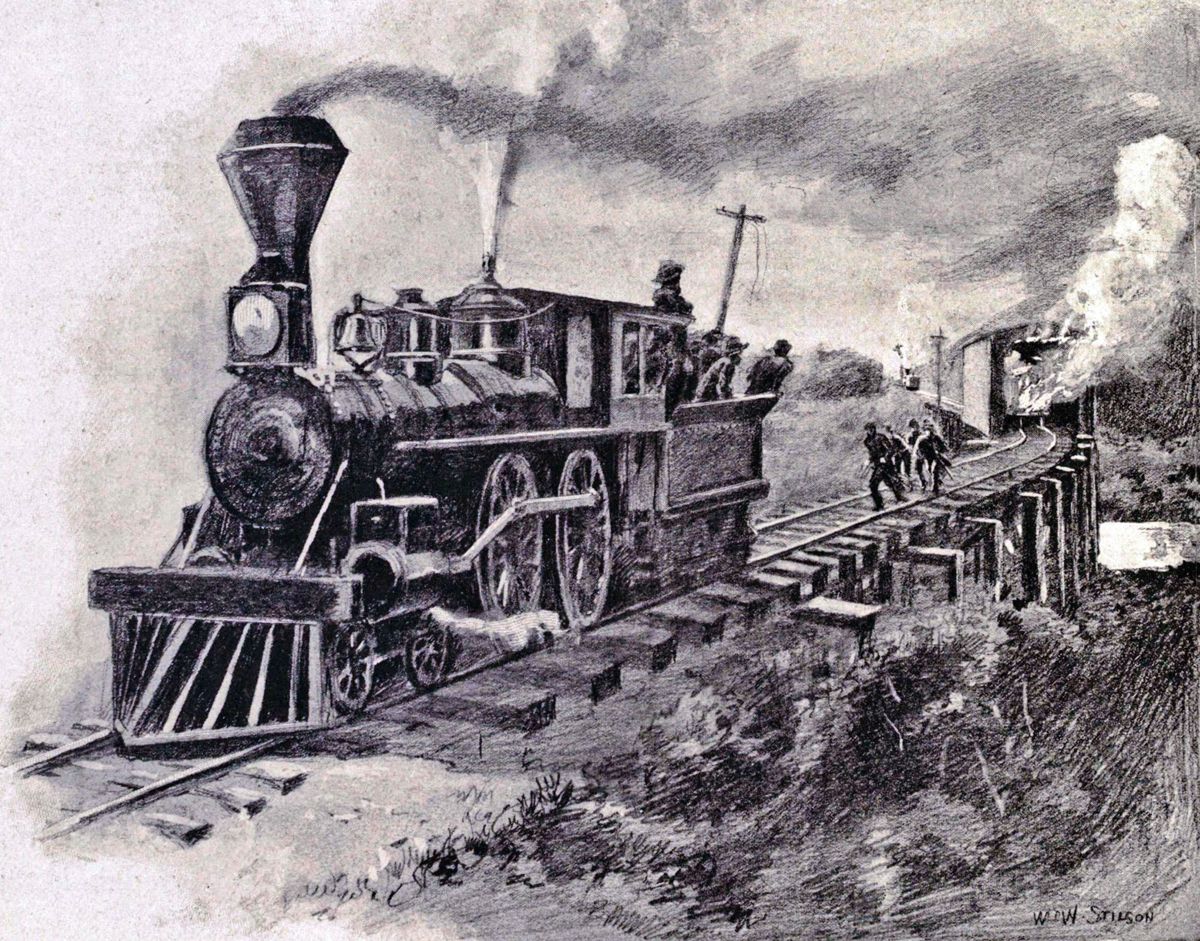
On July 3, President Biden at the White House bestowed Medals of Honor to descendants of two Union soldiers who had participated in the daring Andrews’ Railroad Raid. The raid is a staple of Civil War folklore. In April 1862, James J. Andrews and another civilian, William Campbell, were joined by a dozen-and-a-half soldiers of the 2nd and 21st Ohio Volunteer Infantry Regiments on a dangerous mission into Rebeldom.1 Near Chattanooga, they were to slip behind enemy lines, make their way toward Atlanta and at a station north of the city, seize a train and speed north, burning bridges, tearing up track and cutting the telegraph along the way. Union Brig. Gen. Ormsby Mitchel approved the plan, hoping it might help in his proposed move against Chattanooga.2 After an eighty-seven-mile chase, the raiders were captured. Eight of the twenty were tried and hanged as spies (Andrews among them). The rest escaped or were exchanged.3 During 1863-64 the U.S. War Department awarded Medals of Honor to nineteen Andrews Raiders. (Andrews and Campbell, civilians, were ineligible.) For some reason two raiders, Pvts. George Wilson and Philip Shadrach, were overlooked.4 This rankled Private Shadrach’s great-great-great nephew, Ron Shadrach, who a few years ago enlisted the help of Bradley Quinlin, a Civil War authority in Suwanee, Ga. Shadrach had been trying since 2008 to secure a Medal for his ancestor, but apathy and bureaucratic hoops got in the way. Quinlin, 70, is co-author of Duty Well Performed: The Twenty-first Ohio Volunteer Infantry in the Civil War (2011); nine of the Andrews Raiders served in the regiment. Quinlin enlisted the aid of his congressman, and after twelve years
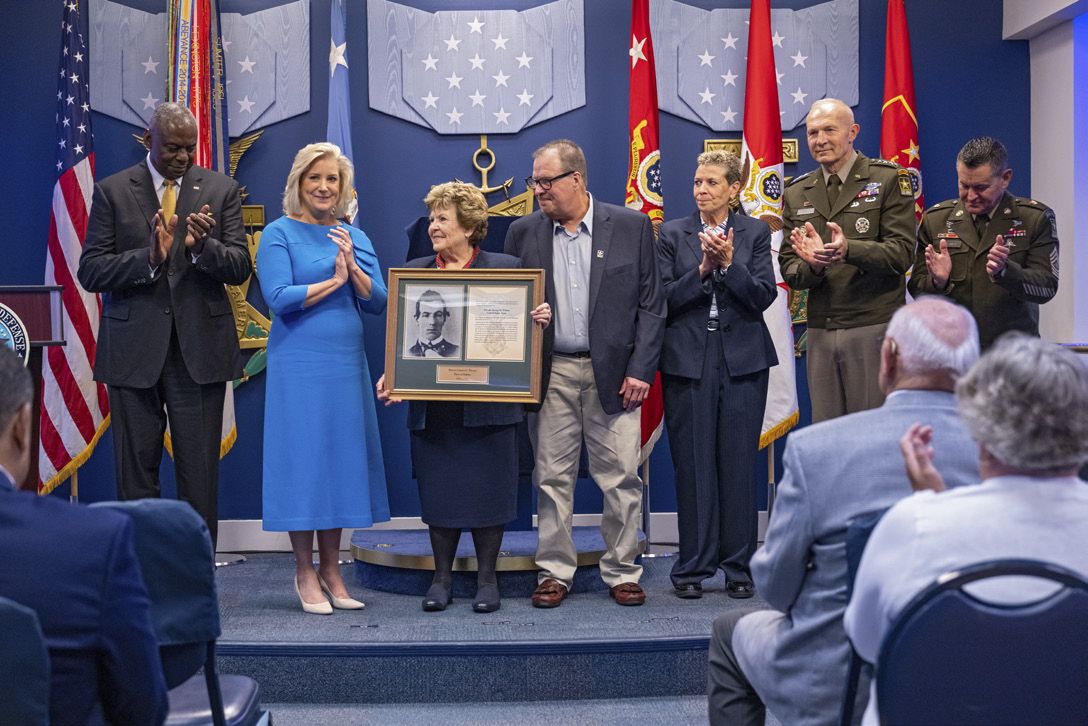
Secretary of Defense Lloyd J. Austin III hosts the Hall of Heroes Induction Ceremony of Private Philip G. Shadrach and Private George D. Wilson, U.S. Army, at The Hall of Heroes in the Pentagon, Washington, D.C., July 4, 2024. The privates were awarded the Medal of Honor (posthumously) for their extraordinary heroism while participating in a covert military operation 200 miles behind Confederate lines on April 12, 1862. (DoD photo by U.S. Air Force Tech. Sgt. Jack Sanders)
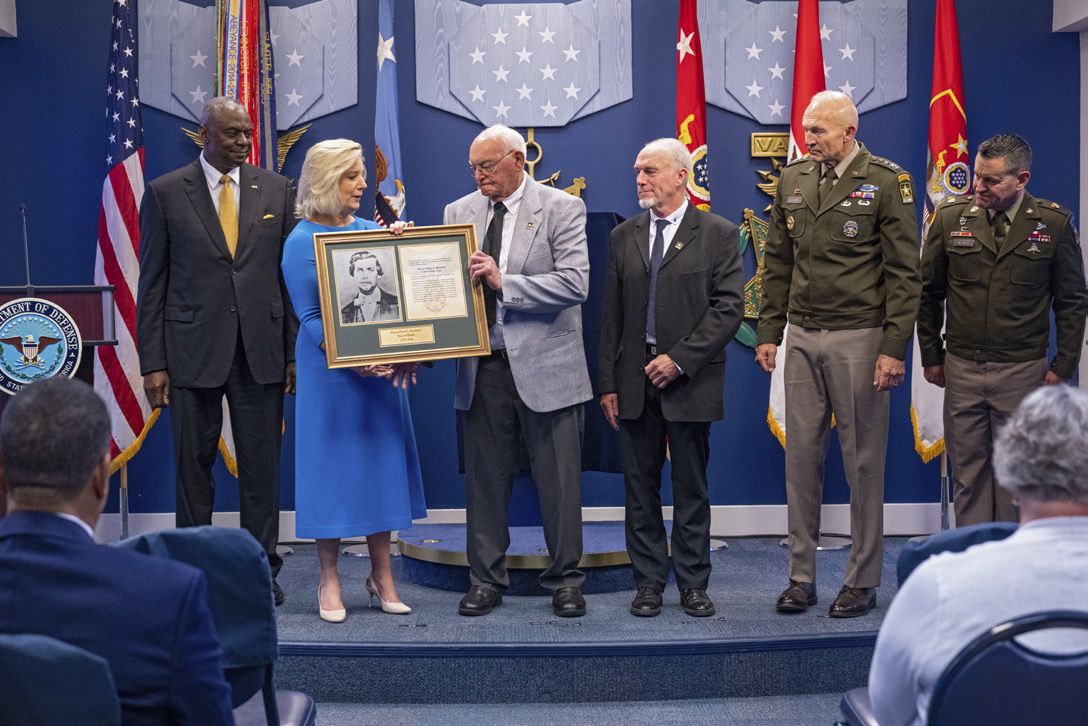
Theresa Chandler, great-great-granddaughter of Pvt. George D. Wilson, 2nd Ohio Volunteer Infantry Regiment, receives the Medal of Honor on behalf of her ancestor. More than 40% of the over 3,500 Medals of Honor bestowed since 1862 have gone to Union Civil War veterans. Soldiers in the Indian Wars were given 426 Medals; 111 have gone to Spanish-American veterans; and 86 for servicemen in the Philippine-American War. (DoD photo by U.S. Air Force Tech. Sgt. Jack Sanders)
of bureaucratic delays, with Shadrach he pushed the project through the Pentagon. (Secretary of Defense Lloyd Austin had to approve the Medal.)5 Finally, the Medal ceremony was planned for the White House. President Biden has in recent years bestowed the Medal of Honor to servicemen who fought at Mogadishu; on Monday, July 3, he presented Medals to descendants of two Union veterans of the Civil War. “It’s a long time in coming,” he began. Mr. Biden described the Medal: star-shaped, made of copper, coated in bronze. “At first, it was called the Army of Medal of Honor,” he continued. “In time, to capture the full capacity of our Armed Forces it became known simply as the Medal of Honor. Today, it is our nation’s highest honor.” The President explained that all of the Andrews Raiders had received the award, except for two, George Wilson and Philip Shadrach. “Today, we right that wrong,” he continued; “Today, they finally receive the recognition they deserve.” Assuming the role of history professor, President Biden spoke about the service of Privates Wilson and Shadrach with the 2nd Ohio. Folks, it was April 7th, 1862. James Andrews, the Union spy, who regularly sneaked behind Confederate lines, was preparing to lead a daring scheme. A group of two dozen soldiers, including George and Philip, would travel 200 miles deep into Confederate territory and steal a Confederate chain—a train near Atlanta and drive it north to Chattanooga, just over the Georgia border, which Union troops were preparing to capture—that is, Chattanooga. Along the train journey, they would destroy enemy bridges, railroad tracks, telegraph lines, disrupting communications and vital supply lines, sabotaging the railroad that the Confederate Army used to move troops. President Biden went on to relate how the raiders attached three boxcars to the locomotive and tender they had seized. He mentioned the rain that hampered the raiders’ efforts at bridgeburning, as well as the pesky southbound trains that slowed them down. “They almost made to [out of] Georgia, but about 15 miles from Chattanooga, they ran out of fuel, and the Confederates closed in.” Some of the captured raiders were lucky, and either escaped or were exchanged. “The rest, including Philip and George, were tried as spies and both sentenced to death.” “Their heroic deeds went unacknowledged for over a century, but time did not erase their valor,”
President Biden declared. “And what they fought for was just as precious as it is today: unity over disunity, freedom over subjugation, progress over retreat, truth over lies.” Accepting the awards on July 3 were Gerald Taylor, greatgreat-nephew of Private Shadrach; and Theresa Chandler, great-great-granddaughter of Private Wilson.6 More than 3,500 Medals of Honor have been awarded since President Lincoln signed the bill creating the Army Medal of Honor in July 1862.7 Almost half went to Union veterans of the Civil War. Soldiers of the Indian Wars, World War I (126 recipients), World War II (471, 273 of them posthumously), and America’s other conflicts have received the Medal of Honor. “It’s so important to know our history,” President Biden affirmed in his closing remarks. Tracing the history of the Medal of Honor—and for us Civil Warriors, the 1,522 Union veterans who received it—help us remember what courage is all about. Endnotes 1. 2. 3. 4. 5. 6.
James G. Bogle, “The Great Locomotive Chase or, The Andrews Raid,” Blue & Gray, vol. 4, no. 6 (July 1987), 12. Russell S. Bonds, Stealing the General: The Great Locomotive Chase and the First Medal of Honor (Yardley PA, 2007), 34-35. Stephen Davis, “Andrews Raid” in John C. Inscoe, ed., The Civil War in Georgia (Athens GA, 2011), 66-67. Bonds, Stealing, 322, 325. Phone conversation with Mr. Quinlin, July 5, 2024. The White House, “Remarks by President Biden at Presentation of the Medal of Honor to Army Private Philp G. Shadrach and Private George D. Wilson,” delivered in the East Room, July 3, 2004. Bonds, Stealing, 308.
i t