
Burnside’s Invasion of East Tennessee: A History of Misinformation Part 1
By Terry L. Futrell · Originally published November-December 2024 · pp. 18–23
Introduction Authors and historians sometimes present a tarnished view of significant historical events. Published accounts of Maj. Gen. Ambrose E. Burnside’s August-September 1863 invasion of East Tennessee provide excellent examples. Diligent research incorporating often overlooked primary sources disproves misinformation published by selected authors and historians about Burnside’s forces and their actions during the East Tennessee Campaign.
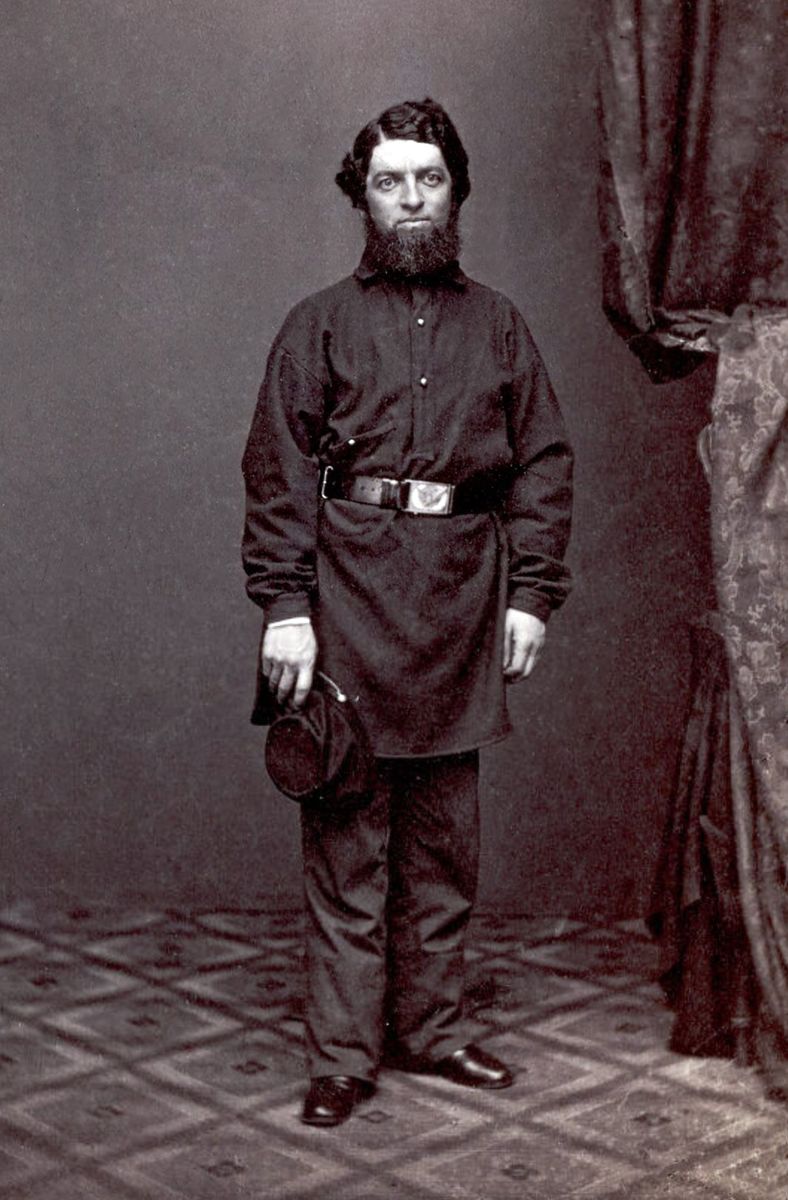
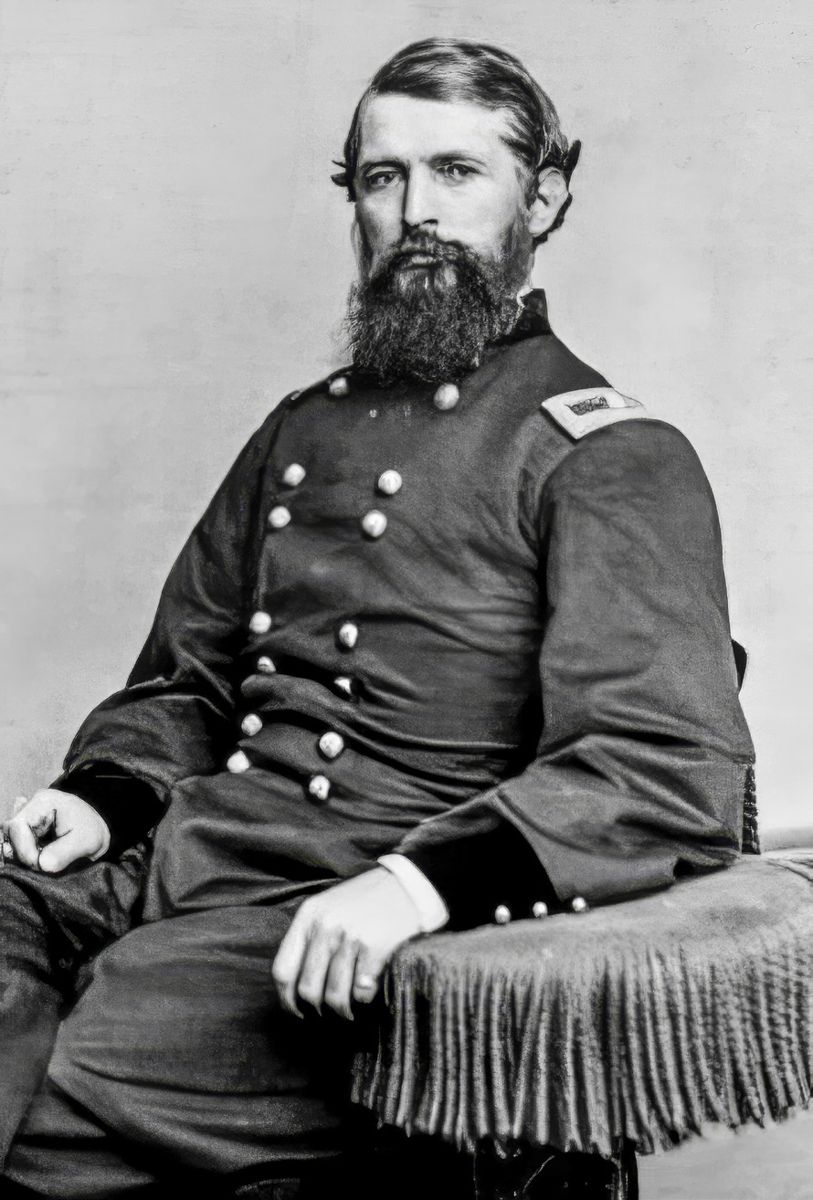
Historical Misinformation Augustus Woodbury Augustus Woodbury, D.M. enlisted in April 1861 as chaplain and captain of the 1st Rhode Island Volunteer Infantry, serving alongside Col. Ambrose E. Burnside. Woodbury formed relationships with several men who would later become senior officers of the IX Army Corps.
Augustus Woodbury, Chaplain, 1st Rhode Island, D.M.
From these men he obtained interviews, notes, and manuscripts that provided a basis for several books he wrote after the end of the war.1,2 In his 1867 book Major General Ambrose E. Burnside and the Ninth Army Corps, Woodbury describes Burnside’s invasion of East Tennessee with the XXIII Corps. Woodbury stated that Burnside’s plan included “a column of cavalry under Colonel Foster upon the left, to march directly upon Knoxville by way of Jacksboro.”3 Woodbury then described movement of this column, “The fifth column, composed of cavalry, marched from Williamsburg directly on Jacksboro, passing through Wheeler’s Gap, and occupied Knoxville on the same day upon which the infantry reached Kingston.”4 There are several inaccuracies in Woodbury’s portrayal of the invasion. Col. John W. Foster was never directed to march through Wheeler’s Gap into Jacksboro and then to march on and occupy Knoxville. Foster took command of the 2nd Brigade, Fourth Cavalry Division more than a week after the invasion began. Brig. Gen. E.H. Hobson initially commanded the brigade but became ill and was unable to participate. Col. Felix W. Graham of the 5th Indiana Cavalry assumed command of the brigade at Glasgow, Ky., on the right flank of Burnside’s entire invading force, not the left flank as reported by Woodbury.5 Graham remained in command until the brigade passed through Jamestown, Tenn., and approached Montgomery on August 28. At that point, Foster, the senior officer, assumed command of the brigade.6 It was only as Burnside’s main force was leaving Montgomery on August 31 to move on Kingston and Loudon that Burnside personally directed Foster to move through Winter’s Gap [now Oliver Springs] and possibly on to Knoxville.7 The fifth column, as described by Woodbury, was one regiment from the First Brigade and went only as far as
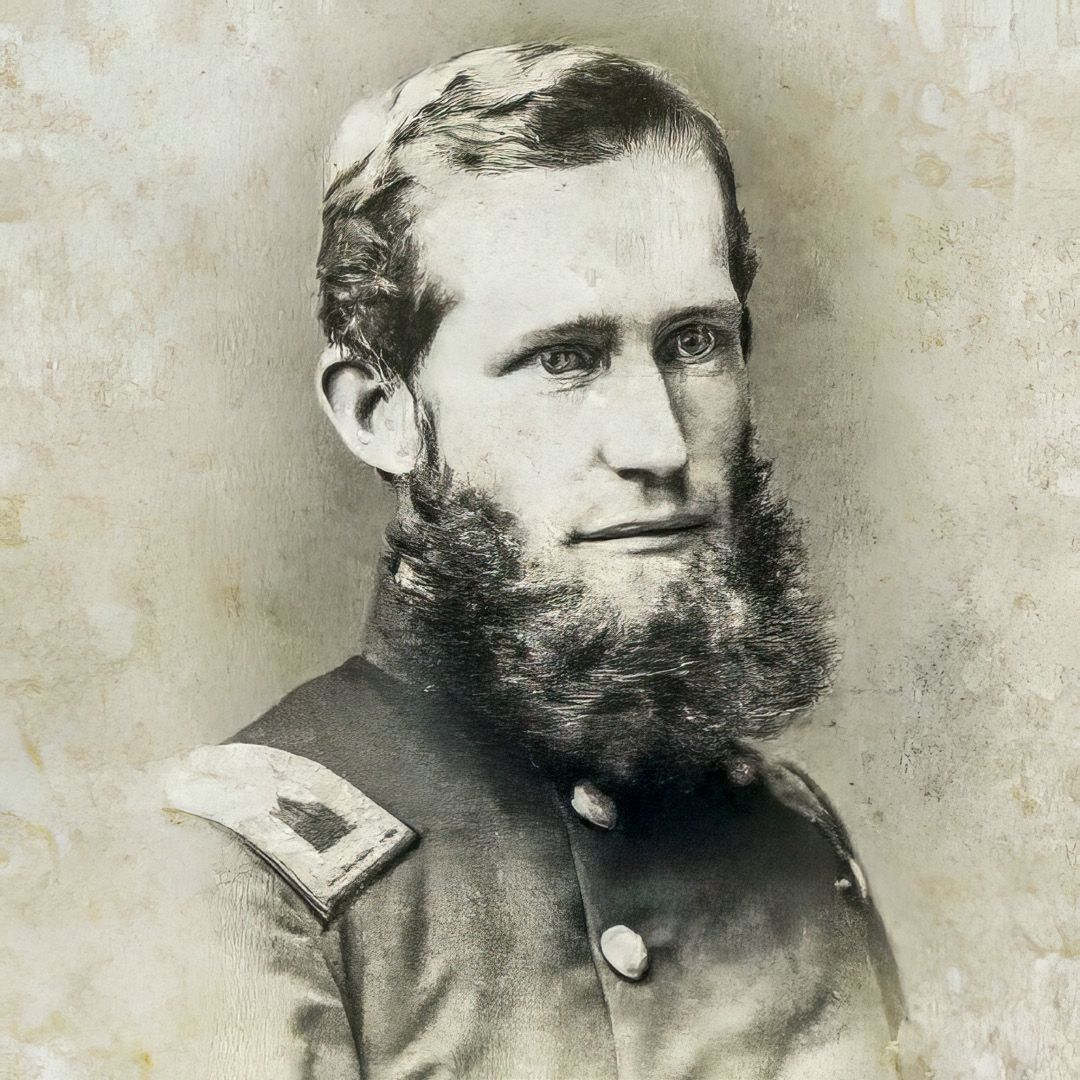
Col. John W. Foster.
Jacksboro. The demonstration against Jacksboro on August 27 was executed by the U.S. 1st Regiment of Tennessee Volunteer Infantry (mounted), which was detached from the 1st Brigade, 4th Cavalry Division. After overwhelming the Confederates in a skirmish at Jacksboro and capturing 48 prisoners, the 1st Tennessee then traveled west, turned over their prisoners after passing through Huntsville, and rejoined the remainder of the 1st Brigade.8
Jacob D. Cox Brig. Gen. Jacob D. Cox served under General Burnside in the Department of the Ohio at the time of the invasion of East Tennessee but did not personally participate in the invasion. After the war, Cox gained recognition as a military historian and published several books about the Civil War. In 1900, he published Military Reminiscences of the Civil War, a detailed history of the war.9 While Cox accurately described the movement of troops before Burnside’s forces were united at Montgomery, his narrative then became infused with several errors. Cox stated that the united columns moved through Emory Gap to Kingston. Emory Gap is the location of the present city of Harriman, Tenn., and is the gap through which the Big Emory River flows through Walden Ridge. As clearly shown on a map prepared under the direction of Capt. Orlando M. Poe in 1864, the road from Montgomery to Kingston over which Burnside’s troops traveled passed through DeArmond Gap alongside the Little Emory River, located approximately six miles northeast of Emory Gap.10,11 Cox also stated in error that Burnside sent two
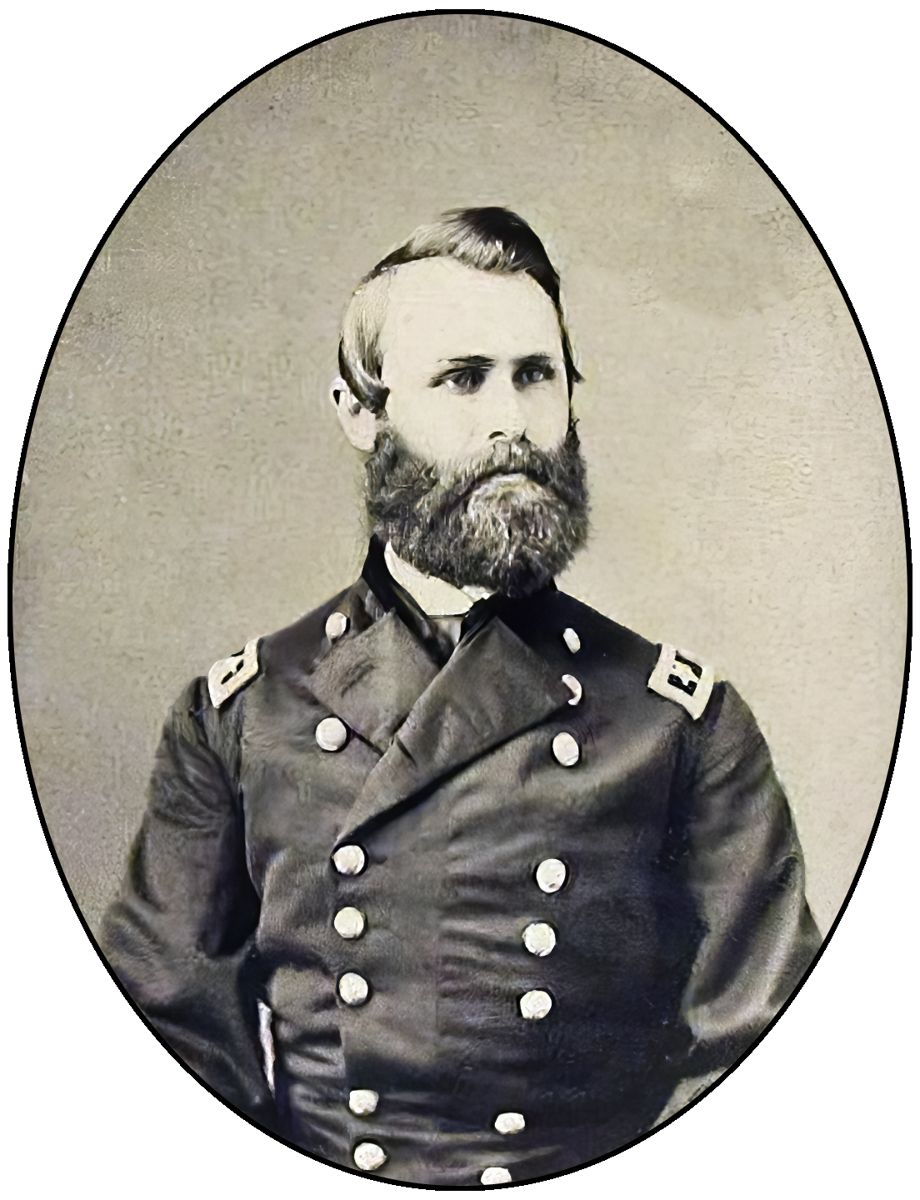
Brig. Gen. Jacob D. Cox.
detachments through Big Creek Gap and Winter’s Gap to make demonstrations on Knoxville. No detachment passed through Big Creek Gap because Col. Robert K. Byrd learned that the Gap was fortified by Confederates and sent only the 1st Tennessee Infantry (mounted) to Jacksboro. Byrd then proceeded west toward Chitwood’s with the remainder of his brigade.12 Burnside’s intent for the detachment passing through Winter’s Gap was to occupy Knoxville rather than to make a demonstration, as clearly stated in a letter written by Foster to his wife on September 2, the day after his brigade occupied Knoxville.13
Shelby Foote Author Shelby Foote is best known for his three-volume work The Civil War: A Narrative, published over a 16year period from 1958-74, and for his prominence in the Ken Burns’ Civil War public television documentary series. Foote did not cite his material, leaving the reader to assume his narrative’s accuracy. The fallacy of this approach is demonstrated by Foote’s erroneous description of Burnside’s entry into East Tennessee: …he had resolved to make his approach march in four columns. Two were of cavalry, one to advance on the left through Big Creek Gap and the other on the right through Winter’s Gap, while the third, made up of two divisions of infantry, marched between them on Kingston, which lay at the confluence of the Clinch and Tennessee rivers, forty miles below Knoxville, the objective of all three columns. The fourth, composed of the remaining infantry division, would move directly on Cumberland Gap.14 Foote’s portrayal of the invasion differs from Burnside’s operational plan that dispatched General Hartsuff on August 20, 1863, initiating the invasion.15 Burnside detailed the planned movement of four columns from various locations in Kentucky, all of which would converge on Montgomery, then the county seat of Morgan County, Tenn. Two columns, one infantry and one cavalry, would merge at Jamestown, Tenn., and travel to Montgomery. The other two columns, one infantry and one cavalry, would merge at Chitwood’s, cross New River west of Huntsville, Tenn., and proceed to Montgomery. The path from Montgomery to Kingston would take Burnside’s force south of both Big Creek Gap and Winter’s Gap, not between them. Burnside clearly stated that Brig. Gen. Samuel Carter’s Division was to move from Williamsburg, Ky., to Chitwood’s in Scott County, Tenn, and that demonstrations would be made “which will result in the evacuation of Big Creek and Cumberland Gaps.” Only Byrd’s Brigade of cavalry was dispatched from Williamsburg in the direction of Big Creek Gap, and only the 1st Tennessee Volunteer Infantry (mounted) proceeded to Jacksboro, Tenn.16 Foote asserted that Knoxville was “the objective of all three columns.” Capt. Orlando M. Poe, Chief Engineer of the Army of the Ohio during the invasion, contradicted this, brigades departing from different parts of Kentucky. Hess shows Graham’s Brigade traveling through Jamestown, Tenn., and Foster’s Brigade traveling through Big Creek Gap and Clinton.20 In his accompanying narrative, Hess stated: By the time Carter reached Indian Tavern, located a bit west of the gap [Big Creek Gap] and forty-five miles from Knoxville, it became evident that Col. John S. Scott’s Confederate cavalry brigade had given up Big Creek Gap and was retiring toward Kingston, with Byrd in pursuit. Carter then detached another brigade, commanded by Col. John W. Foster, to secure Knoxville by riding via Big Creek Gap and Clinton.21 Primary sources show that both Graham and Foster commanded the 2nd Brigade of the Fourth Division at different times during the invasion. This brigade formed the western (right) flank of Burnside’s force. Graham assumed command at the beginning of the invasion due to General Hobson’s sickness; Foster, the senior officer, took
Brig. Gen. Samuel P. Carter, 4th Division Cavalry.
stating “From Montgomery the entire column except one brigade of cavalry, was projected upon Kingston, having Loudon for an objective point.”17 Burnside told General Halleck in a dispatch from Williamsburg on August 26 that “From Montgomery we shall move according to circumstances, but probably upon Kingston and Loudon Bridge, as these seem to be the places to which General Rosecrans desires us to go in order to co-operate fully with him.”18 Burnside later decided the morning of August 31 to have Foster’s Brigade leave the main column and proceed to Winter’s Gap. Burnside decided early on September 1 to have Foster advance to Knoxville and occupy the town.19
Earl J. Hess Well-known Civil War historian and history professor Earl J. Hess has authored more than 20 books on the Civil War. In 2012, Hess published The Knoxville Campaign: Burnside and Longstreet in East Tennessee in which he detailed the entry of Burnside’s Army of the Ohio into East Tennessee. Hess perpetuated some of the same misinformation attributed to other authors and introduced an additional error regarding location of the Indian Tavern. Just as Woodbury did in 1867, Hess erroneously depicted brigades led by Colonel Graham and Colonel Foster as separate entities. Hess’ map of the invasion shows different paths for cavalry brigades under Colonel Graham and Colonel Foster, with the two
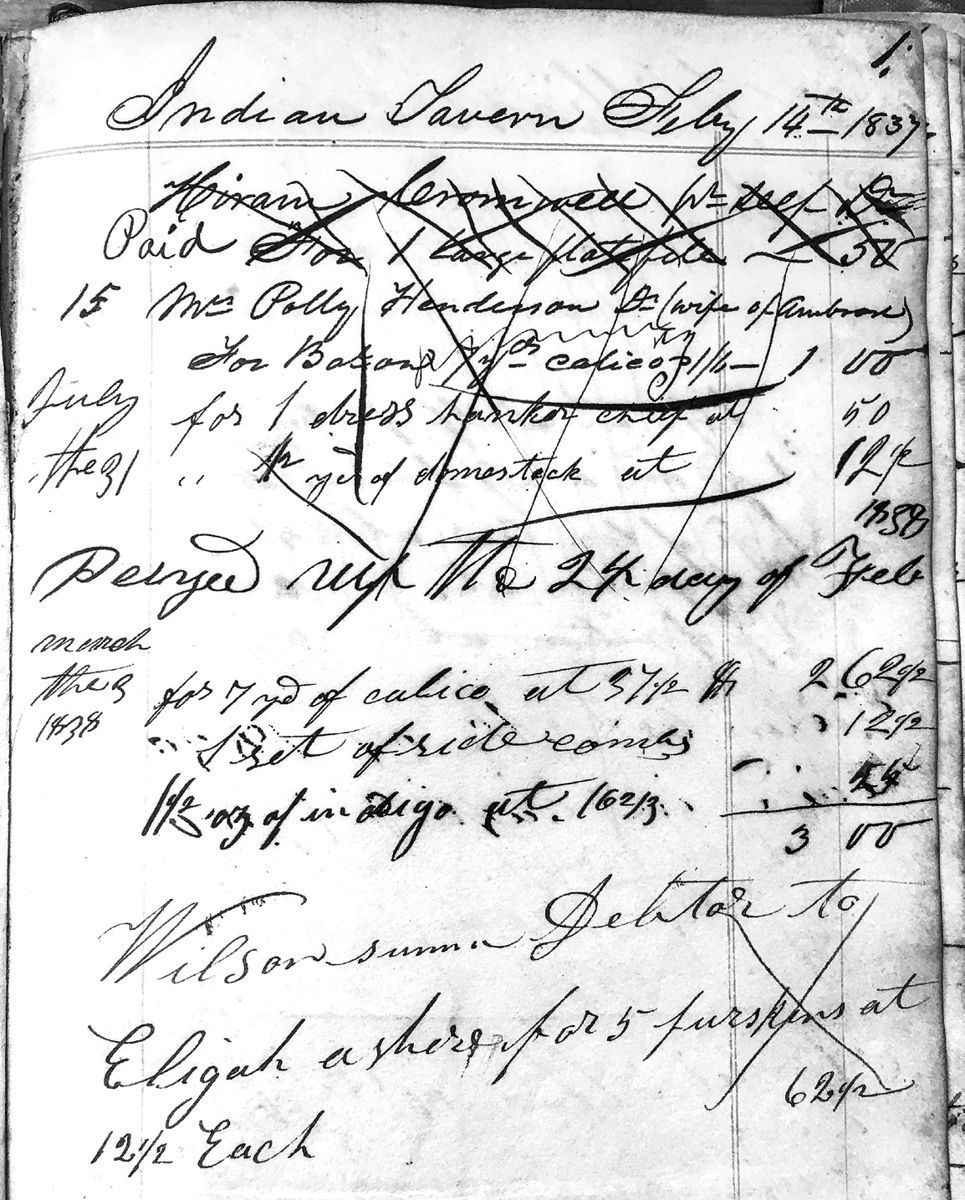
Entry from Joseph Hawkins Schooler’s journal showing February 14, 1837, as the date he assumed operation of the Indian Tavern located near Wartburg in Morgan County, Tenn. (Roane Heritage Commission)
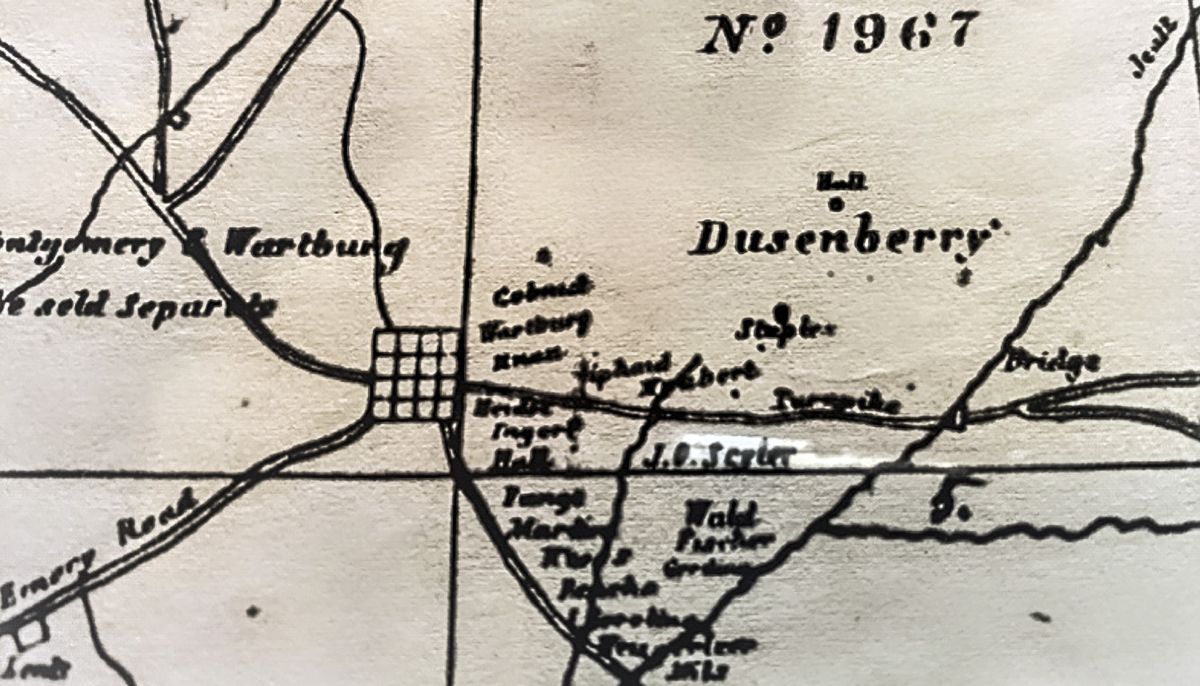
command as the brigade neared Montgomery on August 28. The brigade Hess depicted as Colonel Foster’s traveling through Big Creek Gap and Clinton did not exist. The 2nd Brigade, Fourth Division traveled from Glasgow, Ky., to Montgomery in Morgan County via Jamestown, where the brigade joined the remainder of Burnside’s force.22 Hess also stated that General Carter was at the Indian Tavern just a bit west of Big Creek Gap when he detached Foster to move through Big Creek Gap to Clinton and on to Knoxville. The location of the Indian Tavern shown by Hess is wrong, approximately 25 miles line of sight from its true location, and much farther by the road network that existed during the Civil War.23 Rather than being located a bit west of Big Creek Gap, the Indian Tavern was located east of Wartburg, only four miles from Montgomery, in Morgan County.24 Hess’ location of the Indian Tavern is refuted by his own source, Capt. Orlando M. Poe, who stated “The movement was made without difficulty or special incident until reaching the Indian tavern, about eight miles from Montgomery.”25 Through exhaustive research, Morgan County historian and registered land surveyor Michael Nance determined with certainty that the Indian Tavern was located on the property of William L. Schooler along Flat Fork Creek east of Wartburg, approximately four miles from Montgomery.26 During the first two years of the Civil War, Schooler’s property was known as Confederate Camp Schooler [sometimes spelled “Schuyler”] and is identified as such multiple times in Hancock’s Diary.27 Since Nance concluded his research, the journal of William L. Schooler’s father, Joseph Hawkins Schooler, was located at the Roane County Heritage Center in Kingston, Tenn. The journal clearly stated February 14, 1837, as the date on which Schooler assumed operation of the Indian Tavern.28 The grave marker of Joseph Hawkins Schooler is located on the property. Hess stated, “When Carter had detached Byrd’s Brigade to move ahead toward Big Creek Gap, he brought his other two brigades along behind as support.”29 Only Byrd’s and Shackelford’s brigades were part of Carter’s column, and only Shackelford’s Brigade remained with Carter after Byrd was detached for the planned demonstration on Big Creek Gap.30 Primary sources show that Carter and Shackelford moved westward from Williamsburg across Jellico Mountain before crossing the line into Tennessee near Chitwood’s, never trailing Byrd in support of his brigade.31
Summary For 150 years, historians and authors have documented and analyzed the invasion of East Tennessee by Union forces under Maj. Gen. Ambrose E. Burnside. Many made grievous errors in their portrayal of the invasion. For early authors, this was understandable because official records had not yet been compiled, cataloged, and published. Unfortunately, even contemporary authors have conveyed some of the same misinformation, even though good primary source material is readily available, both online and in physical collections. The failure to improve accuracy over time suggests either a lack of due diligence in performing Civil War research or reliance on other than credible sources.
Endnotes
1 “Rhode Island 1st Volunteer Infantry (Union),” Fold3, accessed October 15, 2021, https://www.fold3.com/regiment/10163/rhode-island-1stvolunteer-infantry-union-civil-war-stories. 2 Augustus Woodbury, Major General Ambrose E. Burnside and the Ninth Army Corps (Providence: Sidney S. Rider & Brother, 1867), vi. 3 Ibid., 305. 4 Ibid., 306-307. 5 John W. Foster, War Stories for My Grandchildren (Cambridge: The Riverside Press, 1918), 121. 6 United States. War Department. The War of the Rebellion: A Compilation of the Official Records of the Union and Confederate Armies. Ohio State University. Serial 052, p. 0210. https://ehistory.osu.edu/books/official-records/052/0210. (Hereinafter referenced as Official Records). 7 Foster, War Stories for My Grandchildren, 122-123. 8 “Civil War Service Records, Union Records,” Digital images, Fold3, https://www.fold3.com/image/272/266058643. 9 Jacob D. Cox, Military Reminiscences of the Civil War: Vol. I, April 1861 – November 1863 (New York: Charles Scribner’s Sons, 1900). 10 L. C. Glenn, The Northern Tennessee Coal Field (Nashville: State of Tennessee Division of Geology, 1925), 293-294. 11 Orlando M. Poe, Map: East Tennessee North of Loudon, Tennessee: Office U.S. Engineers, 1864 located in Maps at the Tennessee State Library and Archives, https://teva.contentdm.oclc.org/digital/collection/p15138coll23/id/106. Map of Lands in Morgan County, Tennessee by the Tennessee 12 B. F. Thompson, History of the 112th Regiment of Illinois Volunteer Infantry in the Great War of the Colonization Company, 1854 showing the location of the Rebellion (Toulon: Stark County News, 1885), 86. Schooler farm, which is misspelled “Scyler.” The Schooler 13 Foster, War Stories for My Grandchildren, 122farm was home to the Indian Tavern. (Courtesy Morgan County 123. Genealogical and Historical Society)
14 Shelby Foote, The Civil War: A Narrative: Volume 2: Fredericksburg to Meridian (New York: Random House, Inc., 1963), 103. 15 Official Records, Serial 052, p. 0094-0095, https://ehistory.osu.edu/books/official-records/052/0094. 16 Thompson, History of the 112th Regiment of Illinois Volunteer Infantry in the Great War of the Rebellion, 86. 17 Official Records, Serial 051, p. 0566-0568, https://ehistory.osu.edu/books/official-records/051/0566. 18 Official Records, Serial 052, p. 0169, https://ehistory.osu.edu/books/official-records/052/0169. 19 Foster, War Stories for My Grandchildren, 122-123. 20 Earl J. Hess, The Knoxville Campaign: Burnside and Longstreet in East Tennessee (Knoxville: The University of Tennessee Press, 2012) 12. 21 Ibid., 13. 22 Foster, War Stories for My Grandchildren, 121. 23 Hess, The Knoxville Campaign: Burnside and Longstreet in East Tennessee, 12. 24 Terry L. Futrell and Michael W. Nance, Civil War Sourcebook: Morgan County, Tennessee (Wartburg: Independently Published, 2019), 13-19. 25 Orlando M. Poe, “Personal Recollections of the Occupation of East Tennessee and the Defense of Knoxville” in War papers read before the Commandery of the State of Michigan Military Order of the Loyal Legion of the United States, 1886-1898, Vol. I (Detroit: Winn & Hammond, Printers, 1893), 5-6. 26 Futrell and Nance, Civil War Sourcebook: Morgan County, Tennessee, 13-19. 27 R. R. Hancock, Hancock’s Diary or A History of the Second Tennessee Confederate Cavalry (Nashville: Brandon Printing Company, 1887), 36-37. 28 Joseph Hawkins Schooler, “Journal,” original located at the Roane Heritage Center, Kingston, Tennessee, February 10, 1837, entry.
29 Hess, The Knoxville Campaign: Burnside and Longstreet in East Tennessee, 13. 30 Official Records, Serial 051, p. 0552-0556, https://ehistory.osu.edu/books/official-records/051/0552. 31 Frances Andrews Tenney, War Diary of Luman Harris Tenney, 1861–1865 (Cleveland: Evangelical Publishing House, 1914), 85.
About the Author
After retiring from a successful career in engineering and technology management in the nuclear industry, Terry Futrell applied the same disciplined approach to researching the Civil War in East Tennessee. Together with Morgan County Historian Michael Nance, Terry published Civil War Sourcebook: Morgan County, Tennessee in 2019, which received an Award of Distinction from the East Tennessee Historical Society. In 2020, Terry published 101: The Men of Company H, 3rd Regiment East Tennessee Infantry (USA) that details the men of the company and their actions during the Civil War. Terry recently published in 2023 Civil War Sourcebook: The East Tennessee Campaign, which compiles and chronologically arranges official records and other primary sources to present a detailed account of communications and actions related to General Burnside’s invasion of East Tennessee.