
the truth at cassvile Was Joe Johnston honest with History?
By Jonathan A. Noyalas · Originally published May-June 2024 · pp. 6–17
From the publisher e are delighted to share the news, about the transformation of Civil War News! After five decades of delivering captivating and thorough Civil War narratives to our audience in the form of a newspaper, we are now shifting to a bi-monthly magazine format. This change signifies more than a phase in our publication’s rich history; it marks a significant step towards creating more engaging, enduring, and enriching content for our readers and valued advertisers. This vision has been in progress since 2016. The magazine’s premium pages offer an engaging reading experience. The crafted and organized content, free from the constraints of newspaper layouts transforms the exploration of historical stories into sheer joy. As a subscriber you’ll appreciate how this magazine seamlessly blends style with readability. By subscribing, you can explore the perspectives and discoveries shared by historians and writers specializing in the Civil War. It’s an opportunity to engage with content that’s not only informative but also thought-provoking, crafted by experts in the field. Subscribing ensures you’re among the first to delve into groundbreaking research and diverse viewpoints. You become part of a community that values depth, excellence, and storytelling connections. Subscribing to this reimagined publication is not about receiving a magazine; it’s about immersing yourself in a narrative of the Civil War. Every issue is like an edition filled with insights and captivating visuals that you’ll want to revisit time and time again. It’s an investment in knowledge, motivation, and being part of a community that treasures the lessons and stories from the Civil War. Your subscription isn’t about acquiring a magazine; it opens up avenues to explore the past in an engaging manner. What makes this magazine stand out is its commitment to showcasing exclusive articles. As a
Subscribe online at
Subscribe online at https://www.historicalpublicationsllc.com/site/subscription_services.html
Sincerely,
Jack W. Melton Jr.
Publisher
Wsubscriber, you’ll have access to aspects of the Civil War that have been overlooked or hidden for years. This exclusivity isn’t a benefit; it’s an expedition into territories of history. Each edition will be carefully packaged in a polybag to guarantee it arrives in a condition reflecting the magazine’s standards. Your privacy and the quality of your reading experience are always our priorities as a publisher. For 50 years, Civil War News has been a beacon for history enthusiasts, scholars, and the general public who are captivated by the tales and rich history of the American Civil War. Its commitment to delivering thorough content on events has solidified its position as a respected source within the Civil War community. This new magazine design is tailored to appeal to an audience catering to those with an interest in the American Civil War, academic historians, and everyone in between. By exploring topics such as events related to the Civil War, in-depth articles from writers across the country, glimpses into civilian life, analyses of battles and key figures, nuanced discussions on slavery issues, and detailed examinations of military campaigns ranging from East Coast skirmishes to operations in the Trans Mississippi region, the magazine seeks to offer a well-rounded view of the Civil War era. The transition of Civil War News to a magazine format signifies a milestone in its evolution, demonstrating responsiveness to changing media trends and a commitment to meeting audience preferences. Through a range of content that includes insights and personal narratives, the magazine aims to be a resource for enthusiasts interested in Civil War events, details, and material culture. This transformation respects the publication’s legacy while embracing opportunities, ensuring that stories, lessons, and impacts of the Civil War are portrayed with precision, depth, and complexity. All subscriptions purchased or renewed at the higher rate of $41 will be prorated appropriately.
Lt. Col. George Armstrong Custer
Historic Calderwood & Son Double Action Pinfire Revolver with “G.A.C.” Inscribed Case and Receipt from Family Descendant Lt. Col. Charles A. Custer Identifying the Cased Set as Owned by Lt. Col. George Armstrong Custer
Large Wragg & Sons Spear Point Bowie Knife with Desirable HalfHorse, Half-Alligator Pommel and Sheath
Jefferson Davis Incredibly Historic, Gettysburg Killed in Action, Confederate Shipped and Inscribed Colt Model 1860 Fluted Army and Shoulder Stock of William G. Conner of the Famed Cavalry Unit “The Jeff Davis Legion” with Original Bill of Sale for the Complete Order
3600 Harwood Road, Bedford, TX 76021 ∙ P: 800-238-8022 ∙ F: 309-797-1655 ∙ [email protected] ∙ Auctioneer: Patrick Hogan (#18366) ∙ Buyers Premium 17.5% RIAC IS ALWAYS ACCEPTING QUALITY CONSIGNMENTS, ONE GUN OR AN ENTIRE COLLECTION! Call: 800-238-8022 or Email: [email protected]
Historic Cased Factory “Vine Scroll” Engraved Colt Model 1860 Army Percussion Revolver with Ebony Grip Passed Down through the Family of Second Lieutenant Huntington F. Wolcott of the Second Massachusetts Cavalry
Rare, Well Documented and Historic B Company No. 102 U.S. Colt Model 1847 Walker Percussion Revolver Marked for Mexican General and Governor of Coahuila Andres Viesca with Herb Glass Authentication Letter Historic and Exceptional Engraved Civil War Martially Inspected New Haven Arms Co. Henry Lever Action Rifle Identified to a Member of the U.S. 3rd Veteran Volunteer Infantry
Extremely Rare and Outstanding Documented Iron Frame New Haven Arms Co. Henry Lever Action Rifle
Rock Island Auction Company®
Catalog Online Now WWW.ROCKISLANDAUCTION.COM
Premier Auction
Fine, Historic, & Investment Grade Firearms
May 17 TH, 18TH & 19TH Bedford, Texas
Over 100 Civil War items in this auction
Rare Civil War U.S. “O’Donnell’s Foundry” 6-Pounder Wiard Rifle with Carriage and Caisson
History Lives Here
®
Historic Documented Ainsworth Inspected Prime 7th Cavalry Range “Lot Six” U.S. Colt Cavalry Model Single Action Army Revolver Accompanied by Kopec Letters and Additional Information Attributing the Revolver to Captain Myles Moylan, Commander of Company A of the 7th Cavalry, Medal of Honor Recipient, and Veteran of Numerous Significant Battles, Including Gettysburg, Little Bighorn, and Wounded Knee
Captain Myles Moylan
THE UNFINISHED FIGHT: THE ENFIELD AT MANASSAS
RECONSIDERED By Craig L. Barry
“at [First] Manassas, over thirty-five thousand Union troops went into battle, armed primarily with aging smoothbores. Their final assault up Henry Hill came within mere yards of carrying the day and breaking the back of Confederate resistance. That final gallant charge, however, was shredded by the concentrated volleys of Stonewall Jackson’s men, armed primarily with newly issued Enfield Rifles that could kill at four hundred yards and were murderous at a hundred yards or less, a range at which the smoothbores of the Union were still all but useless.” – William Forstchen, Bill Fawcett, It Seemed like a Good Idea: A Compendium of Great Historical Fiascoes (1988)
The passages highlighted beg further discussion beginning with “…armed primarily with newly issued Enfield Rifles.” How could that possibly be correct? How many Enfields were in Confederate hands as early as July 1861? Lacking the ability to produce their own infantry arms in sufficient quantity to meet their needs, the Confederacy sent agents to Europe to procure the best infantry arms that could be found. Caleb Huse’s initial efforts resulted in the purchase of 3,500 rifles from London gun-making firms in April 1861. According to Stephen C. Tucker in A Short History of the Civil War at Sea, these were loaded on the 700-ton steamer Bermuda. On April 22, 1861, the Bermuda steamed from Falmouth and ran the Union blockade via Nassau, arriving in Savannah, Ga., on September 18, 1861. The majority of these rifles were “London guns, Barnett marked.” The rest (1,200) were manufactured by the London Armoury Co. These were the first Enfield rifles to reach Confederate soil since the start of the war. Ruling out time travel, it is doubtful that very many of those Enfield rifles could have been in use by General Jackson’s brigade for the fighting at Henry Hill two months earlier in July 1861. If not Enfield rifles, what were General Jackson’s troops issued early in the war? Well, it appears they received a variety of muskets, just like most other infantry units. In May
1861, the 4th Virginia Infantry, Co. H (Rockbridge Grays) left Lexington, Va., for Harper’s Ferry with borrowed muskets from the Virginia Military Institute. These weapons were M1851 Springfield Cadet smoothbore muskets, a scaleddown version of the U.S. Model 1842. By September 1861, the Grays still had them as the Commonwealth of Virginia asked for the return of VMI’s weapons, prompting General Jackson to respond to the Governor’s office stating, “I regret to say that Capt. Updike’s company (Rockbridge Grays) has not returned the cadet muskets and I fear that I will be unable to forward them to the VMI until in their place can be supplied other percussion muskets.” In case that might be deemed an isolated incident, it has been noted that the Shenandoah Sharpshooters, Company K, 33rd Virginia, were initially issued outdated flintlock muskets. No doubt, the men in that company felt the Rockbridge Grays were lucky, since at least they had percussion muskets and not the less reliable flintlock smoothbore muskets. On May 26, 1862, one of the Liberty Hall Volunteers, 4th Virginia Co. I, wrote home that he was carrying a “Belgian musket,” most likely an imported smoothbore converted to percussion. Various accounts also documented that most of Jackson’s men were not fully armed with imported Enfield rifles before 1863. The variety of muskets early in the war as noted above is, if not all inclusive, exactly what you would expect. Were there anything but smoothbore muskets in use at First Manassas? It appears there were scattered rifles in use by flank companies Enfield .577 caliber bullet. and skirmishers, just not Enfield rifles imported from Britain. General Jackson’s 4th Virginia Co. F was initially issued U.S. Model 1855 two-band “Harpers Ferry” rifles with saber U.S. Model 1861, but respectable. bayonets seized at the Federal Armory in Harpers Ferry, Va., However, most smoothbores were in April 1861. There were also known to be a number of U.S. not fired with a single ball alone, but Model 1841 Percussion rifles (with and without bayonet lugs) rather with “buck and ball” which in Southern Arsenals before the war. There were not enough included three smaller .31 balls in Enfield rifles documented as received by either side to be addition to the single large .66 caliber found in any significant numbers during mid-1861. lead ball. With buckshot added to the Moving on to more foolishness from this remarkable rounds, the hits jumped dramatically. Still firing 50 times, the passage “…murderous at a hundred yards or less, a range at accuracy with the buckshot at 100 yards ranged between 79 which the smoothbores of the Union were still all but useless.” and 84 hitting, while the balls hit between 31 and 36 times. The improved accuracy of the .58 caliber U.S. Model 1861 Note the increase in overall hits because of the number of and .577 caliber Pattern 1853 Enfield rifle-muskets is not at projectiles. The point being, firing at massed troops inside 100 issue. At longer ranges, beyond 100 yards, a single soldier yards, the smoothbore musket was very effective. Far from armed with a smoothbore musket is not likely to hit a lone “useless,” it could be argued purely on the basis of “hits,” enemy target. At the same time, it is important to note that the smoothbore was perhaps more effective inside 100 yards the troops were clustered in tight formation and not spread than the rifle-musket. That is one reason why the “obsolete” out like targets on a firing smoothbore muskets were range. still in service on both sides It is true that aimed at a when Lee surrendered at stationary silhouette; the Appomattox Courthouse rifle-musket can hit easily in 1865. A good source on “I REGRET TO SAY THAT CAPT. at a distance greater than the extensive use of the UPDIKE’S COMPANY HAS 100 yards, assuming the smoothbore musket during NOT RETURNED THE CADET man firing the weapon the Civil War is Bloody MUSKETS AND I FEAR THAT I is properly trained in its Crucible of Courage by WILL BE UNABLE TO FORWARD use. To illustrate this, data Brent Nosworthy. THEM TO THE VMI UNTIL IN and photographs from The issue of what General THEIR PLACE CAN BE SUPPLIED comparative firing of the Jackson’s forces had in OTHER PERCUSSION MUSKETS.” “New Rifle Musket, Calibre hand during July 1861 is not .58’’ which most likely widely in dispute if existing means the U.S. Model records are consulted, 1861, and the “Smoothbore limited though they are. The Musket, calibre .69’’ which question regarding whether might have been a converted flintlock Model 1816/22 or the any other Enfield rifles could have been in the ranks at all for Model 1842, is available in the National Archives. Claud E. First Manassas is a topic worth considering. Specifically, the Fuller used this same data in The Rifled Musket. possibility of Wade Hampton’s self-purchased Enfield rifles At 100 yards, the U.S. Model 1861 rifle-musket hit between being used during the battle in question, or perhaps procured 48 and 50 times out of 50 shots per target, getting less than as a battlefield pick-up. After all, there is at least one-period 50 hits just once. Accuracy fell off, though; at 200 yards, the account of a Confederate soldier at First Manassas claiming hit rate ranges from 41 down to 32. At 300 yards, accuracy is to pick up an Enfield rifle from a fallen Union soldier and worse, between 23 and 29 hitting the target. At 500 yards, the continuing the fight so armed. If so, he would have also hit rate was between 12 and 21. A moderate wind needed the supply of .577 caliber rounds in the cartridge box, existed during all firings of the rifle-musket. too, and would have been out of the fight once it was empty. The smoothbore musket was tested in two Accounts from soldiers about exactly when and where they categories, with and without buckshot. At procured a battlefield pick-up can be unreliable. There is a 100 yards, again with 50 shots of ball display in the Civil War portion of the Tennessee State Museum being fired, between 37 and 43 hit, a hit where an 1861 Colt Special Model rifle-musket is shown. The rate that was not as good as the rifled caption accompanying the display states the soldier picked up the piece from the battlefield at Shiloh in April 1862. The U.S. government did not receive the first deliveries of Colt Special U.S. .58 caliber Minié ball (bullet). Models until August 1862. Once again, ruling out time travel this soldier’s recollection of his battlefield pick-up cannot be correct.
Above: Confederate infantryman wearing homespun shell jacket and trousers, plain non-military buttons, and kepi. Soldier holds a blockade run Pattern 1853 Enfield riflemusket and the accompanying English angular bayonet in its scabbard on his belt. (Liljenquist Family Collection of Civil War Photographs) (Library of Congress). It is well known that besides receiving imported modern weapons from overseas, many Confederates procured rifled arms courtesy of the Union Army. Unfortunately, putting any sizeable number of Enfield rifles in Union hands during mid1861 is similarly problematic. Federal purchasing agents arrived in London a few weeks after the Confederates. Huse had already contracted with many London firms for their entire available output, so Federal purchasers largely fell back on Birmingham; the first dribs and drabs from those early contracts began to arrive in August 1861. However, some purchasing agents for the states of New York and Massachusetts beat both the Federal and Confederate governments to England. Caleb Huse wrote that before the Confederate contract with London Armoury could be filled, the firm had to complete an earlier order for Massachusetts. The following passage suggests there were at least some Enfield rifles in the hands of other Massachusetts volunteers as early as July 10, 1861, if not with Union troops down in Virginia fighting the Confederates. A letter to the Greenfield Gazette and Courier newspaper follows, which was in publication during this period. Still, I could not find the original archived newspaper article or the letter of that date referenced here. Don C. Williams quotes the letter is his piece on The Enfield Rifle in the 28th Massachusetts, which tracks with what other soldiers noted about receiving them. The letter reads as follows: Camp of the 10th Reg’t Mass Volunteers, Hampden Park, Springfield, Massachusetts July 10 [1861] “…Friday morning the regiment marched to the U.S. Armory and returned the muskets loaned them for the purpose of drill, and in the afternoon we received our full supply of the Enfield rifled musket. For this the Regiment may well thank our efficient Colonel, whose influence has procured for us so fine an arm; whilst other Regiments are obliged to take the guns we returned, smooth bore muskets of the old model … The Enfield gun, purchased by the State (of Massachusetts) in England, though differing in many respects from the Springfield rifled musket, is a handsome and no doubt serviceable weapon, and I think fully equal to the Springfield arm…” Along the same lines, the History of the First-Tenth-Twentyninth Maine Regiment, by Maj. John M. Gould (1871) notes the following a few months later: “Oct. 21st [1861], new muskets were delivered to the men,
British Military Pattern 1853 Type III Enfield rifle musket .577 caliber, 39-inch barrel. Although the Pattern 1853 Enfield rifle-musket was the second most used infantry long arm on both sides during the American Civil, those guns produced at the Royal Small Arms Factory (RSAF) at Enfield Lock, like the one pictured below were not acquired by either side. The “ENFIELD” marked guns were British military property that was not exported for use by either side during the war. While some obsolete British military arms were used during the war, current production guns from the British national armory were not, and the Pattern 1853 Enfield Rifle Muskets acquired by both sides were commercial guns, produced by various English contractors. The RSAF-produced Enfields were some of the highest quality P1853s produced during the era, as they were fully interchangeable parts guns, built primarily on Americanproduced machinery, set up by James Burton, former Harpers Ferry Master Armorer, who would later oversee the Confederate Richmond Armory and then all Confederate government armories. (Atlanta History Center, Beverly M. DuBose Jr. Collection)
and this furnished another excuse for a hearty growl from the 1st Mainers. “Had we not been promised a new blue uniform and Springfield muskets?” To be sure we had the blue uniform and a good outfit in every way, “but look at these Enfield muskets,” said they, “with their blued barrels and wood that no man can name!” They were not a bad weapon, however, differing little from the Springfield, in actual efficiency, weight, length, and caliber, but far behind in point of workmanship …”
Regarding Wade Hampton and his legion’s weaponry, additional research revealed some information that may be of interest on the topic of their privately purchased Enfield rifles and who received them. Craig L. Barry was born in Stephen Wise noted in Lifeline C harlottesville , V a . H e of the Confederacy: Blockade holds his BA and Masters Running During the Civil War degrees from UNC (1988) that the first blockade (Charlotte). Craig served The Watchdog Civil War runner to deliver Enfields Q uarterly as A ssociate to the Confederacy was the E ditor and E ditor from steamship Bermuda. It was 2003–2017. The Watchdog from the Enfield rifles aboard p ubl i s h e d books and the Bermuda that “Wade columns on th century Hampton supplied his Legion material. He is the author of with 200 Enfield rifles, 20,000 several books including The Enfield cartridges and two six C ivil War Musket: A Handbook pound [3.67-inch] rifled field for Historical Accuracy (2006, pieces.” We also know the Bermuda 2011), The Unfinished Fight: Essays arrived in Savannah on September 18, on C onfederate M aterial C ulture 1861, too late for any of its cargo to be Vol. I and II (2012, 2013). He has also used at First Manassas. published four books in the F i n a l l y, which of Suppliers to the Confederacy During the Civil War, Major Caleb Huse Wade Hampton’s troops series on E nglish A rms (Feb. 11, 1831–March 12, 1905) served as eventually got those very & A cc o u t r e m e n t s , an arms procurement agent and purchasing first Enfield rifles that ran Quartermaster stores and the blockade and landed in specialist for the Confederacy. (Public Domain) other European imports. Savannah? The unit known as the Washington Light Artillery in Hampton’s Legion was issued the Enfield rifles, and actually “won” them as part of a battalion drill competition conducted by General Hampton. The contest was judged a tie, with the other winning unit (Company H, German Volunteers) receiving the two rifled artillery pieces. A review of the record indicates that the German Volunteers were not formed and mustered in at Charleston, S.C., until August 22, 1861. They departed from Charleston for Virginia by rail in September 1861. Again, this suggests a later date than First Manassas in July 1861 for the potential use of the first shipment of Wade Hampton’s Enfield rifles, as well as any other weapons that came in on the Bermuda.
The Graphic War K i m m el & Fo r st e r Pa rt o n e By Salvatore Cilella The Graphic War highlights prints and printmakers from the Civil War discussing their meaning and the printmaker or artist’s goals.
The lithographers Kimmel and Forster, unlike other German American artists of the Civil War era, left very few historical footprints on the national scene. According to their own lithographs, they occupied a business establishment at 254 and 256 Canal Street, New York City. We know Christopher Kimmel “worked as an engraver, lithographer, and printer in New York City with three different partners: Samuel Capewell (1852–1862), Thomas Forster (1865–1870), and Henry E.F. Voigt (1871–1877). By 1878, the partnership of “Kimmel & Voigt” was comprised of Henry Voigt and George Kimmel; the firm was active during the Etching Revival printing etchings for artists.1 During the war, Kimmel listed himself as an engraver in 1863 and in 1864, as a printer. When he partnered with Thomas Forster between 1876 and 1870, the two listed themselves as engravers, lithographers, printers, and colorers [sic].2 “They produced the well-known print The Old Flag Waves over Fort Sumter, as well as prints documenting the installation of the new Atlantic Cable.”3 During the war, Kimmel was associated with publisher Bromley and Company, a New York firm that published several scandalous anti-Lincoln and anti-abolitionist prints. They appeared in the New York daily The World, which originally supported Lincoln, but then was sold to a consortium of New York Democrats who unabashedly attacked Lincoln. Despite these attack prints, by 1865, Kimmel had embraced Lincoln and his Emancipation policies. With Forster he published a group of pro-Union, pro-abolitionist, pro-emancipation, allegorical prints laden with patriotic iconography. Two particularly significant prints bookended the war. They were both produced sometime in the years immediately after Lee’s surrender, ca. 1866-67. Although early colonists popularized Uncle Sam and Yankee Doodle, the feminist depictions of liberty and freedom have been the “most appealing,” according to historian David Hackett Fischer. Fischer writes that they “descended from the ancient goddess of liberty, a timeless figure who represented an idea that derived its authority … from eternal truth. In the early American republic, they became something different—a symbol of modernity, endlessly redefined by the whirl of contemporary fashion—
and they gained new meaning from their relevance to the present.”4 Both prints were published as uncolored, black and white, large folio lithographs. The first was entitled The Outbreak of the Rebellion in the United States 1861 and dated 1865. The entire image is split evenly between the “good” of Union and the “evils” of secession. Centering the tableau is the Goddess Liberty, or Columbia, wearing the French revolutionary Phrygian cap with a laurel wreath. In her left hand is a pole holding the American flag. She is surmounted by the American eagle. On her left, (the viewer’s right), stands Lincoln addressing his audience. Behind his outreached left arm is General Winfield Scott in uniform. Below, “various figures exemplifying the generosity and suffering of the Northern citizenry” pour out their donations to keep the Northern war machine running smoothly. Below Lincoln’s feet is a widow (presumably) grieving with her two children. In the right background, over scenes of war, a bright sun rises above the mountains. On the print’s left, the figure of Justice has dropped her blindfold and holds the scales of justice in her left hand and a sword in her right. Asleep at his post is President James Buchanan while his Secretary of War, John B. Floyd, “who was accused of misappropriation of government funds,” is shown raking coins into a bag. Confederate President Jefferson Davis is depicted below a palm tree, a symbol of South Carolina, where the rebellion began. Wrapped around the tree is the venomous snake of secession. In the left background, in contrast, is a depiction of Fort Sumter and nothing but ominous clouds hovering over all. The following year, 1866, Kimmel and Forster issued a sequel they entitled, The Outbreak of the Rebellion in the United States. This time the vanquished Rebel army is depicted on the right side of the print, below a bowing, bending, palmetto tree. Jefferson Davis holds a sack of money as Robert E. Lee offers his sword in surrender. John Wilkes Booth is center right. Three women are central to this tableau. On a pedestal, Liberty is right center with her revolutionary Phrygian hat next to Columbia with stars in her crown. Below them is Justice with her sword and scales. Carved into the pedestal are likenesses of Lincoln and Washington. On the left is the new President, Andrew Johnson. Behind him, Ulysses S. Grant is seen on horseback leading the victorious Union troops. American flags are in abundance and the vanquished Confederate symbols are nowhere to be seen. More striking and importantly, the artists have included two black figures; one armed and in the Union uniform, the other, in civilian clothes, a freed slave. With this print, Kimmel and Forster had made it “clear that in war and iconography, African Americans had … raised themselves from shackled slaves to freedom fighters.” As Harold Holzer et. al., have written, this crowded assemblage has “cast … (its) … gaze squarely on the two African Americans” featured prominently in the foreground. As in the 1861 version, the American eagle flies majestically over the entire scene as Liberty holds the large American flag.5
The Outbreak of the Rebellion in the United States, 1861. (Library of Congress)
The End of the Rebellion in the United States, 1865. (Library of Congress)
Endnotes American Historical Print Collectors Society, https://ahpcs.org/publisher/kimmel-forster. Print authority David McNeely Stauffer, in his basic reference work on American Engravers, “incorrectly identifies a P.K. Kimmel as a ‘New York engraver of vignettes and portraits, working about 1850, and was later a member of the engraving firm of Capewell & Kimmel, of the same city. There was also an engraving firm of Kimmel & Foster [sic].’ This appears to merge information about New York engraver Frederick K. Kimmel and Christopher Kimmel.’” As cited on American Historical Print Collectors website, Stauffer, American Engravers Upon Copper and Steel, I, 153. Peters, in his America on Stone, (251) repeats the same misinformation. Jay T. Last, The Color Explosion: Nineteenth Century American Lithography. Hillcrest Press, 2006, p. 174. David Hackett Fischer, Liberty and Freedom: A Visual History of America’s Founding Ideas. Oxford; Oxford University Press, 2005, p. 233. Holzer, et. al., The Union Image, University of North Carolina Press, pp. 200, 235.
l l
Middle TN (Franklin) Civil War Show
After 43 years in the museum field, Cilella devotes his time to collecting American prints and maps and writing. He has written extensively on Emory Upton: Upton’s Regulars: A History of the 121st New York Volunteers in the Civil War (Kansas, 2009); a twovolume C orrespondence of M ajor G eneral E mory U pton , (T ennessee , 2017), received the 2017–2018 A merican C ivil W ar M useum ’ s F ounders A ward for outstanding editing of primary source materials. He edited Upton’s love letters 1868-70 to his wife–Till Death Do Us Part (Oklahoma, 2020), and The Memoirs of Dewitt Clinton Beckwith of Upton’s Regulars (McFarland, 2023).
Subscribe and join our thousands of readers at https://tinyurl.com/277vpke9
Subscribe online at https://historicalpublicationsllc.com/site/subscription_services.html
2024 Richard Barksdale Harwell Award D. Scott Hartwig to Receive 37th Annual Award
The Atlanta Civil War Round Table is pleased to announce that it has chosen D. Scott Hartwig as the winner of the 2024 Richard Barksdale Harwell Award for his I Dread the Thought of the Place: The Battle of Antietam and the End of the Maryland Campaign. The Round Table annually presents the Harwell Award for the best book on a Civil War subject published in the previous year. “Hartwig’s fine book is the first major study of the Battle of Antietam/Sharpsburg since 1983,” said Gary Barnes, Chairman of the Round Table’s Harwell Award Committee.” Barnes added that he and the other members of the committee are confident that the awardwinning book “will be considered the definitive study of this important battle.” Scott Hartwig Hartwig was the supervisory (Photo by Barbara J. Sanders) park historian at the Gettysburg National Military Park for twenty years. He previously authored To Antietam Creek: The Maryland Campaign of September 1862. I Dread the Thought of the Place was published by the Johns Hopkins University Press. The Round Table has presented this prize each year since 1989. Recent recipients include Jeffry Wert, Charles Knight, Caroline Janney, Stephen Davis, Hampton Newsome, and Wilson Greene. The Round Table is now accepting nominations for the 38th award, which will be presented in 2025. Nominations must be received by December 31, 2024.
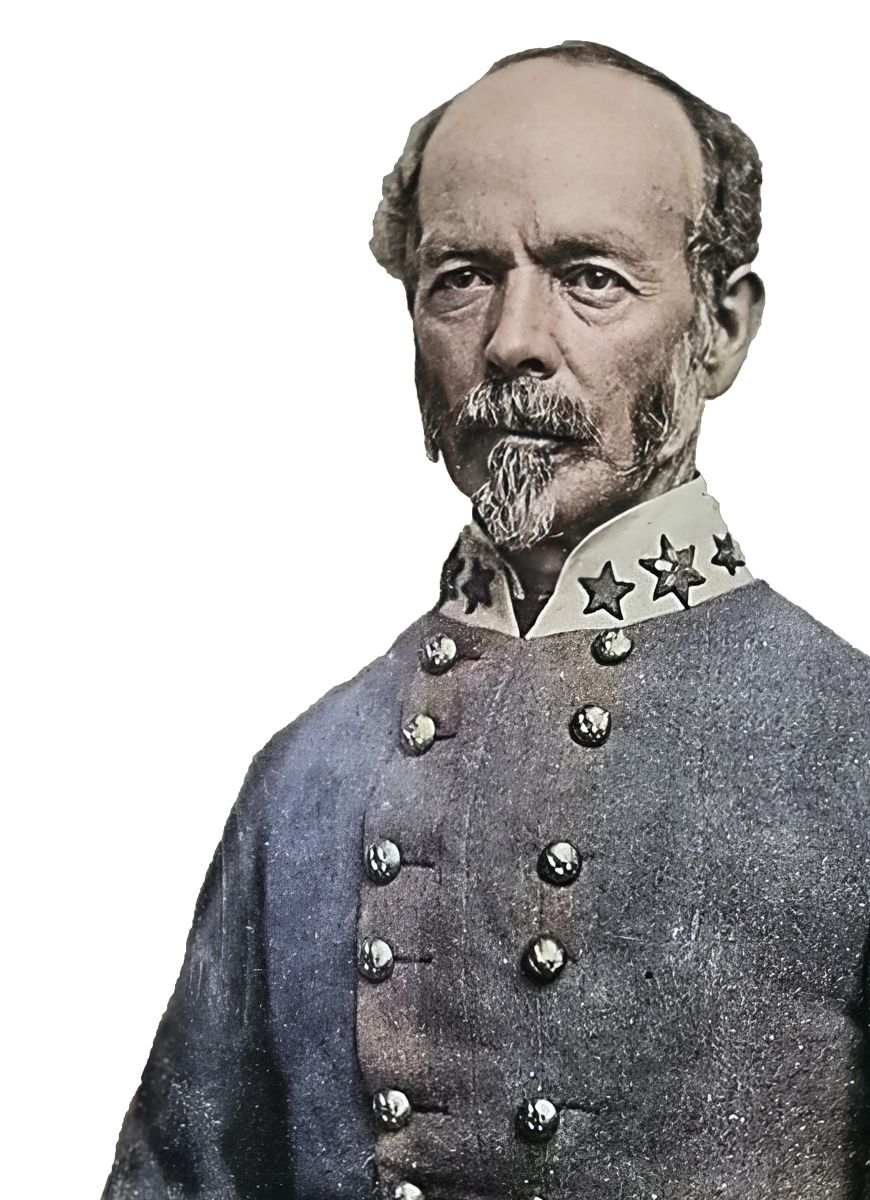
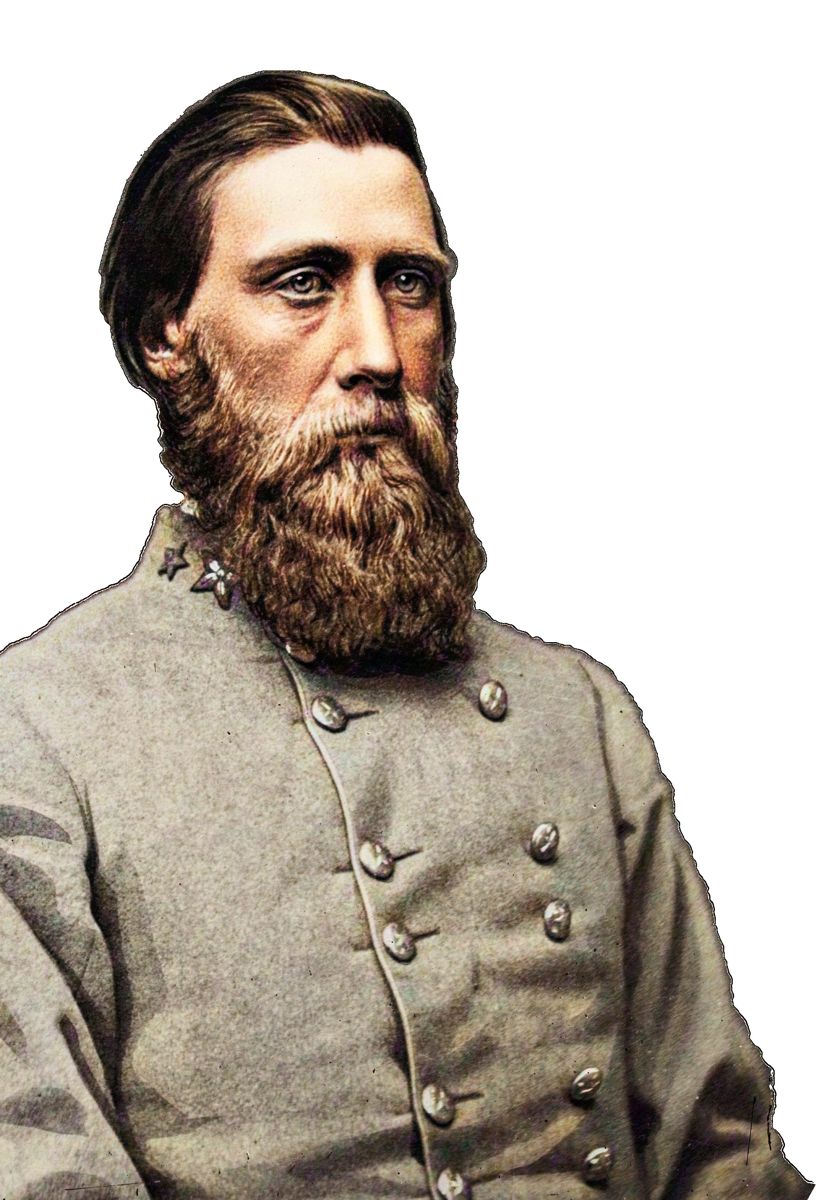
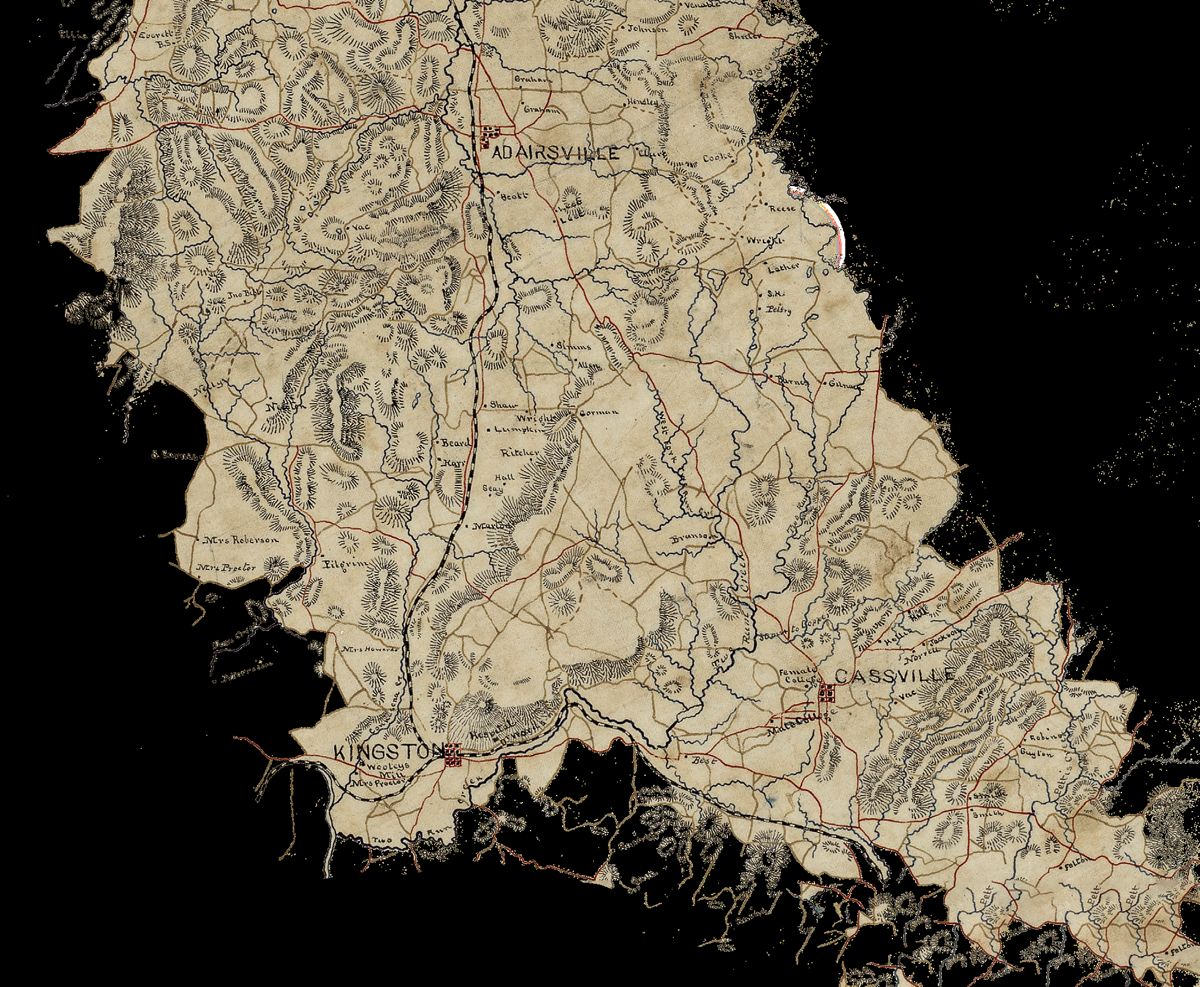
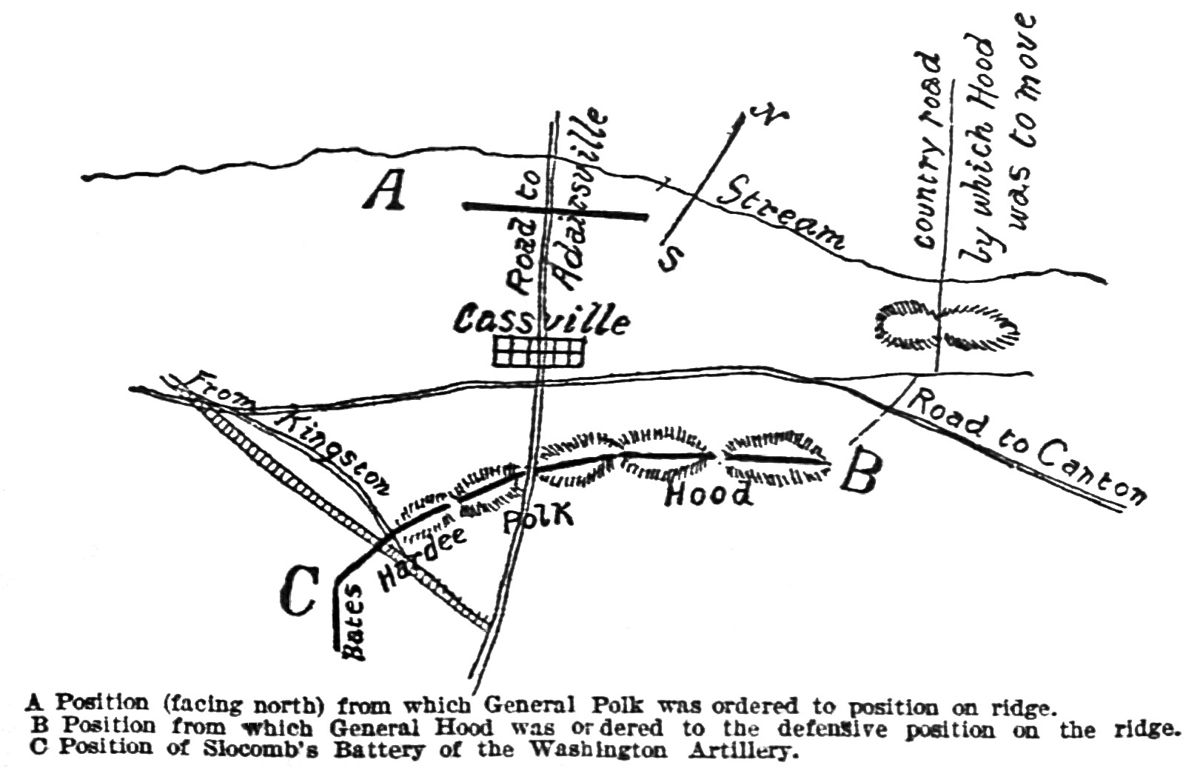
The Cassville Affairs Johnston, Hood, and the Failed Confederate Strategy in the Atlanta Campaign, 19 May 1864
by Robert D. Jenkins, Sr.
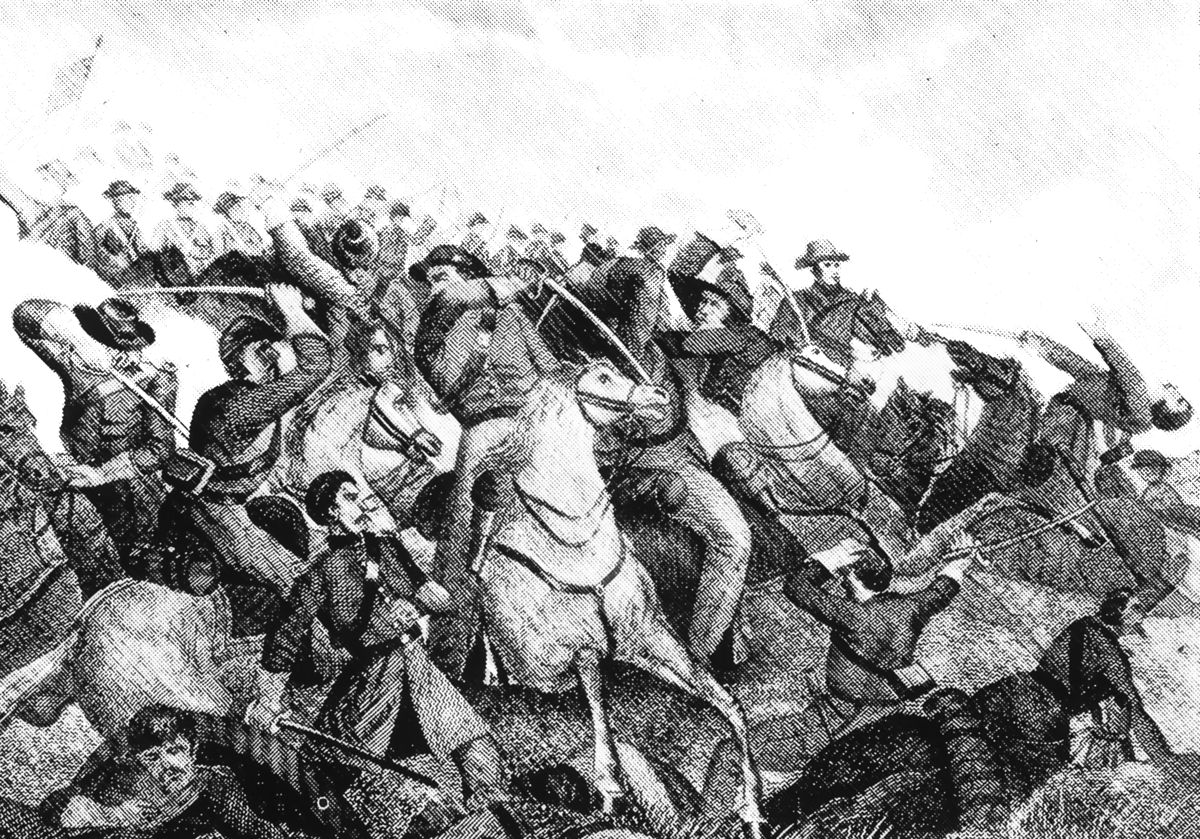
Civil War historians have remained baffled over the Cassville controversies for the past 150 plus years. There are two versions of events: Confederate commanding General Joseph E. Johnston’s story and Lieutenant General John Bell Hood’s story. The Cassville Affairs promises to change our understanding of the events surrounding Cassville and close the gap in its history. Use coupon code MUPNEWS at checkout to receive a 20% discount on your entire order. Or—call 866-895-1472 toll-free to place your order with a Visa/MC. Shipping charges apply. $39, hardback • 440 pages • Bibliography • Indexes • Illustrations • Period & Modern Maps
“Robert Jenkins has offered up a provocative new look at this pivotal moment in the decisive struggle for northern Georgia in the summer of 1864—and in the process, has overturned the conventional wisdom concerning Cassville by adding a deep new understanding of what happened here. This book should be considered essential reading for anyone studying the Atlanta Campaign.” —David A. Powell, award-winning author of The Chickamauga Campaign trilogy