
Two Pardons, One by Each Side, for One Soldier
By Carl L. Sell Jr. · Originally published March 2024 · pp. 14–15
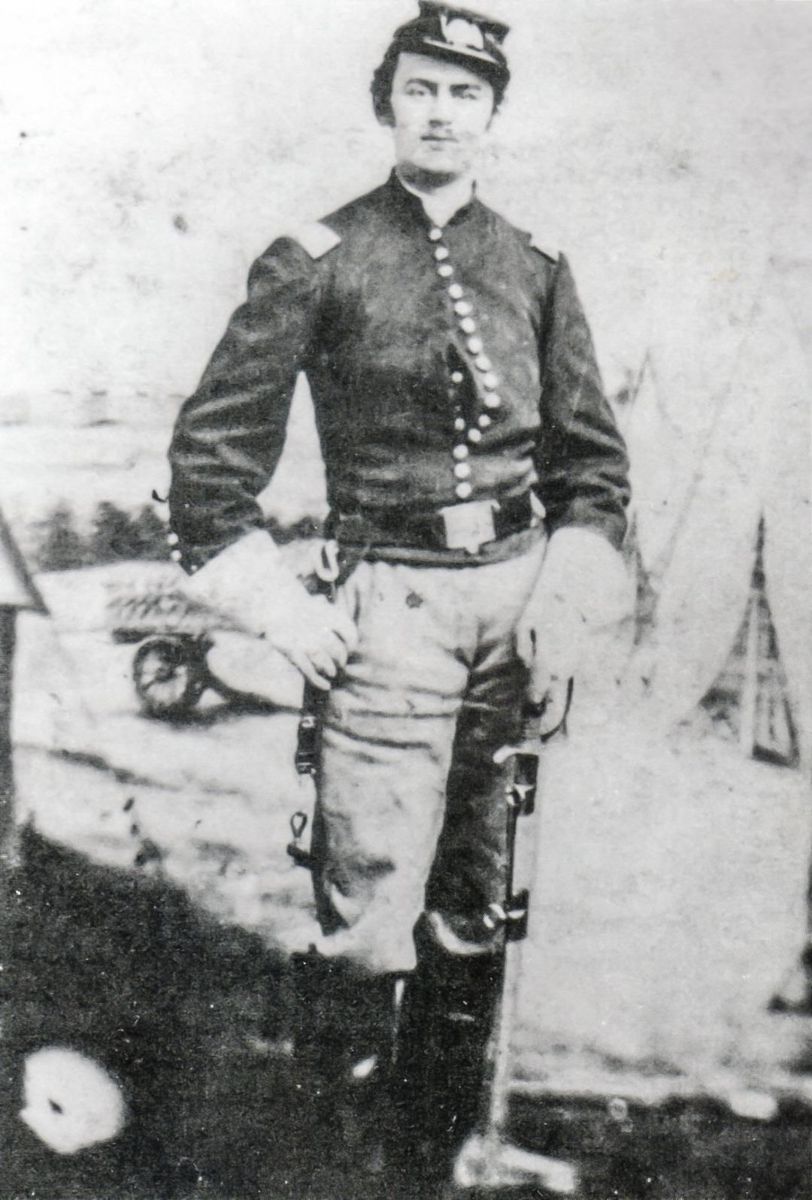
Two Pardons, One by Each Side, for One Soldier By Carl L. Sell Jr. Francis (Frank) Donaldson was a fast talker and opinionated Union soldier from Philadelphia who survived the Civil War. He was twice pardoned, once by each side, captured, wounded, and found guilty in 1864 by court-martial. His brother, John, was a Confederate soldier who obtained a pardon for his brother from Virginia’s Governor John Letcher in 1862 after Frank had been captured at Balls Bluff. When asked about his brother’s decision to fight for the South, Frank said, “I do not blame him because he believes he is right.” John was a member of the 22nd Virginia Infantry. Despite the war, the brothers were able to keep up with each other through the military grapevine and their brother Joseph back in Philadelphia. Most of Frank’s letters wound up in a book that aided the research for this article. An unabashed admirer of Gen. George McClellan, Frank spoke in derogatory terms of Union leaders Ambrose Burnside and Joseph Hooker, both of whom were decisively defeated by Gen. Robert E. Lee’s Confederates at Fredericksburg and Chancellorsville, respectively. Frank’s last major battle was at Gettysburg. Hooker was relieved by Gen. George Gordon Meade just days before Gettysburg. Donaldson didn’t like Meade either, but he did give him credit for positioning the Union army between Confederate cavalry leader JEB Stuart’s forces and the
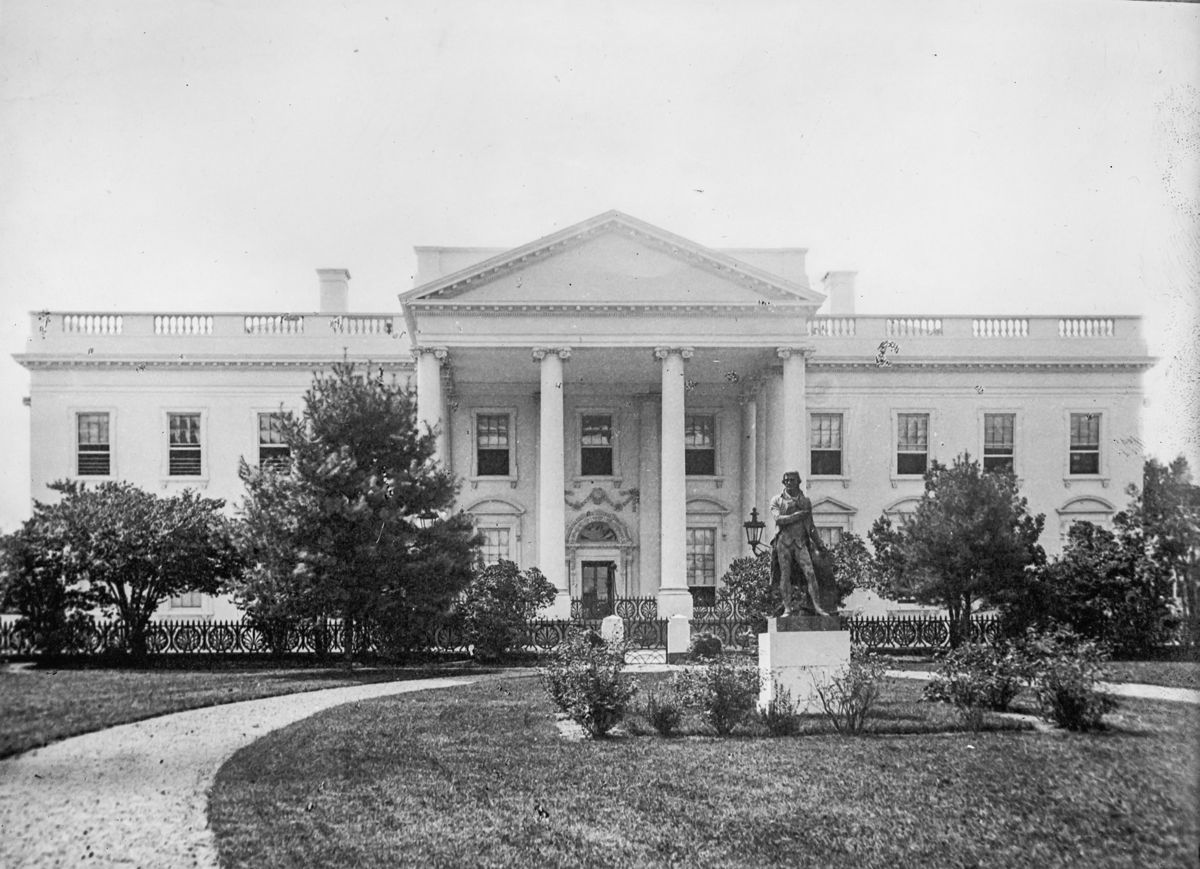
White House entrance in early 1860s.
Confederate infantry on the way to Gettysburg. Frank Donaldson was involved in two earlier battles on the Potomac River, first at Balls Bluff in October 1861 as a member of the 71st Pennsylvania Regiment, and then in September 1862 at Shepherdstown, Va., while serving with the 118th Pennsylvania. In between, he was wounded at Fair Oaks, Va., on May 30, 1862, serving under McClellan during the Peninsula Campaign. He admitted that he broke down and cried when McClellan was relieved after Antietam. He was recruited for the 71st Pennsylvania Infantry, known as the California Regiment, although all the members were from Pennsylvania in a geographic quirk early in the war. The brigade was led by Brig. Gen. Charles P. Stone and included a regiment commanded by Sen. Edward Dickinson Baker, who represented Oregon and was a close friend of President Lincoln. In fact, Baker had visited Lincoln at the White House the day before the Oct. 21-22 battle at Balls Bluff. Baker had recruited all the men of the 71st in Philadelphia. Donaldson was mustered in as a sergeant in Company H on June 4, 1861. At Balls Bluff, Donaldson was captured after a member of the 18th Mississippi stopped him as he headed back toward the battlefield. Just moments earlier, Baker had been killed by the Mississippians as the Yankees were being pushed back down the bluffs to the Potomac River. Donaldson was just behind Baker when the colonel was shot in the heart while, leading a charge. He said he didn’t see Baker get hit, citing smoke and fog, but he did see him fall. The battle became a rout as Union soldiers retreated back across the river into Maryland. Donaldson later was involved in the same situation at Shepherdstown, about 50 miles up the Potomac, as Federal troops were rebuffed after crossing the river in the aftermath of Antietam in September 1862. As was the case with Balls Bluff, Donaldson’s outfit, by then the 118th Pennsylvania, suffered massive casualties as they fled. Union prisoners from Balls Bluff, including Donaldson, were marched 25 miles to Manassas, where they boarded railroad cars for Richmond. Donaldson reported the prisoners were given bread and beef to eat. In Richmond, the prisoners were shuttled between tobacco warehouses until he wound up in Libby Prison. While incarcerated, Frank somehow ran across some friends of his brother, John, who was in camp in western Virginia. John had been involved in a number of battles in the Kanawha Valley and the New River Valley in what is now West Virginia. As soon as he heard of his brother’s fate, John and the 22nd’s adjutant, Noyes Rand, traveled to Richmond to see Frank and try to get him released. They successfully petitioned Virginia Governor Letcher for a release and got him a job and a place to stay before returning to camp at Lewisburg in Greenbrier County, a long way from Richmond. Frank was exchanged on Feb. 19, 1862, rejoined his old unit, and was chosen as captain of Company H, just in time for the major battles of McClellan’s Peninsula Campaign. The brothers wouldn’t see each other again until after the war. At Fair Oaks, Donaldson was shot by a musket ball through his left arm. He was evacuated by rail to a ship on the York River headed to New York. Poor weather on the Atlantic Ocean forced the ship to be rerouted up the Chesapeake Bay to Philadelphia, where he convalesced at the Broad Street Military Hospital. While at home in Philadelphia after the wounding at Fair Oaks, Frank Donaldson was recruited by the Philadelphia Corn Exchange Regiment. He was commissioned as a captain and given a $160 bonus by the commodities exchange, which was organizing recruits in response to President Abraham Lincoln’s call for additional troops to fill Union ranks after one-year enlistments expired. As the new regiment headed toward the Army of the Potomac, Donaldson suffered a bayonet wound while handling arms and equipment at Baltimore. The One Hundred Eighteenth was still being trained at the time of Antietam. The recruits had joined the Army of the Potomac near Leesburg, Va., and were continuing drills as the booms of the cannon and rifle fire were heard from along the banks of Antietam Creek near Sharpsburg. Two days after the battle, the 118th was involved in an abortive attempt to attack the retreating Confederates at Shepherdstown. They, along with four other Union brigades, were chased back across the Potomac River, with the 118th suffering 200 casualties, some resulting from the fact that their antiquated weapons failed to fire. After Shepherdstown, Donaldson and the 118th were engaged at Fredericksburg, arriving at the Virginia city two weeks before the pontoons necessary to cross the Rappahannock River did. He said the men played cards and fished in the river until the attack was launched. The 118th stormed the Confederates behind the stone wall several times at Marye’s Heights, again suffering many losses. According to Donaldson, the Army of the Potomac marched across the Rappahannock, convinced that Hooker’s plan to flank the Confederate army at Chancellorsville would result in the destruction of the enemy. Of course, the opposite happened as Lt. Gen. Stonewall Jackson’s famous flank march destroyed the right flank of the Union army, although the famous general was mortally wounded by friendly fire, robbing General Lee of one of his most effective commanders. The 118th saw little action at Chancellorsville, mostly serving as the rear guard for a beaten, retreating army. General Meade called upon the unit to restore order as a mutiny broke out among disorganized and unhappy troops during the retreat. Hooker bore the brunt of dissatisfaction, and it wasn’t long before he was relieved and Meade gained command of the army. On the way to Gettysburg, Donaldson and the men cheered an erroneous rumor that General McClellan would regain leadership of the Union Army. They didn’t like General Meade, who replaced Hooker on June 27.
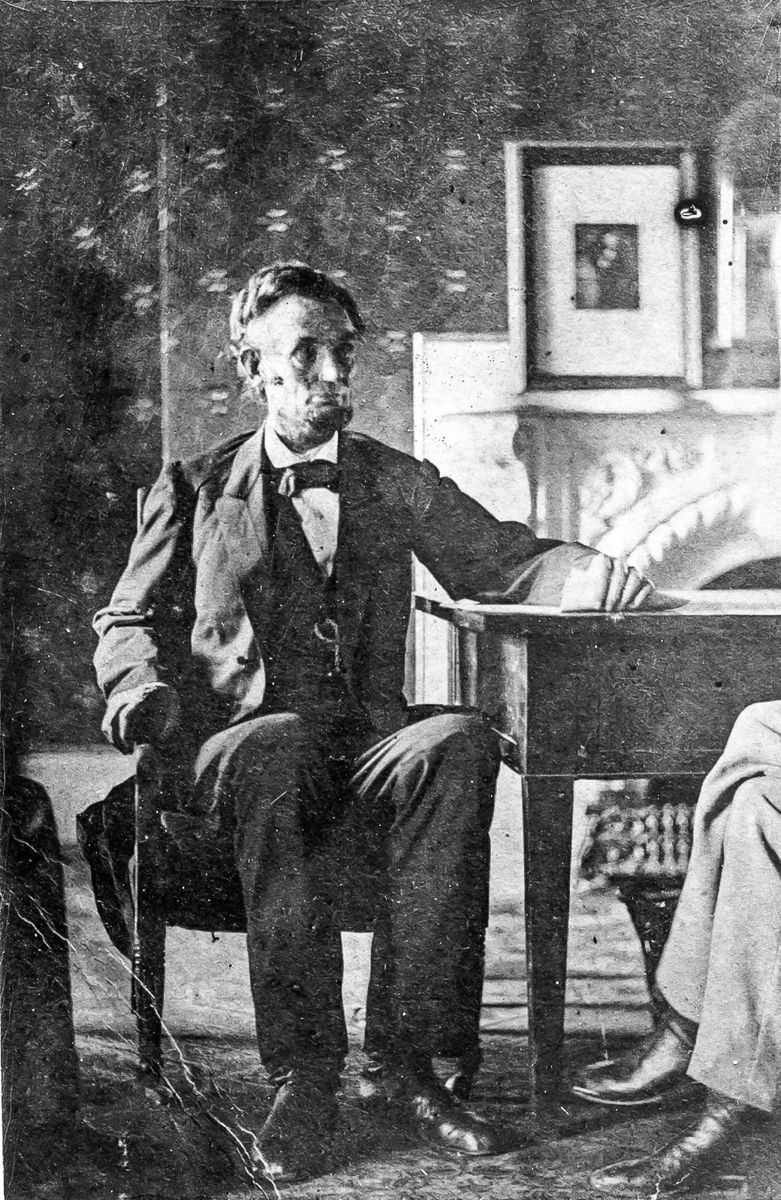
Lincoln in his White House office.
CivilWarNews.com “Old Four Eyes,” Donaldson said they called him. Later, the men agreed that Meade was the man of the hour at Gettysburg. As the first day at Gettysburg unfolded, the 118th marched 47 miles, arriving on the battlefield in the early hours of July 2. After only two hours rest, they were assaulted by Confederate Lt. Gen. James Longstreet’s Corps at the Peach Orchard, giving up ground until a successful, but short lived counterattack by the Pennsylvania Reserves. The 118th spent day three reorganizing and caring for the dead and wounded. After Gettysburg, the 118th and the Union Army followed Lee and the Confederates back into Virginia, but a planned assault was called off at Mine Run. Donaldson and his men found themselves back in camp near Falmouth. Since Shepherdstown, Donaldson had engaged in numerous differences in opinion with Lt. Col. James Gwyn, and it appeared only a matter of time before those differences reached a climax. Gwyn, like Donaldson, had been with the Corn Exchange Regiment since it was formed. Gwyn was promoted to colonel in the fall of 1863 and went home to Philadelphia on leave because of illness. When he returned, he accused Donaldson as being the source of some uncomplimentary articles that had appeared in the Philadelphia papers. Later, the Regiment was assembled to greet its commander and the occasion of his promotion. Donaldson was late for the assembly, a fact that Gwyn mentioned in his remarks, and ordered the captain to take his company to the drill field for two hours. Donaldson said he later went to Gwyn’s tent to explain his tardiness, and an argument ensued. The two had words, and Donaldson said Gwyn drew his sword, so Donaldson unsheathed his pistol. Gwyn had Donaldson arrested and held for a courtmartial hearing. Donaldson, who offered no defense, was found guilty on December 20 and dismissed from the service. Donaldson returned to Philadelphia and didn’t learn of the verdict until January 6. Donaldson’s only avenue of appeal after being judged guilty was to seek a pardon from the President of the United States. So he contacted Congressman Charles O’Neill and asked for help arranging a meeting. O’Neill agreed to meet Donaldson at the Metropolitan Hotel in Washington City on May 2, 1864. At first, the Congressman didn’t seem overly interested in Donaldson’s case but quickly changed his mind. The next morning, at Willard’s Hotel, Donaldson met O’Neill, Postmaster General Montgomery Blair, Secretary of the United States Senate John W. Forney, and Thomas Webster of Philadelphia, who had been appointed to raise recruits for the new United States Colored Troops, which had recently been authorized. The group walked across the street to Lincoln’s private White House office, where they were joined by others seeking audiences with the President. Lincoln entered the room and recognized Forney, who introduced Donaldson, saying “this is the young gentleman we told you about.” He repeated Donaldson’s case, told Lincoln in glowing terms what a fine, upstanding young man Donaldson was and who was engaged to be married. Lincoln shook Donaldson’s hand with one hand, put his other hand on his shoulder, and suggested he go home, marry the young lady, and start a family (hopefully all boys because the Union needed recruits, and it appeared that a long war was inevitable). Lincoln also said he would advise Judge Advocate General Joseph Holt to “remove the stain of the sentence.” Frank took the President’s
CivilWarNews.com advice, went home, and married Mary Landell. However, they had two girls, Frances, born in 1875, and Kate, the following year. In addition to John, Frank’s other brothers were Jacob, who lived until 1915, and Charles, who died at age 5 in 1839. The Donaldson boys had a grandfather who had been the Sheriff of Philadelphia. Their parents died before the war. John worked in the insurance business until he died in 1928 at age 87. Mary died the next year. Two years older than Frank, John Donaldson had moved from Philadelphia to Charleston, then part of Virginia, in 1856 and worked in the retail and commercial hardware business. He joined a local militia group in May 1861 that became part of the 22nd Virginia Infantry Regiment commanded by Col. George Patton, whose grandson later was the United States’ legendary World War II lieutenant general. John Donaldson was wounded in the side and shoulder at Droop Mountain in 1863 and captured at Cold Harbor in 1864. He was imprisoned at Point Lookout, Maryland, for several weeks before being transferred to Fort Delaware in the Delaware River south of Philadelphia. He was released on June 10, 1865, moved to Cincinnati, and then back to Philadelphia, serving as a businessman in both cities. He died in an Atlantic City, New Jersey, sanitarium in July 1901. John never married. *Although not often mentioned, Meade wore pince-nez glasses that were attached to his uniform. The glasses were balanced on the nose and could be folded while not in use. Meade was also known as “Old Snapping Turtle” by his men. This story leans heavily on Donaldson’s book, Insights into the Army of the Potomac, Historian Ben Trittipoe, as well as the Official Records, and other history publications. Those interested in learning more about actual life during the war are encouraged to read Donaldson’s book. For the record, Colonel Gwyn was wounded at The Wilderness and later was breveted as a brigadier general for service in 1864 at Petersburg and then major general at Five Forks on April 1, 1865. Gwyn died in 1906 and is buried in Philadelphia. Carl Sell is a writer of occasional articles for the Civil War News. He can be reached at sellcarl@ aol.com or 703-971-4716.