
Through The Lens
To A Man Up A Tree
By Stephanie Hagiwara · Originally published March 2024 · pp. 8–9
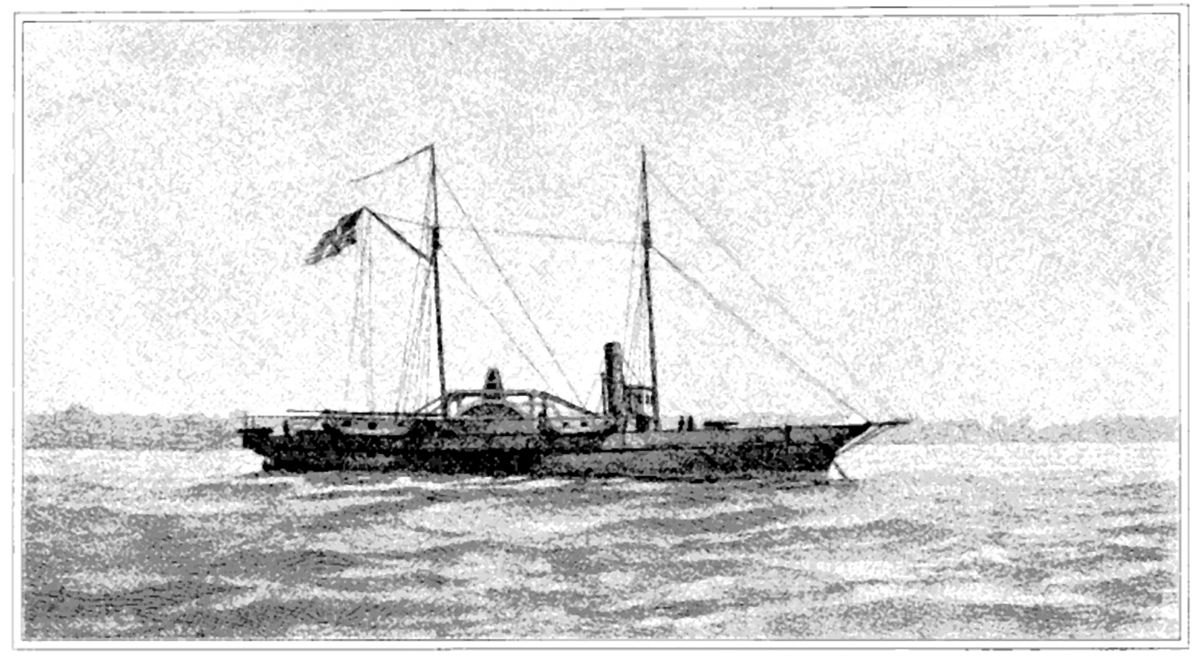
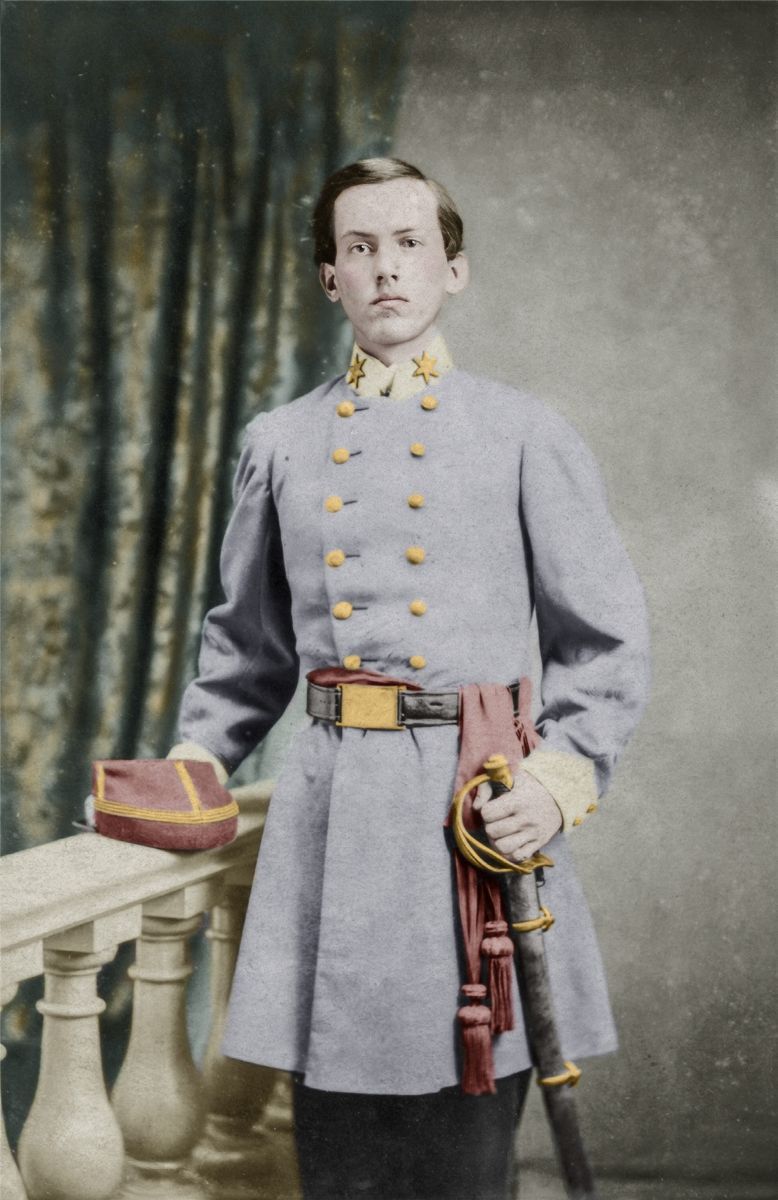
To A Man Up A Tree “Had I been supplied with four Whitworth guns I firmly believe you might have slept in New Bern that night.” – C.S. Gen. James Johnston Pettigrew On February 25, 1863, C.S. Gen. James Longstreet took command of the Department of Virginia and North Carolina. One of Longstreet’s assignments was protecting the Confederate supply chain to Richmond, Va. It had become endangered by the Federals’ March 14, 1862, capture of New Bern, the secondlargest port in North Carolina. From New Bern, U.S. Gen. John Foster, Department of North Carolina, led an expedition that burned a railroad bridge near the vital train junction in Goldsboro, N.C., and seized or destroyed the surrounding livestock and foodstuffs. Longstreet appointed North Carolinian Gen. Daniel H. Hill, commander of the North Carolina District. Hill had a reputation as a fighter and immediately requested more troops “to assume offensive operations.” Hill contended that “… the planters are now at a loss to know what to do and will not pitch another crop until the presence of a competent force in North Carolina will guarantee protection.” Longstreet ordered Gen. William H.C. Whiting to send “half your force” along with one of his three long range Whitworth rifled cannon. Whiting, citing his own request for a brigade, sent 4,000 men without the British-made gun. Hill launched his three-prong attack on New Bern from Kinston, N.C., to coincide with the oneyear anniversary of its capture. Gen. Junius Daniel’s Brigade was assigned to move on the “lower Trent road.” On March 13-15, 1863, the Battle of Fort Anderson, aka the Battle of Big Gully, began as Federal pickets greeted Daniel with gunfire before retreating two miles to the entrenchments at Big Gully, ten miles outside New Bern. On March 14, at daylight, the Confederates exchanged fire for three hours with three Federal regiments and their two pieces of artillery. Daniel personally led four companies in a successful charge to drive the bluecoats out. The second prong was C.S. Gen. James Johnston Pettigrew’s 7,000 men with seventeen artillery pieces under Maj. John C. Haskell. Pettigrew, a lawyer who had studied military science in Europe, was “a singularly com/cwn. (National Archives)
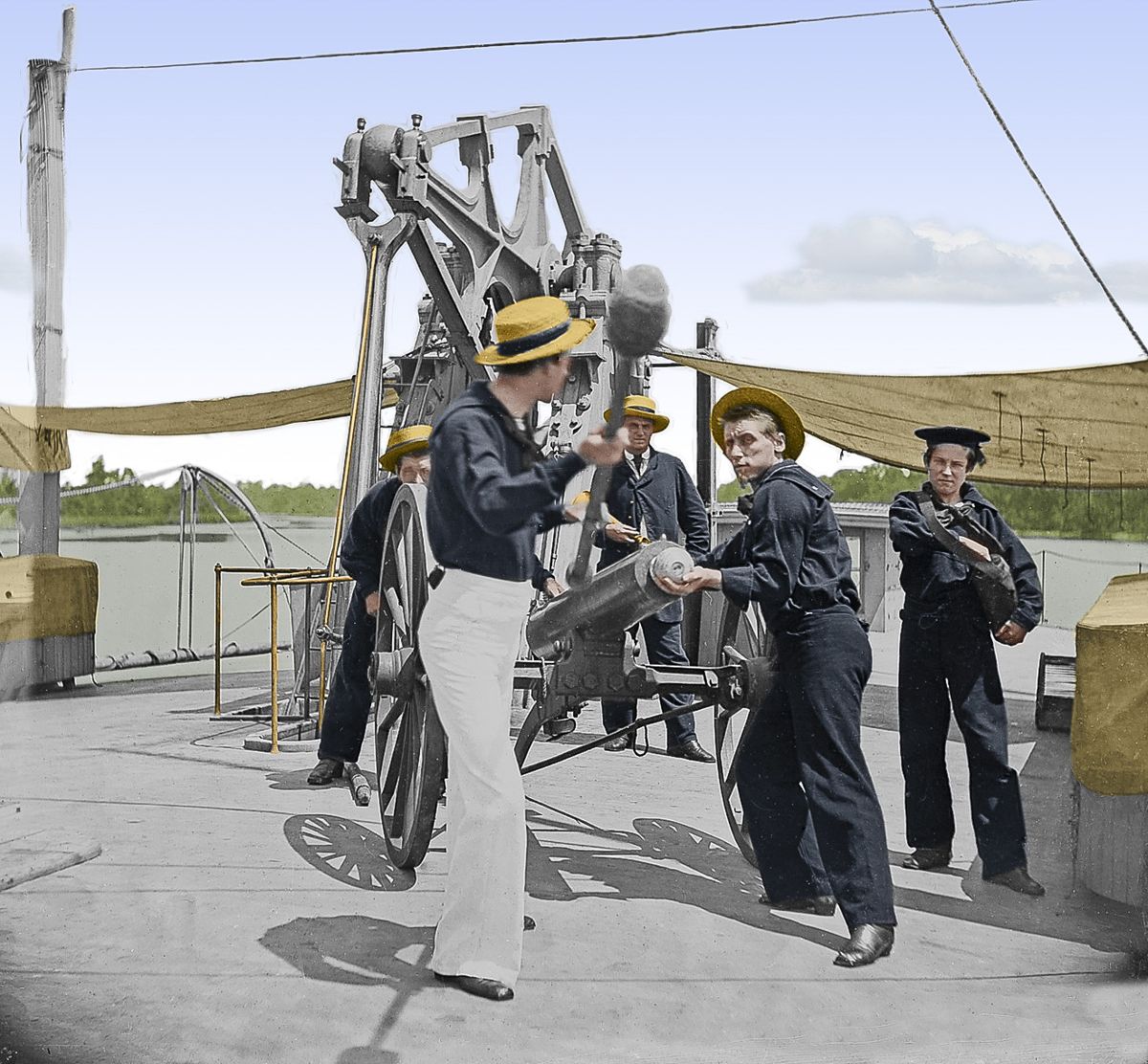
charming man, whose men were devoted to him and felt the most implicit confidence in him.” According to Haskell, Pettigrew’s inexperience “in men’s capacity to march,” resulted in his exhausted men arriving a few miles from their target of Fort Anderson, a day earlier than Hill’s other troops. Fort Anderson, located across the Neuse River from New Bern, was an unfinished earthwork situated in a swamp, accessible only by a wagon-wide, quarter mile-long causeway and numerous cattle tracks. It was garrisoned by 300 men of the 92nd N.Y. Volunteers. On March 14, at dawn, “four batteries, supported by skirmishers and immediately followed by the infantry,” dashed down the causeway. Haskell’s guns opened fire. Deeming that he had shown sufficient force to “demoralize” the defenders and wanting to save his own men, Pettigrew sent a demand for surrender. U.S. Col. Hiram Anderson countered with a request for a cease-fire so that he might communicate with his commanding officer. Against fervent advice, Pettigrew agreed. In New Bern, the Confederate firing was initially mistaken as an early start to the planned celebration of the town’s capture. A “gay time” had been planned with “plenty of beer.” Instead, the New Bern soldiers formed in light marching order and ‘’it looked as if our breakfast as well as beer will get stale.” The Federals used the ceasefire to signal for reinforcements. Soon smoke from the approaching gunboat USS Hunchback, a converted New York ferryboat, was spotted. Haskell “sharply” fired on the Hunchback, which soon ran aground. A Federal battery across the Neuse joined the battle. The parade ground of Anderson “was riddled by shot and shell, and the parade literally blown up by the enemy’s artillery.” Nevertheless, lieutenants Merrill, Nathanial Barstow, 24th Mass., and his flagman Timothy Marsh, 21st Mass., continued to give “directions, distances and elevations to the gunners” on both river and land. The Hunchback sustained the hot exchange with the Rebels for 30-45 minutes while the USS Hetzel was towed into position. The Hetzel fired three shells from her IX-inch gun, and “the enemy’s battery was silenced.” Unbeknownst to the Federals, about the first hour, a 20-pdr. Parrott gun had burst, killing one man and seriously wounded two others. Initially, Haskell had been able to position his guns to fire 400 yards distance at Fort
CivilWarNews.com Anderson with great precision. The “very inferior ammunition” made striking the gunboats at 1 3/4 miles distance ineffectual. Shells from all four 20-pdr. Parrott rifles would “burst at the mouth of the gun.” Instead of storming Anderson with the infantry, Pettigrew had the guns gradually withdrawn. During the retreat, the axle of another 20-pdr. Parrott damaged during the battle broke in two. The gun was hidden for later retrieval. Regarding the Parrotts, Pettigrew hoped to never “see them again.” Haskell would recommend not returning the borrowed 20-pdr. Parrotts to the Macon Light Artillery “as it is a good company and deserves better than to have its members wounded and killed by defective guns.” The third prong, C.S. Gen. B. H. Robertson’s cavalry “were to break up the Atlantic and North Carolina Railroad.” Instead, Robertson sent out “a lieutenant, who partly cut the railroad. He sent out a colonel, who saw some Yankees and came back.” The episode confirmed Hill’s previous assessment that Robertson’s cavalry was “wonderfully inefficient.” Hill withdrew his forces. Alexander Murray, Senior Naval Officer, Sounds of North Carolina, was “gratified that the navy had such an opportunity to protect the army.” The navy inspected the battlefield and discovered the burst Parrott gun and “fragments of bones, clothes, etc.” The conclusion was that “one of the 9-in. shells from the Hetzel was probably one of the most destructive projectilesthrown during this war from either side.” Southern newspapers reported Hill’s demonstration as a victory with 1,500 prisoners taken. Hill’s men not only knew that the newspaper articles were false, but they also doubted if Hill even had an objective for his New Bern expedition. Walter MacRae, a participant at Big Gully wrote, “I must say it looks very like it to a man up a tree. These big generals don’t always have such deep laid plans as people give them credit for.” Sources: • Barrett, John G. The Civil War In the North: The University of North Carolina Press, 2017. • Haskell, Col. John Cheves. The Haskell Memoirs: The Personal Narrative of a Confederate Officer: Golden Springs Publishing, 2015. • United States, War Department. The War of the Rebellion: A Compilation
•
of the Official Records of the Union and Confederate Armies. Washington: 1894. Serial 26, Chapter XXX, pp. 183–199. In the United States Navy. Report of the Secretary of the Navy, December 1863: Washington Government Printing Office, 1863, pp. 58-63.
Stephanie Hagiwara is the editor for Civil War in Color.com and Civil War in 3D.com. She also writes a column for History in Full Color.com that covers stories of photographs of historical interest from the 1850’s to the present. Her articles can be found on Facebook, Tumblr and Pinterest.