
The Graphic War
Soldiers Rest, Alexandria, Virginia
By Salvatore Cilella · Originally published March 2024 · pp. 30–31
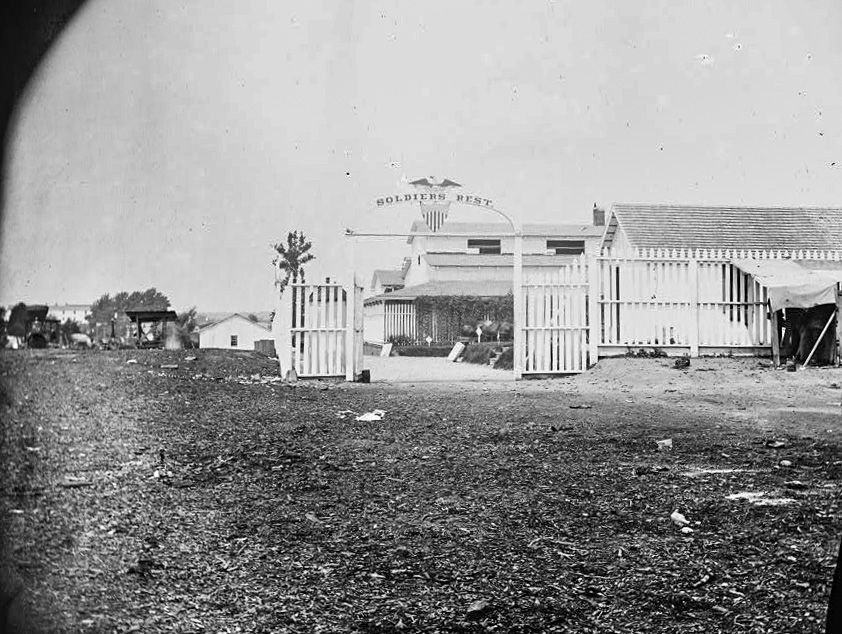
Soldiers Rest, Alexandria, Virginia The Graphic War highlights prints and printmakers from the Civil War discussing their meaning and the printmaker or artist’s goals. As the war dragged on, Confederate and Federal administrators scrambled to provide adequate hospital and care centers for the wounded and disabled. The North with its superior material advantages established a series of hospitals and “soldier’s rest” facilities in and near the war action. This inevitably devolved on the Washington area where countless hospitals, one count placed it at 85, were built. Initially, as on the battlefield, houses, churches, municipal and federal properties, and even barns, were used to house the wounded. In Washington all those resources in addition to the Capitol and Patent Office building were used as “hospitals.” “As the war casualties mounted, the city with a population of 75,000 was forced to house as many as 50,000 patients. The government established 25 military hospitals in the city and neighboring counties.” In addition to the hospital building fervor, military forts and logistical depots soon occupied the capital’s perimeter. This included Alexandria, occupied by Union forces as early as May 1861. The city soon became “a logistical supply center for the federal army. Troops and supplies were transported to Alexandria via the port and the railroad and then dispersed where needed at the front. Wounded soldiers, brought back on the trains, crowded the available hospitals and temporary medical facilities in and around the town.” Ultimately, Alexandria established more than 30 hospitals with 6,500 beds. Washington and Alexandria also established “Soldier’s Rests,” a concept kept alive during the Vietnam War where “Rest and Recreation” posts (R&R) were maintained in Hawaii, Australia, Thailand, and other “garden spots” of southeast Asia. In Alexandria, the Soldier’s Rest was located on the south side of Duke Street, near S. West Street. Today, the Shiloh Baptist Church’s meeting center and Old Town Village townhomes occupy this location. Originally, the Army adapted a large warehouse at the corner of Duke and Union Streets. When that proved inadequate, they built Soldier’s Rest.
According to the Alexandria Gazette, the Rest was “designed for the accommodation of U.S. troops arriving and remaining temporarily in this place.” Located at the “upper end of Duke Street near the O&ARR depot, [it] is said to be the largest and most complete establishment for the purpose contemplated, in the U.S. or anywhere else. It has sleeping apartments, bathing rooms, reading rooms, etc. etc. The estimated cost of the whole establishment is $50,000.” It also included a guard house, dining hall, and large kitchen. (Figs. 2 & 3.) The key to its function was its location near the Orange and Alexandria Railroad providing easy access to soldiers traveling to and from the front. Abolitionist Julia Wilbur of Rochester, New York, lived in Alexandria during the war and she described the Rest to a friend in 1863: “The Soldier’s Rest is guarded by 75 of the
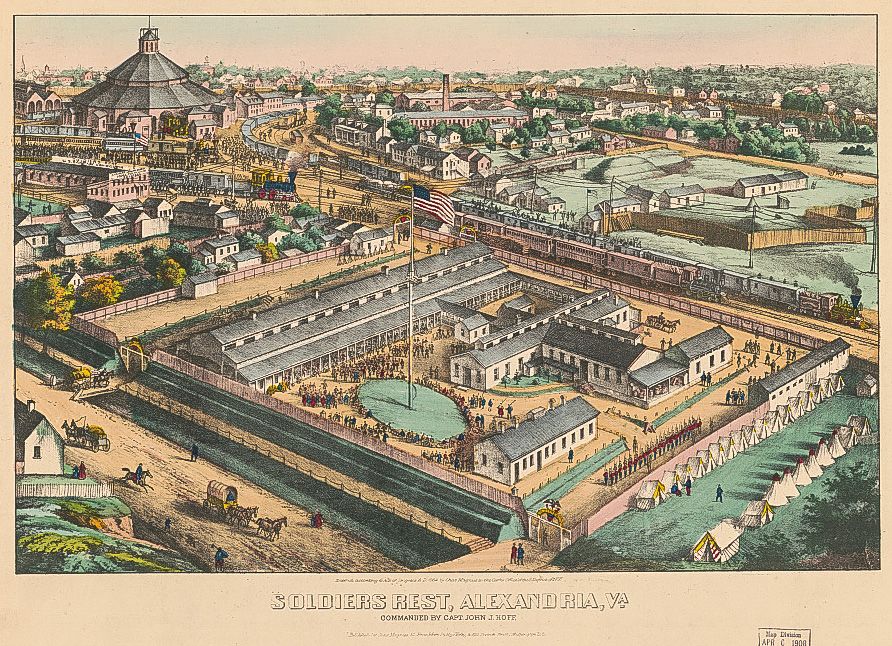
Invalid Corps. They are kept very strict. I was there a few days ago, & had some Anti-Slavery & temperance tracts. They [soldiers] almost grabbed them, they have no reading there now.” The Army’s Quartermaster noted “these buildings are constructed substantially & finished in an efficient & tasty style, and every precaution taken to render them pleasant, comfortable and healthy.” As events escalated in the field with Grant’s Overland Campaign in the spring of 1864, the urgent need for hospitals increased. On May 28, 1864, the Alexandria Soldier’s Rest became a hospital to alleviate the rush of wounded from The Wilderness, Spotsylvania, and Cold Harbor. It served as part of the 1st Division General Hospital until it returned to its original use as a rest stop. Charles Magnus, a prolific lithographer of whom we have written previously, captured the mini-city in 1864 at the height of its use as a hospital. Magnus operated a lucrative printing shop in Washington just across the Potomac. From there he produced countless images of military posts, camps, hospitals, letterheads, patriotic envelopes and small folio city views. According to one historian, “the city of Alexandria…stimulated his imagination.” His busy interpretation reveals a lively and dynamic military post adjacent to the railroad, with its large round house in the left background. (Fig.1) Soldiers and civilians approach gates on various points of the large, enclosed facility. As often with these military post’s prints, lithographers took “poetic license” portraying order, efficiency, and purpose. According to Magnus, the commanding officer was John J. Hoff. Hoff enlisted as a 2nd Lieutenant in Battery A, First New Jersey Light Artillery in July 1861; he resigned in November 1862 and was commissioned a captain in the US Volunteer Commissary. Hoff served until he mustered out as a major in 1866. After the war, the property was abandoned and sold at public auction in 1866. “Gentlemen of this city,” reported the Alexandria Gazette, purchased the property “at comparatively cheap rates.” It assured its readers that “the buildings will be readily removed.” Endnotes 1.
“Historic Medical Sites near Washington DC,” National Library of Medicine, https:// www.nlm.nih.gov/hmd/historicmedical-sites/index.html. Ibid. “Alexandria During the Civil War,” City of Alexandria, https://www.alexandriava.gov/CivilWar. “Union Hospitals inAlexandria,” City of Alexandria, https://www.alexandriava.gov/historic-sites/union-hospitals-in-alexandria. The Alexandria Gazette, October 21, 1863. From a letter of Julia Wilbur,
CivilWarNews.com Nov. 20, 1863 to Mrs. Barnes. Rochester Ladies’ Anti-Slavery Society Papers, 1851-1868, William L. Clements Library, University of Michigan. 7. City of Alexandria website. https://www.alexandriava.gov/historic-sites/basic-page/soldiers-rest. 8. The Divisions do not apply to officially designated Army divisions, only hospital organizations. 9. E. Richard McKinstry, Charles Magnus, Lithographer: Illustrating America’s Past, 1850-1900, 136. 10. Francis B. Heitman: Historical Register of United States Army 1789-1903, I, 534. 11. The Alexandria Gazette, November 12, 1866. After 43 years in the museum field, Cilella devotes his time to collecting American prints and maps and writing. He has written extensively on Emory Upton: Upton’s Regulars: A History of the 121st New York Volunteers in the Civil War (Kansas, 2009); a two-volume Correspondence of Major General Emory Upton, (Tennessee, 2017), received the 2017–2018 American Civil War Museum’s Founders Award for outstanding editing of primary source materials. He edited Upton’s love letters 1868-70 to his wife—Till Death Do Us Part (Oklahoma, 2020) and The Memoirs of Dewitt Clinton Beckwith of Upton’s Regulars (McFarland, 2023).
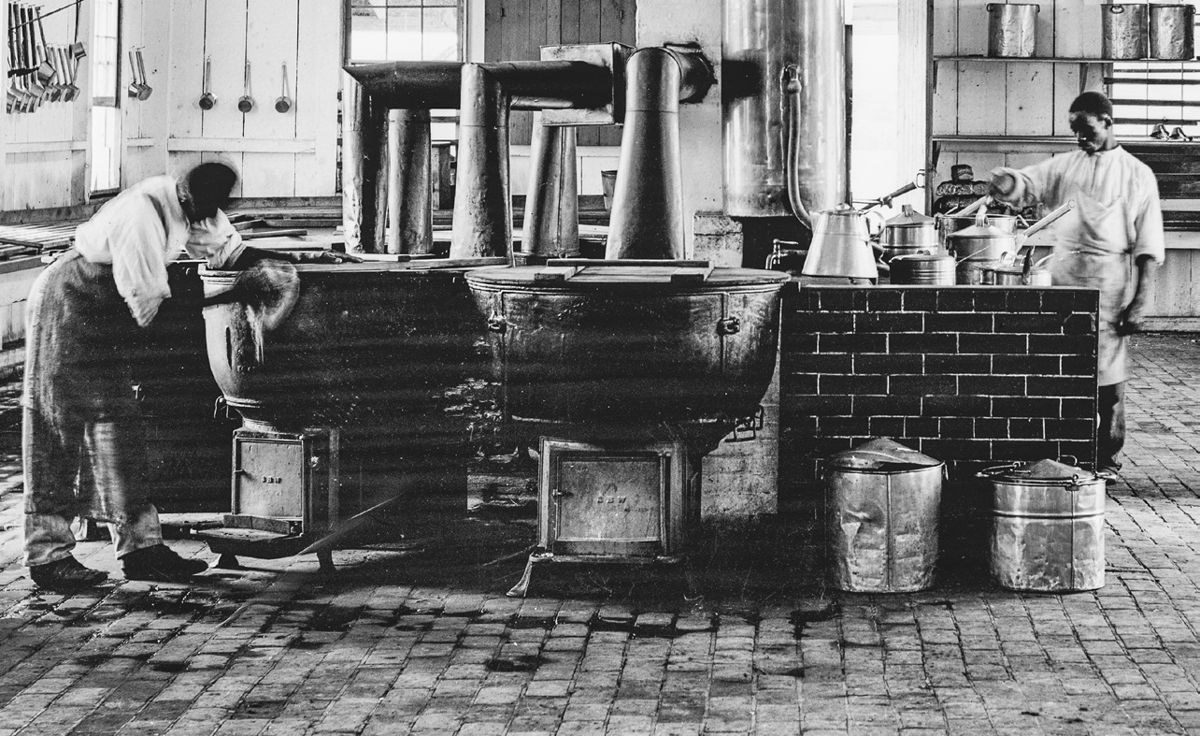
Figure 3. Photograph Cooks in the Kitchen, Soldier’s Rest Alexandria. (Library of Congress)