
A Heartfelt Tribute of Parental Affection
By Joseph Wilson · Originally published March 2024 · pp. 22–23
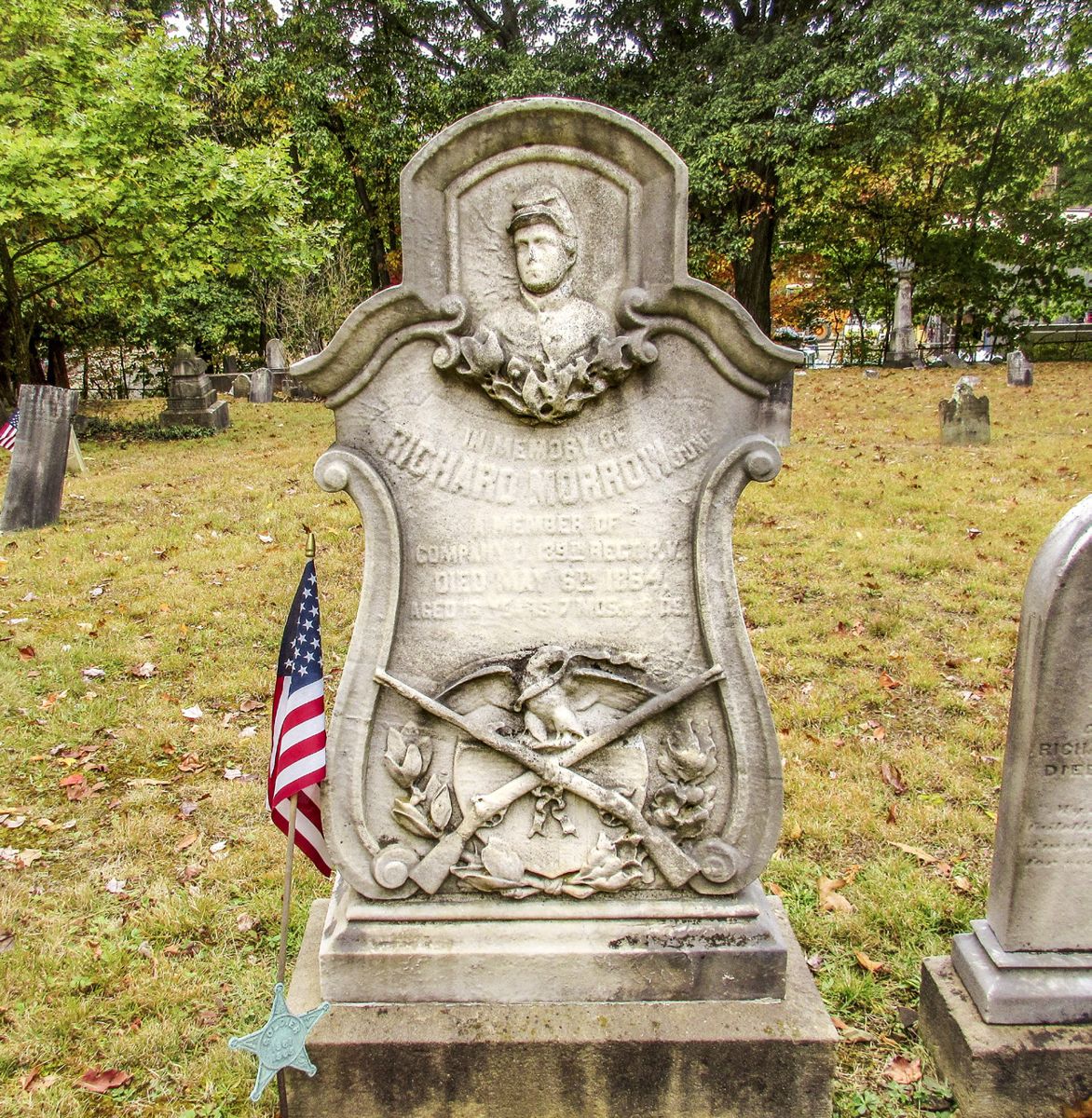
A Heartfelt Tribute of Parental Affection By Joseph Wilson Behind an old iron gate shrouded in overgrown shrubs, a seemingly forgotten and hidden Pittsburgh cemetery holds a loving tribute from heartbroken parents for their precious son, Private Richard Morrow, whose death in the Civil War can stir emotions even today in strangers who stumble upon the heartfelt and impressive five-foot granite tombstone. Adorned with crossed muskets, the bust of a Union soldier, and an emotional inscription, the stone standing in the Pine Creek Cemetery bears witness to the immense love a mother and father had for their son. But Richard Morrow’s body doesn’t rest beneath the marker. Richard Morrow’s parents never knew the final resting place of their soldier boy. Maybe it’s best they didn’t. The insensitive disposal of his bones wouldn’t have met with their approval. Like so many parents, Richard Sr. and Mary Morrow watched their son march off to war and simply vanish, never to be seen or heard from again. Richard was the youngest of nine children and only 16 years old when he enlisted in 1862. Like many families up north, the Morrow family never received any information as to where they could retrieve the body for a proper burial back home. So, a memorial sitting atop an empty grave in the overlooked cemetery had to suffice. No visitations or placing of flowers where he rested in peace for all eternity was possible. Their baby boy was lost forever. On the back of the touching memorial, the stone reads, “This stone is a tribute of parental affection in memory of Richard Morrow Jr. a member of Co, D, 139th P.V. son of Richard and Mary Morrow, who nobly defended his country’s cause, was wounded at the Battle of the Wilderness, Va., on the 5th and died in the field hospital on the 6th of May, 1864, age 18 years, 7 months, and 9 days, being buried by strangers, the precise place of his grave is unknown.”
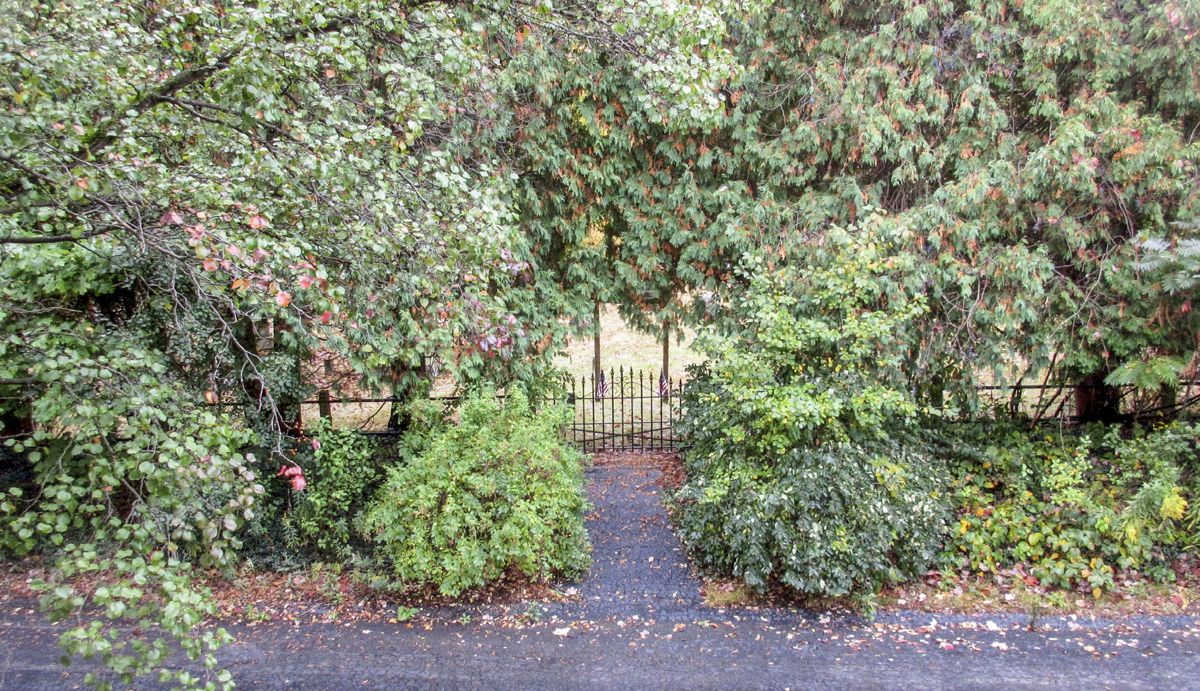
The obscure Pine Creek Cemetery remains well secreted behind a Quality Inn in Gibsonia, Pa. Being off the beaten path, not many visitors get to appreciate the sentiment emanating from Richard’s memorial. Like all early cemeteries, a church stood alongside the graveyard. The old church is long gone, with only the concealed cemetery surviving. Established in the early 1800s on the outskirts of Pittsburgh, the grounds were the first site of the Pine Creek Congregation of the Reformed Presbyterian Church. A recent stay in one of the back rooms of the Quality Inn introduced me to the Pine Creek Cemetery. Gazing out the window from my room, I noticed what seemed to be a few tombstones peeking through the thicket of bushes. A closer look revealed the old boneyard. Being an enthusiast of older cemeteries, I wandered over and swung open the well-worn ornamental gate for a thorough exploration. Richard Morrow’s memorial immediately caught my eye.
Richard Morrow enlisted in the 139th PA Volunteers on September 1, 1862, at the tender age of sixteen. His first assignment, burying the dead from the Second Battle of Bull Run, introduced the boy to the horrors of war. Little did the new enlistee know that a shovel would break ground two years later for the disposal of his own carcass in an unknown grave marked only by a wooden stake. But that wasn’t the final depository of Richard’s remains. A single soldier’s grave, although unknown, at least had a decent burial. Many soldiers’ repose under a stone with the familiar “Unknown” carved into the headstone. Morrow’s eventual resting place is worse. The final discarding of his earthly form reflects the disrespect shown to many deceased volunteers in Father Abraham’s army. The 139th PA served in General Frank Wheaton’s Brigade, General George Getty’s Division, as part of the VI Corps. On May 5, 1864, at the Battle of the Wilderness, the division was detached from the VI Corps to fight with Hancock’s II Corps along the Orange Plank Road. General Wheaton’s Brigade, including the 139th NY, stood directly in the path of General A.P. Hill’s Confederate Corps as they advanced on the Orange Plank Road. Richard was certainly mortally wounded in the vicious fighting on the Orange Plank Road on May 5 and died the next day in a field hospital. Since the 139th
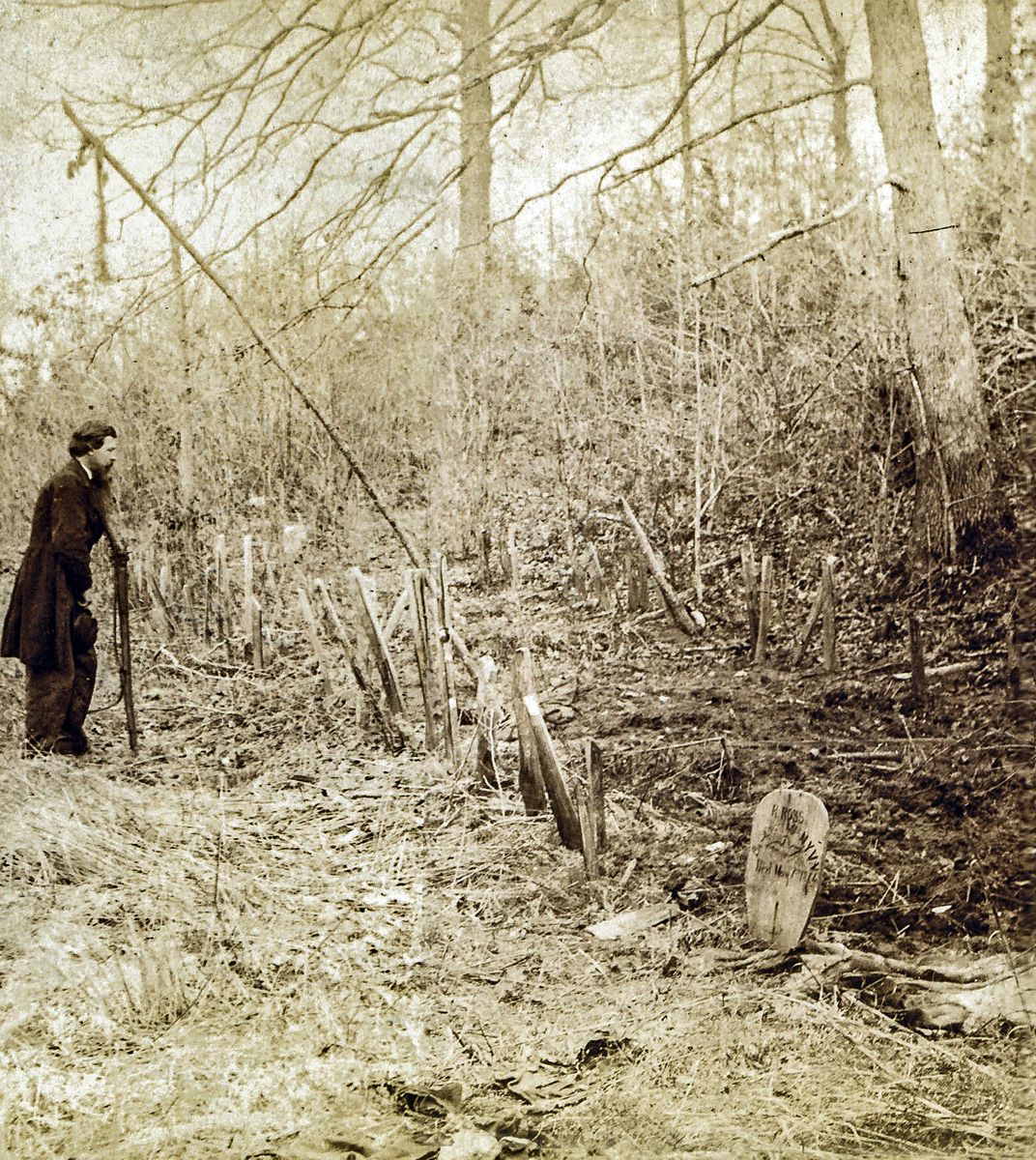
Fredericksburg Cemetery Marker. Richard Morrow’s headstone.
fought with Hancock’s II Corps, the wounded Morrow would have been carried to the nearest field hospital, the II Corps hospital site on the nearby Carpenter Farm. In the chaotic atmosphere swirling on the battlefield, identifying all the wounded soldiers being carried to the hospital wasn’t possible. Chief Surgeon Thomas A. McParlin noted, “the influx of patients was so rapid and their numbers so great, that it was not possible to record all of them.” According to information given by his family on his memorial, he was “buried by strangers.” Those strangers would have been soldiers assigned to the field hospital as attendants. Being only a private, the grave was likely hastily dug, not very deep, and marked only by a tree branch. At that point, any hope of recovering Richard’s body vanished for his family and most of the families of the 2,246 other dead Union soldiers who perished at the Battle of the Wilderness. Sadly, both governments lacked any plan for identifying or properly taking care of their dead. As a result of the poor planning, nearly half of all Union soldiers in the 73 Civil War National Cemeteries established around the country are “Known but to God.” Private Richard Morrow is one of many Union soldiers who went into the earth with only a wood stake denoting a dead Yankee. General U.S. Grant’s Army of the Potomac quickly moved on to Spotsylvania. Fast-moving armies had little time to bury the many bodies scattered about the countryside after a horrific battle. Grant revealed his true feelings on caring for the battlefield dead when he harshly stated, “the business of Generals is with the living.” It would be thirteen months before any actions caring
Entrance to Pine Creek Cemetery.
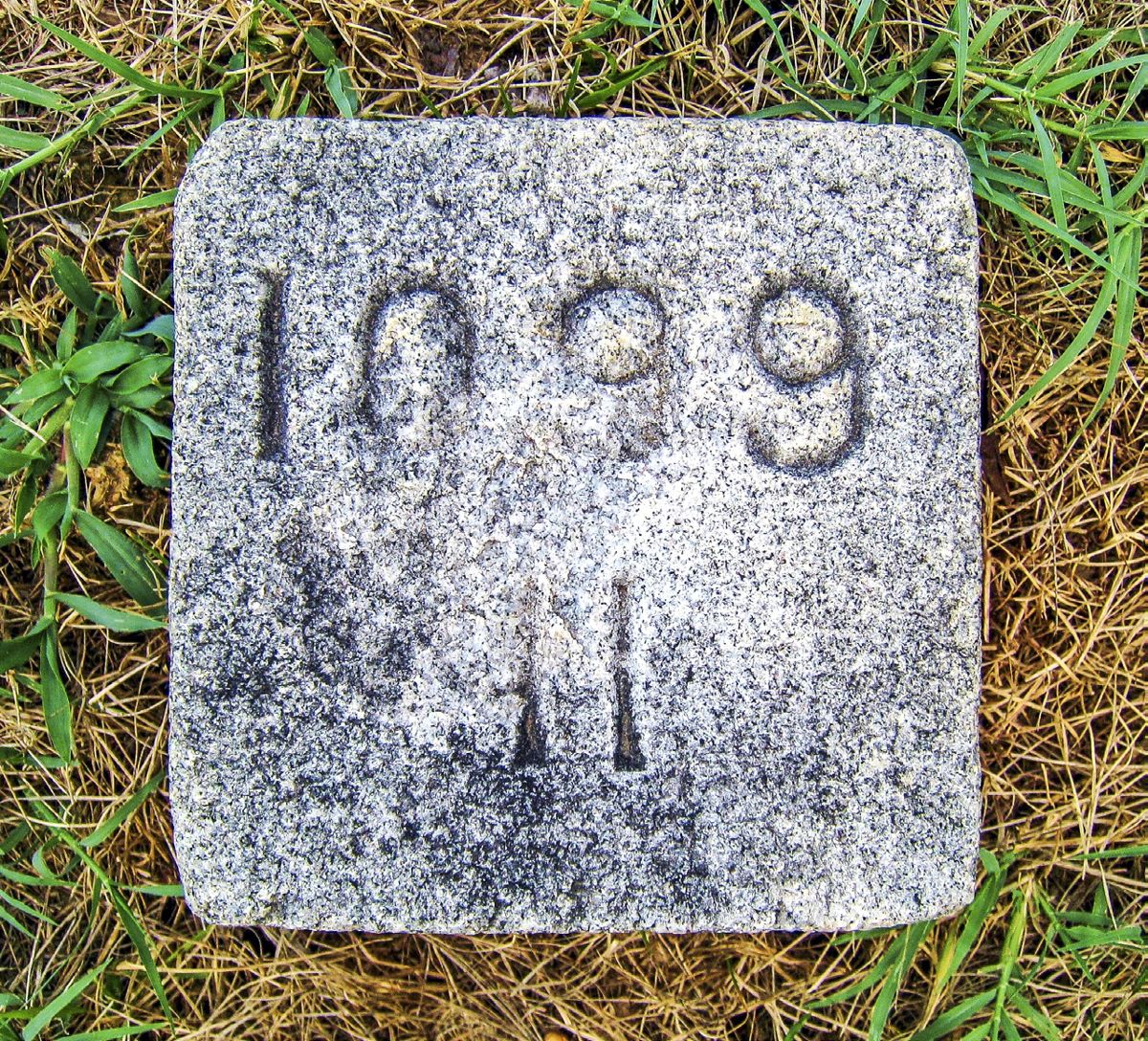
CivilWarNews.com for the dead on the Wilderness Battlefield took place. Union burial details returned in June 1865 to bury the dead in temporary cemeteries on the battlefield. Not all soldiers went into the ground after the battle. By 1865, any marker capable of identifying a body above or below ground had long been disintegrated. Any bones found above ground were gathered up and callously deposited in wooden boxes, all mixed up together with anywhere from 5 to 10 soldiers’ bones in a single coffin. Those boxes were buried in Wilderness Cemetery #1 and Cemetery #2. Already buried soldiers, like Richard, received a new board stating, “Unknown Soldier.” The Wilderness graveyards #1 and #2 would cease to exist a year later. In 1866, the Federal government again sent troops to dig up the bones previously buried in 1865, as well as those soldiers buried after the battle, for removal to the newly designated Fredericksburg National Cemetery. All the dead from area battles, including Spotsylvania, Chancellorsville, the Wilderness, and Fredericksburg, went into the ground at the new Fredericksburg Cemetery. In the second recovery in 1866, when all the remains were dug up and reinterred in the Fredericksburg National Cemetery, Private Richard Morrow’s dug-up bones would have been jumbled together with a pile of other soldier’s bones in a single coffin and buried in the Fredericksburg Cemetery under a small square ordinary stone detailing how many supposedly filled that particular box. No soldier’s remains rest intact as the Lord had created them. Had Richard’s family known of the method, it’s likely they would have found it a distasteful and repugnant manner for a cherished loved one to rest for all eternity. When collecting the bones, Lieutenant William Landon of the 1st United States Veteran Volunteers commented on the process, “Ten skulls were placed in each coffin, which was then filled with bones. The lid was screwed on and lowered into their final resting place, unknown, but not unhonored.” Richard Morrow’s family and the families of other soldiers, whose bones were indifferently consigned into a single box with a mix of different bones, might question Landon’s sentiment suggesting any kind of honor. The total number of soldiers buried in Fredericksburg came to 15,243, with an astonishing 13,000 of those cadavers being unknown. The disordered bones
CivilWarNews.com dumped into a single pine coffin dominate the grounds at the Fredericksburg Cemetery. No gun salutes or prayers rented the air for these boys. To install individual markers for each soldier would have required a much larger cemetery. Convenience ruled the day for Civil War dead. Even with more acreage, bones arriving at the cemetery all tangled together in one box would have made single graves impossible. Richard Morrow and many soldiers earned little appreciation once their military effectiveness ended. Little effort was expended in caring for the lowestranking Civil War soldier. Bone collectors often preceded the army in gathering up bleached bones for sale as fertilizer. Fresh fruits and vegetables sprouted from the pulverized bones of dead soldiers. When able to assign a burial detail, the quick work usually meant only a foot of dirt covered the remains. Hogs had little trouble uncovering the bodies for their next meal. According to the inscription carved on the Pine Creek stone by Richard’s parents, they believed “the precise place of his grave is unknown.” With all the bones collected in the postwar effort around the Wilderness Battlefield, it’s a sure bet that their boy’s bones are resting in the Fredericksburg National Cemetery cluttered with a heap of other bones in one non-descript pine box. Donald Pfanz, a Fredericksburg historian, has a good idea of the general location in the cemetery that holds Private Morrow’s remains. He states, “Union soldiers who fell in the Wilderness, but who were buried on the field, rather than in one of the two Wilderness National Cemeteries, are buried primarily on the lower five terraces of Fredericksburg National Cemetery or on the plateau, especially in Division B, Section C, which lies adjacent to the north wall of the cemetery to your right as you are facing the Humphrey’s monument and about halfway back. They too are buried almost exclusively in groups of five.” Surely, sorrow touched the Morrow family in losing their youngest child. Not knowing his final resting place must have caused even more grief. But pride in their youngest son’s patriotism speaks loudly on Richard’s memorial in the Pine Creek Cemetery for all to behold in years to come. In the end, maybe all the Morrows needed to know was that their youngest son perished on May 6, 1864, while he “nobly defended his country’s cause” at the Battle of the Wilderness. And hopefully, that was enough for them. Joseph F. Wilson is a member of Old Baldy CWRT and The General Meade Society. The writer lectures on Civil War topics and is the writer and producer of the documentary “Civil War Prisons – An American Tragedy” available on Amazon. His YouTube channel is – “Joseph F. Wilson.” Contact - Joef21@ aol.com.