The Unfinished Fight
A Few Thoughts on Men’s Shirts
By Craig L. Barry · Originally published March 2024 · pp. 16–17
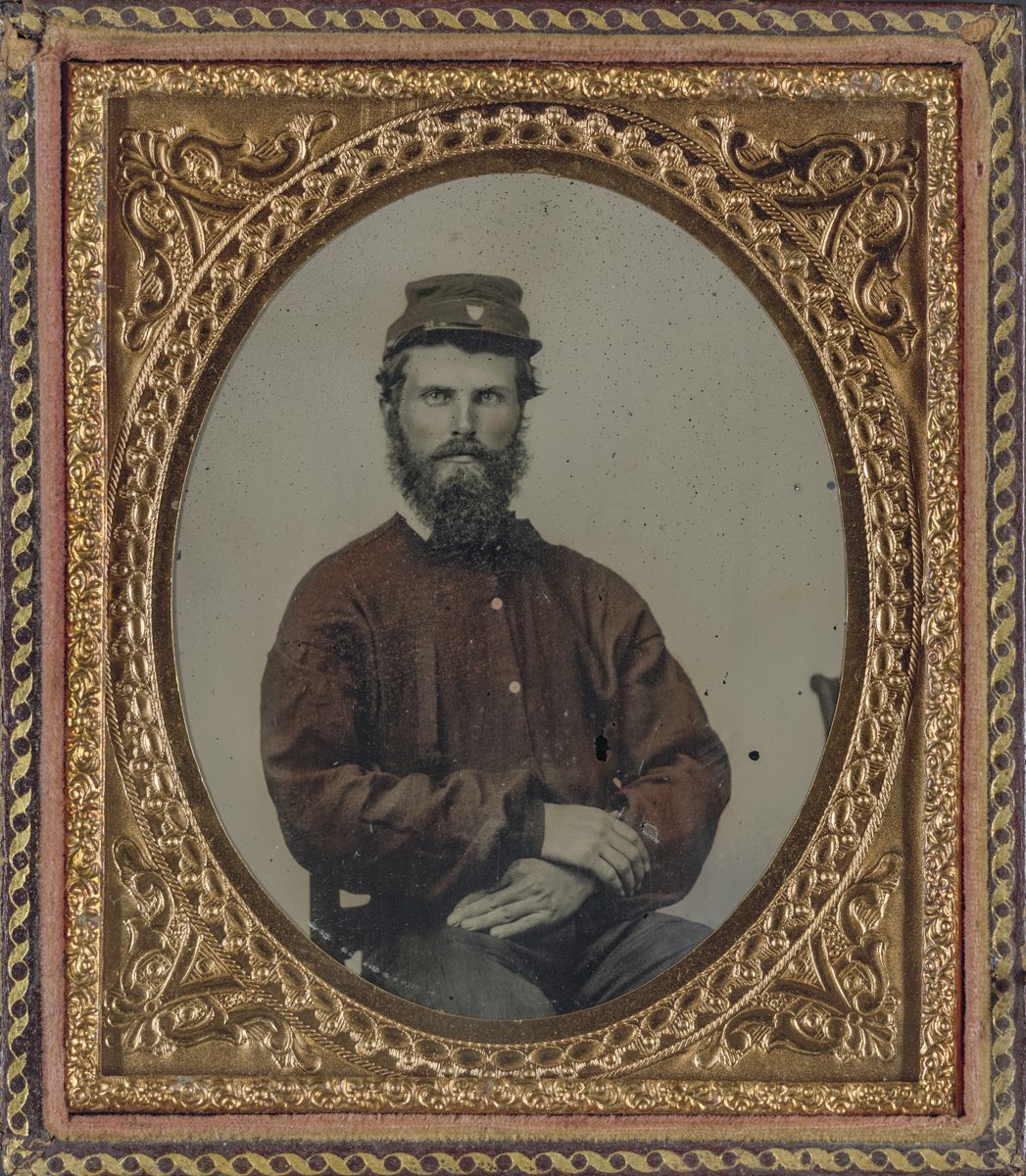
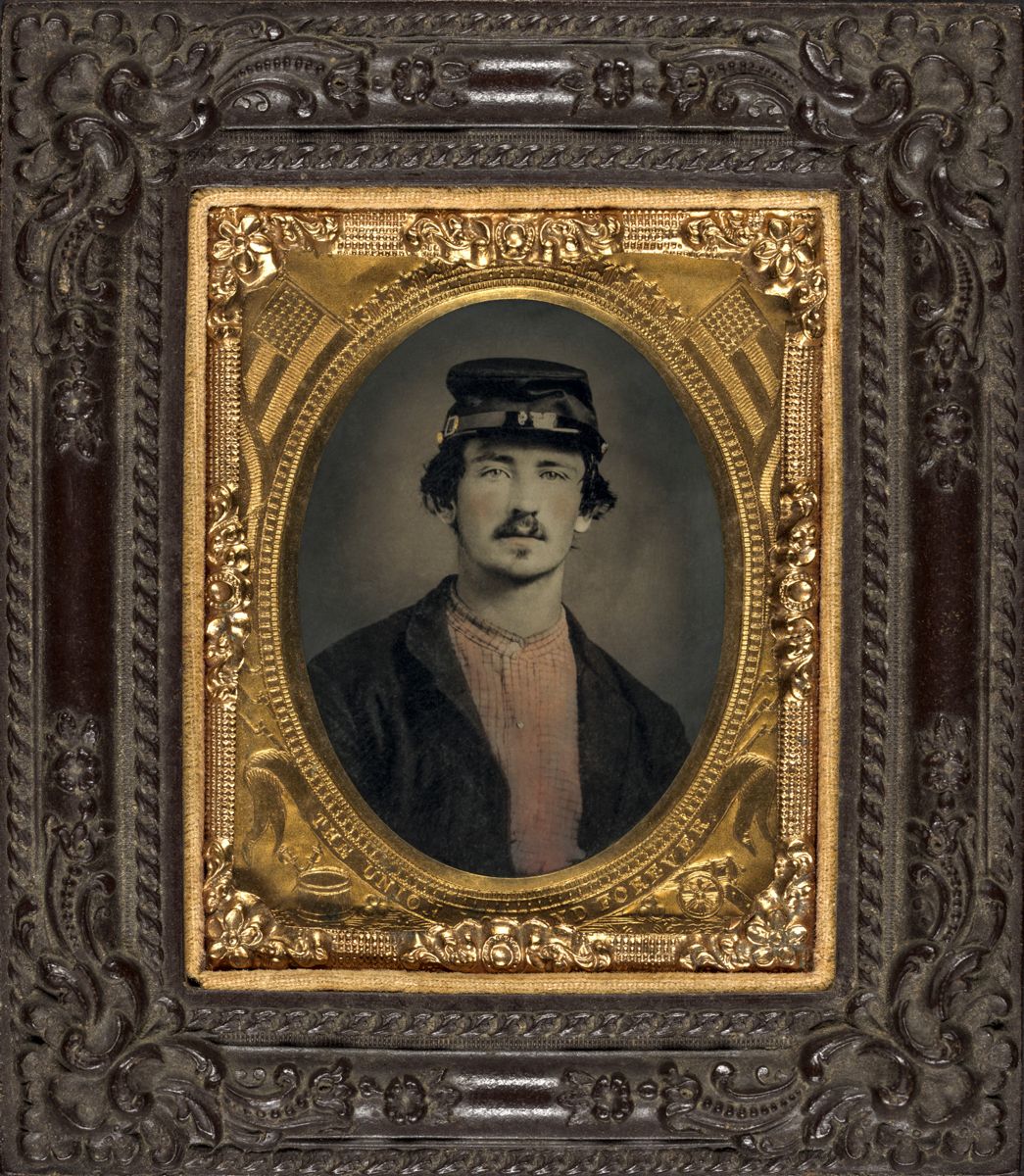
A Few Thoughts on Men’s Shirts Whether Union or Confederate, all soldiers were civilians before they were in the military, and all of them wore shirts. While seemingly simple, the cut and construction of a man’s shirt actually involve some fine hand sewing and tailoring. If trousers or sack coats were somewhat illfitting, that is one matter, but a poor-fitting shirt will hamper a man’s movements, and a poorly constructed garment will not stand up to the wear and tear of outdoor living, much less washing by hand with lye soap. Ignoring the government-issued shirts for the time being, we can never know the full extent of what was worn by soldiers during the Civil War, but we have some good ideas. The appearance of the Federal government’s issued shirt is well documented, and information is widely available. The Confederate and states governments issued shirts in some quantity; however, there are few if any surviving specimens available to examine. There are those who state that there were no Confederate-supplied shirts. However, a close look at Confederate records, including those for the least prosperous year of the war, reveals some startling statistics. “For example, during the last six months of 1864 and including to 31 January 1865, the Army of Northern Virginia alone was issued the following: 157,727 Cotton shirts, 170,139 Pairs of Drawers, 21,063 Flannel Shirts, 74,851 Blankets.” Even if shirts were issued, soldiers often wore civilian shirts supplied from home. Fabrics used to make civilian shirts included wool, flannel, heavy cotton; finer shirts were made of linen, muslin or fine cotton. However, despite the variation found in the number of surviving specimens, a few broad conclusions can be supported by the evidence we do have. Consider possible pattern variation not only in terms of surviving garments but keeping in mind that during the Civil War-era, everything was re-used. Remnants of useable fabric from worn out or torn shirts can still be found in period quilts. These allow some insight into both the appearance of the cloth and the various print patterns used for shirts. A good starting off point for anyone interested in a serious study of mid-century men’s shirts should consider Thoughts on Men’s Shirts in America, 1750— 1900 by William L. Brown. One thing you will notice is that the shirts did not button all the way down the front. Also in looking at the pictures and illustrations is the location of the button holes on the cuff. The vast majority from the photos of 1860s-era shirts in Brown’s book suggest that with the sleeve crossed over, as if the man were crossing his arms, you see the buttonhole. Perhaps the author did that to fit the shirt on the page better? Whatever the case, the buttonhole is in the back of the cuff. Cuffs on Civil Warera shirts varied as well. Cuffs can be added using the material of the shirt or a different color or even a different material. Most cuffs on civilian shirts were about two inches wide. These changes began around the middle of the 1840s, and other major improvements included a lower neckline and more support across the shoulders. The placket front began to appear and extended to about the sternum with three or four buttons. By the 1860s, tailoring sophistication had increased, and shirt cuts changed radically. The modern “set in” sleeve introduced a contoured armpit and corresponding cut in the sleeve head. Shirt tails began to have rounded corners as well. Let’s consider for a moment the subject of collars. Shirts with button-on collars were becoming more common but by no means ubiquitous. There were also many examples of shirts that were collarless. Also, consider that with a button-on “removable” band collar, going collarless is a viable option as well. Hence, with detachable “band” collars even collared shirts could be worn collarless. There were also attached collared shirts with short squared points. You can change the appearance of a single shirt for multiple wearing by attaching and removing the collar on different days. Pockets were not sewn on most shirts. Heavier overshirts often had a breast pocket or two. The pockets were generally lower on the shirt and larger than breast pockets on shirts today. In terms of fabrics, white cotton was the most common shirt material. Printed fabrics tended to have white backgrounds with small designs in one or two colors. It can be difficult to find a decent reproduction civilian shirt, which means you have only three options. Buy off the rack, have a custom-made shirt, or sew your own. Whichever way you choose, here are a few things to consider. Regarding material, it is best to stick with homespun that is one hundred percent cotton or wool flannel, and linen, instead of modern blends. If a blend is used, it should be something like linsey-woolsy (cotton or linen and wool) that is documented for the time period. The cost of the better fabric is negligible compared to the impact it has on the appearance of the shirt. It will be more accurate, as well as being more comfortable to wear. With another nod to accuracy, first consider patterns and finished products based on documented original specimens, either photographs or in museums. Next, choose buttons that are correct. Stay away from any plastic and modern buttons. Nothing kills the appearance of an otherwise period correct shirt more than plastic buttons. Go with glass, bone, shell, metal, porcelain, two or four-holed solids, or mother of pearl. As long as “The Button Baron” https://johnzaharias.com/ (John Zaharias) is still around, there is a time-honored provider for authentic buttons, and he is a recommended source. Glass buttons are nice because you can match them to the fabric. While metal buttons were authentic to the time; consider the effect of possible rusting on the fabric. If there are four button holes, they should be sewn on in a crisscross or X-pattern. If you purchase a shirt “off the rack” that is already made, even if the material and design is correct, which is doubtful, it may still have machine sewn buttonholes. If so, you should rework the buttonholes to make the shirt more correct for the period. Yes, there were sewing machines, and yes some of them were capable of producing button holes, but even when shirts were machine sewn, the buttons and button holes were still done by hand. Take a seam ripper and pick out the buttonhole stitches and handwork them using the “buttonhole stitch.” The stitching around the buttonhole is a bit tricky. Working from left to right, bring the thread out on the lower line, position the needle through the upper line and take a straight downward stitch. Keeping the thread under the point of the needle, pull up the stitch to form a loop and repeat. In fact, it is suggested that you remove all exposed machine stitching and hand stitch those areas. Try to use a spacing of about six or seven stitches per inch. When finished, you have now made your “off the rack” shirt much more authentic. Those with a sharp eye will also note that this is the stitch often used around the perimeter of “issue” blankets. If these instructions are confusing to you, it is because sewing by hand is largely a lost art in modern times. Most of us sew well enough to put a cover on a canteen but perhaps would not classify ourselves as quite ready to perform this kind of handiwork on an off-the-rack shirt, much less tailor an entire period correct garment. Craig L. Barry was born in Charlottesville, Va. He holds his BA and Masters degrees from UNC (Charlotte). Craig served The Watchdog Civil War Quarterly as Associate Editor and Editor from 2003–2017. The Watchdog published books and columns on 19th-century material. He is the author of several books including The Civil War Musket: A Handbook for Historical Accuracy (2006, 2011), The Unfinished Fight: Essays on Confederate Material Culture Vol. I and II (2012, 2013). He has also published four books in the Suppliers to the Confederacy series on English Arms & Accoutrements, Quartermaster stores and other European imports.