
The Unfinished Fight Peanuts and Parched Corn
By Craig L. Barry · Originally published July-August 2024 · pp. 8–11
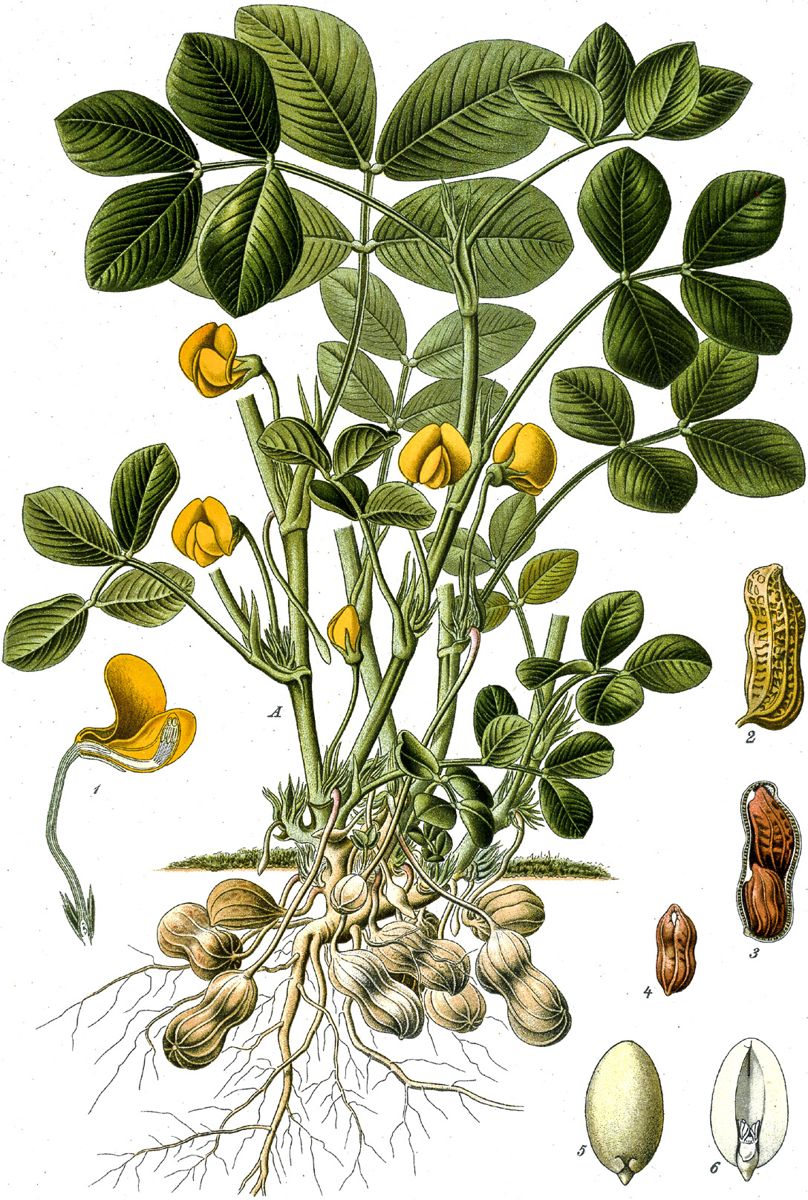
No discussion of Southern Civil War rations would be complete without including peanuts. Period accounts suggest that when bread and meat were scarce, peanuts—a/k/a goober peas, pindars, ground-peas or ground-nuts—were useful as an alternate source of protein, at least in emergencies. Since cooking facilities and other equipment were scarce, Confederate soldiers roasted their ration of peanuts over the campfire or shelled and fried them in leftover grease. The notion of whether peanuts were eaten boiled comes up from time to time, and as much as boiled peanuts are enjoyed as a snack in the Deep South today, there is no known evidence Civil War soldiers preparing them that way. The problem is that this method of prepared required a fair amount of salt, which was in scarce supply and more needed elsewhere. Regardless of preparation, peanuts produced a high protein ration that was light in weight and could easily be carried by a soldier on the march. A good handful in the shell provides 200 calories, 10 grams of carbohydrate and the same of fat, and 6 grams of protein. As a nutrient, “a pound of peanuts… provides approximately the same energy value (in calories) as 2 pounds of beef, 1.5 pounds of Cheddar cheese, 9 pints of milk, or 36 medium-size eggs.” A raw or “green peanut” is not green in color. It takes a hundred (or more) frost free days to grow peanuts for consumption, and they are usually available from May through November primarily in nine Southern states. Peanuts grow best in sandy soil, especially along the coast or just inland. The varieties are quite different, though. The king of the American peanut family is the so-called “Virginia.” This variety has the largest kernel and is only grown in Southeast Virginia (Suffolk, Waverly, Wakefield, Surry, etc.) and Northeastern North Carolina in the sandy soil just inland from the coast. The low country of South Carolina and the Georgia/Alabama region grows what is known as the common “Runner” variety, which features Swamp mud will blacken water just as effectually, but neither will it make coffee…Think of paying forty cents a pound for charcoal to embitter and blacken the water you drink. The practice should be suppressed by the Board of Health, if there were no war to do it.”
Save the peanuts for eating, especially if they are of the finest variety known as “Virginia.” Finally, as an alternate ration parched corn is often mentioned by Confederate soldiers. American corn was grown in almost every state during the 1860s. Of course, while a portion of the corn crop was used for animal feed, human consumption of corn was still the most prevalent use of the grain. Corn was easier to grow than other grains and it thrived in a wide array of conditions. Regional varieties of corn differed based on the growing season and the soil conditions. Common corn varieties included Southern white, also called “horse tooth,” yellow and even reddish or blue colored regional varieties. Red corn was used almost exclusively for animal feeds. Parched corn or what is sometimes called “corn nuts” is made by removing fresh corn from the cobs, drying the kernels thoroughly and then frying the dried kernels. It was easy to make. Put a small amount of salt pork or bacon in the pan and render it down. Leave a light coating of grease in the pan as this will keep the corn from sticking. Cover the bottom of the pan with kernels such that none are on top of the others, in fact a little room in between the kernels is best. Keep stirring and the heat will quickly make the small kernels of dried corn swell up and brown a bit. Parched corn was easier on the teeth, tasty and provided a good source of energy while on campaign. It takes less than a minute to parch the corn. When the corn puffs up and turns a light to medium brown color in the pan, it is ready. This was the traditional way to make a traveling ration of parched corn, but there are other recipes that dry the corn while it is still a smaller kernel with a more uniform size. The Georgia Runner variety peanut is the most widely grown type. Georgia produces about 40% of all the peanuts grown in the South. Further west (Texas, Oklahoma) the smaller, redskin Spanish peanut is grown. This type has the highest oil content, but you would have to be pretty hungry to fool with eating them. Peanut coffee is an odd beverage, obviously not coffee as there are no coffee beans and not made solely from peanuts either. It is an amalgamation made up of 1/3 cup peanuts, 1/3 cup rye or wheat, and 1/3 cup cow peas. The three ingredients are roasted black, then ground up and brewed. As far as this beverage goes, follow the advice from the Daily Journal (Wilmington, N.C.) dated October 3, 1861:
“Don’t use the stuff. There isn’t one cook in five hundred who ever did anything else than ruin it. Some of the papers are recommending substitute-parched beans, rye, peas, acorns, etc.
Scenes on the road. Roasting corn. Alfred R. Waud, artist. (Library of Congress)
on the cob, and then remove it and others that use frozen corn kernels rather than fresh corn. The parched corn can be eaten as is, added to boiling water to make porridge, or was used to thicken stews. Finally, that staple of the Confederate soldier’s diet called “Cush” was made in a variety of ways and this well-known recipe is courtesy of Bell E. Wiley from The Life of Johnny Reb: The Common Soldier of the Confederacy. However, it operates on the presumption that both beef and salt pork are also on hand.
“We take some salt pork and fry the grease out then we cut some cold beef in small pieces and put it in the grease, then pour in water and stew it like hash. Then we crumble corn bread or biscuit in it [some soldiers made mush or paste of flour or meal and added one of both of these at this point instead of crumbs] and stew it again til all the water is out then we have Confederate cush.”
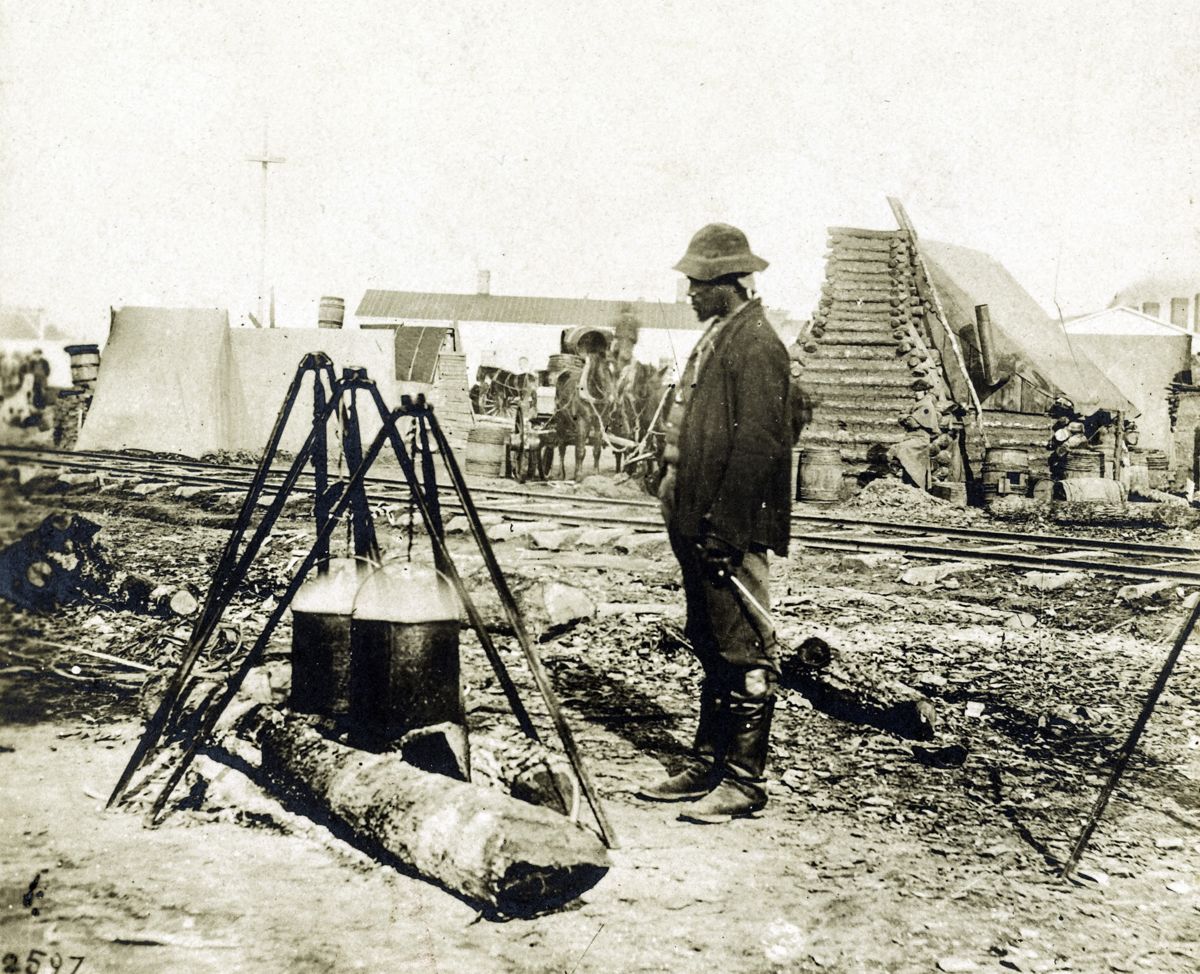
Cooking at City Point, West Point, Va., during the Peninsula Campaign. (Library of Congress)
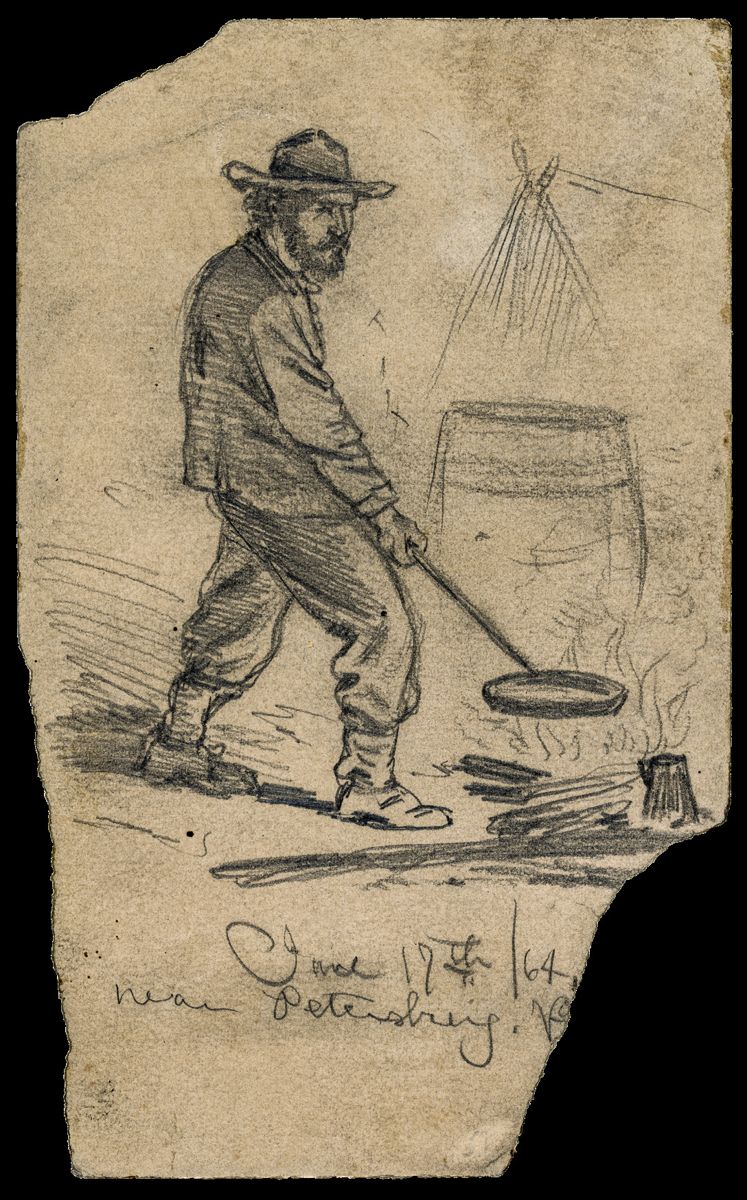
This may not sound appetizing, but it kept body and soul together. The problem was not with the rations so much as what the soldier did with it. Few individual soldiers knew much about cooking. The men pooled their resources and delegated cooking responsibilities to those most able to cook. However, there was not much material to work with. While on campaign there was not much available besides a campfire, the same monotonous rations and a frying pan. Craig L. Barry was born in Charlottesville, Va. H e holds his BA and M asters degrees from UNC (Charlotte). Craig served The Watchdog Civil War Quarterly as Associate Editor and Editor from 2003– 2017. The Watchdog published books and columns on 19th-century material. He is the author of several books including The Civil War Musket: A Handbook for Historical Accuracy (2006, 2011), The Unfinished Fight: Essays on Confederate Material Culture Vol. I and II (2012, 2013). He has also published four books in the Suppliers to the Confederacy series on English Arms History Lives Here
®
Rock Island Auction Company®
Premier Auction
Finest Known Documented Cased Colt Third Model Dragoon Percussion Revolver with Scarce 8 Inch Barrel and Factory Letter Shipped to J.C. Grubb & Co. in April of 1861 at the Start of the Civil War
Fine, Historic, & Investment Grade Firearms RD TH TH
August 23
, 24
Bedford, Texas
& 25
The
George S. Lewis Jr. Collection
Scarce and Very Fine U.S. Inspected Colt Model 1861 Navy Percussion Revolver
The
Greg Lampe
Exceptionally Fine Factory Engraved Colt Model 1851 Navy Percussion Revolver with Accessories and Case Inscribed to William H. Leach
Truly Extraordinary Civil War U.S. Contract Colt Model 1860 Army Percussion Revolver
Collection
Exceptional and Historic Identified 3rd U.S. Veteran Volunteer Infantry Issued, Martially Inspected New Haven Arms Company Henry Lever Action Rifle with Rare Sling
Exceptional Documented Factory Engraved New Haven Arms Co. Volcanic No.1 4-Inch Pocket Pistol with Presentation Inscription from the First Baptist Choir in New Haven to Theodore Rockwood, Extremely Rare Box with “Plated & Engraved” Label, and Ammunition Tin
3600 Harwood Road, Bedford, TX 76021 ∙ P: 800-238-8022 ∙ F: 309-797-1655 ∙ [email protected] ∙ Auctioneer: Patrick Hogan (#18366) ∙ Buyers Premium 17.5% RIAC IS ALWAYS ACCEPTING QUALITY CONSIGNMENTS, ONE GUN OR AN ENTIRE COLLECTION! Call: 800-238-8022 or Email: [email protected]