
Misleading History: The Problematic Legacy of John G. Walker and the Maryland Campaign of September 1862
By Alexander B. Rossino · Originally published July-August 2024 · pp. 48–54
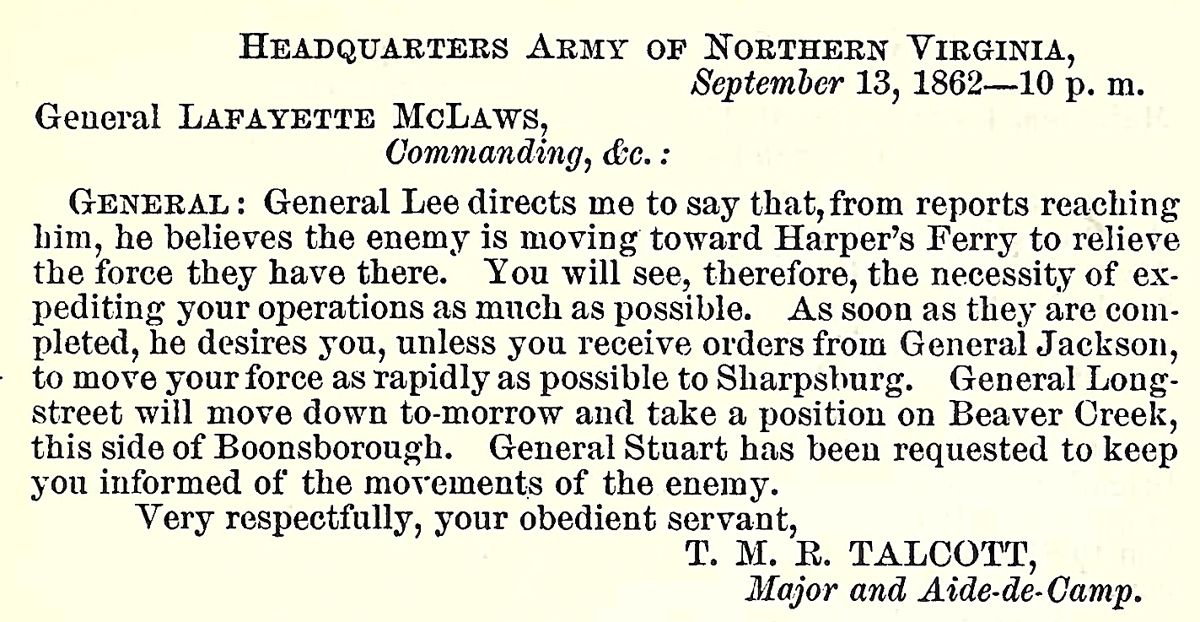
Ever since its publication in 1885, an article penned by former Confederate general John George Walker for The Century Magazine, titled, “Jackson’s Capture of Harpers Ferry,” has been misleading historians into believing certain falsehoods about Robert E. Lee’s September 1862 Maryland Campaign. Specifically, after reporting to army headquarters at the Best Farm, near Frederick, Maryland, around 10 a.m. on September 9, Walker claimed to have participated in a long discussion with General Lee about the strategy and objectives underlying the campaign. Walker alleged that Lee told him several things, including:
- That he had ordered the army’s supply line moved into the Shenandoah Valley “by way of Staunton, Harrisonburg, and Winchester, entering Maryland at Shepherdstown.”
- That there were “between 10,000 and 12,000 men at Harper’s Ferry, and 3000 at Martinsburg … [and] … that they will take refuge at Harper’s Ferry and be captured.”
- That “In ten days from now, if the military situation is then what I confidently expect it to be after the capture of Harper’s Ferry, I shall concentrate the army at Hagerstown, effectually destroy the Baltimore and Ohio [rail]road, and march to this point [placing his finger at Harrisburg, Pennsylvania]. That is the objective point of the campaign. You remember, no doubt, the long bridge of the Pennsylvania railroad over the Susquehanna, a few miles west of Harrisburg. Well, I wish effectually to destroy that bridge, which will disable the Pennsylvania railroad for a long time. With the Baltimore and Ohio in our possession, and the Pennsylvania railroad broken up, there will remain to the enemy but one route of communication with the West, and that very circuitous, by way of the Lakes. After that I can turn my attention to Philadelphia, Baltimore, or Washington, as may seem best for our interests.”
- And, finally, that the Federal commander, George B. McClellan, “is an able general but a very cautious one. His enemies among his own people think him too much so. His army is in a very demoralized and chaotic condition, and will not be prepared for offensive operations—or he will not think it so—for three or four weeks. Before that time I hope to be on the Susquehanna.”1
In his book, Taken at the Flood (1999), Joseph Harsh deftly criticized Walker’s claims on the basis that Robert E. Lee, who always kept his plans close to the vest, would never have provided Walker, a mere acquaintance at the time, with a detailed description of his intentions. That he did so when Lee did not even inform Jefferson Davis about those plans beggars belief. In addition, many claims Walker made never appeared in his report on the activities of his division during the operation. If Walker had not known enough about Lee’s plans to mention them in his October 7, 1862, report, how likely is it that he would have recounted them in detail in a magazine article more than twenty years later? According to Harsh, and to D. Scott Hartwig, himself the author of two monumental volumes on the Maryland Campaign, the answer is not likely at all.2
If the critiques of Harsh and Hartwig are not sufficient to cast doubt on the veracity of General Walker’s account, there are other concrete examples of his errors that can be cited. These are discussed below in detail, with the objective of showing how Walker’s article should not be considered a reliable historical source.
Moving the Army of Northern Virginia’s Supply Line
According to Walker, General Lee intended to shift his army’s supply line into the Shenandoah Valley so it could enter Maryland at Shepherdstown. Portions of Walker’s story are accurate. Lee did indeed intend to move his supply line west of the Blue Ridge Mountains. He wrote about it more than once in letters to Jefferson Davis and mentioned it in his post-campaign report. Yet in his retelling of Lee’s comments, Walker almost immediately contradicted the statement about Shepherdstown by writing that Lee told him he intended to “concentrate the army at Hagerstown.”3
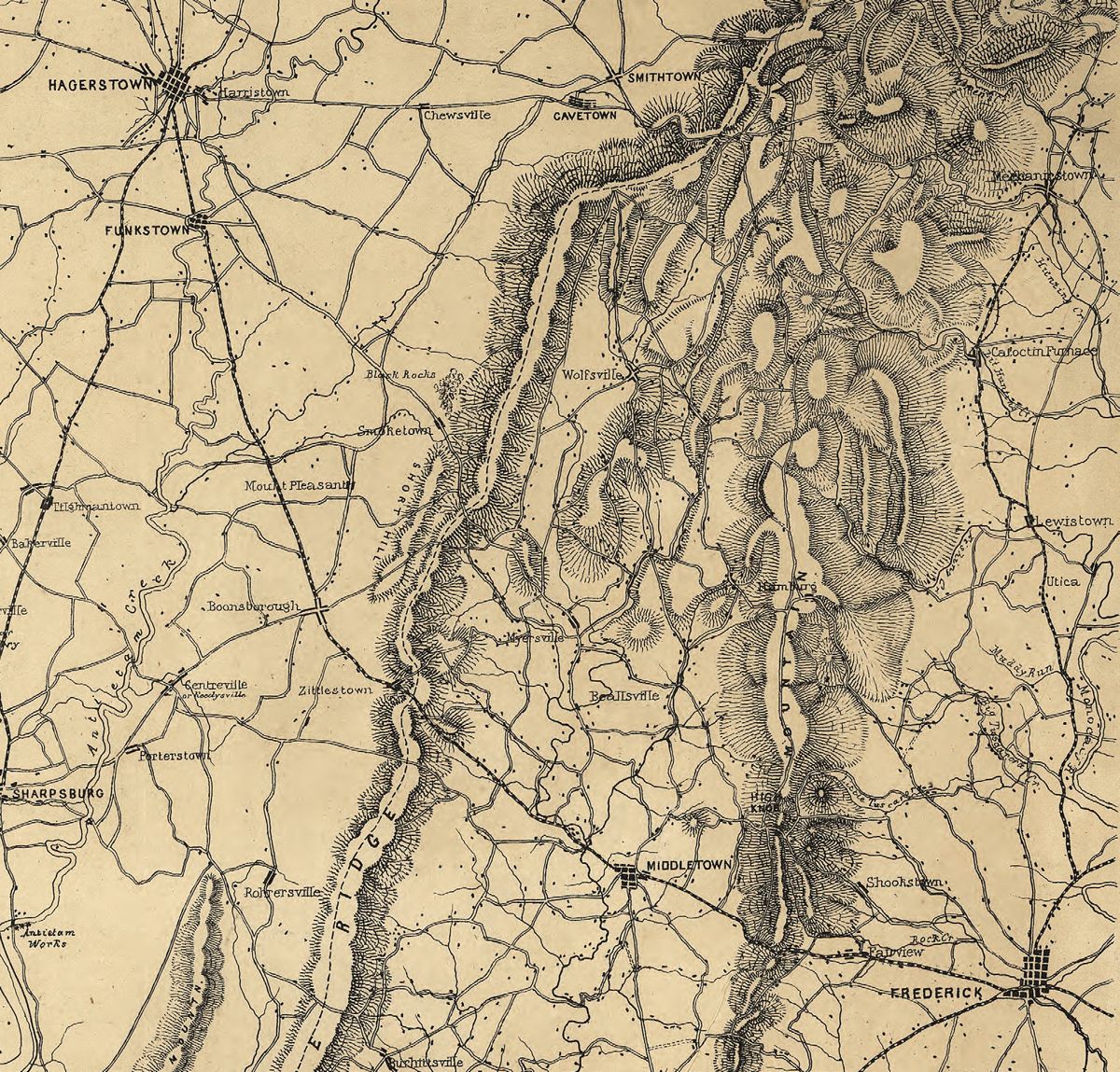
Shepherdstown is quite a distance southeast of Hagerstown, which would not have been a favorable direction for Lee given the ease with which George McClellan could have cut the Confederate supply line by forcing his way over South Mountain. More importantly, and unlike Hagerstown, Shepherdstown is not down the valley turnpike from Winchester, which General Lee had designated as his army’s depot at the start of the campaign.
Writing to Jefferson Davis on September 9, Lee stated, “I am endeavoring to break up the [army’s supply] line through Leesburg, which is no longer safe, and turn everything off from Culpeper Court-House toward Winchester. I shall move in the direction I originally intended, toward Hagerstown and Chambersburg, for the purpose of opening our line of communication through the valley, to procure sufficient supplies of flour.” Three days later, Lee wrote to Davis from his headquarters near Hagerstown, “Before crossing the Potomac I considered the advantages of entering Maryland east or west of the Blue Ridge. In either case it was my intention to march upon this town.”4
General Lee made it clear multiple times that Hagerstown was his target in Maryland so it could be used as a base for further operations. At no time did Lee mention Shepherdstown in any context. Walker clearly depicted the events as they unfolded, as if Lee had planned all along for them to occur in that order. The evidence shows, however, that Lee never intended to run his army’s supply line through Shepherdstown. Instead, he intended to run it up the Shenandoah Valley, across the Potomac at Williamsport, and then to Hagerstown in preparation for whatever came next.
Federal Strength at Harpers Ferry
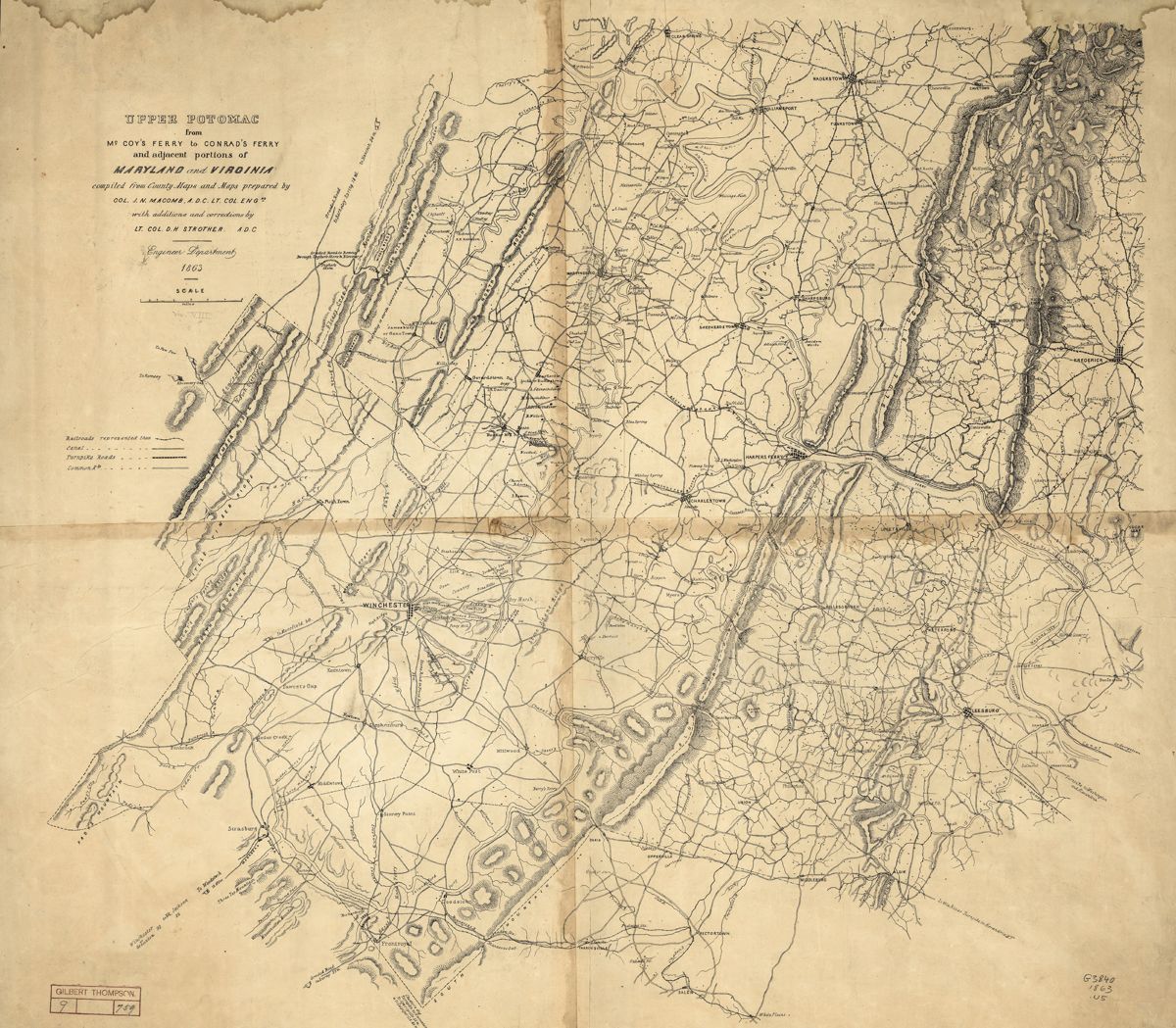
What about Lee’s claim that there were between 13,000 and 15,000 Federal troops at Harpers Ferry and Martinsburg? This number is suspiciously close to the number of men Jackson actually ended up capturing, which makes Walker’s comment dubious. In addition, another postwar source appears to refute Walker’s statement. According to Lafayette McLaws, the commander of one part of the force sent to capture Harpers Ferry, General Lee informed him on September 9, “there was a force of 7000 or 8000 men in garrison at Harper’s Ferry; but he was inclined to think the number was exaggerated, and that there was not, perhaps, more than 3000 or 4000.”5
Walker claimed Lee told him a figure at least double the enemy troop strength that McLaws remembered Lee mentioning. This testimony casts doubt on the figure provided by Walker, particularly when one takes into account the fact that Lee possessed only spotty intelligence about Harpers Ferry at the time he ordered its encirclement. Prior to Captain Elijah Viers White reporting that the garrison remained in place, Lee had assumed, based solely on a rumor, that Colonel Dixon Miles had already evacuated his men. This fact, along with McLaws’s comment, suggests that Walker relied on figures he learned after the events. He then put those figures into Lee’s mouth when recounting years later what the general told him during the events.6
Harrisburg as General Lee’s Objective
The claim Robert E. Lee eyed the Susquehanna River and the bridges across it near Harrisburg as the objective of the Maryland Campaign has proven to be the most detrimental of John Walker’s embellishments. As a result of Walker’s comment, campaign histories have over the years portrayed the Confederate advance across the Potomac in September 1862 as a kind of dry run for the 1863 Gettysburg Campaign. Walker’s claim is, however, demonstrably false.
There is, for one thing, no mention of Pennsylvania as Lee’s objective in the reports of his senior subordinates, Maj. Gen. Thomas J. Jackson and Maj. Gen. James Longstreet. Both men were directly involved in planning the operation against Harpers Ferry, yet neither saw fit to mention Harrisburg or Pennsylvania in their after-action reports. The absence of Pennsylvania suggests either that both men chose to leave it out, which would have been a bizarre coincidence, or that Lee never discussed it with them. Longstreet even failed to mention Pennsylvania as Lee’s objective in his postwar writings on the campaign. The dearth of corroborating sources on this subject is in fact what led Joseph Harsh to voice doubt about Walker’s claim. If Lee did not discuss it with either Jackson or Longstreet, it is almost impossible that he would have mentioned it to Walker.
By September 8, Lee had already decided not to move his army farther north than the Maryland state line. Upon entering Maryland on September 6, Lee did have his sights set on marching his army into the Keystone State. He believed the Federals were disorganized and demoralized, leading him to assume that he had until winter to operate on the Confederacy’s “northern frontier” before another enemy force could be brought against him. Entering Pennsylvania seemed to be a viable option at that point.7
Once he learned on September 8 that a new enemy army under the command of George McClellan was making its way toward him, however, Lee abandoned the idea of moving farther north. Instead, he sought to lure McClellan’s forces west of South Mountain and engage it in a decisive fight along the heights of Beaver Creek, 2.5 miles north of Boonsboro. This portion of Lee’s plan comes through clearly in the general’s after-action report, and in comments he made in February 1868 to William Allan, a veteran of the Maryland Campaign and the Army of Northern Virginia’s first historian. Allan missed the Beaver Creek angle, but there are several other primary sources that mention it, including a September 13 dispatch from Lee to McLaws, the after-action report of Brig. Gen. William N. Pendleton, and an account by a civilian in Funkstown recalling a Confederate runner Lee sent through town to warn the residents of a battle about to take place in their midst.8
Therefore, by the time Walker appeared at army headquarters on September 9, Lee had already decided against moving into Pennsylvania in favor of fighting an engagement in Maryland. Assuming he won that fight, Lee hoped it would prompt secessionists in the state to rise up and take Maryland out of the Union. The general noted this belief in a statement that appeared in the Philadelphia Inquirer on September 12:
We have now come to redeem our pledge to the people of this State (i.e., Maryland). We extend the olive branch to them, and, should they accept it, we shall welcome and protect them, with the assurance that the next battle ground will be in Pennsylvania. But, should they not come forward, after having been amply assured that their property would be unmolested, and every guarantee given that the Southern army should remain on Maryland soil, for the maintenance of their sacred rights, then the battleground must hereafter be in Maryland.9
Lee’s reference to the maintenance of Marylanders’ sacred rights hints at information he learned while camped near Frederick. This intelligence told him that he should expect no uprising unless his army proved it could defend secessionists in the state against reprisals from Federal forces. It is with this in mind that Lee wrote in his August 1863 campaign report, “The difficulties that surrounded them (i.e., Maryland’s secessionists) were fully appreciated … [and] we expected to derive more assistance … from the just fears of the Washington Government than from any active demonstration on the part of the people, unless success should enable us to give them assurance of continued protection. Influenced by these considerations, the army was put in motion” on September 10.10
Lee formulated his plan to fight McClellan’s army at Beaver Creek once it had crossed over South Mountain. The general hoped that “by threatening Pennsylvania,” he could lure the Federal commander northwest. Once there, he could defeat McClellan far from the safety of Washington’s fortifications. This time, if General Lee managed to rout the enemy as he had at Second Manassas, he could destroy it in detail.11
Finally, it is worth mentioning in this context that by the time General Lee reached Funkstown, Maryland, on September 12 a large portion of his army had already melted away. This sudden and rapid weakening of the Army of Northern Virginia precluded any march farther north. Writing to Jefferson Davis one day later, Lee observed, “One great embarrassment is the reduction of our ranks by straggling, which it seems impossible to prevent with our present regimental officers. Our ranks are very much diminished—I fear from a third to one-half of the original numbers.” This reduction in Confederate strength took place during a leisurely two-day, 26 mile march from Frederick to Hagerstown. To imagine that Lee’s army would be capable of marching another 75 plus miles through Pennsylvania to reach Harrisburg is madness.12
What Hath John Walker Wrought?
It becomes clear after reviewing the evidence that Walker’s account should not be considered a reliable historical source. His embellishments have misled historians into believing the Confederate invasion of Maryland amounted to a practice run for the 1863 march into Pennsylvania when it was not. Walker’s dubious claim about Pennsylvania has also prompted scholars to ignore the political dimensions of Lee’s operation, with the result that the Maryland Campaign remains one of the most poorly understood events of the war. As opposed to representing Lee’s effort to bring a slave holding Southern border state into the Confederacy, the campaign is portrayed instead as a halting invasion of the North. This is not what it was.
John Walker effectively reshaped the history of the Maryland Campaign into a tale that elevated the relatively minor role he played in the events. His article cast him as a close confidant of Lee at a time when the general’s image was being burnished to fit the mythology of the Lost Cause. It seems in this sense that Walker hoped to bask in a bit of the luster being shone on General Lee. Caution, therefore, must be exercised when dealing with Walker. It may even be wise to ignore him and his claims altogether if the objective is to get the history right.
Endnotes
- Alexander B. Rossino, Calamity at Frederick: Robert E. Lee, Special Orders No. 191, and Confederate Misfortune on the Road to Antietam (El Dorado, CA, 2023), 43f. John G. Walker, “Jackson’s Capture of Harper’s Ferry,” in Robert Underwood Johnson and Clarence Clough Buel, eds., Battles and Leaders of the Civil War, 4 Vols. (New York, NY, 1885), 2:604ff.
- Government Printing Office, The War of the Rebellion: A Compilation of the Official Records of the Union and Confederate Armies, 128 vols. (Washington, DC, 1880–1901), Series 1, Vol. 19, Part 1, 912ff. Referred to hereafter as Official Records (OR). Joseph L. Harsh, Taken at the Flood: Robert E. Lee and Confederate Strategy in the Maryland Campaign of 1862 (Kent, OH and London, 1999), 136f. D. Scott Hartwig, To Antietam Creek: The Maryland Campaign of September 1862 (Baltimore, MD, 2012), 120.
- OR 19;1, 145.
- OR 19:2, 603f.
- Lafayette McLaws, “The Maryland Campaign: A Paper Read before the Confederate Veterans Association,” (Savannah, GA, 1896).
- Rossino, Calamity at Frederick, 15. White commanded the Loudoun Border Cavalry. Lee sent him to scout out Harpers Ferry on Sept. 6.
- OR 19;1, 144.
- Alexander B. Rossino, “Lee’s Beaver Creek Plan: The September 1862 Battle He Never Had the Chance to Fight and Why That Matters,” North & South, Series II, Vol. 3, No. 1 (June 2022), 19-28.
- Philadelphia Inquirer, Sept. 12, 1862.
- OR 19:1, 144.
- OR 19:1, 145.
- OR 19:1, 144.
A resident of Boonsboro, Md,. Dr. Alex Rossino earned his Ph.D. in History at Syracuse University. He is the author of several books and articles, including Their Maryland: The Army of Northern Virginia from the Potomac Crossing to Sharpsburg in September 1862 and The Tale Untwisted: General George B. McClellan, the Maryland Campaign, and the Discovery of Lee’s Lost Orders, which he co-wrote with Gene Thorp. His latest book, Calamity at Frederick: Robert E. Lee, Special Orders No. 191, and Confederate Misfortune on the Road to Antietam, came out with Savas Beatie in October 2023. Dr. Rossino is also a novelist. His book, Six Days in September: A Novel of Lee’s Army in Maryland, has been praised for its historical accuracy by Civil War enthusiasts. Its companion, The Guns of September: A Novel of McClellan’s Army in Maryland, is due out in 2024.