
Emory and Emily Upton Star Crossed Lovers
By Salvatore Cilella · Originally published July-August 2024 · pp. 22–25
“November seventeenth [1867]. A day never to be forgotten saw the fulfillment of my dearest hopes. On that day, I promised General Upton that I would be to him forever, a loving wife. That nothing but death should ever part us in spirit and when we had kneeled and asked God’s blessing on the solemn step we had taken, I felt the peace I had longed for take possession of my heart.”2 The wedding was idyllic. Snow had blanketed the area the night before. The ceremony was held the next afternoon at 3 p.m. Afterwards the couple was whisked on a horse drawn sleigh from the Sand Beach Church on the shores of Lake Owasco to the comfort of the Martin’s lakeside home, Willowbrook, just south of the village of Auburn.3 Upton had asked for and received a ten month leave for a European honeymoon. Ominously, it appears that just prior to their couple’s departure, Emily contracted tuberculosis, and the trip was cut short. For the next two fraught years, Emory became her reluctant correspondent. To date, few pieces of correspondence between the star-crossed lovers before their marriage has surfaced. One letter hints that they may have separated for a time. He wrote to Emily asking for a “piece of cake” from the wedding of a mutual friend, so that they “could bury the memory of flirtations we both struck up in the winter of our discontent made glorious summer’ when I took you in my arms in the ‘back car’ Nov. 17th, 1867.” Ironically therefore, their body of letters is confined to their married years as they spent most of their brief married life separated. In his attempt to cure Emily, Emory sent her to Havana, Nassau, and Key West, while he was stationed in Memphis for their first year. They were together in Atlanta at McPherson Barracks for a few summer months in 1869. Their letter writing started almost immediately, on of all occasions, their honeymoon! During their first few married days in France, he visited “some military schools” in Brest. The two visited “a large artillery school;” in Lyon, he paid a visit to a cavalry school. A most unconventional honeymoon. One honeymoon letter is quoted in length as it reveals Upton’s military zeal and preoccupation with all things military. Emory had left Emily to visit a military installation in Toulan, France; and she wrote to her mother: I declined to go as I thought a day’s rest was better for me and I should only interfere with the ‘study of war’,
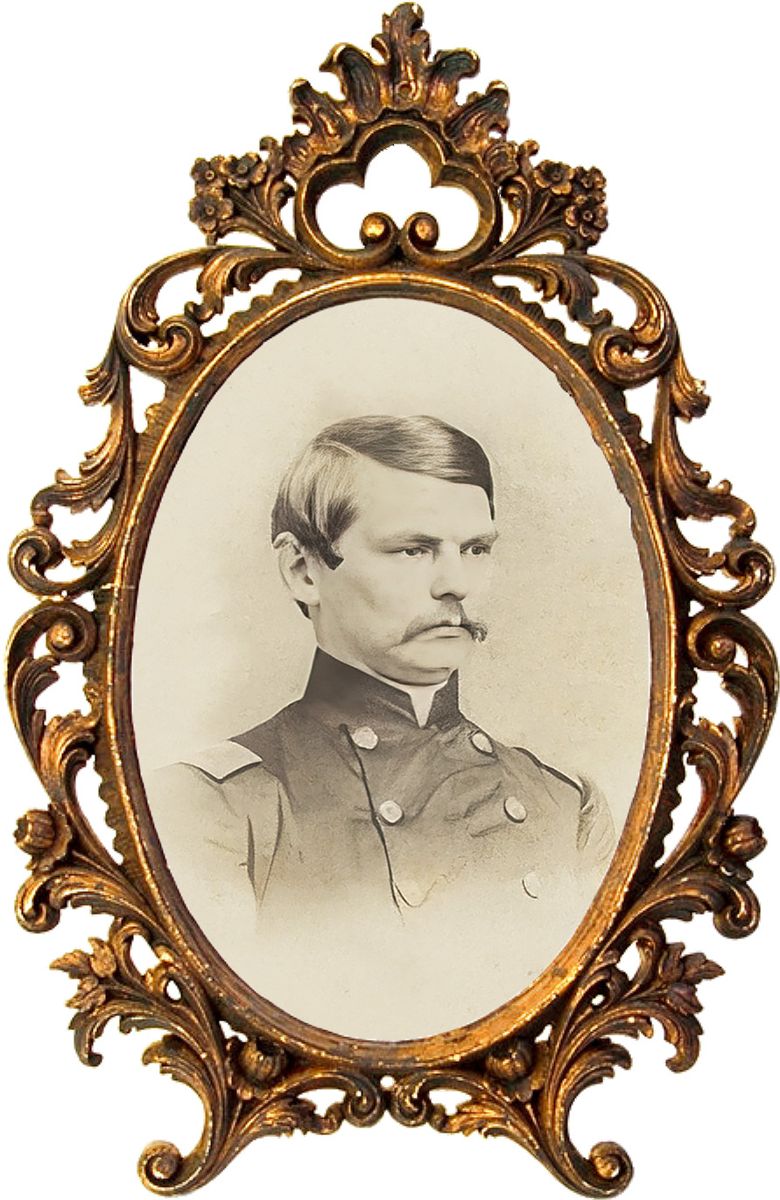
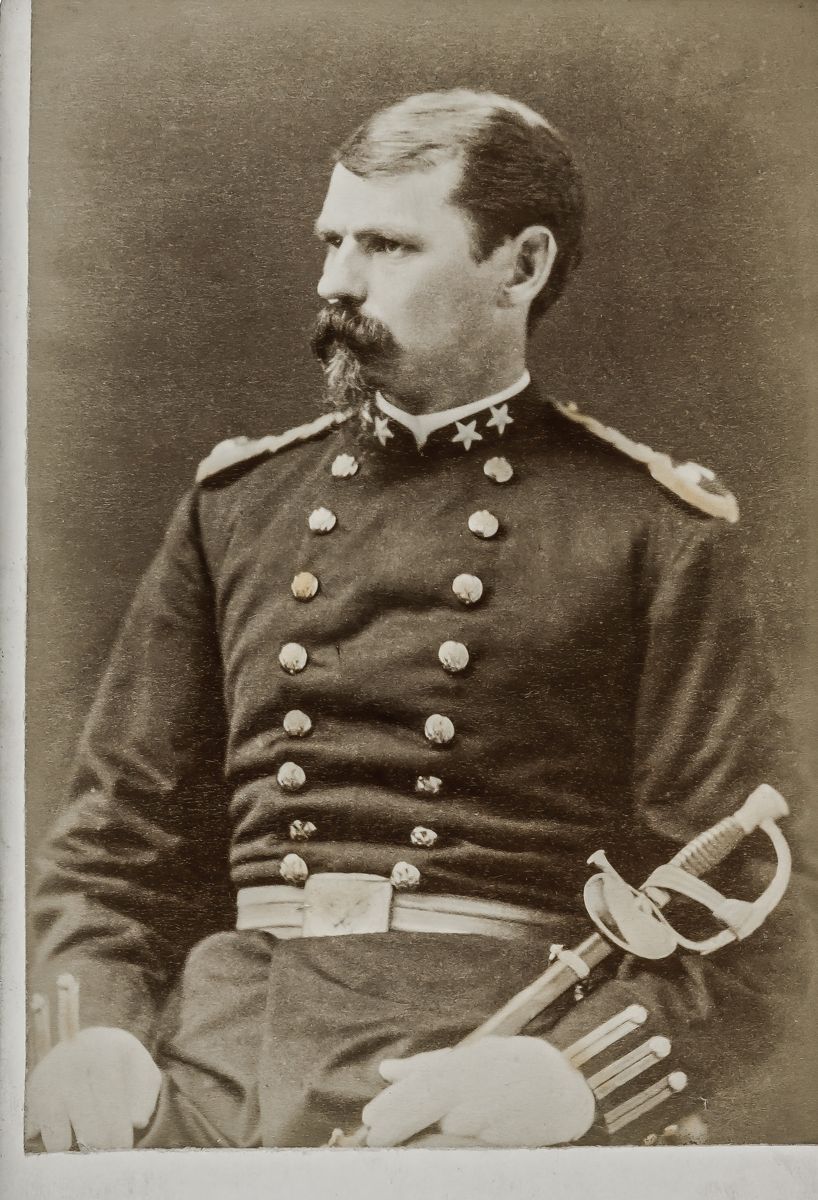
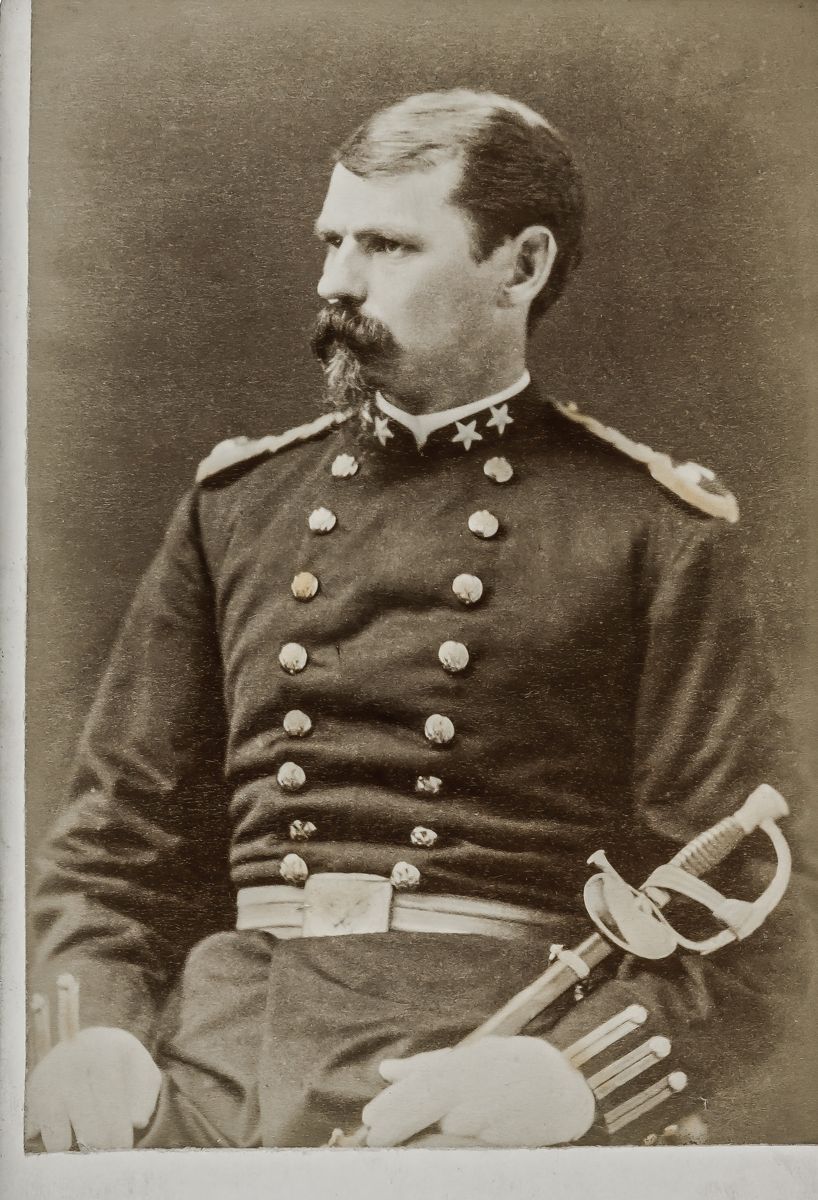
Maj. Gen. Emory Upton. (Library of Congress)
As Henry David Thoreau wrote: “The mass of men lead lives of quiet desperation.” Not Emory Upton. Within 42 short years, Upton crowded a lifetime of action and experience denied most men enjoying much longer lives. He was one of 11 surviving children of Electa Randall and Daniel Upton. His people were successful farmers just outside Batavia, New York in what was called the “Burned Over District.” It was so named after the Second Awakening of 1790–1830, which signified renewed religious fervor. Western New York became the home of several new religious sects, often labeled by historians as “folk religion.” Emily Norwood Martin was also from a large family from Auburn, New York. Her grand uncle, Enos T. Throop served as Governor of New York. Emily’s father and mother, Edward Throop Martin and Cornelia Williams Martin were responsible for making the family home and compound on Lake Owasco known as Willowbrook, a center of social and cultural activity. Future secretary of state and neighbor William Seward was a close friend. Reputedly, notable visitors included Phillip Sheridan, Ulysses Grant, and Washington Irving. Myles Keogh and George Custer were guests as was Andrew Alexander and Emory Upton. Upton briefly attended Oberlin College, successfully graduated from West Point in 1861, and served as a 2nd Lieutenant in the 4th U.S. Artillery. During the war he served in all three branches of service, was wounded three times, and finished the war as Brevet Major-General. After the war he served in the West in administrative posts enabling him to research and write an original system of infantry tactics. In the autumn of 1867, he met Emily Martin. He proposed in November and they were married February 19, 1868. Emily memorialized her engagement in her diary:
which is being carried on so vigorously. I laugh at Emory a good deal. He is determined to make the most of everything and see and learn as much as possible and the way he questions, and crossexamines the poor unfortunates he happens to He has even visited in Marseilles all the little narrow streets and hospitals so as to see both sides of the picture. This is the first time I have been without my husband for more than three hours since we were married.”5
An example of Upton’s handwriting. Letter from Emory to Emily, Nov. 21, 1868, while Upton was in New Orleans. (Courtesy of the Princeton University Library Archives, Manuscripts Division: The Throop and Martin Family Papers, 1693–1951.)
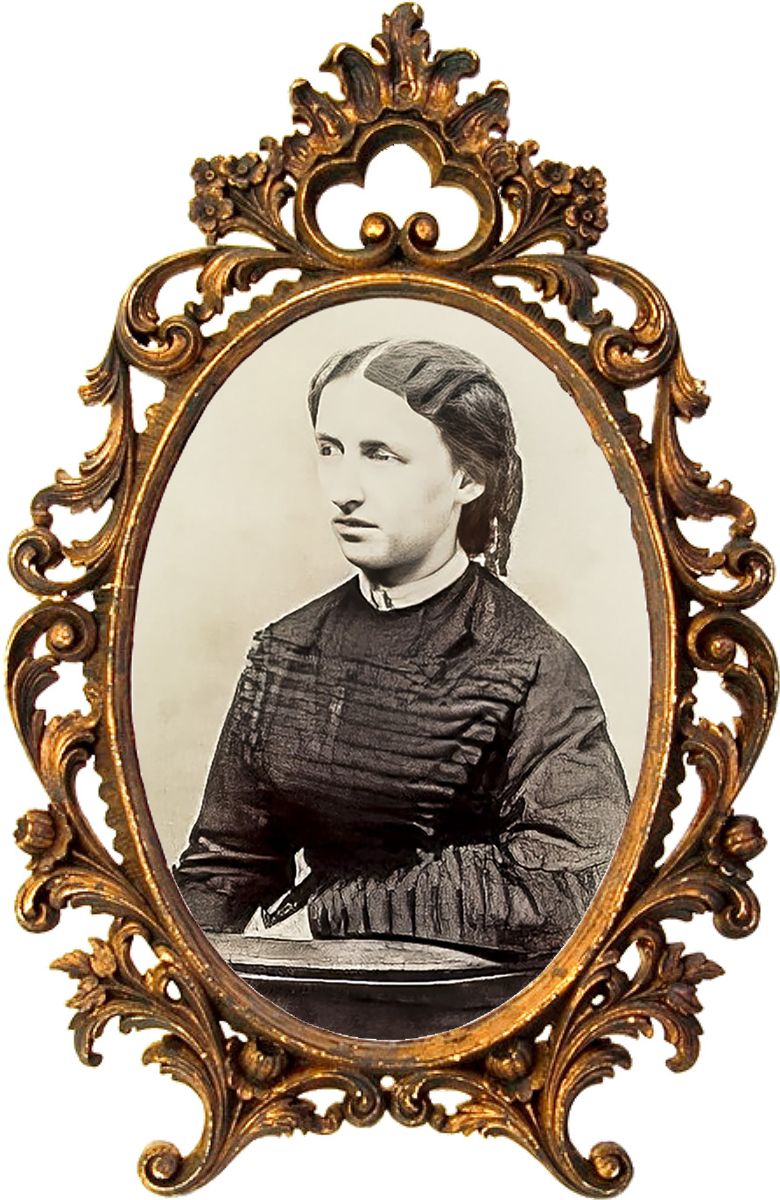
For two years, the two corresponded as much as humanly possible. The only lapses were when they were together briefly in Memphis, a few weeks in Nassau, and a summer in Atlanta. Thanks to the Throop-Martin family, more than sixty letters of Emory Upton’s have been preserved in the manuscript division of the Princeton University Library. Remarkably, none of Emily’s original letters have surfaced if they still survive. Fortunately, however, Emily’s mother kept a letter book in which she transcribed Emily’s letters to her and her husband. Her letter book and “Albums and Diaries” contain voluminous material Emily wrote to her mother and father while on her honeymoon and from Key West, Nassau, and Atlanta in the summer of 1869 but again, none to Emory. Her diary ranges from 1847 until her death in 1870, but also has Throop-Martin material well into the 1880’s. Emory’s letters to Emily end in 1869 although Emily returned to Key West and Nassau a second time at the end of 1869 and stayed until her death in March 1870. None of Emory’s original letters have surfaced from that later period. Emily’s handwriting was difficult; Emory’s almost impossible. Two brothers who served with Upton in Georgia, Ebenezer and Tom Gilpin, made fun of Upton’s handwriting. After the war, Ebenezer corresponded with Upton. At one point he forwarded one of Upton’s letters to his brother with a tongue-incheek warning:
“You will see his chirography has not improved, since the time you tried to decipher his dispatch at Atlanta, turning it up all four ways, and finally asking him ‘if it was poetry.”6
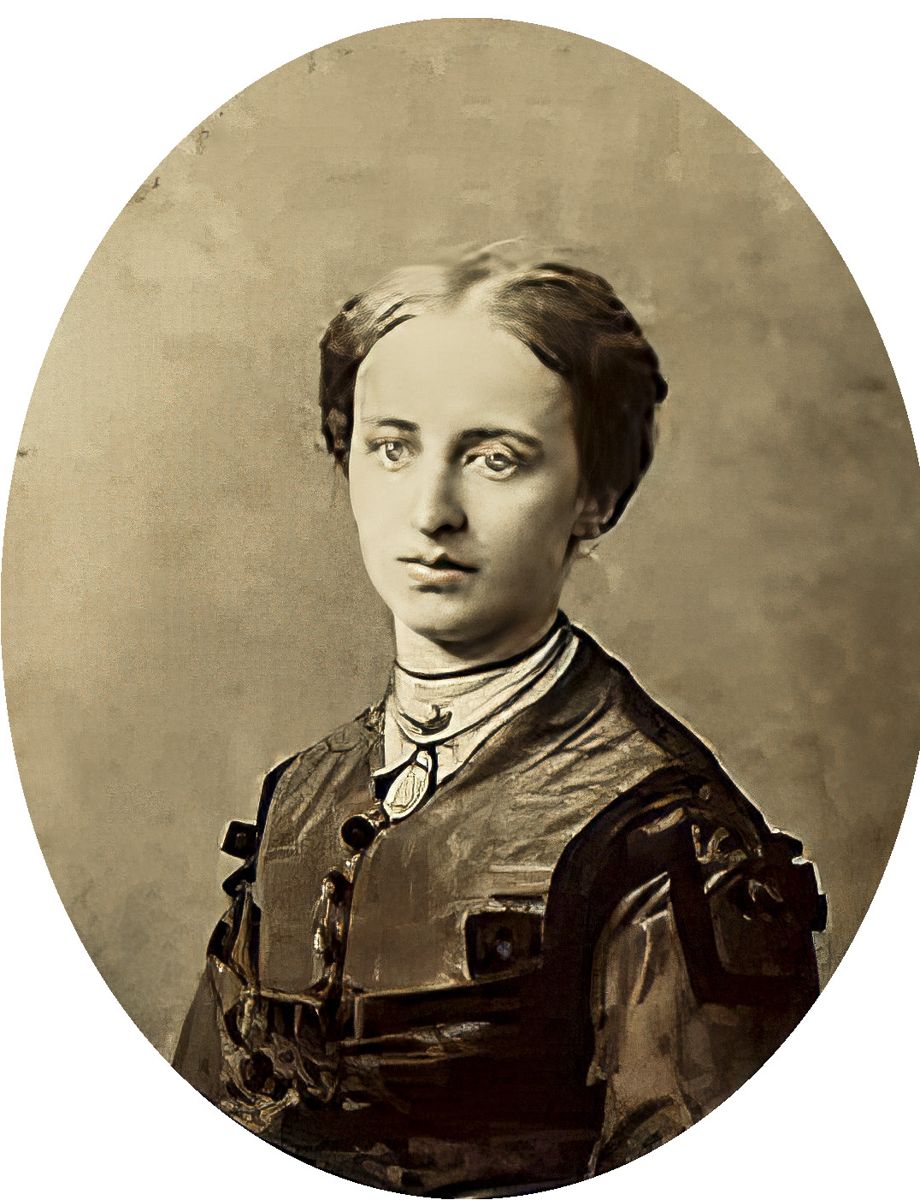
“I am glad to hear that the window has been made a memorial to both. How little did Gen. Upton think that such would be the case when he ordered it.”9
Together, both sets of letters form a poignant narrative of one very strong general’s tender love for a woman and her reciprocal affection. They are the remnants of a romantic, passionate relationship mildly surprising for a combat hero who survived a brutal war, was wounded three times, and served in all three branches of the military. They provide a glimpse into post-Civil War America and the military, which was drastically reduced to nearly its pre-war strength. The letters speak to the roles each were to play in mid19th century, the daily lives of participants of a post war, occupying army in Reconstruction Atlanta and Memphis, and the dashed hopes of a young married couple attempting to create a normal life together.7 In May 1870, still feeling the sting of the loss of his wife, Upton wrote his sister Sara,
In 1934, fire damaged the church. In the church’s reconstruction, the bell tower was shortened and all the original stained-glass windows were destroyed. The building now serves as commercial rental space for weddings and special occasions.
“The feeling of desolation has again come over me, as, in entering my home, I realize that the loved one who made it so happy, my precious Emily, has gone from me forever. But God can help me to bear this sorrow, and, while now life offers no attractions, I know that when again in active duty, employed in instilling in the minds of the nation’s future defenders’ ideas of devotion to duty and discipline, I shall experience consolation in the thought that I am again useful in the world. Here I am in the midst of a thousand evidences of Emily’s love for me. It was at this desk my heart flowed out to her daily in the letters, which used to comfort her poor heart. But all is changed. She is hidden from me, and already violets, blooming over her sacred form, offer their daily fragrance unto Heaven. I am not tempted to arraign the goodness of God. I can humbly thank him for lending me, even for so short a time, his angelic child, who, under his chastening hand, brought me back to a knowledge of the truth, and with her I can say, ‘Bless the Lord, O my soul, and forget not all his benefits’.”8 On March 14, 1881, Emory Upton, despondent over his health, the loss of his wife, and fear that his tactics manuals were a failure, took his own life. He was stationed in San Francisco at the Presidio. His death shocked his family and close military friends. Sometime just before his death, Upton ordered a stain-glassed window honoring Emily to be placed in the Sand Beach Church where they were married. When the project was postponed, the family learned of it and took advantage of the delay. Mrs. Martin, Upton’s mother-in-law, changed the project to include Emory. Upton’s publisher D. Appleton told Mrs. Martin:
Endnotes 1.
This article contains excerpts from Salvatore G. Cilella Jr., (Editor) Correspondence of Major General Emory Upton; Knoxville, The University of Tennessee Press, 2017 and Salvatore G. Cilella, Jr. (Editor) Till Death do us Part: The Letters of Emory and Emily Upton, 1868–1870; Norman, University of Oklahoma Press, 2020. Hereafter Cilella, Correspondence and Cilella, Love Letters. Diary entry, Emily Upton, November 29, 1867. James Wilson remarked to a New York Times reporter in 1918 that Upton “never knew a woman intimately until he was married, three years after the war, never drank liquor, never tasted tobacco, never used a profane word.” Richard Barry, “Emory Upton, Military Genius,” New York Times, June 18, 1918. Grenville Tremain, “Emily’s Wedding,” From “What Might Have Been Expected; Album, 1837–-1870,” unpaginated album compiled by sister Cornelia (Nelly) Eliza Martin. New-York Historical Society. As cited in Cilella, Love Letters, 5. Emily to her father, March 19 and 20, 1868. Martin Papers. Emily to her mother, April 6, 1868. In the Throop and Martin Family Papers, Princeton University Library. Hereafter, Martin Papers. Ebenezer Gilpin to Thomas Gilpin, June 6, 1878. James H. Wilson Papers, Library of Congress. Cilella, Love Letters, viii & ix. Upton to his sister, probably Sara. Peter Smith Michie, The Life and Letters of Brevet major General Emory Upton, 240-241. Location of original unknown, as cited in Cilella, Love Letters, 232-233. Hereafter Michie, Upton. D. Appleton to Mrs. Martin, November 12, 1881. Princeton University Library.
After 43 years in the museum field, Cilella devotes his time to collecting A merican prints and maps and writing. He has written extensively on Emory Upton:
Upton’s Regulars: A History of the 121st New York Volunteers in the Civil War (Kansas, 2009); a twovolume Correspondence of Major General Emory Upton, (Tennessee, 2017), received the 2017–2018 American Civil War Museum’s Founders Award for outstanding editing of primary source materials. He edited Upton’s love letters 1868-70 to his wife–Till Death Do Us Part (Oklahoma, 2020), and The Memoirs of Dewitt Clinton Beckwith of Upton’s Regulars (McFarland, 2023).