
This And That
The Final Surrender
By Gould Hagler · Originally published January 2024 · pp. 26–27
Soldiers, I am left a commander without an army, a general without troops. You have made your choice. – Gen. E. Kirby Smith to his command, May 30, 1865 After Lee surrendered to Grant on April 9, and as Johnston met with Sherman to fix the terms under which the forces in North Carolina would lay down their arms, Federal officers were sent to demand the capitulation of Confederate forces to the west. Previous columns have covered the surrenders of Lt. Gen. Richard Taylor in Alabama and Maj. Gen. M. Jeff Thompson in Arkansas. The third and final column in this series will examine the events in the Department of the Trans-Mississippi, a vast region commanded by Gen. E. Kirby Smith. On April 19, Maj. Gen. John Pope, commanding the Military Division of the Missouri, dispatched his chief of staff, Lt. Col. John T. Sprague, to meet with Smith and offer the same terms accepted by Lee at Appomattox. Sprague traveled for two weeks to cover the 600 or so miles between Pope’s headquarters in St. Louis and Smith’s in Shreveport, La. As Sprague began his journey down the Mississippi River and up the Red, Smith became aware of the events in Virginia. On April 21 he penned a message to his troops. “Great disasters have overcome us,” he wrote. In the face of this misfortune, however, he appealed to his men to soldier on. He offered hope for “succor from abroad” and ultimate victory. “Stand by your colors, maintain your discipline,” Smith urged.
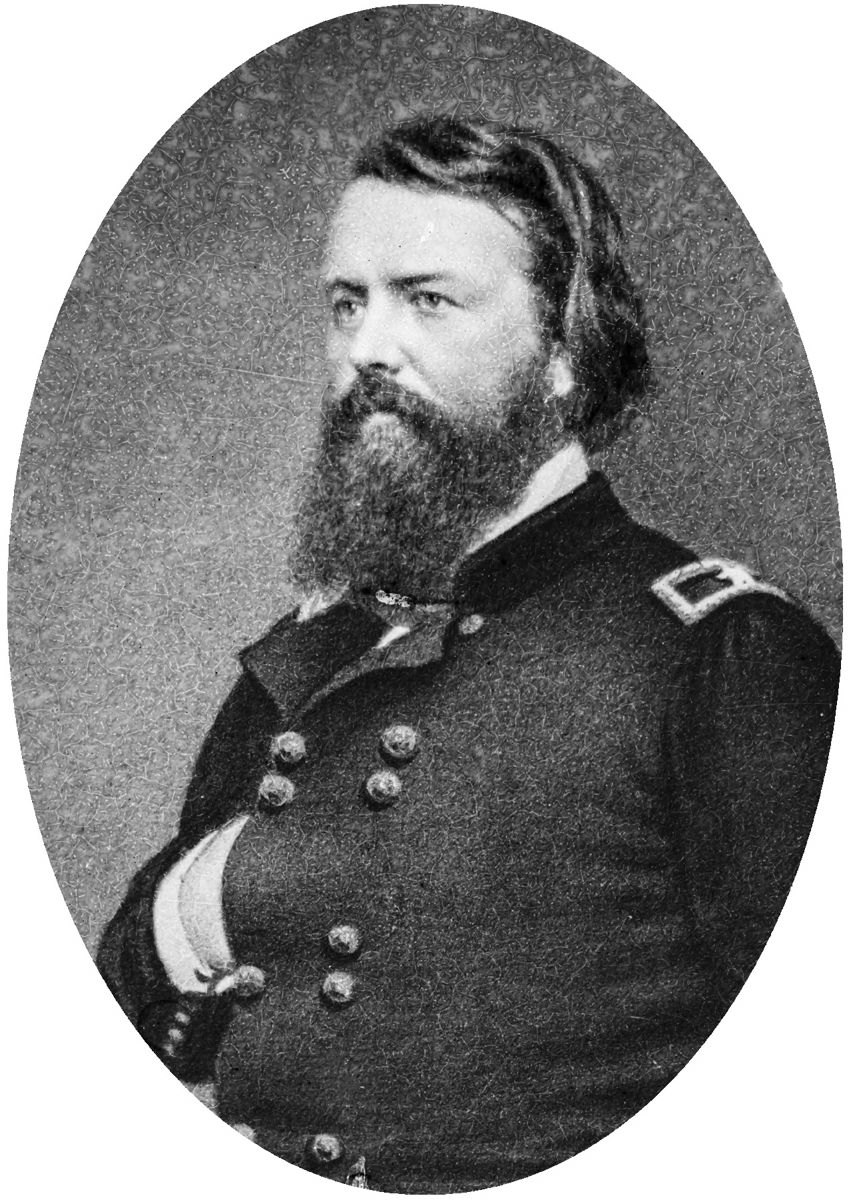
Maj. Gen. John Pope. (Library of Congress)
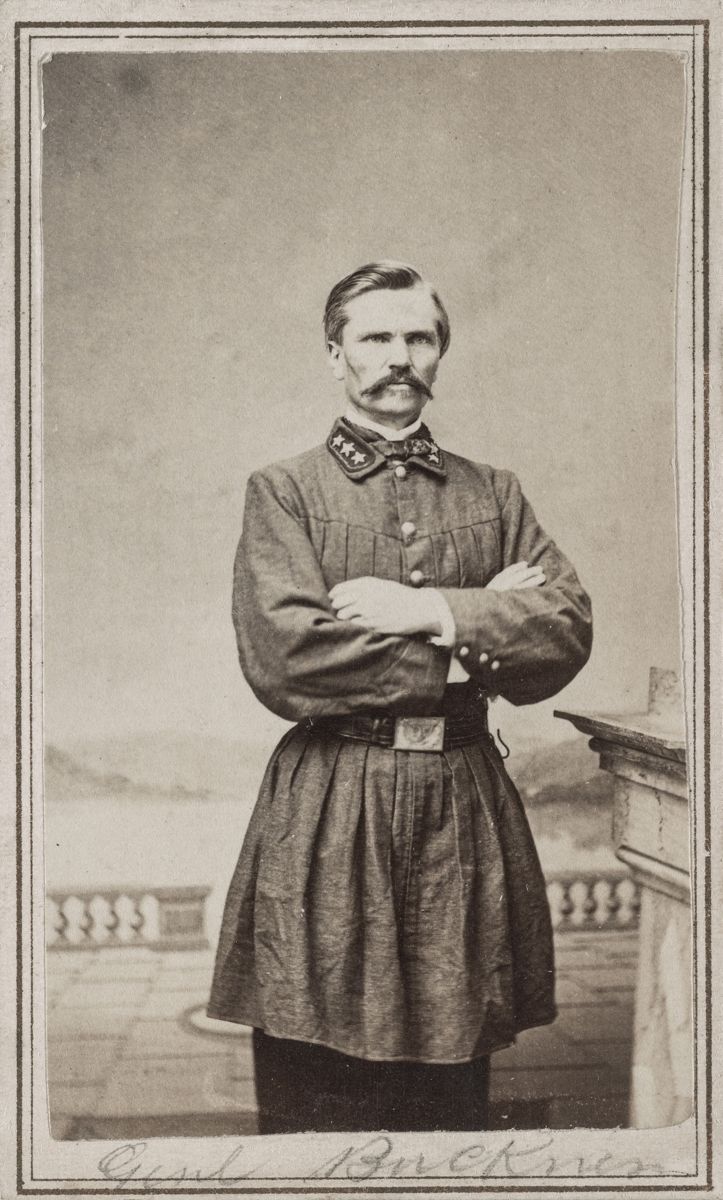
It is interesting to note that on the last leg of his journey, after passing through Confederate lines, Sprague traveled upriver to Shreveport in the same steamboat as Confederate Lt. Gen. Simon Bolivar Buckner. Also aboard were some of Lee’s men, soldiers paroled at Appomattox and headed home. Buckner commanded a district in Smith’s department and would soon be appointed Smith’s chief of staff. He was to play an important role as events unfolded. Sprague met with Smith on May 8 and presented Pope’s written proposal. The next day Smith handed Sprague a written rejection. On that same day Smith invited the governors of Texas, Arkansas, Louisiana and Missouri to meet with him in Marshall, Texas. He felt obliged to consult with the available civil authorities before acting. After this consultation Smith met again with Sprague on May 15. He wrote that his army “was menaced only from a distance [and was] large and well supplied and in an extensive country full of resources.” The Federals’ terms were therefore “not such as a soldier could honorably accept.” Smith proposed that his army would be disbanded but not surrendered. All officers, soldiers and citizens in his department would be granted “immunity from prosecution for all past acts.” Sprague rejected these terms and began his return to St. Louis. Smith left for Texas, planning to relocate his headquarters to Houston and organize continued resistance. Smith’s position was not remotely as strong as he claimed. As recently as April 28, Maj. Gen. John B. Magruder, commander of a military district in Smith’s department, had written to Smith pledging his “most cordial CivilWarNews.com support” in the situation which he described as “the present crisis of our affairs.” Magruder’s pledge notwithstanding, Smith’s army was falling apart. The very day after his assurance, Magruder reported that the men were “deserting by tens and twenties a night.” On May 16 Magruder informed Smith that “some 400 of the troops attempted to desert the post in Galveston with arms in their hands.” Their attempt was thwarted, but the contagion was unabated. The officers in an infantry division informed Magruder that their “troops would fight no longer.” Magruder concluded: “The officers and men insist upon dividing the property before the surrender, and I think it ought to be done…. Nothing more can be done except to satisfy the soldiers, to induce them to preserve their organization, and to send them in regiments &c. to their homes, with as little damage to the community as possible. For God’s sake act or let me act.” In case Smith had any doubts about Magruder’s assessment, Maj. Gen. John G. Walker, commander of a cavalry division, added a postscript to the report: “I definitely concur in the foregoing. I will say in addition…that the troops of this district cannot be relied on. They consider the contest a hopeless one, and will lay down their arms at the first appearance of the enemy.” On May 19, the commander of a division encamped near Mansfield, La., issued an order to his brigade commanders authorizing them to “disband troops under their commands and permit them to proceed to their homes.” The order stated that “the major portion” of the men had already gone and had taken much government property with them. Other men were granted furloughs “to go home and cut the wheat crop.” Their families were “in very destitute circumstances.” Despite these dire events, some diehards did not want to quit. Several generals, led by Maj. Gen. Sterling Price, feared that Smith was about to yield. They plotted to force him out, hoping to continue resistance under Buckner’s leadership, whom they planned to install in Smith’s stead. Where these leaders expected to find followers willing to fight is uncertain. Buckner’s own view of this conspiracy is not clear. It never got off the ground, however, as both Price and Buckner quickly chose another course: surrender. While Smith was relocating his department’s headquarters to Houston, Buckner, whom Smith left in temporary command, was
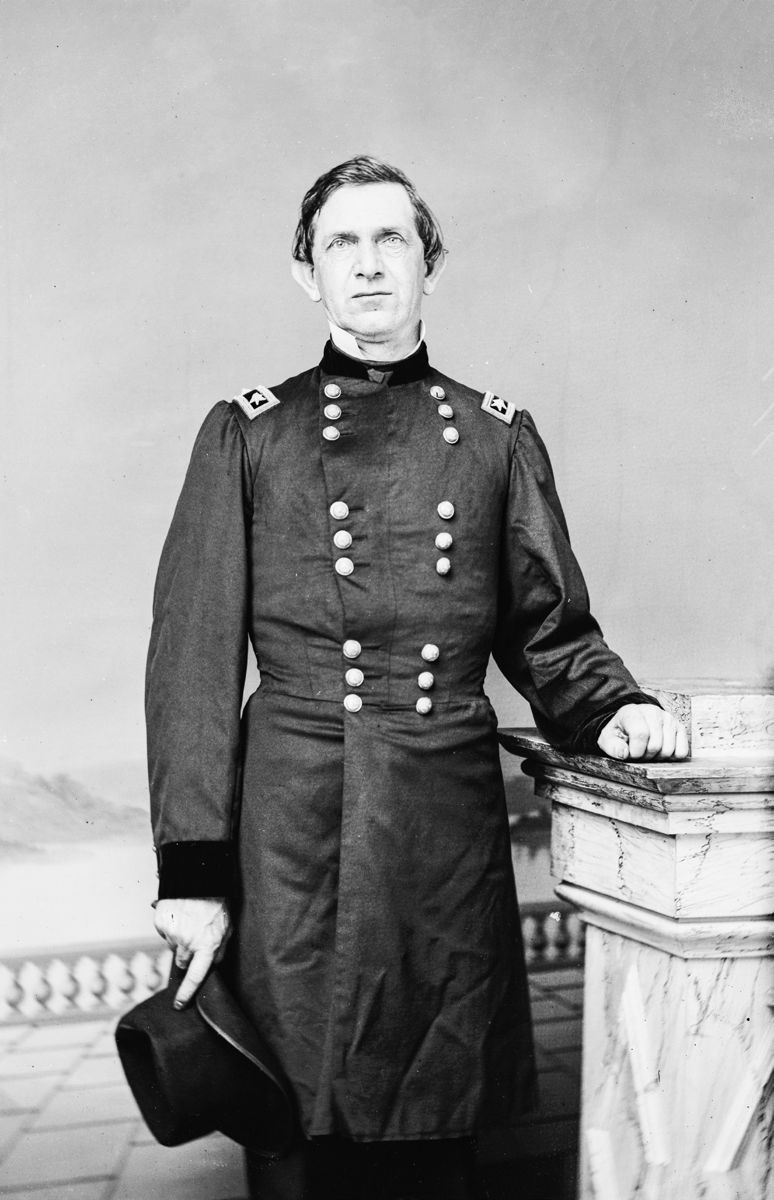
Gen. Edmund Kirby Smith. (Library of Congress) CivilWarNews.com on his way to New Orleans with Price to surrender the troops of the department. As the document was written, Buckner’s action was subject to his commander’s approval, but this provision was a fiction: Smith had no choice. Buckner met with Federal Maj. Gen. Edward Canby and on May 26 signed the surrender. Smith arrived in Houston on May 27, several days after he left Shreveport and one day after Buckner signed the surrender document in New Orleans. Smith already knew that his position was very weak before he left Shreveport, but as he traveled to Texas, he learned from a dispatch sent by Magruder and from his own observation, that conditions were deteriorating even further and at a shocking pace. Many his men were simply no longer soldiers in a disciplined military organization, but rather part of a dangerous mob. Smith faced the harsh, undeniable facts and threw in the towel. On May 30 he published a remarkable message to his troops. Smith wrote that he had intended to concentrate his forces in Texas and to carry on the fight if negotiations failed to “secure terms honorable alike for soldiers and citizens.” To his chagrin, he continued, he had discovered upon his arrival in Houston that the Texas troops had “forsaken their colors and their commanders.” Now he was “a commander without an army.” Meanwhile, on May 27, Canby dispatched Brig. Gen. E.J. Davis to meet with Smith “for the purpose of conferring with you in relation to the details of the military convention” executed on the 26th. On the 31st Davis advised Smith that he was anchored near Galveston. Smith agreed to the terms signed by Buckner. On June 2 he made it official when he put pen
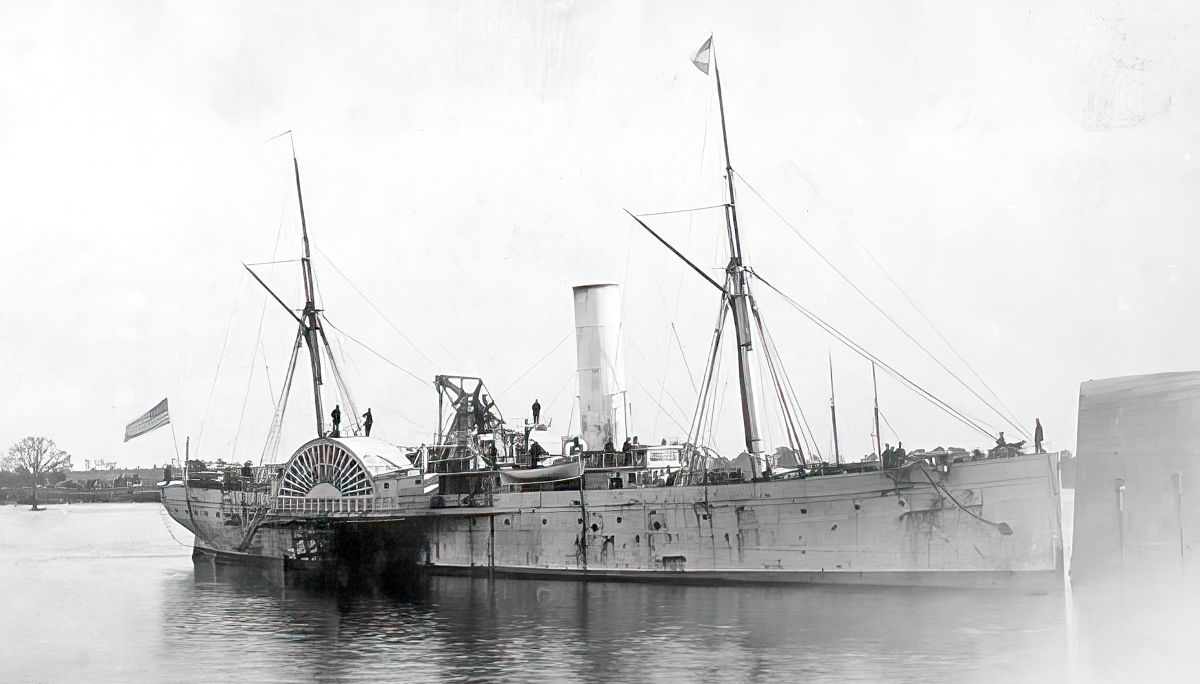
USS Fort Jackson in 1862.
On August 1, Lt. Gen. Buckner wrote a letter to his wife describing the conditions he and the other commanders faced and explaining his actions. Buckner wrote: “Before you can judge the propriety of my surrender, you must be satisfied of the condition of affairs at the time. The troops were deserting by divisions, and were plundering the people as well as the government property. The troops that adhered to me had no desire to prosecute the struggle, and were, in fact, powerless to do so.” It is not clear when Smith learned that Buckner had signed the surrender in New Orleans. Because of the distances involved and the dates of the various communications, it seems unlikely that Smith found out until he met with Federal officers in Galveston. It is noteworthy that his May 30 message did not mention the surrender. Smith cited only the condition and behavior of the troops, their unwillingness to fight and the lamentable reality that he no longer had an army under his command. to paper aboard the USS Fort Jackson. The Civil War did not end on April 9 at Appomattox, or at Bennett Place on April 26. It was not concluded on May 8 in Citronelle or in Chalk Bluff on May 11. Did it end on June 2 in Galveston? That is as good a date as any. After that there was no Confederate army left in the field to surrender. Many of the troops in this final army were paroled. Many others just went home. Sources: David Silkenat, Raising the White Flag: How Surrender Defined the American Civil War, 2019; Arndt M. Stickles, Simon
Bolivar Buckner: Borderland Knight, 1940; Arthur Howard Noll, General Kirby-Smith, 1907; OR, Ser. I, Vol. 48. Gould Hagler is a retired lobbyist living in Dunwoody, Ga. He is a past president of the Atlanta Civil War Round Table and the author of Georgia’s Confederate Monuments: In Honor of a Fallen Nation, published by Mercer University Press in 2014. Hagler speaks frequently on this topic and others related to different aspects of the Civil War and has been a regular contributor to CWN since 2016. He can be contacted by email at [email protected].