
The 2023 Lincoln Forum
By Leon Reed · Originally published January 2024 · pp. 14–17
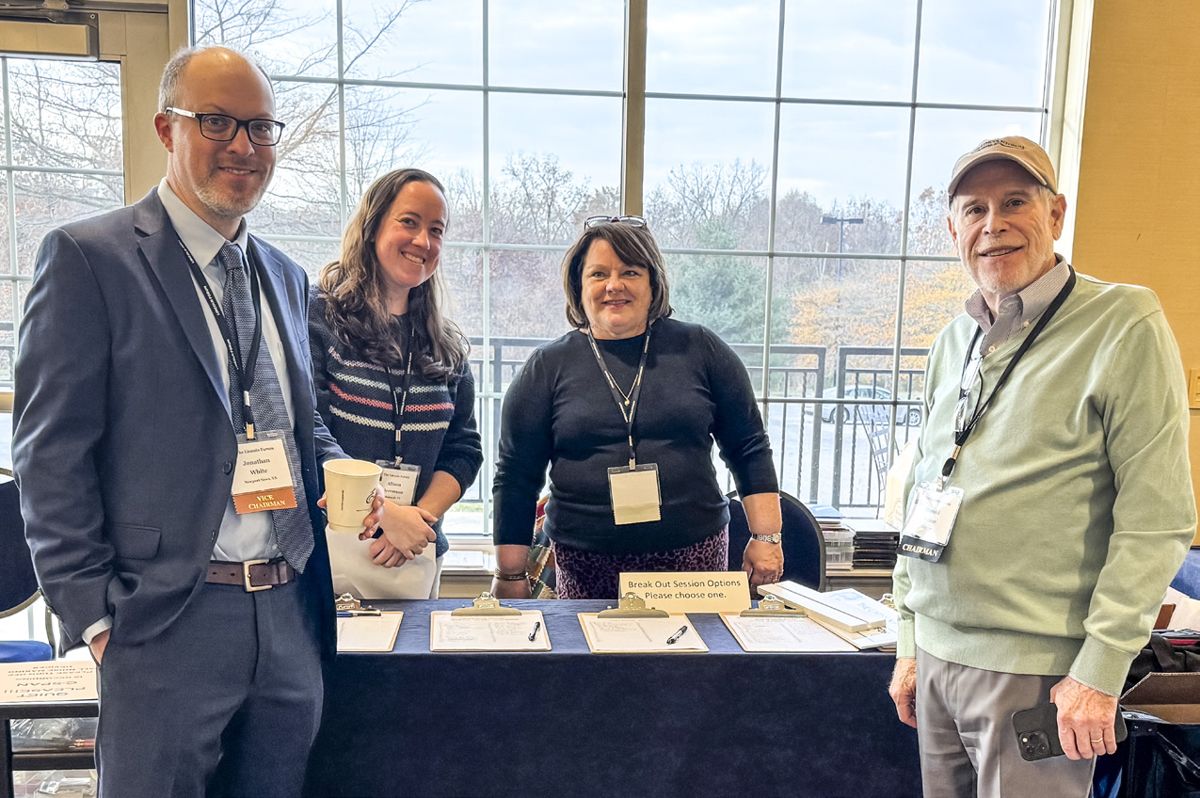
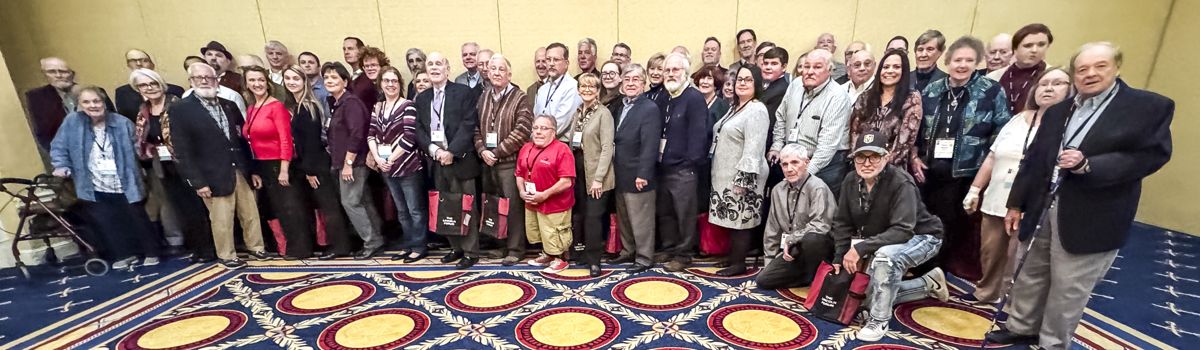
Once again, the Lincoln Forum brought together the nation’s leading Lincoln scholars and enthusiasts at Gettysburg’s Wyndham Hotel for a threeday binge of scholarship, music, video, celebrity watching, and book sales. This time, Forum chair Harold Holzer, Jonathan F. Fanton Director, Roosevelt House Public Policy Institute at Hunter College, and vice chair Jonathan White, professor of American Studies at Christopher Newport University, welcomed a record crowd of more than 350 attendees from 38 states. All indications in the Forum’s onsite bookstore, where sales were brisk from the start of registration until after the last speaker, the state of Civil War scholarship, and interest in reading about it, are strong.
This year’s theme was “What Price Glory? Emancipation and Gettysburg at 160.” In keeping with the theme, many presentations focused on either Civil War fighting men or the lives of black Americans, before and after Emancipation. Plus, of course, Lincoln. At the start of the conference, Holzer congratulated White for winning the 2023 GilderLehrman Lincoln Prize for his book, A House Built by Slaves: African American Visitors to the Lincoln White House. Holzer and White also hosted a reception for the 100+ first-time attendees. Holzer encouraged them to introduce themselves. “Our goal is for you to enjoy this so much that you become a second-time attendee next year.”
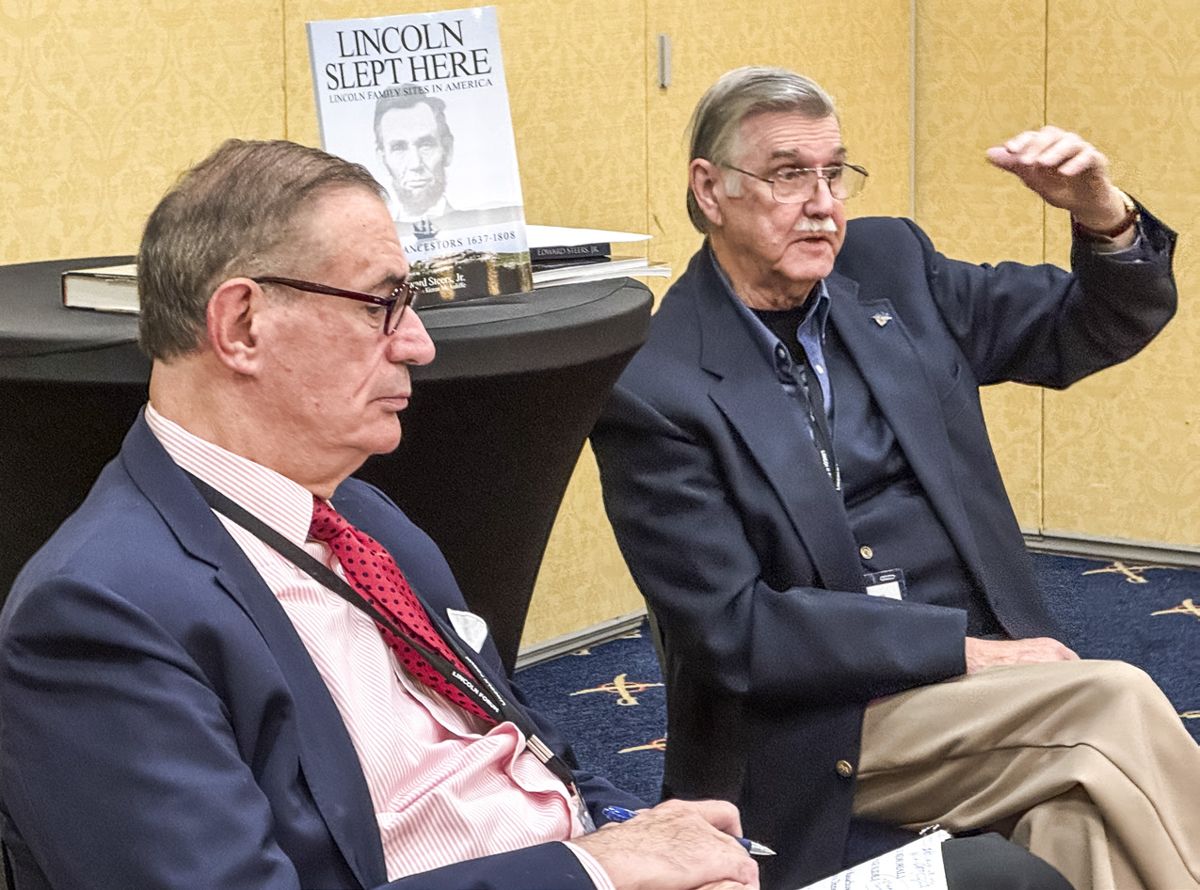
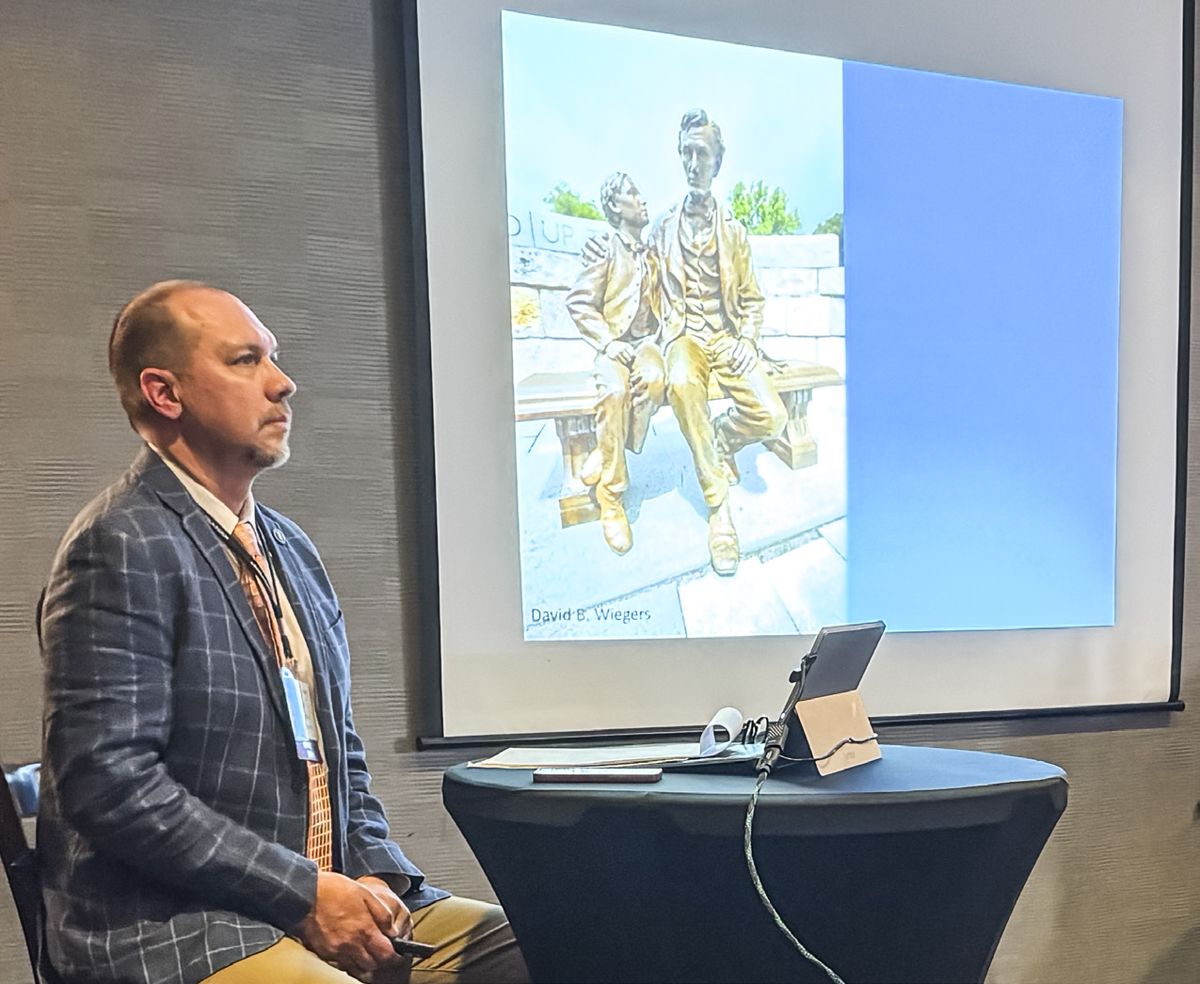
Military Men The conference opened with several presentations on warfighters. Ronald C. White, best-selling author of biographies of Lincoln and Grant, spoke on “Joshua Lawrence Chamberlain at Gettysburg.” He reviewed the familiar episodes of his military career: Little Round Top, Petersburg, Appomattox, but also gave attention to his character, his relationship with his wife, and his postwar careers as Governor of Maine and President of Bowdoin College. While Chamberlain had a distinguished postwar career, White noted, “For many people, they knew as they witnessed the events at Appomattox that the experience now ending represented the high point of their lives, that nothing would ever measure up.” He described the challenges Chamberlain faced as governor and college president and the extent to which he never left Gettysburg. White cited Chamberlain’s “In Great Deeds Something Abides” speech: … spirits linger, to consecrate ground for the vision-place of souls. And reverent men and women from afar, and generations that know us not and that we know not of, heart-drawn to see where and by whom great things were suffered and done for them, shall come to this deathless field to ponder and dream; And lo! the shadow of a mighty presence shall wrap them in its bosom, and the power of the vision pass into their souls. “The story of Joshua Chamberlain is much more than a 19th Century story,” White concluded, “much more than a Civil War story. It raises the question, ‘What makes a hero?’” Craig Symonds, best-selling author and retired U.S. Naval Academy professor, compared the personalities and leadership of two naval heroes of different centuries: the Civil War’s David Glasgow Farragut and World War II’s Chester Nimitz: “Two Admirals, Two Wars, One Temperament.” Symonds stated, “I tell my students that studying leadership of the past will make them better leaders. … But I do not think for a minute that any of my students in Afghanistan said, ‘Ah ha! I know what to do because of what Grant did at the Wilderness.’” Symonds noted that both admirals shared many traits: sons of immigrants, raised by a surrogate, raised in “frontier” circumstances (Farragut literally on the frontier and Nimitz in One of the highlights of each year’s Forum is the series of breakout sessions that happen on the last afternoon. Firsttime attendees head off for a rare privilege—a guided tour of the battlefield compliments of Carol Reardon while everyone else gets to choose from a smorgasbord of intriguing topics. The most renowned session each year is the Lincoln Forum’s equivalent of Huntley and Brinkley, Craig Symonds and John Marszalek, discussing … whatever. This year, they were joined by Richard McMurry for a discussion of Confederate general Joe Johnston. Other breakout sessions included: 1. Dave Weigers, Scott Schroder, and Frank Porcu: Lincoln Statuary in History, Memory, and Photographs 2. Jake Friefeld, Brian Mitchell, and John Rodrigue: After the Proclamation: Black Life in the Wake of Emancipation 3. Candice Shy Hooper and Susannah Ural: Lincoln’s Forgotten Mailman 4. Michelle Krowl, John Lupton, Christian McWhirter: What’s Left to Discover? Lincoln in the Archives 5. Callie Hawkins, Michael Atwood Mason, Erin Mast, and Sam Wheeler: Here I Have Lived: The Lincoln Home and the Lincoln Cottage as Sits of Historical Memory 6. Edwards Steers Jr., and Dennis J. Curran: Annals of the Poor: The Lincoln Genealogy the hill country of Texas). Both were also committed nationalists. He related that Farragut had no hesitancy when he heard of Lee’s departure (“He knew he was an American first.”) Symonds also related an anecdote about Nimitz returning home with his new “Yankee” bride. One of his family decided to show the Yankee how deep family ties ran and asked Chester who he would fight for if a new Civil War broke out and was surprised when the young Texan smiled and said, “Why of course, I would fight for the United States against any rebellion.” Both men were also willing to make a bold decision. Perhaps his boldest came in June 1942 when Nimitz’s decided to confront the Japanese fleet at Midway. “He could have stayed on the defensive; arguably, it was the smart move.” But Nimitz pointed out that, like Farragut’s famous “damn the torpedoes …” remark, this decision was bold but not reckless. “Then Japanese had more carriers, but Nimitz had an airstrip.”
Lincoln, the politician and communicator A panel consisting of Edward Achorn, author most recently of The Lincoln Miracle: Inside the Republican Convention that Changed History; Joseph Fornieri, professor of political science at Rochester Institute of Technology and author of three books on Lincoln; Ronald White; Harold Holzer; and moderator Erin Carlson Mast discussed “Lincoln, the Great Communicator.” Later, Achorn discussed “Lincoln, the Nominee Nobody Expected.” Fornieri observed that Lincoln’s great strength as a communicator was his ability to convey his vision of the Union, consistent with the principles of the Declaration of Independence. Holzer characterized him as “America’s greatest stump speaker.” But Archon observed that he wasn’t a great extemporaneous speaker. He agonized over his speeches.” Holzer agreed. “He never would have written anything on the fly.” Achorn summarized, “He may have been America’s greatest literary stylist.” White observed that “Lincoln disappears in his great speeches. There are no personal pronouns in his two greatest speeches. He goes out of his way to focus on the ideas.” Archon added, “I can’t imagine any other politician making a speech like the Second Inaugural. He doesn’t even take a victory lap or praise the Union. He appeals to the people’s faith; he is looking past victory to peace. He wants the Southerners to feel like Americans.”
The Black Experience, pre- and post-war
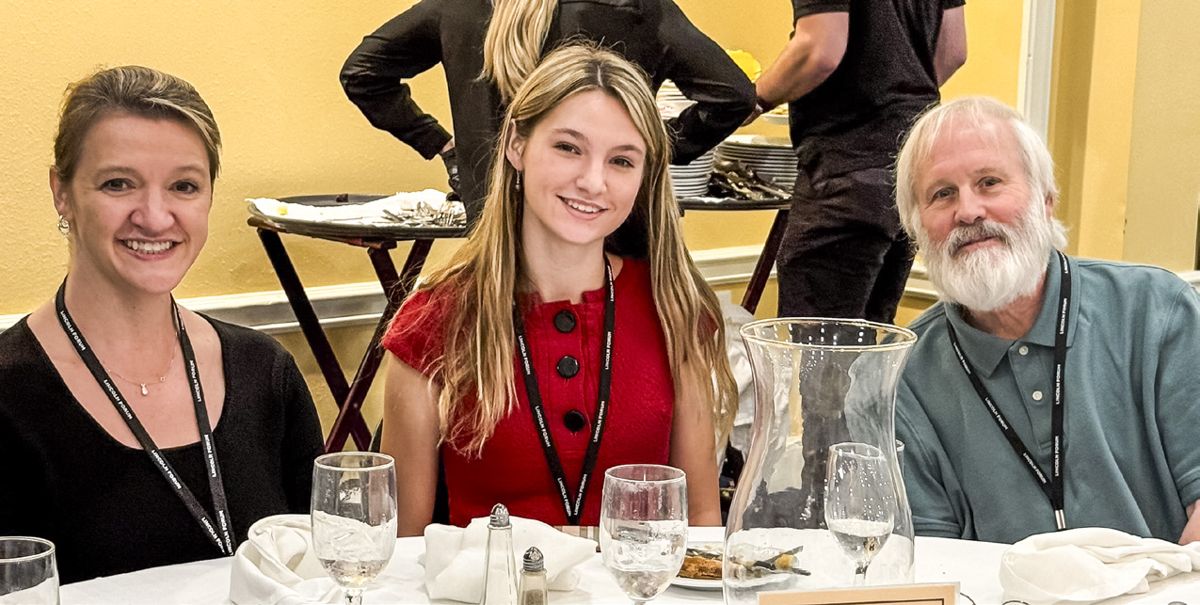
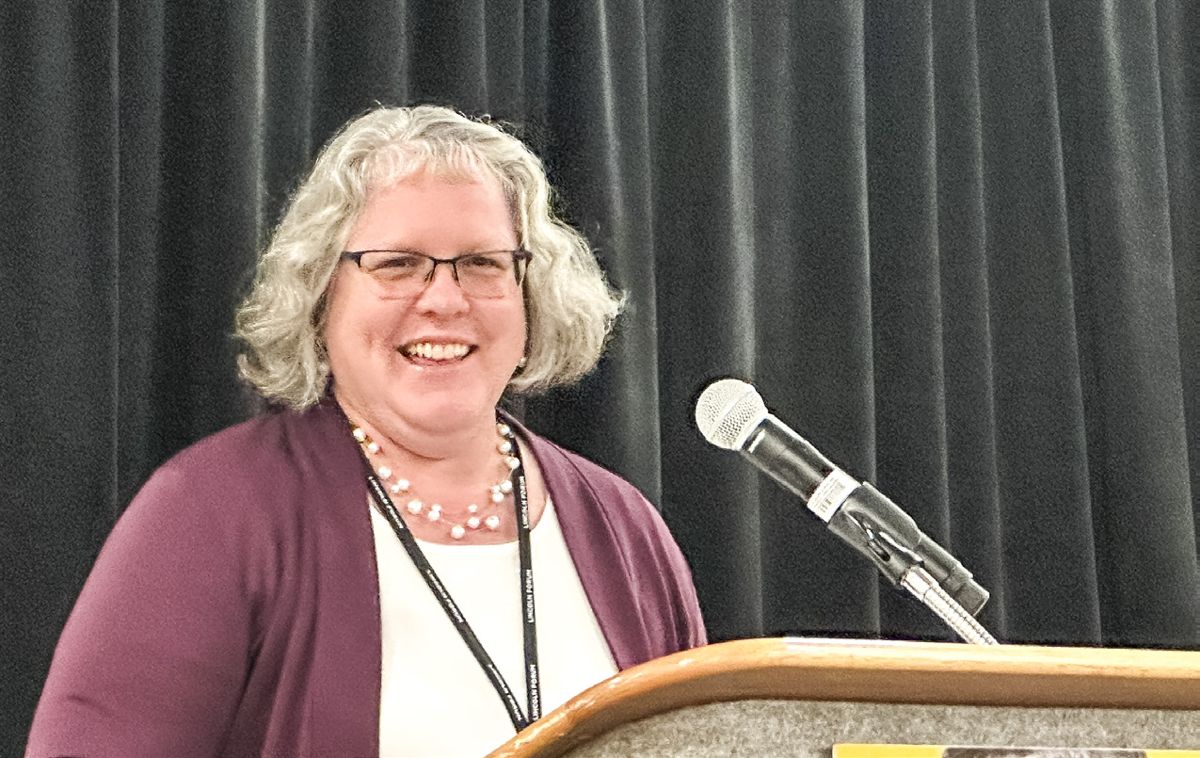
Forum secretary Michelle Krowl. Three panels or speakers addressed the black experience. Kate Masur, professor of history at Northwestern University and author of Until Justice Be Done: America’s First Civil Rights Movement, pointed to the importance of the Northwest Ordinance of 1787, which “was so important in setting these states on the road to not having slavery.” Despite this founding document, the states “all adopted laws that discriminated against free blacks: white-only public school systems, restrictions on voting, etc. And the first organized protests had some success repealing these kinds of laws, especially in Ohio.” Conference vice chair Jonathan White discussed the suppression of the Atlantic slave trade. He pointed out that the slave trade continued for years after it was banned. “Just because something is illegal doesn’t mean it ended.” He related the story of slave trader Daniel Gordon (“he started out with a load of 897 humans; he loaded the ship in 45 minutes.”) Gordon was arrested and sent to New York for trial, a place where “Everybody knew he had nothing to worry about. The slave trade had been piracy for 40 years, and nobody had yet been punished.” But this time, Lincoln
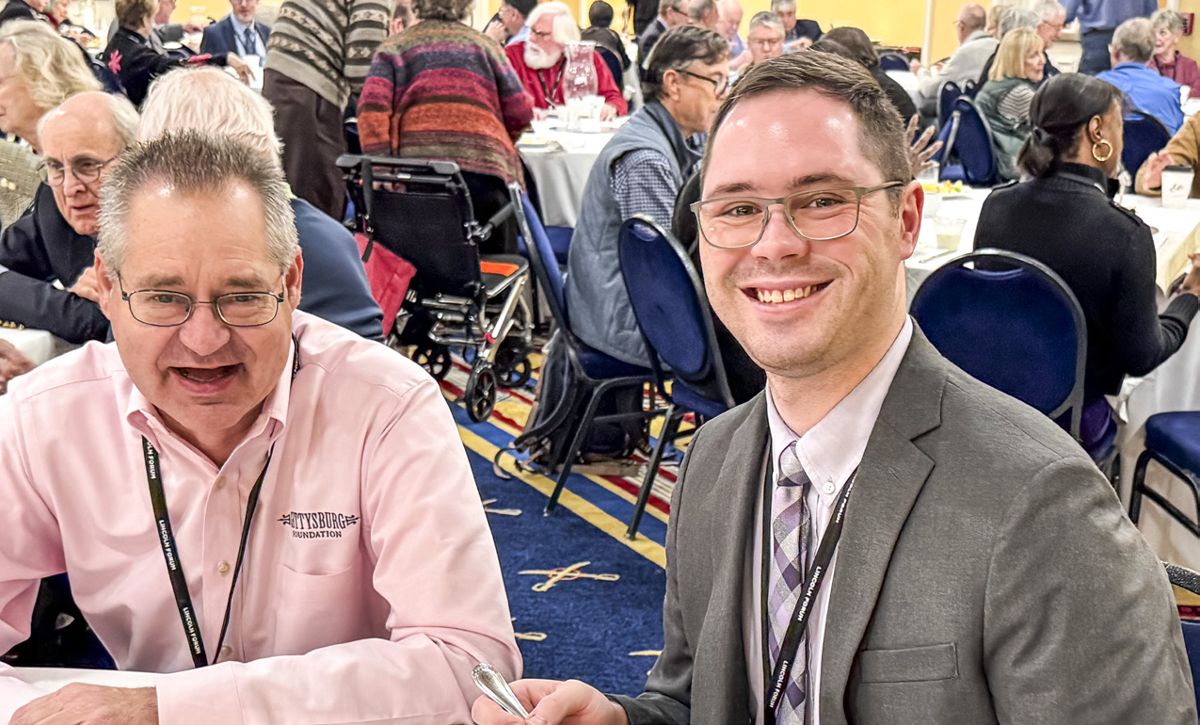
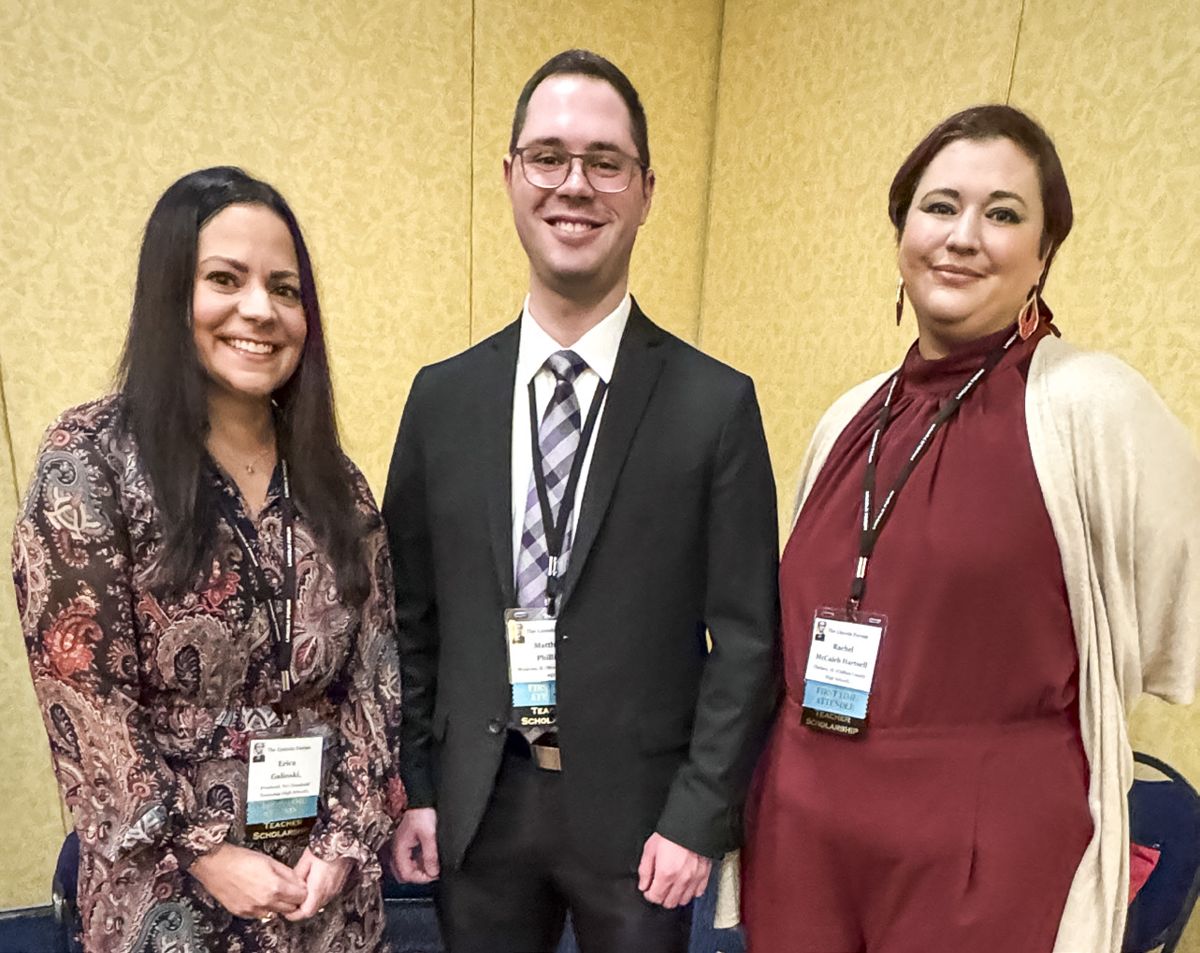
The Lincoln Forum provides scholarships for high school students, college students, and teachers to attend the Forum. This year, three Frank J. Williams student scholars were in attendance, JJ Vander Loop (Wisconsin), Joah Smith (Arkansas), and Aidan Stroud (North Carolina). The student selected for the college scholarship couldn’t attend. Tom Horrocks chairs the committee that selects the students. The three teacher scholarship winners were Erica Galinski (Freehold, NJ), Rachel McCalb Hartsell (Chelsea, AL), and Matthew Phillips (Wenona, IL). Ruth Squillace chairs the selection committee. Sometimes, the scholarship winners seem overwhelmed by the event, but this year’s groups leaped into the event enthusiastically. Whether it was lunch with Gettysburg Foundation chair Wayne Motts, asking Dr. Masur about courses at Northwestern, or chatting with Dr. Green Medford, the scholarship winners made the most of the opportunity. was president, and he ordered his Interior Department to destroy the Atlantic slave trade. As part of this initiative, “Daniel Gordon became the only person in U.S. history executed for the slave trade.”
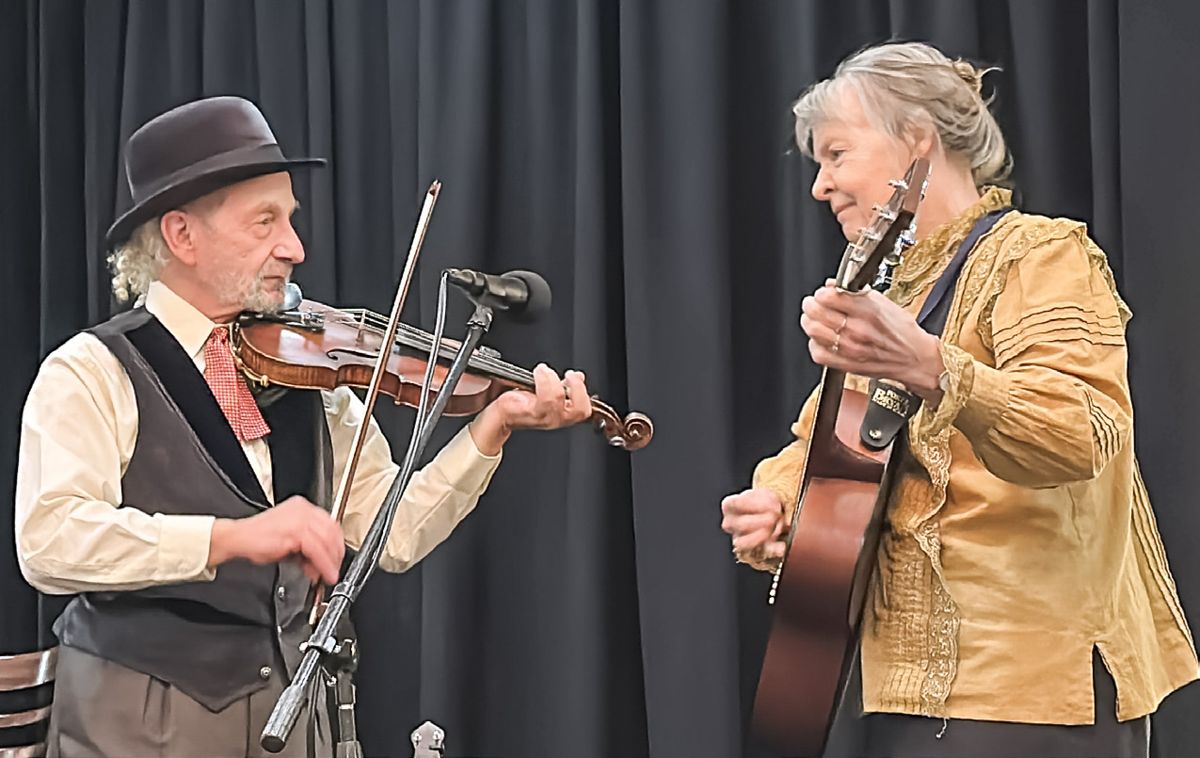
Breakout: Lincoln home, Callie Hawkins (left) and Erin Mast (right)/
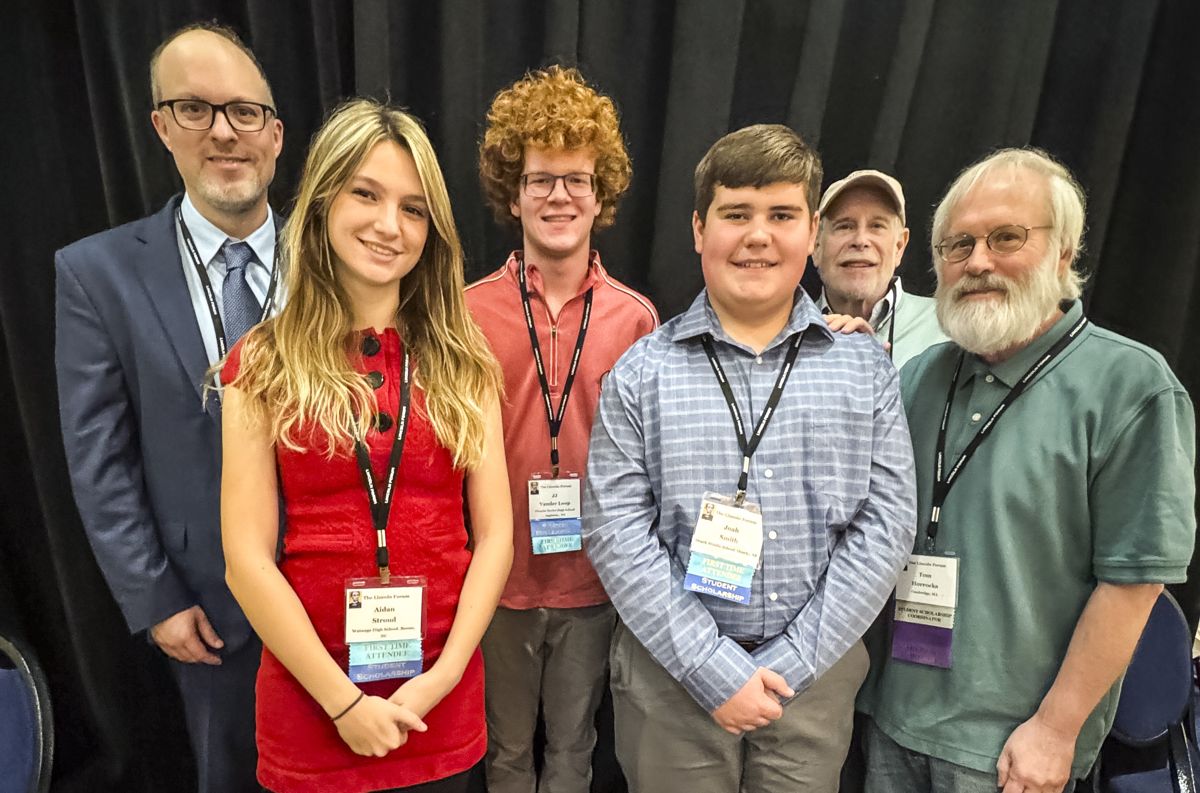
A conversation about Lincoln The main attraction of the Forum’s last evening was an eye-opening rendition of the Gettysburg Address, delivered by Graham Sibley, the actor who played Lincoln in the recent History Channel series, followed by a conversation between Forum chair Harold Holzer and the Executive Producers of that series, historian Doris Kearns Goodwin and her fellow producer, Beth Laski. Sibley, who repeated his performance at Dedication Day ceremonies the next day, delivered an emotional, brooding reading of Lincoln’s 272 words, a distinct contrast to the more introspective readings done by many Lincoln interpreters. The conversation was punctuated with well-selected excerpts from the miniseries, including Lincoln’s first hesitant entry into the political world, an excerpt from the LincolnDouglas Debates, scenes showing Lincoln’s taming of the so-called “Team of Rivals,” the superstar Cabinet members who learned, to their chagrin, that this bumpkin from Illinois was their political master and an emotional meeting between Lincoln and some of his soldiers. Sibley delivered a strong performance throughout, and the excerpts left viewers wanting to see more. Left to right: Tom Horrocks, Ruth Squillace, and Dana Shoaf.
The Show Coordinating plans with the hotel, speakers, and vendors; preparing packets for, registering, and answering questions from 350 guests can overwhelm a conference staff. But year after year, the Lincoln Forum comes off smoothly. “A guest commented on another well regarded conference. “It’s good, but it’s definitely off-Broadway. This,” he gestured, taking in the hotel and attendees, “is Broadway.”
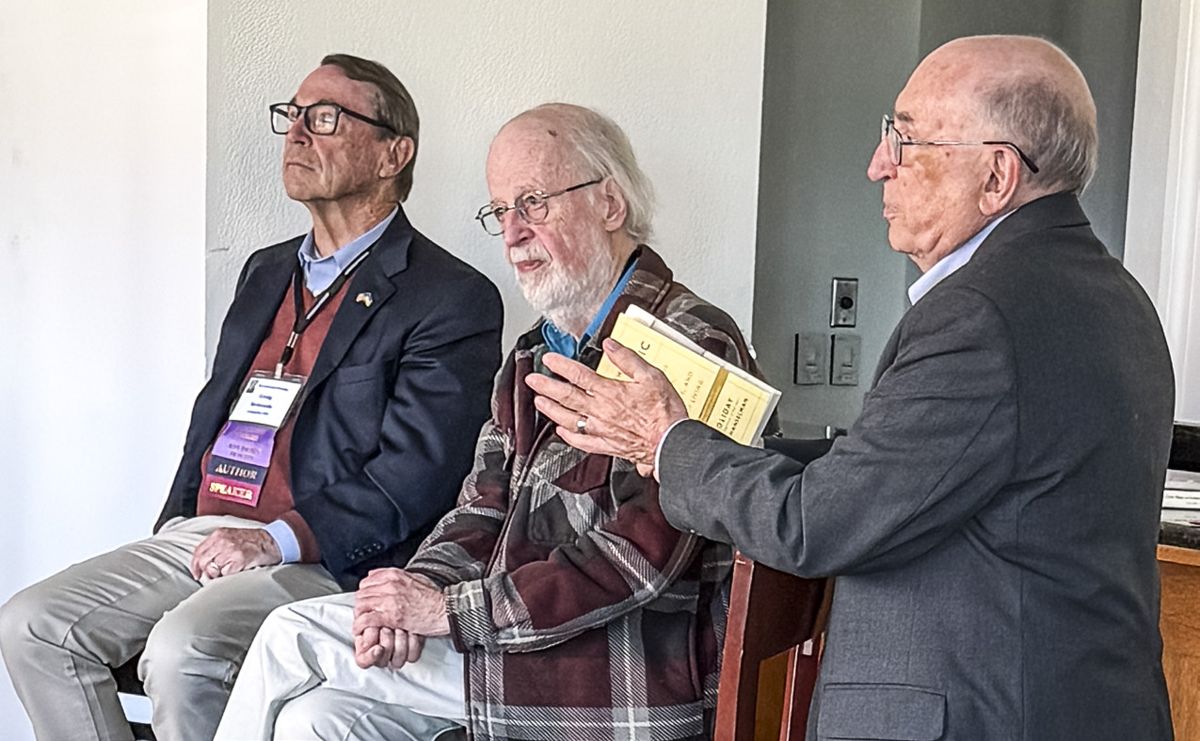
Conversations in the corridors
While the presentations and panel discussions were, as always, first-rate, some of the most intense information exchanges took place in the hallways, between sessions, or at meals. Many guests are
Author Craig Symonds autographing a copy of his book.
Ronald C. White, spoke on “Joshua Lawrence Chamberlain at Gettysburg.”
Author Ron White signs his book for Thomas Gotshall.
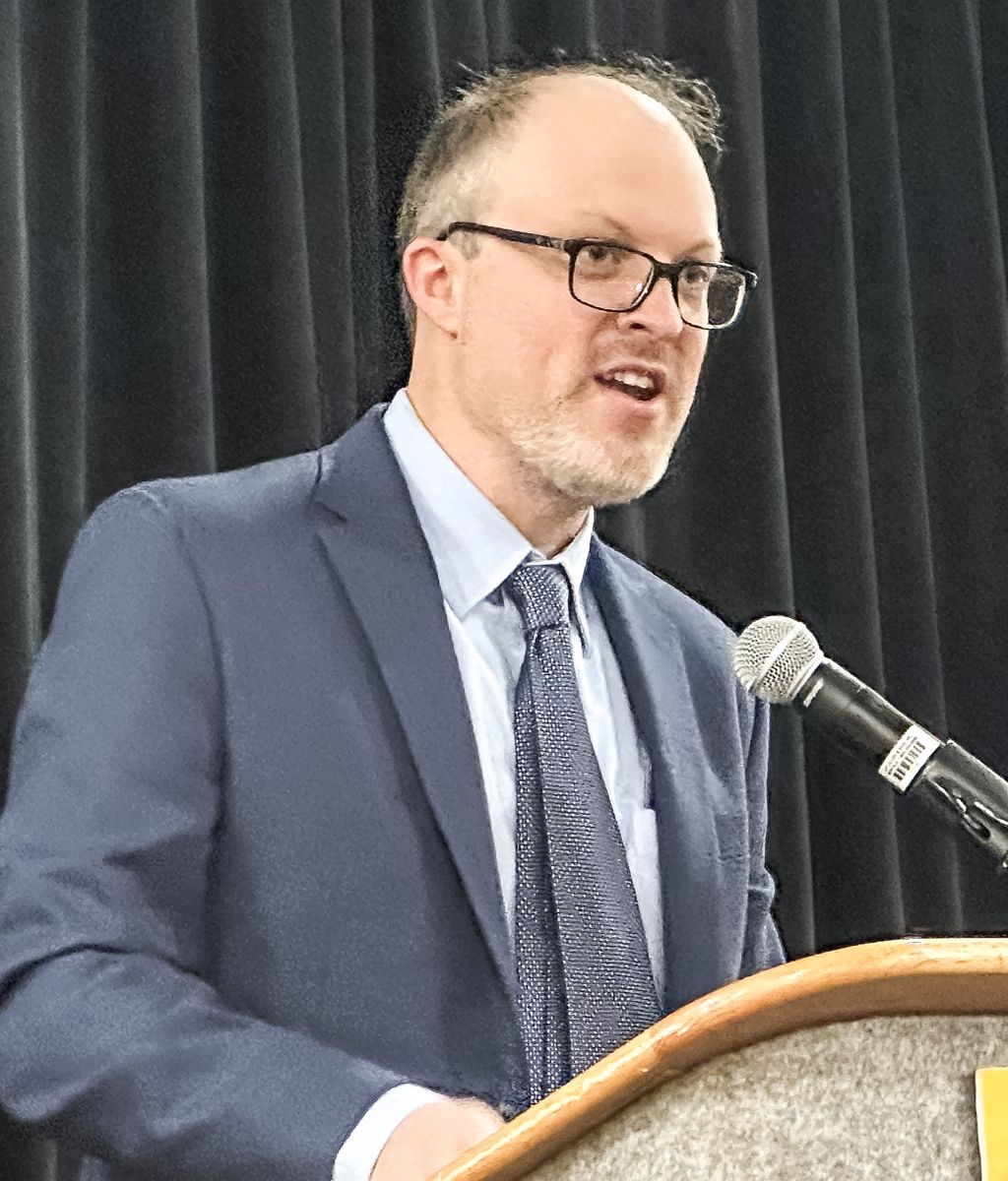
First time attendee Paul Trible with Jonathan White.
Civil War scholars in their own right, and even the celebrity authors are very approachable. A few days after the end of the conference, Forum chair Harold Holzer commented, “I never get tired of hearing attendees tell me, ‘best Forum ever,’ and my email and Facebook accounts overflowed with such comments again this year. I’m genuinely grateful for the positive reaction. I think our unique combination of scholarship, entertainment, and discussion—provided by a terrific roster of both senior and up-and-coming historians— explains the terrific reaction we generate. But I also believe we’ve built something deeper—a family atmosphere that makes each symposium feel like a reunion, further enhanced by first-time attendees whom we welcome as friends and colleagues from the moment they get to Gettysburg.” Holzer closed his comments by looking forward. “Jonathan and I are already looking to next year, already discussing the perfect roster to attract another record-breaking crowd. They used to say all roads lead to Gettysburg. That’s certainly true for the Lincoln Forum. Not all our great staff might agree (yet) but for me, Forum XXIX can’t come soon enough.” His co-chair concurred: “I’ve attended a lot of conferences in my career, but none of them is like The Lincoln Forum. Not only are the speakers among the best in the country, but the attendees are so friendly and welcoming that it feels like you are getting together with 350 of your closest friends. I can’t wait to go back to Gettysburg next November!”
Great communicator panel, moderator Erin Carlson Mast, Joseph Forniri, Edward Achorn, Harold Holzer, and Ron White.
Jonathan White, Ronald C. White winner of the 2023 Lincoln Forum Prize
Leon Reed currently resides in Gettysburg and is an author of several books on the Civil War. He is a frequent contributor to Civil War News.