
Through The Lens
A Whirl-A-Gust Of Woodpeckers In A Hail Storm
By Stephanie Hagiwara · Originally published January 2024 · pp. 6–7
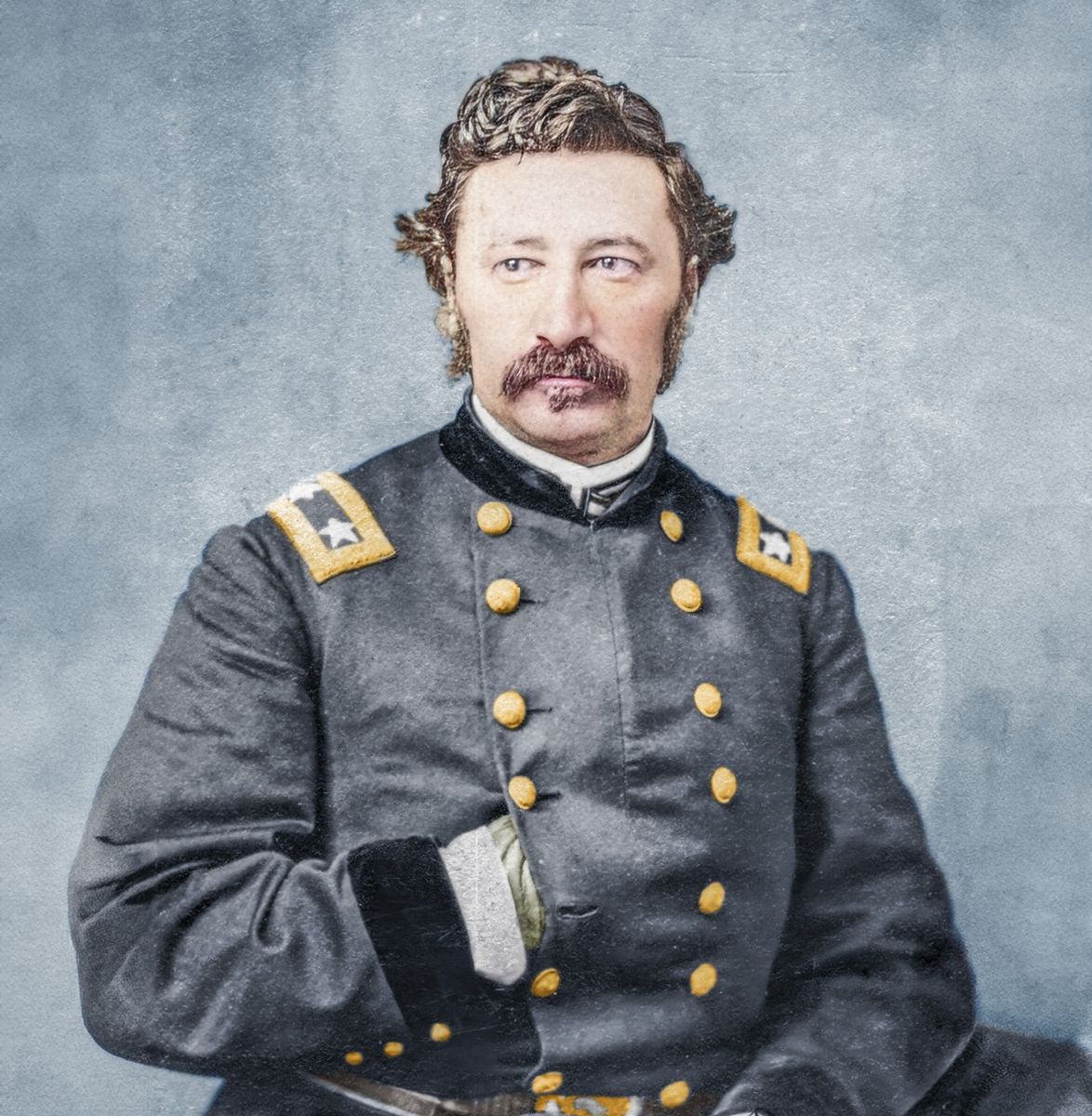
“We will plant it [regimental flag] here, boys, and rally the old Twenty-fifth around it; and here we will die.” – U.S. Col. Thomas Williams, 25th Ill., last words The Battle of Stones River, Tenn., December 31, 1862 – January 2, 1863, began before dawn, pitting U.S. Gen. William Rosecrans’s, Army of the Cumberland, 42,000 men against C.S. Gen. Braxton Bragg’s, Army of Tennessee, 37,713 men. Both commanders planned a surprise attack on the right flank of the enemy. At about 2 a.m. on Dec. 31, 1862, U.S. Gen. Phillip Sheridan, 3rd Division, was wakened by his brigade commander and friend Gen. Joshua Sill who reported
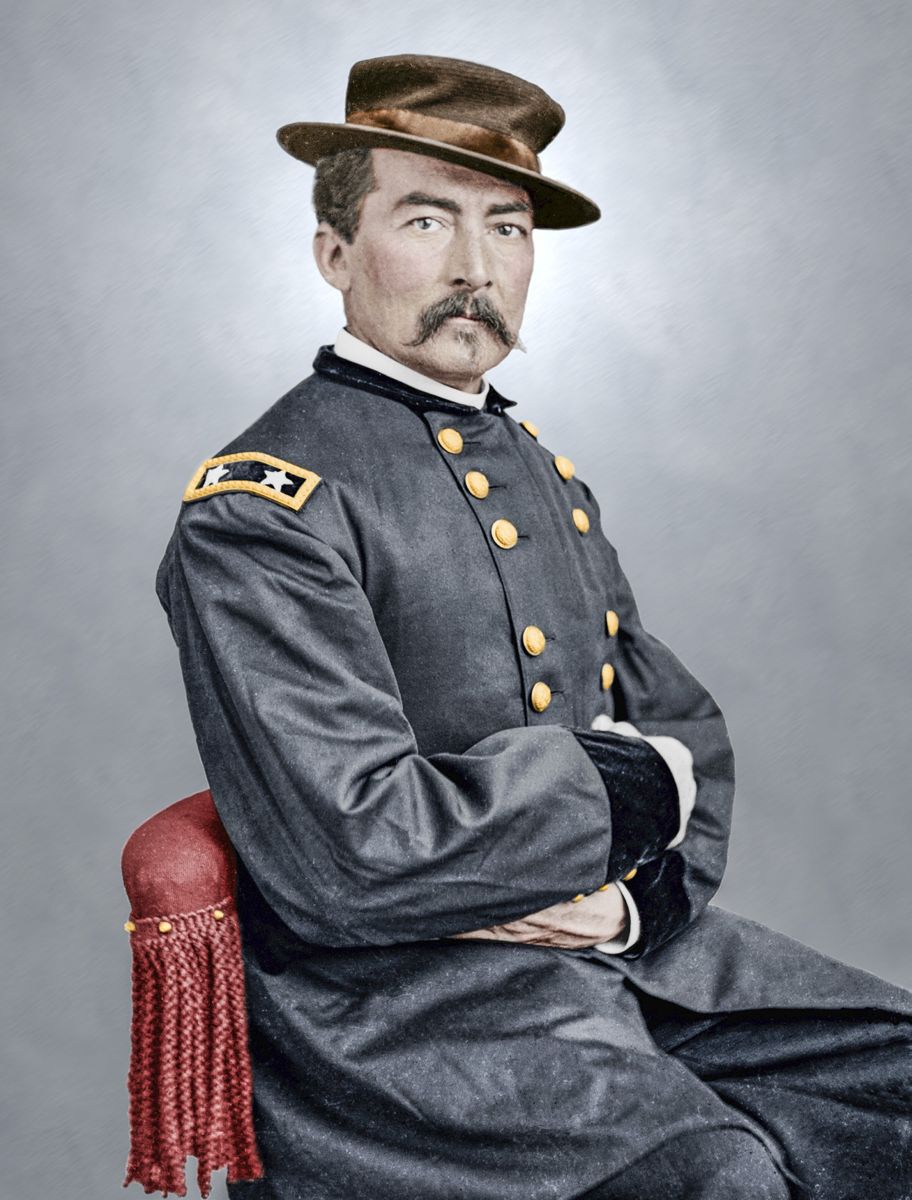
Confederate infantry and artillery were “continuously moving within their lines,” massing towards their corps commander Gen. Alexander McCook’s, Right Wing, positioned on the far right of the Federal line. Both men went to alert McCook, who was sleeping on some straw. McCook dismissed the information. His men’s current position, as part of Rosecrans’s overall attack plan, would be able to withstand a Confederate assault. Sitting on a fallen tree, Sheridan and Sill continued to mull the situation. Sheridan decided to move two regiments to reinforce Sill’s brigade and wake each of his 12 regimental commanders to have his men breakfasted and under arms long before sunup. In the grey light before dawn, McCook’s 16,000 men were preparing breakfast. Out from the cedar thickets came C.S. Lt. Gen. William Hardee’s, 2nd Corps. Hardee’s division commanders, John McCowan’s and Patrick Cleburne, led a combined 10,000 men who emerged, picking up speed as they moved across the cotton and corn fields, sounding the rebel yell as they smashed into U.S. Gen. Richard W. Johnson’s, 2nd Division men. According to a Tennessee private in a brigade at the front of the attackers, the men “swooped down on those Yankees like a whirl-a-gust of woodpeckers in a hail storm.” U.S. Gen. Edward Kirk ordered the 34th Ill. to counterattack 75 yards in front of Capt. Warren Edgarton’s, 1st Ohio, Battery E. Kirk kept rallying and repositioning his men. They fell back to the battery. The Confederates killed five of the 34th’s color-bearers in quick succession and seized their colors. The battery fired 16 to 20 rounds, “with good effect.” Confederate fire rapidly killed the battery’s horses. Edgarton’s “manly voice rang out above the din of musketry, encouraging his men” as they continued to load and discharge the guns. Two horses were shot from under Kirk before he fell with a hip wound that would eventually kill him. “It was not more than five minutes from the firing of the first shot to the catastrophe when my battery was taken and myself a prisoner,” estimated Edgarton. Under withering fire, the 34th retreated across a cornfield that was “a plain of death,” strewn with bodies from both sides. It took the Confederates about a half hour to blow past Johnson’s Division into U.S. Gen. Jefferson C. Davis’s 1st Division, on Johnson’s left. The bluecoats valiantly fought to slow the onslaught before falling back. Next was Sheridan’s division. His men were positioned in “a confused mass of rock, lying slabs, and boulders interspersed with holes, fissures, and caverns which would have made progress over it extremely difficult even if there had been no timber.” The timber, a thick tangle of cedar trunks and branches that obscured the sunlight, made it confusing for the combatants to understand what was happening on the right or left of them. Two of C.S. Lt. Gen. Leonidas Polk’s, 1st Corps., divisions headed the next wave of the
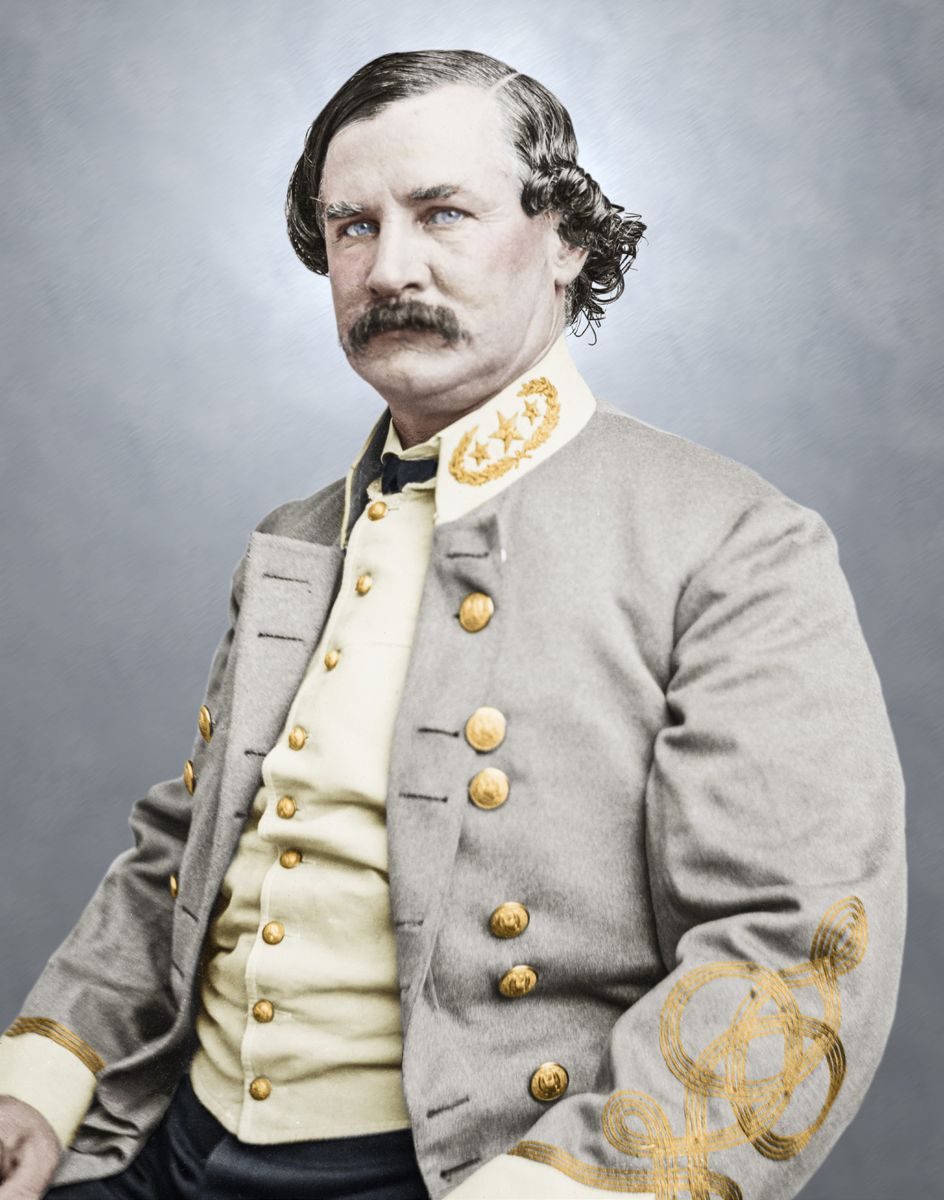
CivilWarNews.com attack. C.S. Maj. Gen. J.M. Withers’s men charged and were repulsed. Sill, leading a charge after the retreating Confederates, was killed. He was found after his horse was sighted galloping to the rear. Sheridan, who would lose all three of his brigade commanders during the fight, considered Sill’s death, “a heavy loss, yet the enemy’s discomfiture was such as to give us an hour’s time” to reposition his men against the enemy’s turningcolumn. Sheridan was able to repulse another two charges. He then repositioned his men into an obtuse angle with three batteries at the apex. At McCook’s direction, under heavy fire Sheridan moved to support the right of U.S. Gen. James S. Negley’s Second Division, Maj. Gen. George Thomas’s Center Corps. Rosecrans had started the day on the Federal far left, executing his plan to attack the enemy’s right flank. About 7 a.m. the rumble of fighting from his right flank grew louder. From McCook’s units “the debris was drifting back rapidly, … remnants Maj. Gen. Benjamin F. Cheatham, C.S.A. Colorization © 2014
of batteries, … men retiring with guns, and men without their guns; men limping, … men carrying off wounded comrades; and faces blackened with powder. … Over all arose, near at hand or more faintly from the distance, the yells of the Reble victors,” reported Sgt. Henry F. Freeman, 3rd Battalion, Pioneer Brigade. It became dreadfully clear. McCook’s Right Wing was collapsing. Rosecrans went into hyperactive mode, wheeling and galloping his grey horse to form a new line behind the Nashville Pike. Sheridan and Negley were directed to hold the line to give him time to regroup. C.S. Maj. Gen. Cheatham’s Division joined the strike on Sheridan’s forces. Cheatham was attacking Sheridan’s left while Hardee’s batteries were firing on the right. Instead of wheeling his division over rough terrain, Cheatham sent his brigades piecemeal. His actions would later be attributed to either his tendencies as an aggressive fighter or being drunk. Cheatham was also known for his profanity. “Give ‘em hell, boys,” he shouted as his men advanced. His commander, Episcopal Bishop Polk would yell, “Give him what General Cheatham says boys!” Both sides rained canister and shell on the other. Sheridan’s position, amid the “Round Forest,” nestled between the cedar tangle and limestone ledge, was strong. The density of the timber was such that, according to a soldier of the 42nd Ill., “they were not aware of the approach of the enemy until they saw their glistening bayonets a few feet from them.” The Confederates were approaching through fields, attacking an invisible enemy. C.S. Gen. S.A.M. Woods’ brigade attacked under the cover of the batteries of captains J.H. Calvert’s Helena Light Artillery and Purham Darden’s Jefferson Flying Artillery, until their ammunition was exhausted about
CivilWarNews.com an hour later. The 29th Miss. advanced through the cornfield. At the start of the charge J.E. Robuck, Company A, was aggravated by having to jump between the deep furrows separating the corn rows. Retreating under a hail of bullets, Robuck considered them too shallow. “I would have liked it better had they had been four feet deep.” Approximately 200 men fell dead or wounded during the 15-minute affair. It was time to change tactics. Having seen repeatedly the collapse of units sent in piecemeal, C.S. Brig. Gen. Alexander Stewart, Cheatham’s Division, refused to repeat the same mistake. Instead of sending in two regiments as directed, he threw his entire brigade against Sheridan and Negley. Stewart’s plan changed the course of the Battle. Sources: •
•
•
•
Cozzens, Peter. No Better Place to Die: The Battle of Stones River: University of Illinois Press, 1991 Korn, Jerry, and the Editors of Time-Life Books. The Struggle for Tennessee: Tupelo to Stones River: Time-Life Books, Alexandria: VA, 1987 Foote, Shelby. The Civil War: A Narrative: Volume 2: Fredericksburg to Meridian: Random House, 1963 United States, War Department. The War of the Rebellion: A Compilation of the Official Records of the Union and Confederate Armies. Washington: Serial 29, Page 301 Chapter XXXII. The Stones River Campaign.
Stephanie Hagiwara is the editor for Civil War in Color.com and Civil War in 3D.com. She also writes a column for History in Full Color.com that covers stories of photographs of historical interest from the 1850’s to the present. Her articles can be found on Facebook, Tumblr and Pinterest.