
The Graphic War
The Rosenthals of Philadelphia
By Salvatore Cilella · Originally published February 2024 · pp. 30–31
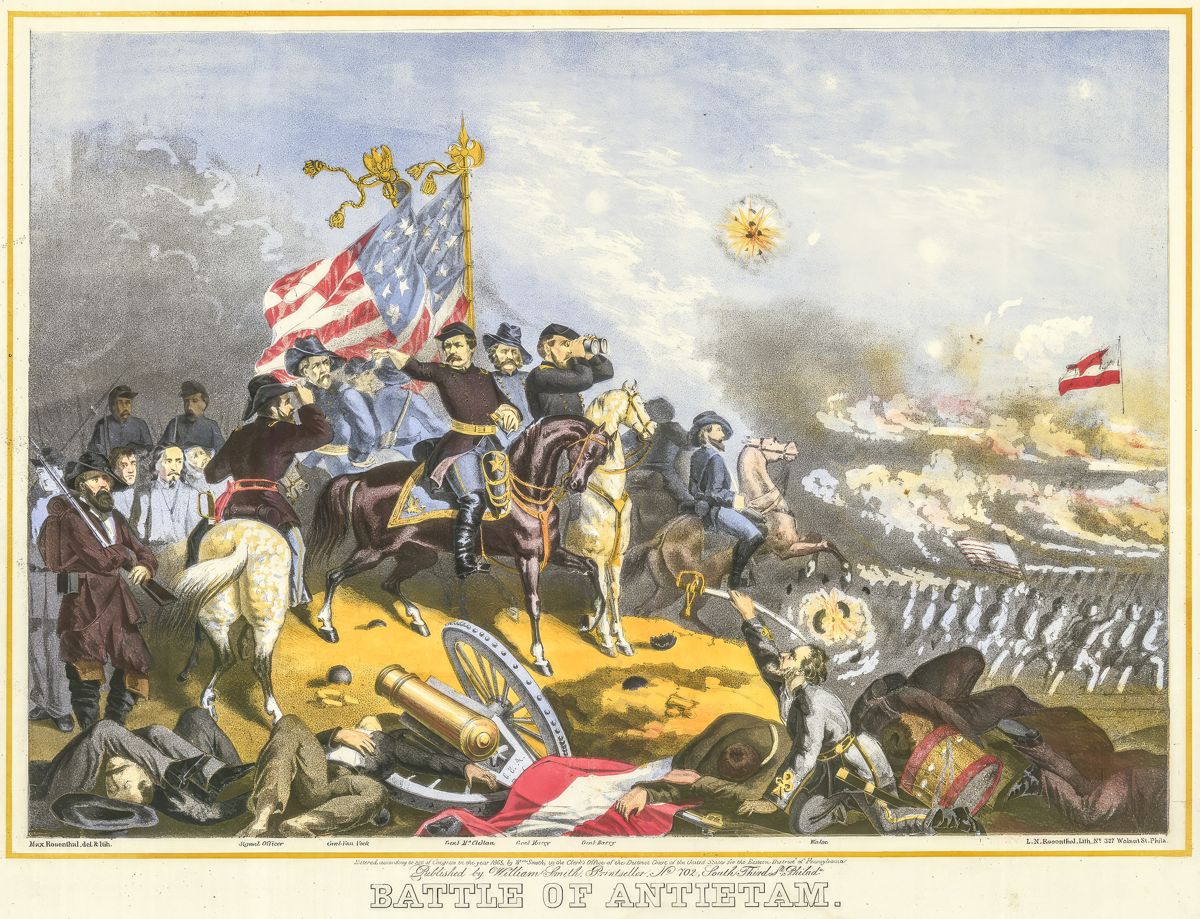
The Rosenthals of Philadelphia The Graphic War highlights prints and printmakers from the Civil War discussing their meaning and the printmaker or artist’s goals. We have written extensively concerning the important contributions made by immigrants to the flourishing graphic arts trade during the last fifty years of the 19th century. Seeing the “land of opportunity” as a source for new beginnings, artists, engravers, lithographers, and photographers found their way to America. Edward Carqueville emigrated from Prussia; Fitzhugh (Fitz) Henry Lane was born in Gloucester, England; and Louis Prang came from Poland. Peter Duval was a Frenchman; Otto Boetticher, a German. These are a few of the many contributors to the history of the graphics of 19th midcentury America. The Rosenthals were an important addition to the graphics scene. Louis Rosenthal was born in Turck, Russian Poland, ca. 1824. Louis and Simon were indentured to lithographic printers in London, Morris was sent to Rabbinical School in Berlin, Germany, and
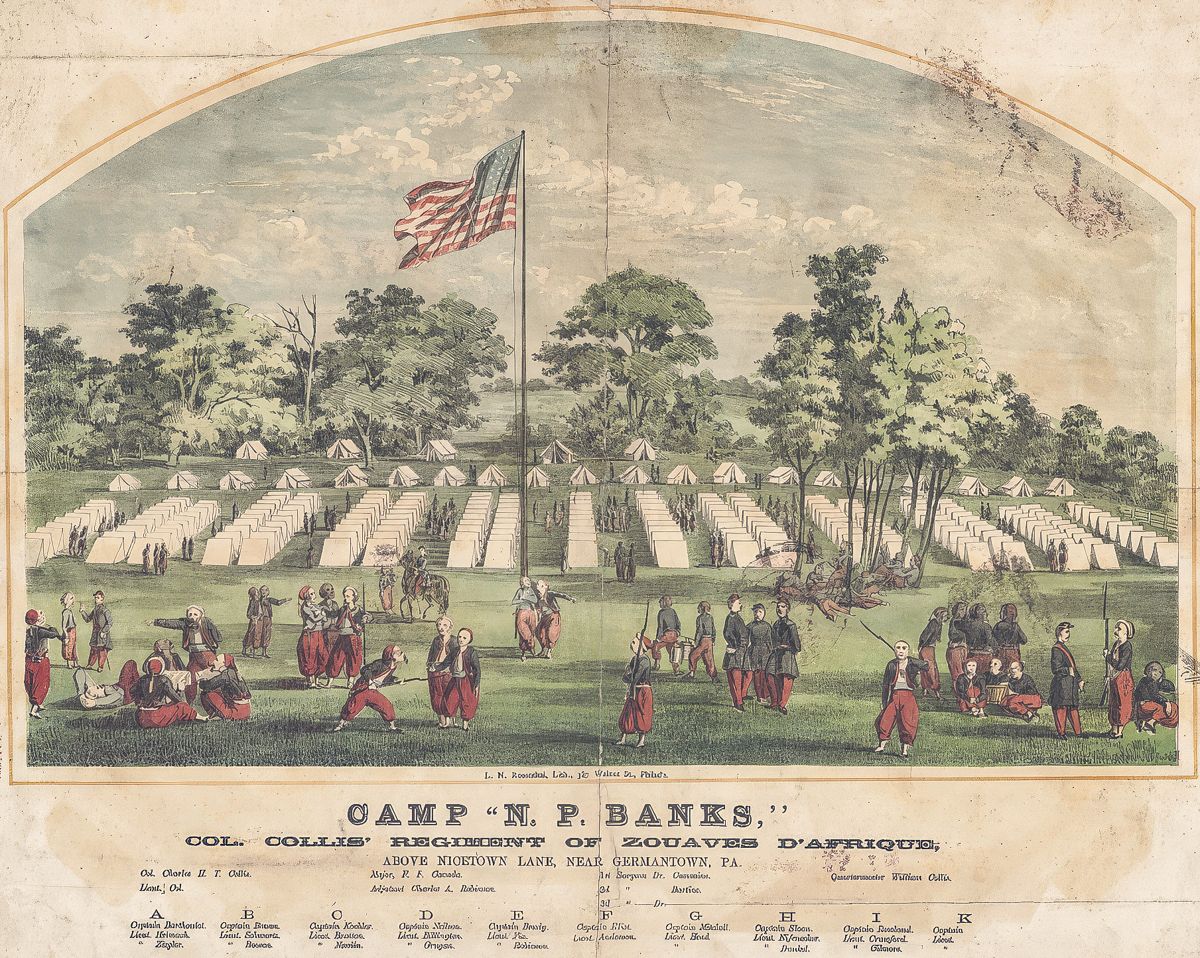
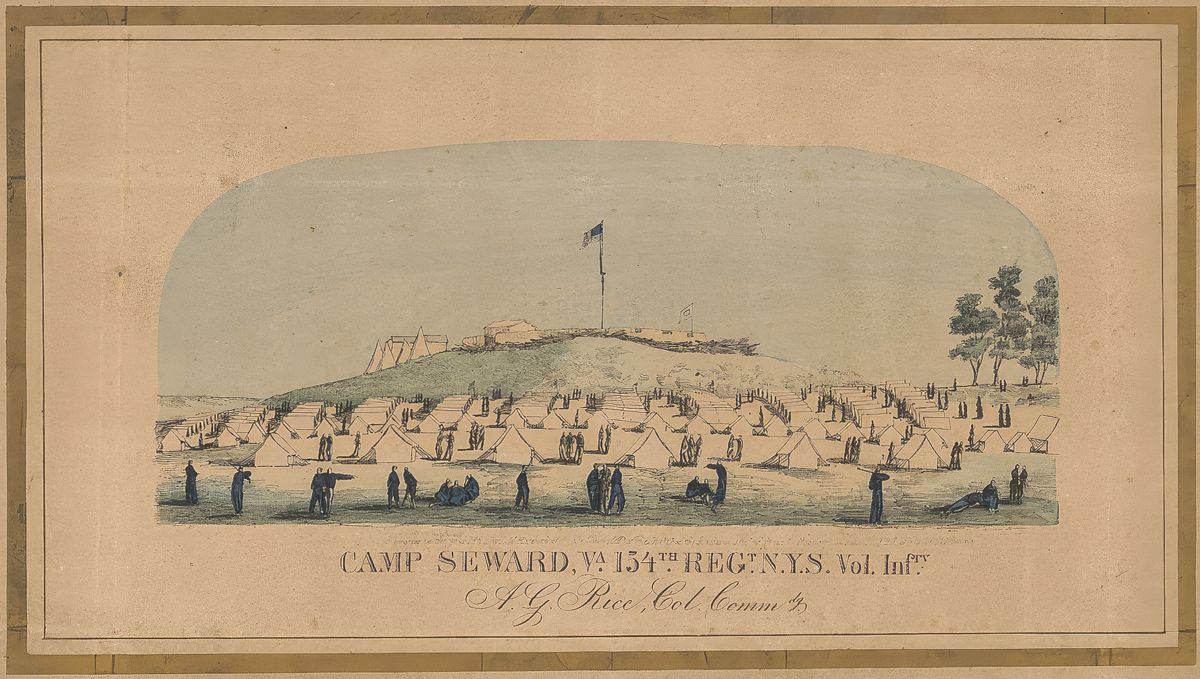
Max was indentured to artist and lithographer Martin Thurwanger in Paris. Following his indenture in London, Louis Rosenthal arrived in New York aboard the Spartan on September 29, 1848.1 In that year, Europe erupted in revolution. France, Ireland, The German Confederation, Hungary, Denmark, the Italian States, and Poland, to name a few, were countries turned inside out by democratic reformers intent on throwing off the old regimes and replacing them with progressive governments. The following year, Louis established himself in the Philadelphia lithographic trade and partnered briefly with Peter Kramer in 1850. Brother Max arrived in Philadelphia with Thurwanger and worked for a short time under Napoleon Sarony. In 1851, he and Louis established the firm L. N. Rosenthal, also known as Rosenthal’s, at the southeast corner of Third and Dock Streets. The family settled in Philadelphia and soon the lithographic firm would prove very successful. Louis, whose name appeared on nearly all the firm’s prints, was the proprietor, printer, and publisher, while Max was the principal artist. The firm rapidly established itself as a premier issuer of illuminated book plates, sheet music covers, advertisements, labels, geological and anatomical prints, portraits, maps, views of buildings, and Civil War scenes. Within a year, the Franklin Institute for Chromolithography, awarded the Rosenthal firm the “First Premium” Award.2 Perhaps the most moving image Max produced was his 1862 depiction of the Battle of Antietam. It is a large folio, hand colored lithograph of the battle featuring General George McClellan front and center. (Fig.1.) The legend in the field of print in the lower left corner reads, “Max. Rosenthal, del. & lith.” The lower right corner reads “L. N. Rosenthal, Lith, No. 327 Walnut St. Phila. In the image is a drum on the ground with “Max Rosenthal” signed into the drum head. This heroic depiction shows McClellan in the center of the action leading his staff during the battle. When McClellan turned back Lee’s invasion of the North, the battle was a technical Union victory that provided Lincoln with political advantages centering on the Emancipation Proclamation and a warning to European powers to stay away from an alliance with the Confederacy. Published in the final year of the war, this dramatic print was an emotional presentation of a tenuous victory. The firm was known for its chromolithographs of army camps during the first few years of the war. (Figs. 2 &3). As print historian Harry Peters wrote “Perhaps most frequently encountered by collectors nowadays are the many views of specific battles and encampments of the Civil War. Most of these were made from pencil drawings made on the spot, are about three or four inches by eight, and have gold frame lines. The fact that great care was taken to show specific army units leads one to think that perhaps these were made on commission, for direct sale to the soldiers and their families. Mr. Albert Rosenthal (Max’s son), has among his papers, a pass giving him access to every camp of the Army of the Potomac, and once owned a collection of these camp prints bound together, and has the impression that there were probably one hundred and fifty different ones. Mr. Rosenthal also says that one of his father’s best portraits was a large folio colored lithograph of General Sherman, made during the Civil War.”3 The actual number produced is unknown. The Historical Society of Pennsylvania holds 74 copies. According to their collection notes “These lithographs depict the camps of many different volunteer regiments from Maine to Washington, DC. The camps themselves were primarily located in Maryland and Virginia. These lithographs mainly illustrate the larger view of the camps, rather than focusing on the soldiers within them. All of the plates provide the name of the camp or the regiment pictured, as well as the name of the commanding officer. Over 50 different camps are represented in these graphic views.”4 After the war, Max turned to painting and exhibited many of his works at the Smithsonian.5 He was the recipient of several international honors, especially from France and England. When he moved temporarily to Chicago, he became a member of the World’s Fair arts committee, where he vetted “foreign painters.”6 When brother Louis relocated to Chicago, the firm closed. It had survived “at least twenty-two years,” and according to one historian, “few names are better known in Philadelphia lithography than Rosenthal.”7 Before his death in 1918, Max had “made over 500 portrait prints of famous Americans by various lithographic and metal engraving techniques.”8 Today, occasionally, Max’s camp scenes show up on-line and in auction houses; most this author has seen, have been “well used up” as the boys in blue and grey used to say.9
CivilWarNews.com 1.
Endnotes:
Peter Marzio, The Democratic Art: Pictures for a 19th Century America, David Godine, Boston; 1979, 34-37; Harry Peters, America On Stone, 343-346. Max Rosenthal Obituary, Chicago Tribune, August 9, 1918; The Pittsburgh Press, August 11, 1918. Peters, 345. Historical Society of Pennsylvania. Collection #3128; https://discover.hsp.org/Record/ead-3128. The Pittsburgh Press, August 11, 1918. Chicago Tribune, August 9, 1918. Nicholas Wainwright, Philadelphia in the Romantic Age of Lithography, The Historical Society of Pennsylvania, 1958, 86; Marzio, 36. See also Erika Piola, Philadelphia on Stone:
Commercial Lithography in Philadelphia 1828-1878. Library Company of Philadelphia, 2012, 148-149. Jay T. Last, The Color Explosion: Nineteenth Century American Lithography, 2005, 127. I wish to thank fellow Civil War historian, Mark Dunkleman for suggesting an article on the Rosenthal’s.
After 43 years in the museum field, Cilella devotes his time to collecting American prints and maps and writing. He has written extensively on Emory Upton: Upton’s Regulars: A History of the 121st New York Volunteers in the Civil War (Kansas, 2009); a two-volume Correspondence of Major General Emory Upton, (Tennessee, 2017), received the
2017–2018 American Civil War Museum’s Founders Award for outstanding editing of primary source materials. He edited Upton’s love letters 1868-70
to his wife—Till Death Do Us Part (Oklahoma, 2020) and The Memoirs of Dewitt Clinton Beckwith of Upton’s Regulars (McFarland, 2023).