Lee saved Hill, who returned the favor in 1862
By Carl L. Sell Jr. · Originally published February 2024 · pp. 12–13
Major General Ambrose Powell Hill Jr., and his new Light Division, had an impressive record in battle during the summer of 1862 but not so much for Robert E. Lee’s youngest division commander when it came to dealing with his peers in the Confederate Army of Northern Virginia. The Light Division, with seven brigades, was the largest in the Confederate Army of Northern Virginia at that point. Later, Hill’s command would range from 3,000 to 12,000 men, depending on the timing and situation. Hill started calling his command the Light Division in reference to its ability to move swiftly into battle. This rivaled the speed of troops commanded by Thomas (Stonewall) Jackson, who recently had defeated Union forces in the Shenandoah Valley and joined Lee, the new commander, and his army defending Richmond. General George McClellan’s Union army had reached within sight of Richmond in late May 1862 when Confederate General. Joseph Johnston was wounded at Seven Pines and Lee was given command. A series of attacks with Hill heavily involved pushed Union forces back down the Virginia Peninsula. Hill’s problems began at Frayser’s Farm on June 30, the next-to-last battle of the Seven Days campaign. The defeat sealed McClellan’s fate, forced him to abandon his attempt to capture Richmond, and forced his relocation by ship back to the defenses of Washington City via the Chesapeake Bay and Potomac River. Divisions commanded by Hill and Major General James Longstreet played major roles in the fighting at Frayser’s Farm, but Hill received most of the credit in a subsequent story in the Richmond Dispatch, a paper whose editor accompanied Hill at the battle. That didn’t set well with Longstreet, Hill’s superior by date of rank, who had his aide write a rebuttal that gave Longstreet’s men the lion’s share of the credit. That precipitated a war of words that resulted in Hill challenging Longstreet to a duel and the latter arresting Hill and making him march at the rear of his column. When the feud reached Lee, the Confederate commander negated the arrest, had the participants end plans for a duel, and placed Hill’s Division under Jackson, who had been given the responsibility of blunting a new threat to Richmond from the north led by Union Major General John Pope’s Army of Virginia. After impressive victories at Cedar Mountain on August 9, Second Manassas on August 2830, and Chantilly on September 1, the wheels came off the cart between Hill and Jackson, so to speak. As Pope retired toward the Washington defenses, McClellan took control of the Union Army of the Potomac and Lee began crossing the Potomac into Maryland. Jackson’s strict compliance with orders and Hill’s loose implementation of them at times of inactivity clashed on September 4. While Jackson expected an orderly wait until units were moving as planned, Hill allowed his men a more liberal interpretation of stand at ease. The result was Jackson arresting Hill and once more forcing him to march behind his troops. Lee subsequently split his forces, sending Jackson and divisions led by Major General Lafayette McLaws and Brigadier General John G. Walker toward Harpers Ferry to capture a 12,000man Federal garrison that stood in the way of the Confederate Shenandoah Valley supply line. Hill didn’t want his troops to go into action without him in command, so he summoned Major Henry Kyd Douglas, Jackson’s aide, and asked him to approach Jackson to ask that Hill be reinstated for the attack. Jackson assented and Hill returned to the front.
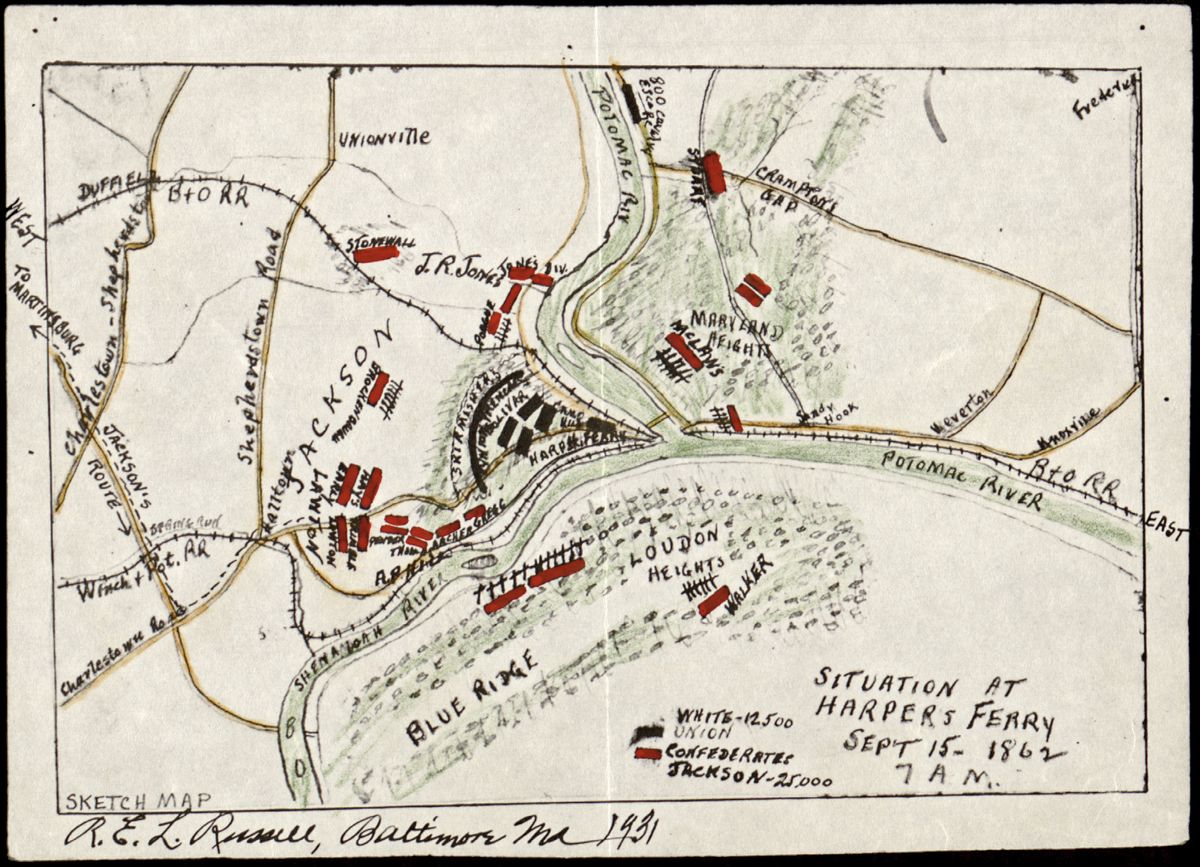
Harpers Ferry map.
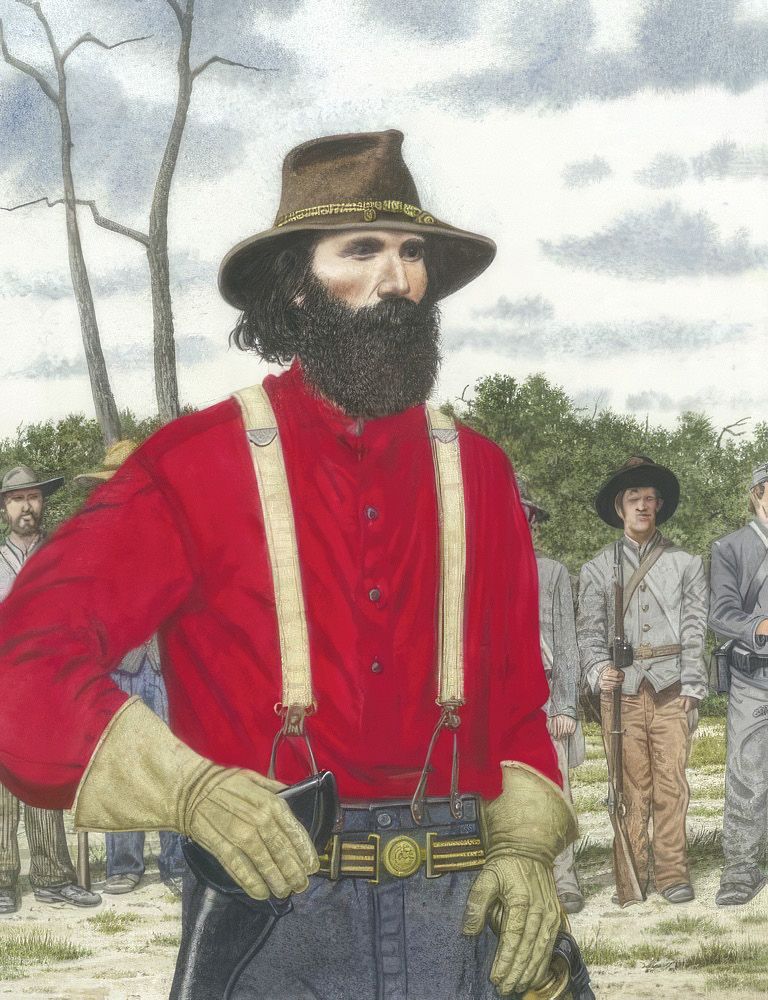
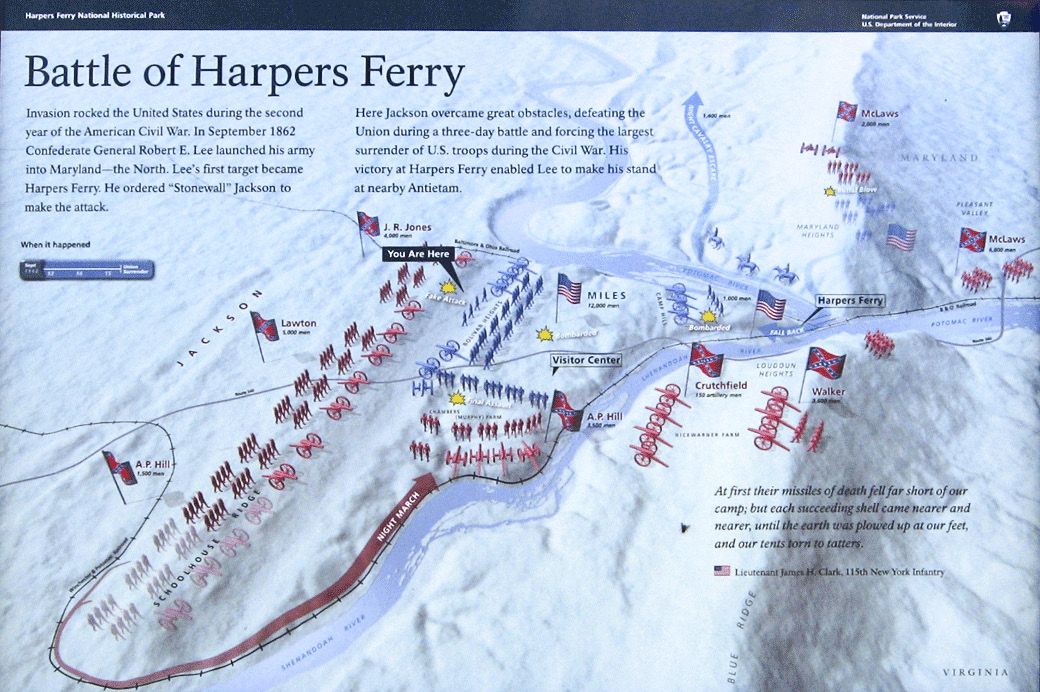
Although they had crossed the Potomac at Leesburg, Jackson and Hill continued west and then recrossed the river at Williamsport, Md., and approached Harpers Ferry from behind. McLaws approached Maryland Heights by way of South Mountain while Walker crossed the Potomac at Point of Rocks to reach Loudoun Heights in Virginia. With McLaws pounding Harpers Ferry with cannon fire from Maryland Heights across the Potomac and Walker hitting Union targets across the Shenandoah River from Loudoun Heights, Jackson did the same from Schoolhouse Ridge, west of Bolivar Heights, with Hill joining in. The Federals were surrounded. When Hill moved the Light Division to an unoccupied spot along the Shenandoah facing the Federals, it was all but over. In an early morning fog September 15, as Hill’s forces began to advance on the trapped Yankees, a white flag appeared. Colonel Dixon Miles, the garrison commander, had been mortally wounded in the bombardment, so Hill sent out a member of his staff to find General Julius White and take him to Jackson for the formal surrender. The Confederates rode into the
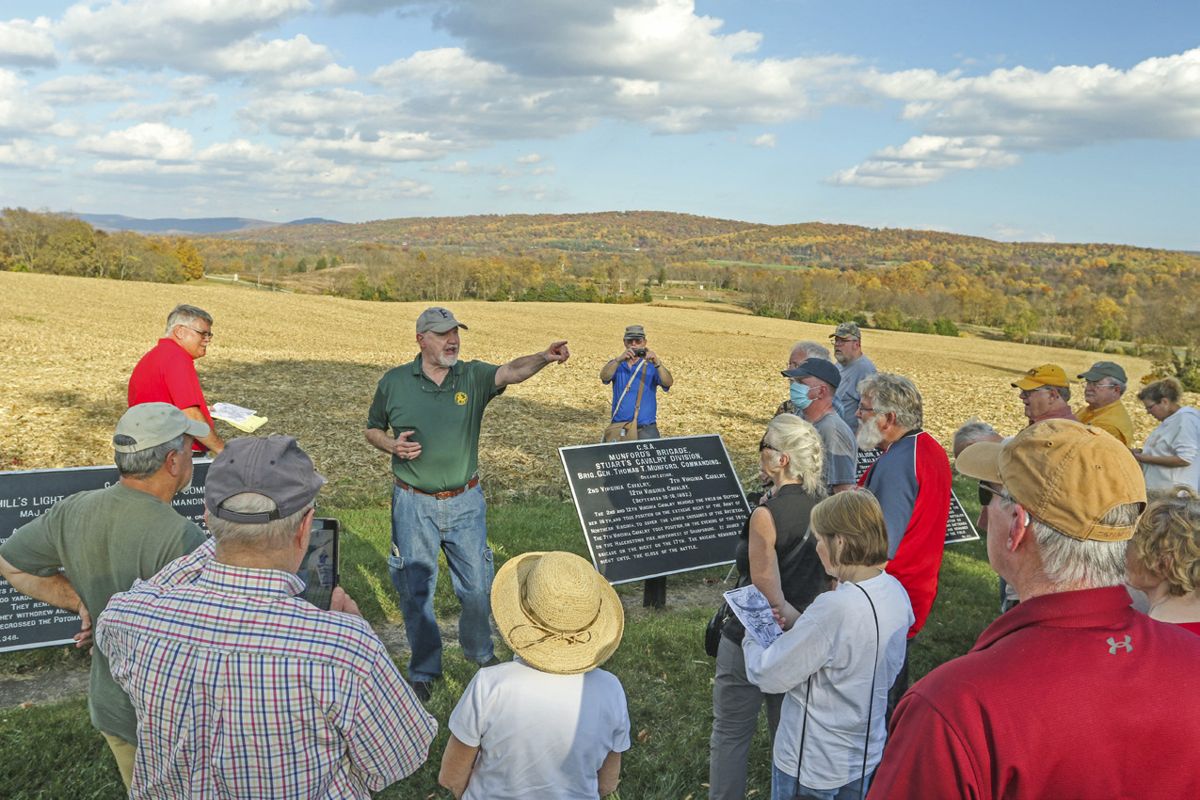
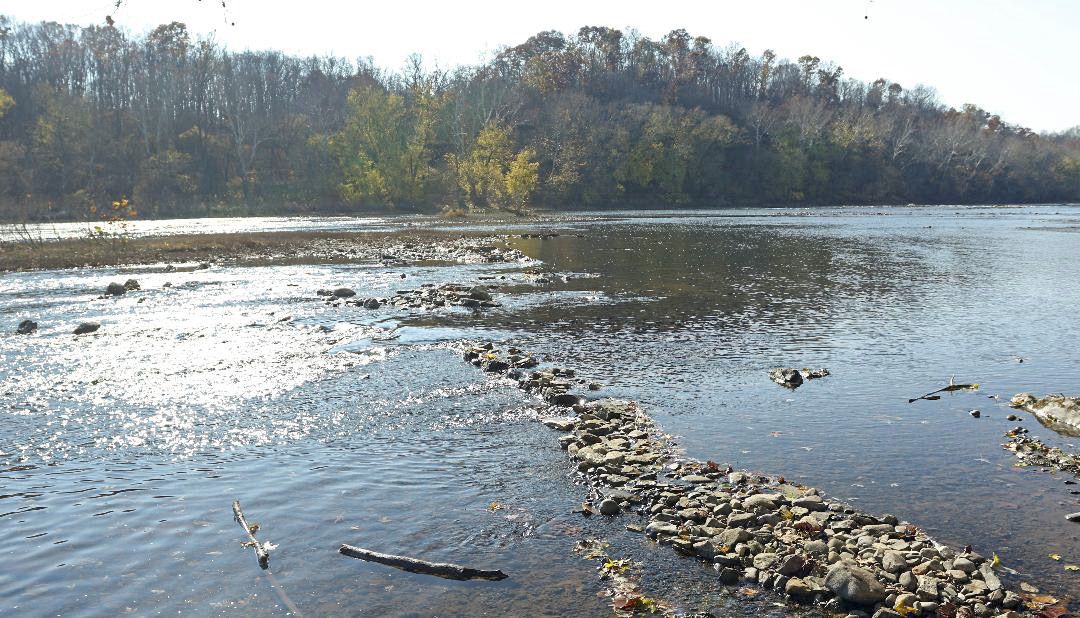
A.P. Hill. CivilWarNews.com shattered town and confiscated 13,000 stands of arms, 73 cannon, 200 wagons, and a large amount of quartermaster stores. As they did at Manassas Junction, the Confederates began enjoying the Union food, uniforms, and supplies. Late that night, Jackson received word to join Lee at Sharpsburg and left immediately. He left Hill behind to handle paroling the prisoners. On the morning of the 17th, the carnage at Antietam began, and Lee sent for Hill. The Confederate commander left immediately, using a 17-mile route to a crossing at Shepherdstown rather than a shorter route because of possible Yankee intervention on the Maryland side of the Potomac. The route over the Potomac via Pack Horse Ford was hilly like a roller coaster, but the Light Division made it to the battlefield by mid-afternoon. By that time, Union forces had pushed back the Confederates defending the Antietam Creek crossing at Burnside Bridge and threatened to finish the bloody encounter on the Harpers Ferry Road just outside Sharpsburg and Lee’s headquarters. Both sides had suffered massive casualties in what would end as the bloodiest one-day battle of the entire war. An anxious Lee continued to ask if there was any sight of Hill’s relief column. He asked an aide to keep looking down the Harpers Ferry Road by telescope; Lee could not hold the spyglass because of sprained wrists suffered in a fall on the march. Finally, the aide announced he had sighted the Confederate banner and gleaming bayonets on the rifles. Hill arrived and quickly directed soldiers into a thin line on the ridge above Burnside Bridge. The young general did not wait to organize oncoming units, so he sent men piecemeal into the Confederate line and ordered them to start shooting. The tactic worked; the Union attack was stopped and the carnage ended. In less than an hour, Hill’s men and the Confederates already on hand had pushed the Yankees back to a defensive position along Antietam Creek. The two armies spent the daylight hours on September 18 burying the dead, collecting wounded, and organizing scattered units. That night, the Confederates began a retreat toward the Potomac, crossing over the same ford Hill had used the previous afternoon. At Shepherdstown, they found almost every building was filled with wounded and dying. As the Confederates moved toward Martinsburg and the Shenandoah Valley, Union General McClellan sent three brigades and cannon batteries to harass the Confederate rear and prevent what he feared would be another attack into Maryland. Soldiers under Major General Fitz John Porter crossed the Potomac, scattering a defense manned by a lone Confederate brigade. Meanwhile, Union Major General Alfred Pleasonton’s horse artillery rained shells on the defenders; some fell short and hit the town. On the shore and bluff across the river facing the Union cavalry artillery were the guns of Lee’s Artillery Reserve, commanded by Brigadier General William Nelson Pendleton. When it appeared the Confederate guns would be overrun, Pendleton went to the rear on what he later said was a search for help. He finally found Lee and reported that all the artillery under his command had been lost. As it turned out, the men manning the guns were able to skedaddle during the day, saving all but five. After securing the shore and heights on the Virginia side of the ford, the Federals retired back across the river during the night of September 19. The next day, they started a reconnaissance in force into Virginia. The cavalry, which had been sent to its camp near Sharpsburg, was scheduled to participate, but a mixup in orders caused the riders to show up late and delay the advance. Little did the Federals know that Stonewall Jackson had visited the area at daybreak on September 20 and mapped out a plan to thwart any further Union advance. He called for six Light Division brigades to return to Shepherdstown and guard the river crossing. The Confederates were about four miles away, a quick hike for Hill’s men. They arrived just as the Union advance to the Virginia shore began, ducking under an artillery barrage designed to protect the invaders. Union forces began advancing on
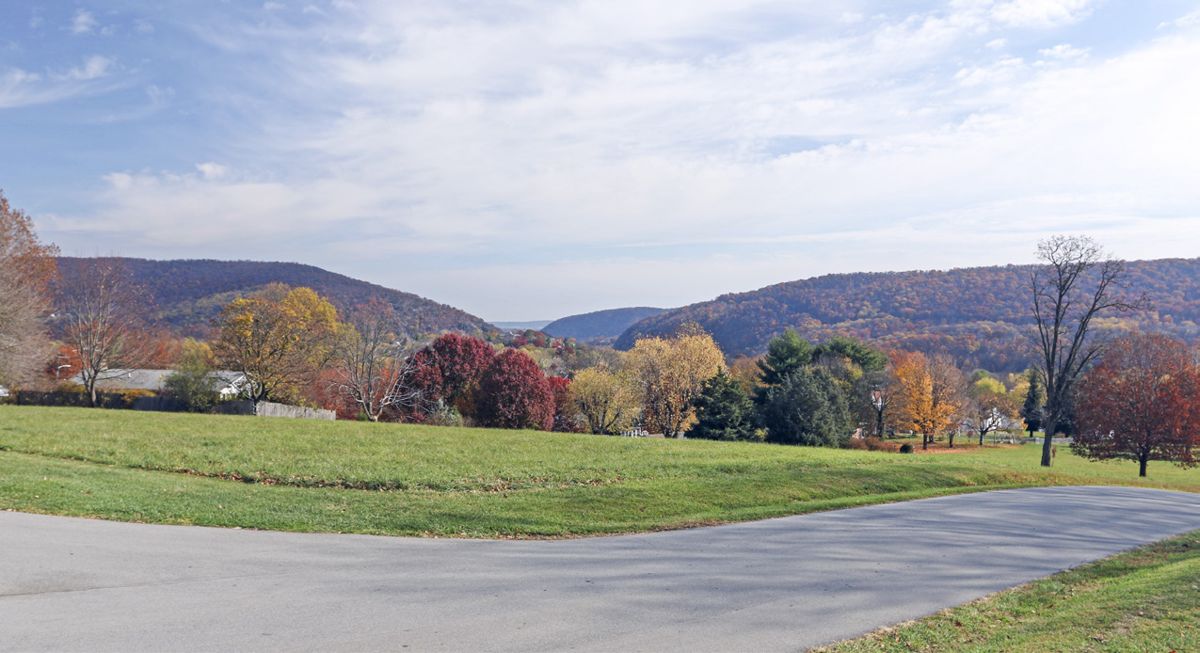
CivilWarNews.com the Charles Town Road. Hill’s men hit with fury in two lines, along with some of Major General Fitzhugh Lee’s cavalry protecting the right flank. The appearance of this force surprised the Federals and forced an order to withdraw across the river. The 118th Pennsylvania Regiment finally got the word but were already being overwhelmed. When the Pennsylvanians finally retreated, many were shot while descending the cliff, others drowned as they forded the river. The 118th was called the Corn Exchange Regiment because it was financed by the Philadelphia Corn Exchange, a commodities trading exchange. Its members were hampered at Shepherdstown; their 1850’s muskets failed to fire because defective main springs were not strong enough to explode the percussion caps. The unit lost over 200 men at Shepherdstown, its first combat. Both armies maintained a presence at Shepherdstown, with the main Confederate forces at Martinsburg and Winchester, and the Federals around Sharpsburg. General McClellan was concerned about a Confederate attack while General Lee took the time to rest, rearm, and resupply. President Lincoln visited McClellan at Sharpsburg on October 2 to urge a Union attack on Lee. McClellan, no doubt remembering what happened at Shepherdstown, didn’t move south until late October. When he did, it was at Berlin (now Brunswick), east of the Blue Ridge Mountains. He kept Porter’s brigades at Shepherdstown until he did. Jackson forwarded his papers involving Hill’s arrest to Lee, asking that the subject be reopened. That’s the last anything was heard of them. After the war, Lee would call Longstreet, Jackson, and Hill his best generals despite their personal animosities. McClellan was sacked by Lincoln in early November. Major General Ambrose Burnside hurried the Army of the Potomac to Fredericksburg, where it waited two weeks for pontoons to the Rappahannock River. That gave Lee time to gather his army in defensive positions and the result was a slaughter of repeated Union attacks. Fredericksburg was the end for Burnside, as Lincoln turned to Major General Joseph Hooker. His biggest accomplishment was upgrading Federal cavalry to match Confederate Major General Jeb Stuart’s horsemen. Spring 1863 brought a Union debacle at Chancellorsville that cost Jackson his life to friendly fire. Hill then became a corps commander, serving until he was shot and killed at Petersburg just days before the war finally ended. Hill was first buried where he fell, then moved to Hollywood Cemetery before being interred again under a monument under Hill Circle, just off Monument Avenue. In 2023, the statue was removed and Hill was reinterred again, this time in his family cemetery near Culpeper. Hundreds watched the Civil War era ceremony when Hill’s remains arrived by horse and wagon.
Carl Sell is a frequent contributor to the Civil War News. The assistance of historian Ben Trittipoe helped make this article possible. Sell can be reached at 703-971-4716 or sellcarl@ aol.com with comments or suggestions for future articles.