
John Newland Maffitt—USN, CSN, ‘Prince of Privateers’
By Joan Wenner, J.D. · Originally published February 2024 · pp. 10–11
In 1861 plans were being formulated for joint Union army maneuvers and naval operations in eastern North Carolina. The Navy Department had considered coastal North Carolina as “an immense watery bastion with the sounds as moats, the Outer Banks as ramparts, and Hatteras Inlet as its chief sally port.” Specific sites had been identified by the Union’s Blockade Strategy Board, along with recommendations for blocking each location. Among North Carolina sites specified for potential blocking was Hatteras Inlet, which provided access to both Albemarle and Pamlico Sounds, and was one of three that were North Carolina’s principal outlets to the sea. If Hatteras Inlet could be blocked or held
by Union forces, it was thought most of the North Carolina coast would be closed to the Confederacy, leaving the ports of Wilmington and Beauford as the state’s only remaining practical outlets to open water. The coastline’s length, numerous inlets, and offshore reefs led Robert E. Lee to see the zone as North Carolina’s “troublesome coast,”
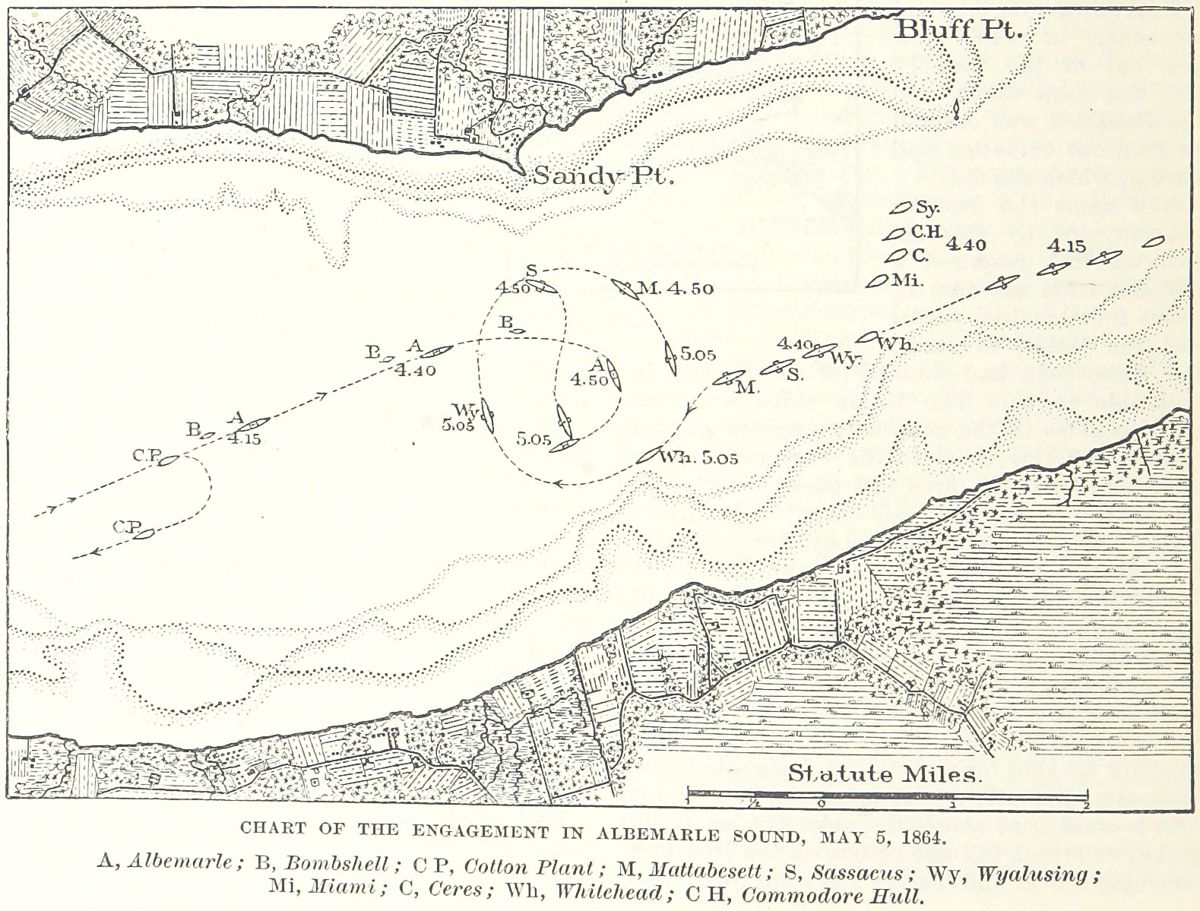
Many students of the war are familiar with the ironclad CSS Albemarle (named after the northern of the two sounds providing access to Hatteras Inlet) and its epic clash in the sound off Plymouth, North Carolina. The Union flotilla included several vessels, including the larger 205foot and in many respects superior USS Sassacus though made of wood—a critical disadvantage. Just before the anticipated ‘wood v. iron’ fight, the Albemarle was spotted on the horizon “with two other dark hulls hovering near, which we knew to be the ram accompanied by her consorts” of steam. Albemarle’s captain ordered her support boats back to Plymouth while the Union warships approached the ironclad in two columns half a mile apart. To briefly summarize the situation, the Union Navy had been unable to bring an ironclad into the North Carolina sounds. Given this, Federal vessels sought to “repel the rebel vessel with sheer numbers. “The flotilla swarmed up Albemarle Sound to Bachelors Bay on May 5, 1864. At 4:40 p.m. the contest began as the first shot ‘rocketed’ from the
Albemarle’s forward Brooke gun. The Union vessel towered over the small, squat ironclad, and after a chaotic fight, the Albermarle slowly removed herself with no fatal damage. Sassacus struck the ram abreast her beam at a good speed which “jarred and careened her so much that the water flowed freely over her decks and gave her so great a list that [Lieutenant Commander Roe] thought it would sink. “The Sassacus then kept the engine going and retained [its] position there, forcing her broadside to, for some ten minutes, hoping soon, one of our gunboats might get up alongside, opposite to me, as she was unable to harm them by ramming. Finding this could not be, and she starting ahead, the Sassacus slued obliquely toward her starboard side, when she fired, raking us, putting 100-pounder rifle shot clear throughout starboard boiler, fore and aft. We then fired the pivot rifle, striking her port sill, and a fragment of this shot flew back upon my deck. I fired again with similar results. I put three rifle shot into her port, and the muzzles of two of her guns were badly broken. Francis A. Roe’s report went on to state that after he rammed the ironclad, and despite also having grenades thrown down her hatch, the Albemarle was able to produce enough steam to release the ironclad and dock at Plymouth, North Carolina, though “in rather dilapidated condition.” He also had reported, “the Albemarle is more formidable than the Merrimack or Atlanta for our solid 100-pounder shot flew into splinters upon her iron plates.” The Sassacus had not been designed as a ram. In fact, it was a double-ender, purposely
CSS Owl. (Wikipedia)
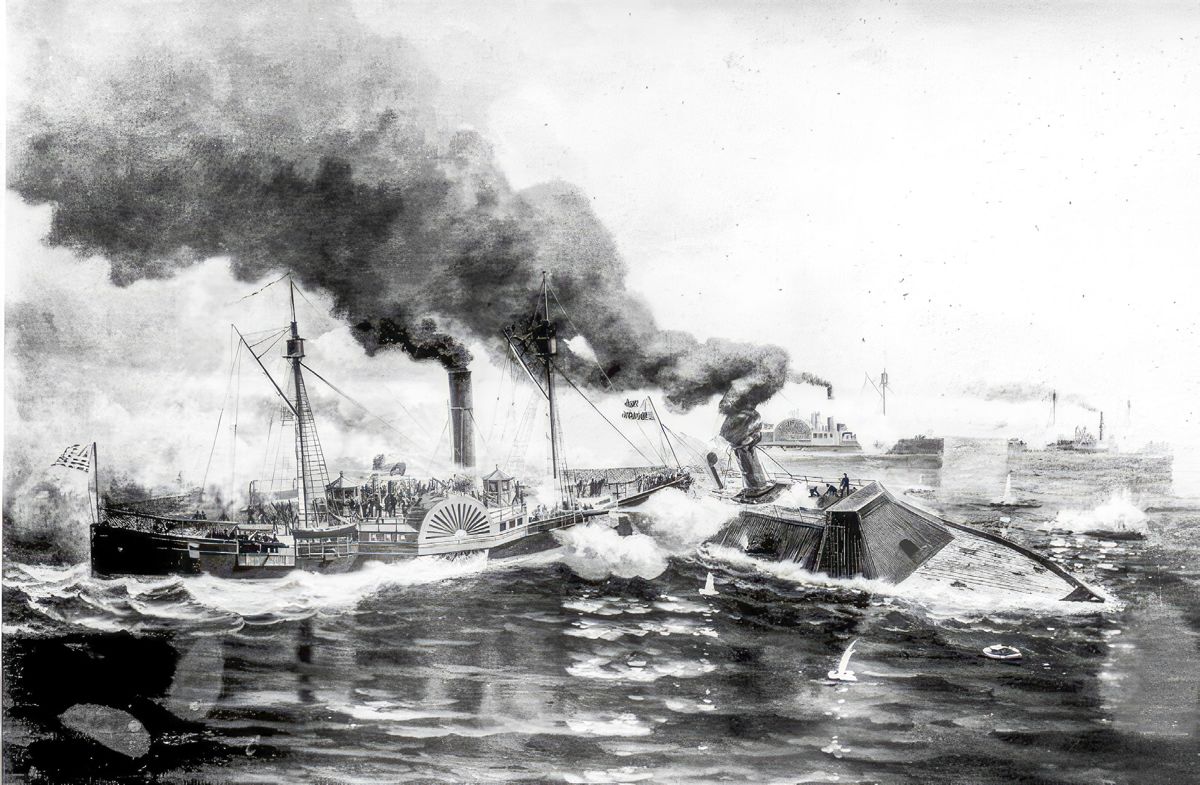
CivilWarNews.com built for operating in the Souht’s shallow rivers and sounds. Rudders on both ends gave the Sassacus and her sister ships the ability to change direction simply by reversing the ship’s steering.In addition to being double-ended, the Sassacus class had a novel reinforcing system composed of iron lattice work built into the hull between the inner planking and the ship timbers holding the outer hull planking. The iron lattice work was intended to reinforce the vessel, not act as armor plating. As a result the Albemarle inflicted major damage on the Federal gunboat. One shell fired pointblank from the ironclad burst the
Yankee’s boiler, which knocked out the Sassacus for good, along with causing five dead on Sassacus and 25 wounded on the nearby Wyalusing, a sister ship of the Sassacus. The fight dragged on for three hours, with Union vessels surrounding the ram at “a respectful distance.” Despite the huge amount of shot and shell expended, the Federal ships failed to land a lethal blow on the ram.
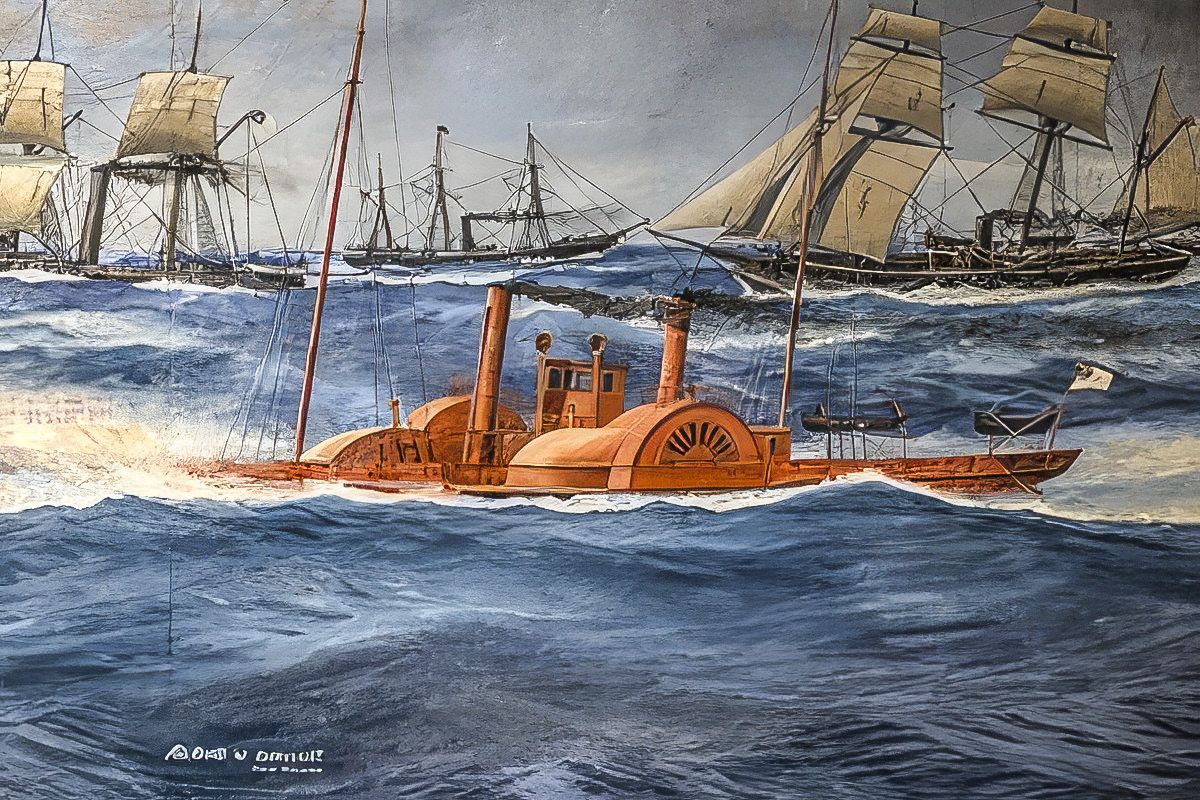
Final Journey of John Newland Maffitt and the CSS OWL
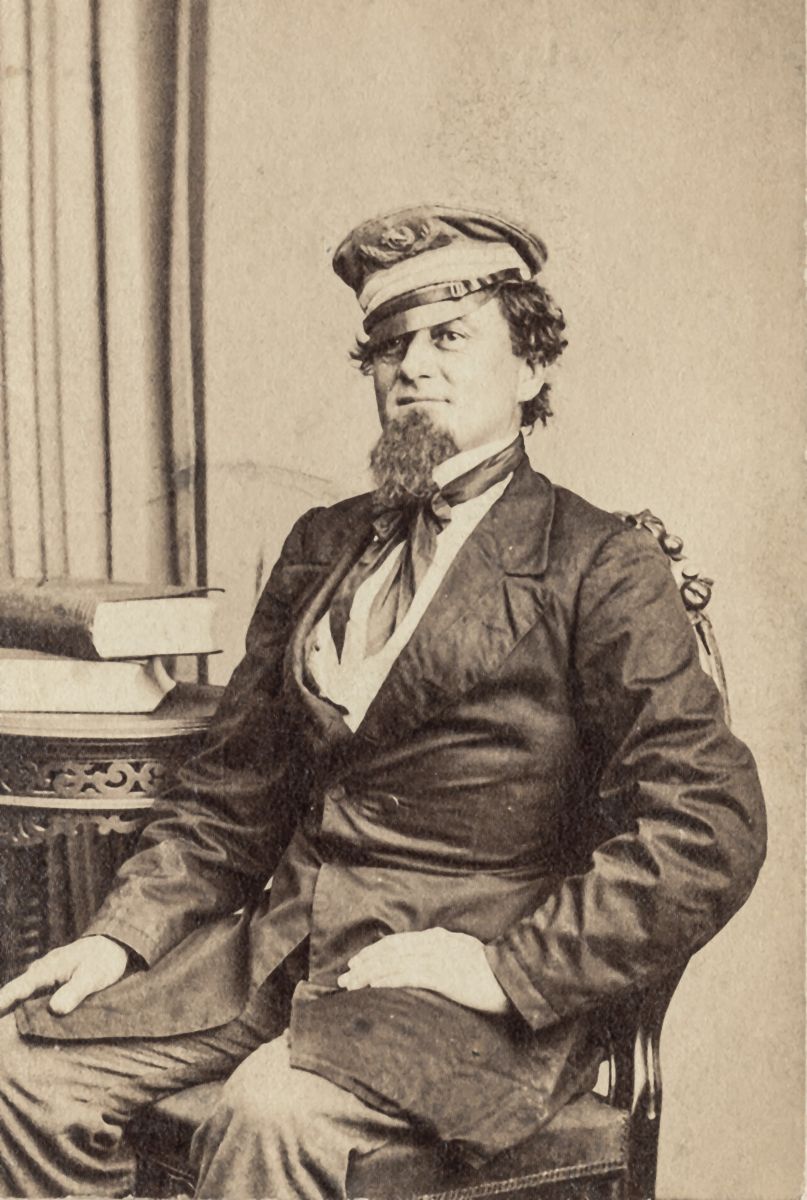
The low-slung, painted red painted blockade runner Owl, originally designed and built in Britain, had been one of four ships purchased by the Confederacy’s agent, and later several more in 1864 but not deliverable as the war neared its end, was last commanded by John Newland Maffitt—the so-called ‘Prince of Privateers.’ He had been detached from the disabled ram CSS Albemarle at Plymouth on September 9, 1864 (having taken over from Cooke, who months earlier had good news relayed to him by Commander Robert Pinkney,

CivilWarNews.com newly in charge of Confederate naval affairs in North Carolina that the ironclad had done “a great deal better than he had expected and will cooperate.). Maffitt returned the Owl to Liverpool rather than surrender it to the United States. (He passed the British Naval Board examination and ran numerous trips from Liverpool to South America for two years before returning to his beloved Wilmington and settling to farming with his third wife.) He had filed an Amnesty Petition on July 1, 1887, with the U.S. Government.
The ironclad Albemarle was destroyed on October 27, 1864, in the Roanoke River by Lieutenant William Cushing, USN. More than one citizen felt as the prominent Zebulon Vance declared, “I died last night a Union man. I am resurrected today a Secession man.” Another was one John Newland Maffitt, who years earlier had, at age 13, joined the U.S. Navy. Joan Wenner, J.D. has a law degree and is a longtime contributor to Civil War News and several history publications. Comments are welcomed at [email protected].