
Through The Lens
Brave Men Die In Battle / The Battle of Stones River: Part III
By Stephanie Hagiwara · Originally published February 2024 · pp. 6–7
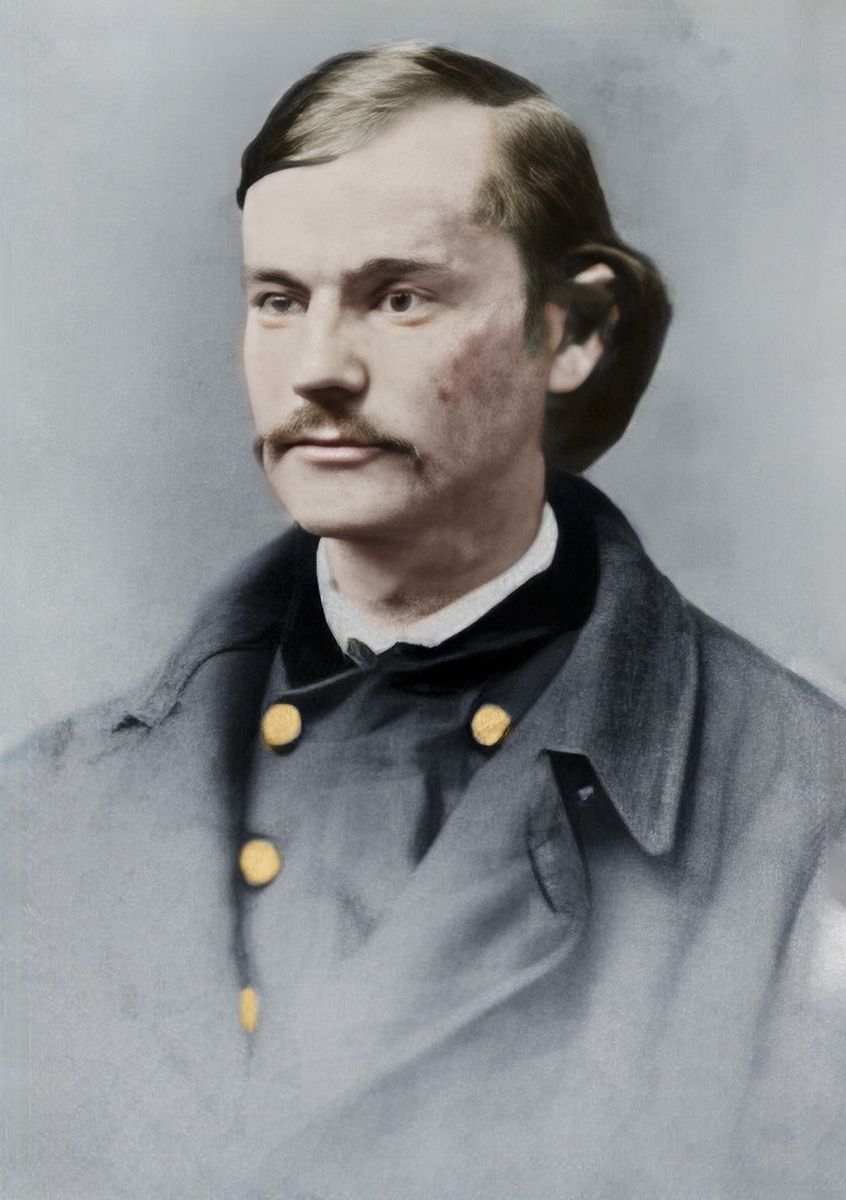
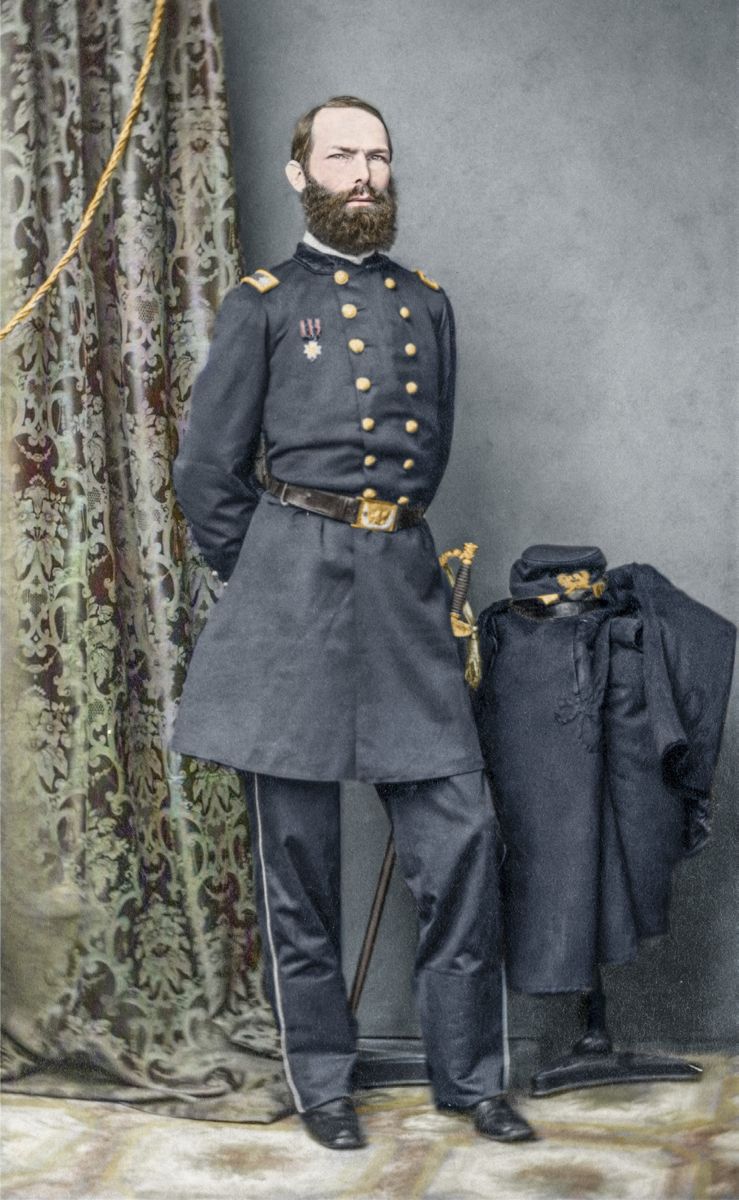
“In the fading light, the sheets of fire from the enemy’s cannon looked hideous and dazzling.” – C.S. Lt. Spencer Tally, 28th Tenn. On December 31, 1862, at the Battle of Stones River, Tenn., C.S. Gen. Braxton Bragg’s Army of Tennessee’s, pre-dawn attack on the right flank of U.S. Gen. William Rosecrans’ Army of the Cumberland, caught the Federals by surprise. C.S. Gen. John A. Wharton, a cavalry officer, would later admit, “So vigorous was the attack of our left upon the enemy’s right, proceeding first at a trot and then at a gallop, I had to travel a distance of miles before I reached the enemy’s rear.” Wharton’s cavalry swooped down on the 75th Illinois. Infantry Regiment. Using his horse artillery battery, Wharton was able to immediately capture his foes along with a fourgun battery. The 1,500 P.O.W.s and guns were sent to Bragg’s headquarters in the nearby town of Murfreesboro, Tenn. Wharton could now focus on his next target, U.S. Gen. Alexander McCook’s supply train. U.S. Capt. Gates P. Thruston, 1st Ohio Volunteer Infantry, had one company of 75 men to guard McCook’s train. At the sound of battle, Thruston hurried two wagonloads of ammunition to the front. On his return, Thruston spotted Wharton’s cavalry leading away McCook’s supply and personal baggage wagons. A second group were preparing to assault McCook’s ammunition train consisting of 76 heavily laden wagons, each drawn by four horses or mules. Thruston quickly repelled the attackers. “I had no special orders and just what to do was something of a problem,” Thruston wrote. He knew staying on the Wilkinson pike would result in capture. He had to act fast. Wielding axes, his infantrymen cut a road into the cedar thickets, crossed ravines, rough ground and “forded Stewart’s creek three times.” Thruston “appealed for help to every cavalry officer within reach.” After a half mile, Thruston reached the “tumult” at Barrows Farm. “Stragglers from the front, teamsters, couriers, negro servants, hospital attendants, and ambulances added to the turmoil. Wounded and riderless horses, cattle wild with fright, all rushing wildly over the field.” According to Thruston, as the train crossed the open field “the enemy charged down upon us like a tempest, the troopers yelling like devils. They outnumbered and outflanked us, and the ammunition train was left to its fate in a cornfield. Teamsters, train guards, the ordnance officer,
(yes, I must admit it,) were not left far behind in the general stampede. We fired one volley from behind our wagons and then hunted cover behind fences and in the nearest thicket. The Confederates began to collect and lead away our teams and wagons.” Into the field charged two battalions of U.S. Col. Lewis Zahm’s, 3rd Ohio Cavalry. The Federals retreated under Confederate shelling. U.S. Col. Minor Millikin, 1st Ohio Cavalry, led a saber-drawn cavalry counter charge into hand to hand combat. Milken was shot in the neck from a distance. The fleeing Federals crossed the creek. Zahm was able to rally the bluecoats and march them back across the creek and repulse the Confederates. In the meantime, by 8:00 a.m. Rosecrans was putting into operation a defensive plan that would protect his access to the Nashville Pike by forming a new line in the path of the fleeing Federals and the pursuing Confederates. Rosecrans positioned Morton’s Pioneers, the Chicago Board of Trade Battery, and Battery B, Penn. Light Artillery near the turnpike. He tasked Col. John Parkhurst, 9th Michigan Infantry, to form a straggler line comprised of intermingled units of bolting infantry and cavalrymen. Rosecrans kept repeating, “This battle must be won,” as he flew about on horseback shoring up his line. A signal officer recalled, “At no one time, and I rode with CivilWarNews.com him during most of the day, do I remember of his having been in one half-hour at the same place.” Arriving around noon, Thruston managed to lead the train the three miles to Rosecrans’ headquarters. Rosecrans rushed over and asked Thruston how he was able to bring the large wagon train to safety. Thruston responded, “We did some sharp fighting, but a good deal more running.” Rosecrans promoted him on the spot to Major. Thruston would end the war as a brevet general. U.S. Gen. Phillip Sheridan, 3rd Division, was livid. He had held his position all morning. Dwindling ammunition was forcing him to conduct a fighting withdrawal. Col. John Beatty, had been ordered by Gen. Lovell Rousseau to hold his position on Sheridan’s right “until hell freezes over.” Beatty deemed Sheridan’s departure as satisfying Rosseau’s criteria to retreat. Bragg decided that if the Federals were bolstering their right flank, it was now time to smash the left at the “Round Forest.” The four acres of rocks covered in cedar trees were surrounded by cotton and winter wheat fields. It was soon dubbed “Hell’s Half-Acre.” During the battle, U.S. Col. William B. Hazen’s men were reinforced by any available Federal units. The Confederates were being mowed down in the fields. The Confederate artillery was returning a “murderous shower of shot and shell” on Hazen. At 1:00 p.m. Bragg ordered Gen. John Breckridge to send four brigades across the river to Gen. Leonidas Polk. The Federals watched as the fresh troops moved towards them, skirting bodies and equipment. As each brigade arrived, Polk launched them at the Round Forest before the supporting brigades had forded the river. The attackers were “falling like leaves … they held their ground with a heroism worthy of a better cause. … but they retired in good order, leaving their dead on the field,” reported Cpl. Gilbert Stormont, 58th Ind. Daylight was fading. Polk doubled the force sent in for a last assault. Hazen, who had been defending the same area all day, called for still more reinforcements. Rosecrans plunged into the heavy fire with his staff officer and close friend Col. Julius Peter Garesché, right behind him to encourage Hazen’s men. Garesché was well liked by the men. He “seemed without earthly ambition, half mystic, half saint; he denied himself reasonable comforts to help the poor.” A shell flew past Rosecrans, decapitating
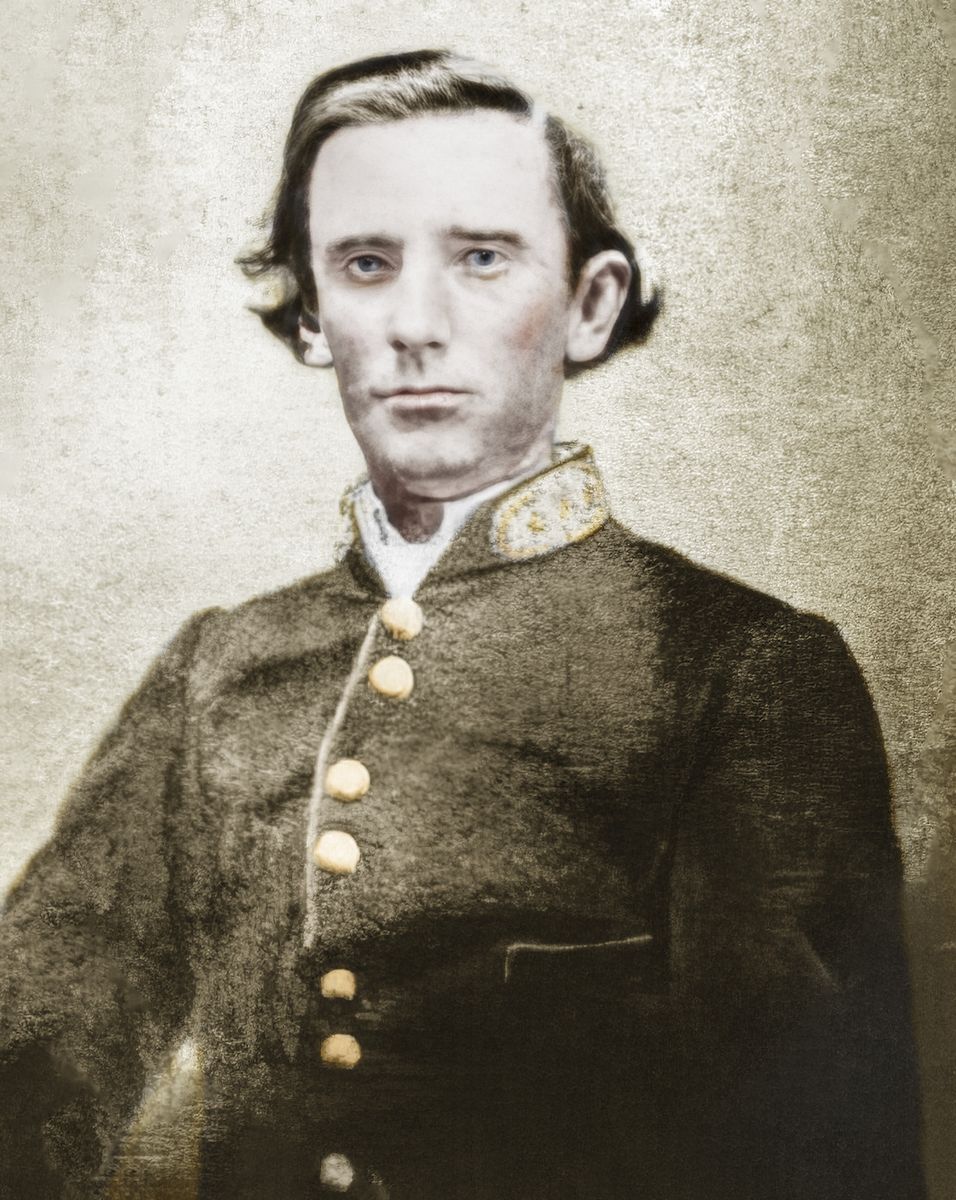
Garesché, splattering blood on Rosecrans’ coat. When informed of Garesché’s death, Rosecrans replied, “Brave men die in battle. Let us push on.” After the battle, Rosecrans cut the buttons from his coat and saved them in an envelope marked, “Buttons I wore the day Garesché was killed.” Again, the Federal artillery easily decimated the approaching Confederates. Again, bits of cotton were stuffed into ears as men moved forward through the cotton fields. Again, Federal rifle fire invigorated the Confederate retreat, leaving good men dead on the field. Darkness ended the first day of battle. Rosecrans decided to stay put. He had enough ammunition to fight another day. He sent the wounded to Nashville, Tenn., under the protection of a 1,000 men escort. The Federal right flank had collapsed, and wagons were being sent to Nashville. Bragg believed he saw signs that he could finish off the Federals. Bragg sent a telegram to Richmond, Va., “The enemy has yielded his strong position and is falling back. God has granted us a happy New Year.”
Cozzens, Peter. No Better Place to Die: The Battle of Stones River. University of Illinois Press, 1991 Korn, Jerry, and the Editors of Time-Life Books. The Struggle for Tennessee. Tupelo to Stones River: TimeLife Books, 1987 Foote, Shelby. The Civil War: A Narrative: Volume 2: Fredericksburg to Meridian. Random House, 1963 Lamer, William. The Edge Of Glory: A Biography of General William S. Rosecrans, U.S.A. LSU Press, 1999 Houk, Eliza Phillips Thruston Houk. A Tribute to General Gates Phillips Thruston. United Brethren Publishing House, 1914
Stephanie Hagiwara is the editor for Civil War in Color.com and Civil War in 3D.com. She also writes a column for History in Full Color.com that covers stories of photographs of historical interest from the 1850’s to the present. Her articles can be found on Facebook, Tumblr and Pinterest.