The Graphic War
W. L. Ormsby: Colt and a Fine Art Engraver
By Salvatore Cilella · Originally published April 2024 · pp. 30–31
The Graphic War highlights prints and printmakers from the Civil War discussing their meaning and the printmaker or artist’s goals. Collectors of Civil War sidearms might recognize the name Waterman Lilly Ormsby. Otherwise, it is definitely not a household name that most people would know.
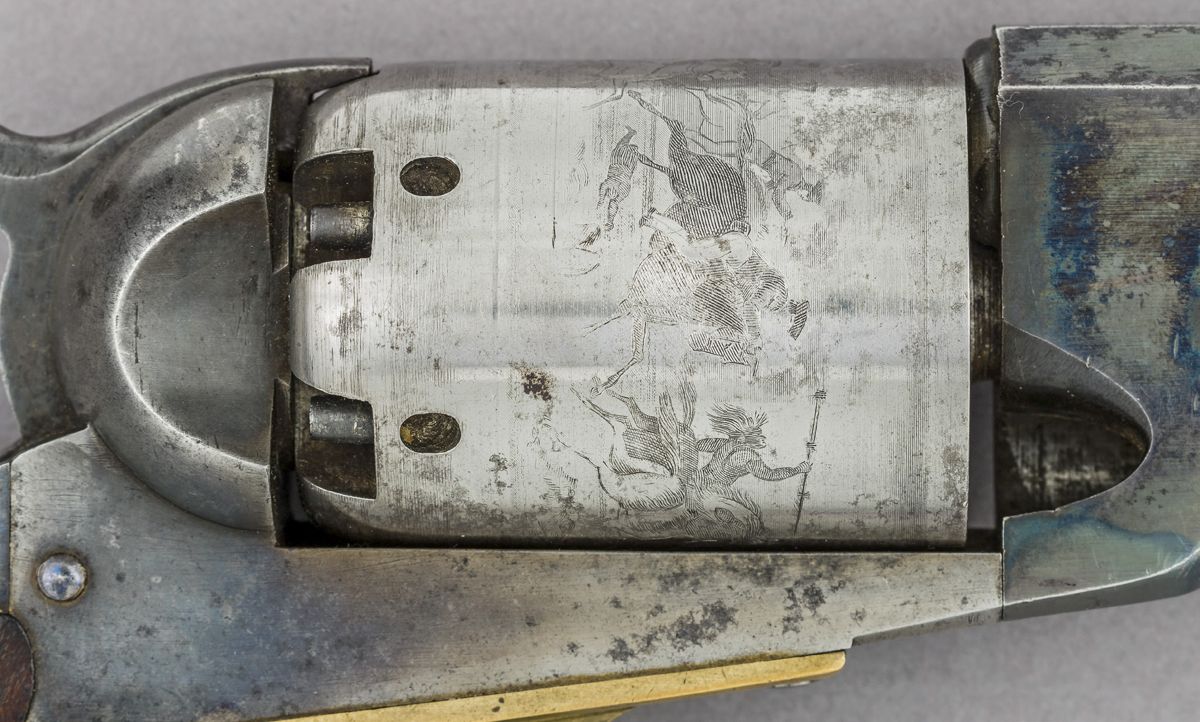
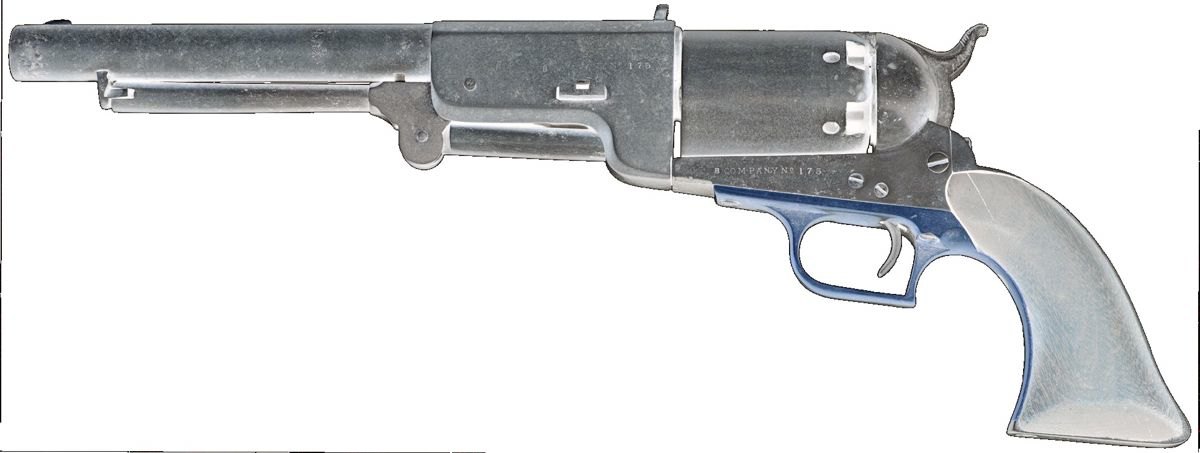
Waterman L. Ormsby was born in Windham County, Conn., in 1809. At 20 he was enrolled in the prestigious National Academy of Design. At an undetermined early age, he “was engraving over his own name in Albany,” New York, and for a while, worked for the engraving firm Carter, Andrews and Co., of Lancaster, Mass. “Being of a decided mechanical bent of mind he invented a rulingmachine, a transfer-press, and a ‘grammagraph,’ a device for engraving on steel directly from medals, medallions, etc.; this latter machine, or a modification of it, was called a ‘panto-graph’.”1 Ormsby’s motivation in developing the grammagraph was to stop counterfeiters of American currency. The machine copied “medals and medallions onto bank note dies in order to give the illusion of” depth. “In Ormsby’s case this was most famously used on the cylinders of revolvers made by Samuel Colt…. Ormsby produced half a dozen engraving scenes for Colt as early as 1839 and …used on… the Colt Walker, Colt Dragoon, Colt Model 1849 Pocket Revolver, Colt 1851 Navy Revolver, and [the] Colt
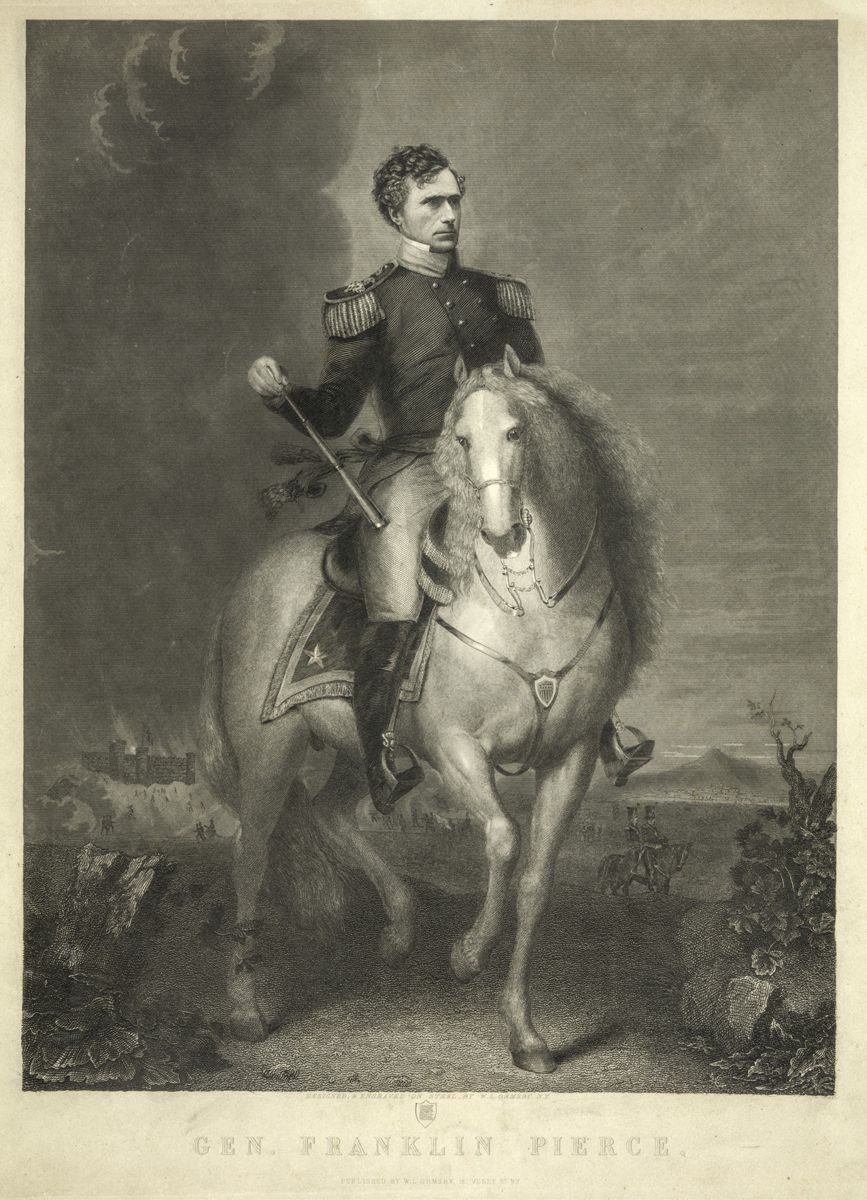
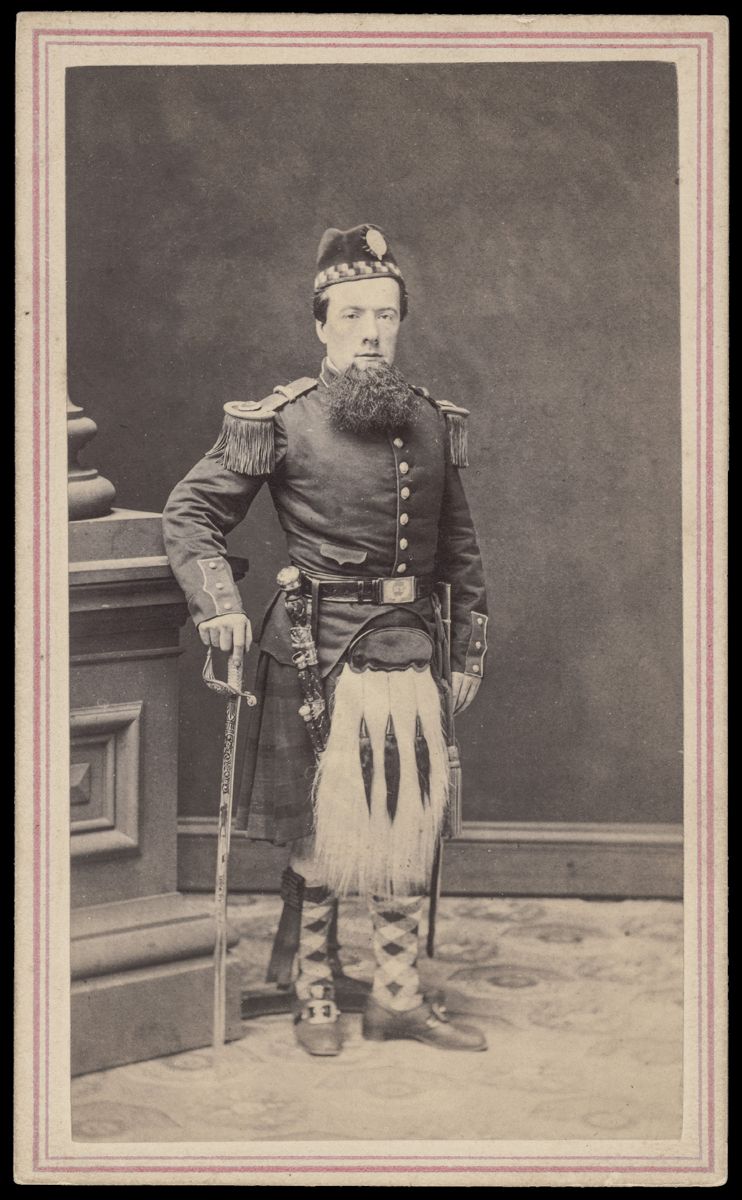
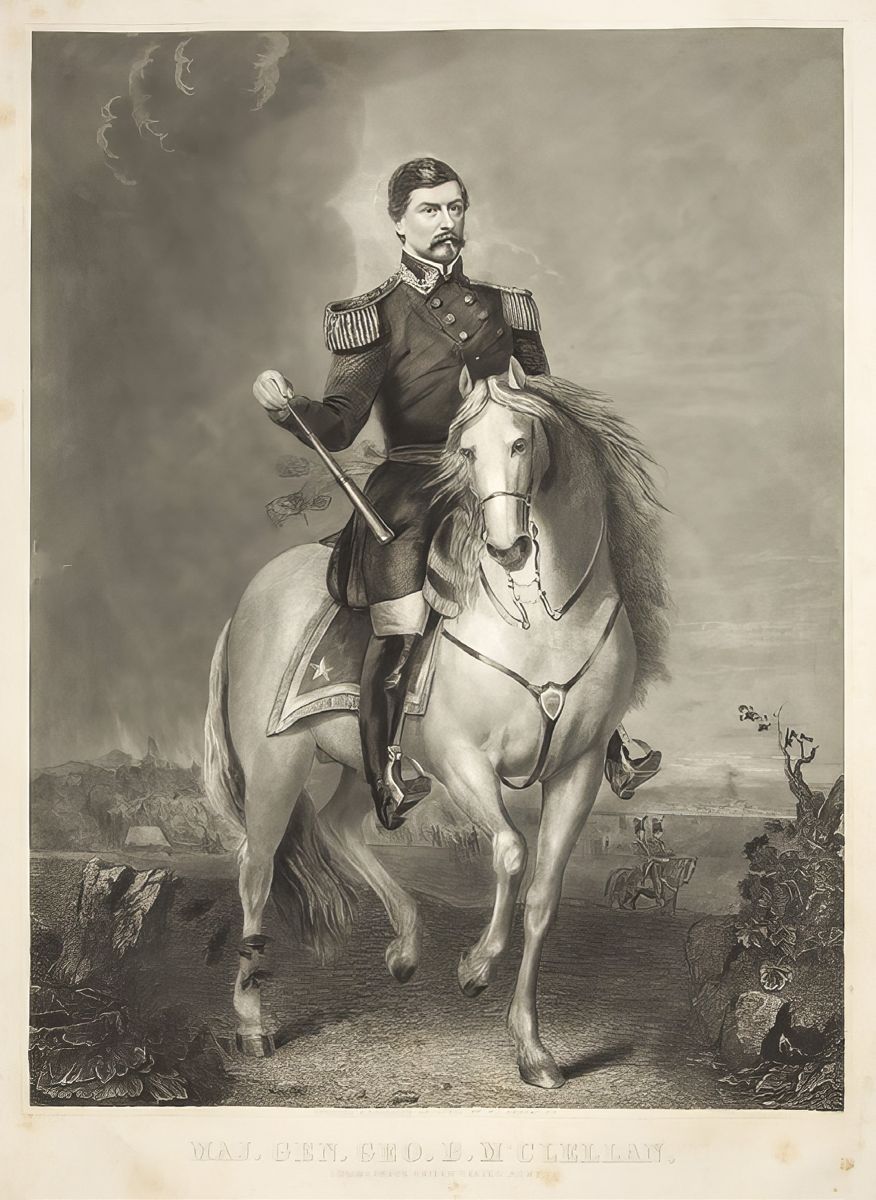
Model 1855 Side hammer Pocket Revolver.”2 Ormsby used his talents in other areas of printing and engraving. After settling in New York City, and gaining a reputation for being an excellent engraver, he “founded the New York Bank Note Company and… (was) one of the founders of the Continental Bank Note Company.” During the Civil War, he was instrumental in designing a five dollar note “intended to prevent counterfeiting.” He was “the author of several pamphlets, including, ‘Cycloidal Configurations’ or the Harvest of Counterfeiture, and a volume on paper-money engraving entitled, A Description of the Present System of Bank Note Engraving, which was published in 1852.”3 He also turned to engraving art prints beginning in the 1840’s for The Columbian Magazine, which was noted for publishing poems and essays by Edgar Allen Poe along with treatises on politics and topics of general interest. Although he eventually gained controlling interest of the magazine in 1847, it soon “began a downward slide” and finally failed in 1849.4 He presented his book on counterfeiting to President Elect Franklin Pierce. Ormsby’s hope was to get Pierce’s endorsement of his thesis that the country, with its proliferation of banks with their own currency, was in danger of being swamped with phony bills. “I beg permission to call on you,” he wrote, “at some future time, when my plans for constructing bank notes to prevent forgery are mature, that I may have an opportunity of convincing you of the utter insecurity of our present paper money, and the necessity of Legislative action on the subject.” Ormsby went on to explain that he estimated that “more than two thirds of the banks in this country have been so successfully and fraudulently imitated, that few persons are enabled to discriminate between the genuine and the false paper.”5 Ormsby was not above reproach however. Rumors circulated freely about his “character and reputation…several times for involvement in counterfeiting schemes and banking frauds. While he was never convicted of any wrongdoing, he was either conveniently ignorant or complicit.”6 Eventually Ormsby turned to engraving portraits. His first and most prominent was “coincidentally” a majestic rendering of General Franklin Pierce in uniform and on horseback, circa 1852. [Fig. 2] He placed Pierce in a Mexican War battle scene showing Chapultepec Castle and Popocatepetl volcano in the background. Not one to be outdone by originality, Ormsby reworked the engraved plate when George McClellan became a major general and commander of the Union Army in November 1861. [Fig. 3] He merely removed Pierce’s head and replaced it with a likeness of McClellan and obliterated references to the Mexican War. The print was obviously produced before McClellan was fired the following year, possibly in the spring of 1862. Ormsby didn’t stop there. After Lincoln fired McClellan and replaced him with Ambrose Burnside, Ormsby updated the title margin to read the obvious: “Late Maj. Gen. George McClellan.” Collectors now refer to it as the first and second state, the former being more valuable. As a footnote, the engraving of McClellan was printed and published by Joseph Laing, an immigrant from Scotland who came to America in 1845. [Fig. 4] In 1850 he became an engraver and print publisher. When war broke out, he joined the 79th New York (Cameron Highlanders) as captain of Company G. in 1861. During the war he was wounded eight times and captured twice, escaping twice. With the regiment’s May1864 mustering out, Laing became the Highlander’s commander, a position he held until 1876. As a civilian, “Laing resumed business as an engraver, lithographer and print publisher, executing steel, copper plate, lithographic engraving and printing.”7 Ormsby passed away in 1883, Laing in 1903.
Endnotes: Stauffer, American Engravers Upon Copper and Steel, 194-5. Metropolitan Museum of Art, Open Access Policy, https:// commons.wikimedia.org/w/ index.php?curid=58745582. Stauffer, 194. Homren, Wayne (August 30, 2020). “Ormsby’s 1852 Bank Note Engraving,” The E-Sylum. The Numismatic Bibliomania Society. Retrieved September 15, 2023. A Description of the Present System of Bank Note Engraving showing its tendency to facilitate counterfeiting: to which is added a new method of constructing bank notes to prevent forgery. As cited in Wikipedia, Waterman Lily Ormsby. Cynthia Lee Patterson, Art for the Middle Classes: America’s Illustrated Magazines of the 1840s, University Press of Mississippi, 2010, 76, 80. https://archive.blogs.harvard.edu/preserving/2015/12/09/w-l-olmsby-counterfeitingexposed/. http://nrs.harvard.edu/urn-3:FHCL:23817588. Ibid. U.S. Militaria Forum, “Colonel Joseph Laing, 79th Cameron
After 43 years in the museum field, Cilella devotes his time to collecting American prints and maps and writing. He has written extensively on Emory Upton: Upton’s Regulars: A History of the 121st New York Volunteers in the Civil War (Kansas, 2009); a two-volume Correspondence of Major General Emory Upton, (Tennessee, 2017), received the 2017–2018 American Civil War Museum’s Founders Award for outstanding editing of primary source materials. He edited Upton’s love letters 1868-70 to his wife—Till Death Do Us Part (Oklahoma, 2020) and The Memoirs of Dewitt Clinton Beckwith of Upton’s Regulars (McFarland, 2023).