This And That
Sabotage at City Point
By Gould Hagler · Originally published April 2024 · pp. 26–28
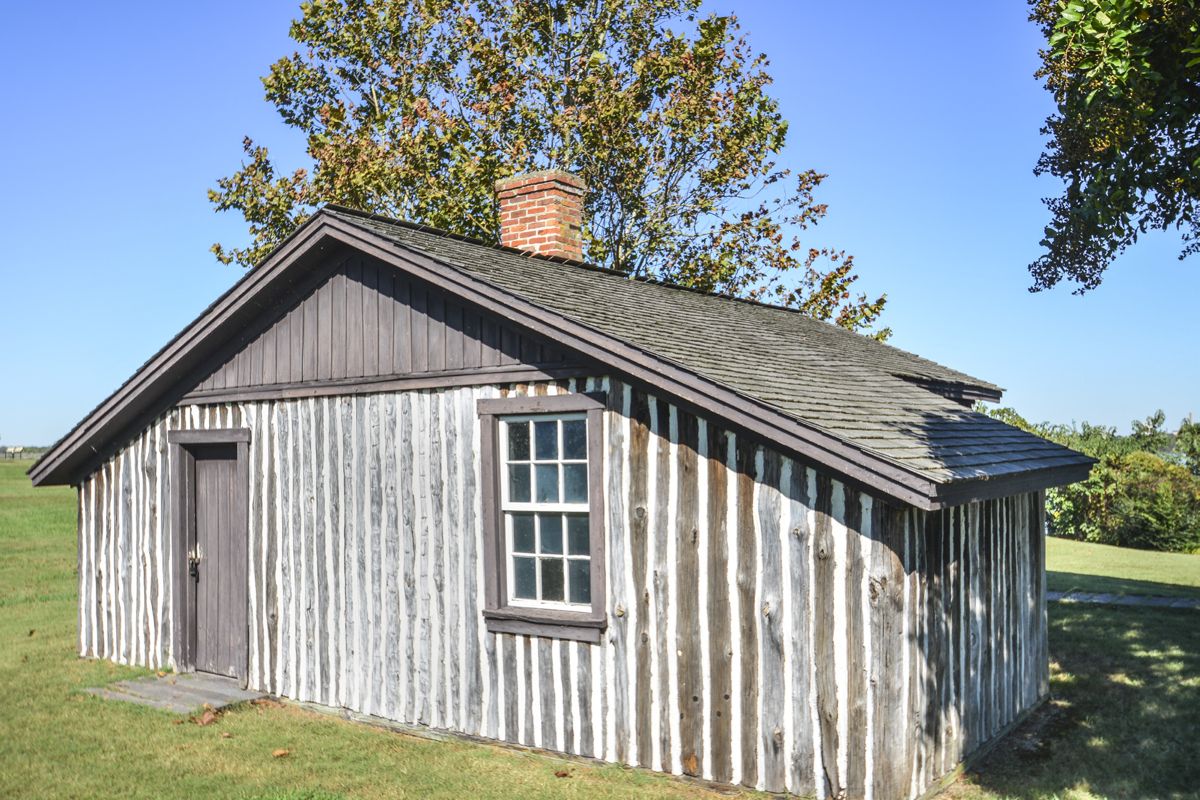
To reach the City Point unit of the Petersburg National Battlefield, drive east from Petersburg past the visitors center, cross Interstate 295, and go through the town of
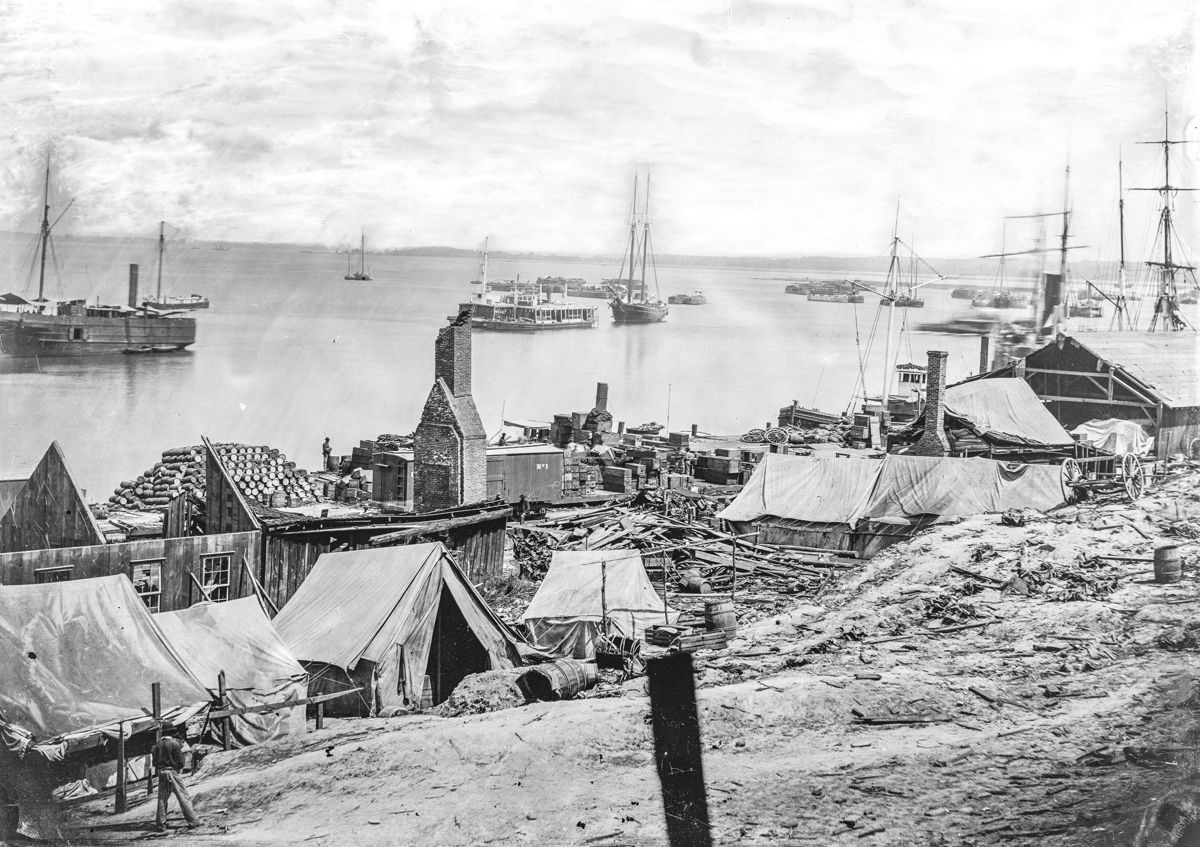
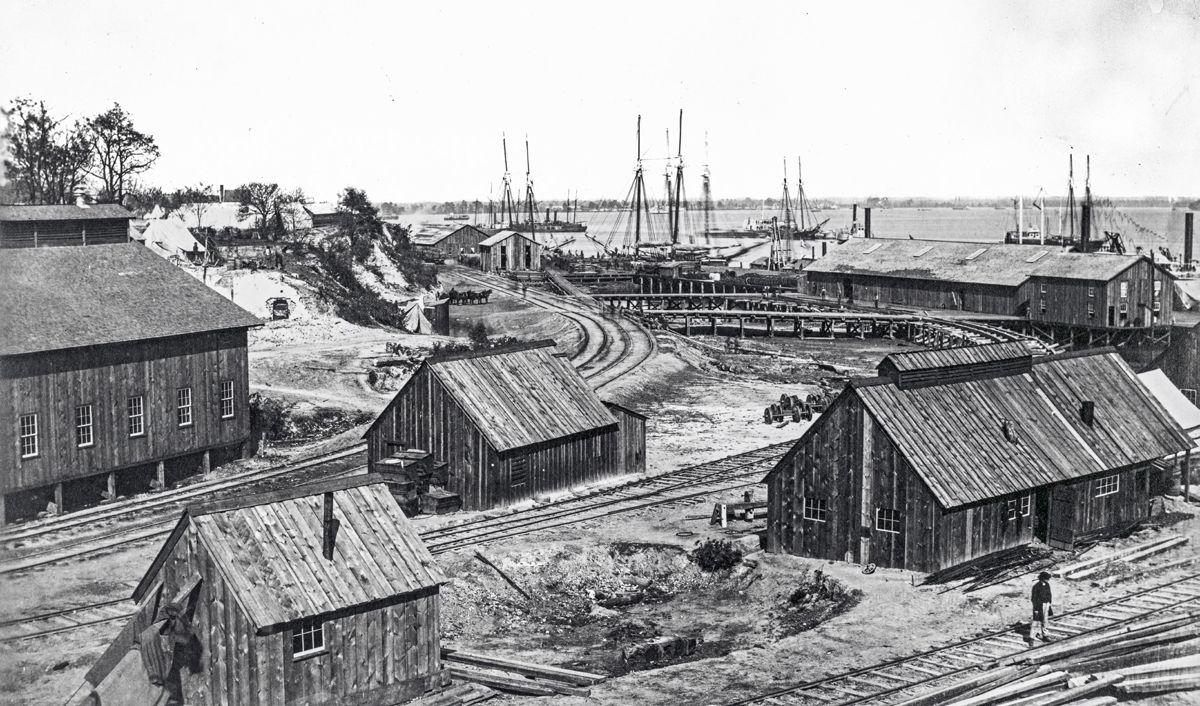
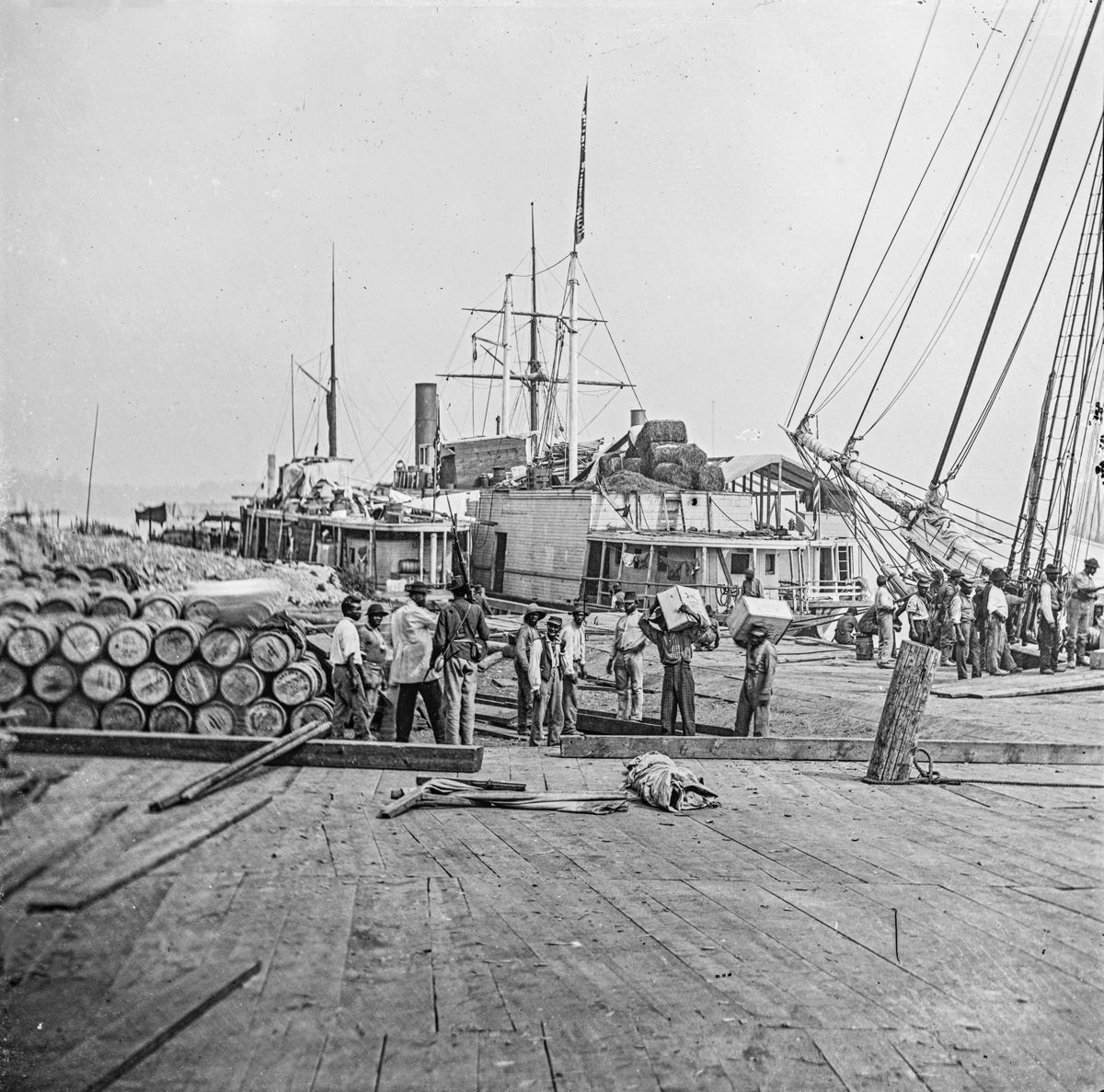
Hopewell. You will arrive at a peninsula which juts out into the Appomattox River where it joins the James. During the final months of the Civil War this nowquiet place was a large and busy port, with ships daily bringing in vast amounts of all the material a huge army needed to wage war. The port sprouted overnight in the summer of 1864 and operated for 10 months. When the Civil War ended the following spring, the facility was dismantled as quickly as it was built. Grant established his headquarters here on June 15, 1864, soon after the Army of the Potomac crossed the James River to threaten Petersburg and the railroad supplying Lee’s hard-pressed army. The coup de main failed to take Petersburg in a swift blow; the Confederates improved and expanded the town’s defenses; and both armies settled in for a long siege. From his new headquarters, Generalin-Chief Grant could conduct the siege, communicate quickly with Washington and, via that link, oversee the armies operating in the other theaters of the war. Here ships unloaded supplies of all kinds: ordnance; lumber and other construction materials; food for tens of thousands of men; provisions for horses and mules; and, of course, more men, horses and mules to replace those lost in battle. Medical supplies were brought in for the giant hospital. Mail was delivered to the soldiers; newsmen came to report on the war; teachers arrived to run a school established for black soldiers, many of whom were freed slaves. Engines and cars were shipped in to haul material to the front, and rails to improve the line and build spurs running along the lengthening Federal lines. Some sources state that City Point was one of the busiest ports in the world. I found no comparative data to support this claim, but this was, without question, a very busy place. In Stillness at Appomattox Bruce
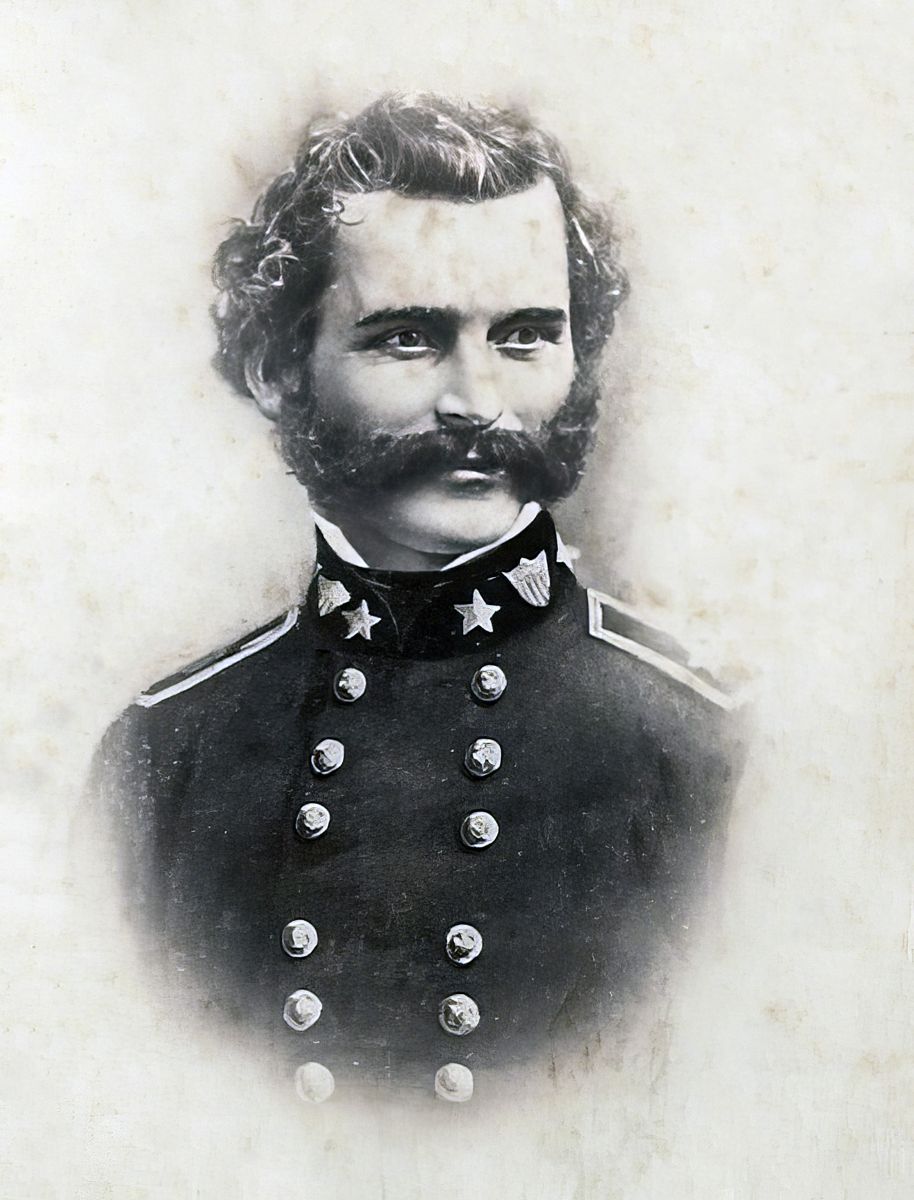
Catton wrote that “An average day would see 40 steamboats, 75 sailing vessels, and 100 barges tied up or anchored along the waterfront.” In the third month of its short life, the port was rocked by a mammoth explosion that killed and maimed scores of men and wrecked ships, a huge wharf, warehouses, and other structures. Until the end of the war the blast was generally thought to be an accident. Such mishaps are not uncommon. In this case, however, the Confederates did the deed. Gabriel Rains was head of the Confederacy’s Torpedo Bureau. Rains, an officer in the Old Army, was appointed brigadier general in the Confederate army in 1861. He commanded an infantry brigade in the Peninsula Campaign and caused a controversy when he used land mines to impede the Federals’ advance toward Richmond. The ethics of this method of warfare were questionable at the time, but as the war progressed such scruples disappeared. As head of the Torpedo Bureau, Rains oversaw the development of various types of “infernal machines” to protect key land positions and ports. Less often, these devices were used as offensive weapons, as at City Point. The weapon in this case was a horological torpedo, or, in modern terms, a time bomb. On July 26, 1864, a member of the Confederate Secret Service, John Maxwell, left Richmond on a mission authorized by Brig. Gen. Rains. Maxwell was armed with a supply of devices from the Torpedo Bureau and accompanied by R.K. Dillard, a man “well acquainted with the localities.” The initial plan was “to operate with the Horological torpedo against the enemy’s vessels navigating [the James River].” However, Maxwell called an audible: larger prey had been identified. He wrote that on
CivilWarNews.com August 2 he and Dillard “learned of immense supplies of stores being landed at City Point, and for the purpose, by stratagem, of introducing our machine upon the vessels there discharging stores, started for that point.” Maxwell and Dillard traveled mostly by night to reach the Federal base. They snuck past the pickets and entered the precincts of the well-guarded facility.
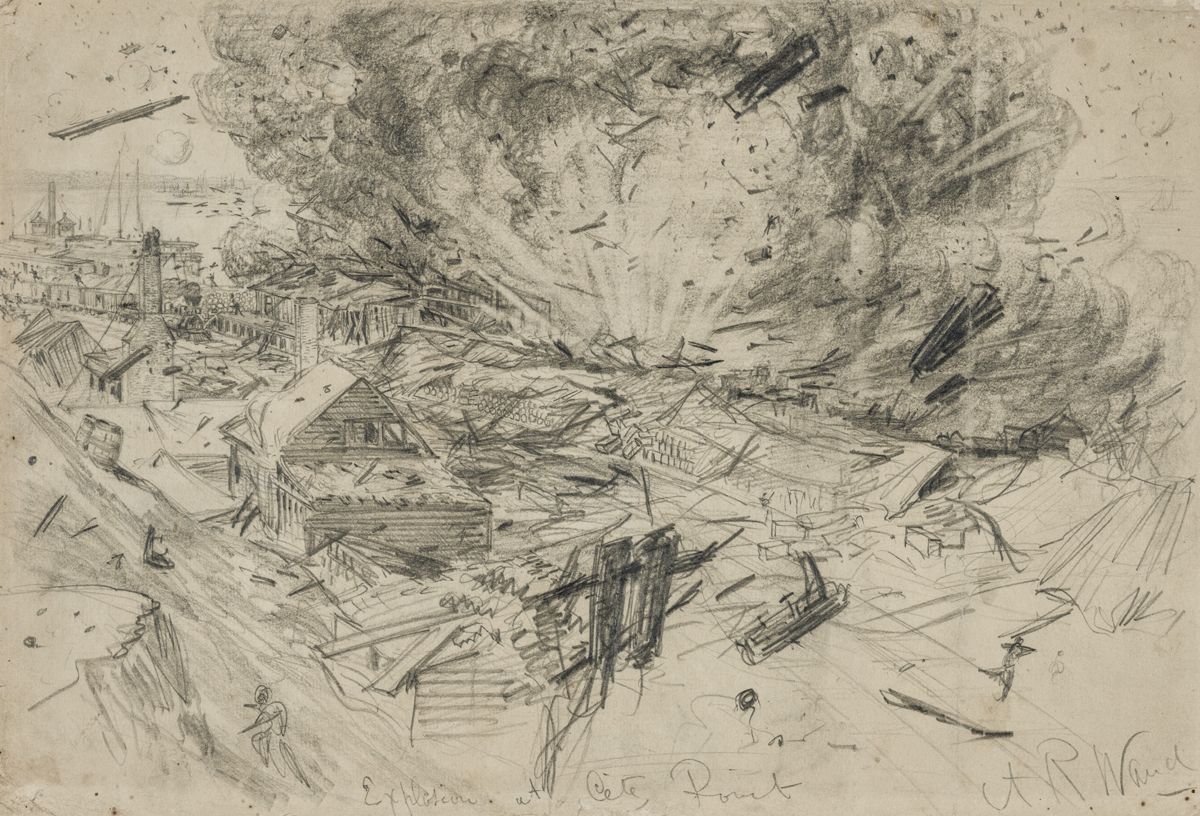
Dillard stayed a half mile away from the wharf. Maxwell got close enough to observe that the captain of a munitions barge was leaving the vessel. He approached a sentinel and said that he had a box which the captain had ordered him to take on board. The sentinel bought the tale and let him pass. Maxwell hailed a crewman. He gave his box to the unsuspecting man, who carried it onto the doomed barge. Maxwell rejoined Dillard and together they waited. “In an hour the explosion occurred,” Maxwell reported. “Its effect was communicated to another barge beyond the one operated upon and also to a large wharf containing their stores (the enemy’s) which was totally destroyed.” Years later, a Federal ordnance officer who witnessed the
The story of the explosion has an interesting postscript. In 1990, John Maxwell’s granddaughter visited City Point Park and met with the museum’s curator, Jimmy Blankenship. She showed the curator an interesting artifact and donated it to the museum. It was a model of the horological torpedo, a model made by her grandfather. Blankenship was interviewed in 2005 for an article in Style Weekly, a Richmond newspaper. Blankenship told the story of City Point’s role in the Civil War, including his interesting visit with Maxwell’s granddaughter. A great great grandson of Maxwell was interviewed for the same article. He relayed some family stories about his ancestor, stories which perhaps contained some embellishments added by the old soldier/secret agent/saboteur. According to this descendant, Maxwell claimed to be the inventor of the horological torpedo. This is unlikely. Maxwell himself stated in his report that the device was furnished to him by Captain McDaniel. The bomb was almost certainly created in Rains’s Torpedo Bureau. It does seem likely that Maxwell made the model which his granddaughter donated to the museum. The family tradition also holds that Maxwell tried to patent the invention after the war. When he was turned down by the Patent Office he appealed to the top. He went to the White House and met with Horace Porter, General Grant’s aide-decamp and President Grant’s personal secretary. Porter was incensed that this Confederate saboteur would have the gall to seek a patent on the device used to kill and maim Federal soldiers and civilian workers. He curtly dismissed the applicant and made sure he never received a patent by which he could profit from his crime. Or so the story goes. explosion wrote this description: “From the top of the bluff there lay before me a staggering scene, a mass of overthrown buildings, their timber tangled into almost impenetrable heaps. In the water were wrecked and sunken barges, while out among the shipping…there was a hurrying back and forth on the decks to weigh anchor, for all seemed to think that something else would happen.” Grant quickly informed Washington. At 11:45 a.m. he sent a brief message to the army’s chief of staff, Maj. Gen. Henry Halleck. “Five minutes ago an ordnance boat exploded, carrying lumber, grape, canister, and all kinds of shot over this point. Every part of the yard used as my headquarters is filled with splinters and fragments of shell.” At the same time as Grant’s telegram, Maj. Gen. A.A. Humphreys, the Army of the Potomac’s chief of staff, sent an inquiry to the Army’s chief quartermaster, Brig. Gen. Rufus Ingalls: “Was that explosion at City Point? What was it?” The reply from Ingalls to Humphreys came quickly: “A barge laden with ordnance stores was accidentally blown up just now while lying at the wharf. There has been considerable destruction of property and loss of life. No officers were killed. The shock was terrific. It is possible we shall never know how the accident occurred. One of your office wagon horses was killed. We are clearing away the ruins at the river.” While Ingalls mentioned only the officers and the horses, many of the casualties were civilian dock workers, and many of those were freed slaves. A black war correspondent, Thomas Morris Chester, filled in the gap left by the quartermaster. “Fragments of humanity were scattered around,” Chester wrote. “Those loudest in their grief were the contrabands who mourned their relatives and comrades. Being employed in great numbers where the accident occurred, more of them were killed and wounded that any other individuals.” At 12:20, 40 minutes after the blast, a circular sent by Humphreys advised the corps commanders that the noise they all heard was from City Point and that the explosion did “material damage to life and property.” Before noon the following day quartermaster Ingalls provided this report to Grant’s inspector general: “There were 33 men killed and 75 wounded yesterday by the explosion of ordnance on the barge. The store-house and wharf were greatly damaged, but can be repaired in a short time. There was but slight loss of subsistence and quartermaster’s property. I have heard no report of the ordnance department as to cause of explosion or loss of property.” Even at a distance of half a mile Maxwell was “severely shocked.” Dillard suffered a loss of hearing, from which he had not recovered by the time Maxwell wrote his report in December. Maxwell’s report included some clippings from Northern newspapers that stated the casualties as 58 killed and 146 wounded, but that he believed the loss of life to be much higher. The monetary loss was reported to be $4,000,000, Maxwell stated, adding that he had no way of determining the accuracy of the estimate. Maxwell and Dillard returned to their original mission and enjoyed some modest success. They returned to Richmond on December 14. One source says that the damage was repaired in nine days. However, the Official Records contains no report advising Halleck or anybody else when City Point was back in business. In fact, except for a single item from the following June, the OR contains virtually nothing about the explosion after Ingall’s message to Humphreys on August 10, just 24 hours after an ordnance barge, two other vessels, a huge wharf, storehouses and other things were blown to smithereens. This silence is telling: in the context of this major campaign in this huge war, the City Point explosion was of no special importance. The damage was repaired; supply ships continued to land; the Army of the Potomac was fed and armed; and the siege continued. There is only one additional mention of the explosion in the OR that is relevant, dated June 3, 1865. Halleck had seen the report Maxwell submitted the previous December. “It appears from this report,” Halleck wrote to Secretary of War Edwin Stanton, “that the explosion…was caused by a horological torpedo placed on the barge by John Maxwell and R.K. Dillard, acting under the direction of Brig. Gen. G.J. Rains and Capt. Z. McDaniel. I have ordered the arrest of these persons if they can be found….” Rains was never arrested, nor, as far as I can tell, were the others named in Halleck’s message to Stanton. After the war Rains lived in several cities in the South and worked as a chemist, ran a boarding house and was headmaster of a school. He also re-entered the service of the United States Army, serving as a clerk in the U.S. Quartermaster Department in Charleston, from 1877 to 1880. Rains died in 1881 and was buried in Saint Thaddeus Cemetery in Aiken, S.C.
John Maxwell remained in Virginia and worked as a blacksmith. He lived in the Robert E. Lee Camp Confederate Soldiers’ Home from 1908 until shortly before his death in 1916. He was buried in Richmond’s Hollywood Cemetery. Sources: Official Records, Series 1, Volumes 42 and 46; W. Davis Waters and Joseph I. Brown, Gabriel Rains and the Confederate Torpedo Bureau, 2017; Bruce Catton, Stillness at Appomattox, 1990 edition; Style Weekly, June 19, 2005; Emmanuel Dabney, “City Point during the Civil War” in www.encyclopediavirginia.org; The Army Historical Foundation, https://armyhistory.org/minewarfare-in-the-civil-war; Warfare History Network, https:// warfarehistorynetwork.com/ article/city-point-bombing. Gould Hagler is a retired lobbyist living in Dunwoody, Ga. He is a past president of the Atlanta Civil War Round Table and the author of Georgia’s Confederate Monuments: In Honor of a Fallen Nation, published by Mercer University Press in 2014. He has been a regular contributor to CWN since 2016 with over 90 published columns. His email is [email protected].