
Civil War Times Illustrated—An Appreciation
By Stephen Davis · Originally published April 2024 · pp. 1–6
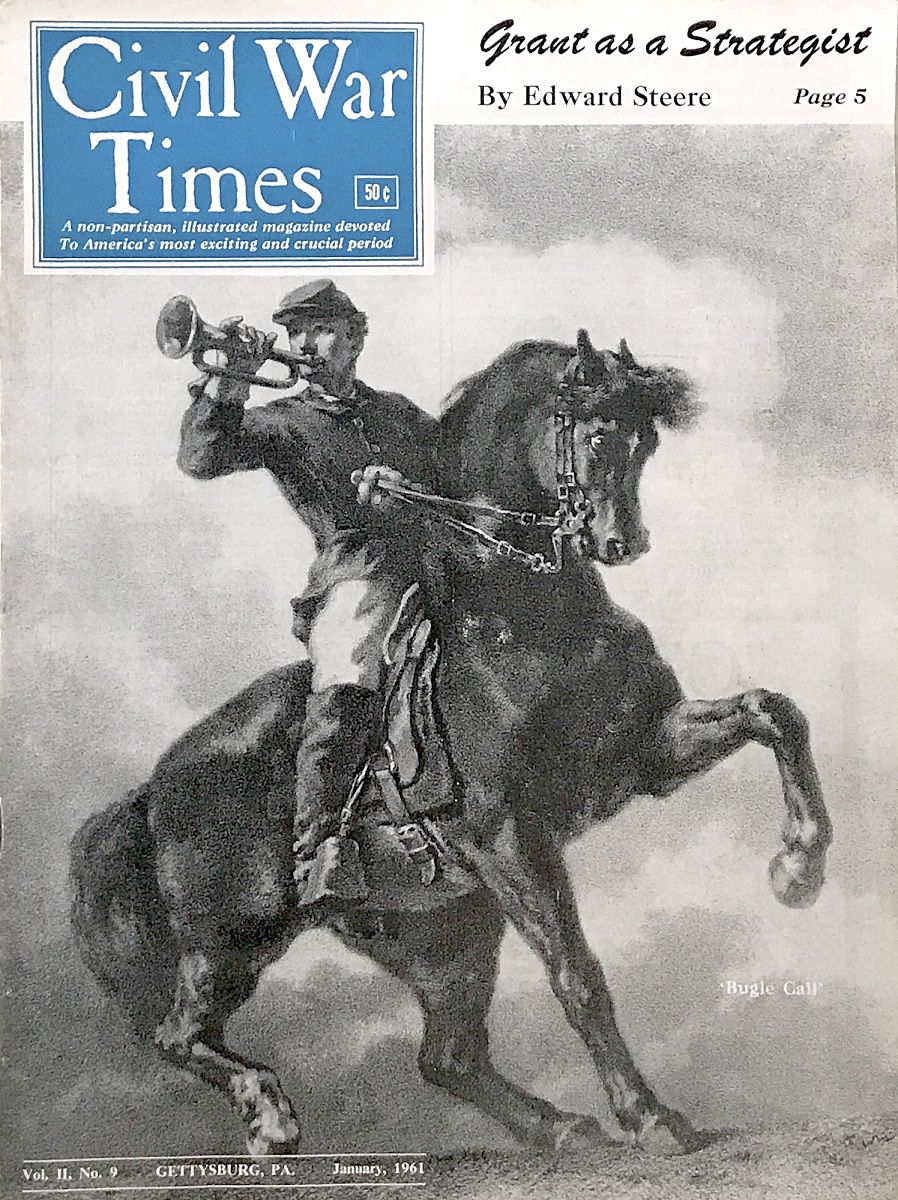
Bruce Catton, Virgil Carrington Jones, Edwin C. Bearss—all are Civil War authors familiar to many enthusiasts of America’s greatest conflict. They also happen to have contributed articles for Civil War Times in its earliest years. Founded in 1959, its successor, Civil War Times Illustrated (begun in April 1962), recently announced it will no longer publish a print edition but post its content “online.” This prompted me to haul out all the boxes in which I’ve been storing this venerable magazine and to look through those old issues. It’s been an adventure—and a wellspring of delightful memories, dating from the magazine’s first couple of decades, through which I rummaged for this article. Back in high school I saved money to contact CWTI and buy as many issues as I could. Here’s Bruce Catton—yes, the Bruce Catton—writing on “Glory Road Began in the West” (July 1960): while the war was stalemated in Virginia, Grant, Sherman, and Thomas were winning it beyond the Alleghenies. In November ‘60, Francis A. Lord wrote on the changes that the rifled musket brought in infantry tactics. Today, such lore seems old-school, but back then (I was a seventhgrader), it was an eye-opener. Glenn Tucker, in “Longstreet: Culprit or Scapegoat” (April 1962), notes that “the South could never forgive Longstreet for being right” at Gettysburg. Before he turned to World War Two, Stephen Ambrose could contribute a profile of Dennis Hart Mahan, the military theorist (November 1963). The very next month’s issue (back then, CWTI came out ten times a year!) offered Bud Robertson’s piece
Civil War Times newspaper, April 1959, the first issue. on the Stonewall Brigade, based on his book, which had just come out. (For us bibliophiles, this stuff is akin to time-travel.) The Centennial, of course, sparked lots of cool material for CWTI. The special issue of August 1862 (the magazine did not publish in September) focused on Antietam. Back then, James V. Murfin was the authority on the battle; he wrote on Lee’s lost orders. Another Centennial-themed issue was “Hood’s Tennessee Campaign” (December 1964), with its main text by Stanley F. Horn. The magazine was good at selecting its featured writers; Horn was author of The Decisive Battle of Nashville (1956). Similarly, when CWTI got D. Alexander Brown to write on Grierson’s Raid (January 1965), it was landing the author of the book Grierson’s Raid (1954). Brown had also served as technical advisor for John Ford’s famous movie The Horse Soldiers (1959), in which John Wayne portrayed Col. John Marlowe. The film foray into Mississippi was inspired by
Grierson’s exploit. (“Inspired” is a loose Hollywood term.) Civil War Times Illustrated arguably enjoyed its heyday during the Centennial, though subscription and sales figures are hard to come by. A perusal of the magazine’s mastheads, December 1960-April 1965, shows just who was in charge of its successful production. Editor and General Manager during these years was Robert H. Fowler. A native North Carolinian, Fowler earned his Bachelor’s degree at the University of North Carolina (1950), and a Master’s at Columbia (1954). He started out as a reporter and assistant city editor for the Greensboro (N.C.) Daily News, then worked for papers in St. Petersburg, Fla. and Harrisburg, Pa., before becoming founder of Civil War Times. For CWT he served as vice president and general manager 1960-69, president 1968-80, and chairman of the board 1980-88. The magazine, 1960-62, was also directed by Associate Editor Col. Wilbur S. Nye. In January 1963, Nye shifted from Associate
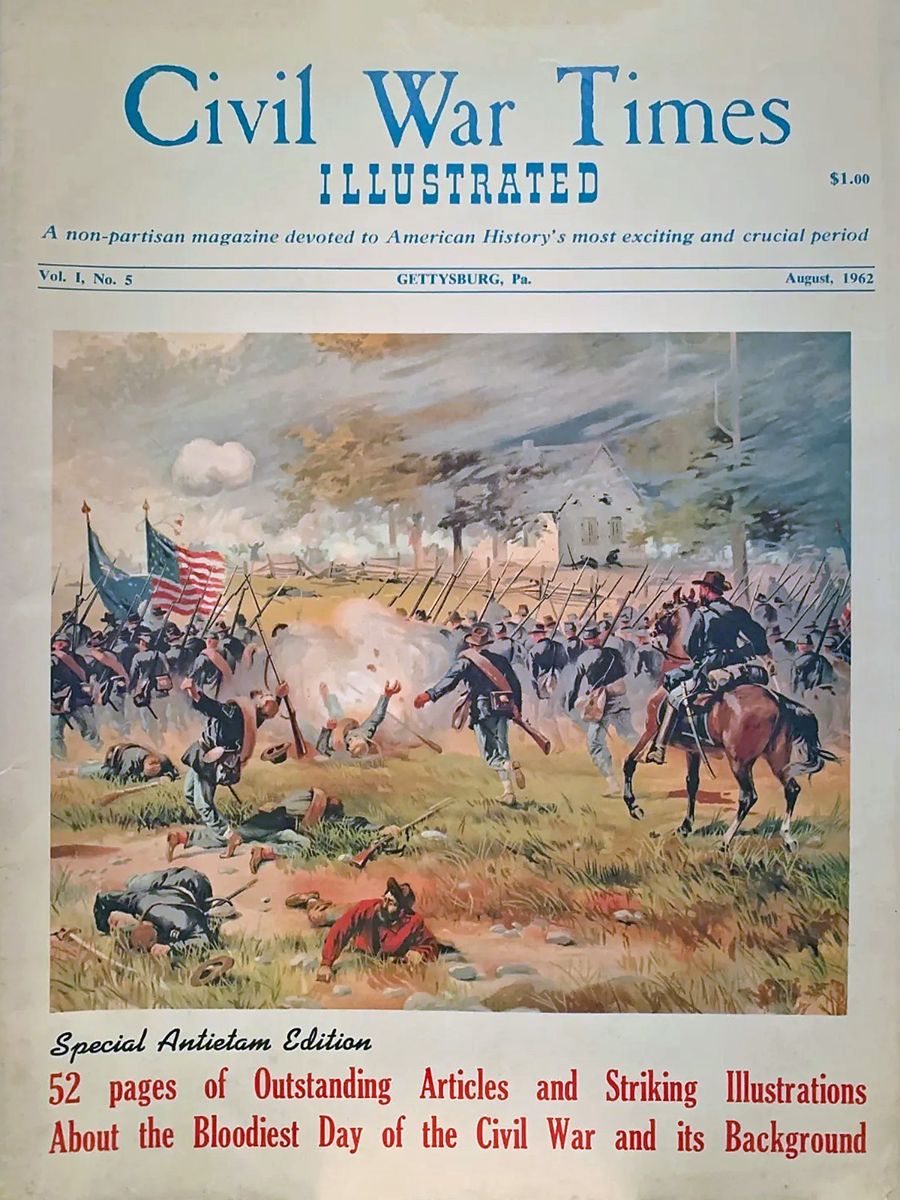
Civil War Times, 1961 newspaper issue. Editor to Managing Editor, a position he held for another several years. Nye (1898–1970) was a West Point graduate (1920) and a World War II veteran. A career army officer (note the Col. in his bylines), he is buried at West Point Cemetery. In June 1961, the name of James V. Murfin began to appear in the masthead as Director of Advertising and Promotion. Murfin (1920– 1987) was a commercial artist who avocationally engaged in historical research and writing. His Gleam of Bayonets (1965) details Antietam, and won the New York CWRT’s Fletcher Pratt Award. Even the ads are interesting.
A New York company in 1971 promoted a five-volume set reprinting war articles that had run in the New York Times, Herald and Tribune. (I wish I had gotten that!) The following month, Edward J. Stackpole wrote on “The Day the Rebels Could have Marched into the White House,” borrowing from his book Sheridan in the Shenandoah, which had just come out. The first issue of Civil War Times Illustrated appeared in April 1962. Editor Robert H. Fowler explained “there is a need for a magazine devoted to the Civil War, its causes, and its effect on the development of this country.” Of course, he was speaking of a popular magazine, aimed at the thousands of Civil War enthusiasts across the country. (A more academic quarterly journal, Civil War History, was being turned out by Kent State University Press.) Because it was the Centennial, each number in the early ‘60s recounted events of a century ago, especially battles and even skirmishes. Compiler of this column was Robert D. Hoffsommer, who happened also to serve as the magazine’s Book Editor. Anticipating a flood of new books coming out, Hoffsommer in August 1961 opined, “the suspense is terrifying”—he was going to be very busy. The variety of topics addressed in every issue was exhilarating. The November 1961 number headlined “Emmett Original of Dixie Found”: the last descendant of Dan Emmett’s widow had just discovered the composer’s manuscript copy of the South’s famous fighting song. CWTI reproduced an image of the original sheet music, complete with Emmett’s handwritten dialect lyrics (“Ole missus marry Will de Weaber/William was a gay deceaber”). Ed Bearss, working at the time in Vicksburg, detailed the Federal mine that, on June 25, 1863, sent Rebels flying into the air. Bearss also wrote to the editor (January 1961), taking issue with a piece on the 18th U.S. Infantry at Vicksburg. For the June 1961 issue, L. VanLoan Naisawald wrote a fine article on field artillery. Naisawald (1920–2010) is author of Grape and Canister: The Story of the Field Artillery of the Army of the Potomac, 1861–1865, which had just been published (1960). On my bookshelf, Naisawald is a goto source on the guns. David Gerard, the magazine’s Book Editor in June 1962, offered a helpful “Why Are Most Civil War Novels Mediocre?” Among his suggestions for aspiring novelists was his Tip Two: “Be one-sided, partisan, and sectional.” (Imagine reading that today.) BTW, Gerard’s choice of most successful novel, based on his tips, is Harold Sinclair’s The Horse Soldiers, about Grierson’s Raid. In “Cavalry Lessons of the Civil War” (January 1968), Jay Luvaas recounts the painful decline of mounted troops’ effectiveness on the Civil War battlefield. The combination of tactics and drama are frequently to be seen in all those old issues. The magazine didn’t shy from controversy. “IN THIS ISSUE STARTLING NEW EVIDENCE STANTON PLANNED LINCOLN’S MURDER!” blares the cover of Vol. III, No. 5 (Aug.Sept. 1961). In this article, “A Civil War Times Exclusive,” Robert Fowler explains that one Ray A. Neff. of Gibbsboro, N.J., had found in an arcane journal two ciphered messages left by Lafayette Baker, head of Edwin Stanton’s private police force. They pointed to “E.S.” as head of a conspiracy to murder Lincoln, using John Wilkes Booth as a tool. Since then, such scholars as William Hanchett (in The Lincoln Murder Conspiracies [1983]) have disproved the Stanton conspiracy thesis. But Americans love presidential conspiracy theories—and this was before the grassy knoll in Dallas—so the “startling new evidence” on Stanton wrapped us all up. The letters to the editor (“Readers’ Forum”) are fun to read. In October 1960, Richard S. Mudd, M.D., grandson of Booth’s leg-setter, sent in a correction of a recent caption that had run with Dr. Mudd’s photograph. CWTI, as most of us came to call it, featured in its fifty pages entertaining articles on a wide range of topics, all well illustrated. The magazine staff included some heavy-hitters, all writers in the field. In August 1971, William C. Davis served as Managing Editor, and Stephen E. Ambrose was an Associate Editor. While Davis was writing his authoritative biography of John C. Breckinridge (1974), he wrote a profile of the general, which appeared in June 1967. Ambrose is author of numerous war books; he passed away in 2002, at the age of 66. “Letters and Diaries” is an occasional column. The one for April 1962 presents the writing of Sgt. George W. Buhrer, 2nd Massachusetts Cavalry. Buhrer was at Cedar Creek when Early’s troops launched their surprise attack. “Everything looked favorable for the enemy,” Buhrer recorded, “til 4 P.M. our glorious General Sheridan arrived, he had been away. He gathered the fleeing infantry and soon our whole line made a desperate and furious attack; twice we were repulsed but a third time we broke their line and routed the enemy.” Frederic Ray was Art Director for a long time. His sharp eye for photographic detail led to his “Photos of Phony Dead at Gettysburg” (January 1967). It appears that in several photographs taken at Devil’s Den, the famed cameraman Alexander Gardner rearranged the body of a slain Confederate sharpshooter in several views for pictorial effect. The magazine was sometimes deliberately provocative (good for sales). An example is Otto Eisenschiml, “Sherman: Hero or War Criminal,” the lead article for January 1964. Eisenschiml, author of Why Was Lincoln Murdered? (1937), had just crossed over the river, so this was probably his last published piece. He closed it by relating why he had omitted Sherman’s name from a list of prominent Civil War generals in his The Hidden Face of the Civil War (1961). He answered that “all others, good, bad, or indifferent, had fought like gentlemen, and that I would insult them by including the wartime Sherman in their company.” (My, how times have changed!) Jay Luvaas, in “Joseph E. Johnston: A Reappraisal” (January 1966), argues that Johnston had the potential to be a great general, but the circumstances of his several commands had placed him in history as rather mediocre. “I wish the man had achieved something,” the historian Gamaliel Bradford observed, as quoted by Dr. Luvaas. Then there was the other Johnston. In February 1967, the esteemed Thomas L. Connelly offered an assessment of Gen. Albert Sidney Johnston’s “Mystique.” “What kind of man was he? A soldier of great potential or an incompetent appointed, by a close friend, to command an army?” Even the author of The Army of the Heartland (1967) could only conclude, “a clear, convincing answer is impossible.” No one can write on health and medicine like a physician. So CWTI published a study by an Ohio doctor, Byron Stinson, on scurvy in the war. “There is no Vitamin C. in cornbread,” Stinson wrote of the soldiers’ common ration. Similarly, Dr. Gordon W. Jones morbidly explains that human excreta and animal garbage, carelessly disposed, combined with primitive hygiene practices to kill thousands of men, “simply because they were not clean.” Whenever I begin an article on a war-topic, CWTI is always the first place I turn—so much so that I laboriously prepared an index of articles in all the issues I possess
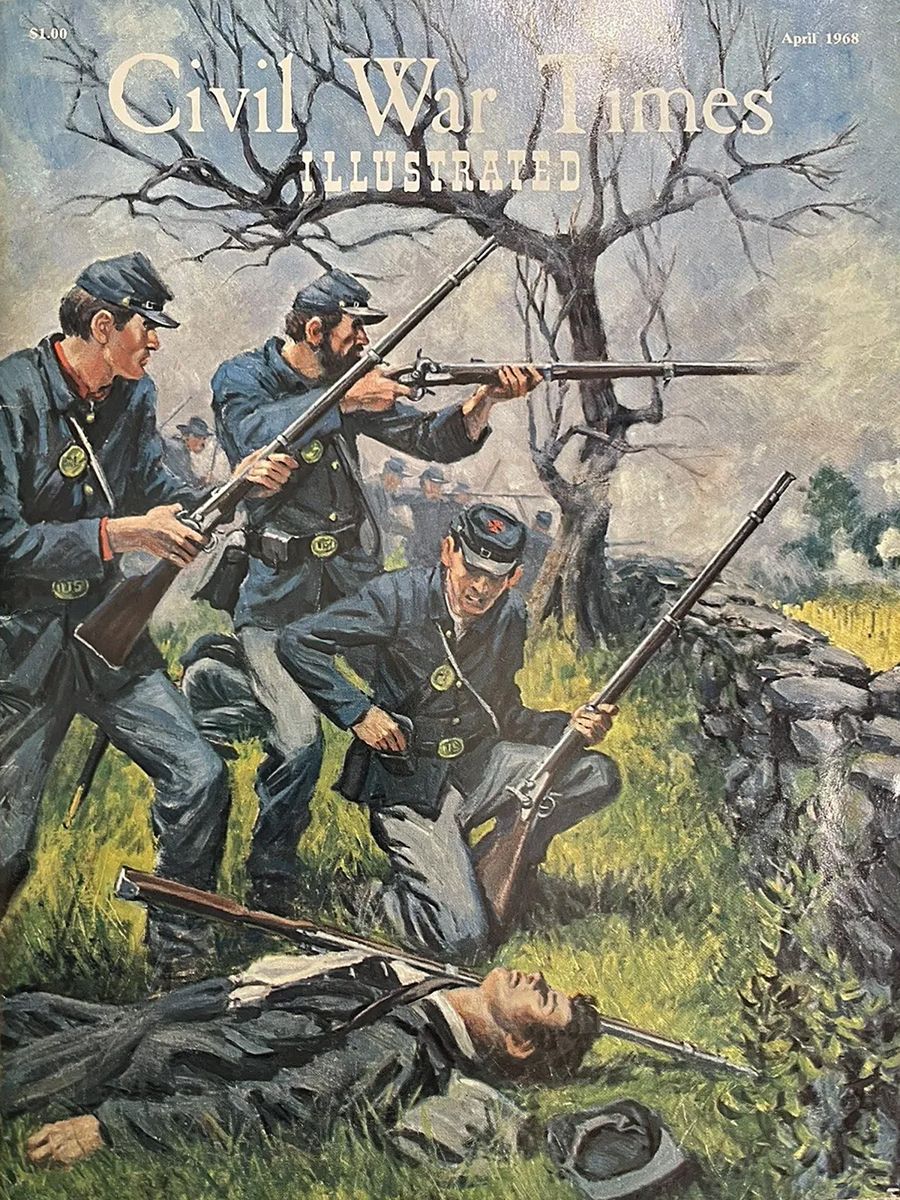
(quite a lot) and could consult. Here is a sampling: • Philip Secrist, “Life in Atlanta” (July 1970) • Dr. John L. Margreiter, “Anesthesia in the Civil War” (May 1967) • Larry J. Daniel, “Manufacturing Cannon in the Confederacy” (November 1973) Wilbur S. Nye tells the story of the famous painting in “‘The Burial of Latane’ and How it Moved Southern Hearts” (January 1964). By the way, a friend in Richmond who knows the family informs me that it’s LATnee, not LataNAY. Since then, CWTI has issued indices of content in its early years of publication. But I wonder if you can still find them. The renowned Bell I. Wiley was always a friend of the magazine. Despite his busy schedule of teaching and writing, Dr. Wiley would contribute such pieces as “The Story of 3 Southern Officers” (April 1964). One of the three was Lt. Robert M. Gill of the 41st Mississippi. Dr. Wiley told us in his class back in’68 that he had read thousands of soldiers’ letters for Johnny Reb and Billy Yank, and Gill’s missives were among them. On July 23, 1864, Gill wrote his wife Betty of his part in the previous day’s battle east of Atlanta, in which Confederates had temporarily broken McPherson’s line. “I never enjoyed a thing better in my life,” he trilled; “we had the pleasure of shooting at Yankees as they ran without being shot at much.” Among Dr. Wiley’s numerous submissions is “Jefferson Davis, an Appraisal” (April 1967). After reviewing the Confederate executive’s strengths and weaknesses, he asked, “Could the Confederacy have achieved independence under other leadership?” His answer was no, because only Robert E. Lee could have performed better than Davis—but he was needed in the field. Dr. Wiley passed on in 1980, but he was writing till the last. In April 1977 there appears his appreciation of the famed diarist Mary Boykin Chesnut. In August 1968, Francis A. Lord, the magazine’s weapons expert, related “Some Close Shaves,” when belt buckles, Bibles, even card decks saved men’s lives. This kind of variety in the magazine’s pages made even perusal a joy. From time to time, CWTI asked readers about their favorite recent articles. In November 1966, editor Fowler announced that the handsdown favorite was Wilbur G. Kurtz’s piece the previous April on the Andrews Raid. (Second place was Glenn Tucker’s profile of George Thomas.) Atlantan Kurtz (1882–1967) was married to Annie Laurie Fuller, daughter of William Fuller, the conductor who so famously pursued Andrews’ train thieves after they stole the locomotive at Big Shanty. So Kurtz got the story direct. Pictures have always been big in CWTI (note, Illustrated). One of my favorite articles is Frederic Ray’s “The Art of Gilbert Gaul” (April 1963). One of the most famous illustrations of Gaul (1855–1919) is “With Fate Against Them,” which was used as the frontispiece for the third volume of Battles and Leaders. Other pictorial features include Ray’s article on how Peter Rothermel produced his huge (32 feet-long) mural painting of the Battle of Gettysburg (July 1963). In a number of back issues one sees entertaining and challenging quizzes to intrigue (and stump) readers. Robert L. Brake, “What Do You Know?” (January 1961) lists twenty-six Civil War generals’ nicknames. A new one on me was “Old Skedad” for Sterling Price, whom I had seen dubbed “Old Pap.” In June 1970 the magazine started running quizzes prepared by Marshall Krolick of Chicago. Example: “Name the battle in which Kelly’s field and the Widow Glenn’s house were prominent landmarks.” (Answer at the end
CivilWarNews.com of this article.) The magazine covers themselves were artful. The one for February 1966 shows “The Battle” by N.C. Wyeth, a noted illustrator in his day (and father of Andrew Wyeth— think of “Christina’s World”). The painting then belonged to a family in Pennsylvania; the magazine’s acknowledgment of their courtesy shows the zeal with which Art Director Ray sought his pictorial material. I’m happy to say the magazine shined its spotlight on Confederate soldier-illustrators, such as Allen C. Redwood (June 1964). The April 1977 issue offers a portfolio sampling of Conrad Wise Chapman’s thirtynine paintings of the Charleston defenses. (Chapman had served there late 1863-early 1864.) One authority, Ben L. Bassham, has termed Chapman’s oils as “among the most successful works of art to emerge from the conflict.” His rendering of the H. L. Hunley, for instance, is iconic. Another featured artist is William L. Sheppard (December 1962). Sheppard served in the Richmond Howitzers, and may have been on the scene at Appomattox when General Lee rode back from his meeting at the McLean house. Sheppard’s touching illustration has a downcast Lee riding slowly among the soldiers gathered around him. Some reach for Traveller’s reins; others sit nearby, just crying. Then there were those special issues, whole magazines devoted to one topic. Gettysburg! (Volume II, Number 4) came out in July 1963, when the newsstand price was still $1. Here, a full-color foldout cover shows a segment of the famed Philippoteaux mural at the point of Pickett’s breach of the Federal line on July 3.
“I Thank the Lord I Am Not a Yankee…”
“Struggle for Vicksburg” (July 1967) had as its chief writer Stephen E. Ambrose, who at that time had joined Robert D. Hoffsommer as an associate editor. “Chancellorsville” (May 1968) serves up text by Joseph P. Cullen. Sidebars were a frequent feature of the magazine. “What Happened to Hooker,” by W.S. Nye, reminds us how Fighting Joe, corps commander under Sherman during the Atlanta Campaign, resigned in a huff when he was oversloughed for army command by Sherman. (McPherson got the job.) An entertaining sidebar (July 1968) is the address by S.L.A. Marshall, the noted military historian, on “Unmilitary Military History.” The reason for so many mediocre Civil War books, he argued, was that their authors “were ignorant of command principle, of human nature under high pressure, and of troop behavior on the battlefield. They did not understand battle.” Hmmm… “The Battles for Chattanooga!” issue (August 1971) includes four color maps showing Federal and Confederate positions. (Think of all the battle books you have, in which maps are few or even non-existent.) Other special numbers include Fredericksburg (December 1965, with text by Edward Stackpole), Chancellorsville (May 1968), the guerrilla war (October 1974), and wartime Richmond (June 1977). The May 1983 number focuses on Second Manassas, with text provided by Dennis Kelly, who worked at the battlefield park for five years. CWTI knew where the experts were. Richard McMurry was a frequent contributor to the magazine. After he finished writing his doctoral dissertation for Bell Wiley
Campaign: December 23, 1863 to July 18, 1864” (Emory, 1967), rather than seeking its publication as a book, Richard mined it for a number of articles for CWTI: Kolb’s Farm (December 1968), Cassville (December 1971), New Hope Church (February 1973), Resaca (November 1970) and Kennesaw Mountain (January 1970). As scholarship from a professional historian, these articles remain staples in the campaign literature. And just as Dr. McMurry drew from his doctoral dissertation, so too did Errol MacGregor Clauss for “The Battle of Jonesborough” (November 1966). Dr. Clauss wrote his dissertation under Bell
Wiley (Emory, 1965, picking up the story of the Atlanta Campaign where McMurry would eventually leave it, in midJuly 1864). It’s amazing to me how Professor Wiley directed the writing of his doctoral students. My copy of The Campaign for Atlanta issue of July 1964 is just about falling apart from overuse, and I’ll tell you why. Allen P. Julian surveys the fighting from Dalton to Johnston’s relief from command. Ned was an Atlantan of the old pro-Joe school, and closed his article with “the Army of Tennessee had little confidence in his successor”—a dated judgement since overridden by the recent writing on Johnston’s deficiencies as army commander. Wilbur G. Kurtz, famed Atlanta illustrator and historian—he wrote the text for most of the historical markers still dotting the city’s streets—covers the fighting around the city in July 1864. Franklin M. Garrett, famed here for his encyclopedic knowledge, wrote on civilian life in the city. Dr. Wiley contributed “The Ordinary Soldier in the Campaign for Atlanta,” based upon his studies of Johnny Reb and Billy Yank. “A Portfolio: Views of Atlanta and Its Defenses” offers ten photographs taken by George N. Barnard in the fall of 1864. Without Barnard’s work we would not know, for instance,
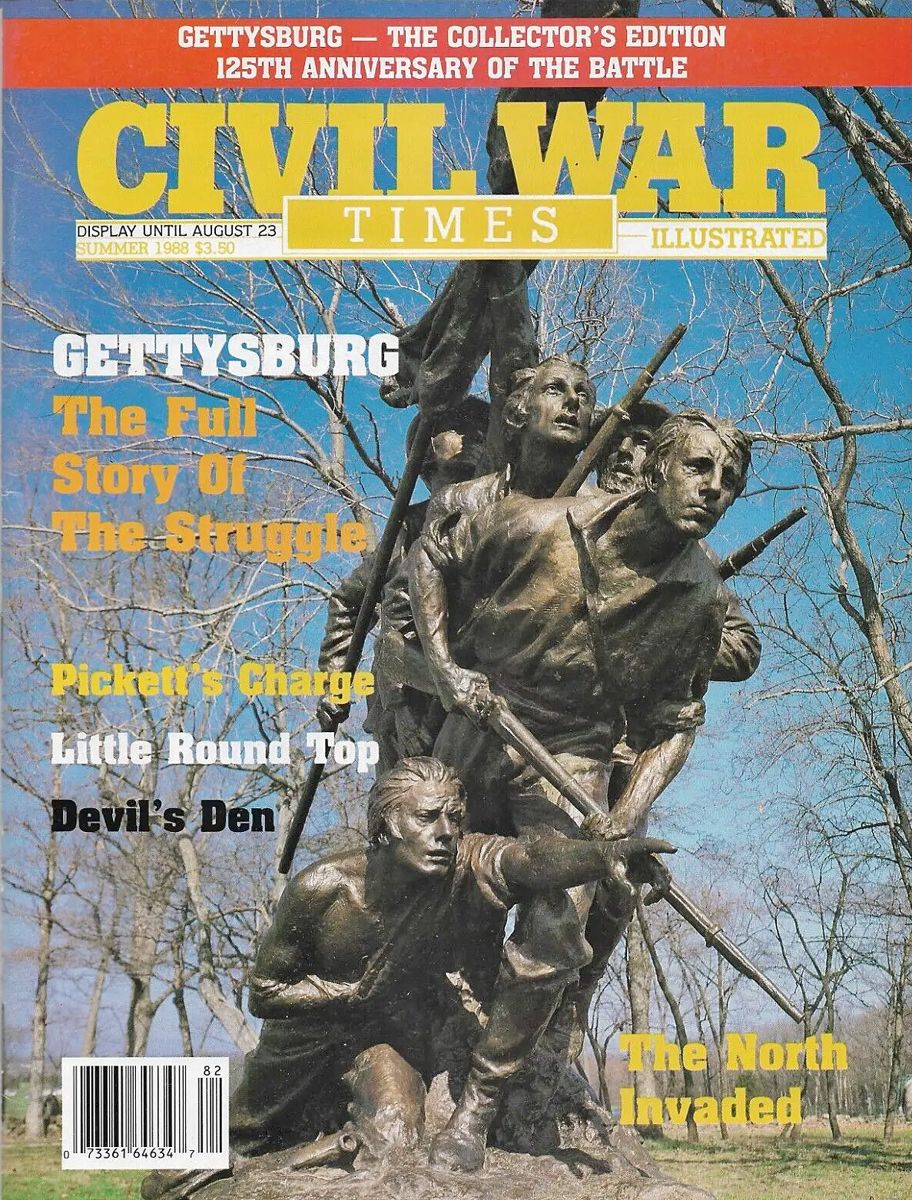
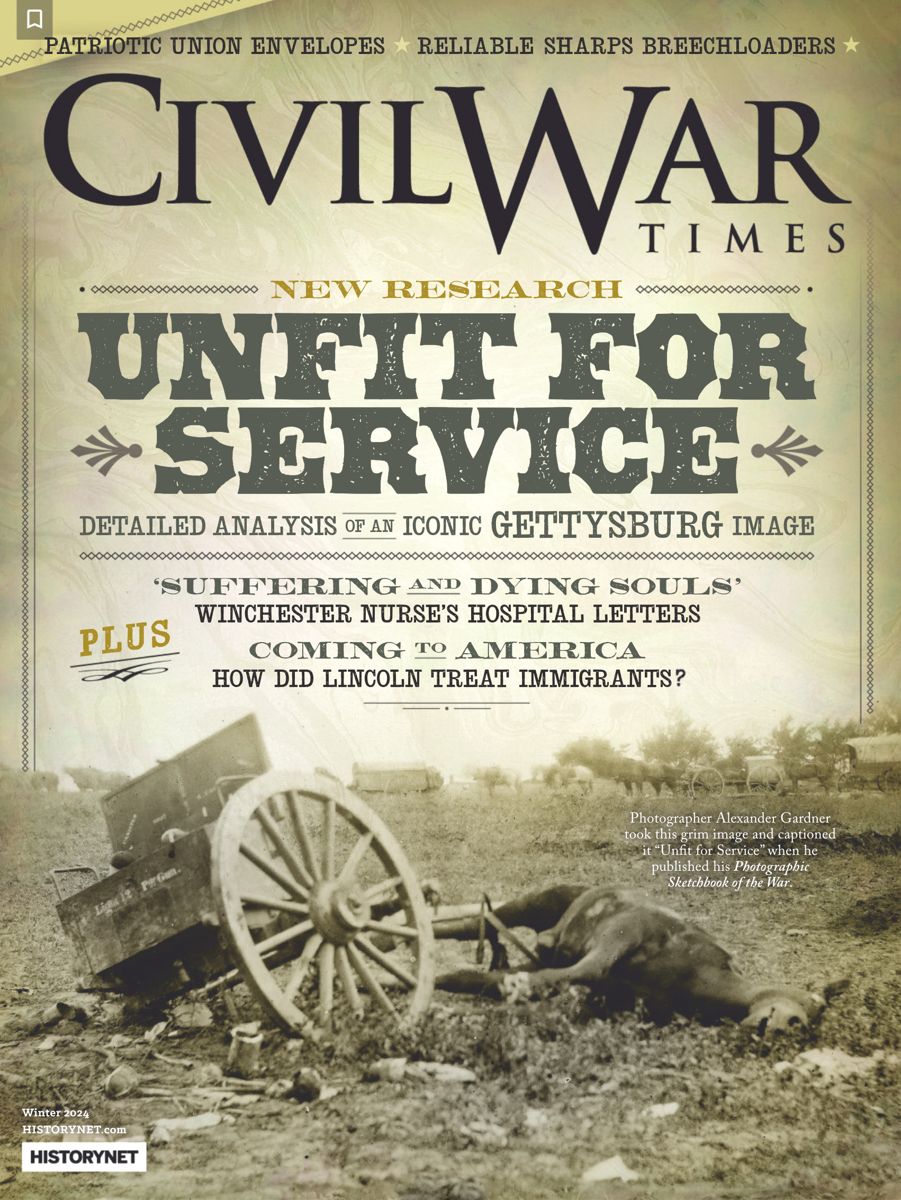
Civil War Times, Winter 2024 issue. what the massive railroad terminal in the center of town (“the car shed”) looked like, both before and after its destruction by Sherman’s engineers in midNovember 1864. Kurtz, technical advisor to Selznick’s Gone With the Wind, was thus able to oversee an accurate reconstruction of the depot for the film. In the summer of 1989, the campaign’s 125th anniversary, CWTI published another special issue on Atlanta. The cover photograph famously shows an unsettled Scarlett racing through all the sick and wounded Confederate soldiers lying out in the open city square. David Evans, of Athens, Georgia, wrote the text covering the campaign. A special feature of the issue was “Gone With the Wind: The Film that Made Me,” by the late, great Albert Castel. Al explained how the movie of 1939 turned him on to the war. “Frankly, my dear,” he concluded, “we do give a damn!” echoing Rhett’s famous taunt in the movie. Well, after all these years, we enthusiasts of the War can say with pride and defiance, “We do give a damn!” for any number of reasons. Civil War Times/ Illustrated (1959–2024), with its hundreds of issues, is one of the strongest.
Quiz question answer:
The Battle of Chickamauga, Sept. 19-20, 1863. Stephen Davis, of Cumming, Ga., is proud to have contributed his own writing to CWTI: the big snowball battle at Dalton (June 1976), Cleburne’s emancipation proposal (December 1978), Port Republic (November 1980), Henry Timrod (February 1983), and Allen C. Redwood (October 1984). Steve’s article on the snowball battle was his very first published piece. Back then the editor was Jack Davis, to whom Steve is still grateful for that first big break. He adds: “When James Lee McDonough and James Pickett Jones’ War So Terrible: Sherman and Atlanta came out in 1987, I noticed that the authors’ account of the Dalton snowball fight had lifted, without quotes or attribution, exact phrasing I had written for my article in CWTI. Richard McMurry told me he had seen plagiarism from his Emory dissertation. I also heard that Prof. Tom Connelly was going to sue McDonough and Jones for lifting some of his material. The result was that W.W. Norton, the publisher, yanked the book from further sales. So if you’ve got a copy of War So Terrible, hold onto it.”